甘源食品

Search documents
被骂上热搜,山姆紧急下架
Xin Jing Bao· 2025-07-16 04:55
Core Viewpoint - Sam's Club has faced strong dissatisfaction from members due to the removal of popular products and the introduction of new items like the low-sugar cake from Haoliyou, leading to significant discussions on social media [1][3]. Group 1: Product Changes - In recent months, Sam's Club has made intensive adjustments to its product offerings, including the introduction of Haoliyou's low-sugar cake priced at 49.9 yuan for 48 pieces, which is exclusive to Sam's channels [3]. - Other new products from leading brands such as Kang Shifu, Heytea, and Xu Fu Ji have been launched, while previously popular items like 100% fruit juice are no longer available [5][10]. Group 2: Membership and Revenue - The annual fee for a regular membership at Sam's Club in China is 260 yuan, while the premium membership costs 680 yuan [8]. - Walmart's latest fiscal quarter reported net sales of 6.7 billion USD (approximately 48.02 billion yuan) in China, with a year-on-year growth of 22.5%, and comparable sales growth of 16.8% [8]. Group 3: Consumer Sentiment - Consumers have expressed their dissatisfaction on social media, with some stating they would not renew their memberships due to the recent product changes [5][10]. - Experts highlight that differentiation is crucial for membership warehouse stores, as members expect unique products that set them apart from non-members [10].



少加班,促消费丨消费参考
2 1 Shi Ji Jing Ji Bao Dao· 2025-07-15 23:44
Economic Overview - In June, the total retail sales of consumer goods in China reached 42,287 billion yuan, with a year-on-year growth of 4.8% [1][7] - For the first half of 2025, the total retail sales amounted to 245,458 billion yuan, reflecting a 5.0% year-on-year increase [1][7] - Excluding automobiles, retail sales in June were 37,649 billion yuan, also growing by 4.8% [1][7] - Online retail sales for the first half of 2025 reached 74,295 billion yuan, with an 8.5% year-on-year growth [7] Consumer Behavior - The average working hours for employees have increased from 47.43 hours in 2021 to 49.1 hours in January 2025, which may negatively impact consumer spending time [3][4] - The decline in consumer spending time is particularly affecting service consumption, which has strict time requirements [3] Policy and Initiatives - The government is implementing "anti-involution" policies aimed at encouraging paid leave and flexible work schedules to boost consumption [4] - The "Promoting Consumption Special Action Plan" includes initiatives like exploring spring and autumn breaks for schools [4] Company News - Marriott International announced that CFO Leeny Oberg will retire in 2026 after 26 years with the company, with Jen Mason and Shawn Hill set to take over her roles [8][9] - Tianrun Dairy's major shareholder reduced its holdings of convertible bonds by 101.61 million units, representing 10.26% of the total issued [10] - Good Idea expects a net loss of 15 to 25 million yuan for the first half of 2025, while also projecting a significant increase in net profit after excluding non-recurring items [11] - Maiqu'er anticipates a net profit increase of 102.17% to 103.11% for the first half of 2025 [12] Market Trends - The Shanghai Consumer 80 Index closed at 4,759.65 points, with a slight increase of 0.07% [6] - Douyin is investing hundreds of millions in subsidies to enhance its local lifestyle business, particularly in the hotel sector [16]
大众品Q2业绩前瞻及中期策略报告:新消费重构投资范式,传统消费循势待时-20250715
ZHESHANG SECURITIES· 2025-07-15 11:48
Group 1 - The report emphasizes the reconstruction of investment paradigms in the food and beverage sector, driven by new consumption trends that focus on emotional value, health, and technological innovation [1][14][30] - The new consumption paradigm is characterized by a shift from traditional consumption frameworks to a model that prioritizes innovative supply and new demand creation through quality offerings [1][14][35] - The report identifies three main consumption trends: rational quality consumption, emotional value self-consumption, and technological iteration innovation [1][14][30] Group 2 - The analysis of sub-sectors indicates that traditional leaders in beer, dairy, and condiments should be evaluated through traditional consumption frameworks, while new consumption-driven sectors like snacks, tea drinks, and health products require a bottom-up approach to identify explosive changes [2][35] - In the snack sector, companies with category dividends and new channel expansions are expected to perform well, with projected revenue growth rates for various companies in Q2 2025 [4][36] - The soft drink sector shows differentiated performance across segments, with energy drinks and ready-to-drink tea expected to grow, while traditional segments face challenges [4][37] Group 3 - The dairy sector is anticipated to have stable revenue in Q2 2025, with a focus on profit elasticity once raw milk prices stabilize [4][38] - The tea drink market is experiencing high growth driven by the delivery battle, with key players like Mixue Group and Cha Bai Dao expected to thrive in the mid-price segment [4][41] - The health product sector is seeing a concentration in the B-end market, while the C-end market requires attention to high-growth single products [4][39] Group 4 - Investment recommendations include companies that align with new consumption trends, such as Wei Long, Yili, Wanchen Group, and others, indicating a focus on long-term growth opportunities despite short-term adjustments [6][35] - The report highlights the importance of supply chain optimization and product innovation for brands to remain competitive in the evolving retail landscape [30][33]
甘源食品(002991) - 2025 Q2 - 季度业绩预告
2025-07-14 08:20
[Core Performance Indicators Forecast](index=1&type=section&id=Performance%20Forecast%20Overview) The company forecasts a significant year-over-year decline in its 2025 first-half net profit and earnings per share | Item | Jan 1, 2025 - Jun 30, 2025 (Forecast) | Prior Period (2024) | | :--- | :--- | :--- | | **Net Profit Attributable to Shareholders of Listed Company** | Profit: RMB 73.00 million – RMB 75.00 million | Profit: RMB 166.5279 million | | Year-over-Year Change | Decrease: 56.16% - 54.96% | - | | **Net Profit After Deducting Non-Recurring Gains and Losses** | Profit: RMB 62.00 million – RMB 64.00 million | Profit: RMB 144.41 million | | Year-over-Year Change | Decrease: 57.07% - 55.68% | - | | **Basic Earnings Per Share** | Profit: RMB 0.80/share – RMB 0.83/share | Profit: RMB 1.83/share | - The performance forecast data is unaudited, but the company has pre-communicated significant matters with its accounting firm, with no major discrepancies[4](index=4&type=chunk)[5](index=5&type=chunk) [Analysis of Performance Changes](index=2&type=section&id=Reasons%20for%20Performance%20Changes) Performance decline is attributed to decreased revenue, rising raw material costs, and increased operating expenses from strategic investments - First-quarter 2025 operating revenue decreased by **13.99%** year-over-year, with net profit down **42.21%**; while Q2 revenue decline is expected to slow, overall first-half revenue will still decrease year-over-year[6](index=6&type=chunk) - Gross profit decreased year-over-year due to the dual impact of reduced revenue scale and increased raw material costs, such as palm oil[6](index=6&type=chunk) - Increased investment in brand and product upgrades led to higher selling and administrative expenses year-over-year, specifically for **selling expenses** (celebrity endorsements, advertising, new product promotion, online/offline channel expansion) and **administrative expenses** (recruiting excellent management personnel, optimizing management team)[6](index=6&type=chunk) - Current brand building investments are part of a long-term plan with no immediate short-term effect, and new products, while promising, are in early promotion stages, not yet scaled, impacting sales expense growth rate temporarily[6](index=6&type=chunk) [Company Outlook and Risk Warning](index=2&type=section&id=Company%20Outlook%20and%20Risk%20Warning) The company is undergoing strategic operational transformation, causing short-term performance pressure but aiming for long-term growth, while cautioning investors on the preliminary nature of this forecast - The company defines the current period as an 'operational transformation phase,' actively adjusting its business strategy (talent iteration, product development, channel optimization), leading to short-term performance pressure but expected to create greater long-term development space[6](index=6&type=chunk)[7](index=7&type=chunk) - In the second half, the company plans to actively increase sales of new and core products and continuously strengthen internal management to enhance operational efficiency[7](index=7&type=chunk) - The company explicitly states that this performance forecast is a preliminary estimate by the finance department, and final financial data will be based on the official '2025 Semi-Annual Report,' advising investors to exercise caution[8](index=8&type=chunk)

2025年中国开心果行业市场政策、产业链图谱、供需现状、进出口贸易、竞争格局及发展趋势研判:线上销售渠道占比逐年攀升,达38.3%[图]
Chan Ye Xin Xi Wang· 2025-07-10 01:52
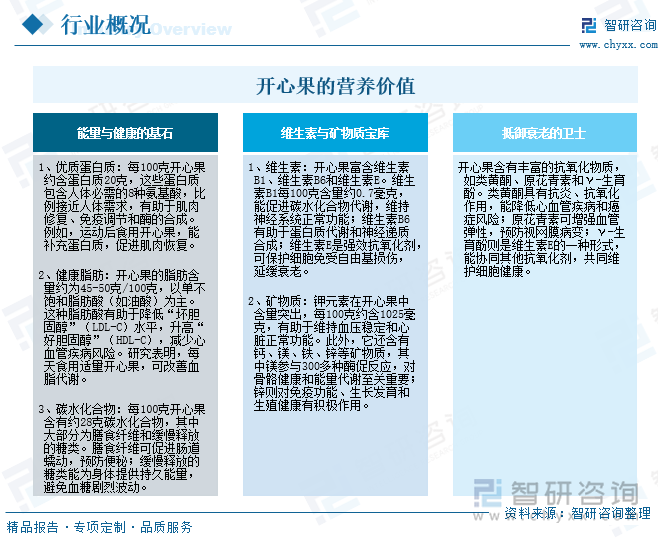
Overview - The demand for pistachios in China is increasing due to rising living standards and changing consumer preferences towards healthy snacks. In 2024, the demand for pistachios is projected to reach 235,100 tons, with a market size of 22.711 billion yuan, while the domestic production is only 81,100 tons, necessitating significant imports each year [1][10]. Market Policy - China has implemented a series of stringent food safety policies to regulate the production of pistachios, ensuring product quality and promoting the industry's development towards standardization and high quality. Key policies include guidelines for traditional food production, food safety assessment methods, and measures to enhance food enterprise standard management [4][6]. Industry Chain - The pistachio industry chain includes upstream cultivation, processing equipment, flavoring, and packaging materials. The main cultivation areas are in Xinjiang and Gansu, where the climate is suitable for pistachio growth. Due to insufficient domestic production, China heavily relies on imports. The midstream involves processing, while the downstream includes sales channels such as supermarkets, convenience stores, and e-commerce platforms [8][10]. Development Status - The market for pistachios is experiencing continuous growth, with a projected import volume of 133,700 tons and an import value of approximately 86.9 million USD in 2024. The average import price is 6.50 USD per kilogram, with major suppliers being the United States, Iran, Australia, and Turkey [12][10]. Competitive Landscape - The pistachio industry in China is characterized by a fragmented competitive landscape with numerous participants. Key players include Three Squirrels, Qiaqia Food, and Good Products, among others, with operations spread across various provinces [14][16]. Company Analysis - Three Squirrels has achieved significant sales, with total revenue reaching 10.62 billion yuan in 2024, of which the nut business accounted for 5.366 billion yuan, representing 50.5% of total revenue [16]. Good Products, established in 2006, reported total revenue of 7.159 billion yuan in 2024, with the nut business contributing 1.138 billion yuan, or 15.9% of total revenue [18]. Development Trends - The future demand for pistachios is expected to grow as consumer health awareness increases, leading to a shift towards low-fat, high-protein, and nutrient-rich products. Companies are likely to invest in product diversification and innovation, including new flavors and functional products, as well as deep-processing products like pistachio butter and oil [20].




食品饮料行业周报:重视新品类和新渠道下的α机会-20250707
Donghai Securities· 2025-07-07 12:31
Investment Rating - The report assigns an "Overweight" rating for the food and beverage industry, indicating a positive outlook compared to the broader market index [1][57]. Core Insights - The report emphasizes the importance of new product categories and channels, highlighting potential alpha opportunities within the food and beverage sector [4]. - The secondary market performance shows a decline of 0.62% in the food and beverage sector, underperforming the CSI 300 index by 0.92 percentage points, ranking 20th among 31 sectors [7][12]. - The report identifies key trends in various sub-sectors, including the stabilization of liquor prices, improving beer demand, and high growth potential in the snack segment [7][27]. Summary by Sections 1. Secondary Market Performance - The food and beverage sector experienced a decline of 0.62%, with the liquor sub-sector showing a relative increase of 1.20% [12]. - Top-performing stocks included Huang Shang Huang, Jiu Gui Jiu, and ST Tong Pu, with gains ranging from 5.12% to 11.71% [12][17]. 2. Major Consumer Goods and Raw Material Prices - Liquor prices as of July 7, 2025, show a mixed trend, with the 2024 Flying Moutai price at 1,890 RMB for scattered bottles, down 160 RMB from the previous month [21]. - Beer production in May 2025 reached 3.584 million kiloliters, reflecting a year-on-year increase of 1.30% [27]. - Dairy prices indicate a stable trend, with fresh milk priced at 3.04 RMB per kilogram, while pork prices are at 20.58 RMB per kilogram, showing a slight increase [29]. 3. Industry Dynamics - The report notes that there are currently 65,900 beer-related enterprises in China, predominantly located in East and Northeast regions [54]. - Recent promotional activities, such as the Taobao flash sale, have significantly boosted sales in the liquor and dairy sectors [54]. 4. Core Company Dynamics - Key company updates include Kuozi Jiao's announcement of a cash dividend of 1.30 RMB per share, totaling 778 million RMB [56].




吃货又立功!又一老字号要上市 靠一颗野果能否圆梦?
Zhong Guo Ji Jin Bao· 2025-07-05 12:21
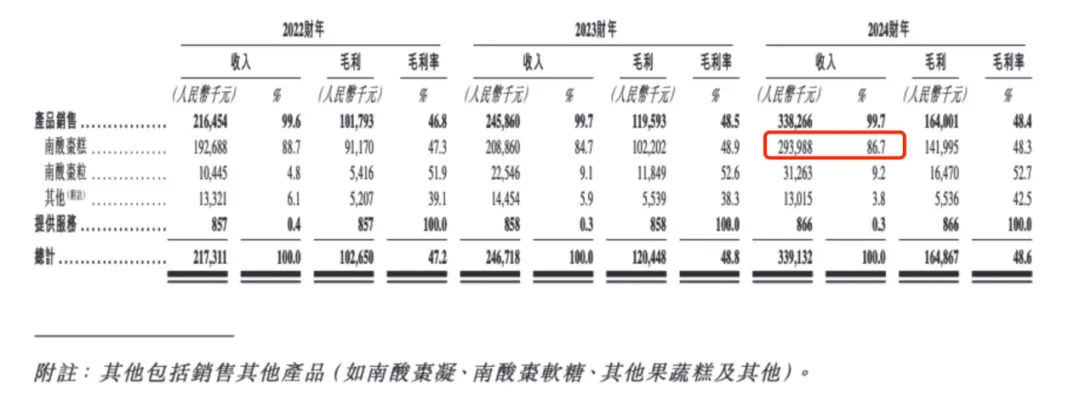
Core Viewpoint - Qiyunshan Food is preparing for an IPO, heavily reliant on its main product, South Jujube Cake, which contributed 2.94 billion RMB in revenue for 2024, accounting for 86.7% of total revenue [1][3]. Revenue and Product Performance - The South Jujube Cake has dominated the company's revenue, contributing 88.7%, 84.7%, and 86.7% of total revenue from 2022 to 2024 respectively [1][3]. - Other products, including South Jujube Granules, South Jujube Jelly, South Jujube Soft Candy, and South Jujube Frozen, are also based on South Jujube but have significantly lower revenue contributions [2]. - Revenue from South Jujube Granules increased from 10.44 million RMB in 2022 to 31.26 million RMB in 2024, but its share remains small at 9.2% [3]. Production Capacity and Strategy - The company strategically reduced production capacity for other products from 1,100 tons to 677 tons while increasing South Jujube Cake production capacity to 9,224 tons to meet rising market demand [4]. - The focus on a single product may enhance short-term efficiency but could limit long-term market adaptability due to a lack of product diversification [4][6]. Marketing and Sales Channels - Qiyunshan Food has a high marketing expenditure, with sales and marketing costs reaching 75.84 million RMB in 2024, accounting for 23.11% of revenue [10]. - The company relies heavily on offline sales channels, with 89.3% of revenue generated through 230 distributors, of which 199 are offline [7][9]. - Online sales have been declining, with online direct sales contributing only 10.4% of total revenue in 2024, down from 12.7% in 2022 [9][10]. Customer Concentration - In 2024, a single customer contributed 22.9% of total revenue, indicating a growing reliance on a few key clients [12][13]. - The share of revenue from the top five customers has increased from 26.4% to 38.7% over the past three years, raising concerns about customer concentration risk [13]. Industry Trends - The snack industry is witnessing a shift towards volume-based sales channels, which has become a new growth driver for companies [14]. - However, this model may pressure brand owners on cost management and supply chain efficiency due to lower profit margins associated with volume sales [15]. Supply Chain Risks - Qiyunshan Food faces supply chain risks as it relies on local farmers for raw materials without formal contracts, making it vulnerable to supply shortages and price fluctuations [16].
吃货又立功!又一老字号要上市,靠一颗野果能否圆梦?
中国基金报· 2025-07-05 11:57
Core Viewpoint - Qi Yun Shan Food is heavily reliant on its single product, South Sour Jujube Cake, which poses risks for its IPO ambitions as it struggles with diversification and online transformation [1][2][4][6]. Financial Performance - In 2024, South Sour Jujube Cake generated 294 million RMB, accounting for 86.7% of total revenue, while other products contributed only 13 million RMB, representing a mere 3.8% [1][2][3]. - Revenue growth for Qi Yun Shan Food was 37.25% in 2024, significantly higher than 13.82% in 2023, driven by an expanded distribution network [14]. Product and Market Strategy - The company has strategically reduced production capacity for other products, focusing resources on South Sour Jujube Cake and South Sour Jujube Granules, with the latter's production capacity dropping from 1,100 tons to 677 tons [4][5]. - Despite claims of pursuing product diversification, R&D investment has decreased from 4.7% in 2022 to 3.5% in 2024 [6]. Sales Channels - In 2024, offline sales accounted for 89.3% of total revenue, with 199 out of 230 distributors being offline [8][10]. - Online sales have been declining, with online direct sales only reaching 35.5 million RMB in 2024, down from 12.7% in 2022 and 14% in 2023 [10][11]. Customer Concentration - The top five customers contributed 38.7% of total revenue in 2024, with the largest customer alone accounting for 22.9% [15][16]. - The reliance on a few key customers raises concerns about revenue stability and potential risks associated with customer concentration [15][16]. Supply Chain Challenges - Qi Yun Shan Food faces supply chain risks due to its dependence on local farmers for raw materials, which are not secured by formal contracts, leading to potential shortages and price volatility [18].

盐津铺子(002847):从“产品出海”到“链路出海”
Orient Securities· 2025-07-02 11:07
Investment Rating - The investment rating for the company is "Buy" (maintained) with a target price of 91.84 CNY [1][4]. Core Viewpoints - The company is transitioning from "product export" to "supply chain + brand export," with a significant investment of 220 million CNY in establishing its first overseas factory in Thailand, focusing on konjac and potato chip categories [3]. - The company aims to achieve a 10%-20% share of overseas business within 3-5 years, indicating a strategic shift towards globalization [3]. - The financial performance remains robust, with projected net profits for 2025-2027 at 783 million CNY, 999 million CNY, and 1.215 billion CNY respectively, despite adjustments due to raw material and labor cost fluctuations [4][8]. Financial Summary - The company’s revenue is expected to grow from 4.115 billion CNY in 2023 to 9.190 billion CNY by 2027, reflecting a compound annual growth rate (CAGR) of 17.1% [6]. - The net profit margin is projected to stabilize around 12% over the forecast period, with net profit growth rates of 67.8%, 26.5%, and 22.3% for the years 2023, 2024, and 2025 respectively [6][10]. - The company’s earnings per share (EPS) are forecasted to increase from 1.85 CNY in 2023 to 4.45 CNY in 2027 [6][10].
江苏省苏州市市场监督管理局关于公布苏州市级食品安全监督抽检信息的公告(2025年第8期)
Zhong Guo Zhi Liang Xin Wen Wang· 2025-07-01 08:24
Summary of Key Points Core Viewpoint - Recent food safety inspections in China revealed that out of 292 samples across 20 categories, 5 samples were found to be non-compliant with safety standards, prompting regulatory actions by local market supervision departments [3]. Group 1: Non-compliant Products - The inspection identified 4 batches of agricultural products and 1 batch of catering food as non-compliant [3]. - Specific non-compliant items included: - Sweet pepper and ginger, each with 1 batch exceeding the pesticide residue limit of thiamethoxam [5]. - Mulberry with 1 batch exceeding the limit for the fungicide carbendazim [5]. - Yellow bean sprouts with 1 batch exceeding the limit for 6-benzyladenine (6-BA) [5]. - Homemade old vinegar jellyfish with 1 batch exceeding the aluminum residue limit, measured at 688 mg/kg against a standard of ≤500 mg/kg [4]. Group 2: Regulatory Actions - Local market supervision departments have initiated investigations and corrective actions regarding the identified non-compliant food products [3].