Stellantis N.V.

Search documents
特朗普停止CAFE标准,美国能源、环境与产业政策急转弯
Zhong Guo Qi Che Bao Wang· 2025-12-23 06:29
Core Viewpoint - The Trump administration's decision to halt the Corporate Average Fuel Economy (CAFE) standards marks a significant shift in U.S. automotive regulation, impacting energy, environmental, and industrial policies [1]. Group 1: Policy Changes - The new regulations set the fuel efficiency target for 2031 vehicles at 34.5 miles per gallon (mpg), a substantial decrease of 31.5% from the previous target of 50.4 mpg [4]. - The elimination of the CAFE standards means automakers will no longer need to invest heavily in research and development to meet stringent fuel efficiency requirements, allowing them to focus on producing more profitable traditional fuel vehicles and larger models [5]. Group 2: Economic Implications - The policy change is expected to save consumers at least $1,000 when purchasing new vehicles, with potential for even greater savings [3]. - Under the Trump administration, $700 billion has been invested in the U.S. automotive industry, with significant investments announced by major automakers such as Ford and Stellantis [3]. Group 3: Industry Reactions - The automotive industry has largely welcomed the decision, with industry leaders stating that the previous CAFE standards were unrealistic and burdensome [5]. - The oil industry has expressed optimism that higher fuel consumption vehicles will boost gasoline demand and support traditional energy sectors [6]. Group 4: Environmental Concerns - The cessation of CAFE standards is anticipated to lead to stagnation or regression in vehicle fuel efficiency, resulting in increased fuel costs for consumers [6]. - Critics argue that the rollback of these standards could hinder technological advancements in the automotive sector, which have historically been driven by the need to meet fuel efficiency regulations [6].


特斯拉11月在欧盟注册量下降34%,比亚迪增长235%
Ge Long Hui· 2025-12-23 05:10
Group 1 - The core point of the article highlights the contrasting performance of various automotive manufacturers in the EU market for November, with Toyota experiencing a decline in new car registrations while BYD saw significant growth [1] Group 2 - Toyota's new car registrations in the EU decreased by 9.2% in November [1] - Stellantis (STLA.US) reported a slight increase in registrations, growing by 0.3% [1] - Tesla's registrations fell sharply by 34% [1] - BYD achieved remarkable growth in registrations, increasing by 235% [1]


松绑“燃油车禁令”让欧洲分裂
Huan Qiu Shi Bao· 2025-12-22 22:41
Core Viewpoint - The European Union's plan to relax the ban on fuel vehicles has faced opposition from Stellantis, which argues that the revised policy lacks a clear growth roadmap for the automotive industry [1] Group 1: Stellantis' Position - Stellantis CEO, Carlos Tavares, criticized the EU's proposal, stating it does not provide necessary measures for the automotive industry to return to growth [1] - Tavares emphasized that without growth, it is difficult to consider additional investments, which are crucial for building a resilient supply chain vital for European employment and prosperity [1] Group 2: EU's Proposal Details - The EU Commission proposed to adjust the 2035 "ban on fuel vehicles" by changing the new car "zero emissions" target to a "90% reduction" from 2021 levels, allowing a 10% reduction gap to be compensated through low-carbon steel and sustainable fuels [1] - The proposal allows manufacturers to continue emitting 10% of 2021 levels and to sell some fuel and hybrid vehicles, but concerns have been raised about the feasibility and cost of these measures for automakers [1] Group 3: Industry Reactions - The response from the European automotive industry is divided, with Renault welcoming the proposal while the German automotive industry association described it as "disastrous" due to excessive implementation barriers [2] - EU officials maintain that the new emissions offset mechanism preserves the ambition of the original 2035 ban, asserting that the automotive industry is not questioning its climate goals [2] - German Finance Minister Lars Kleinbai warned manufacturers against relying on internal combustion engines, urging a faster transition to electric vehicles as the future of mobility [2]
How Trump’s Tariffs Are Actually Hitting Detroit’s Auto Industry | WSJ
The Wall Street Journal· 2025-12-22 17:00
Automotive Industry Impact of Tariffs - AlphaUSA, an automotive fastener manufacturer, faces an existential threat due to tariffs, potentially leading to closure if costs cannot be passed on or relief is not obtained [2] - The US has lost tens of thousands of manufacturing jobs this year, despite Trump's promises of a manufacturing boom due to tariffs [4] - Tariffs have moved the needle and leveled the playing field, bringing some product back to the US [5] - The auto industry has lost just over 15,000 jobs this year through November [11] Company Financials & Operations - AlphaUSA has paid approximately $13 million (130万) in tariffs through November, with current monthly payments between $225,000 and $250,000 [9] - A part that used to cost a dime (10 cents) now costs 15 cents due to tariffs, representing a 50% increase [6] - Tariffs impact AlphaUSA's ability to expand its capital base and limits potential future growth [25] Union Perspective & Investment - UAW (United Auto Workers) has long advocated for auto tariffs, which they believe have led to new investments and job creation at facilities like the Stellantis Warren Truck Assembly Plant [16] - Stellantis reversed course after Trump's automotive tariff announcement, bringing back a shift of workers and expanding production [13][14] - New investments at Eric's plant are expected to generate a shift to production and create roughly 900 jobs [17] Policy & Implementation - Trump's tariffs are imposed under Section 232, allowing duties to protect national security, and the International Emergency Economic Powers Act (IEEPA) for national emergencies like the trade deficit [7][8] - Some of Trump's tariffs are at risk after the Supreme Court appeared skeptical of his authority to impose broad levies [24] - There is a desire to see all manufacturing brought back to the US, emphasizing the need to "build it here" if it's sold here [21]
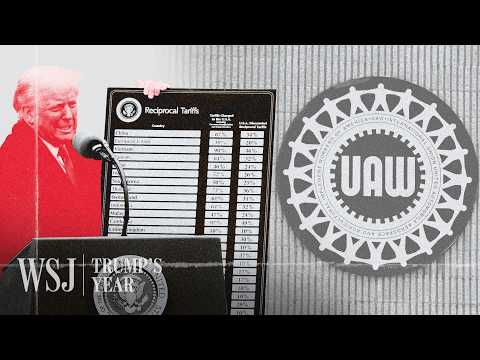
How Trump's Tariffs Are Actually Hitting Detroit's Auto Industry | WSJ
Youtube· 2025-12-22 17:00
Core Viewpoint - The automotive industry is facing significant challenges due to tariffs imposed by the Trump administration, which are affecting small and medium-sized manufacturers like AlphaUSA, potentially threatening their existence without relief or the ability to pass costs on to consumers [2][3][11]. Group 1: Impact of Tariffs on Manufacturers - AlphaUSA, a manufacturer of automotive fasteners, reports that tariffs have increased costs significantly, with some parts seeing price increases from $0.10 to $0.15 due to a 50% tariff [6]. - The company has paid approximately $1.3 million in tariffs through November, with ongoing costs estimated at $225,000 to $250,000 per month [9]. - The auto industry has lost around 58,000 manufacturing jobs this year, with over 15,000 of those in the automotive sector specifically [11]. Group 2: Responses from the Automotive Sector - Some manufacturers are returning to the U.S. to avoid tariffs, but the overall job loss in manufacturing raises concerns about the effectiveness of these policies [4][23]. - Stellantis, a major automotive company, initially planned to cut jobs at its Warren assembly plant but reversed this decision following the announcement of automotive tariffs, indicating a potential positive impact on job retention and expansion [13][19]. - Union representatives express optimism about the tariffs leading to new investments and job creation, with expectations of 900 new jobs linked to upcoming production shifts [17][18]. Group 3: Future Outlook and Challenges - There is a belief among some industry stakeholders that the tariffs could lead to a resurgence in American manufacturing, although the actual outcomes remain uncertain [23]. - The Supreme Court's skepticism regarding the broad authority of tariffs may pose risks to some of Trump's tariff policies, but those under Section 232, affecting manufacturers like AlphaUSA, are not directly impacted by this case [24]. - Manufacturers emphasize the importance of keeping their workforce employed and the challenges they face in expanding their operations due to financial constraints caused by tariffs [25].

Argentina Lithium Announces Memorandum of Understanding with Xi'an Lanshen New Material Technology to Advance Rincon West Lithium Project
TMX Newsfile· 2025-12-22 12:00
Core Viewpoint - Argentina Lithium & Energy Corp. has entered into a Memorandum of Understanding with Xi'an Lanshen New Material Technology Co., Ltd. to advance its Rincon West Lithium Brine Project towards feasibility study completion and potential commercial production [1][2]. Group 1: Collaboration Details - The MOU outlines a joint effort to develop a 5,000 tonnes-per-year battery-grade lithium carbonate plant, with scalability to 15,000-20,000 tonnes annually [2]. - Lanshen will provide integrated DLE pilot platform, engineering packages, technical personnel, and equipment quotations necessary for feasibility-level engineering [2]. - The collaboration includes a progressive earn-in structure for Lanshen's contributions, which will qualify for equity participation in Argentina Lithium's subsidiary, Argentina Litio y Energia S.A. [2]. Group 2: Project Significance - This collaboration is a significant milestone following Argentina Lithium's recent NI 43-101 Mineral Resource Estimate at Rincon West, strategically located near Rio Tinto's operation in Salta Province [3]. - The partnership aims to reduce development timelines, improve process efficiency, and enhance the project's commercial pathway [3]. Group 3: Leadership Statements - The CEO of Argentina Lithium emphasized that this MOU represents a pivotal turning point, strengthening the technical foundation and strategic positioning of Rincon West [4]. - Lanshen's President expressed enthusiasm for the collaboration, highlighting the company's decade-long development of DLE technology for efficient lithium extraction [4]. Group 4: Company Background - Argentina Lithium is focused on acquiring high-quality lithium projects in Argentina to meet the growing global demand from the battery sector, with a strategic investment from Stellantis N.V. [9]. - The company has a history of success in the resource sector and has assembled some of the most prospective lithium properties in the Lithium Triangle [9]. Group 5: Lanshen Overview - Xi'an Lanshen New Material Technology Co., Ltd. is recognized for its innovations in Direct Lithium Extraction technologies and has a strong presence in multiple brine-producing districts in China [5][7]. - Lanshen provides fully integrated engineering solutions, including brine compatibility testing and project commissioning, supporting the advancement of environmentally responsible lithium-extraction technologies [6][7].

为什么说欧盟撤回,但又没完全撤回“禁燃令”
Zhong Guo Qi Che Bao Wang· 2025-12-22 08:28
Core Viewpoint - The European Commission has officially withdrawn its plan to ban the sale of new gasoline vehicles starting in 2035, opting for a more flexible emissions reduction strategy that requires a 90% reduction in CO2 emissions from new cars compared to 2021 levels by 2035, rather than the previous 100% target [2][3][4]. Emission Reduction Changes - The initial aggressive target of a complete ban on gasoline vehicles was proposed in 2021, which led to significant industry upheaval. The European Parliament passed a zero-emission agreement in February 2023, but under pressure from countries like Germany and Italy, the EU made compromises, allowing for exemptions for vehicles using synthetic fuels [3][4]. - The new proposal allows for a 90% reduction in emissions, with the remaining 10% potentially offset by using low-carbon steel, synthetic fuels, or non-food biofuels. Additionally, a three-year window from 2030 to 2032 has been established, requiring a 55% reduction in passenger car emissions and a 40% reduction for vans compared to 2021 levels [3][4]. Market Implications - The policy shift allows for various vehicle types, including plug-in hybrids and traditional gasoline vehicles, to remain in the market while still aiming for significant emissions reductions. However, the majority of vehicles sold will still need to be zero-emission to meet the 90% reduction target [4][9]. - The slow adoption of electric vehicles has been a critical factor in this policy adjustment, with European automakers like Volkswagen and Stellantis advocating for more lenient targets due to weak demand for electric vehicles [4][5]. Competitive Landscape - European automakers are facing competitive pressure from companies like Tesla and Chinese manufacturers, prompting the need for policy adjustments to protect local market shares. The German government has been a key advocate for this policy change, emphasizing a "technology-neutral" approach to maintain industrial competitiveness [5][6]. - The decision to retain the internal combustion engine market while offsetting emissions through other means is seen as a pragmatic approach that aligns with current market conditions [5][6]. Legislative Process - The new proposal requires approval from EU member states and the European Parliament, indicating that the coordination process may be complex and contentious due to differing national interests [6]. Support for Small Electric Vehicles - The EU has introduced a new regulatory category for small electric vehicles (M1E), aimed at promoting urban commuting solutions. This category includes vehicles under 4.2 meters in length, with incentives for manufacturers producing these models [9][10]. - The EU plans to set more lenient requirements for safety and range for M1E vehicles and will implement a "super credit" system, allowing manufacturers to earn additional carbon credits for each small electric vehicle sold, thereby easing overall emissions reduction pressures [10][11]. Corporate Strategy - Companies like Stellantis and Renault are positioned to benefit significantly from the new M1E category, as they have been advocating for differentiated regulatory policies for small vehicles. Stellantis has noted a drastic reduction in affordable small car models due to regulatory costs, highlighting the need for additional support [10][11]. - The EU's push to increase the electric vehicle procurement ratio in corporate fleets is seen as a crucial lever to boost electric vehicle demand, as corporate fleets account for a significant portion of vehicle sales in the EU [12]. Overall Assessment - While the EU has abandoned the "one-size-fits-all" ban on internal combustion vehicles, it has not relinquished its core emissions reduction goals. The new approach seeks a balance between industrial protection and environmental objectives, although internal disagreements among member states and increasing global competition in the electric vehicle sector present challenges for successful implementation [13].

碳排放+补贴+产品三重共振,欧洲电动车开启短暂复兴还是长期繁荣?
Minmetals Securities· 2025-12-22 03:46
Investment Rating - The report rates the automotive industry as "Positive" [5] Core Insights - The development of new energy vehicles (NEVs) in Europe from 2020 to 2025 has experienced three phases: "explosion period ➡ stagnation period ➡ return to growth" [15] - The EU's carbon emission targets are driving the cyclical growth of electric vehicles (EVs) [15] - Government incentives and infrastructure development are directly related to EV penetration rates [2] - Automakers are transitioning to new electric platforms and expanding their product matrix to include entry-level models [3] - The long-term trend for European EVs suggests a potential for steady growth beyond cyclical fluctuations [4] Summary by Sections 1. EU's Top-Level Design - Carbon Emission Targets - The EU has implemented stringent carbon emission regulations, tightening targets every five years, which has led to a cyclical growth pattern in NEVs [16] - The average carbon emission target for 2025 is set at 93.6 g/km, with penalties for non-compliance [34] - The introduction of a "new energy vehicle coefficient" allows automakers to count EV sales more favorably towards their carbon targets [24][34] 2. Government Efforts - Incentives & Infrastructure - Various countries have introduced diverse and robust incentive measures, including purchase subsidies, which have significantly boosted EV sales [45] - The correlation between charging station density and EV penetration is strong, with a coefficient of approximately 0.64 [2] - By 2025, Europe will need around 7 million charging stations to meet carbon emission targets, with current numbers at approximately 1.218 million [2] 3. Automakers' Efforts - Electrification Transition - Major automakers are shifting from internal combustion engine platforms to dedicated electric platforms, enhancing product capabilities such as range and charging speed [3] - Companies like Volkswagen and Renault are focusing on reducing vehicle prices to make EVs more accessible, targeting price points around €20,000 [3] - The competitive landscape is evolving with increased offerings from Chinese automakers in the European market [3] 4. Long-Term Trends for European EVs - The average EV penetration rate in Europe needs to reach 33% from 2025 to 2027 to meet carbon emission requirements, with projected rates of 25%, 32%, and 35% for those years [4] - The long-term market outlook is positive, with expected compound annual growth rates (CAGR) of approximately 16% from 2025 to 2030 [4]
FT中文网精选:零跑汽车德国国家经理:我们用“性价比”击中了欧洲消费者的痛点
日经中文网· 2025-12-22 03:23
零跑汽车和斯泰兰蒂斯实现了扬长避短和优势互补。换句话说,众车企可能已经进入 一个单枪匹马已无法轻易胜出的时期了。 FT中文网 . 英国《金融时报》集团旗下唯一的中文商业财经网站,旨在为中国商业菁英和决策者们提供每日不可或 缺的商业财经资讯、深度分析以及评论。 零跑汽车在广州车展上展出的低价EV"A10"(11月21日,资料图) 编者荐语: 日本经济新闻社与金融时报2015年11月合并为同一家媒体集团。同样于19世纪创刊的日本和英国的两家 报社形成的同盟正以"高品质、最强大的经济新闻学"为旗帜,推进共同特辑等广泛领域的协作。此次, 作为其中的一环,两家报社的中文网之间实现文章互换。 以下文章来源于FT中文网 ,作者张冬方 文丨FT中文网专栏作家 张冬方 和很多其他中国汽车品牌进入欧洲的路径不一样,零跑汽车选择了和欧洲车企斯泰兰蒂斯合 资的方式,也和大多数中国汽车品牌要么选择电动汽车渗透率高的北欧,要么选择本土汽车 产业没那么强悍的南欧国家作为首站,从而避开德国市场的做法不同,零跑汽车去年秋陆续 进入了包括德国在内的九个市场。 短短一年之后,零跑汽车在销量上实现了一个几乎其他任何中国汽车品牌都没有达成的效 果,那 ...

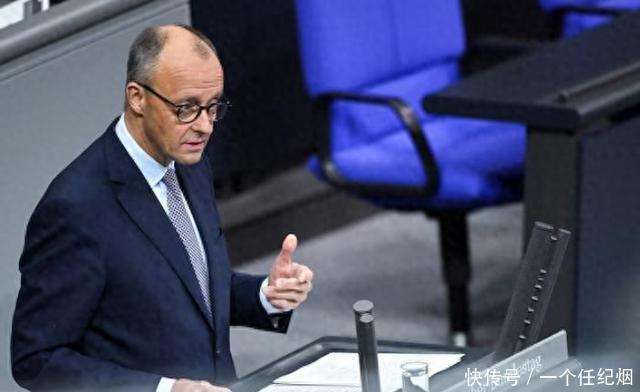
质疑欧盟规则,德国总理公开叫板,反对2035禁售燃油车
Sou Hu Cai Jing· 2025-12-20 05:15
Core Argument - The article discusses the ongoing debate surrounding the EU's 2035 ban on combustion engine vehicles, highlighting German Chancellor Merz's push to reconsider the legislation due to its potential impact on millions of jobs in the German automotive industry [1][3][11]. Group 1: Legislative Context - The EU's regulation mandates a 55% reduction in new car carbon emissions by 2030, a further 50% reduction by 2034, and a complete zero-emission requirement by 2035, effectively phasing out internal combustion engine technology [3][4]. - The legislation has faced opposition from Germany, with former Chancellor Scholz expressing resistance to the ban [3][4]. Group 2: Economic Impact - The German automotive industry contributes nearly 5% to the national GDP and provides jobs for over 7 million workers, making it a critical sector for the country's economy [4][6]. - Merz's stance is supported by the German Automotive Industry Association and the Metal Industry Association, which have united to exert pressure on the EU [8][11]. Group 3: Industry Dynamics - The automotive sector in Germany is at a crossroads, facing challenges from the global expansion of Chinese electric vehicles and increasing import tariffs from the U.S. [11][19]. - The internal combustion engine is seen as a vital part of the industry, with companies like Volkswagen and BMW expressing concerns over the financial implications of a complete ban [8][17]. Group 4: Technological Considerations - The EU's legislation does allow for the registration and use of vehicles powered by synthetic fuels after 2035, which is viewed as a potential lifeline for the internal combustion engine [13][23]. - The development of solid-state batteries is anticipated to revolutionize the automotive market, with projections indicating that they will begin limited use by 2027 and achieve mass production by 2030 [23][25].