
吉利

Search documents
极氪9X或将搭载宾利顶配车型专属Naim音响
Feng Huang Wang· 2025-08-20 05:41
Core Viewpoint - Zeekr officially announced that the Zeekr 9X will feature Naim audio systems from the UK, known for their high-fidelity sound products and used in luxury vehicles like Bentley [1] Group 1: Product Features - The Naim audio system in the Zeekr 9X includes 32 speakers and a peak power of 3868W, designed to deliver a 3D immersive sound experience [1] - The audio system is configured in a 9.2.4.8 layout, aiming to create a "mobile concert hall" experience for high-end users [1] Group 2: Market Positioning - The Zeekr 9X is positioned as the flagship model for Zeekr and the entire Geely brand, indicating a focus on premium features and luxury [1] - The Naim audio system is also noted for its association with high-end brands, enhancing the Zeekr 9X's appeal in the luxury automotive market [1]
“60天账期”满期 车企兑现如何?
Guang Zhou Ri Bao· 2025-08-20 05:24
Group 1 - The automotive industry has implemented a "60-day payment term" for suppliers, marking a significant change in payment practices [1][3] - GAC has established a comprehensive management system covering the entire process from order issuance to payment, with 95% of payments made in cash [2] - FAW has shifted to 100% cash payments for recognized small and medium-sized suppliers, moving away from a mixed payment model [2] Group 2 - The "60-day payment term" is boosting confidence in the supply chain, encouraging investments from both upstream and downstream players [3] - Major automakers, including Toyota, Volkswagen, and BYD, have adopted the 60-day payment term, leading to increased production and sales [3] - In July, automotive production and sales reached 2.591 million and 2.593 million units, respectively, reflecting year-on-year growth of 13.3% and 14.7% [3]
【港股科技观察】小米Q2业绩炸裂,但真正的信号藏在下半场!
Jin Rong Jie· 2025-08-20 02:04
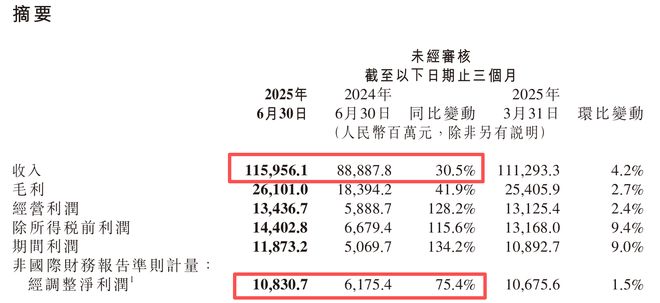
Core Viewpoint - The Hong Kong stock market's technology sector is experiencing a divergence, with some companies like SMIC and Xiaopeng Motors performing well, while others like Xiaomi and Tencent are declining [1][2]. Company Performance - Xiaomi reported impressive Q2 results with revenue of 116 billion RMB, a year-on-year increase of 30.5%, and an adjusted net profit of 10.83 billion RMB, up 75.4% year-on-year, marking a historical high [2]. - Tencent's Q2 revenue grew by 15% and net profit increased by 17%, indicating strong performance among leading tech companies [3]. Market Trends - Despite recent market weaknesses attributed to concerns over e-commerce price wars and economic recovery, there is a significant influx of capital into Hong Kong stocks, particularly in the technology sector, with net purchases exceeding 940 billion HKD this year [3][9]. - The Hong Kong Technology 50 ETF has seen a net inflow of over 180 million RMB in the past 14 trading days, indicating strong investor interest [3]. Valuation Insights - The current valuation of the Hong Kong technology index is at a historical low, with a price-to-earnings ratio of 22.48, suggesting a high safety margin for investors [7]. - The ETF covering major tech companies like Alibaba, Tencent, and Xiaomi accounts for over 30% of its holdings, providing comprehensive exposure to the sector [6]. Future Outlook - The technology sector in Hong Kong is expected to perform even better in the second half of the year, driven by performance expectations and valuation restructuring [9].

反内卷”显效 国补接续 汽车市场蓄力迎接“金九银十
Zhong Guo Chan Ye Jing Ji Xin Xi Wang· 2025-08-19 22:27
Core Viewpoint - The automotive market in July experienced a seasonal slowdown, but year-on-year growth remained robust due to favorable policies and market conditions [1][2]. Group 1: Market Performance - In July, automotive production and sales reached 2.591 million units each, with month-on-month declines of 7.3% and 10.7%, respectively, while year-on-year growth was 13.3% and 14.7% [2]. - Retail sales of passenger vehicles in July totaled 1.834 million units, showing a year-on-year increase of 6% but a month-on-month decrease of 12% [2]. - The cumulative retail growth rate for the domestic automotive market improved from -12% in January to 11% by June, indicating a "front low, middle high" trend [2]. Group 2: Company Performance - Leap Motor achieved a record delivery of 50,129 units in July, marking a year-on-year increase of over 126% [3]. - Xiaomi's vehicle deliveries exceeded 30,000 units in July, while NIO delivered 21,017 units, a slight year-on-year increase of 2.53% [3]. - Li Auto's deliveries fell nearly 40% year-on-year, highlighting the competitive challenges faced by some brands [3]. Group 3: Industry Dynamics - The automotive industry is undergoing a comprehensive effort to address excessive competition, with positive progress reported in reducing "involution" [5]. - The number of new car price reductions has increased, with 113 models experiencing price cuts from January to July 2023, indicating a trend towards more rational pricing [5]. - The automotive industry's profit margin reached 6.9% in June, reflecting improved market order and reduced pressure [5]. Group 4: Future Outlook - The market is expected to see further growth during the "Golden September and Silver October" sales period, supported by ongoing policies and new model launches [7]. - The government has allocated 69 billion yuan for the third batch of long-term special bonds to support the "old-for-new" consumption policy, which is anticipated to stabilize consumer confidence [7]. - Consumer spending is expected to increase, with savings growing rapidly, enhancing purchasing power and enthusiasm for vehicle purchases [8].


永茂泰2025年上半年营收增长51.66% 机器人及镁合金新赛道业务获突破
Zheng Quan Shi Bao Wang· 2025-08-19 11:07
Core Viewpoint - Yongmaotai (605208) reported significant growth in revenue and strategic advancements in various sectors, including automotive, robotics, and magnesium alloy markets in the first half of 2025. Group 1: Financial Performance - In the first half of 2025, Yongmaotai achieved a revenue of 2.619 billion yuan, representing a year-on-year increase of 51.66% [1] - The company sold approximately 134,000 tons of aluminum alloy products, marking a year-on-year growth of about 50.70% [1] - The sales volume of aluminum alloy liquid accounted for 63.82% of the company's aluminum alloy business [1] Group 2: Automotive Sector Developments - Yongmaotai focused on expanding its customer base in the new energy vehicle sector, successfully developing projects with clients such as BYD (002594), Geely, and Seres (601127) [2] - The company sold approximately 13.5153 million automotive parts, reflecting a year-on-year growth of about 12.31% [2] - Revenue from new energy vehicle parts constituted 49.67% of the total revenue in the automotive parts segment [2] - Yongmaotai established a smart manufacturing base for automotive parts in Mexico, enhancing its product and customer structure [2] Group 3: Robotics and Magnesium Alloy Initiatives - The company is actively engaging in the robotics sector, collaborating with various robotics companies and research institutions to develop products [3] - Yongmaotai has received orders for multiple products from a well-known domestic robotics company, including components for the torso, joints, and limbs [3] - The establishment of the "Yongmaotai Robotics Technology Research Institute" aims to accelerate the development of new technologies and products [3] - In the magnesium alloy sector, Yongmaotai is expanding its customer base and has secured contracts for various products from leading automotive and electronic manufacturers [3]

斯里兰卡之惑:不选中国新车 偏爱日本二手车?
Jin Tou Wang· 2025-08-19 08:50
Core Insights - Japan's used car exports to Sri Lanka surged to 46.9 billion yen (approximately 318 million USD) in the first half of this year, nearing a new high for semi-annual exports, following the lifting of a five-year import ban in February [1][2] - The popularity of Japanese used cars in Sri Lanka is attributed to their perceived investment value and compatibility with local driving conditions, as both countries drive on the left side of the road [1] - The average value of each used car exported from Japan to Sri Lanka increased to 2.49 million yen in the first half of this year, compared to less than 2 million yen before 2020 [2] Export Trends - The export value of Japanese used cars to Sri Lanka in the first half of this year exceeded the total export value of 30.9 billion yen in 2019, just behind the record of 50.1 billion yen in the first half of 2018 [1] - In June alone, the export value reached 16 billion yen, indicating a strong recovery and potential for setting a new annual export record [2] Market Dynamics - Despite the entry of electric vehicle manufacturers like BYD from China, Japanese used cars remain more favored due to their lower price range compared to new Chinese vehicles, which are priced 30%-50% higher [2] - Japanese automakers have established a strong presence in Sri Lanka since the 1980s, creating a lasting reputation for durability, while Chinese brands only began to enter the market on a larger scale after 2015 [2] - The recovery of the used car market in Sri Lanka has also positively impacted the domestic used car market in Japan, with auction prices for many models increasing since the ban was lifted [2]
中泰国际每日晨讯-20250819
ZHONGTAI INTERNATIONAL SECURITIES· 2025-08-19 02:40
Market Overview - On August 18, despite a lack of direction in the Hong Kong stock market, individual stocks showed good performance, with the Hang Seng Index down 93 points or 0.4% to close at 25,176 points, while the Hang Seng Tech Index rose 0.7% to 5,579 points [1] - The market saw a trading volume exceeding 311.9 billion HKD, indicating active trading. Net inflow from the Stock Connect decreased to 870 million HKD [1] - The overall market performance was stable, with 959 stocks rising, highlighting increased investor interest in high-performing stocks and industry leaders [1] Economic Analysis - Since July, the momentum of economic recovery in China has weakened, and the Hang Seng Index's valuation has significantly recovered, with a forecasted PE of approximately 11 times, returning to levels seen in 2018-2019 [2] - The risk premium is at a historical low, and the AH premium has reached a near six-year low. A technical correction in the index is considered a normal phenomenon within a high-level fluctuation [2] - The ample liquidity in the market supports Hong Kong stocks, while the 10-year Chinese government bond yield has risen to 1.78%, indicating a shift towards asset rebalancing from bonds to stocks [2] Real Estate Sector - The new housing transaction volume continued to decline year-on-year, with a reported 1.23 million square meters sold in 30 major cities, down 15.5% year-on-year [3] - The decline in transaction volume was worse than the previous week's 12.3% drop, with a month-on-month decrease of 4.9% [3] Industry Dynamics Consumer Sector - 361 Degrees (1361 HK) announced a strategic partnership with Stand Robot, focusing on wearable robots and high-performance materials, which positively impacted its stock price, rising 2.3% [4] Automotive Sector - The automotive sector saw a rally, with Great Wall Motors (2333 HK) rising 10.2%, driven by favorable sales and performance news [4] - Other automotive stocks like Geely (175 HK) and BYD (1211 HK) also saw increases of 2.6% and 0.8%, respectively [4] Innovative Pharmaceuticals - The innovative drug sector saw most major companies rise, with a focus on expanding medical insurance coverage and supporting pharmaceutical innovation [5] - China Biopharmaceutical (1177 HK) reported steady growth in the first half of the year, while Haijia Medical (6078 HK) forecasted a decline in revenue and net profit but improved cash flow due to reduced receivables [5] New Energy and Utilities - The new energy and utilities sector experienced narrow fluctuations, with some stocks like Harbin Electric (1133 HK) and Weisheng Holdings (3393 HK) rising by 1.3% and 4.5%, respectively [6] - Hong Kong and China Gas (1083 HK) reported expected mid-term results but saw a decline of 7.2% in stock price, possibly due to profit-taking [6] Company-Specific Updates China Water Affairs (855 HK) - The company announced an increase in water prices for a new supply project in Hubei, with price hikes of 9.6% to 64.4% effective from September 1 [7] - Two additional water supply projects are entering the hearing stage, with a total daily supply capacity of 104,000 tons [8] - The likelihood of a full acquisition offer for Kangda Environmental (6136 HK) is low, and it is not expected to impact the company's financial status [9] - The target price for China Water Affairs has been raised to 6.90 HKD, reflecting a potential upside of 11.1% [10] 361 Degrees (1361 HK) - The company reported a revenue increase of 11.0% to 5.71 billion RMB in the first half of the year, with a net profit of 860 million RMB, also up 8.6% [12] - The children's clothing segment showed strong performance, with a 25.8% increase in sales [13] - E-commerce revenue grew by 45% to 1.82 billion RMB, driven by promotional events and new product launches [14] - The target price for 361 Degrees has been adjusted to 7.74 HKD, corresponding to a 10 times FY26E PE ratio [15]
固态电池,外卖小哥可能要比你先用上了
汽车商业评论· 2025-08-18 23:04
Core Viewpoint - The automotive industry is eagerly awaiting solid-state batteries, with mass production timelines being pushed from 2025 to 2027, while semi-solid batteries are being introduced as a precursor to full solid-state technology [4][6][11]. Group 1: Semi-Solid Battery Developments - SAIC's MG4 model is set to feature a semi-solid battery version, with pricing to be announced in September and deliveries expected within the year [4]. - The semi-solid batteries for both MG4 and the delayed IM L6 Max are developed in collaboration between SAIC and Qingtao Energy, indicating a competitive landscape for early adoption [6]. - Hive Energy plans to supply semi-solid batteries for BMW's next-generation MINI models, with large-scale production expected by the end of 2026, marking a significant milestone in the industry [6]. Group 2: Technological Innovations - The first generation of semi-solid batteries from SAIC Qingtao utilizes traditional lithium iron phosphate and ternary materials, achieving a range of 1000 kilometers [8]. - The second generation of semi-solid batteries aims to improve safety, energy density, and lifecycle, with a reduction in liquid electrolyte content from 10% to 5% [8][10]. - Innovations in core materials and collaborative efforts between vehicle manufacturers and component suppliers are crucial for the successful commercialization of new battery technologies [10]. Group 3: Full Solid-State Battery Production Plans - The industry consensus suggests that full solid-state battery mass production is likely to commence around 2027, with various companies providing timelines that align closely with this date [11][12]. - Companies like Aulton and Guoxuan High-Tech are actively working on solid-state battery production lines, with Guoxuan achieving a 90% yield rate on its pilot line [11][12]. - SAIC Qingtao aims to achieve full solid-state battery production by 2026, with energy density targets exceeding 400Wh/kg [11][14]. Group 4: Alternative Applications for Solid-State Batteries - The demand for solid-state batteries is not limited to the automotive sector; applications in eVTOL and humanoid robots are emerging as significant opportunities [15][18]. - Companies like Hive Energy and Funeng Technology are already engaging with clients in these new fields, indicating a broader market potential for solid-state technology beyond traditional vehicles [15][18]. - The introduction of solid-state batteries in two-wheeled vehicles is also gaining traction, with companies like Tianneng launching new products that significantly enhance performance metrics compared to traditional lithium batteries [18].






禾赛(HSAI.US)涨逾8% 二季度营收同比增长53.9%
Zhi Tong Cai Jing· 2025-08-18 14:11
Core Insights - Hesai (HSAI.US) shares rose over 8% to $27.73 following the release of its Q2 2025 unaudited financial data on August 15 [1] - The company reported revenue of 710 million RMB, a year-on-year increase of 53.9%, and net profit exceeding 40 million RMB, surpassing GAAP profitability targets [1] - Hesai secured new model designations from a joint venture brand under Toyota, with plans for mass production in 2026 [1] Financial Performance - In Q2, Hesai's total lidar deliveries reached 352,095 units, marking a year-on-year growth of 306.9% [1] - Deliveries of ADAS products amounted to 303,564 units, up 275.8% year-on-year [1] - The robotics sector saw deliveries of 48,531 units, a significant increase of 743.6% year-on-year [1] - For the first half of 2025, total lidar deliveries reached 547,913 units, reflecting a year-on-year growth of 276.2%, surpassing the total for 2024 [1] Market Position and Clientele - Hesai's lidar has become a standard safety feature for advanced driver-assistance systems (ADAS), contributing to the launch of several popular vehicle models [1] - In Q2 and recently, the company secured designations for 20 models from nine leading automakers, with deliveries planned for 2025-2026 [1] - Key clients include major automotive players such as Geely, Great Wall Motors, and Changan Automobile [1] Robotics Sector - The JT series in the robotics field achieved over 100,000 units delivered in less than five months, setting a global record for speed [1]

2025年第二季度全球新能源车销量同比增长30%
Zheng Quan Shi Bao Wang· 2025-08-18 12:55
Group 1 - In Q2 2025, global sales of new energy vehicles (NEVs) reached 4.868 million units, a year-on-year increase of 30% [1] - The sales of battery electric vehicles (BEVs) reached 3.28 million units, growing by 39% year-on-year, with BYD holding the largest market share at 18.3% [1] - The total electric vehicle (EV) sales, including hybrid electric vehicles (HEVs), reached 6.456 million units, accounting for 29% of global automobile sales [1] Group 2 - In Q2 2025, global sales of plug-in hybrid electric vehicles (PHEVs) were 1.587 million units, a year-on-year increase of 15% [2] - BYD's market share in the PHEV segment decreased from nearly 40% to 28.9%, with its sales declining by 12% year-on-year [2] - The introduction of the new model N9 by BYD's sub-brand Tengshi led to a 41% increase in sales, allowing it to enter the top ten for the quarter [2] Group 3 - In the U.S. market, the end of electric vehicle subsidies on September 30 is expected to impact the growth prospects of the EV industry [3] - The global sales forecast for NEVs in 2025 is 19.7 million units, representing a 21% year-on-year increase, with growth expected to slow to 14% in 2026 [3]
