NEC

Search documents
世界首次五百强断崖差:日本149家,美国151家,中国3家,现在呢
Sou Hu Cai Jing· 2025-11-08 13:12
Core Insights - The 1995 Fortune Global 500 list highlighted a significant disparity between Chinese, American, and Japanese companies, with only 3 Chinese firms compared to 151 American and 149 Japanese firms, indicating a stark economic gap that has since narrowed significantly by 2025, with 130 Chinese firms compared to 138 American and 38 Japanese firms [1][3][11] Group 1: Historical Context - In 1995, the three Chinese companies listed were primarily state-owned enterprises in the oil and banking sectors, with revenues significantly lower than the leading American firm, Walmart, by nearly six times [3][5] - The economic landscape of the 1990s saw American companies dominating the high-value sectors, while Japanese firms excelled in mid-tier manufacturing, leaving Chinese firms at the lower end of the value chain [3][5] Group 2: Economic Shifts - The entry of China into the WTO in 2001 marked a turning point, leading to a surge in exports and significant infrastructure development, with highway construction increasing from 9,580 kilometers to 190,000 kilometers and high-speed rail reaching 42,000 kilometers [10][11] - By 2025, Chinese companies had expanded their presence in the Global 500, with notable firms like State Grid and PetroChina maintaining strong positions, while private enterprises like BYD and Xiaomi emerged as global competitors [10][11] Group 3: Current Landscape - The top seven American companies, including Apple and Microsoft, generated revenues of $2 trillion and profits of $484 billion, representing a substantial portion of the Global 500 list [9] - Despite challenges such as rising national debt and trade tensions, American firms continue to rely heavily on financial services, leading to concerns about the hollowing out of the manufacturing sector [9][11] Group 4: Future Outlook - The transformation of Chinese companies from low-end manufacturing to high-tech and financial sectors reflects a significant shift in global economic power dynamics, with China now leading in areas like renewable energy and 5G technology [11][13] - The 2025 Global 500 list serves as a testament to the resilience and adaptability of Chinese firms, showcasing their ability to compete on a global scale and reshape industry standards [11][13]



计划每年砸1万亿日元! 频繁点错“科技树”的日本这次梭哈半导体和AI
智通财经网· 2025-11-06 04:16
Core Viewpoint - Japan's ruling party plans to raise approximately 1 trillion yen (about 6.5 billion USD) annually to support the development of advanced semiconductor manufacturing and AI ecosystems, aiming to regain its status as a semiconductor manufacturing leader and become an AI superpower comparable to the US and China [1][4]. Funding Strategy - Starting from the new fiscal year in April, most government funding will be sourced through regular budgets rather than supplementary budgets, marking a shift from previous years [1][2]. - This change is expected to provide a more stable funding source without disrupting market stability [1][2]. Government Investment - Since the new semiconductor revival strategy was established in 2021, Japan has allocated approximately 5.7 trillion yen to support domestic semiconductor and AI sectors, primarily through supplementary budgets [1][2]. - In the previous year's supplementary budget, about 1.5 trillion yen was allocated for semiconductor and AI support, part of a larger commitment of over 10 trillion yen for these technology sectors [2]. Key Players - Approximately 1.7 trillion yen of the allocated government funds has been directed to Rapidus Corp., which aims to achieve mass production of cutting-edge 2nm chips by 2027 [2][3]. - Rapidus is positioned as Japan's core player in advanced chip manufacturing, competing with TSMC in logic chip foundry services [2][3]. Industry Dynamics - The majority of the world's advanced AI chips are currently manufactured by TSMC, while Japan is increasing its support for domestic chip manufacturers to enhance their advanced process production capabilities [3]. - Rapidus, established in 2022, has received significant government financial backing and support from major Japanese companies, including Toyota and Sony, to develop 2nm chips for AI, autonomous driving, and quantum computing applications [3]. Economic Policy Context - The new Prime Minister, Fumio Kishida, is expected to revive "Abenomics," focusing on aggressive fiscal stimulus and industrial support policies, which could positively impact Japan's domestic demand and core technology sectors [4][5]. - The anticipated continuation of Abenomics is seen as a long-term catalyst for the Japanese stock market, particularly benefiting technology stocks and sectors related to semiconductors and AI [5]. Historical Perspective - Japan's past missteps in technology investments have led to missed opportunities in key sectors like IT and the internet, prompting the current government to double down on semiconductor and AI technologies to secure a leading position in these critical fields [6].


海外需求行业盈利强劲,日股三季报开局强劲
Hua Er Jie Jian Wen· 2025-11-04 07:31
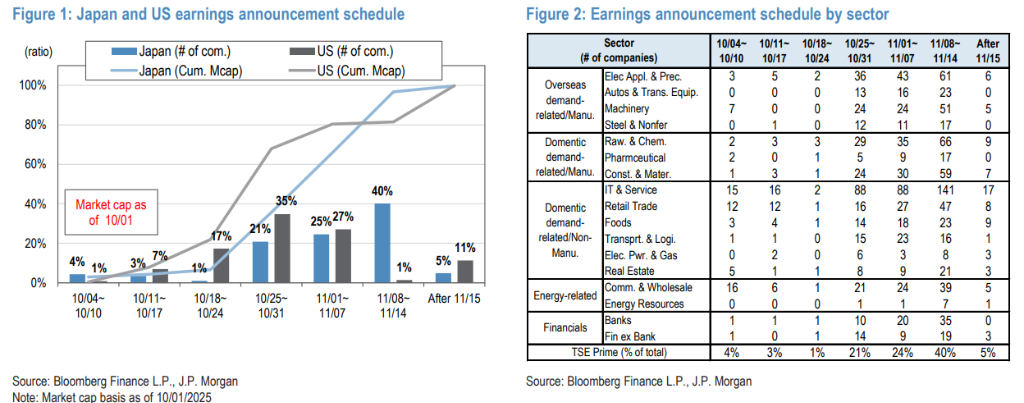
Core Insights - The core driver of profit momentum in Japan's Q3 performance is overseas demand, while domestic sectors remain relatively weak [1][5][6] - Approximately 30% of companies in the Tokyo Stock Exchange Prime market have reported Q3 results, showing significant improvement over Q2, with revenue up 2.8%, operating profit up 11.0%, and net profit up 28.7% year-on-year [1][5] Sector Performance - The electronics and precision instruments sector, including companies like Hitachi, Fujitsu, NEC, and Advantest, has been a major contributor to net profit growth, alongside the power and gas sector [5] - In contrast, the automotive sector saw a net profit decline of 0.6%, and the food sector experienced a slight drop of 0.1% due to weak consumer demand [5] - Over 50% of companies exceeded Bloomberg consensus expectations, with export-oriented manufacturing firms outperforming domestic firms significantly (15.4% vs. 7.2%) [5][6] Market Expectations and Guidance - Export-oriented companies performed better partly due to conservative market expectations influenced by tariff impacts and uncertainties in the U.S. economy [6] - 52 companies have raised their full-year earnings guidance, although automotive manufacturers have yet to report, leaving tariff impacts unclear [6] - Japanese companies maintain a USD/JPY exchange rate assumption of 144 yen for FY2025, lower than the current market level of 154 yen, providing a buffer for overseas business profitability [6] Stock Buybacks - There are signs of recovery in stock buybacks, with TSE index constituents announcing a total of 0.7 trillion yen in buyback plans since October, matching levels from the same period in 2024 [6] - Advantest announced a buyback of 150 billion yen (2% of outstanding shares), while Recruit Holdings plans to buy back 250 billion yen (3% of outstanding shares) [6]
CORRECTING and REPLACING CSG Systems International Cancels its Upcoming Q3 2025 Earnings Presentation due to NEC Acquisition Announcement
Businesswire· 2025-10-30 11:45
Group 1 - CSG Systems International, Inc. has corrected its address in the Forward-Looking Statements section of a release issued on October 29, 2025, changing it from 129 Inverness Dr W to 169 Inverness Dr W [1] - The company announced the cancellation of its upcoming Q3 2025 earnings presentation due to the announcement of the NEC acquisition [1] - The earnings results call was originally scheduled for Wednesday but will no longer take place [1]


CSG Systems International Cancels its Upcoming Q3 2025 Earnings Presentation due to NEC Acquisition Announcement
Businesswire· 2025-10-29 09:11
Core Viewpoint - CSG has announced it will not hold its third quarter 2025 earnings results call due to its acquisition by NEC, which is pending shareholder and regulatory approvals [1] Company Actions - CSG has entered into a definitive agreement to be acquired by NEC [1] - The company is suspending all future quarterly earnings calls [1] - CSG will no longer provide annual guidance [1]

X @Bloomberg
Bloomberg· 2025-10-29 07:04
Japan’s NEC said it’s buying CSG, a US supplier of customer care and billing services for cable and phone companies, for around $2.9 billion in a move to shore up its operations in the US https://t.co/yrcwR6jFmb ...
日本的“诺贝尔奖爆发期”,也许是一场“最成功的失败”
3 6 Ke· 2025-10-24 01:26
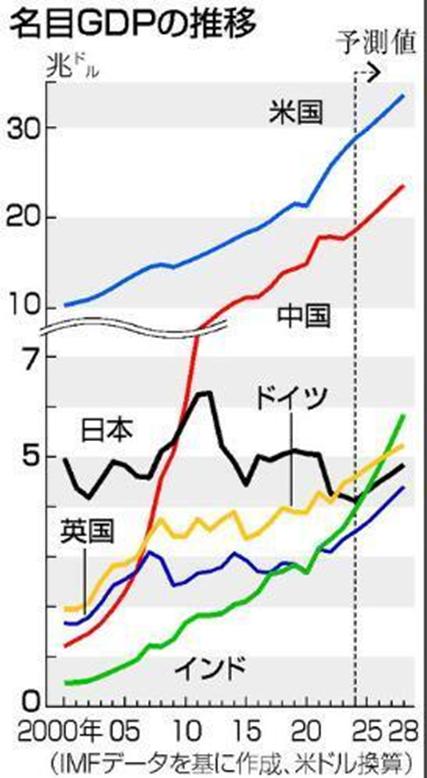
Group 1 - Japan has achieved a significant milestone in Nobel Prize wins, with the total surpassing 30, making it the leading Asian country in this regard [1][6][8] - The recent Nobel Prize winners from Japan, including physicist Yoshinori Ohsumi and chemist Akira Yoshino, highlight the country's strong foundation in scientific research [1][6] - Despite the Nobel achievements, Japan's GDP is projected to be surpassed by India, indicating a decline in its economic standing [1][8] Group 2 - The Japanese government set an ambitious goal in 2001 to win 30 Nobel Prizes over 50 years, which was met with skepticism but was based on Japan's strong economic and scientific foundation at the time [6][8][9] - Japan's historical dominance in various industries, such as consumer electronics and IT, provided a robust base for scientific advancements that led to Nobel recognitions [9][11][13] - The decline of Japan's consumer electronics industry in the 2000s, due to rapid technological changes and competition, has resulted in a disconnect between scientific achievements and economic performance [23][25][28] Group 3 - Japan's focus on high-end technology and materials has not translated into competitive consumer products, leading to a loss of market share to foreign competitors [29][32] - The failure to adapt to new market trends, such as smartphones and streaming services, has further exacerbated Japan's economic challenges [28][40] - Japan's hydrogen energy initiatives, while technologically advanced, have struggled to gain market traction due to high costs and inadequate infrastructure [40][41][43] Group 4 - The disparity between Japan's Nobel Prize successes and its economic decline is attributed to a "time mismatch," where scientific advancements have not been effectively commercialized [45][46] - The entrenched economic structures and strategic arrogance within Japanese corporations have hindered innovation and responsiveness to market demands [46][50] - The overall lesson emphasizes the need for innovation across all sectors, not just in scientific research, to ensure sustainable economic growth [50][51]
日本半导体,失落的30年
半导体行业观察· 2025-10-22 01:20
Core Viewpoint - Japan once dominated the global semiconductor market but has experienced a 30-year decline due to policy shifts, rigid corporate culture, and global competition. The future direction of Japan's semiconductor industry is under scrutiny as it seeks to regain its competitive edge in a market projected to reach $733 billion by 2025 [2][4]. Group 1: Historical Context - In the late 1980s to early 1990s, Japan's semiconductor industry held over 50% of the global market share, marking the "Japan's semiconductor" golden era, with NEC, Hitachi, and Toshiba ranking among the top three semiconductor companies [2][3]. - Japan's initial success was attributed to advanced manufacturing technology and a management model based on General Electric, allowing for efficient operations through vertical integration and clear export strategies [3][4]. Group 2: Factors Leading to Decline - The decline of Japan's semiconductor competitiveness is multifaceted, with significant turning points including the policy failures marked by the "Japan-U.S. Semiconductor Agreement," which pressured Japan to open its market [4][5]. - Japan's focus on domestic demand and mass production led to aggressive price competition, perceived as dumping, and a reluctance to adopt U.S. semiconductor technologies [5][6]. - The vertical integration model, while effective initially, became a hindrance as the industry grew, leading to slow decision-making and an inability to adapt to market changes [6][7]. Group 3: Impact of Global Competition - The rise of South Korean companies like Samsung, which adopted owner-managed structures for rapid decision-making and investment, further exacerbated Japan's decline [7][8]. - Economic factors, including the appreciation of the yen and the bursting of the real estate bubble in the 1990s, led to reduced investment enthusiasm among Japanese manufacturers [8][9]. Group 4: Current Landscape and Future Prospects - Despite the decline of major vertical integration semiconductor manufacturers, Japan's materials and equipment sectors remain robust, suggesting potential for a resurgence in the semiconductor industry [8][9]. - The COVID-19 pandemic highlighted the vulnerabilities in global supply chains, prompting calls for Japan to rebuild its domestic semiconductor manufacturing capabilities to maintain industrial competitiveness [9][10].

被困住的日本数据中心:在AI梦、电老虎与扰民噩梦中挣扎
虎嗅APP· 2025-10-17 13:42
Core Viewpoint - The article discusses Japan's struggle to balance the rapid growth of AI data centers with its environmental goals, highlighting the significant energy consumption of these facilities and the challenges posed to Japan's carbon neutrality commitments by 2050 [3][25]. Group 1: AI Data Centers and Energy Consumption - A newly constructed mega data center in Tokyo Bay symbolizes Japan's AI strategy, supporting cloud and edge computing while also being a major energy consumer [2][3]. - The annual energy consumption of a single data center can equal that of a medium-sized city with a population of 100,000, with global data center electricity demand expected to double to approximately 945 TWh by 2030 [3][4]. - AI data centers are described as "energy hogs," with energy consumption for training large language models equivalent to the annual electricity usage of 3,000 average Japanese households [12][13]. Group 2: Japan's AI Strategy and Investments - Japan's government has recognized the need to catch up in AI, launching the "AI Strategy" in 2018 to promote collaboration between industry, academia, and government [5][6]. - The establishment of the "National AI Supercomputing Project" aims to create supercomputing platforms in Tokyo and Osaka, with a budget that includes dedicated funding for AI computing capabilities [7][8]. - Foreign investments from companies like Microsoft, Amazon AWS, and Google are expected to exceed $20 billion over the next five years, emphasizing the importance of localized computing infrastructure [9][10]. Group 3: Energy Structure and Challenges - Japan's energy structure is under pressure, with a return to nuclear power being considered to meet energy demands, despite public opposition following the Fukushima disaster [15][16]. - The geographical distribution of renewable energy resources poses challenges, as many AI data centers are located in regions where renewable energy cannot be efficiently transmitted due to outdated infrastructure [15][16]. - The aging power grid struggles to handle the sudden load demands from data centers, leading to significant investments in new underground transmission lines [15][16]. Group 4: Local Community and Environmental Concerns - Local communities are divided over the presence of data centers, with some viewing them as economic opportunities while others express concerns over noise and water usage [20][21]. - Environmental organizations are pressuring the government and companies to ensure that AI development does not compromise climate commitments, with some groups filing lawsuits to halt data center projects [21][22]. Group 5: Technological Innovations and Policy Reforms - Japan is exploring advanced energy technologies, such as hydrogen and nuclear fusion, to address its energy challenges, although these solutions are still in development [23][24]. - The market for Power Purchase Agreements (PPAs) is being reformed to allow companies to secure long-term renewable energy contracts, which is seen as a step towards meeting international standards [23][24]. - Energy efficiency upgrades within data centers are being pursued, with companies like Fujitsu and NEC implementing liquid cooling solutions to improve energy efficiency [23][24].

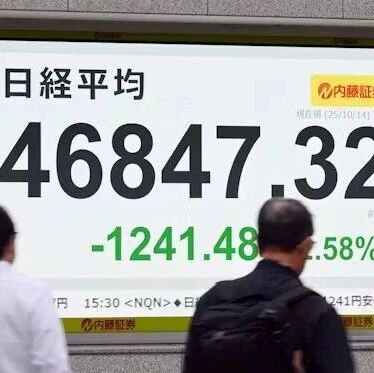
日经平均股指大跌2.58%
日经中文网· 2025-10-14 08:00
Market Overview - The Nikkei average index closed at 46,847 points on October 14, down 1,241 points (2.58%) from the previous weekend, primarily due to political uncertainty following the Komeito party's exit from the ruling coalition with the Liberal Democratic Party (LDP) and concerns over US-China tensions [2][4]. Political Impact - The exit of the Komeito party has led to increased political uncertainty, causing investors to withdraw from the market. The volatility index (Nikkei Volatility Index, VI) reached around 34, the highest level since April 22, indicating heightened market anxiety [4]. - Analysts express concerns about the potential for a change in government if opposition parties unite, which could lead to a lack of clarity in policy execution and delays in investments in growth sectors, further impacting the Japanese stock market [4]. Stock Performance - Stocks that were previously bought during the "Takaichi trade" following the appointment of LDP President Sanae Takaichi saw significant declines, with defense-related IHI shares dropping over 3% and cybersecurity stocks like NEC falling more than 4% [4]. - Despite the overall market decline, some stocks showed resilience, with Yaskawa Electric rising by 7% amid speculation that the exit of the Komeito party would not significantly impact corporate performance [5]. Market Sentiment - There is a prevailing market assumption that the LDP will continue to govern as a minority party, leading to expectations of limited market declines despite potential operational gridlock [5]. - Some analysts noted stronger-than-expected buying demand, suggesting that the broader fiscal expansion framework would remain unchanged even after the Komeito's exit from the coalition [5].