康方生物

Search documents
医药2026年度策略报告:黎明渐显,创新为纲-20251130
China Post Securities· 2025-11-30 11:51
Investment Strategy Overview - The core investment strategy for the pharmaceutical sector in 2026 emphasizes innovation and the recovery of profitability within the industry, as the sector has shown signs of stabilization after a period of volatility [4][30]. Innovative Drug Industry Chain - The domestic innovative drug sector is gaining global recognition, with a significant increase in the attention from multinational corporations (MNCs) towards domestic assets. The demand for new products is strong, driven by the approaching patent cliffs for MNCs and favorable policies for domestic drugs entering international markets [5][44]. - The market for PD-(L)1/VEGF bispecific antibodies is experiencing heightened interest, with complementary mechanisms to antibody-drug conjugates (ADCs) expected to drive synergy and growth [5][51]. - The demand for new therapeutic modalities such as peptides, ADCs, small nucleic acids, and cell and gene therapies (CGT) is projected to maintain high growth rates, supported by a recovering outsourcing demand during the overseas interest rate decline [6][43]. Non-Pharmaceutical Sector - The medical device sector is showing signs of recovery, with some companies reporting improved performance in Q3 2025. The bidding for medical equipment is expected to continue recovering, leading to better performance in 2026 [6][7]. - The traditional Chinese medicine sector is anticipated to benefit from ongoing adjustments to the essential drug list, with opportunities for price increases and improved profit margins for leading companies [6][7]. Retail Pharmacy Sector - The retail pharmacy industry is undergoing accelerated consolidation, with leading pharmacies optimizing their store structures to alleviate profit pressures. This is expected to result in a noticeable improvement in profit margins in 2026 [7]. Market Performance and Valuation - The pharmaceutical sector has shown a rebound since early 2025, with a notable increase in the market index, outperforming the broader market indices. As of November 21, 2025, the CITIC Pharmaceutical Index had risen by 14.68% [15][30]. - The valuation of the pharmaceutical sector is at a historical median since 2010, with a price-to-earnings (PE) ratio of 48.38X, indicating a high premium compared to the broader market [17][30]. - The scale of pharmaceutical funds reached a record high of 226 billion yuan by Q3 2025, although the market capitalization of pharmaceutical stocks remains below historical peaks, suggesting potential for growth [20][24]. Financial Performance - The pharmaceutical sector's revenue for the first three quarters of 2025 was 185.46 billion yuan, reflecting a year-on-year decline of 1.34%. However, Q3 2025 showed a revenue increase of 1.18% compared to the previous quarter, indicating signs of recovery [30][31]. - The net profit attributable to shareholders for the pharmaceutical sector in the first three quarters of 2025 was 14.06 billion yuan, down 1.69% year-on-year, but with a positive growth of 3.61% in Q3 2025 compared to the previous quarter [30][31].


新药周观点:创新药10月进院数据更新,多个新纳入医保新药快速进院-20251130
Guotou Securities· 2025-11-30 06:35
Investment Rating - The report maintains an investment rating of "Outperform" [5] Core Insights - The innovative drug sector is experiencing rapid growth, with several new drugs being quickly incorporated into the medical insurance directory as of October 2025 [3][20] - The report highlights significant increases in the number of drugs entering hospitals, particularly those newly included in the insurance directory, indicating strong market demand [3][19] Weekly New Drug Market Review - From November 24 to November 30, 2025, the top five performing new drug companies were: Frontline Bio (+23.12%), Yifang Bio (+15.74%), Rongchang Bio (+15.39%), Kangfang Bio (+14.86%), and Jakes (+14.18%). The five companies with the largest declines were: Yongtai Bio (-4.11%), Nothland (-3.33%), Junshengtai (-2.78%), Boan Bio (-2.09%), and Dongyao Pharma (-1.11%) [1][14] Suggested Focus Stocks - The report suggests focusing on several companies with promising catalysts, including: 1. Companies with MNC certification and high overseas sales potential: Sanofi, Lianbang Pharma, and Kelun Biotech 2. Companies with overseas data catalysts: Betta Pharma, Hutchison China MediTech, and Yimeng Bio 3. Potential heavyweights for overseas MNC licensing: Fuhong Hanlin, Shiyao Group, and Yifang Bio 4. New innovative drug technology breakthroughs: small nucleic acids, in vivo CAR-T, fat reduction and muscle gain, autoimmune CAR-T/bispecific antibodies, and gene therapy [2][18] New Drug Industry Key Analysis - The National Healthcare Security Administration updated the data on innovative drugs included in the insurance directory as of October 2025, showing rapid hospital entry for several newly included domestic innovative drugs. Notable drugs with fast entry rates include: - Hengrui Medicine's Tazobactam - Innovent Biologics' Toripalimab - Haisco's Alogliptin and Clopidogrel - Sinopharm's Aliskiren and Amlodipine - Shanghai Yizhong's Paclitaxel polymer micelles - Kangfang Bio's Ivoris monoclonal antibody [3][19] New Drug Approval and Acceptance Status - This week, 11 new drugs or new indications received approval for market entry, while 13 new drugs or new indications were accepted for review [4][24] New Drug Clinical Application Approval and Acceptance Status - This week, 54 new drug clinical applications were approved, and 44 new drug clinical applications were accepted [8][27]
11月最牛金股涨超60%!12月金股出炉,这些板块“含金量”高
券商中国· 2025-11-30 02:06
随着11月交易收官,最新一期的券商金股出炉。 从目前已披露的12月金股名单来看,电子、电力设备、医药生物、食品饮料等行业受到集中关注,国产算力、机器人、消费复苏等主题热度较高。 展望12月行情,券商普遍认为市场仍处牛市,中长期仍看好科技成长。 11月最牛金股涨超60% 回顾11月,A股市场整体呈现震荡格局,上证指数月内小幅下跌1.67%,而创业板指、科创50指数则分别下跌4.23%和6.24%。在结构性行情中,券商金股 组合表现分化明显。 Wind数据显示,11月券商推荐金股中,由华泰证券独家推荐的上海港湾单月涨幅达60.15%,成为当月表现最亮的金股;由东北证券独家推荐的蓝色光标 则以45.99%的月涨幅排名第二;华泰证券推荐的亚翔集成以43.57%的月涨幅排名第三;此外,由天风证券推荐的延江股份11月上涨37.59%,位列第四。 11月金股中,单月涨幅超20%的还包括深圳新星(华鑫证券推荐)、众生药业(东海证券推荐)、西麦食品(开源证券、方正证券推荐)等。 从券商金股组合的整体表现来看,11月券商金股收益率分化明显。在每市APP收录的40余家券商金股组合中,仅5家券商收益率为正。具体来看:国联民 生证券金 ...


分化盘整,互联网、大消费等小幅上涨,医疗回撤
Ge Long Hui· 2025-11-29 20:43
Market Overview - The Hang Seng Index opened high but experienced a decline, closing down 0.24% by midday [1] - The internet sector showed the strongest performance, followed by technology and consumer sectors, while healthcare and banking sectors faced declines [1] Internet Sector - The internet sector opened slightly higher and maintained a narrow range above the midline, rising 0.57% by midday [3] - Notable performers included Horizon Robotics with a 3.31% increase, while companies like JD Group, Baidu, and Alibaba also saw slight gains [3] - Conversely, stocks such as Bilibili, Kuaishou, and Meituan experienced minor declines [3] Consumer Sector - The consumer sector opened high but fell back, showing a slight increase of 0.07% by midday [3] - Significant gains were observed in Pop Mart, which surged 3.84%, and MGM, which rose 3.3%, with several other stocks like Mixue Ice City and金沙江 also increasing by over 2% [3] - However, Hansoh Pharmaceutical dropped 3.17%, and other companies like Nongfu Spring, Sinopharm, and Alibaba Health saw declines exceeding 2% [3] Healthcare Sector - The healthcare sector experienced a sharp decline after opening, maintaining a weak consolidation at low levels, down 0.96% by midday [3] - WuXi Biologics faced a significant drop of 3.9%, with nearly 10 stocks including CanSino Biologics, JD Health, and 3SBio also declining by over 1% [3]

医保谈判结果公布在即,关注 ASH 大会
SINOLINK SECURITIES· 2025-11-29 14:55
Investment Rating - The report maintains a positive outlook on the innovative drug sector, indicating a rebound and potential for further growth in the upcoming months [3][6]. Core Insights - The innovative drug sector is expected to see a rebound after previous adjustments, with significant catalysts anticipated in December and January. The results of the national medical insurance negotiations will be released in early December, which may impact the inclusion of domestic innovative drugs in the insurance catalog [3][14]. - The upcoming American Society of Hematology (ASH) conference from December 6-9 is highlighted as a key event, with multiple differentiated hematology products expected to present new data [3][4][42]. - The CXO sector shows a continuous upward trend, supported by the rapid growth of new orders and backlog, ensuring performance release in the next 1-2 years [4][53]. Summary by Sections Innovative Drugs - The report emphasizes the importance of focusing on dual/multi-target drugs for various cancers and chronic diseases, as well as opportunities in ADCs and small nucleic acid therapies [6][15]. - The report notes that the innovative drug financing data is showing marginal improvement, indicating a potential recovery in the sector [6][15]. Biologics - The report mentions positive preliminary results from the Phase II clinical trial of amycretin for Type 2 diabetes, suggesting continued monitoring of its clinical progress [4][46]. Medical Devices - The report highlights the emergence of innovative domestic medical devices, with expectations for profit margins to stabilize and improve as new products are approved [5]. Traditional Chinese Medicine & Pharmacies - The report suggests monitoring companies with strong brand power and good inventory management, such as China Resources Sanjiu and Jichuan Pharmaceutical, due to rising flu incidence [5]. Medical Services and Consumer Healthcare - The report discusses a collaboration between a traditional Chinese medicine group and a local health bureau to enhance the capabilities of grassroots medical services through technology [5]. Key Investment Targets - The report identifies key companies to watch, including Innovent Biologics, Kintor Pharmaceutical, and others in the innovative drug and medical device sectors [7].




中国医药产业步入结构性“拐点”
Bei Jing Ri Bao Ke Hu Duan· 2025-11-28 22:16
Core Insights - The Chinese pharmaceutical industry is at a significant "structural turning point," involving a systemic reconstruction of technology, market dynamics, value logic, and global roles [1] - The trend of Chinese pharmaceutical companies increasingly engaging in overseas licensing agreements is notable, with a total of nearly $66 billion in licensing deals in the first half of 2025 [2][4] - China's innovation in pharmaceuticals is gaining global recognition, with a substantial increase in the number of approved innovative drugs and clinical trial registrations surpassing those in the U.S. for two consecutive years [4][5] Group 1 - Chinese pharmaceutical companies are transitioning from generic drugs to innovative drugs, focusing on original drugs with new mechanisms and targets, as evidenced by significant licensing agreements with global pharmaceutical giants [2][3] - The quality of Chinese pharmaceutical innovation is improving, with research and development speeds 30% to 40% faster than global benchmarks, while asset valuations remain lower at 60% to 70% of global levels [4][6] - The number of approved innovative drugs in China reached 43 in the first half of the year, marking a 59% increase year-on-year, alongside a 87% increase in innovative medical devices [5][6] Group 2 - Challenges remain in the industry, including low concentration, poor accessibility of new drugs, and insufficient original innovation, necessitating strategies like internationalization and industrial transformation [6] - The industry is still positioned at the lower end of the value chain, with calls for building international innovation platforms to capture a larger share of global innovation benefits [6] - The integration of basic research with industrial transformation is crucial for achieving a turning point in China's innovative drug sector, focusing on unmet clinical needs rather than competing in existing markets [6]

第三季度亏损大幅收窄 智翔金泰业绩回暖待盈利
Xin Lang Cai Jing· 2025-11-28 11:29
Core Viewpoint - The company Zhixiang Jintai (688443.SH) is gaining attention as it progresses towards commercializing its core product, the Sairiqi monoclonal antibody injection, despite its initial poor stock performance and ongoing losses. Investors are keen to understand when the company will achieve profitability as it moves into a phase of revenue realization [1][4]. Financial Performance - In the third quarter, Zhixiang Jintai reported a revenue of 162.16 million yuan, a year-on-year increase of 1199.88%, while the net profit attributable to shareholders was a loss of 53.28 million yuan, significantly narrowing from a loss of 187 million yuan in the same period last year [3][4]. - For the first three quarters, the company achieved a total revenue of 208 million yuan, reflecting a year-on-year increase of 1562.05%, with the net loss narrowing from 550 million yuan to 370 million yuan, a reduction of 32.73% [4]. Product Development and Market Position - Zhixiang Jintai focuses on the development of monoclonal and bispecific antibodies for autoimmune, infectious diseases, and oncology. Currently, only one product has been approved for sale, and the company has incurred a cumulative net loss of 2.869 billion yuan from 2020 to 2024 [5][7]. - The Sairiqi monoclonal antibody injection has been approved for two indications and is expected to contribute significantly to revenue, having generated 45.38 million yuan in sales in the first half of the year [7][8]. - The company is facing competition from multiple IL-17A targeted drugs, including Novartis's Secukinumab, which has established a strong market presence with sales reaching 2.08 billion yuan in 2022 and increasing to 2.75 billion yuan in 2023 [8][9]. Research and Development - Zhixiang Jintai has over ten products in its research pipeline, with three currently under review for approval. The company has invested heavily in R&D, with expenditures of 4.54 billion yuan, 6.20 billion yuan, and 6.10 billion yuan over the last three years, totaling 16.85 billion yuan [10][11]. - Recent collaborations have provided short-term financial relief, including a partnership with Cullinan Therapeutics that brought in a $20 million upfront payment and potential milestone payments totaling $692 million [12][13]. Future Outlook - The company aims to enhance its product pipeline and market presence through innovative drug discovery technologies and expanding its therapeutic targets. However, long-term sustainability will depend on the success of its proprietary products in generating consistent revenue [13].



刚刚,重磅期指来了!
Ge Long Hui· 2025-11-28 07:22
Core Viewpoint - The Hong Kong stock market has transitioned from a valuation low to a liquidity high, with significant inflows of capital driving this change, as evidenced by the performance of the Hang Seng Index and the Hang Seng Tech Index outperforming major US indices [1][5]. Group 1: Market Performance - As of November 27, the Hang Seng Index has risen by 29.34% and the Hang Seng Tech Index by 25.29% year-to-date, both surpassing key US indices [1]. - The average daily trading volume for the Hang Seng Index reached 256.125 billion yuan, the highest since 1969, while the Hang Seng Tech Index saw an average daily trading volume of 79.025 billion yuan, a record since its inception [5]. Group 2: Capital Inflows - A significant capital inflow has been observed, with net inflows from mainland investors through the Stock Connect and ETFs reaching 137.9185 billion HKD year-to-date, marking a record since the launch of the Stock Connect [6]. - The cumulative inflow into A-share investable ETFs for Hong Kong stocks reached 34.2663 billion yuan, with 28.6858 billion yuan flowing in during the second half of the year, accounting for 83.71% of the total [6]. Group 3: Structural Changes - The influx of stable and large-scale capital has driven a revaluation of liquidity in the Hong Kong market, leading to a demand for more sophisticated risk management tools [7]. - The Hong Kong Stock Exchange launched the "Hang Seng Biotechnology Index Futures" on November 28, marking a significant expansion of the derivatives market and providing a dedicated risk management tool for the biotechnology sector [8][12]. Group 4: ETF and Index Performance - The Hang Seng Biotechnology Index has seen a year-to-date increase of 83.36%, with a peak increase of 112% earlier in the year, reflecting strong performance despite adjustments to its constituent stocks [15]. - The Hang Seng Medical ETF (159892) has become a key entry point for institutions into the biotechnology sector, with a scale of 6.207 billion yuan, focusing on high-growth areas such as innovative drugs and CXO services [13]. Group 5: Industry Trends - The biotechnology sector is experiencing a transformation with the introduction of commercial insurance for innovative drugs, indicating a shift from a single-payer system to a multi-payer model [19]. - The sector is entering a phase of performance realization, with constituent companies of the Hang Seng Biotechnology Index reporting a 56% year-on-year increase in net profits, with eight companies exceeding 100% growth [20]. - The globalization of Chinese innovative drugs is accelerating, with an export scale of 115 billion USD by the end of October 2025, highlighting the sector's growing global influence [20]. Group 6: Market Evolution - The launch of the Hang Seng Biotechnology Index Futures signifies a shift from liquidity-driven growth to a more structured financial ecosystem, enhancing the role of Hong Kong stocks in the global pricing system [21][22]. - The market is evolving towards a mature stage where asset values are determined by performance, institutional frameworks, and globalization, rather than market sentiment [24].

上蹿下跳,恒生指数短期进入休整
Ge Long Hui· 2025-11-28 04:40
银行开盘后直线跳水,随后超跌反弹,截止午盘上涨0.73%。其中民生银行上涨2.55%,光大银行上涨 2.38%,农业银行上涨2.07%,青岛银行上涨2.02%,邮储银行、渣打银行、浙商银行等多股涨幅均在 1%上方。 内容只是个人观点,仅供参考,不作为投资依据!欢迎关注交流,互相学习、共同探讨! 围绕中轴上蹿下跳后上涨0.34%,银行股涨幅居前,大消费紧随其后;互联网跌幅居前,恒生医疗、恒 生科技等紧随其后。 大消费围绕中轴上蹿下跳,截止午盘微涨0.07%。其中泡泡玛特大涨8.8%,思摩尔上涨4.92%,康方生 物上涨4.31%,名创优品上涨4.09%,零跑汽车、古茗上涨3.02%。药明生物逆势下跌4.07%,阿里健 康、周大福等股跌幅均在3%上方。 互联网冲高回落,截止午盘下跌0.93%。其中阿里巴巴下跌2.33%,百度集团、腾讯控股、地平线机器 人、哔哩哔哩等股均小幅收跌;京东集团逆势上涨2%,快手、网易等股均小幅收涨。 ...
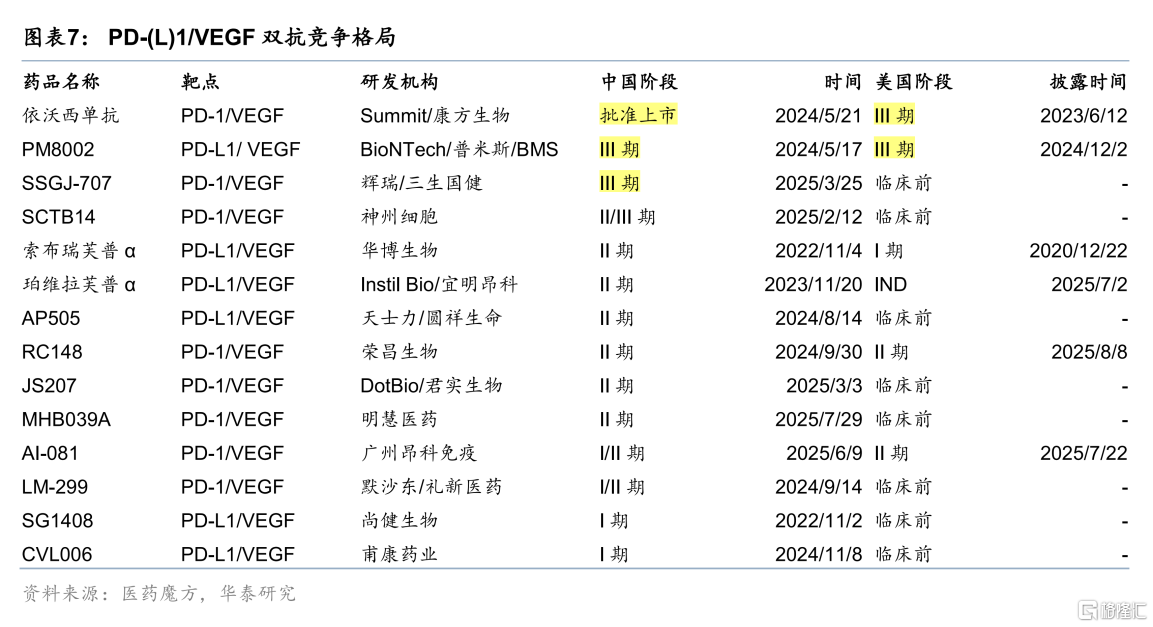
三强争霸:PD-(L)1VEGF双抗的“速度与激情”
Ge Long Hui· 2025-11-28 04:09
Core Insights - The focus in the PD-(L)1/VEGF bispecific antibody market has shifted from business development amounts to development efficiency and indication differentiation [1] - The competition is intensifying as multiple PD-(L)1/VEGF bispecific antibodies are entering Phase III clinical trials, emphasizing the importance of research speed and strategic indication planning [1] Domestic Indication Layout - The PD-(L)1/VEGF bispecific antibody market in China is characterized by rapid development and strategic positioning, with 康方生物/Summit’s Ivonescimab leading the way [2] - Ivonescimab has received approval for two indications in China, with projected sales of approximately 9 billion CNY in 2024 and 7.2 billion CNY in the first half of 2025, and a forecasted total sales exceeding 15 billion CNY in 2025 [2][3] Clinical Development and Market Potential - The first indication for Ivonescimab was approved in May 2024 for treating advanced non-squamous non-small cell lung cancer (nsq-NSCLC) after progression on EGFR-TKI therapy [3] - The second indication was approved in April 2025 for first-line treatment of PD-L1 positive (TPS≥1%) EGFR mutation negative and ALK negative advanced NSCLC [3] - The third indication for Ivonescimab is under review for first-line treatment of advanced squamous NSCLC [3] - The potential of the advanced lung cancer market is significant, with non-small cell lung cancer accounting for approximately 85% of all lung cancer cases [3] Competitive Landscape - The competitive landscape includes other key players such as BioNTech/BMS with PM8002 and Pfizer with SSGJ-707, both of which are also in late-stage clinical trials [5][6] - PM8002 is focusing on triple-negative breast cancer (TNBC) and small cell lung cancer (SCLC), while SSGJ-707 has initiated a head-to-head comparison with Keytruda for treating PD-L1 positive NSCLC [6][8] Global Market Dynamics - The global PD-(L)1/VEGF bispecific antibody market is dominated by three main players: 康方生物/Summit, BioNTech/BMS, and Pfizer, all of which are conducting Phase III clinical trials [8] - The strategies of these companies vary, with 康方生物 focusing on building a strong clinical barrier in the lung cancer market, BioNTech/BMS creating differentiation in TNBC and SCLC, and Pfizer leveraging its ADC advantages in colorectal cancer [18]