
极氪

Search documents
车企购置税补贴成标配,年底车市“翘尾”行情预期降温
Huan Qiu Wang Zi Xun· 2025-11-15 03:57
来源:环球网 【环球网消费综合报道】随着新能源汽车购置税减免政策进入退坡倒计时,市场迎来了新的变化。自9 月以来,理想、蔚来、极氪等十余家主流新能源车企陆续推出购置税兜底政策,承诺在今年底前锁单的 消费者,即便车辆在明年交付,也能享受2025年的免税待遇,差额部分由车企承担。这一普遍性的市场 行为,在为消费者提供保障的同时,也使得业内对年底传统"翘尾"行情的预期趋于谨慎。 根据相关政策,2025年是免征新能源汽车购置税的最后一年,2026年和2027年将减半征收。这意味着, 明年购买一辆20万元左右的新能源车,消费者将额外承担近万元的购置税。面对政策变化可能带来的成 本上升,车企主动承担了这部分差额,以维持市场吸引力。这些兜底政策大多以11月底或12月底为锁单 截止日期,补贴上限普遍为1.5万元,部分品牌如长安启源和小米汽车甚至覆盖全系车型,显示出企业 稳定市场预期的决心。 东方IC 新能源车普遍存在的"期车"销售模式,进一步平滑了年底的销量波动。许多热门车型的交付周期长达数 月,这意味着,即便消费者在11月锁单,车辆交付也要等到明年,销量自然被计入明年数据,无法对今 年的车市形成集中式的拉动效应。 从更深层 ...

禾赛科技两月股价跌超30%,招商证券国际下调其目标价
Jing Ji Guan Cha Wang· 2025-11-14 03:56
Core Viewpoint - Hesai Technology faces pressure from the capital market despite strong shipment growth over the past two quarters, with a recent downgrade in target prices by招商证券国际 due to equity expansion from its Hong Kong listing [2][4]. Financial Performance - In Q3, Hesai reported revenue of 795 million RMB, a year-on-year increase of 47.5%, and achieved a net profit of 256 million RMB, marking a turnaround from losses and a quarter-on-quarter growth of 481% [4]. - Excluding a one-time investment gain of 173 million RMB, the core net profit was 83.31 million RMB, exceeding consensus expectations by approximately 30% [4]. - The gross margin was 42.1%, down 5.6 percentage points year-on-year, primarily due to an increase in the proportion of lower-priced ADAS products [4]. Shipment and Market Dynamics - Total shipments reached 441,000 units in Q3, a year-on-year increase of 229% and a quarter-on-quarter growth of 25.43%, although the growth rate has slowed compared to the previous quarter [5]. - The average selling price (ASP) of ADAS lidar decreased from approximately 4,000 RMB in Q1 to 1,800 RMB in Q3, indicating a "volume increase, price decrease" structural change [5]. Future Outlook - Hesai has raised its full-year profit guidance, projecting a net profit range of 350 million to 450 million RMB for 2025, up from a previous estimate of 200 million to 350 million RMB [5]. - The company expects Q4 shipments to be around 600,000 units, with revenue anticipated between 1 billion to 1.2 billion RMB and a gross margin of approximately 40% [5]. - For 2025 to 2026, ADAS product shipments are expected to grow to 2 to 3 million units, with significant growth anticipated in the robotics sector as global demand recovers [5]. Industry Trends - As L3 autonomous driving advances, the number of lidar units per vehicle is expected to increase from one to three to six, potentially raising the per-vehicle value to between 500 to 1,000 USD [6]. - Hesai's customer base is expanding, with new orders from companies like GAC and Chery expected to begin in 2026, alongside additional orders from overseas Robotaxi clients [6]. - Despite concerns over temporary gross margin declines, the long-term market potential in automotive and robotics remains substantial, with quarterly profit fluctuations considered normal in the early stages of scaling [6].

百公里加速不小于5秒新规下,哪些车面临“刹车”?
Xin Jing Bao· 2025-11-14 03:38
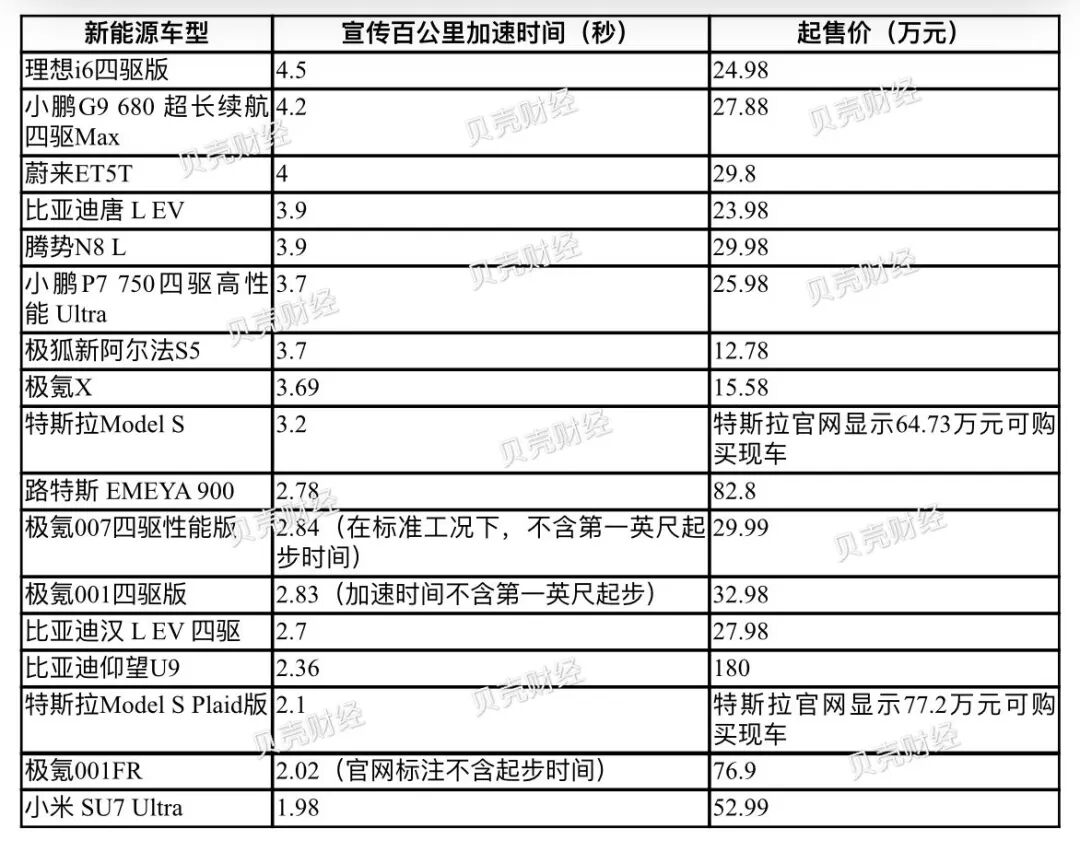
Core Viewpoint - The new national standard proposed by the Ministry of Public Security aims to address safety concerns related to the rapid acceleration of electric vehicles, requiring that passenger cars have a default acceleration time of no less than 5 seconds for 0 to 100 km/h after each power-up [2]. Group 1: New National Standard - The proposed national standard, titled "Technical Conditions for the Safe Operation of Motor Vehicles," is currently open for public consultation [2]. - The standard specifically targets the issue of loss of control in electric vehicles due to excessive acceleration [2]. Group 2: Current Market Impact - At least 19 models of electric vehicles currently on sale have an official acceleration time of less than 5 seconds for 0 to 100 km/h [2]. - The following are some of the models with their respective acceleration times and starting prices: - Li Auto i6 AWD: 4.5 seconds, starting at 249,800 CNY - Xpeng G9 680: 4.2 seconds, starting at 278,800 CNY - EMEYA 600: 4.15 seconds, starting at 538,000 CNY - NIO ET5: 4 seconds, starting at 298,000 CNY - BYD Tang L EV: 3.9 seconds, starting at 239,800 CNY - Tesla Model X: 3.9 seconds, starting at 704,900 CNY - Denza N8 L: 3.9 seconds, starting at 299,800 CNY - Xpeng P7 750: 3.7 seconds, starting at 259,800 CNY - Arcfox Alpha S5: 3.7 seconds, starting at 127,800 CNY - Geely Geometry X: 3.69 seconds, starting at 155,800 CNY - Tesla Model S: 3.2 seconds, starting at 647,300 CNY [3].

极氪多款车型热销引发资本追捧,摩根大通增持极氪
Feng Huang Wang· 2025-11-14 03:03
Core Insights - Morgan Stanley has significantly reduced its holdings in NIO, Xpeng, and Li Auto while increasing its investment in Geely's premium electric vehicle brand Zeekr, indicating a shift in institutional confidence towards Zeekr [1] - Zeekr's new flagship SUV, Zeekr 9X, launched in September, has seen strong sales, leading to price surges in both domestic and international markets [1] - The brand's recent models, including the refreshed 001 and 7X, have exceeded sales expectations, contributing to Zeekr's strong market performance [1] - Zeekr 009 has maintained its position as the best-selling luxury electric MPV in markets such as Hong Kong, Thailand, and Malaysia [1] - The company's strategic initiatives in the second half of the year, including product upgrade announcements and enhanced customer service commitments, have positively impacted its Net Promoter Score (NPS) and market reception [1]
为何要求百公里加速不小于5秒,影响哪些车?五问机动车新国标
Xin Jing Bao· 2025-11-14 01:06
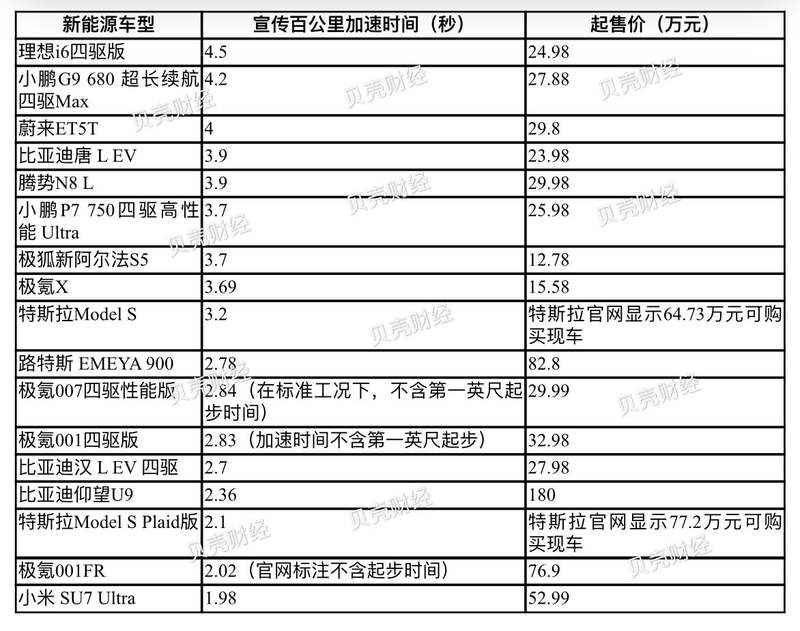
Core Viewpoint - The new national standard for automotive safety, particularly for electric and hybrid vehicles, aims to address acceleration control issues by mandating a default acceleration time of no less than 5 seconds for passenger cars, thereby enhancing safety and reducing the risk of loss of control during operation [1][2][8]. Group 1: New Regulations - The draft standard proposes that passenger vehicles should have a default state where the acceleration time to 100 km/h is no less than 5 seconds after each ignition [1][2]. - Electric and plug-in hybrid vehicles must include a pedal misapplication suppression feature to detect and limit power output during stationary or crawling conditions [1][2]. - The design of car door handles is also addressed, requiring mechanical release functionality to ensure doors can be opened without tools in emergencies [1]. Group 2: Rationale Behind the Regulations - The requirement for a minimum acceleration time of 5 seconds is based on the observation that many drivers, especially inexperienced ones, may struggle with high acceleration modes, leading to accidents [2][8]. - The standard aims to ensure that vehicles start with a lower acceleration performance, making it easier for new drivers to adapt and reducing the likelihood of accidents due to misoperation [8]. Group 3: Current Market Situation - In the current market, most fuel vehicles in the 100,000 to 200,000 yuan price range have acceleration times between 7 to 10 seconds, while high-performance models can achieve significantly lower times [3][4]. - Many electric vehicles, such as the Tesla Model S and others, boast acceleration times under 4 seconds, indicating a shift in performance expectations [4][5]. Group 4: Impact on Manufacturers - The new regulations primarily affect high-performance four-wheel drive vehicles, while most two-wheel drive models are unlikely to require significant adjustments [9][10]. - Manufacturers can meet the new standards through software adjustments, such as modifying default power output and pedal response logic, rather than extensive hardware changes [9][10]. Group 5: Regulatory Context - The recent regulatory measures reflect a broader trend of increasing oversight in the electric vehicle market, aiming to ensure safety and quality as technology evolves [11][12]. - The new regulations are seen as a necessary step towards high-quality development in the automotive industry, promoting safety and user experience while addressing the rapid technological advancements in electric vehicles [12].
五问机动车新国标:为何要求百公里加速不小于5秒 影响哪些车?
Xin Jing Bao· 2025-11-14 00:44
Core Viewpoint - The new national standard for automotive safety aims to address the issue of acceleration-related loss of control in electric vehicles by mandating a default acceleration time of no less than 5 seconds for passenger cars upon startup [1][2][3]. Group 1: New Regulations - The draft standard requires that passenger cars, upon each ignition, must default to a state where the acceleration time to 100 km/h is no less than 5 seconds [1]. - Electric and plug-in hybrid vehicles must have a pedal misapplication suppression feature that detects and limits power output when the vehicle is stationary or creeping [1]. - The design of car door handles is also addressed, requiring mechanical release functionality to ensure doors can be opened in emergencies without tools [1]. Group 2: Rationale Behind the Regulations - The requirement for a minimum acceleration time of 5 seconds is intended to reduce the risk of accidents caused by inexperienced drivers misusing high acceleration modes [2][8]. - The standard is based on the observation that most driving schools and conventional fuel vehicles have acceleration times exceeding 5 seconds, making it a reasonable benchmark for new drivers [2]. Group 3: Impact on the Automotive Industry - The new regulations primarily affect high-performance four-wheel drive vehicles, while most two-wheel drive models are unlikely to require significant adjustments [9]. - Automakers can meet the new standards through software adjustments, such as modifying default power output and throttle response logic, rather than extensive hardware changes [9]. - The regulations are seen as a necessary step to balance safety and performance, especially as high-performance electric vehicles become more accessible to less experienced drivers [7][9]. Group 4: Industry Response and Future Outlook - The automotive industry is experiencing a shift towards higher safety standards in response to rapid technological advancements in electric vehicles [10][11]. - The new regulations are part of a broader trend to ensure that safety measures keep pace with innovations in vehicle technology, including smart driving and fast charging [10]. - The overall goal is to promote sustainable development in the electric vehicle sector by enhancing safety, regulating the market, and improving user experience [11].
五问机动车新国标:为何要求百公里加速不小于5秒,影响哪些车?
Bei Ke Cai Jing· 2025-11-14 00:33
Core Viewpoint - The new national standard for automotive safety, particularly for electric and hybrid vehicles, aims to address issues related to rapid acceleration and loss of control by implementing stricter technical requirements for manufacturers [4][7][21]. Group 1: New Technical Requirements - The draft standard proposes that passenger vehicles must default to a mode where the time to accelerate from 0 to 100 km/h is no less than 5 seconds after each ignition [4][8]. - Electric and plug-in hybrid vehicles are required to have a pedal misapplication suppression feature that detects and limits power output during stationary or low-speed conditions, providing clear signals to the driver [4][5]. Group 2: Rationale Behind the 5-Second Requirement - The requirement for a minimum 5-second acceleration time is based on the observation that many drivers, especially inexperienced ones, struggle with high acceleration modes, leading to accidents [7][16]. - This standard is designed to ensure that vehicles start with lower acceleration performance, allowing drivers to adapt better and reduce the risk of loss of control due to sudden power output [16][21]. Group 3: Impact on Current Vehicles - Most current two-wheel drive electric vehicles typically have acceleration times exceeding 5 seconds, meaning the new standard will not significantly impact them [17]. - The primary effect will be on high-performance four-wheel drive vehicles, which may need software adjustments to comply with the new acceleration requirements [18]. Group 4: Regulatory Context - The new regulations are part of a broader effort to enhance safety standards in the rapidly evolving electric vehicle market, addressing gaps in existing regulations [19][20]. - The regulations aim to balance technological advancements with safety, ensuring that manufacturers prioritize user experience and safety alongside performance [21].

三电技术精细化迭代引领行业升级——“中国心”2025年度十佳新能源汽车动力系统实车测试
Zhong Guo Qi Che Bao Wang· 2025-11-13 09:06
Core Insights - The Chinese electric vehicle (EV) market is entering a critical transformation phase driven by technology, with production and sales exceeding 10 million units in the first nine months of 2023, reflecting over 30% year-on-year growth, significantly outpacing the overall automotive industry [2] - The market penetration rate for EVs reached 57.8% in September 2023, indicating a shift from the popularization phase to a quality enhancement phase [2] - The "China Heart" 2025 annual top ten EV power systems testing showcased the highest level of current Chinese EV power technology, with 15 models participating, including both pure electric and range-extended hybrid systems [2][3] Industry Trends - The testing revealed three major trends in power system technology: the adoption of 800V high-voltage architecture, deep integration of motor, battery, and intelligent driving systems, and a shift towards self-research and development as a core competitive advantage [3] - The BYD Tang L EV features the world's first super-kilovolt architecture, indicating a new phase of competition in the "kilovolt-level" technology [3] - The new generation of range-extended systems, such as the Seres SET330D, achieved significant performance improvements, including a maximum thermal efficiency of 44.8% [3] Competitive Landscape - Domestic brands are gaining significant advantages in technological advancement and supply chain resilience, while joint venture brands are accelerating their technological follow-up, injecting new vitality into industry competition [4] - The "China Heart" evaluation emphasizes a balanced approach to advanced technology and user value, highlighting the importance of aligning advanced technologies with user needs and infrastructure capabilities [5][6] User-Centric Development - The focus on user experience is critical, with experts noting that the 2025 models show significant improvements in power, acceleration response, and ride comfort compared to previous years [5] - There is a caution against excessive technological parameters that may not align with consumer needs, emphasizing the importance of practical technology optimization [6][7] - The evaluation process aims to identify models that excel in comprehensive performance rather than just individual strengths, reinforcing the need for a user-centered approach in technology development [7]

智己LS9上市,上汽品牌向上突破天花板
Guan Cha Zhe Wang· 2025-11-13 08:19
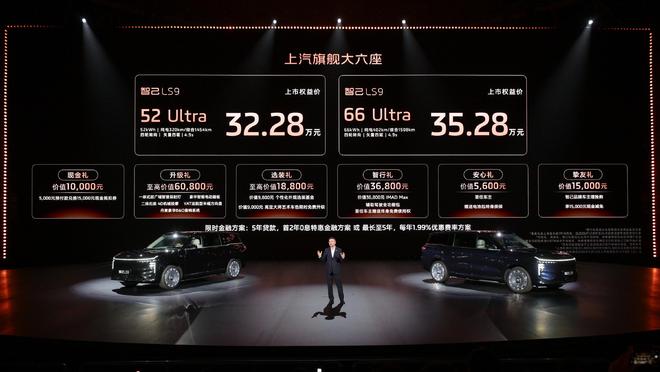
Core Viewpoint - The launch of the IM LS9 marks a significant step for SAIC's premium electric vehicle brand, entering the increasingly competitive market for high-end plug-in hybrid SUVs, with a focus on enhancing brand positioning and market share [3][9]. Product Launch - The IM LS9, a large six-seat SUV, was officially launched on November 12, with two extended-range versions priced at 322,800 yuan and 352,800 yuan, approximately 14,000 yuan lower than the pre-sale prices [1]. - The LS9 is positioned as the flagship model of SAIC's self-owned product line, competing with models like Li Auto L9, AITO M9, and Zeekr 9X [3][7]. Technical Specifications - The LS9 features dimensions of 5279mm in length, 2000mm in width, and 1806mm in height, with a wheelbase of 3160mm [3]. - It is equipped with the Star Super Extended Range technology, offering a maximum combined power of 390kW and torque of 670N·m, achieving 0-100 km/h in 4.9 seconds [7]. - The vehicle provides two battery options, with a maximum pure electric range of 402 km and a total range of 1508 km, supporting 800V fast charging [7]. Interior and Features - The interior includes high-end materials such as Nappa leather and features like zero-gravity seats, a 25-speaker B&O sound system, and a 21.5-inch 4K entertainment screen [5]. - It incorporates advanced smart driving hardware, including a 520-line laser radar and NVIDIA Thor chip, supporting various autonomous driving functions [5]. Market Positioning - The LS9's pricing strategy is competitive, with a lower pre-sale price compared to its main rivals, and it includes several high-end features as standard [9]. - Despite the attractive pricing and features, the IM brand still needs to enhance its recognition in the high-end market, where competitors have established a solid user base [9].

明年起购置税将减半征收,已有17家主流汽车品牌承诺兜底
Di Yi Cai Jing· 2025-11-13 06:55
Core Viewpoint - The full exemption of purchase tax for new energy vehicles (NEVs) will end in 2025, prompting a competitive rush among car manufacturers to secure orders before the policy change [2][3]. Group 1: Policy Changes - From January 1, 2026, the purchase tax for NEVs will be halved, with a maximum tax reduction of 15,000 yuan per vehicle [2]. - The exemption period for NEVs will continue until December 31, 2025, with a maximum exemption of 30,000 yuan per vehicle [2]. Group 2: Market Dynamics - As of November 13, 2023, 17 major automotive brands have introduced purchase tax subsidy plans to attract consumers, covering all or part of their vehicle models [2][3]. - The urgency among consumers to purchase vehicles has increased due to the impending policy change, leading to a shift in consumer preferences towards models with shorter delivery times [3]. Group 3: Sales Performance - In October 2023, NEV production and sales reached 1.772 million and 1.715 million units, respectively, both showing over 20% year-on-year growth, with a penetration rate surpassing 50% [3][4]. - Cumulative NEV production and sales exceeded 13 million units in the first ten months of 2023, marking a year-on-year increase of approximately 33% [3]. Group 4: Competitive Landscape - The reduction in purchase tax incentives is leading NEV manufacturers to increase promotional efforts to capture market share [4]. - From 2026, plug-in hybrid vehicles with an electric range of less than 100 kilometers will no longer qualify for purchase tax exemptions, indicating a potential market shift towards manufacturers with strong technological capabilities [4].