易方达基金

Search documents
今年ETF新品,多点开花
中国基金报· 2026-01-25 10:28
Core Viewpoint - The ETF market in China is experiencing robust growth in 2026, with a diverse range of new products being launched and a steady increase in scale, indicating a strong market potential and competitive landscape [2][4]. Group 1: New ETF Launches - As of January 24, 2026, a total of 17 new ETFs have been established, with an issuance scale nearing 10 billion yuan, accounting for 22.37% of new fund launches and 14.69% of the total issuance scale [2]. - The newly established ETFs cover various sectors including non-ferrous metals, chips, artificial intelligence, biotechnology, food, batteries, and public utilities [2]. Group 2: Market Growth Drivers - Industry experts are optimistic about the growth potential of the ETF market, driven by long-term capital inflows and evolving investor demands [5]. - Institutional investors, such as insurance companies, are increasingly seeking long-term allocations in the domestic equity market, while individual investors are becoming more accepting of passive index products due to their low fees and high transparency [5]. - There remains significant room for innovation in ETF products, particularly in niche sectors and strategies, as the demand for diversified investment portfolios continues to grow [5]. Group 3: Competitive Landscape - The ETF market is characterized by a concentration of leading firms, posing challenges for smaller fund companies. However, differentiation and refined operations are seen as key strategies for smaller firms to carve out a niche [7]. - Smaller fund companies are encouraged to focus on underrepresented sectors and themes where larger firms have not established a strong presence, thereby building expertise and brand influence [7][8]. - There is a need for smaller firms to innovate in product offerings, such as Smart Beta and ESG-focused ETFs, to meet the diverse asset allocation needs of investors [8]. Group 4: Challenges in the ETF Market - Despite growth opportunities, the ETF market faces challenges such as insufficient investor understanding and operational pressures on certain products [9]. - Some individual investors lack a deep understanding of ETFs, leading to impulsive trading behaviors, which can negatively impact their investment outcomes [9]. - Certain ETFs are experiencing issues with small scale and high operational costs, which can erode investor returns and affect trading efficiency due to low liquidity and high bid-ask spreads [9].


易方达产业机遇混合A:2025年第四季度利润412.61万元 净值增长率10.89%
Sou Hu Cai Jing· 2026-01-25 06:45
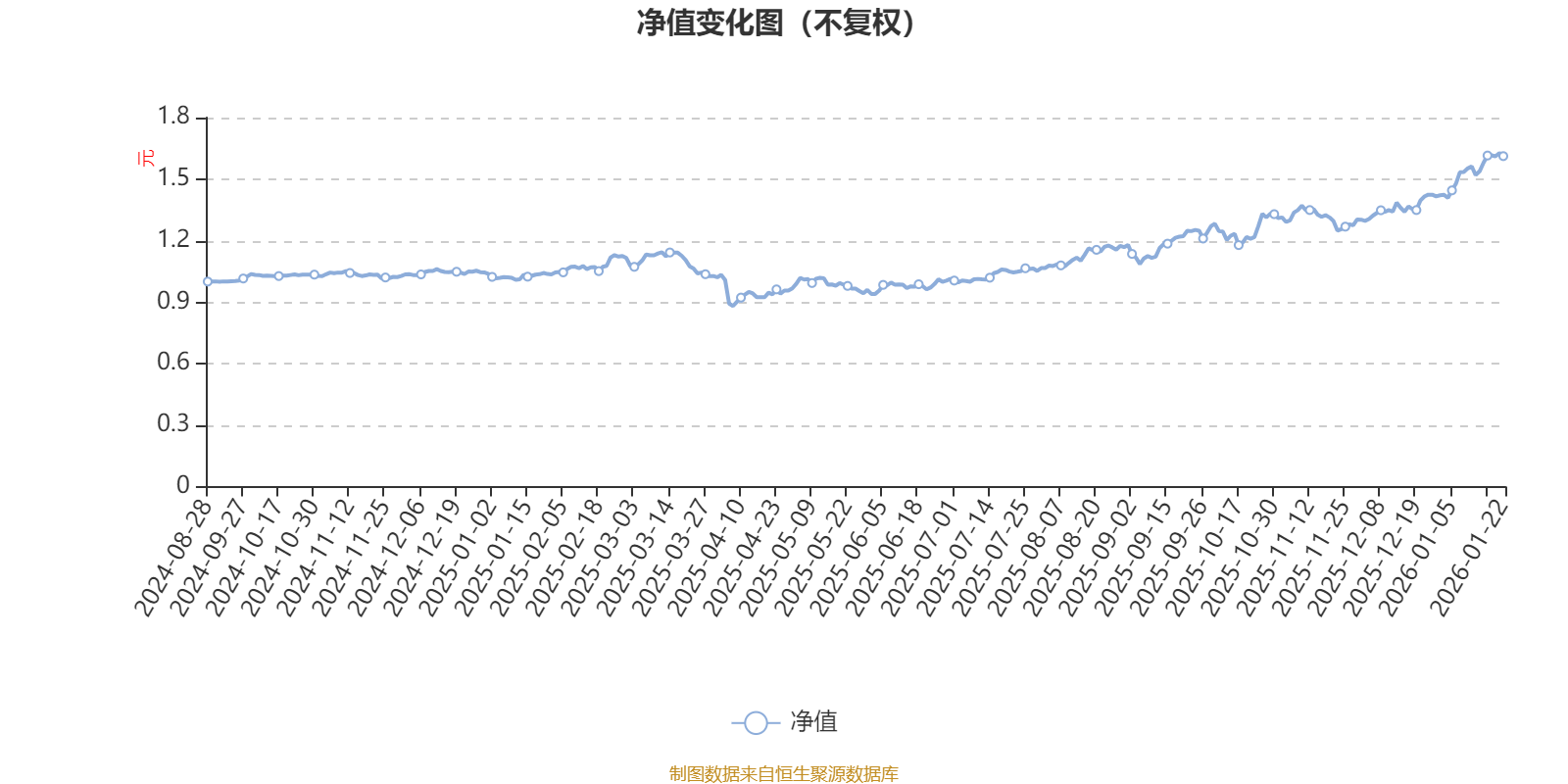
AI基金易方达产业机遇混合A(021179)披露2025年四季报,第四季度基金利润412.61万元,加权平均基金份额本期利润0.1396元。报告期内,基金净值增 长率为10.89%,截至四季度末,基金规模为4298.18万元。 该基金属于偏股混合型基金。截至1月22日,单位净值为1.612元。基金经理是杨宗昌,目前管理的2只基金近一年均为正收益。其中,截至1月22日,易方达 供给改革混合近一年复权单位净值增长率最高,达70.29%;易方达产业机遇混合A最低,为55.4%。 基金管理人在四季报中表示,四季度,本基金继续延续三季度以科技创新为配置主线,同时结合自下而上个股挖掘方式构建组合,结合三季度以来市场变化 对组合进行较大调整和再平衡,整体配置在风格上更趋均衡。考虑到存储模组公司、AI 产业链温控及电源公司涨幅较大,估值提升明显,我们大幅减持了 相关持仓。在 TMT 板块内,配置方向转向半导体设备与材料,重点布局受下游存储客户扩产影响较大的股票或者国产替代渗透率较低环节的公司。在周期 板块,我们提高了煤炭行业的配置比例,同时增配化工板块中部分调整较为充分、估值回归合理的个股。汽车板块,我们继续保持了相关公司的 ...
重大新规,最新解读来了!
Zhong Guo Ji Jin Bao· 2026-01-25 04:41
Core Viewpoint - The recent release of the "Guidelines for Performance Benchmarking of Publicly Raised Securities Investment Funds" and "Operational Details" by the China Securities Regulatory Commission and the Asset Management Association of China marks a significant milestone in the high-quality development of the public fund industry, focusing on long-term value and addressing industry pain points such as "ambiguous benchmarks" and "style drift" [1][3]. Group 1: Regulatory Framework - The new regulations establish a comprehensive control system around performance benchmarks, focusing on four dimensions: representation, constraints, assessment, and supervision, thereby reinforcing the "anchor" and "scale" of the investment framework [3][5]. - The guidelines require that performance benchmarks accurately reflect product positioning and investment style, and that fund managers appoint experienced fund managers based on these benchmarks, which cannot be changed arbitrarily [5][6]. Group 2: Industry Impact - Major fund companies support the new regulations, indicating that they will refine product positioning and establish dynamic benchmark evaluation mechanisms, shifting the industry focus from "scale competition" to "capability competition" [4][7]. - The new rules are expected to create a clearer and more stable investment style and product positioning, which will attract more long-term capital to the market [6][7]. Group 3: Investor Benefits - The regulations aim to enhance the clarity and stability of performance benchmarks, providing investors with a practical reference for selecting funds, thus fostering a long-term investment mindset [6][7]. - The linkage between benchmarks and performance compensation is expected to strengthen the alignment of interests between fund managers and investors, focusing on delivering long-term returns [7][8]. Group 4: Future Outlook - The introduction of these guidelines is seen as a historic opportunity for the public fund industry to enhance its core competitiveness and adhere to fiduciary duties within a strict regulatory framework [8]. - A clear, stable, and transparent fund market will better meet the wealth management needs of residents, enhancing investor trust and satisfaction, ultimately promoting steady progress in the high-quality development of the public fund industry [8].
重大新规,最新解读来了!
中国基金报· 2026-01-25 04:34
Core Viewpoint - The recent release of the "Guidelines for Performance Comparison Benchmarks of Publicly Raised Securities Investment Funds" and "Operational Details" by the China Securities Regulatory Commission and the Asset Management Association of China marks a significant milestone in the high-quality development of the public fund industry, focusing on long-term value and addressing industry pain points such as "ambiguous benchmarks" and "style drift" [2][4]. Group 1: Regulatory Framework - The new regulations establish a comprehensive control system around performance comparison benchmarks, focusing on four dimensions: representation, constraints, assessment, and supervision, along with a transitional period and benchmark database construction [3]. - The guidelines require that performance benchmarks accurately reflect product positioning and investment style, aligning with the fund contract's investment goals and strategies, and that once set, benchmarks cannot be changed arbitrarily [7]. Group 2: Industry Impact - The introduction of these guidelines is seen as a critical step towards the maturity and professionalism of the public fund industry, providing a clear direction and framework for high-quality development [4][10]. - The new rules are expected to shift the industry focus from "scale competition" to "ability competition," fostering a differentiated competitive landscape [4]. Group 3: Investor Protection - Fund companies have committed to ensuring investor interests are considered when adjusting benchmarks, promising to inform investors through announcements and customer service [5]. - The new regulations aim to enhance the clarity and stability of performance benchmarks, serving as a practical reference for investors in selecting funds that align with their long-term investment goals [11]. Group 4: Long-term Development - The guidelines are designed to create a robust ecosystem that encourages fund managers, custodians, sales institutions, and evaluation agencies to fulfill their responsibilities, promoting a positive transformation in the industry [10]. - The regulations emphasize the importance of linking fund manager compensation to long-term performance against established benchmarks, thereby aligning the interests of fund managers with those of investors [11].

构建全链条管理体系 公募基金业绩比较基准新规正式发布
Jin Rong Jie· 2026-01-25 04:13
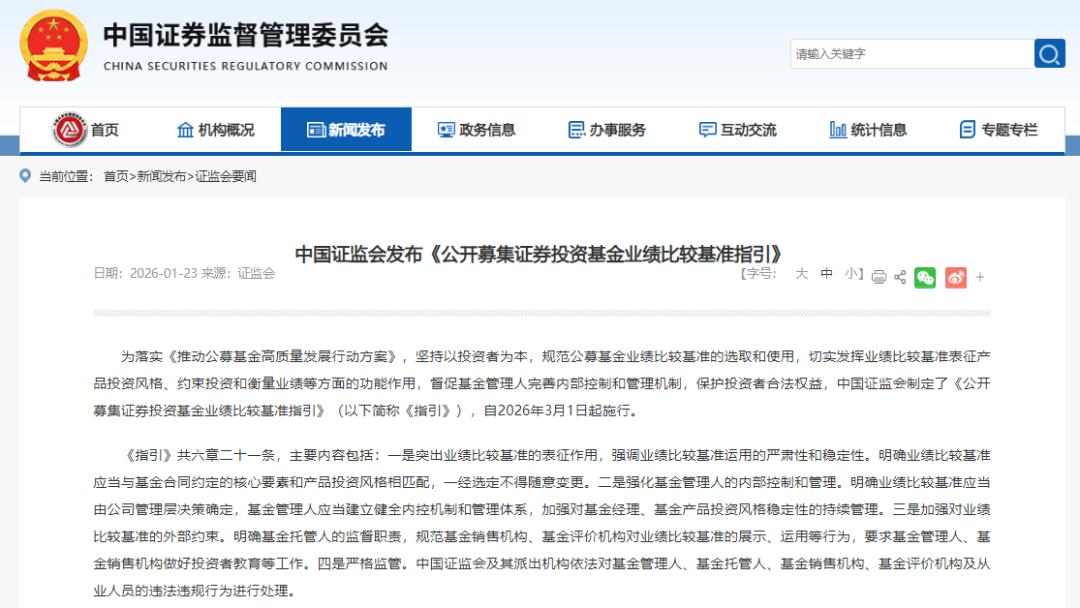
1月23日,中国证监会发布《公开募集证券投资基金业绩比较基准指引》(以下简称《指引》),规范 公募基金业绩比较基准的选取和使用。同日,中国证券投资基金业协会配套发布《公开募集证券投资基 金业绩比较基准操作细则》(以下简称《操作细则》),规范公募基金业绩比较基准选取和使用的操作 流程。 同时,将业绩比较基准深度嵌入绩效考核体系。《指引》明确提出,基金管理人应建立以基金投资收益 为核心的考核机制,并将基金业绩与基准的比较情况作为重要依据。特别是当基金长期业绩明显低于其 业绩比较基准时,相关基金经理的绩效薪酬将受到直接影响。这一规定旨在从激励约束机制上,驱动投 资行为与产品定位及持有人利益长期保持一致。 加强基准外部约束 设置过渡期安排 《指引》进一步明确了基金托管人的监督职责,要求其对业绩比较基准的合理性及投资组合的相符性进 行复核与监督。同时,规范基金销售机构与评价机构的行为,要求其在产品推介和业绩评价中合理使用 并显著展示业绩比较基准,帮助投资者做出有效判断,共同营造透明规范的市场环境。上述举措将推动 形成内外部协同监督合力。 易方达基金副总裁王骏表示,此次《指引》及《操作细则》的发布,是贯彻落实《推动公募基 ...
这类产品单周“失血”超4000亿元,ETF总规模跌破6万亿元丨ETF规模周报
Sou Hu Cai Jing· 2026-01-25 02:44
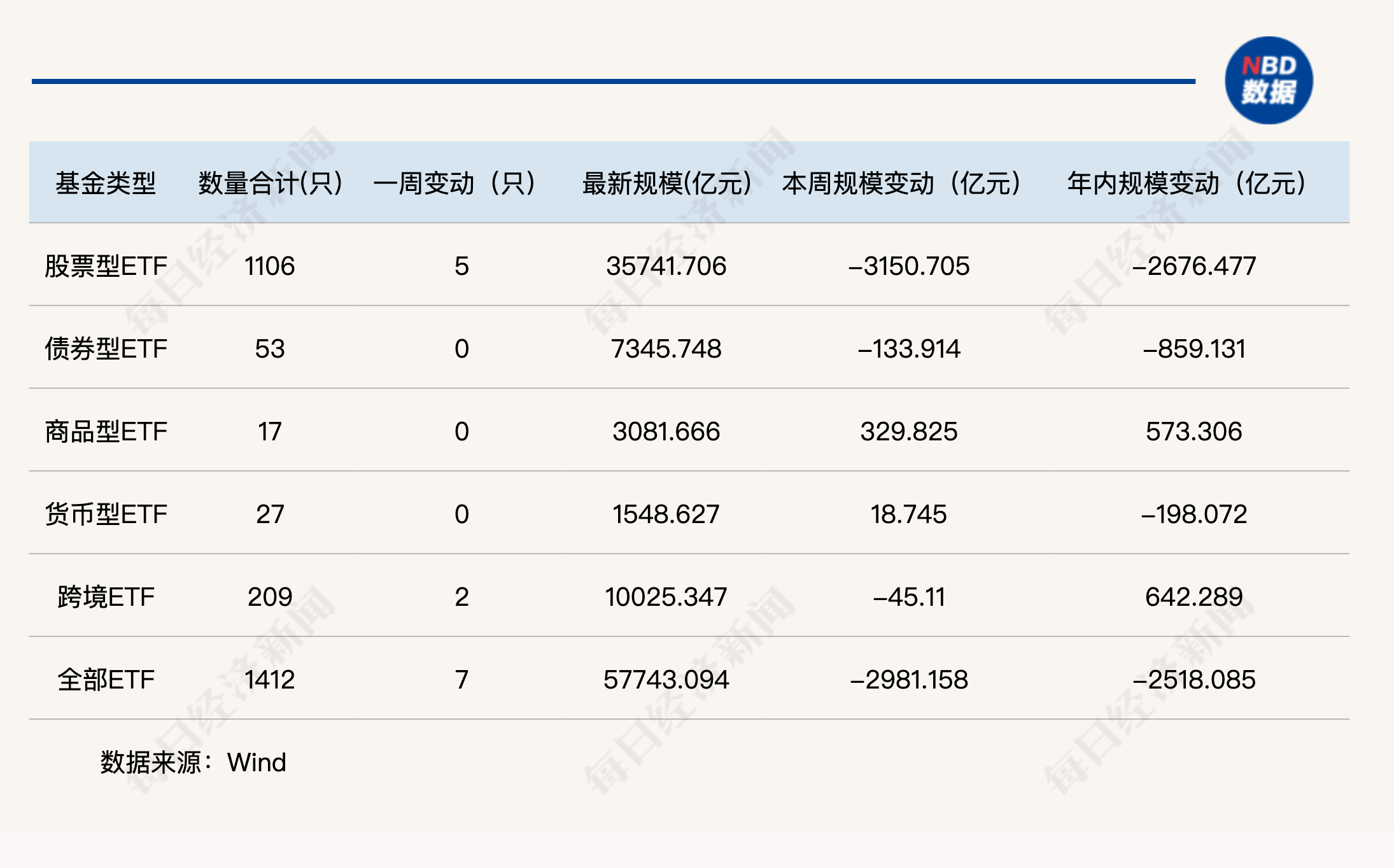
1月19日~1月23日,A股主要股指震荡分化,沪深300指数周跌0.62%,中证A500指数涨0.78%;创业板指跌0.34%,科创50指数涨2.62%;港股市场震荡调 整,恒生指数周跌0.36%,恒生科技指数跌0.42%。 在此背景下,ETF市场再度上演"冰火两重天"——一边是黄金、化工和科创芯片ETF持续吸金;另一边却是大资金从宽基ETF中"撤退",单周规模下降超 4000亿元,ETF总规模降至6万亿元以下。 近期,"汇金系"减持搅动风云,沪深300相关产品年内"失血"已超3300亿元,昔日的"香饽饽"瞬间成了"烫手山芋",头部机构受影响较大,华夏、易方达和 华泰柏瑞等基金公司ETF规模本周均缩水超800亿元。 今年以来,截至1月24日,股票型ETF高开低走,年内规模已"失血"2676.48亿元。债券型ETF和货币型ETF双双陷入低迷,年内规模分别缩水859.13亿元和 198.07亿元。相比之下,跨境ETF和商品型ETF表现较为亮眼,年内规模分别增长642.29亿元和573.31亿元。 沪深300挂钩ETF年内规模缩水超3300亿元 ETF挂钩指数方面,本周两级分化特征更加明显,宽基指数挂钩ETF规模持 ...
“百亿基金经理”大洗牌!头部阵容生变,多位知名基金经理管理规模缩水(附最全名单)
Sou Hu Cai Jing· 2026-01-25 02:44
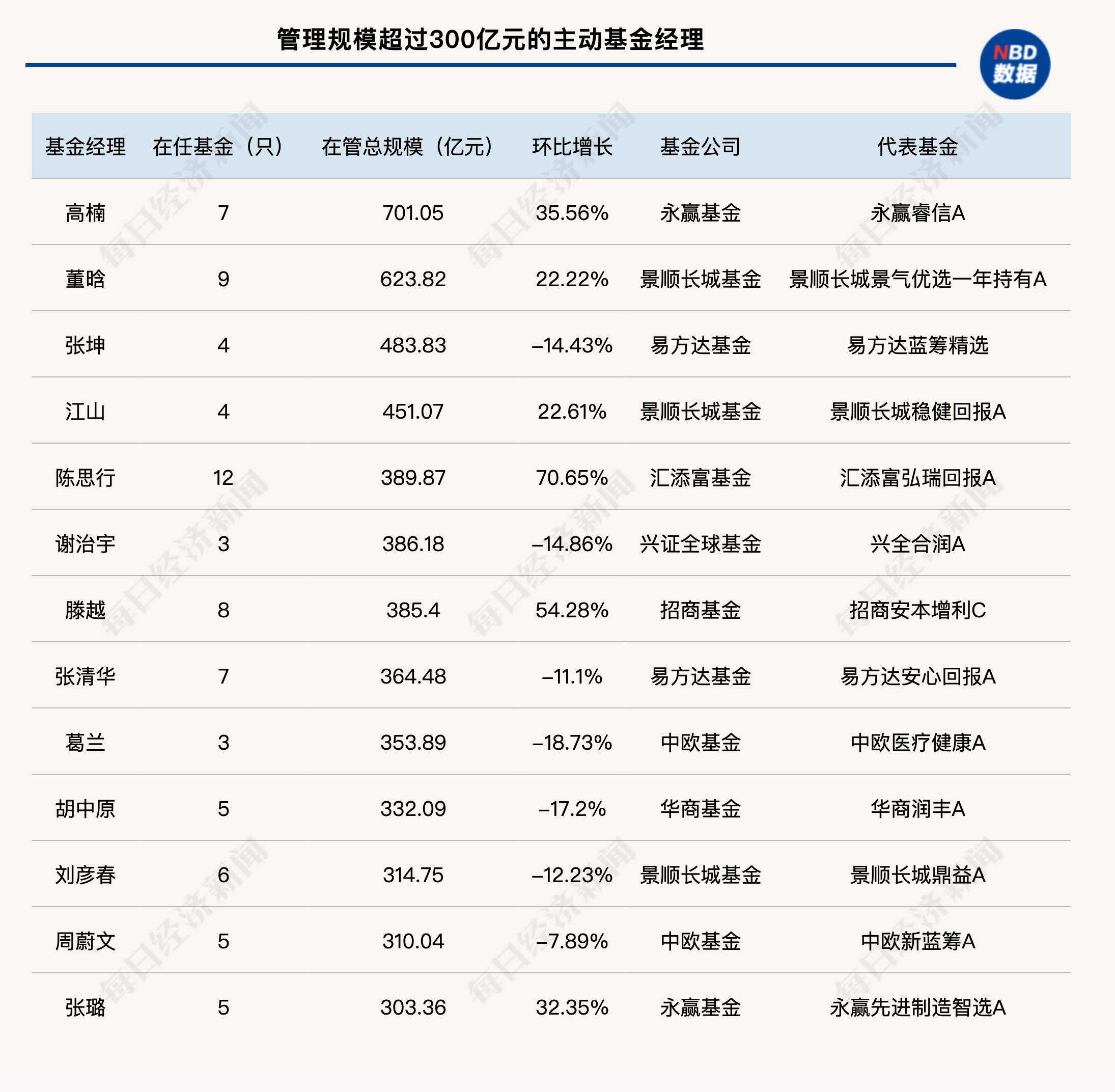
Core Insights - The active equity fund manager landscape has undergone significant changes, with performance being the primary driver of fund size fluctuations [1][8] - A notable reshuffling of the "billion-dollar fund managers" has occurred, with some well-known managers experiencing a decline in their rankings due to shrinking fund sizes [1][8] Fund Manager Performance - As of the end of last year, there were 114 active fund managers managing over 10 billion yuan, with significant adjustments in the top rankings [1] - Gao Nan from Yongying Fund leads with a management scale of 701.05 billion yuan, a 35.56% increase from the previous quarter [1][5] - Dong Han from Invesco Great Wall Fund follows with 623.82 billion yuan, a 22.22% increase [2][5] - Zhang Kun from E Fund has seen a decline, with a management scale of 483.83 billion yuan, down 14.43% [2][5] Notable Fund Managers - Other prominent fund managers with over 30 billion yuan in management include Jiang Shan, Chen Sixing, and Xie Zhiyu, among others [3][5] - Meng Xia from Harvest Fund has shown remarkable growth, entering the "billion-dollar fund manager" list with a 76.63% increase to 120.64 billion yuan [7][8] Market Trends - The fourth quarter of last year saw a clear divergence in management scales among "billion-dollar fund managers," with some achieving significant growth while others faced declines [7][8] - Investors are increasingly prioritizing long-term performance stability and investment style compatibility over the allure of star fund managers, indicating a more rational market approach [8]
FOF最新“购物车”曝光!大举扫货这些基金
券商中国· 2026-01-24 11:09
Core Viewpoint - The article highlights the latest trends in FOF (Fund of Funds) investments, indicating a preference for low-risk products and a strategic shift from gold ETFs to gold stock ETFs amidst rising international gold prices [1][4]. Group 1: FOF Investment Trends - In Q4 2025, FOFs favored low-risk products, with short-term bond ETFs being the most heavily weighted, particularly the Hai Fu Tong Short Bond ETF, held by 95 FOFs with a total market value of approximately 4.17 billion [3]. - The Guotai Li Xiang Medium and Short Bond C fund saw significant increases in holdings, with a quarterly change of about 1.49 billion shares, indicating a strategic shift in FOF allocations [3]. Group 2: Gold Investment Strategy - Despite rising international gold prices, FOFs reduced their holdings in gold ETFs, with a total reduction of 40.68 million shares in the Huaan Gold ETF alone, while simultaneously increasing their investments in gold stock ETFs [4][5]. - The increase in gold stock ETFs was notable, with FOFs adding 50.74 million shares in Yongying Gold Stock ETF and 24.03 million shares in Huaxia Gold Stock ETF, reflecting a shift in strategy towards higher potential returns in gold equities [4][5]. Group 3: FOF Market Growth - The overall scale of FOFs has surpassed 250 billion, driven by strong support from banking channels such as China Merchants Bank and China Construction Bank, which have launched successful asset allocation programs [2][7]. - As of the end of 2025, the total scale of FOFs reached 252.11 billion, marking a significant milestone in the market [7].

25Q4 主动权益基金季报分析:主动权益四季度加仓周期减持科技,永赢主动权益规模突破千亿
Shenwan Hongyuan Securities· 2026-01-24 11:06
1. Report Industry Investment Rating No relevant content provided. 2. Core Viewpoints of the Report - In Q4 2025, active equity funds generally focused on technology, consumption, and computing power. The scale of active equity funds decreased, while index funds increased slightly. The performance of active equity funds declined compared to the previous quarter. Funds increased their positions in cyclical sectors and reduced their positions in technology and pharmaceutical sectors [1][5][8]. - Caitong Fund had the best average performance among active equity fund management companies with a scale of over 10 billion yuan in Q4 2025. Other fund companies with good performance included Western Securities, Yongying Fund, and Huashang Fund [25]. 3. Summary According to the Table of Contents 3.1 Fund Four - Quarter Report Investment Outlook Keywords - Technology, consumption, and computing power were the key focuses of active equity fund managers in Q4. The trend keywords included "repair", "recovery", and "resilience"; industry - related keywords were "technology", "consumption", and "electronics"; theme keywords were "computing power", "robotics", and "new energy"; event - related keywords were "interest rate cuts", "exports", and "tariffs" [1][5]. 3.2 Performance and Scale Dimension - **Scale Change**: The scale of active equity funds decreased from approximately 4 trillion yuan in Q3 2025 to about 3.85 trillion yuan in Q4, a decline of 4.14%. Meanwhile, the scale of index funds increased slightly from 4.44 billion yuan to 4.54 billion yuan, a growth of 2.46%. In terms of fund companies, Yongying and Guojin had significant growth in active equity management scale, with Yongying's active equity scale exceeding 100 billion yuan [8][12]. - **Performance**: The performance of active equity funds in Q4 2025 declined significantly compared to the previous quarter. Approximately 42.8% of active equity funds achieved positive returns, with a median return of - 1.02%. Most funds' performance ranged from - 10% to 5%, and 192 funds achieved returns of over 10%. The top - performing funds in Q4 were mainly concentrated in industries such as military, non - ferrous metals, and communications [13][15]. - **Position and Heavy - Holding Stock Allocation**: The overall position of active equity funds decreased in Q4, with the average stock position dropping to 87.70% (-1.05%) and the Hong Kong stock position also significantly decreasing (-1.93%). The allocation ratio of heavy - holding stocks in Hong Kong stocks decreased, while the allocation ratios in CSI 300, CSI 500, and CSI 1000 increased [17][18]. - **Large - Scale Funds**: E Fund's Blue - Chip Select remained the largest active equity fund. Some large - scale funds' performance declined in Q4 2025, and their shares decreased, while some funds' shares continued to grow, such as Yongying Ruixin and Yongying Technology Smart Selection [22]. - **New Issues and Continued Operations**: In Q4 2025, Yongying Pioneer Semiconductor Smart Selection and Yongying High - end Equipment Smart Selection had the highest estimated net subscription amounts among active equity products. The new - issue product with the largest scale was GF Quality Selection, with a scale of 3.759 billion yuan. E Fund had the largest new - issue scale among fund companies, and Agricultural Bank of China had the largest new - issue scale among custodian banks [23][24]. 3.3 Fund Company Dimension - **Performance**: Caitong Fund had the best average performance of active equity funds in Q4 2025, with an average return of 4.22%. Other fund companies with good performance included Western Securities, Yongying Fund, and Huashang Fund. Fund companies with high performance differentiation included Yongying Fund and Baoying Fund, while those with low differentiation included Morgan Fund and Haitong Fund [25][26]. - **Scale**: E Fund remained the largest active equity management company, but its scale decreased in Q4 2025. Yongying Fund's active equity scale increased significantly in Q4 2025 [28]. - **Heavy - Holding Stock Allocation**: Caitong Fund under - allocated non - ferrous metals and over - allocated electronics and communications. Leading fund companies generally over - allocated non - ferrous metals and chemicals and under - allocated pharmaceutical and biological industries. Some fund companies also had significant over - or under - allocation in certain industries, such as CITIC Prudential Fund significantly over - allocating banks and Huashang Fund significantly over - allocating computers [30]. - **Market Value and Valuation Style**: Companies with relatively large - market - value holdings included Ruiyuan, Morgan, and Huatai - PineBridge; those with relatively small - market - value holdings included Yongying, Dacheng, and Nuoyuan; companies with relatively high PE holdings included Yongying, Huashang, and E Fund; those with relatively low PE holdings included Ruiyuan, Dacheng, and ABC - CA Fund [34].
基金大事件|公募重磅新规落地!有色金属大涨,诞生多只“翻倍基”
Zhong Guo Ji Jin Bao· 2026-01-24 11:05
Group 1 - The core viewpoint of the news is the implementation of new regulations for public funds in China, specifically the "Guidelines for Performance Benchmarking of Publicly Raised Securities Investment Funds" issued by the China Securities Regulatory Commission (CSRC) [2] - The new guidelines aim to address existing issues in the public fund industry, such as the lack of specific regulations, inadequate internal control mechanisms among fund managers, and significant performance deviations from benchmarks [2] - The guidelines are expected to enhance the long-term value investment approach in the public fund industry and improve investor satisfaction by addressing industry pain points like "style drift" and "fund blind boxes" [3] Group 2 - In the fourth quarter of 2025, public funds experienced a loss of 110.1 billion yuan, marking the first loss season since the fourth quarter of 2024, with stock, mixed, and QDII funds being the main contributors to the losses [4] - Despite the losses in Q4 2025, the overall profit for public funds for the entire year reached 26,041.07 billion yuan, with equity funds being the primary profit contributors [4] - The total management scale of public funds reached 37.63 trillion yuan by the end of Q4 2025, reflecting a growth of 1.18 trillion yuan from the previous quarter [9] Group 3 - The Ministry of Finance released several policy documents aimed at optimizing personal consumption loans and supporting small and micro enterprises, which are expected to positively impact the financial market [5] - The Shanghai Futures Exchange announced adjustments to the price limits and trading margins for nickel, lead, and zinc futures contracts, effective from January 27, 2026 [6] Group 4 - Resource-related funds have seen significant performance improvements, with some funds doubling in value due to the strong performance of the non-ferrous metals sector, which rose by 89.38% in 2025 [7] - The FOF (Fund of Funds) has shown a preference for bond funds and ETFs, with specific funds being highlighted as favorites in the latest quarterly reports [8] Group 5 - The issuance of public funds has seen a strong start in 2026, with many funds being sold out on the first day of offering, indicating strong demand for equity assets [13][14] - The recent market conditions, including favorable policies and a low-interest-rate environment, have contributed to the active issuance of new funds [14] Group 6 - Hu Jianping, a prominent private equity figure, emphasized the importance of adapting to global economic changes and highlighted opportunities in the AI sector during a recent investor meeting [27] - The CSRC has taken strict actions against illegal activities in the private equity sector, imposing fines and banning individuals involved in violations [28][29]