
圆通速递

Search documents
阿里“增持”申通快递再度延期 申通股价下跌
Nan Fang Du Shi Bao· 2025-11-17 11:10
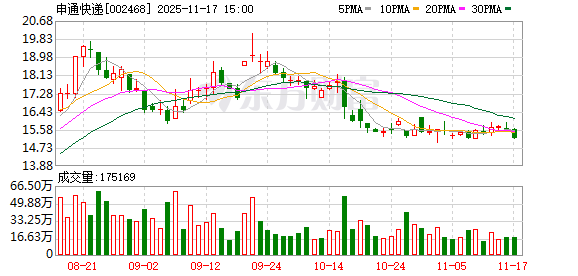
Core Viewpoint - The exercise period for Alibaba's stock options in Shentong Express has been postponed again, now extending to December 27, 2028, which raises uncertainties regarding Alibaba's potential control over Shentong Express [2][4]. Group 1: Stock Option Agreement - Alibaba has signed an extension agreement for the stock option rights, allowing it to purchase 100% of the shares of Shanghai Derun No. 2 Industrial Development Co., Ltd. and 100% of the shares of Shanghai Gongzhirun Industrial Development Co., Ltd., which hold 4.9% and 16.1% of Shentong Express, respectively [3][4]. - The total exercise price for the stock options is RMB 5.276 billion, equating to RMB 16.413 per share, while Shentong Express's current stock price is RMB 15.17, reflecting a decline of 2.76% [3][4]. Group 2: Financial Performance - In Q3, Shentong Express reported revenue of RMB 13.546 billion, a year-on-year increase of 13.62%, and a net profit of RMB 302 million, up 40.32% [6]. - The company's cash flow from operating activities decreased by 28.55%, attributed to an increase in monthly settlement customer revenue and a reduction in advance payments from end franchisees [6]. Group 3: Market Dynamics - The express delivery industry is experiencing a slowdown, with national express business volume growth decreasing from 15.8% to 12.3% and revenue growth dropping from 9.0% to 4.2% from June to August [5]. - Shentong Express's market share is currently at 13%, on par with Yunda, but behind Zhongtong and Yuantong, with a significant increase in business volume compared to Yunda in Q3 [6][7]. Group 4: Strategic Developments - Alibaba has been reducing its equity stakes in various sectors, including logistics, which may impact its strategic focus and investment in Shentong Express [7]. - The collaboration between Shentong Express and Alibaba has deepened since 2020, with significant investments and partnerships aimed at enhancing logistics capabilities [4][6].


无限切片之下,不只Tim,无人能幸免
创业邦· 2025-11-17 10:10
Core Viewpoint - The article discusses the impact of fragmented information and the phenomenon of "deconstructionism" in the context of a recent controversy involving a Bilibili content creator, Tim, highlighting how the original context of content can be lost when it is sliced and shared in a fragmented manner [5][11][24]. Group 1: Incident Overview - Tim participated in a Q&A video where he humorously presented himself at a matchmaking corner, leading to a backlash due to the disparity between his self-description and his actual background [7][8]. - The backlash included criticism of Tim's perceived humility, with some accusing him of intentionally downplaying his advantages for entertainment purposes [11][12]. - The incident sparked discussions on social class and the consumption of weaker individuals, reflecting deeper societal issues [12]. Group 2: Fragmentation of Information - The article emphasizes that the original 17-minute Q&A video was reduced to a 50-second clip, which stripped away essential context, leading to misinterpretations [17][24]. - The process of content slicing often results in multiple iterations, where the essence of the original message is altered, leading to extreme interpretations [19][20]. - The fragmentation creates a disconnect between different audience perceptions, where some see arrogance while others view it as a traditional interaction [17][20]. Group 3: Community and Context - The article notes that the original context of Tim's self-deprecating humor was well understood within his fan community but lost when taken out of that context [25]. - The difference in audience engagement between long-form and short-form content is highlighted, with short videos lacking the depth needed for nuanced understanding [25][26]. - The response from Tim's fanbase to the controversy was more rational and reflective, suggesting a desire to address the issues of content fragmentation and its implications [26][28].

物流板块11月17日跌0.92%,*ST原尚领跌,主力资金净流出3.19亿元
Zheng Xing Xing Ye Ri Bao· 2025-11-17 08:49
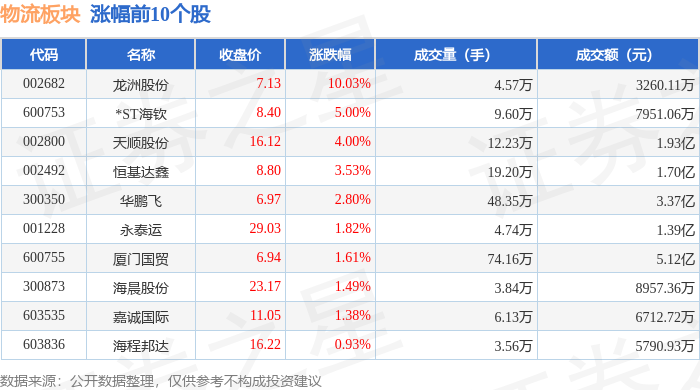
Market Overview - The logistics sector experienced a decline of 0.92% on November 17, with *ST Yuan Shang leading the drop [1] - The Shanghai Composite Index closed at 3972.03, down 0.46%, while the Shenzhen Component Index closed at 13202.0, down 0.11% [1] Stock Performance - Notable gainers in the logistics sector included: - Longzhou Co., Ltd. (002682) with a closing price of 7.13, up 10.03% [1] - *ST Haiqin (600753) with a closing price of 8.40, up 5.00% [1] - Tiens Group (002800) with a closing price of 16.12, up 4.00% [1] - Conversely, *ST Yuan Shang (603813) saw a significant decline of 5.00%, closing at 35.88 [2] Trading Volume and Capital Flow - The logistics sector recorded a net outflow of 319 million yuan from institutional investors, while retail investors saw a net inflow of 222 million yuan [2] - The trading volume for Longzhou Co., Ltd. reached 45,700 hands with a transaction value of approximately 32.6 million yuan [1] Individual Stock Capital Flow - Key capital flows for selected stocks included: - Longzhou Co., Ltd. (002682) had a net inflow of 12.36 million yuan from institutional investors, representing 37.92% of its total trading [3] - Tiens Group (002800) saw a net inflow of 11.51 million yuan, accounting for 5.96% of its trading [3] - *ST Haiqin (600753) experienced a net inflow of 5.56 million yuan, representing 6.99% of its trading [3]


相亲角视频引网友争议,影视飓风CEO回应:切片创造了故事
Yang Zi Wan Bao Wang· 2025-11-17 08:48
Tim表示,以后视频应该增加更多的注释,去解释拍摄的环境,也规避这种有争议的议题,"谁能够用这些固定的素材二创出最极限的解读等,就能够吸 引最多的眼球。一旦一种解读成功,吸引了足够多的眼球,别的切片都会疯狂跟进这种方向。它创造了一个故事,但是把后续责任放回了当事人的身上, 或者我们这里。希望你们能够了解一下起因经过,看一下我们原来的片子,我相信你会有对应的判断,我真的不是坏人。" 公开资料显示,Tim的中文名为潘天鸿,1996年出生于浙江省杭州市,初中毕业后出国读书,毕业于英国肯特大学电影系。目前账号"影视飓风"在B站粉 丝约1431万,抖音粉丝931万。其父亲潘水苗,现任圆通速递(600233)股份有限公司总裁、董事。 扬子晚报/紫牛新闻记者 徐韶达 11月15日,"影视飓风"账号发布"关于影视飓风近期舆情"的视频。Tim在视频中说,"粉丝问答是我们频道的一个传统,这是一个比较整活或者幽默向的节 目。当时很多人提了想让我去相亲角,编导和制片说能搞定。正好在回答上一个问题的时候,我提到了婚庆行业的简历需要一套独特的理解方式,我们就 顺着上一个问题拍了下去。制片做了场地申请,在拍摄的时候明确告知这片区域在拍摄, ...

东兴晨报P1-20251117
Dongxing Securities· 2025-11-17 06:45
Economic News - The State Council meeting emphasized enhancing supply-demand adaptability to unleash consumption potential and promote economic circulation, focusing on consumption upgrades to lead industrial upgrades [1] - The Ministry of Foreign Affairs and Chinese consulates in Japan warned Chinese citizens about the deteriorating safety environment in Japan, advising against travel [1] - The National Bureau of Statistics reported that the industrial added value above designated size grew by 4.9% year-on-year in October, with a cumulative growth of 6.1% from January to October [4] Key Company Information - Ningde Times' shareholder Huang Shilin plans to transfer 1% of shares [4] - Huaxia Happiness has had its pre-restructuring accepted by the Langfang Intermediate Court [4] - Kaiser Travel Industry formed a consortium with Guangzhou Haina to participate in the restructuring investment of Zhangjiajie Tourism Group, acquiring 800,000 shares [4] - Huakang Clean won a project worth 100 million yuan [4] - Chuangye Huikang is planning a change of control and will resume trading on November 17 [4] Antimony Industry Insights - China holds 30% of global antimony resources, with reserves increasing from 480,000 tons in 2020 to 670,000 tons in 2024, reflecting a CAGR of 8.7% [6] - In 2024, China is projected to produce 60,000 tons of antimony, accounting for 57.7% of global production, which has been declining over the past decade [7] - The demand for antimony in flame retardants remains the highest, while the fastest growth is seen in photovoltaic glass, with a projected 10.8% increase in global antimony consumption in 2024 [8] - The strong growth in photovoltaic installations is expected to drive sustained demand for antimony, with projections indicating a significant increase in demand from 2024 to 2027 [9] - The global antimony supply-demand gap is expected to widen, with a projected shortfall of 9.5 million tons by 2027, representing 42.8% of demand [10] - The tightening of antimony supply due to export controls and environmental policies in China is likely to push prices higher, with potential increases of up to 56% in domestic prices [11]
油运市场旺季启动,地缘冲突不改航空上行 | 投研报告
Zhong Guo Neng Yuan Wang· 2025-11-17 02:09
Group 1: Express Delivery Industry - The National Postal Administration reported that from October 21 to November 11, express delivery companies collected a total of 13.938 billion packages, with an average daily collection of 634 million packages, which is 117.8% of the regular business volume [2][3] - The peak daily business volume during the peak season reached 777 million packages, setting a new record for single-day business volume [2][3] - The express delivery market continues to expand, demonstrating its critical role in promoting consumption upgrades and supporting economic growth [2][3] Group 2: Industry Dynamics - The National Postal Administration emphasized the need to enhance delivery service levels and combat "involution" during recent meetings with industry stakeholders [2] - The express delivery business volume is expected to grow by approximately 7% year-on-year in October, with business revenue projected to increase by around 5% [3] - During the National Day and Mid-Autumn Festival holidays, from October 1 to 8, express delivery companies processed a total of 7.231 billion packages, with an average daily processing volume exceeding 900 million packages [3] Group 3: Investment Opportunities - The current e-commerce express delivery industry shows resilient demand, and the "anti-involution" trend is driving up express delivery prices, releasing profit elasticity for companies [12] - Companies such as SF Express and JD Logistics are expected to benefit from cyclical recovery and ongoing cost reductions, with significant potential for both performance and valuation increases [12] - Recommendations include focusing on YTO Express for market share growth, Shentong Express for capacity and service improvements, Zhongtong Express for stable operations, and SF Holdings for continuous operational potential [12]
已采取临时措施,将尽快恢复配送
Si Chuan Ri Bao· 2025-11-16 20:47
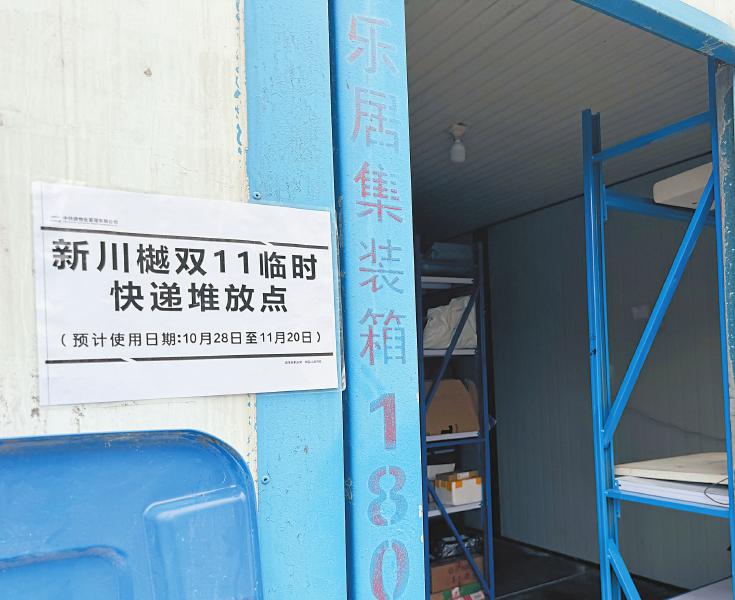
Core Viewpoint - The delivery services of several express companies in the Chengdu New District have been suspended, causing significant inconvenience for residents during the peak shopping period of "Double 11" [2][4]. Group 1: Delivery Issues - Residents in the New Chuan District reported that multiple express companies, including Zhongtong, Yuantong, Shentong, and Yunda, indicated that their locations were "undeliverable" due to reasons such as "address cannot be delivered" and "the order's delivery area cannot be dispatched" [2][3]. - The situation is affecting several residential complexes, with reports confirming that 2-5 express companies are showing "undeliverable" status for each complex [3]. Group 2: Reasons for Delivery Suspension - The primary reasons for the suspension of delivery services include the lack of delivery points in the area and a high volume of complaints from residents regarding lost or damaged packages [4][6]. - Many residential complexes lack dedicated express delivery stations, leading to a significant increase in delivery volume, with some complexes experiencing over 1,000 packages daily during "Double 11" [6]. - Complaints from residents about delivery issues have increased, prompting express companies to halt services due to operational inefficiencies and rising costs [6]. Group 3: Solutions Being Implemented - Community staff have reported that measures are being taken to address the delivery issues, including converting parts of property management offices into temporary pick-up points for packages [7]. - New temporary storage solutions, such as delivery cabinets and designated areas for package storage, are being established to facilitate the collection of packages by residents [7]. - Plans are in place to develop a neighborhood center that will integrate various services, including express delivery, to improve logistics in the area [7].


香港及中国交通运输行业 - 周期股受关注-Investor Presentation-HKChina Transportation - Cyclicals Under the Spotlight
2025-11-16 15:36
Summary of the Investor Presentation on HK/China Transportation Industry Overview - **Industry Focus**: The presentation covers the transportation sector in Hong Kong and China, specifically focusing on airlines, shipping, and express delivery [1][6]. Airlines - **Market Outlook**: The outlook for Chinese airlines remains bullish, driven by a supply-driven upcycle. Business demand is gradually recovering, with summer weaknesses fading [2][73]. - **Pricing Dynamics**: There is a closing pricing inflection due to continuous improvements in Passenger Load Factor (PLF) and a consensus among airlines against anti-involution practices [2][69]. - **Key Picks**: - Top pick: Air China-H (0753.HK) - Other recommendations: China Eastern Airlines-H (0670.HK), China Southern Airlines-H (1055.HK), Spring Airlines (601021.SS) [2][73]. - **Performance Metrics**: - 3Q25 total Revenue Passenger Kilometers (RPK) grew by 6.3% YoY, reaching +23% compared to 2019 levels [12][14]. - Domestic PLF improved to 89.4% in October, up by 4.1 percentage points YoY [28][69]. - Business route passenger growth recovered to 5.9% in October from approximately 3% during the summer [24][69]. Shipping - **Geopolitical Influences**: Geopolitical dynamics are significant factors affecting the shipping industry. VLCC (Very Large Crude Carrier) rates have reached new highs due to increased demand for "legitimate tankers" [3][80]. - **Tanker Market**: The tanker upcycle is expected to continue, with limited VLCC deliveries until the second half of 2026 [80][84]. - **Container Shipping Outlook**: The outlook for container shipping remains uncertain due to oversupply and disruptions from global trade frictions. The container ship orderbook/fleet ratio is at 32%, indicating high supply pressure [3][115][118]. Express Delivery - **Market Trends**: The express delivery industry is experiencing decelerated volume growth, with smaller players losing market share amid anti-involution initiatives. Leading players are consolidating and acquiring a majority of segment profits [4][125][127]. - **Key Players**: ZTO (ZTO.N) and YTO (600233.SS) are highlighted as market share leaders, while concerns remain for smaller players like Yunda (002120.SZ) due to sustained profit pressure [9][130]. Additional Insights - **Inbound Travel Recovery**: International demand growth for airlines remains robust, with total international capacity recovering to approximately 85% of 2019 levels, and that operated by Chinese airlines reaching about 105% [29][31]. - **Profitability Metrics**: The correlation between load factors and margins suggests that improved PLFs will support higher profitability for airlines [70][72]. - **Market Consolidation**: The express delivery market is consolidating, with leading players benefiting from anti-involution measures, while smaller players struggle to maintain market share [125][127]. This summary encapsulates the key insights and metrics from the investor presentation, providing a comprehensive overview of the current state and outlook of the transportation sector in Hong Kong and China.





高低切&反内卷
2025-11-16 15:36
Summary of Conference Call Notes Industry Overview - The conference call discusses the "anti-involution" policy aimed at optimizing supply-demand structures and promoting inflation recovery, which has been strengthened since September 2025 [2][3][5] - The current market shows a clear high-low switching phenomenon, with cyclical industries such as coal, petrochemicals, and non-ferrous metals performing well [2][7] Key Points and Arguments Anti-Involution Policy - The anti-involution policy aims to clear supply first and stimulate demand later, optimizing the supply-demand structure to promote inflation recovery [3][6] - The policy has been increasingly enforced since September 2025, with a focus on regulating production behaviors and eliminating irrational competition [2][3][5] - Specific measures include supply-side constraints and governance of low-price competition in various sectors, including electronics and steel [5][6] Market Impact - The anti-involution policy is expected to have both short-term and long-term impacts on the equity market, with a positive catalyst effect on prices and performance over the next year [6] - The policy is anticipated to lead to a deeper adjustment of the capacity cycle over the next 3-5 years, similar to the supply-side structural reforms initiated in 2016 [6][8] Sector Performance - The cyclical industries benefiting from the anti-involution and inflation trading include non-ferrous metals, steel, coal, petrochemicals, and sectors like agriculture and logistics [2][11] - The photovoltaic industry is experiencing price increases due to capacity exits, while the wind power sector has seen an 18% increase in turbine prices [2][12] - In the lithium battery sector, the price of lithium hexafluorophosphate has doubled, and global energy storage demand is growing at over 50% [2][12] Steel Industry Insights - The steel industry is facing challenges with rising raw material prices but is expected to see a gradual recovery in steel prices and profits due to policy support [13][15][16] - Major companies like Baosteel and Hesteel are expected to benefit from the anti-involution policy, which supports advanced enterprises [3][14][16] Polyester and PTA Industry - The polyester and PTA industry is characterized by high concentration, with supply growth lagging behind demand growth, leading to a healthy supply-demand relationship [17][18] - The Ministry of Industry and Information Technology is taking measures to potentially reduce production or curb new capacity, benefiting integrated companies [18] Organic Silicon Industry - The organic silicon industry has not seen new capacity since 2025, with demand growing rapidly at 24% in the first half of the year [19][20] - A recent meeting led by state-owned enterprises aims to reduce capacity by 30%, which could improve profitability and market concentration [20] Livestock Industry - The livestock industry has faced challenges, with pig prices dropping to a four-year low, leading to a shift towards capacity reduction [21][22] - Major companies are actively reducing production in response to policy adjustments [21] Express Delivery Industry - The express delivery sector has implemented anti-involution measures, resulting in price increases across the industry [23][24] - Companies like YTO Express and Shentong Express have reported increased revenue per shipment, indicating successful price adjustments [24][25][26] Recommendations - The conference recommends focusing on cyclical industries that benefit from tight supply and inflation trading logic, particularly in sectors like electric cells, metals, chemicals, agriculture, and transportation [10][11] - Specific express delivery companies such as YTO Express, Shentong Express, Jitu Express, and ZTO Express are highlighted as having strong performance potential under the anti-involution policy [27]
化工有色起飞,周期怎么看?
2025-11-16 15:36
Summary of Key Points from Conference Call Records Industry Overview Chemical Industry - The CCPI price index for the chemical industry increased slightly to 3,868 points, up 1% from the previous week, indicating a stabilization in prices [7][8] - Fixed asset investment growth in the chemical raw materials and products sector decreased to -7.9% in October, down from -5.6% previously, signaling a slowdown in investment [7][8] - Improvement in liquidity and anti-dumping policies are seen as catalysts for a potential recovery in the chemical sector in Q4 2025, with a focus on chemical fiber, nickel-chromium, agricultural chemicals, and lithium battery materials [8] Oil Shipping Industry - Oil shipping rates reached a five-year high of $126,000, driven by OPEC production cuts and increased demand, with supply tightness expected in 2025 [3][4] - The U.S. sanctions on Russian and Iranian fleets have further tightened compliant shipping capacity [3] - Recommendations include招商轮船 (Zhongshan Shipping) and 海南港股 (Hainan Port Stocks) due to favorable market conditions [4] Express Delivery Industry - During the Double Eleven shopping festival, 极兔速递 (Jitu Express) reported a global average daily package volume of 94.59 million, a 15% year-on-year increase, with significant growth in Southeast Asia and new markets [5] - The average daily package volume in Brazil exceeded 1 million, confirming the company's expansion potential in new markets [5] - The overall growth rate of express delivery volume slowed to less than 10% due to price increases, particularly in Guangdong where prices rose by approximately 0.5 yuan [6] Lithium Battery Materials - The price of lithium hexafluorophosphate surged from 50,000 yuan to 135,000 yuan per ton, reflecting strong market demand [9][10] - The price of additives like vinyl carbonate (VC) increased significantly due to supply disruptions, with VC prices rising from 77,000 yuan to 115,000 yuan [9][10] - Recommendations include 新宙邦 (New Zobon) and关注莲花科技 (Lianhua Technology) for their strong positions in the lithium battery supply chain [10] Organic Silicon Industry - The organic silicon industry has seen a price increase for DMC to 13,000 yuan, driven by a consensus to reduce production by 30% [11] - No new production capacity is expected from 2025 to 2026, while demand is projected to grow by 8-10%, indicating a potential supply-demand improvement by 2026 [11] Vitamin Market - The vitamin market is showing signs of seasonal demand, with prices for vitamin E and A recovering due to low inventory levels [12][13] - Recommendations include focusing on leading companies like 新和成 (New Hecheng) and 花园生物 (Garden Bio) for investment opportunities [13] Metal Sector - The metal sector has performed strongly, with expectations for continued interest in aluminum and energy metals [14] - Recommendations include 盛新锂能 (Shengxin Lithium) and 雅化集团 (Yahua Group) as key players in the market [14] Coal Industry - The coal sector is experiencing price fluctuations, with port coal prices rising but at a slower rate [15][16] - Anticipated increases in demand due to colder weather could drive prices higher, presenting a good investment opportunity in coal stocks [16] Conclusion - The conference call highlighted various sectors with distinct trends and investment opportunities, particularly in the chemical, oil shipping, express delivery, lithium battery materials, organic silicon, vitamin, metal, and coal industries. Each sector presents unique dynamics influenced by market conditions, regulatory changes, and consumer demand.