大疆

Search documents
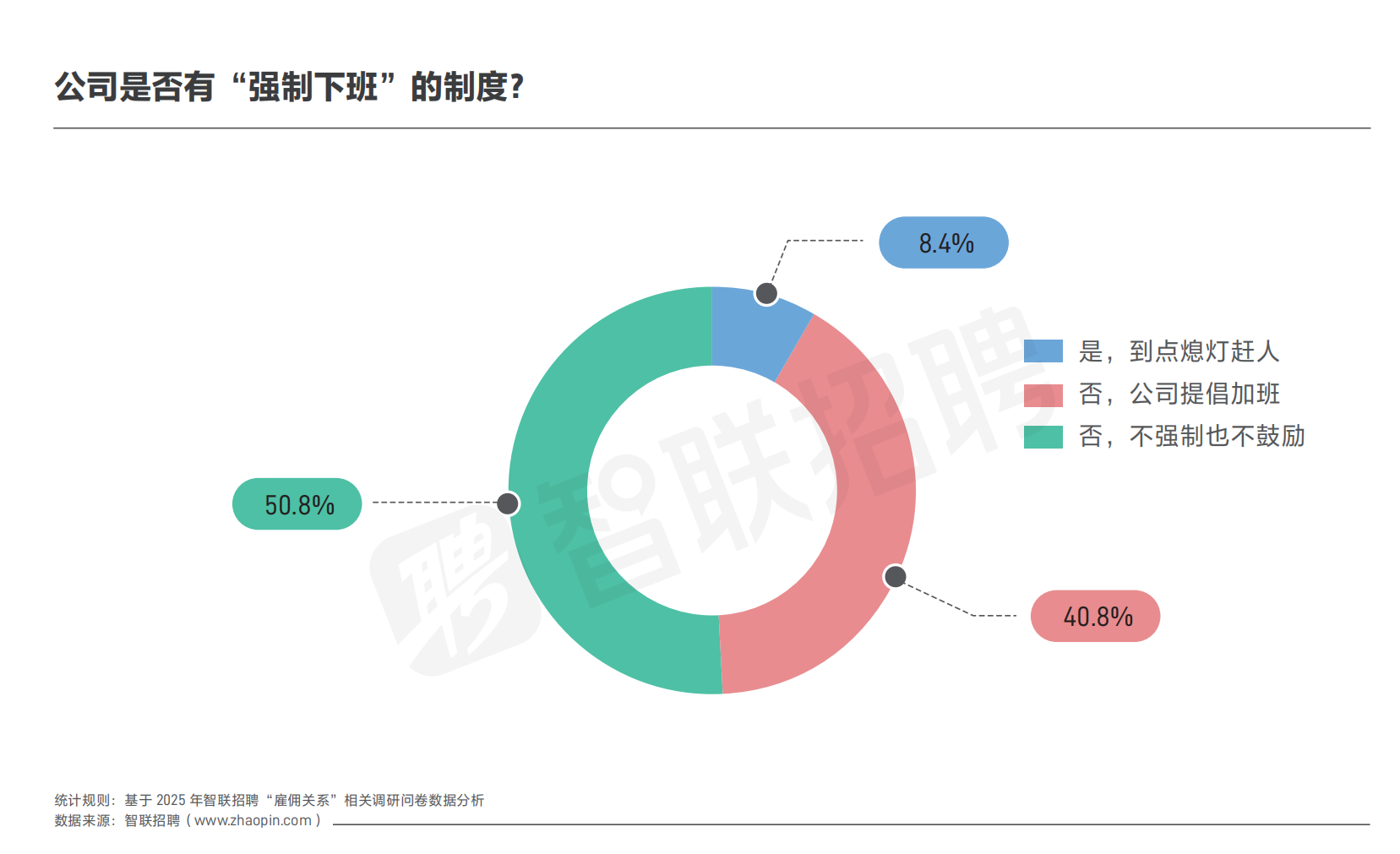
8%企业已试点“强制下班”
第一财经· 2025-12-22 10:35
本文字数:1148,阅读时长大约2分钟 作者 | 第一财经 郭晋晖 从年初的政府工作报告到年末到中央经济工作会议,都将"整治'内卷式'竞争"列为经济工作的重要任 务。这一年自上而下的"反内卷"对普通打工人有何影响? 智联招聘近日发布的《2025雇佣关系趋势报告》(下称报告)的调查显示,"反内卷"已经成为职场 新共识,78%职场人会因内卷跳槽,职场人对健康工作环境与生活平衡的诉求,也在推动企业人力 资源管理的转变,国内8.4%的公司已正式推行"强行下班"制度。 2025.12. 22 这份报告称,当职场内卷挤压个体成长空间、侵蚀生活质量,造成无效消耗时,越来越多的人便开始 重新权衡这份工作是否值得继续坚持。 调研数据显示,近八成职场人坦言,若长期处于过度内卷的环境中,会萌生离职念头,其中31.5% 表示"更倾向于寻找工作节奏更健康的企业"。职场人也会采用"策略性摸鱼"、下班后开启消息免打 扰,拒绝"表演式"工作等行为来进行"反内卷"。 今年3月,中共中央办公厅、国务院办公厅印发《提振消费专项行动方案》,要求对各单位休息休假 制度执行情况的常态化监督,依法保障劳动者休息休假权益,不得违法延长劳动者工作时间,"保障 ...


调查:8成职场人会因内卷跳槽,8%企业已试点“强制下班”
Di Yi Cai Jing· 2025-12-22 10:16
大疆、海尔、美的等企业相继推出"反卷"措施 从年初的政府工作报告到年末到中央经济工作会议,都将"整治'内卷式'竞争"列为经济工作的重要任务。这一年自上而下的"反内卷"对普通打工人有何影 响? 智联招聘近日发布的《2025雇佣关系趋势报告》(下称报告)的调查显示,"反内卷"已经成为职场新共识,78%职场人会因内卷跳槽,职场人对健康工作环 境与生活平衡的诉求,也在推动企业人力资源管理的转变,国内8.4%的公司已正式推行"强行下班"制度。 今年3月,中共中央办公厅、国务院办公厅印发《提振消费专项行动方案》,要求对各单位休息休假制度执行情况的常态化监督,依法保障劳动者休息休假 权益,不得违法延长劳动者工作时间,"保障休息休假权益"成为职场反内卷的一个标志。 年初,大疆、海尔、美的等企业相继推出"反卷"措施——到点强制下班、抵制无效加班、严禁非必要会议,浙江民企也开始自觉推行4.5天工作制。 上海社科院经济研究所研究室主任詹宇波曾对第一财经表示,"内卷"和竞争激烈,是人才市场长期热议的话题。因此,减少劳动时间,增加闲暇时光,趋势 兴起就很容易获得认可,也具有内生的动力。 报告显示,这些变化表明企业开始调整考核考核和激励 ...
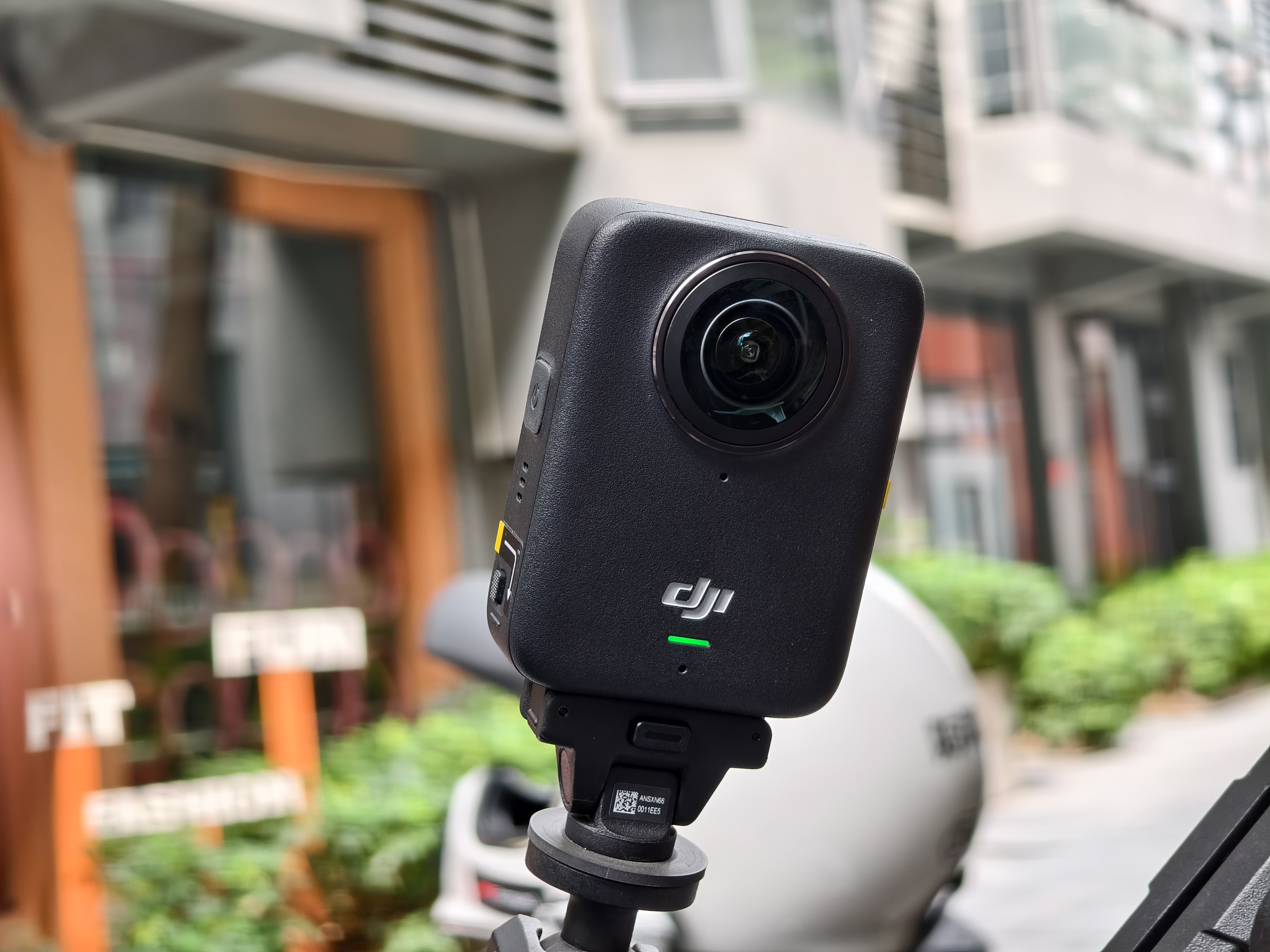
户外影像的2025年:性能内卷退潮,无感体验爆发,大疆影石双雄争霸
3 6 Ke· 2025-12-22 09:21
Core Insights - The outdoor imaging market is experiencing significant growth, driven by the changing user perception of capturing moments, prioritizing the ability to record over image clarity [5][6][15]. Group 1: Market Trends - The global action camera market is projected to reach $2.292 billion in sales by 2024, with an expected growth to $3.449 billion by 2031, reflecting a compound annual growth rate (CAGR) of 6.1% from 2025 to 2031 [5]. - The trend towards outdoor imaging equipment is characterized by devices that are lighter, smaller, and simpler, allowing users to focus on enjoying activities while the equipment handles the recording [8][31]. Group 2: User Experience Evolution - Users' understanding of "capturing moments" has shifted from meticulous preparation to a more spontaneous approach, where devices automatically record during activities [6][15]. - The evolution of drones has shifted from primarily capturing scenic views to providing stable, natural third-person perspectives, with a focus on simplifying user operation [8][9][14]. Group 3: Technological Innovations - DJI's Neo 2 drone exemplifies the trend towards user-friendly operation, featuring intuitive controls that eliminate the fear of complex handling [9]. - The Insta360's X5 and DJI's OSMO 360 cameras allow users to capture entire environments without the need for immediate compositional decisions, enhancing the user experience [16][22]. Group 4: Product Development - The emergence of thumb cameras addresses the need for easy, everyday recording, making the process as natural as using headphones [27][28]. - Both DJI and Insta360 are focusing on making image recording a habitual part of users' lives, transforming the act of capturing moments into a seamless experience [27][31]. Group 5: Future Directions - The outdoor imaging industry is expected to continue simplifying the recording process, moving away from complex setups to more intuitive, user-friendly devices [31][34]. - The ultimate goal is to create a second imaging system that allows users to effortlessly document their lives without distinguishing between creative shooting and casual recording [34].
2025,中国最火创业潮
投资界· 2025-12-21 07:39
Core Viewpoint - The article discusses the opportunities in embodied intelligence and AI hardware in China, highlighting the potential for companies that integrate software and hardware effectively, particularly in the fitness and robotics sectors [2]. Group 1: Company Insights - Speediance, founded in 2020, focuses on digital fitness equipment that replaces traditional weights with motors, emphasizing effective fitness guidance and meeting diverse user needs [3]. - Zhujiji Dynamics has been researching humanoid robotics since 2017, aiming to create a general-purpose robotic platform that serves households rather than factories [4]. - Speediance has benefited significantly from AI, transitioning towards an AI personal training model, capitalizing on the growing demand for fitness knowledge [4][7]. Group 2: Market Dynamics - The AI and robotics sectors in China are experiencing rapid growth, with a notable efficiency advantage in hardware iteration compared to other countries [4]. - The fitness market is seen as a certain opportunity, with a potential global market size reaching hundreds of billions, driven by health and wellness trends [10][15]. - The article suggests that the current wave of interest in humanoid robots may contain bubbles, but such bubbles are necessary for innovation and attracting talent [9][12]. Group 3: Technological Advancements - The integration of AI in health management is highlighted, with potential applications in monitoring heart rates and mental health indicators through advanced data processing [8][11]. - The discussion emphasizes the importance of data in robotics, noting that the complexity of tasks for robots requires extensive data collection and processing capabilities [13][16]. - The future of robotics is seen as reliant on the development of general-purpose robots that can meet diverse household needs, leveraging both hardware and software advancements [15].

深圳发力首发经济的“双面画像” :要“流量”更要“留量”
Sou Hu Cai Jing· 2025-12-21 00:35
Core Insights - The opening of Shenzhen's MixC shopping center on July 12, 2025, attracted 420,000 visitors and generated nearly 20 million yuan in sales, highlighting the vitality of China's economy and urban competitiveness [2] - The concept of "first-release economy" is emerging as a key strategy for cities to activate consumption and enhance commercial appeal, encompassing new product launches, business models, and services [2] - Shenzhen is positioning itself as a leading city for the "first-release economy," with significant policy support and a focus on attracting new brands and innovative business formats [11][13] Economic Growth - In Q3 2025, Shenzhen experienced a "explosive growth" in its first-store economy, with 222 new first stores, a 34.5% increase from Q3 2024, and a 15% rise compared to the first half of 2025 [4] - The total retail sales in Shenzhen exceeded 1 trillion yuan for two consecutive years, with the wholesale and retail sector growing from 4 trillion yuan to 6 trillion yuan over the past five years [4] - Shenzhen has been designated as a national pilot city for "new scenes, new formats, and new models" in consumption, expected to receive 400 million yuan in special support funds [4] Policy Support - The Chinese government has emphasized the importance of the first-release economy in promoting brand consumption and has encouraged cities to develop brand launch centers [11] - Shenzhen's government aims to add over 1,000 new first stores, flagship stores, and new concept stores within the year, as part of its consumption boost initiatives [11] - The establishment of the Shenzhen First-Release Economy Service Center marks a new phase in the professional and systematic development of the first-release economy [15] Market Dynamics - Shenzhen is becoming the first stop for many domestic and international brands entering the South China market, driven by strong market demand and a young, affluent consumer base [8] - The city is not only a consumer market but also a global manufacturing and innovation hub, with major tech companies launching their latest products in Shenzhen [8] - The competition is shifting from merely attracting new stores to cultivating an ecosystem and deepening consumer experiences [18] Future Outlook - Shenzhen aims to build world-class commercial districts, targeting a retail sales total of 1.7 trillion yuan by 2030 and nearly 2.5 trillion yuan by 2035 [16] - The city must leverage its technological and consumer strengths to transition from a follower to a leader in the first-release economy [17][18] - The focus will be on converting initial consumer interest into long-term loyalty, which poses a challenge for mall operations and brand sustainability [17]

1至11月四川省退税商品销售额同比增长超142%
Xin Hua Cai Jing· 2025-12-20 09:52
Core Insights - Sichuan Province's tax refund sales have increased by over 142% year-on-year from January to November, ranking fourth in the country behind Shanghai, Beijing, and Guangdong [1] - The number of outbound tourists applying for tax refunds has surged by 284% [1] Group 1: Sales Performance - The sales scale of tax refund goods in Sichuan is significant, with a notable increase in inbound tourism contributing to this growth [1] - Tourists from 122 countries and regions have participated in the tax refund program, an increase of 56 compared to last year [1] - Tourists from Hong Kong and Macau lead in consumption, accounting for 41% of total spending [1] Group 2: Consumer Trends - Southeast Asian and South Asian tourists represent the largest number of consumers, with their total participation increasing by nearly four times and spending rising by over 2.5 times [1] - Sales of international brands such as luxury bags and jewelry are prominent, while "Made in China" and "Sichuan-made" products have also shown remarkable performance [1] - Sales of Xiaomi phones, smartwatches, and DJI drones have increased by 728% in quantity and 176% in sales value, making up 62% of total sales in the 3C product category [1] Group 3: Retail Environment - Chengdu is the core consumption area, with over 99% of tax refund participants and sales coming from the city [2] - The adjustment of the tax refund threshold and the rapid expansion of tax refund stores have positively impacted small and medium-sized businesses [2] - There are currently 662 tax refund stores in Sichuan, doubling the number since the beginning of the year, with a significant increase in stores selling domestic brands [2] Group 4: Innovative Measures - Sichuan has introduced innovative measures such as "immediate refund" online services and cross-province recognition to enhance the tax refund process [2] - Two major tax refund points have been established in key shopping areas to facilitate the consumption of foreign tourists [2] - The number of stores offering "immediate refund" services has increased nearly threefold since the beginning of the year, with a 16-fold increase in the number of participants and a 19-fold increase in sales [2]
破解中小学AI教育“五无”:科企入校成效显著,西部教材、教师缺口明显
Xin Lang Cai Jing· 2025-12-20 08:46
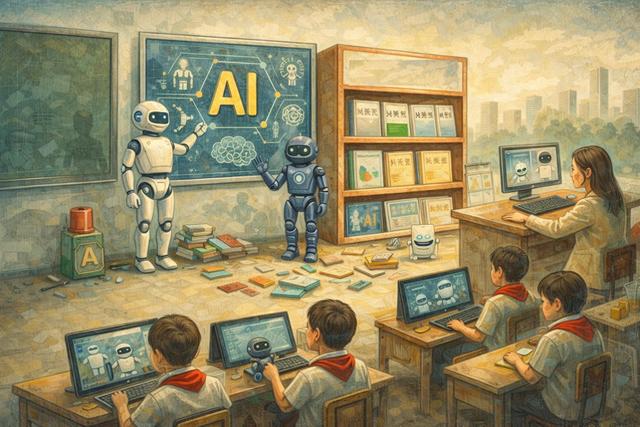
Core Insights - The implementation of AI education in primary and secondary schools is set to officially begin in certain provinces by September 2025, driven by various policies and guidelines from the Ministry of Education [3][6] - There is a significant disparity in the understanding and application of AI among teachers in less developed regions compared to more developed areas, highlighting a need for improved training and resources [4][5] Group 1: Current State of AI Education - As of now, many teachers in less developed regions have limited exposure to AI tools, with only about 30% having used AI in their work, indicating a gap in familiarity and application [3][4] - In Shanghai, over 6,000 teachers have utilized AI for lesson preparation, and more than 15,000 have incorporated AI tools into their teaching, showcasing a more advanced integration of AI in education [3] Group 2: Challenges in AI Education Implementation - The "Five Nos" concerns raised by experts include the lack of fixed class hours, standardized textbooks, professional teachers, smart devices, and evaluation standards, which hinder the effective rollout of AI education [2][4] - Many existing AI educational materials are outdated or overly focused on promoting specific technology products, lacking the necessary breadth and depth for comprehensive education [5][6] Group 3: Role of Technology Companies - Technology companies are increasingly recognized for their role in providing comprehensive AI education solutions, with firms like iFlytek and DJI leading initiatives in various provinces [4][5] - These companies are leveraging cloud technology to create virtual labs, making AI education more accessible to schools with limited resources [4] Group 4: Future Directions - There is a growing demand for national standardized textbooks and more training opportunities for teachers to enhance the quality of AI education [5][6] - Concerns have been raised about the potential commercialization of AI education, with some regions focusing excessively on competitions and certifications, which may detract from the core educational objectives [6]
开放创新的生态才是“杀手锏” | 经观社论
Jing Ji Guan Cha Bao· 2025-12-20 05:41
Core Viewpoint - The article discusses the supply chain competition between DJI and Yingshi, highlighting a broader trend across various industries where leading companies require exclusive agreements from suppliers, raising questions about the implications for innovation and competition in China's manufacturing sector [1][2]. Group 1: Supply Chain Dynamics - The phenomenon of "one or the other" in supply chain agreements is not unique to the drone industry but is observed in consumer electronics and home appliances [1]. - Leading companies seek influence over their supply chains, which can be justified as a means to protect prior innovation investments [1]. - However, when exclusivity extends beyond core components to semi-custom parts and secondary suppliers, it can lead to excessive control over the supply chain, potentially resulting in non-market resource squeezing [1]. Group 2: Long-term Implications - Short-term strategies to control resources may hinder competitors but could ultimately obstruct knowledge flow and weaken the overall innovation capacity of the supply chain [2]. - The true competitiveness of Chinese manufacturing relies on a complete, collaborative, and flexible industrial system, supported by numerous small and medium enterprises [2]. - An advanced manufacturing nation thrives not on closed-off competitive advantages but on an open ecosystem that fosters growth and innovation among all participants [2]. Group 3: Recommendations for Improvement - Clearer regulations are needed to define the boundaries of monopoly and unfair competition, protecting smaller players and guiding market leaders to avoid endless commercial disputes [3]. - Companies should adopt tiered supply chain cooperation models, ensuring necessary protections for unique technologies while maintaining openness for standardized components [3]. - Industry leaders must balance protecting innovation with promoting industry progress, recognizing that true competition lies in advancing the entire ecosystem rather than merely defeating rivals [3].
经观社论|开放创新的生态才是“杀手锏”
经济观察报· 2025-12-20 05:21
Core Viewpoint - A healthy and open supply chain ecosystem ultimately benefits all participants, including today's market leaders, and the competitiveness of this ecosystem determines how far leading companies can go [1]. Group 1: Supply Chain Dynamics - The article discusses the "either-or" phenomenon in supply chains, particularly highlighted by the competition between DJI and Yingshi, which is not unique to the drone industry but prevalent across various sectors like consumer electronics and home appliances [2]. - The discussion emphasizes the importance of a competitive environment and innovation ecosystem to support China's transition from a manufacturing giant to an advanced manufacturing power [2]. - Leading companies seek influence over supply chains for valid business reasons, and the practice of exclusive agreements should be analyzed on a case-by-case basis [2][3]. Group 2: Risks of Over-Control - Short-term strategies that enhance control over supply chains may hinder competitors' access to resources, but long-term implications could obstruct knowledge flow and weaken innovation capabilities across the supply chain [3][4]. - The true competitiveness of Chinese manufacturing is rooted in a complete, collaborative, and resilient industrial system, supported by numerous small and medium enterprises [4]. Group 3: Recommendations for Improvement - To escape the cycle of "involution" and zero-sum competition, collaboration and restraint among regulatory bodies, leading companies, and suppliers are essential [4][5]. - Clearer rules are needed to define the boundaries of monopoly and unfair competition, protecting smaller participants while regulating market leaders to avoid endless commercial disputes [5]. - Companies should explore tiered supply chain cooperation models, maintaining openness for standardized components while protecting core proprietary technologies [5].

「一脑多形」圆桌:世界模型、空间智能在具身智能出现了哪些具体进展?丨GAIR 2025
雷峰网· 2025-12-20 04:07
Core Viewpoint - The article discusses the current state and future potential of embodied intelligence, focusing on the challenges and opportunities presented by world models and spatial intelligence in the field of robotics and AI [2][4][10]. Group 1: Development of Embodied Intelligence - The technology route for embodied intelligence is still in an exploratory phase, with no convergence yet, which is seen as a positive sign for innovation [4][3]. - There is a consensus among experts that the core issues of embodied intelligence, such as interaction and human-machine collaboration, should be addressed by academic institutions, while industries focus on practical applications [4][5]. - The integration of AI with physical entities is expected to lead to significant advancements in intelligence, but the field must avoid reverting to industrial automation without achieving generalized intelligence [4][5][30]. Group 2: World Models in Autonomous Driving - World models are currently being utilized by leading companies like Tesla to enhance data generation and improve decision-making processes through closed-loop testing [11][12]. - The concept of world models has gained traction in autonomous driving due to the simplicity of generating scenarios compared to robotics, with advancements in generative AI enabling the creation of realistic training samples [12][13]. - There is ongoing debate regarding the definition and application of world models in both autonomous driving and robotics, with differing opinions on the necessity of pixel-level reconstruction versus latent state representation [12][13][14]. Group 3: Spatial Intelligence in Robotics - Spatial intelligence is a critical aspect of robotics, with a focus on perception and understanding spatial relationships, which has evolved from traditional SLAM techniques to more learning-based approaches [20][21]. - The current challenges in spatial intelligence include the need for better data representation and understanding of complex spatial relationships, which are still underdeveloped in robotic systems [22][23]. - The integration of visual and semantic information is essential for enhancing robots' spatial capabilities, but the field is still in its early stages [22][23][24]. Group 4: Commercialization and Future Applications - The future of drone applications is expected to expand significantly, with potential uses in various sectors, but the timeline for widespread adoption remains uncertain [26][27]. - The gap between technological capabilities and market needs poses challenges for entrepreneurs, as there is often a mismatch between innovative ideas and practical industrial requirements [30][31]. - The shift towards learning-based control paradigms is anticipated to increase the applicability of drones and robots in real-world scenarios, moving beyond traditional automation [28][29].