
九毛九

Search documents
大众餐饮行业深度:解码大众餐饮龙头逆势增长的生意经
Guoxin Securities· 2025-08-19 09:28
Investment Rating - The report maintains an "Outperform" rating for the mass catering industry [5] Core Insights - The mass catering industry is experiencing a slowdown in growth, with new engines emerging from lower-tier markets and online services [1][14] - Health and cost-effectiveness are becoming key consumer demands, necessitating adjustments in brand strategies to meet these evolving preferences [1][22] - The report draws parallels with Japan's restaurant industry, highlighting that even during economic downturns, leading companies can achieve growth through efficiency and value [1][27] Summary by Sections Industry Changes - The mass catering industry has seen a decline in growth rates, with a reported 4.3% year-on-year increase in total catering revenue for the first half of 2025, and a mere 0.9% increase in June [14] - Lower-tier markets are becoming significant growth drivers, as they show stronger consumer activity compared to high-tier cities [14][17] - The online food delivery market is expanding rapidly, with a projected market size of 1.3 trillion yuan in 2024, growing at a rate faster than the overall catering market [17] Strategies of Leading Companies - Domestic catering leaders are shifting from scale expansion to efficiency improvement, focusing on optimizing store operations and enhancing supply chain value [2][38] - Companies like Xiaocaiyuan and Green Tea Group are expected to see significant profit growth through operational efficiency and strategic expansion [3] Investment Value of Leading Companies - Xiaocaiyuan is projected to achieve net profits of 7.7 billion yuan in 2025, while Green Tea Group is expected to reach 5.1 billion yuan [3] - The report recommends focusing on companies that are effectively balancing same-store sales growth with steady expansion, particularly Xiaocaiyuan, Green Tea Group, Guoquan, and Jiumaojiu [3][5]
餐饮月度专题:茶饮扩张强劲,西式快餐扩张活跃,客单价环比企稳-20250818
ZHESHANG SECURITIES· 2025-08-18 13:05
Investment Rating - The industry investment rating is "Positive" [4] Core Insights - The report highlights strong expansion in tea beverage brands and active growth in Western fast food, with average transaction prices stabilizing month-on-month [5][8][10] Summary by Sections Western Fast Food - The expansion of Western fast food is active, with average transaction prices remaining stable, indicating market resilience [8] - Notable trends in net store openings for major brands include: - KFC: -0.4% in August 2024 - McDonald's: 0.2% in August 2024 - Pizza Hut: -1.8% in August 2024 - Domino's: 0.0% in August 2024 [8] Tea Beverage - Leading brands in the tea beverage sector are expanding significantly, while overall average transaction prices are fluctuating as they seek balance [10] - Key trends in net store openings for major tea brands include: - Mixue Ice Cream: -2.3% in August 2024 - Heytea: -1.1% in August 2024 - Naixue's Tea: -0.3% in August 2024 [10] Coffee & Hot Pot - The coffee segment shows strong expansion momentum, with notable net store openings: - Luckin Coffee: 1,812 new stores, 8% increase - Kudi Coffee: 2,495 new stores, 25% increase [12] - The hot pot industry is facing adjustments, with several brands showing negative net openings [14] Other Food Segments - The overall opening of stores in segments like pickled fish, snacks, and small pubs is cautious, with average transaction prices stabilizing [15] - Key trends in net store openings for snack brands include: - Zuiyan Zhiwei Chicken: -463 stores, 8% decrease - Juewei Duck Neck: -1,127 stores, 9% decrease [17]
九毛九“塌房”记:食品安全、服务翻车,网红品牌为何从神坛跌落
Jing Ji Guan Cha Bao· 2025-08-15 05:42
Core Viewpoint - Jiumaojiu International Holdings Limited, once a leading player in the Chinese dining industry, is facing significant challenges including declining performance, store closures, food safety controversies, and a crisis of consumer trust [1][2]. Performance Decline: Core Brand Contraction - In 2024, Jiumaojiu reported a revenue of 6.074 billion yuan, a year-on-year increase of 1.5%, but net profit plummeted by 87.69% to 55.807 million yuan [2]. - The number of stores decreased from 807 in Q1 2025 to 780 in Q2, with a total of 78 closures, reverting to the level at the end of 2023 [2]. - The core brand "Tai Er Suancaiyu" saw its stores drop from 634 at the end of 2024 to 566, with a significant reduction in self-operated locations [2]. - Same-store sales and turnover rates declined across various brands, with "Tai Er Suancaiyu" turnover rate falling from 3.5 times per day to 3.1 times, and same-store daily sales dropping by 13.7% [2]. Triple Blow: Pre-made Food Controversy, Food Safety, and Service Quality - Jiumaojiu's brands, particularly "Tai Er Suancaiyu," are embroiled in controversies regarding food safety, service quality, and the use of pre-made ingredients [3]. - Despite claims of using fresh ingredients, reports suggest that key ingredients are delivered from a central kitchen, leading to consumer dissatisfaction [3]. - Food safety issues have arisen, including reports of cleaning agents found in utensils and foreign objects in dishes, damaging the brand's reputation [3]. - Service quality has also been criticized, with customers reporting poor service and long wait times, indicating a decline from its previous popularity [3]. Market Capitalization Decline: Founder’s Wealth Erosion - Jiumaojiu's market capitalization peaked at 56.2 billion HKD in February 2021 but has since plummeted over 90% to approximately 4 billion HKD by July 2025 [4]. - The founder, Guan Yihong, has seen a significant reduction in personal wealth, reflecting the company's struggles post-IPO [4]. - The initial public offering was marked by high investor enthusiasm, but the subsequent operational shortcomings have led to a prolonged decline [4]. Recovery Challenges - Jiumaojiu has attempted various strategies for recovery, such as closing underperforming stores and enhancing delivery services, but these efforts have yielded limited results [4]. - The transition from a highly sought-after brand to struggling for customer attraction highlights the challenges faced by brands driven by capital rather than sustainable operational practices [4][5]. - Without breakthroughs in supply chain transparency, menu innovation, and employee training, the path to recovery remains long and arduous for Jiumaojiu [5].
“三座大山”、“外卖大战”下的餐饮众生相
3 6 Ke· 2025-08-14 11:54
Core Viewpoint - The restaurant industry in China is facing significant challenges in 2025, with declining revenue growth, shrinking profits, and intensified competition, primarily driven by rising costs in raw materials, rent, and labor [2][4][8]. Group 1: Industry Performance - In the first half of 2025, national restaurant revenue growth decreased by 3.6 percentage points year-on-year, while revenue growth for large-scale dining units fell by 2 percentage points [2]. - In Beijing, profits in the accommodation and catering industry dropped by 67% in the first half of 2025 compared to the previous year [2]. - The China Cuisine Association noted a trend of slowing revenue growth, declining profits, and increased competition in the restaurant sector [2]. Group 2: Cost Pressures - The "three mountains" of pressure on restaurants include rising costs of raw materials, rent, and labor, which are affecting nearly all Chinese dining establishments [4][8]. - For example, at the restaurant chain Haidilao, employee costs, rent, and raw materials accounted for 71.9% of total revenue in 2024 [4]. - The rising labor costs are particularly notable, with average monthly wages exceeding 5,000 yuan and additional costs for employee accommodations and social security [3][4]. Group 3: Financial Performance of Key Players - Haidilao and other major restaurant chains have shown only slight revenue and profit increases, while many others report poor financial performance [5]. - For instance, the group "Xiabuxiabu" reported a revenue decline of 19.65% in 2024, with a net loss of 398 million yuan, more than doubling its previous year's losses [6]. - "Naixue" reported a revenue drop of 4.7% in 2024, with a net loss of 917 million yuan, continuing a trend of losses since its IPO [6][7]. Group 4: Strategies for Survival - To cope with rising costs, restaurants are focusing on cost control and efficiency optimization as survival strategies [8]. - Haidilao has implemented smart kitchen management systems and a full supply chain layout to reduce procurement costs and ensure food safety [10][11]. - New restaurant brands are increasingly adopting digitalization to enhance operational efficiency and cost management [14][19]. Group 5: Shift to Delivery and New Business Models - As the industry transitions from growth to a focus on existing market share, many restaurants are exploring online ordering and delivery services [15]. - Some brands are opening "satellite" or "quick pick-up" stores in lower-rent areas, primarily focusing on delivery to reduce costs and improve efficiency [15]. - For example, Haidilao's delivery revenue increased by 20.4% in 2024, while "Jiuma Jiu" reported a 15.8% growth in its delivery business [15]. Group 6: Competitive Landscape - The competitive landscape of the delivery market has stabilized, with restaurants competing on product quality, supply chain efficiency, and digital capabilities [20]. - Brands like "Kua Fu" and "Ning Ji" are leveraging their established capabilities in product quality and digitalization to gain a competitive edge in the delivery market [19][20].



九毛九(09922.HK)将于8月22日召开董事会会议以审批中期业绩
Ge Long Hui· 2025-08-12 09:53
格隆汇8月12日丨九毛九(09922.HK)公布,公司将于2025年8月22日召开董事会会议,以(其中包括)审 议及通过集团截至2025年6月30日止六个月的中期业绩及其发布,以及审议派发中期股息的建议(如 有)。 ...
九毛九(09922) - 董事会会议召开日期
2025-08-12 09:49
香港交易及結算所有限公司及香港聯合交易所有限公司對本公告的內容概不負責,對其準確性 或完整性亦不發表任何聲明,並明確表示,概不對因本公告全部或任何部份內容而產生或因倚 賴該等內容而引致的任何損失承擔任何責任。 Jiumaojiu International Holdings Limited 九毛九國際控股有限公司 (於開曼群島註冊成立的有限公司) 董事會會議召開日期 九毛九國際控股有限公司(「本公司」)之董事(「董事」)會(「董事會」)謹此宣佈, 本公司將於2025年8月22日(星期五)舉行董事會會議,其中議程包括批准刊發本 公司及其附屬公司截至2025年6月30日止六個月之未經審核綜合中期業績公告, 以及考慮派發中期股息(如有)。 於本公告日期,董事會包括主席兼執行董事管毅宏先生、行政總裁兼執行董事何 成效先生、執行董事崔弄宇女士及蘇淡滿先生,以及獨立非執行董事唐智暉女 士、朱睿女士及王曉梅女士。 承董事會命 九毛九國際控股有限公司 主席 管毅宏 香港,2025年8月12日 (股份代號:9922) ...
云贵川Bistro漂亮饭,人均300没有回头客
3 6 Ke· 2025-08-08 07:10
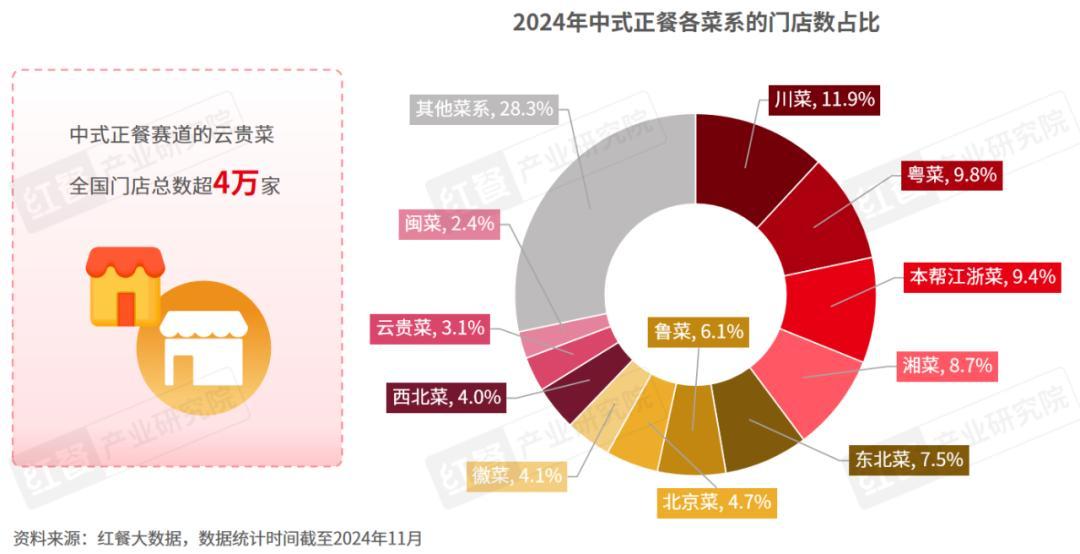
Core Viewpoint - The rise of "Yunnan-Guizhou-Sichuan bistro" restaurants reflects a trend where traditional regional cuisines are being rebranded and marketed as high-end dining experiences, often detached from their authentic roots [1][29]. Group 1: Characteristics of Yunnan-Guizhou-Sichuan Bistro - These bistros often feature names that include words like "mountain," "wild," "fruit," and "cloud," emphasizing a blend of local and foreign influences [2]. - The decor is typically natural and earthy, with elements like camping chairs and greenery to create an illusion of being in the wilderness [2]. - The menu combines traditional dishes with modern twists, such as using whole ingredients for preparation and pairing unusual combinations to enhance visual appeal for social media [2]. Group 2: Evolution of Bistro Concept - Originally, a bistro referred to a small, affordable French eatery serving simple dishes, primarily catering to local communities [3][5][6]. - Over time, the term has evolved into a marketing tool that conveys a sense of casual elegance, often associated with higher price points and upscale locations [8][9][11]. - The average spending per person in these establishments has significantly increased, with typical prices ranging from over 100 to 500 yuan [10]. Group 3: Market Dynamics and Trends - The Yunnan-Guizhou-Sichuan cuisine has not been fully developed in the past, with only 2.4% of Chinese restaurants representing Guizhou cuisine [16][18]. - Geographic challenges have hindered the growth of these cuisines, making it difficult to establish a robust supply chain and attract talent [18][19][20]. - The recent popularity of dishes like Guizhou sour soup has led to a surge in related restaurant openings, with a 40% increase in establishments focusing on this flavor profile [13][14][15]. Group 4: Marketing and Consumer Perception - The current trend of Yunnan-Guizhou-Sichuan bistros is seen as a marketing strategy that capitalizes on the exotic appeal of these cuisines, often prioritizing aesthetics over authenticity [24][26]. - The industry is increasingly resembling the entertainment sector, where capital seeks to package and promote lesser-known cuisines as trendy dining options [28]. - Ultimately, this trend risks reducing the rich culinary heritage of Yunnan and Guizhou to mere symbols of middle-class aspirations, overshadowing their true cultural significance [29].
百福控股出售知名餐饮股份,顾东升、潮发创始人魏传发等接手
Nan Fang Du Shi Bao· 2025-08-07 10:57
Core Viewpoint - Baifu Holdings plans to sell 1.70% of its stake in Yujian Xiaomian for 48 million yuan, reducing its ownership from 17.16% to 15.46% [1][3] Company Summary - The three individual investors acquiring the shares are Du Ming, Gu Dongsheng, and Wei Chuanfa, with Gu already holding 7.73% of Yujian Xiaomian [3] - Baifu Holdings views the Chinese restaurant industry as being in a growth phase, and the sale is intended to recoup initial investment costs and seek new investment opportunities [3] - Despite the sale, Baifu Holdings considers its remaining stake in Yujian Xiaomian as a strategic investment and has no plans to dispose of the remaining shares [3] - Baifu Holdings initially invested 25 million yuan in Yujian Xiaomian in November 2016, followed by additional investments in February 2020 and March 2021 [3] Industry Summary - Yujian Xiaomian, founded in Guangzhou in 2014, specializes in Sichuan and Chongqing-style noodles and ranked fourth in market share among Chinese noodle restaurants last year [4] - Yujian Xiaomian's revenue for 2024 is projected to be 1.154 billion yuan, with a net profit of 60.7 million yuan [4] - Baifu Holdings primarily generates revenue through investments and operations in the restaurant and food brands sector, with a total of 1,171 brand outlets by the end of 2024 [4][6] - Baifu Holdings reported a 22.3% decline in revenue to 474 million yuan for 2024, with a net loss of 242 million yuan, attributed to intense market competition and strategic transformation [6] - The company faces liquidity challenges, with current assets of 153 million yuan and cash equivalents of only 21.3 million yuan, leading to a current ratio of 0.17 [6]

九毛九(09922) - 截至二零二五年七月三十一日止之股份发行人的证券变动月报表
2025-08-06 08:56
FF301 股份發行人及根據《上市規則》第十九B章上市的香港預託證券發行人的證券變動月報表 截至月份: 2025年7月31日 狀態: 新提交 致:香港交易及結算所有限公司 公司名稱: 九毛九国际控股有限公司 (於開曼群島註冊成立的有限公司) 呈交日期: 2025年8月6日 I. 法定/註冊股本變動 | 1. 股份分類 | 普通股 | 股份類別 | 不適用 | | 於香港聯交所上市 (註1) | | 是 | | | --- | --- | --- | --- | --- | --- | --- | --- | --- | | 證券代號 (如上市) | 09922 | 說明 | | | | | | | | | | 法定/註冊股份數目 | | | 面值 | | 法定/註冊股本 | | | 上月底結存 | | | 500,000,000,000 | USD | 0.0000001 | USD | | 50,000 | | 增加 / 減少 (-) | | | | | | USD | | | | 本月底結存 | | | 500,000,000,000 | USD | 0.0000001 | USD | | 50,000 ...
港股午评:恒指涨0.18%、科指涨0.03%,“反内卷”概念股强势,创新药及餐饮股走低
Jin Rong Jie· 2025-08-06 04:23
盘面上,大型科技股涨跌各异,其中,阿里巴巴、腾讯涨近2%,京东飘红,美团、网易、百度跌超 1%;"反内卷"相关板块涨幅抢眼,涨价潮叠加反内卷,纸业股持续上攻,玖龙纸业大涨超11%,钢铁 股、煤炭股拉升明显,马鞍山钢铁续刷阶段新高,中国神华更是创下跌历史新高价;消息称苹果 iPhone17系列发布会定于9月9日举行,苹果概念股多数走强,石油股、黄金股表现活跃。另一方面,餐 饮股跌幅明显,权重股百胜中国绩后跌超4%,九毛九、海底捞走低,创新药概念股呈现高开低走行 情,脑机接口概念股、濠赌股、内银股、半导体股齐跌。 企业新闻 创科实业(00669.HK):上半年营业额78亿美元,同比增加7.5%;净利润6.28亿美元,同比增加14.2%。 百胜中国(09987.HK):2025年第二季度取得收入28亿美元,同比增长4%;经营利润3.04亿美元,同比增 加14%。 上美股份(02145.HK):发布盈喜,预计中期收入约40.9亿-41.1亿元,同比增约16.8%-17.3%;净利润约 5.4亿-5.6亿元,同比增约30.9%-35.8%。 时代天使(06699.HK):发布盈喜,预计中期净利润约1340万-1480万 ...