
三星电子

Search documents
日媒:日本国内电视销量排名,中资背景企业占“半壁江山”
Huan Qiu Shi Bao· 2026-02-06 22:49
Core Viewpoint - Sony Group's decision to divest its television business to a joint venture led by Chinese companies will increase the market share of Chinese-backed brands in Japan's television market to 60% [1][2]. Group 1: Market Dynamics - Japanese television manufacturers, once dominant in the global home appliance industry, are at a critical juncture in their business model transformation [1]. - Chinese brands such as TCL and Hisense are increasingly visible in Japanese electronics stores, indicating a shift in market presence [1]. - The ownership structure of Japanese brands like REGZA has changed significantly, with Hisense holding 95% of its shares, while Toshiba only holds 5% [1]. Group 2: Pricing and Competition - Chinese products have a clear price advantage, with a 43-inch 4K LCD television priced around 50,000 yen (approximately 2,210 RMB), compared to Japanese brands priced around 100,000 yen [2]. - Japanese companies have been outsourcing key components like LCD panels, diminishing their technological edge [2]. - Chinese-backed companies now account for a significant portion of television sales in Japan, with their market share expected to reach 60% when including Sony's brand under the new joint venture [2]. Group 3: Industry Trends - The overall market for flat-screen televisions in Japan has contracted, with shipments dropping from over 25 million units in 2010 to less than a quarter of that figure [2]. - In the global market, Japanese companies are losing their presence, with Samsung, LG, Hisense, and TCL projected to dominate the rankings by 2025 [2]. - Panasonic remains the only major Japanese company manufacturing televisions independently, but it has outsourced the production of lower-end models [2]. Group 4: Broader Implications - The television manufacturing sector reflects broader trends in the white goods industry, where Japanese companies are also selling off businesses or restructuring with foreign firms [3]. - Chinese products are gradually shedding the perception of being low-quality and cheap, as they improve in cost control and technology [3].


市场情绪波动致韩国股市震荡加剧
Sou Hu Cai Jing· 2026-02-06 20:22
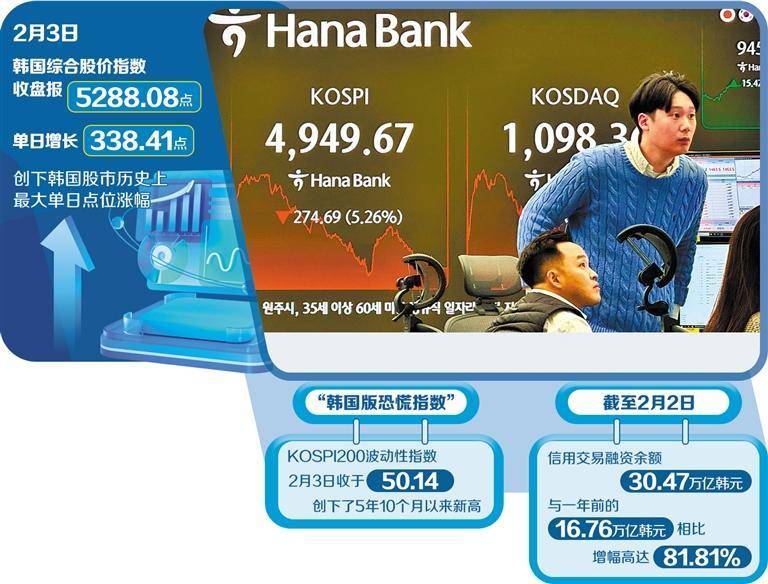
2月2日,韩国首都首尔一家银行的职员在一块显示股市交易信息的大屏幕前工作。 (新华社发) 近期,韩国股市波动加剧。2月3日,韩国综合股价指数(KOSPI)在经历"黑色星期一"的短暂震荡后,以惊 人的速度强劲反弹,一举突破历史新高,收盘报5288.08点。这一里程碑式的表现不仅刷新了KOSPI的最高纪 录,更以单日338.41点的涨幅,创下了韩国股市历史上最大单日点位涨幅,其6.84%的涨幅也成为自2020年3 月24日以来的最高单日百分比增幅。2月4日,KOSPI上涨1.57%,报5371.1点,创收盘历史新高。2月5日, KOSPI下跌3.86%。2月6日,KOSPI在一度下跌超5%后回升,跌幅收窄至2%以内。尽管出现下跌,KOSPI今 年年内仍上涨约18%,过去12个月该指数已翻倍。 除了产业基本面,韩国政府积极推行的"资本市场先进化政策"和一系列股市扶持措施也为市场提供了政策层 面的支持。更重要的是,充裕的市场流动性为股市上涨提供了坚实的基础。截至2月2日,投资者购买股票时 委托证券公司购买或出售股票后没有提取的"投资者存托金"已突破111万亿韩元,自上月底突破100万亿韩元 以来持续增长。同时,活跃的 ...

投资者选股愈发挑剔,人工智能概念股走势分化
Xin Lang Cai Jing· 2026-02-06 15:49
受资本支出飙升、企业债务高企,以及市场对人工智能技术盈利主体的质疑影响,投资者的选股标准愈 发严苛,全球人工智能概念股的行情开始出现分化,股市在个股、板块甚至区域间的走势均呈现割裂状 态。 2022 年 11 月 ChatGPT 问世后,所有与人工智能概念沾边的标的均迎来暴涨 —— 从芯片制造商、软件 企业,到原材料供应商,甚至是受人工智能颠覆冲击最大的企业也不例外。 一、人工智能 "卖铲者" 表现领跑 本周软件股的暴跌,进一步拉大了人工智能领域 "卖铲者"—— 即助力人工智能数据中心建设的硬件制 造商,与供应链下游企业间的表现差距。 美股市场中,ServiceNow 与赛富时本周股价分别下跌 12% 和 9%;欧洲市场里,励讯集团、伦敦证券 交易所集团这两家数据分析企业的股价也分别下挫 16.4% 和 6.3%。 这一热潮推动股市和债市走高,监管机构与投资者纷纷发出泡沫预警,而微软、亚马逊、字母表、元宇 宙等科技巨头仍相继公布了数千亿美元的人工智能领域投资计划。 本周全球市场的震荡表明,人工智能概念股的行情正迎来拐点,投资者开始权衡人工智能技术的预期收 益与持续攀升的投入成本。 以下四大市场特征,直观展现人 ...
空前的半导体存储器泡沫已经到来?
36氪· 2026-02-06 13:36
Core Viewpoint - The price of DRAM semiconductor memory is experiencing significant increases due to heightened competition for AI investments, leading to supply shortages in consumer products like PCs and potential price hikes for end products [4][5][9]. Group 1: Price Increases - The bulk trading price of benchmark DRAM products for November-December 2025 has risen by 40% compared to September, and over three times compared to December 2024 [5][6]. - The DDR4 8GB module is priced around $6.36, while the 4GB module is approximately $4.84, both reflecting a 40% increase from September [6]. Group 2: Supply and Demand Dynamics - Major companies are prioritizing supply for AI applications, particularly for data center servers, resulting in insufficient availability for consumer products [5][7]. - A rare situation occurred in October 2025 where bulk trading prices could not be established due to supply shortages, indicating a significant imbalance in the market [5]. Group 3: Impact on End Products - The increase in DRAM prices is forcing some end products to raise their prices, with companies like Mouse Computer and HP indicating potential price hikes due to rising DRAM costs [9]. - IDC forecasts an 8.9% decrease in PC supply in 2026 under pessimistic scenarios, highlighting the broader impact of DRAM price increases on the market [9].
美股科技股大震荡,资金却逆势抢筹港股,机构认为AI投资仍是主线
Di Yi Cai Jing· 2026-02-06 13:04
Core Viewpoint - The recent emergence of AI Agents like OpenClaw has triggered a significant pullback in the global tech sector, raising questions about whether this is the beginning of a narrative bubble burst or a buying opportunity [1][2]. Group 1: Market Performance - As of February 5, the Nasdaq 100 index has seen a cumulative decline of 3.93% for the week, while the S&P 500 Software and Services index has dropped for seven consecutive trading days [1]. - The Hang Seng Tech Index and the STAR Market 50 Index have also experienced declines of 6.51% and 5.76%, respectively [1]. - Major tech stocks such as Samsung Electronics, SK Hynix, and SoftBank have faced varying degrees of price drops [1]. Group 2: AI Agent Impact - The recent popularity of AI Agents, particularly OpenClaw, is identified as a key catalyst for the ongoing decline in the tech sector [2]. - OpenClaw allows users to execute complex workflows through natural language commands, showcasing significant advancements over earlier AI Agents [2]. - The introduction of specialized plugins for AI Agents, such as those by Anthropic, indicates a shift towards more practical applications in fields like law and finance [2]. Group 3: Capital Expenditure Trends - Major tech companies are maintaining high levels of capital expenditure, with Alphabet projecting its 2026 capital spending to reach between $175 billion and $185 billion, nearly double its 2025 spending [3]. - Amazon anticipates a capital expenditure of approximately $200 billion in 2026, significantly higher than its expected 2025 spending of $131 billion [3]. - Following these announcements, Alphabet's stock fell over 7% in after-hours trading, while Amazon's shares dropped more than 4% [3]. Group 4: Investment Strategies - Despite the downturn in the tech sector, some investors are increasing their positions, with notable figures like Dong Bin purchasing shares in Nvidia, Meta, and Google [4]. - Dong Bin believes that increased capital expenditure will enhance Google's competitive edge, viewing the current sell-off as shortsighted [4]. Group 5: Southbound Capital Trends - There is a clear trend of capital "bottom-fishing" in Hong Kong stocks, with southbound funds recording net purchases exceeding 50 billion yuan in the first week of February [5]. - The top five ETFs by net inflow in the past week were predominantly Hong Kong tech-themed ETFs, with the Hang Seng Tech ETF alone attracting 3.148 billion yuan [5]. Group 6: Market Sentiment and Future Outlook - Citic Securities expresses skepticism about the overly optimistic market sentiment regarding AI Agents potentially replacing traditional software, citing limitations in current large language models [6]. - The firm suggests that the narrative of AI "consuming" software remains largely theoretical, with practical applications still limited to simpler tasks [6]. - However, industry experts maintain that the AI wave and technological self-reliance remain central themes, with potential long-term productivity gains expected from ongoing AI advancements [6][7].



汇丰坚定“减持”韩股:一个高度共识的交易,风险巨大
Hua Er Jie Jian Wen· 2026-02-06 11:06
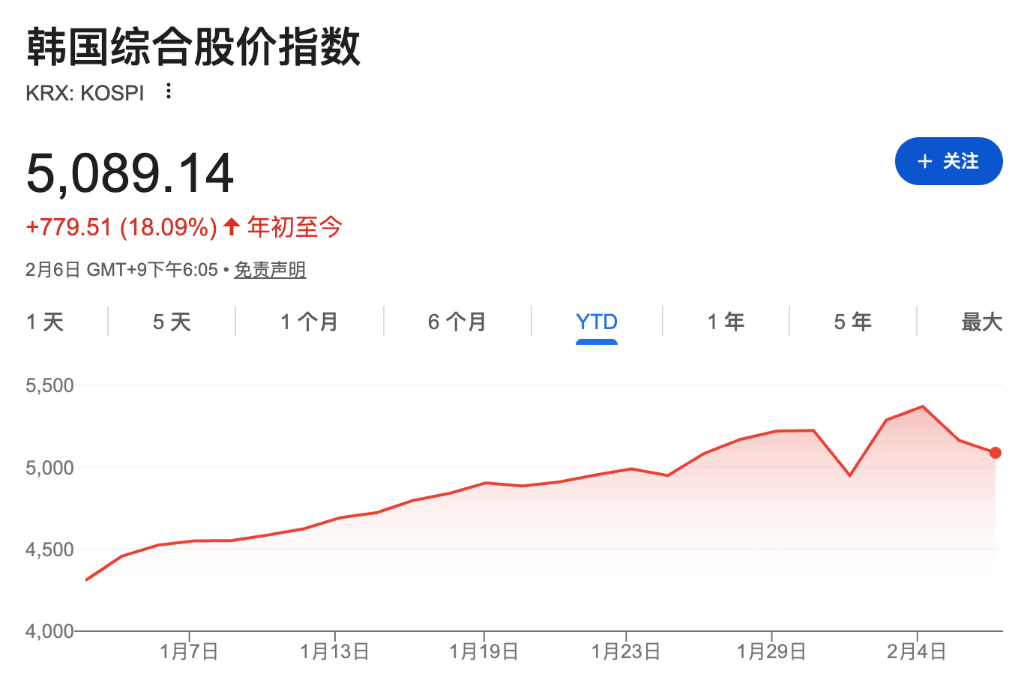
当市场为韩国股市年内近20%的涨幅欢呼时,汇丰却发出警示:极度拥挤的共识交易正酝酿巨大风险。 2月6日,汇丰亚太区股票策略主管Herald van der Linde在报告中表示,当前对韩股的乐观情绪已接近危险边缘,流动性掩盖了结构性风险。汇丰 团队坦言,其对韩股的"低配"策略已错过显著涨幅,但该行坚持认为,问题关键并非在于质疑AI前景、芯片需求或公司治理改善,而在于交易过 度集中与情绪极度乐观。 数据显示,当前市场共识高度一致:SK海力士的44位分析师中,41位给予"买入"评级;三星电子更是未出现任何"卖出"评级。汇丰警告,这种几 乎无分歧的看多局面,往往预示风险临近。报告警告称: "如果AI叙事出现动摇,投资者可能会同时涌向出口。即使市场自年初以来上涨,我们仍要提示这一风险。为此,我们只能硬着头皮忍 受这种痛苦。" 外资悄然离场,本土散户推高韩股 尽管基本面数据强劲,但汇丰银行警告,韩国股市的利好可能已被过度定价,且资金流向已出现危险背离。根据汇丰报告,FTSE韩国指数成分股 2026年盈利预计翻倍,主要由存储芯片巨头驱动,造船、国防等工业板块也同步增长。然而,这些积极因素已充分反映在股价中。 更关键的信 ...
芯片设备大厂,上调营收预期
半导体芯闻· 2026-02-06 10:12
如果您希望可以时常见面,欢迎标星收藏哦~ Tokyo Electron有限公司上调了全年业绩预期,尽管其季度利润未达预期,并表示,芯片制造商渴 望搭上人工智能支出浪潮的顺风车,因此预计支出将大幅增长。 这家半导体工具供应商目前预计截至 3 月份的财年营业利润为 5930 亿日元(38 亿美元),高于 此前预期的 5860 亿日元,但低于预期。 Tokyo Electron表示,从高带宽内存到传统芯片,DRAM制造设备的需求尤为强劲,而且这种趋势 可能会持续数年。与此同时,该公司指出,中国内存制造商的增长势头略有降温,而中国逻辑芯片 制造商也在推迟设备的交付计划。 喜欢我们的内容就点 "在看 " 分享给小伙伴哦~ Tokyo Electron的客户包括台积电和三星电子,该公司受益于市场对先进芯片制造设备日益增长的 需求。但这家日本公司也不得不应对中美之间激烈的技术竞争所带来的出口限制。 预计这家总部位于东京的公司也将受益于台积电计划在其即将在日本建设的第二家工厂采用 3 纳 米芯片工艺。 (来源:内容 综合自彭博社 ) *免责声明:文章内容系作者个人观点,半导体芯闻转载仅为了传达一种不同的观点,不代表半导体芯闻 ...

科技股领跌拖累亚洲股市 穆迪下调展望致印尼股市重挫
Xin Lang Cai Jing· 2026-02-06 07:58
周五韩国股市延续跌势,投资者持续撤离科技股;穆迪下调印尼信用评级展望,对这个东南亚最大经济 体构成最新冲击,印尼股市跌幅超2%。 摩根士丹利资本国际亚洲新兴市场指数下跌0.5%,韩国综合股价指数1.7%的跌幅构成主要压力,日本 以外亚洲股市整体跌幅一度逼近2%。 首尔市场方面,芯片制造商三星电子与SK海力士分别下跌1.2%和0.2%,带动区域信息技术板块下跌约 2.4%。 本周人工智能企业Anthropic为其Claude聊天机器人推出全新法律工具,引发市场对信息技术及软件服务 行业将遭遇大范围冲击的担忧,全球市场随之震荡。 eToro市场分析师泽维尔・王表示:"美国科技股走势疲软,市场情绪也容易传导至亚洲科技板块,尤其 是此前亚洲科技股经历一轮大涨,持仓已处于高位。""当前市场表现更像是投资者在降低风险、锁定收 益,而非整体科技主线行情出现瓦解。" 责任编辑:李肇孚 周五韩国股市延续跌势,投资者持续撤离科技股;穆迪下调印尼信用评级展望,对这个东南亚最大经济 体构成最新冲击,印尼股市跌幅超2%。 摩根士丹利资本国际亚洲新兴市场指数下跌0.5%,韩国综合股价指数1.7%的跌幅构成主要压力,日本 以外亚洲股市整体 ...
健康追踪市场竞争加剧 苹果收缩调整基于AI的虚拟健康教练服务项目
Jing Ji Guan Cha Wang· 2026-02-06 06:49
Core Viewpoint - Apple is scaling back its virtual health coaching service, part of a reassessment of its strategy in the growing health services market [1] Group 1: Apple's Strategy - The project, codenamed Mulberry, has been gradually reduced in recent weeks [1] - Apple plans to integrate some features originally intended for the AI-driven service into its existing Health app and roll them out gradually [1] Group 2: Competitive Landscape - Apple faces increasing competition in the health tracking market from companies like Samsung and fitness platform Strava [1] - OpenAI has also entered the health sector with the launch of ChatGPT Health, which analyzes medical test results and provides guidance on diet and exercise plans [1]

电子:格局落定,价值归真:从周期波动走向技术溢价
Soochow Securities· 2026-02-06 06:24
Investment Rating - The report suggests a focus on companies such as SanDisk (SNDK.O), SK Hynix (000660.KS), Samsung Electronics (005930.KS), and Micron Technology (MU.O) due to their potential in the AI-driven storage market [4]. Core Insights - The industry is transitioning from traditional cycles to AI-driven technological premiums and high growth, with storage becoming a critical bottleneck for AI computing efficiency [5]. - AI is driving exponential growth in storage demand, with significant increases in requirements for high-bandwidth memory (HBM) and solid-state drives (SSD) due to the scaling laws of model parameters [5]. - The valuation framework is being reshaped, with revenue growth and net profit margin expansion occurring simultaneously, indicating a period of high operational leverage in the storage sector [5]. Summary by Sections AI Value Chain - The AI value chain includes components such as computing chips (GPUs, CPUs, ASICs), storage (DRAM, SSD, HDD), networking, and energy solutions, highlighting the interconnectedness of these sectors [10][12]. - The storage segment is characterized by oligopolistic features, with high barriers to entry supporting high profitability [12]. Storage Demand and Hardware Architecture - Storage demand is categorized into cold, warm, and hot data, with different storage solutions (HDD, SSD, DRAM) tailored to each category's speed and capacity requirements [20]. - The architecture is structured in layers, with HBM for high-speed access, SSD for intermediate storage, and HDD for large capacity [29]. Large Language Model Storage Requirements - The report details the storage needs of large language models, emphasizing the importance of storage capacity and bandwidth in both training and inference phases [42][47]. - The growth in model parameters necessitates increased storage capacity, with significant implications for the demand for NAND and DRAM technologies [59]. Company-Specific Insights - Micron Technology (MU.O) is focusing on data centers and has made significant advancements in HBM3E technology, with a strong market demand for its products [64][70]. - SanDisk (SNDK.O) has undergone a restructuring, achieving notable revenue growth and improving profit margins through a focus on high-value enterprise SSDs [72][78]. - SK Hynix is benefiting from its early entry into the AI storage market, while Samsung is striving to catch up [79][81].