奈雪的茶

Search documents
60元一杯仍排长队!新茶饮品牌集体闯关美国
Guo Ji Jin Rong Bao· 2025-08-11 05:24
Core Insights - The article highlights the rapid expansion of Chinese tea brands in the U.S. market, with a notable increase in overseas store openings, particularly in high-demand areas like Silicon Valley and New York [1][7][19] - The shift from Southeast Asia to the U.S. as a primary target for expansion reflects a strategic move by brands to establish long-term brand influence and product recognition in a mature market [7][19] Expansion Trends - Chinese tea brands have seen a sixfold increase in overseas store numbers over the past year, with over 100 stores now in the U.S., making it the fastest-growing market for new tea brands [1][19] - Brands like Heytea, Nayuki, and Bawang Chaji are entering the U.S. market, indicating a trend towards higher-tier market challenges after gaining experience in Southeast Asia [6][19] Market Dynamics - The U.S. ready-to-drink tea market is expanding rapidly, with a projected annual growth rate of 9.1%, and the market size expected to exceed $8 billion by 2030 [9][19] - Brands are targeting young consumers aged 18-35, focusing on high-traffic areas for store locations, such as shopping centers and university neighborhoods [8][19] Sales Performance - Notable sales figures include Heytea's first-day sales of 3,500 cups in New York, translating to approximately 210,000 RMB, and Bawang Chaji's opening day sales exceeding 5,000 cups in Los Angeles [10][19] Cultural and Supply Chain Considerations - The expansion into the U.S. market involves cultural adaptation and supply chain challenges, with brands needing to localize products and establish efficient supply chains [17][18] - Heytea has partnered with local suppliers in the U.S. to ensure quality and consistency in its offerings, becoming the first tea brand to build a systematic supply chain overseas [18][19] Future Outlook - Despite challenges, the overseas market presents significant growth opportunities for tea brands, as the domestic market faces saturation [19]


茶饮出海趋势、算力需求拉动光伏消纳、两融重返两万亿关口
Tebon Securities· 2025-08-11 04:37
Market Overview - The A-share market has shown strong upward momentum, with the index successfully surpassing the 3600-point mark, and the margin financing balance returning to the 2 trillion yuan level for the first time since May 2015[3] - The current tea beverage industry is experiencing intensified competition, with a significant shift towards overseas markets, particularly the United States, indicating substantial growth potential[3] Industry Trends - In the energy and technology integration sector, AI data centers are paving new paths for centralized photovoltaic consumption, supported by continuous policy efforts to promote the synergy between computing power and electricity[3] - The semiconductor industry is entering a new cycle driven by strong AI demand, with high-end segments like silicon wafers and MLCCs seeing notable demand differentiation[3] Structural Changes - The analysis of the Fortune China 500 list from 2015 to 2025 reveals a shift in China's industrial structure, with high-tech industries like electronics and modern services like finance becoming new growth drivers, while traditional sectors like real estate face deep adjustments[6] - The number of companies in the real estate sector has decreased from 45 to 29 over the past decade, reflecting significant industry contraction due to regulatory changes and market dynamics[7] Consumer Insights - The domestic tea beverage market has seen a slowdown in expansion, with the total number of stores increasing by only 0.74% in the first half of 2025, indicating a shift towards quality competition[23] - Major tea brands are increasingly looking to expand internationally, particularly in the U.S. market, which is projected to grow at a CAGR of 9.1% from 2019 to 2024, with significant potential for new store openings[26] High-End Manufacturing - The "East Data West Calculation" project is expected to enhance the coupling effect between photovoltaic power consumption and computing power industry development, with an estimated average annual energy consumption increase of approximately 9.8 GW for data centers over the next three years[34] - Global semiconductor sales reached $59.9 billion in June 2025, marking a year-on-year increase of 19.6%, driven primarily by business-to-business AI demand rather than consumer electronics[3]


一周上新!富贵面包、山山家、桃李面包...海内外新品资讯抢先看 | 全球职人情报
东京烘焙职业人· 2025-08-10 08:32
Core Insights - The article highlights the latest trends and new product launches in the baking industry, showcasing various innovative items from different brands and stores [2][3][4][5][6][7][8]. Group 1: New Product Launches - Dingdong Maicai introduces a Tuna Cheese Sandwich and a Japanese Red Bean Bread from the Bao Luo Workshop [2] - FamilyMart launches a Cat Tail Cake Roll [3] - Peach Li Bread presents a Frozen Brownie Cake [2] - Neighbor Convenience Store features a Happy Caterpillar Bread and a Red Bean Toast [2] - Happiness Bakery offers a Happiness Full Cake with four visible fresh fruits [17] Group 2: Seasonal and Thematic Products - Shan Shan Jia presents a Pearl Milk Tea Cake, combining rich flavors for a unique dessert experience [19] - Guang Lian Shen introduces a Pickled Vegetable and Fresh Meat Mooncake, emphasizing fresh ingredients and traditional flavors [21] - HPCBAKERY's "Fortune" series showcases a variety of festive baked goods [25] - 85 Degrees C offers an Italian Barbecue Sauce Sun Egg Bread, highlighting Italian culinary influences [26] Group 3: Health and Wellness Trends - The article mentions the introduction of probiotic drinks and health-focused products, such as the probiotic series from Luckin Coffee [137] and the instant probiotic series from Cha Yan Yue Se [140]. - The focus on low-calorie and health-conscious options is evident in the new product offerings from various brands, catering to the growing demand for healthier choices [137][140]. Group 4: Market Trends and Consumer Behavior - The article notes a significant increase in sales for tea brands during the autumn season, with some brands reporting a 500% increase in delivery sales [144]. - The response to seasonal marketing campaigns, such as "The First Cup of Milk Tea in Autumn," has led to a surge in consumer interest and engagement across multiple brands [143][144]. - The expansion of brands like Bawang Tea Ji into Asian markets indicates a growing trend of international brand presence and competition in the beverage sector [146].



在商场蹭空调,去麦当劳打牌:城市空间应向谁开放?| 编辑部聊天室
Xin Lang Cai Jing· 2025-08-10 03:16
Group 1 - The article discusses the increasing presence of elderly individuals in urban spaces such as cafes and fast-food restaurants, highlighting their need for social interaction and cooling spaces during summer [1][3][4] - It emphasizes the lack of suitable urban spaces for different demographics, particularly the elderly, who often occupy areas designed for younger populations, leading to conflicts over space usage [3][8] - The concept of public space is explored, noting that urban planning often fails to accommodate the needs of various groups, resulting in a struggle for resources among different age demographics [8][9][22] Group 2 - The article references sociologist William H. Whyte's research on public spaces, indicating that people are drawn to areas with others, contradicting their stated preferences for solitude [4][7] - It highlights the active role of elderly individuals in claiming and modifying urban spaces to meet their needs, demonstrating a proactive approach rather than a passive one [8][11] - The discussion includes the impact of commercial spaces, such as Starbucks, which serve as informal public spaces, providing a venue for social interaction beyond traditional settings [12][14][18] Group 3 - The article points out the tension between different user groups in public spaces, where the needs of the elderly for leisure and socialization often clash with those of younger individuals seeking active recreational areas [8][9][22] - It discusses the role of chain stores in providing standardized public spaces that cater to diverse needs, while also raising concerns about the homogenization of social experiences [18][19] - The narrative suggests that urban spaces are increasingly shaped by commercial interests, blurring the lines between public and private domains, and complicating the understanding of public space in the context of urban life [22][27]


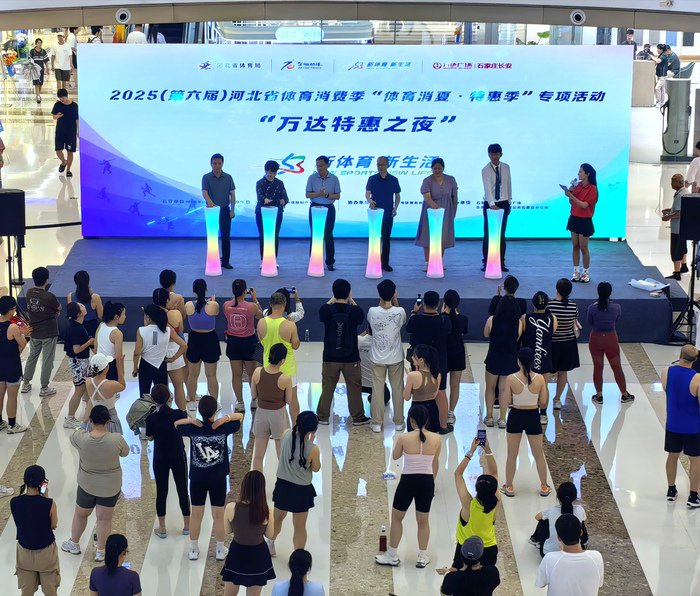
2025(第六届)河北省体育消费季“体育消夏・特惠季”专项活动——“万达特惠之夜”
Xin Lang Cai Jing· 2025-08-09 04:01
Core Insights - The event "Wanda Special Night" is a key activity of the 2025 (6th) Hebei Sports Consumption Season, promoting both sports participation and consumer engagement [1][10] - The event aims to activate the night economy in the city while promoting the concept of "New Sports, New Life" through interactive experiences [1][10] Event Highlights - The event commenced with a dynamic fitness class, attracting over 150 fitness enthusiasts and media representatives [3][10] - More than 20 brands participated, offering exclusive discounts, with some promotions reaching nearly 50% off, valid until August 31 [3][5] Discounts and Offers - Sports equipment discounts included 59% off on new products from Hongxing Erke, and significant savings on children's apparel from Jordan [5] - Food and beverage discounts featured items like a signature watermelon ice for 12.9 yuan, and various tea brands offering up to 8.8% off [6] Leisure and Lifestyle Promotions - The event also included lifestyle discounts, such as 150 yuan off on jewelry repairs and various promotions on home goods and entertainment [7] - Fitness services were offered at low prices, including a 9.9 yuan trial class and 30% off summer training courses [8] Overall Impact - The "Wanda Special Night" created a consumption chain linking sports activities with shopping, enhancing the synergy between exercise and consumer spending [10] - The Hebei Sports Consumption Season has introduced over 782 promotional measures across more than 300 sports enterprises, focusing on benefiting the public [10]


罢免非独立董事,市值已蒸发九成,奈雪如何扭亏为盈?
凤凰网财经· 2025-08-08 13:09
Core Viewpoint - Naixue's tea is facing significant challenges in achieving stable profitability, with a decline in revenue and increasing competition in the beverage market [2][3][4]. Financial Performance - Naixue's revenue from 2021 to 2024 was 42.97 billion, 42.92 billion, 51.64 billion, and 49.21 billion respectively, with net profits of -4.526 billion, -476 million, 11.166 million, and -926 million [2]. - The adjusted net profits for the same years were -145 million, -461 million, 20.912 million, and -919 million [2]. Business Model and Expansion - Naixue has a low proportion of franchise stores, with 90.8% of revenue coming from direct stores, which saw a decline in income [3][4]. - In 2023, Naixue launched a "partner plan" to open franchise stores, requiring an investment of approximately 1 million and management experience [3]. - By the end of 2024, the number of franchise stores increased to 345, while direct store revenue decreased by 6.3% [4]. Market Strategy and Product Development - Naixue is exploring new store formats to adapt to different consumer scenarios, including the introduction of "Naixue green stores" focusing on healthy food options [6][7]. - The company has simplified its brand name and launched a "no sugar natural nutrition+" initiative to promote healthier products [8]. Investor Sentiment and Market Position - Naixue's market capitalization has significantly decreased from approximately 290 billion HKD at its IPO to about 24.93 billion HKD [8][9]. - Major investors have been reducing their stakes, indicating a loss of confidence in the company's future prospects [9][10].
“减脂”饮品的学费,年轻人交了无数遍
3 6 Ke· 2025-08-08 10:28
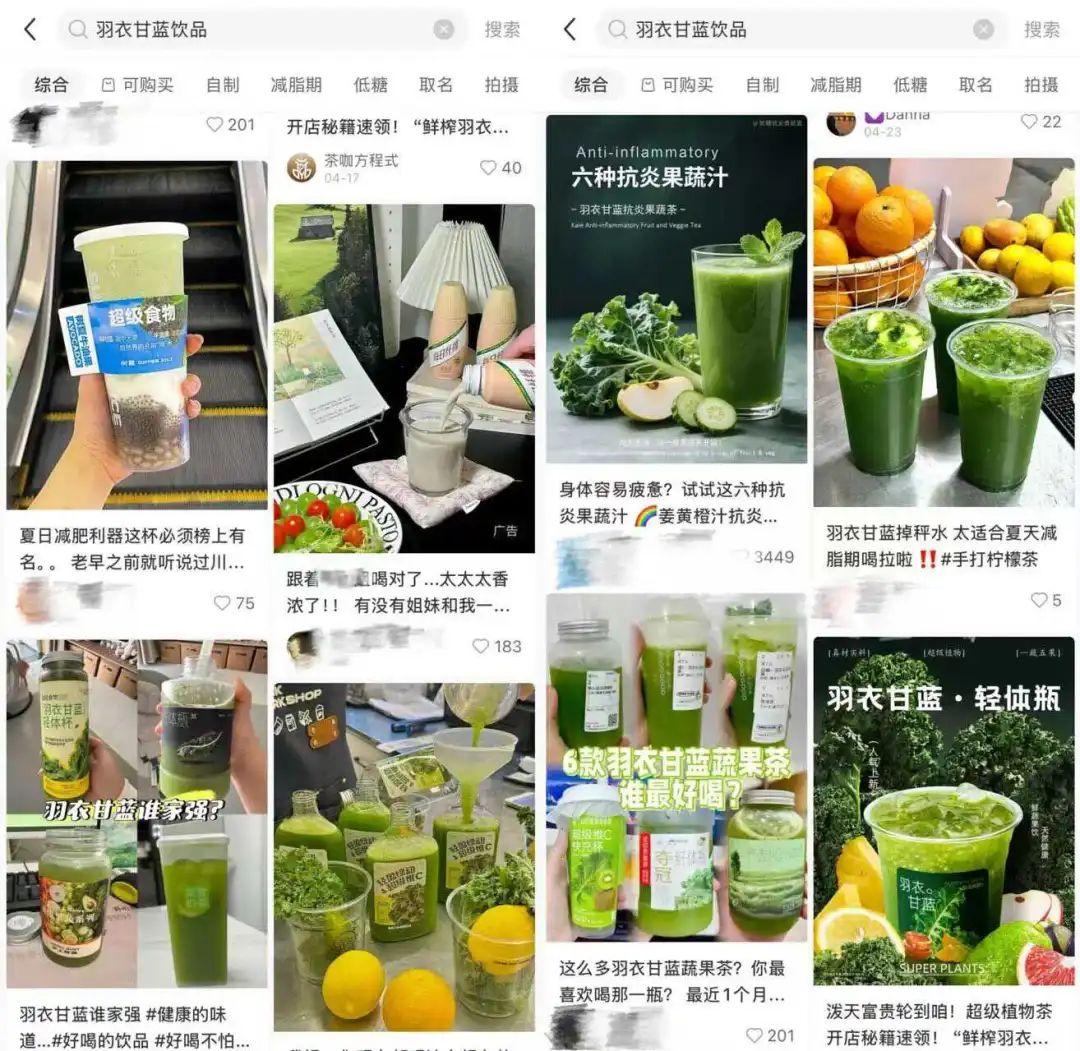
Group 1 - The rise of kale as a trendy beverage among young consumers, particularly in the context of health and weight loss, has gained significant attention on social media platforms [1][3][5] - Kale drinks are marketed with claims of being low-calorie and high in dietary fiber, appealing to health-conscious consumers despite skepticism from industry insiders regarding their actual effectiveness for weight loss [2][15][19] - The kale market has seen a dramatic increase in price, with reports indicating that the price per kilogram has risen from a few cents to over 3.5 yuan, reflecting its newfound popularity [7][14] Group 2 - Major tea and coffee brands, including Heytea and Luckin Coffee, have launched kale-based drinks, contributing to the trend and capitalizing on the health-conscious consumer market [9][14][18] - The light food market in China has experienced rapid growth, with a projected market size exceeding 320 billion yuan in 2024, indicating a strong consumer demand for healthier options [15][16] - The marketing strategies employed by beverage companies often use terms like "light" and "slimming," which resonate with young consumers' health anxieties, leading to increased sales of kale drinks [16][22] Group 3 - Despite the popularity of kale drinks, there are concerns about their actual health benefits, as many products contain added sugars and other ingredients that may negate their purported health advantages [19][21] - The phenomenon of kale drinks reflects a broader trend of emotional consumption among young people, who are willing to pay a premium for products that symbolize a healthy lifestyle [22][23] - The kale trend is indicative of a larger cycle in the beverage industry, where new "superfoods" are continuously sought after by both consumers and capital investors [2][23]
单店销量激增775%,奈雪“好运紫”造秋一杯现象级营销
Ge Long Hui· 2025-08-08 10:14
Group 1 - The core theme of the news is the significant sales performance of Nayuki's Tea, particularly on the day of the start of autumn, with a single store's GMV increasing by 775.1% year-on-year [1] - The takeaway delivery GMV also saw a substantial increase of over 218.5% year-on-year, with the number of orders on delivery platforms surpassing 1 million [1] - The best-selling product, "66 Blueberry Mulberry Yogurt Smoothie," has become a popular choice among celebrities, contributing to the overall sales surge [1] Group 2 - Multiple stores experienced a surge in orders, with some locations showing wait times exceeding 400 cups, indicating high demand [1] - A notable single order at the Qingdao Rongchuang Mao store reached 2,000 servings, showcasing the extreme popularity of the brand [1] - The marketing strategy leveraging celebrity endorsements appears to be effective, as fans are quickly sharing their experiences with the featured products [1]
立秋第一波奶茶大战!喝茶送黄金、送汽车、送锦旗……你选哪家?
Sou Hu Cai Jing· 2025-08-08 07:50
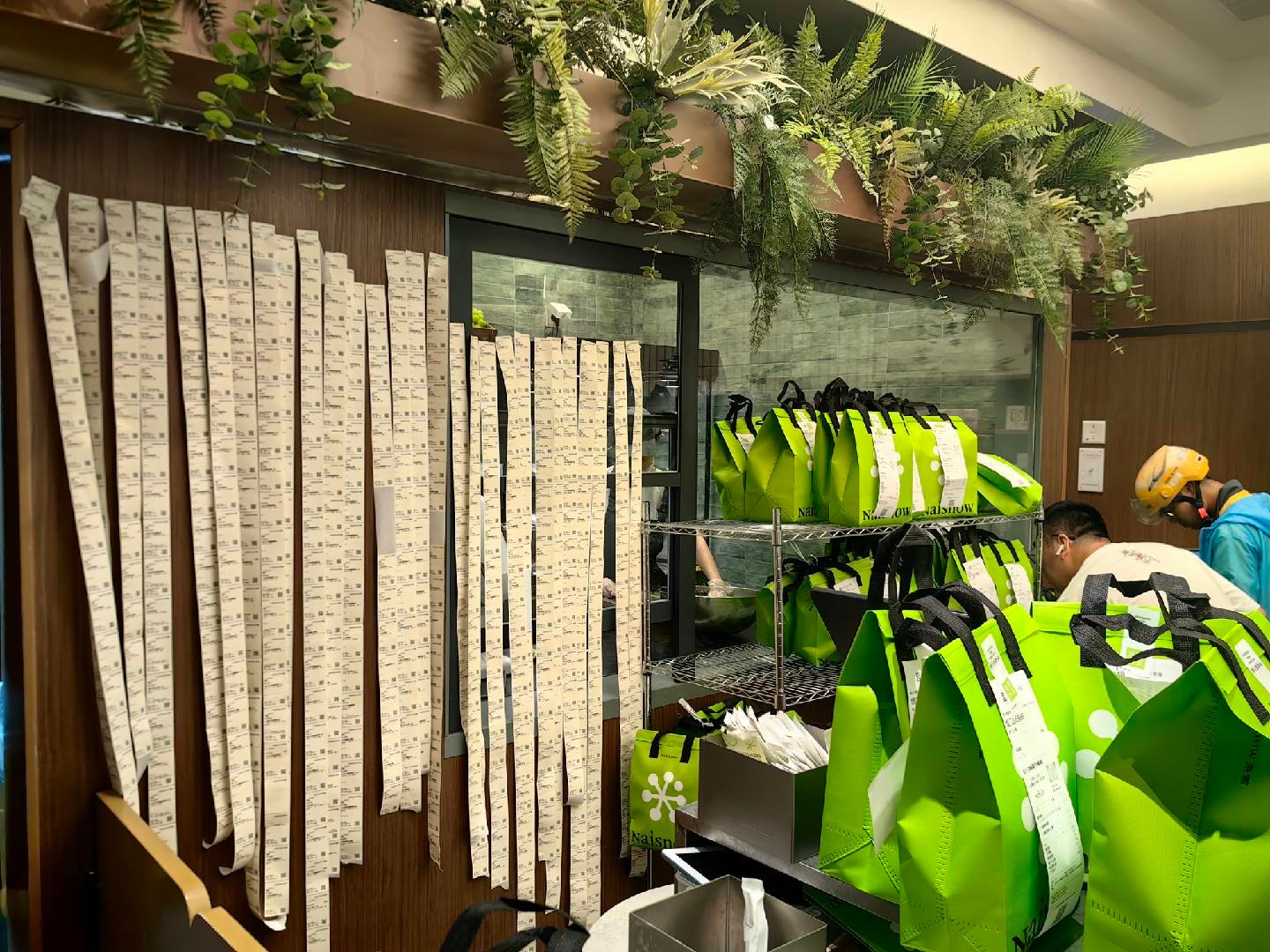
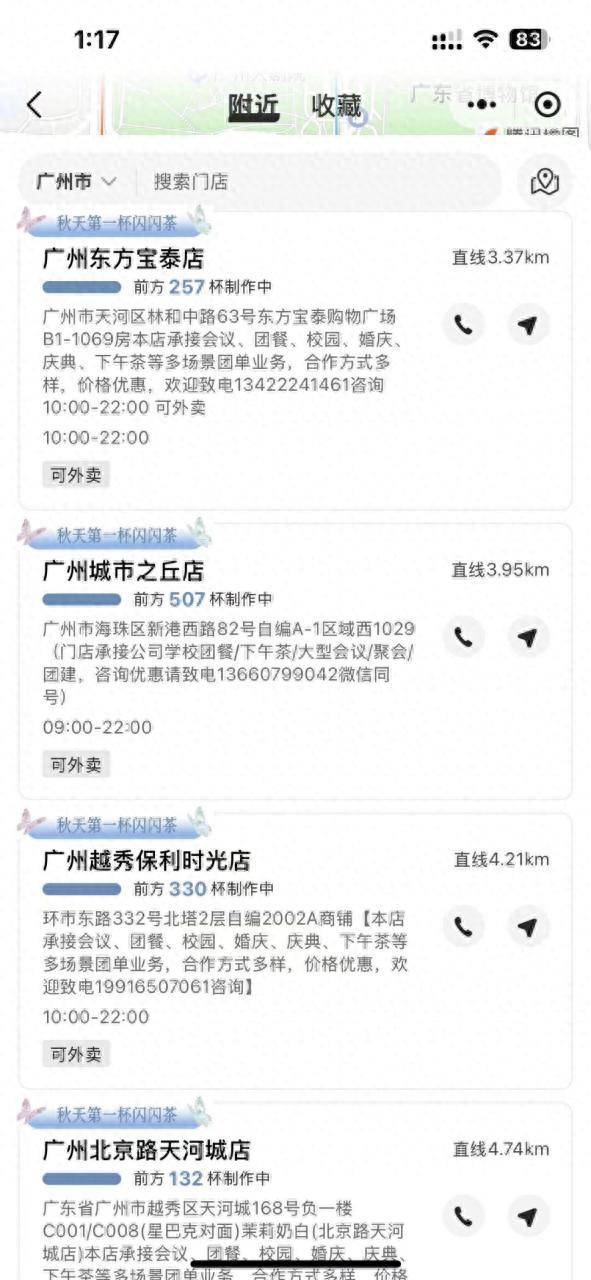
Core Viewpoint - The "First Cup of Milk Tea in Autumn" event continues to thrive, with significant consumer engagement and promotional activities from various tea brands, marking it as a major marketing event akin to "Double Eleven" in the milk tea industry [1][15]. Group 1: Consumer Engagement - On August 7, the first day of autumn, many consumers reported delays in their tea orders, with some waiting over 100 minutes for delivery [1][3]. - Social media platforms were flooded with images of overwhelmed tea shops, showcasing a high volume of orders and long wait times for delivery [3][4]. - Some consumers resorted to "blind box milk tea" due to the overwhelming demand, with reports of orders being canceled after long waits [6][8]. Group 2: Brand Promotions and New Products - At least 15 tea brands launched 36 new products themed around "First Cup of Milk Tea in Autumn," featuring seasonal flavors like osmanthus, grapes, and apricots [1][9]. - Brands are employing various promotional strategies, including giveaways of gold, cars, and other prizes to stimulate consumer interest [1][13]. - The trend of introducing floral flavors, particularly osmanthus, has gained traction among new tea products this autumn [9][13]. Group 3: Marketing Strategies - The event has been strategically crafted by brands to create emotional connections with consumers, enhancing brand loyalty and engagement [15]. - The marketing approach focuses on creating a sense of ritual and emotional value, appealing to younger consumers who seek to express themselves through these experiences [15].
着眼年轻化发展 新茶饮亟待转型突破
Sou Hu Cai Jing· 2025-08-08 04:06
Core Insights - The new tea beverage industry is experiencing a structural explosion this year, driven by consumption upgrades and innovative marketing strategies [3][4][9] Market Overview - The Chinese ready-to-drink tea market is expected to exceed 368.9 billion yuan by 2025, with the Chinese-style new tea segment surpassing 200 billion yuan and a compound annual growth rate of 15% [4] - As of now, there are over 304,000 new tea-related enterprises in China, with more than 15,000 newly registered this year [4] - The market is gradually saturating, with a projected market size of 354.72 billion yuan in 2024 and a potential to exceed 400 billion yuan by 2028 [4] Consumer Trends - New tea consumers are numerous and highly engaged, with a significant portion of young people gaining awareness of traditional Chinese tea culture through new tea beverages [5][10] - The trend towards healthier options is evident, with an increasing number of middle-aged consumers trying low-sugar and low-fat products [4][5] Innovation and Development - Innovation is the core driving force of the new tea beverage industry, encompassing product, technology, and cultural dimensions [7][8] - Product innovation includes the incorporation of diverse ingredients like fresh fruits and low-calorie options, catering to health-conscious consumers [7][8] - Technological advancements such as automated tea-making equipment and digital supply chain management are enhancing production efficiency and product quality [8] Competitive Landscape - The industry is witnessing a wave of IPOs, with several brands like Nayuki and Heytea going public to fund expansion and digital upgrades [9][10] - The competition is intensifying, with brands facing pressure to maintain growth amidst a crowded market [9][11] International Expansion - Many new tea brands are looking to expand overseas, with significant growth in Southeast Asia and other international markets [10] - For instance, Mixue has over 4,800 stores abroad, while other brands are also establishing a presence in countries like South Korea, Thailand, and Australia [10] Challenges Ahead - The industry faces challenges such as price wars and quality control issues, which could impact brand reputation and consumer trust [11] - Some brands are actively rejecting price competition and focusing on quality and innovation to sustain their market position [11]