
零跑汽车

Search documents
企业竞相打出“全域AI”明牌造车下半场“含模量”飙升
Xin Lang Cai Jing· 2026-01-16 20:08
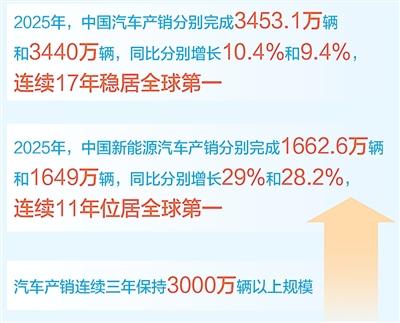
Core Insights - The automotive industry in China is experiencing significant growth, with vehicle sales reaching 34.4 million units in 2025, a year-on-year increase of 9.4% [1] - The shift towards "full-domain AI" is becoming prominent, with major automotive manufacturers and supply chain giants like Geely and Bosch increasing their investments in AI technologies [1][2] - Geely has introduced a comprehensive technology system that includes the WAM model for intelligent cockpits and the G-ASD platform for advanced driving assistance, indicating a trend towards AI-driven automotive solutions [2][5] - The automotive sector is transitioning from electric vehicle transformation to AI-driven innovations, with "model inclusion" becoming a key metric for evaluating future trends in vehicle manufacturing [1][4] Industry Developments - AI is evolving from peripheral features to a central role in automotive technology, with companies adopting "full-domain AI" strategies to enhance user experience and operational efficiency [2][3] - Geely's G-ASD system is noted for its advanced capabilities, utilizing a SmartAIAgent architecture and achieving a high level of model inclusion, making it one of the leading driving assistance systems globally [2][4] - Bosch has unveiled a new AI cockpit platform that integrates personalized features and real-time environmental interpretation, showcasing the trend towards highly customized user experiences in vehicles [3] Technological Advancements - The automotive industry is witnessing a shift towards data and model-driven approaches in intelligent driving technologies, with systems like Geely's G-ASD integrating multi-modal models to enhance performance [4][5] - The introduction of high-performance AI models is expected to increase computational demands, necessitating significant investments in data centers and computational resources for training and validation [6][7] - The development of autonomous driving systems requires extensive data input and ongoing algorithm training, which may lead to increased costs and resource allocation challenges for companies [6][7] Competitive Landscape - The year 2026 is anticipated to be a pivotal moment for the automotive industry's "model inclusion" competition, with companies possessing robust self-research capabilities likely to capture higher market segments [7] - Smaller manufacturers lacking sufficient R&D investment may face marginalization in the rapidly evolving technological landscape [7] - Geely is positioned as a leader in the full-domain AI landscape, being the first to establish a comprehensive ecosystem that includes automotive, chip, satellite, and AI technologies [8] Strategic Recommendations - The Chinese automotive industry is encouraged to maintain a "self-controllable" approach in AI technology development, focusing on core models and safety mechanisms to avoid dependency on external sources [7][9] - Collaboration with global standards and open-source communities is recommended to mitigate technological gaps and enhance innovation [9]

天海电子IPO过会 拟募资24.6亿元
Zheng Quan Shi Bao· 2026-01-16 17:37
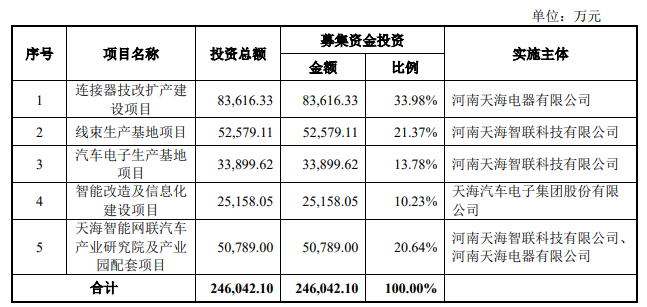
Core Viewpoint - Tianhai Electronics has successfully passed the IPO review by the Shenzhen Stock Exchange, marking a significant milestone for the company in the automotive parts industry [1][2]. Group 1: Company Overview - Tianhai Electronics specializes in automotive transmission systems, connection systems, and intelligent control solutions, focusing on the research, production, and sales of automotive wiring harnesses, connectors, and electronic components [1]. - The company has established a strong brand image and customer reputation in the domestic automotive parts sector, becoming a primary supplier for major automakers such as Chery, SAIC Group, Geely, and Changan [2]. Group 2: Market Position - In 2024, the Chinese automotive wiring harness market is projected to reach 119.6 billion yuan, with Tianhai Electronics holding a leading market share of 8.45% [1]. - The company ranks among the top three in the automotive connector market, which is valued at 47.8 billion yuan, with a market share of 3.52% [1]. Group 3: Financial Performance - Tianhai Electronics reported revenues of 11.549 billion yuan, 12.523 billion yuan, and 10.898 billion yuan for the first three quarters of 2023 to 2025, with net profits of 652 million yuan, 614 million yuan, and 537 million yuan respectively [2]. Group 4: IPO Fund Utilization - The company aims to raise 2.46 billion yuan through its IPO, which will be allocated to projects including connector technology upgrades, wiring harness production base construction, automotive electronics production base, smart transformation and information technology projects, and the Tianhai Intelligent Connected Vehicle Industry Research Institute and supporting industrial park [2].
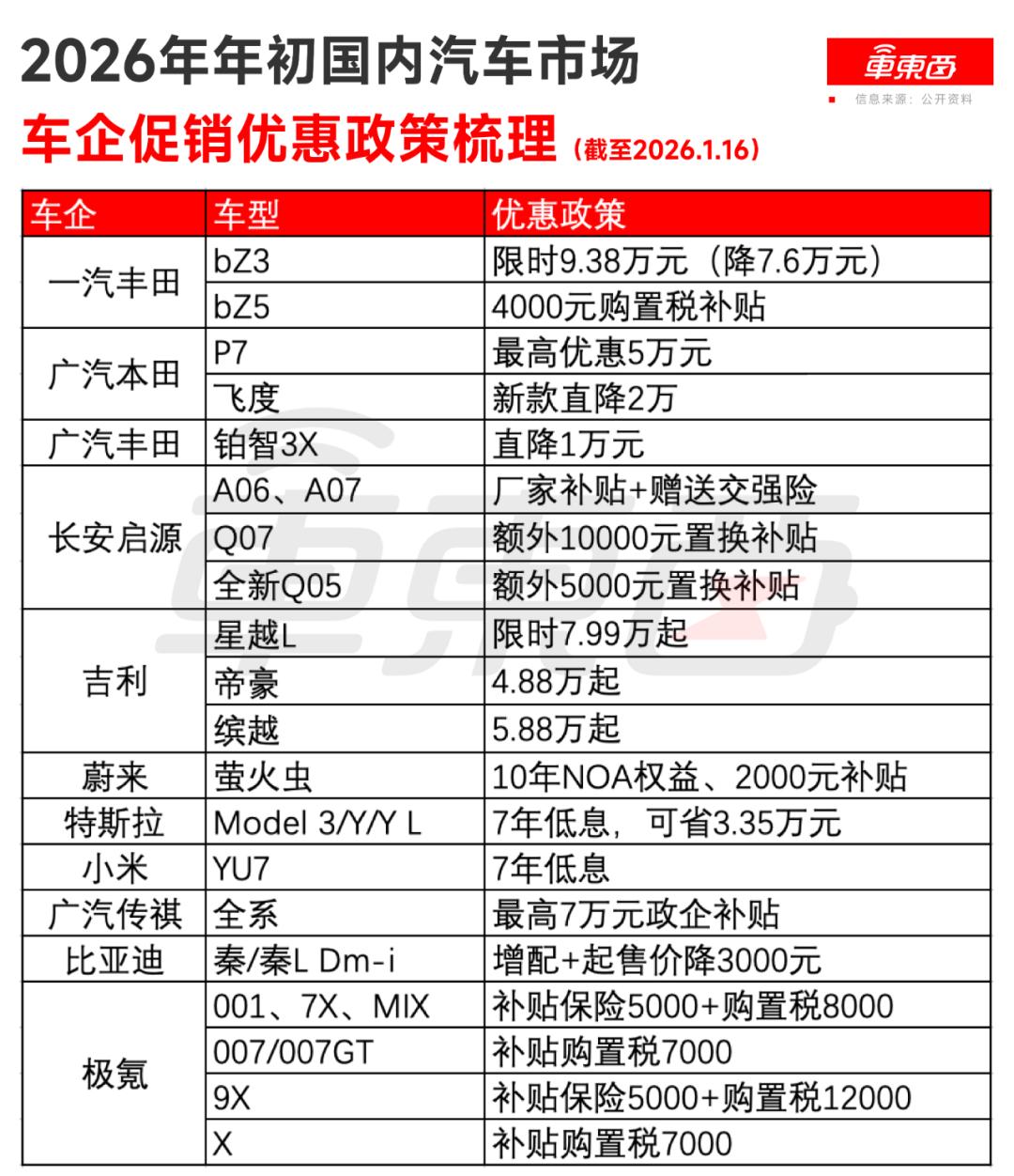
超20款车光速调价,丰田“自杀式”反击,2026价格战再升级
3 6 Ke· 2026-01-16 12:53
Core Viewpoint - The automotive industry is experiencing an intense price war initiated by luxury brands, leading to significant price reductions across various models from multiple manufacturers, creating a new wave of discounts in the market [1][6]. Group 1: Price Reductions and Promotions - BMW has initiated a price drop of up to 300,000 yuan, prompting over 10 automakers to follow suit with more than 20 mainstream models participating in the price reduction trend [1]. - Geely's Emgrand is now priced at 48,800 yuan, while the new Honda Fit has seen a price cut of 20,000 yuan, setting a new low at 66,800 yuan [1][13]. - Toyota's bZ3 electric sedan has been drastically reduced to 93,800 yuan, a decrease of 76,000 yuan, representing a nearly 45% drop from its previous price [9]. Group 2: Competitive Strategies - The competition has escalated with joint efforts from joint venture brands, particularly Japanese automakers, who are adopting aggressive pricing strategies to reclaim market share [7]. - Various automakers are employing a combination of subsidies, enhanced features, and financing options to attract buyers, rather than relying solely on price cuts [20][30]. - NIO's Firefly brand is offering cash subsidies along with a 10-year NOA (Navigation on Autopilot) free usage right, showcasing a strategic approach to enhance customer value [32]. Group 3: Market Dynamics and Consumer Impact - The price war has led to a significant reduction in the entry price for electric vehicles, making them more accessible to consumers [9][19]. - The automotive market is witnessing a shift where companies are not just competing on price but also on the value offered through financing and additional features, which may lead to a more sustainable competitive environment [37]. - The ongoing promotions and price adjustments are expected to drive sales ahead of the Chinese New Year, indicating a strategic push by manufacturers to maximize order volumes during this peak season [37].





天海电子深交所主板IPO过会 主营汽车线束、汽车连接器等汽车零部件产品
智通财经网· 2026-01-16 12:19
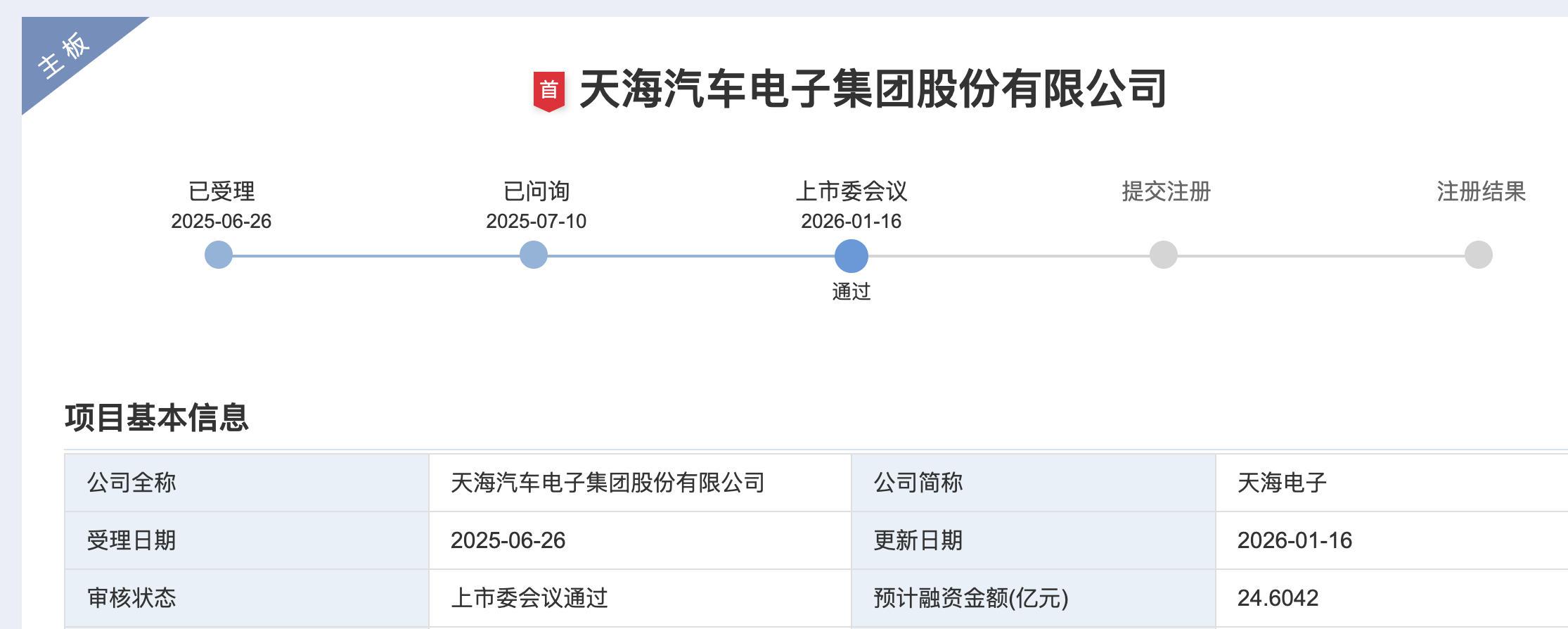
Core Viewpoint - Tianhai Automotive Electronics Group Co., Ltd. (Tianhai Electronics) has received approval for its IPO on the Shenzhen Stock Exchange, aiming to raise approximately 2.46042 billion yuan [1]. Group 1: Company Overview - Tianhai Electronics specializes in providing automotive transmission systems, connection systems, and intelligent control solutions, focusing on the R&D, production, and sales of automotive components such as wiring harnesses, connectors, and electronic products [1]. - The company’s products are primarily used in both new energy vehicles and traditional fuel vehicles [1]. - Key raw materials for the company's products include wires, cables, connectors, chips, and electronic components [1]. Group 2: Sales and Market Position - The company employs a direct sales model for its wiring harnesses and electronic products, while its connectors are primarily sold through direct sales with some distribution [2]. - Tianhai Electronics has established long-term partnerships with major automotive manufacturers, including Chery Automobile, SAIC Motor, and General Motors, positioning itself as a first-tier supplier [2]. - The company has also formed multi-dimensional collaborations with leading new energy vehicle manufacturers such as Li Auto, NIO, and Xpeng Motors, capitalizing on the growth opportunities in the new energy vehicle sector [2]. Group 3: Fundraising and Investment Projects - The funds raised from the IPO will be allocated to several key projects, including: - Connector technology upgrade and expansion project with a total investment of approximately 836.16 million yuan [3]. - Wiring harness production base project with an investment of about 525.79 million yuan [3]. - Automotive electronics production base project with an investment of around 338.99 million yuan [3]. - Smart transformation and information technology project with an investment of approximately 251.58 million yuan [3]. - Industry research institute and industrial park supporting project with an investment of about 507.89 million yuan [3]. Group 4: Financial Performance - The company’s projected revenues for the years 2022 to 2025 are approximately 8.215 billion yuan, 11.549 billion yuan, 12.523 billion yuan, and 6.557 billion yuan respectively [3]. - Net profits for the same periods are estimated to be around 410 million yuan, 684 million yuan, 616 million yuan, and 324 million yuan respectively [3]. - As of June 30, 2025, total assets are projected to reach approximately 12.753 billion yuan, with a debt-to-asset ratio of 61.55% [4].
盘点2025:让车企走下坡路的九大“致命伤”
3 6 Ke· 2026-01-16 12:12
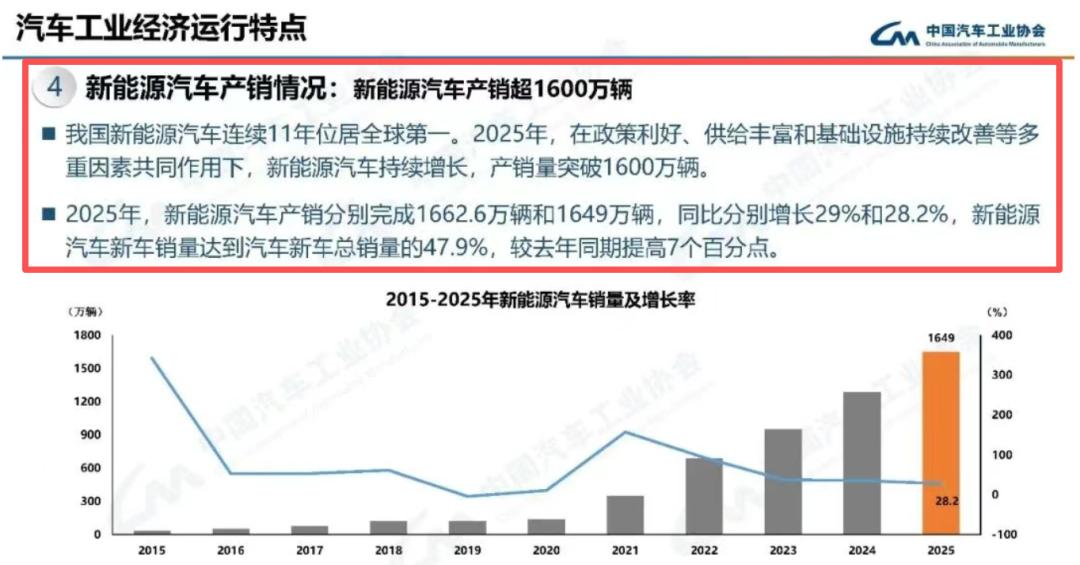
Core Insights - The Chinese electric vehicle (EV) market saw record production and sales in 2025, with 16.626 million units produced and 16.49 million units sold, marking a year-on-year growth of 29% and 28.2% respectively, maintaining its position as the global leader for 11 consecutive years [1][3] - A significant industry reshuffle is underway, with previously dominant brands experiencing declines, highlighting that success now hinges on minimizing errors rather than just speed [3][4] Group 1: Market Dynamics - The rapid evolution of the EV market has led to increased competition, with companies like Li Auto facing challenges due to slow product line updates, resulting in lost market share [4][9] - Competitors have surpassed Li Auto in key metrics such as electric range and technology, prompting Li Auto to accelerate its product upgrade cycle from four years to two [9][10] Group 2: Quality Control Issues - Manufacturing quality issues, such as the "spray powder" problem affecting BYD vehicles, have led to customer dissatisfaction and complaints, indicating potential weaknesses in quality control and supply chain management [10][11][14] - These quality concerns can erode brand loyalty and consumer trust, as they directly impact user experience [14] Group 3: Marketing and Trust - Some companies are engaging in "small print marketing," which obscures critical information and can lead to trust erosion among consumers, as seen with Xiaomi's SU7 [15][18] - The practice of reducing vehicle configurations without proper disclosure has resulted in significant backlash, particularly for XPeng's G6 model, leading to a sharp decline in brand reputation [18][22] Group 4: Design and Consumer Perception - Controversial design choices, such as those made for the Li Auto MEGA, have sparked public debate and negatively affected sales and brand image [23][25] - A disconnect between innovative design and consumer expectations can lead to adverse market reactions [25] Group 5: Supply Chain and Financial Health - The financial struggles of companies like Nezha, which reported a mere 15.45 million yuan in cash against debts exceeding 26 billion yuan, highlight the risks of aggressive expansion without solid financial foundations [30][32] - Poor supplier choices can lead to significant reputational damage, as seen with Zeekr's "zero self-ignition" claim being undermined by safety incidents [33][35] Group 6: Product Recalls and Safety - Major recalls due to safety issues, such as those affecting Xiaomi and BYD, underscore the importance of rigorous product testing and quality assurance [36][39] - Recalls not only incur financial costs but also severely damage brand reputation and consumer confidence [39] Group 7: Competitive Landscape - The EV industry is evolving into a comprehensive competition encompassing strategic stability, technological innovation, honest marketing, and robust supply chain management [39] - Companies that respect manufacturing principles and maintain a focus on user value are more likely to succeed in this challenging environment [39]




天海电子深市主板IPO过会
Sou Hu Cai Jing· 2026-01-16 11:03
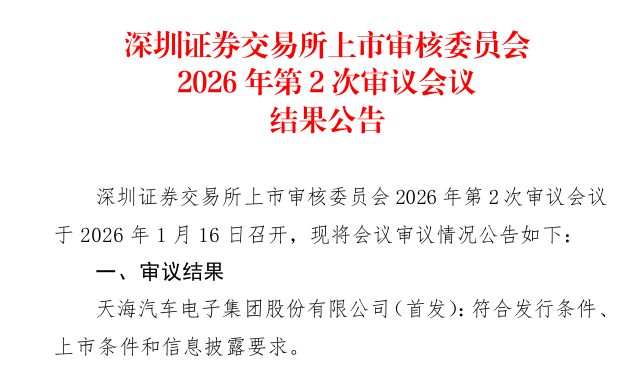
Group 1 - The Shenzhen Stock Exchange's listing review committee approved Tianhai Automotive Electronics Group Co., Ltd.'s IPO, confirming it meets issuance, listing, and information disclosure requirements [1] - Tianhai Electronics is located in Hebi Economic and Technological Development Zone, primarily engaged in the R&D, production, and sales of automotive wiring harnesses, connectors, and electronic components, holding a market share of 8.45% in the automotive wiring harness industry and 3.52% in the automotive connector industry [2] - The company has established long-term stable partnerships with major automakers such as Chery, SAIC, Geely, Changan, and General Motors, as well as collaborations with leading new energy vehicle manufacturers like Li Auto, NIO, Leap Motor, and Xpeng [2] Group 2 - In 2024, Tianhai Electronics achieved a revenue of 12.523 billion yuan and a net profit attributable to shareholders of 614 million yuan; in the first half of 2025, the revenue was 6.557 billion yuan with a net profit of 315 million yuan [2] - The company completed its A-share listing guidance in June 2025 and plans to raise 2.46 billion yuan through its IPO on the Shenzhen Stock Exchange, which will be used for various projects including connector technology upgrades, production base construction, and the establishment of an intelligent connected vehicle research institute [2]
天海电子深主板IPO过会 拟募资24.6亿元
Zheng Quan Shi Bao Wang· 2026-01-16 10:35
Group 1 - The core viewpoint of the article is that Tianhai Electronics has successfully passed the IPO review by the Shenzhen Stock Exchange, marking a significant milestone for the company [1] - Tianhai Electronics, established in the 1970s, initially focused on traditional fuel vehicle wiring harnesses and has since expanded into core areas such as connectors and intelligent control systems, laying a solid foundation for future growth [3] - The company provides automotive transmission systems, connection systems, and intelligent control solutions, with its main products including automotive wiring harnesses, connectors, and electronics, primarily used in both new energy and traditional fuel vehicles [3] Group 2 - The brand "THB" is recognized in the market, reflecting the company's technical strength, with the per vehicle value of its products increasing significantly from 2500 yuan to over 5000 yuan, demonstrating a clear technology premium effect [3] - In 2024, the Chinese automotive wiring harness market is projected to reach 119.6 billion yuan, with Tianhai Electronics holding a leading market share of 8.45%, while it ranks among the top three in the 47.8 billion yuan automotive connector market with a 3.52% share [3] - Tianhai Electronics has established long-term stable partnerships with major automotive manufacturers such as Chery, SAIC Group, Geely, and General Motors, and has also collaborated with leading new energy vehicle companies like Li Auto and NIO [4] Group 3 - For the first three quarters of 2023 to 2025, Tianhai Electronics reported revenues of 11.549 billion yuan, 12.523 billion yuan, and 10.898 billion yuan, with net profits of 0.652 billion yuan, 0.614 billion yuan, and 0.537 billion yuan respectively [4] - The company plans to raise 2.46 billion yuan through its IPO to invest in projects including connector technology upgrades, wiring harness production bases, automotive electronics production bases, and the Tianhai Intelligent Connected Vehicle Industry Research Institute [4] - The construction of these projects is expected to enhance the company's R&D capabilities, improve the intelligence and informatization of production processes, and expand existing production capacity, thereby strengthening its core competitiveness and profitability [4]
从“蔚小理”到“零鸿米”
Ren Min Ri Bao· 2026-01-16 10:17
Group 1 - The new energy vehicle (NEV) market is experiencing a shift in competitive dynamics, with new players like Leap Motor and Hongmeng Zhixing rising in sales rankings, while traditional brands like NIO, Xpeng, and Li Auto are adjusting their strategies [2] - The entry of internet companies into the automotive sector has led to innovative business models and product definitions, with NIO focusing on user experience through battery swapping, Xpeng emphasizing smart driving, and Li Auto expanding the concept of automotive living spaces [2] - The NEV industry is transitioning from electrification to intelligence, entering a phase where technological differentiation, cost efficiency, and global capabilities are critical for survival [2] Group 2 - The rise of "Zero, Hongmeng, and Xiaomi" reflects a new trend in the automotive industry's integration, supported by leading ICT companies like Huawei and Dahua, which provide technological advantages in smart cockpit and driving solutions [3] - Huawei's focus on ICT technology and its collaboration with automotive companies to enhance vehicle quality is becoming a consensus in the industry, with many manufacturers adopting Huawei's integrated product development and marketing systems [5] - The collaboration between GAC Group and Huawei in developing the Qijing automotive design center showcases the importance of user feedback in product design, highlighting the integration of advanced development processes [4]
富特科技(301607) - 2026年1月16日投资者关系活动记录表
2026-01-16 10:02
Group 1: Company Performance and Market Growth - The main reasons for the company's performance growth are the rapid expansion of the electric vehicle market and deep partnerships with major manufacturers, including NIO, Xiaomi, and Renault, leading to a doubling of overall performance by 2025 [1] - The company has successfully established a diversified customer base, covering traditional automotive brands and new energy vehicle manufacturers in both domestic and international markets [1][2] Group 2: Customer Base and Future Expansion Plans - Current major domestic clients include GAC, NIO, Great Wall, Xiaomi, XPeng, and others, while international collaborations are ongoing with Renault and Stellantis, with production expected to start in 2026 [2] - The company aims to leverage strategic opportunities in the industry to enhance its international presence and actively pursue new clients and projects to increase global market share [2] Group 3: Overseas Business Development - Overseas business is a key growth factor, with revenue from international operations exceeding 17% in the first half of 2025, and ongoing R&D for other international projects [2] - The company plans to deepen cooperation with leading clients and expand its international customer base, expecting continued positive contributions from overseas operations [2] Group 4: V2G Business Development - The V2G (Vehicle-to-Grid) business is developing in regions with mature electricity markets and evolving regulatory frameworks, with expectations for significant support to grid stability and optimization as electric vehicle ownership increases [2] Group 5: Financing Projects - The company is actively advancing its refinancing projects, having recently completed and submitted responses for the second round of review inquiries, and will fulfill disclosure obligations as per regulatory requirements [2]
刚刚!天海电子主板IPO过会
Sou Hu Cai Jing· 2026-01-16 10:01
Group 1 - The Shenzhen Stock Exchange's Listing Review Committee has approved Tianhai Automotive Electronics Group Co., Ltd.'s IPO application, confirming it meets the issuance and listing conditions as well as information disclosure requirements [1] - Tianhai Electronics, located in Hebi Economic and Technological Development Zone, specializes in the R&D, production, and sales of automotive wiring harnesses, connectors, and electronic components, holding a market share of 8.45% in the automotive wiring harness industry and 3.52% in the automotive connector industry in China [2] - The company has established long-term stable partnerships with major automakers such as Chery Automobile, SAIC Group, Geely Automobile, Changan Automobile, and General Motors, as well as collaborations with leading new energy vehicle manufacturers like Li Auto, NIO, Leap Motor, and Xpeng Motors [2] Group 2 - In 2024, Tianhai Electronics achieved a revenue of 12.523 billion yuan and a net profit attributable to shareholders of 614 million yuan. In the first half of 2025, the company reported a revenue of 6.557 billion yuan and a net profit of 315 million yuan [2] - The company completed its A-share listing guidance in June 2025 and plans to raise 2.46 billion yuan through its IPO on the Shenzhen Stock Exchange, which will be used for various projects including connector technology upgrades, production base construction, and the establishment of an intelligent connected vehicle research institute [2]