新华三

Search documents
紫光股份(000938):公司点评:积极开展对新华三剩余股权的收购,基本面总体向好
Zhongyuan Securities· 2025-12-16 08:21
Investment Rating - The report assigns a rating of "Increase" for the company, indicating an expected relative increase of 5% to 15% compared to the CSI 300 index over the next six months [3][36]. Core Insights - The company is actively pursuing the acquisition of the remaining 19% stake in Xinhua San held by HPE, which reflects a positive outlook on its fundamentals [2]. - In 2025, the company's revenue growth accelerated, with a reported revenue of 77.32 billion yuan for the first three quarters, representing a year-on-year increase of 31.41%. However, the net profit attributable to the parent company declined by 11.24% [9]. - The growth momentum for Xinhua San is primarily driven by domestic government and enterprise business, as well as international business, with respective year-on-year growth rates of 62.55% and 83.99% in the first three quarters of 2025 [9]. - The company has increased its stake in Xinhua San to 81%, with Xinhua San contributing 77% of the company's revenue and 146% of its net profit in the first three quarters of 2025 [9]. - The company is expected to alleviate financial pressure from the acquisition of Xinhua San through its successful listing on the Hong Kong Stock Exchange [9]. Financial Data Summary - As of September 30, 2025, the company reported a net asset value per share of 5.06 yuan and a net profit margin of 9.70% [5]. - The company's revenue is projected to reach 101.06 billion yuan in 2025, with a growth rate of 27.88% [12]. - The earnings per share (EPS) for 2025 is estimated at 0.52 yuan, with corresponding price-to-earnings (P/E) ratios of 46.62, 32.07, and 24.41 for the years 2025, 2026, and 2027 respectively [12].

金融网络安全靶场市场深度分析-筑牢数字金融的“数字沙盘”
QYResearch· 2025-12-12 02:22
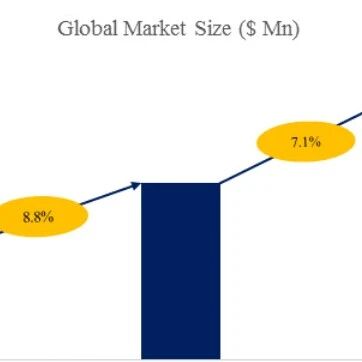
Core Viewpoint - The financial cybersecurity range is evolving from a technical validation tool to a core infrastructure for digital financial security, enhancing the defensive capabilities of financial institutions and promoting proactive immunity against cyber threats [5]. Industry Overview - The financial cybersecurity range integrates virtualization, big data, and other technologies to provide a comprehensive security infrastructure for financial institutions, including attack-defense drills, vulnerability verification, emergency response training, and system testing [1]. - The industry value chain consists of upstream technology providers, midstream platform developers, and downstream financial institutions, forming a complete chain from equipment supply to operational services, with a gross margin of approximately 50-65% [3]. Market Trends - According to QYResearch, the global financial cybersecurity range market is projected to reach $1.37 billion by 2031, with a compound annual growth rate (CAGR) of 7.1% over the coming years [3]. - The financial cybersecurity range is becoming a critical infrastructure in the digital transformation of the financial industry, driven by the acceleration of digitalization and the evolution of cyberattack methods [5]. Industry Chain Collaboration - The industry chain covers three main segments: upstream technology support focusing on core technology development, midstream platform construction and operation, and downstream application scenarios expanding to fintech companies and third-party payment platforms [7]. - Upstream focuses on core technology research, including virtualization engines and AI attack-defense algorithms, while midstream involves specialized security vendors providing modular designs for core functional modules [7]. Policy Drivers - Global financial regulatory frameworks have set clear requirements for the construction of cybersecurity ranges, with policies accelerating their adoption among financial institutions [8]. - The Chinese "Financial Technology Development Plan (2022-2025)" emphasizes the establishment of a cybersecurity attack-defense exercise system, mandating regular drills for financial institutions [8]. Challenges and Opportunities - The financial cybersecurity range faces challenges such as reliance on imported technologies, high construction costs, and a significant talent gap in the industry [9]. - The market has high entry barriers, requiring expertise in core patents, substantial funding, and compliance with security certifications [10]. Future Directions - The financial cybersecurity range is expected to evolve into a "financial security brain," integrating various technologies and expanding its application scenarios [10]. - Companies are encouraged to pursue differentiated competition by focusing on full-scenario coverage in the financial industry and collaborating with academic institutions to overcome technological bottlenecks [10].

未来网络试验设施正式投入运行,完成120项重大创新试验
Huan Qiu Wang Zi Xun· 2025-12-06 01:50
Core Insights - The Future Network Experimental Facility, China's first major national technology infrastructure in the information and communication sector, has officially commenced operations [1] Group 1: Facility Overview - The facility is located in Nanjing, Jiangsu, and was completed in August 2024 [1] - It covers 40 cities nationwide, featuring 88 backbone network nodes and 133 edge network nodes, with a total optical transmission length exceeding 55,000 kilometers [1] - The facility can support 4,096 heterogeneous services for parallel testing and is capable of interconnecting with existing domestic and international networks [1] Group 2: Performance Metrics - The facility enables efficient, high-speed, low-latency, and low-jitter data transmission, with a packet loss rate of only one in a million [1] Group 3: Service and Collaboration - To date, the facility has served major national research institutions such as the National Astronomical Observatory and the Institute of High Energy Physics, as well as telecom operators like China Telecom, China Mobile, China Unicom, and China Broadcasting Network [1] - It has collaborated with universities including Peking University, Nanjing University, Zhejiang University, and the Chinese University of Hong Kong, along with leading companies like Huawei, H3C, and Baidu, completing 120 significant innovation experiments [1] - The experiments cover critical dimensions such as core chips, network operating systems, routing control, security and trust, large-scale networking, and new AI services [1]
2025数智科技生态大会|中国电信携手AI终端生态合作伙伴 智惠千家万户
Sou Hu Cai Jing· 2025-12-05 02:08
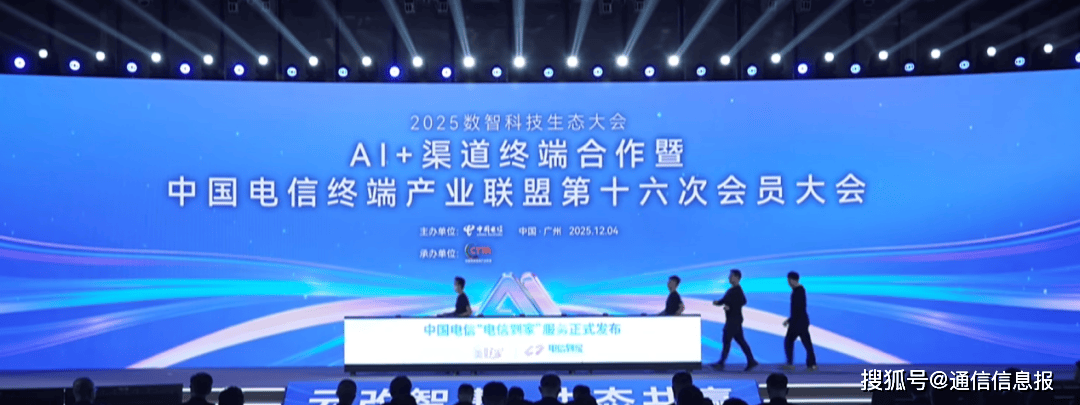
Core Insights - The 2025 Digital Technology Ecological Conference in Guangzhou highlights China's Telecom's commitment to embracing artificial intelligence (AI) and upgrading its strategy from "cloud transformation" to "intelligent benefits" [1][2] - AI terminals are significantly changing lifestyles, with various innovative products showcased at the conference [1] Group 1: AI Capability Enhancement - China Telecom is systematically building its AI capabilities, with its "Star Sea" data intelligence platform gathering over 10 trillion tokens of general model corpus and 14 industry datasets, totaling over 350TB [2] - The company employs a dual-track strategy of "independent + ecosystem" for model development, launching over 80 industry models and 30 intelligent applications, serving more than 20,000 industry clients [2] Group 2: Innovative Consumer Products and Experiences - The launch of the new generation Tianyi AI Central Screen integrates communication, entertainment, security, and smart home control, enhancing digital life with a focus on user interaction [4] - The "Star Little Chen Terminal Intelligent Agent" redefines call experiences with features like real-time fraud alerts and smart meeting assistance, enhancing both personal and professional communication [5] Group 3: Collaboration and AI Terminal Popularization - China Telecom initiated the AI + Terminal Cooperation Star Plan, signing key partnerships with major companies like Huawei and Xiaomi to expand its terminal ecosystem [7] - The "Jingyi Huanneng Plan" with JD.com allows consumers to enjoy operator subsidies and a seamless purchasing experience for AI devices, enhancing service efficiency [7][8] Group 4: Consumer Incentives and Outreach - In Shaanxi, over 1,000 mobile sales stores are integrated into the "National Subsidy" program, offering substantial discounts on AI devices, with some models seeing up to 2,000 yuan in total savings [8] - The "AI Terminal Going to the Countryside" initiative in Shandong promotes AI technology in rural areas, resulting in a 45% increase in AI terminal sales in covered counties [8] Group 5: Service Innovations - The "Telecom to Home" service allows users to book professionals for various business operations and terminal deliveries, enhancing customer service and convenience [10]

海达尔(920699):深耕精密滑轨领域,乘AI东风拓展服务器滑轨新增长极
Soochow Securities· 2025-12-04 05:49
Investment Rating - The report gives an "Accumulate" rating for the company, marking its first coverage [1]. Core Views - The company is deeply engaged in the precision slide rail sector and is expanding its server slide rail business, leveraging the growth of AI [8][14]. - The demand for household appliances is steadily increasing, and there is a high growth in the domestic demand for server slide rails [8][49]. - The company has a comprehensive product layout and is actively expanding its server slide rail offerings [8][73]. - The earnings forecast indicates a potential for rapid growth in performance due to the expansion of the server slide rail business and the gradual release of production capacity [8][26]. Summary by Sections 1. Deep Engagement in Precision Slide Rail Sector - The company specializes in the R&D, production, and sales of precision slide rails, primarily used in household appliances and servers, establishing stable partnerships with major clients [13][14]. - The management team has extensive industry experience, with all members having over ten years in the company [20]. - The company has received numerous honors and qualifications, including being recognized as a high-tech enterprise and a "little giant" in Jiangsu Province [13]. 2. Stable Expansion of Household Slide Rails and High Growth in Server Slide Rail Demand - The company is positioned within the precision metal connection component industry, with significant growth opportunities in both household and server slide rails [40][49]. - The domestic refrigerator market is expected to grow, with retail sales reaching 133.3 billion yuan in 2023, driven by high-end product trends and government policies [49][62]. - The server slide rail market is projected to grow significantly, with the global server market expected to reach 588 billion USD by 2029, reflecting a compound annual growth rate of 18.8% from 2024 to 2029 [64][70]. 3. Comprehensive Product Layout and Active Expansion of Server Slide Rail Offerings - The company offers a wide range of slide rail products, with over 700 models, including approximately 600 household slide rails and about 100 server slide rails [73]. - The server slide rails are designed for high load capacities, ranging from 40kg to 130kg, and include features such as drop-locking and tool-free installation [73][75]. - The company is focused on high-end slide rail solutions, which are increasingly used in large-capacity and multi-temperature refrigerators, enhancing its market penetration [57][58]. 4. Earnings Forecast and Investment Recommendations - The company is expected to achieve net profits of 0.77 billion yuan in 2025, with a year-on-year decrease of 5.4%, followed by growth in subsequent years [1][26]. - The projected P/E ratios for 2025, 2026, and 2027 are 28, 26, and 22 times, respectively, indicating a favorable valuation as the company expands its server slide rail business [1][26].
我国信息通信领域首个国家重大科技基础设施——未来网络试验设施通过国家验收,正式投入运行!
Yang Zi Wan Bao Wang· 2025-12-03 15:26
Core Insights - The Future Network Experimental Facility has successfully passed national acceptance, marking a significant milestone in China's information and communication technology infrastructure [1][2][3] - This facility is the first national major scientific and technological infrastructure in the field of information communication in China, aimed at addressing key technological challenges and promoting industrial development [1][2] Group 1: Project Overview - The Future Network Experimental Facility is led by the Jiangsu Future Network Innovation Research Institute in collaboration with several prestigious institutions, including Tsinghua University and the Chinese Academy of Sciences [1][2] - The facility will operate 24/7, covering 40 cities with over 88 backbone network nodes and 133 edge network nodes, totaling more than 55,000 kilometers of optical transmission [3] Group 2: Technological Achievements - The project has achieved breakthroughs in key technologies, including the development of the world's first distributed large-scale network operating system and a wide-area deterministic network [4] - It has established 206 international and domestic standards and has been granted 221 invention patents and 139 software copyrights [4] Group 3: Strategic Importance - The facility supports national strategic needs and serves as a comprehensive experimental environment for future network research, core device development, and application validation [2][4] - It is expected to enhance capabilities in various fields, including astronomical data transmission, industrial internet applications, and satellite internet testing [4][5] Group 4: Industry Impact - The facility has already served numerous national research institutions and major telecommunications operators, completing 120 significant innovation experiments across various critical dimensions [5] - It plays a crucial role in empowering national strategies such as "East Data West Computing," industrial internet, artificial intelligence, and low-altitude economy [5]
飞荣达:不断提高综合竞争优势
Zheng Quan Ri Bao Zhi Sheng· 2025-12-03 09:39
Core Viewpoint - The company has signed non-disclosure agreements with several clients, indicating a strong client base and confidentiality in its operations [1] Group 1: Client Base - The company serves a diverse range of clients, including notable names such as H Company, ZTE, Cisco, Inspur, Datang Mobile, and others [1] - The client list also includes significant players like Firefly, New H3C, Super Fusion, Lenovo, Wistron, Compal, Asus, Oriental Communication, and Shenzhou Kuntai [1] Group 2: Product Offering - The company offers a wide variety of products that cater to different customer needs, environments, and usage levels [1] - The company has demonstrated significant technological advantages in the liquid cooling field, which is a key area of its product offering [1] Group 3: Business Development - The company has made notable progress in advancing its business, particularly in the liquid cooling technology sector [1] - The company will continue to monitor developments in relevant technology fields to enhance its competitive advantages [1]

绿色算力投资手册(下):从硬件能效、节能温控到算能协同、赋能转型,绿色算力各赛道前景广阔
ZHESHANG SECURITIES· 2025-12-01 13:15
Investment Rating - The report does not explicitly state an investment rating for the green computing industry Core Insights - The green computing industry is analyzed from three dimensions: computing side (hardware and software), energy side, and application side, with a focus on liquid cooling technology, efficient algorithms, high-density servers, and long-term attention on integrated systems and green electricity [1][2][12] - The transition from energy efficiency optimization to a collaborative system of "computing power, electricity, and carbon power" is highlighted as a core trend in the intersection of technology and energy [1][2] Summary by Sections 1. Research Framework - The demand for computing power is rapidly increasing due to global digitalization and intelligent transformation, with AI data center IT energy consumption projected to grow significantly from 55.1 TWh in 2024 to 146.2 TWh by 2027, reflecting a compound annual growth rate of 44.8% [11][12] 2. Computing Side: Role of Algorithms, Devices, and Carriers - Green algorithms are essential for optimizing AI computing efficiency, focusing on reducing computational and storage costs while maintaining performance [2][30] - Data center hardware is identified as a major source of energy consumption, with significant advancements in chip architecture and high-density integration driving energy efficiency [2][12] - Efficient cooling technologies, such as liquid cooling, can significantly reduce Power Usage Effectiveness (PUE) to below 1.3, with AI-driven management systems enhancing operational efficiency [2][12] 3. Energy Side: The End of Computing Lies in Electricity - The report emphasizes the need for energy structure transformation, with approximately 70% of China's data center energy coming from coal [2][12] - Innovations in energy management, such as integrated microgrids and direct connections to green electricity, are crucial for optimizing energy allocation [2][12] 4. Application Side: AI+ Achieving Green Empowerment Across Industries - AI computing is driving decarbonization across various sectors, with significant reductions in carbon emissions projected for energy (12%-22%), industry (13%-22%), transportation (10%-33%), and buildings (23%-40%) [2][3] - The development of edge computing and large models is expected to transform consumption patterns and production methods, leading to a comprehensive green and intelligent transition in the economy [3][12] 5. Summary and Recommendations - The report suggests focusing on key areas such as liquid cooling technology, efficient algorithms, and integrated energy systems as potential investment opportunities in the green computing sector [2][12]

北京政法职业学院:打造网络技术高素质人才培养高地
Xin Jing Bao· 2025-12-01 13:14
Core Viewpoint - The Beijing Political Science and Law Vocational College is aligning its computer network technology programs with the demands of the capital's information industry, focusing on high-quality development and regional digital economy growth [1][10]. Group 1: Industry Demand and Professional Layout - The college's computer network technology program group is designed to meet the needs of the capital's "four centers" and focuses on internet services, software, and information technology trends [2]. - The program includes specialized areas such as "Network Technology (Network Attack and Defense)", "Data Intelligence", "Artificial Intelligence Application", and "Judicial Appraisal Technology", targeting key sectors like network security and data intelligence [2][3]. Group 2: Curriculum Innovation - The curriculum is based on a competency-oriented approach, integrating theoretical and practical teaching [4]. - Core courses in network security include "Network Basics - Attack and Defense Techniques - Penetration Practice", while data intelligence courses cover "Data Processing - IoT Development - AI Applications" [4]. Group 3: Practical Training - Practical training comprises over 60% of the program, featuring a three-tiered system of "Recognition Internship - Job Internship - Comprehensive Training" [5]. - The college collaborates with leading companies to provide real-world project experiences, with 40% of students participating in actual enterprise projects [5]. Group 4: Faculty Development - The program emphasizes building a high-quality teaching team with a dual-teacher model, consisting of 21 full-time and 10 part-time instructors, all with substantial industry experience [7]. - Continuous professional development for faculty is ensured through mandatory training and industry engagement [7]. Group 5: Quality Assurance - A multi-dimensional quality assurance mechanism is in place, including a professional construction advisory committee and innovative evaluation methods [8]. - The employment rate for graduates has remained above 95%, with 80% securing positions in leading internet and technology firms [8]. Group 6: Social Service and Industry Integration - The college has developed a "three-in-one" social service model that includes industry collaboration, technical services, and vocational training [11]. - The institution aims to alleviate talent shortages in the industry by training over 500 skilled professionals annually and contributing to rural revitalization efforts [11]. Group 7: Future Development - The college plans to continue enhancing its programs and contribute to high-quality vocational education development, aiming to establish itself as a leading institution in computer network technology training [12].

字节豆包AI手机来了,PCB龙头科翔股份或成受益赢家
Quan Jing Wang· 2025-12-01 02:01
Core Insights - ByteDance and ZTE are collaborating to launch the Doubao AI phone in December, marking ByteDance's first foray into the smartphone market, which is seen as a revolutionary AI smart entry rather than a simple smartphone upgrade [1] - The Doubao phone is expected to create significant growth opportunities in the consumer electronics sector, akin to the "Seres" model in the automotive industry [1] Group 1: Product and Technology - ByteDance is implementing a "big model + super application + hardware" closed-loop strategy, leveraging its self-developed large model capabilities, its own super app ecosystem, and a vast global user base [2] - The Doubao phone will feature deep AI integration, allowing it to perform complex tasks through voice commands, such as booking flights and organizing meeting notes, thus acting as a personal intelligent assistant [2][3] - The device aims to create a seamless ecosystem across various devices, breaking down barriers between smartphones, wearables, tablets, and smart home devices [2] Group 2: Market Impact and Partnerships - ZTE is positioned to benefit significantly from this collaboration, potentially revitalizing its smartphone brand by integrating ByteDance's AI ambitions into the Doubao phone [4] - Kexiang Co., Ltd. is also a major beneficiary, deeply integrated into ByteDance's ecosystem through its supply chain partnerships with ZTE and other key players [5] - Kexiang is positioned to meet the increasing demand for high-density, high-frequency, and lightweight PCB solutions driven by the AI phone's requirements [7]