
雷鸟创新

Search documents
英伟达推出新一代Rubin/存储平台,台积电1月15日举行法说会
Guotou Securities· 2026-01-11 07:34
Investment Rating - The industry is rated as "Outperforming the Market - A" with a maintained rating [4] Core Insights - Nvidia has launched the next-generation Rubin AI platform, which is set to significantly enhance training performance by 3.5 times and improve AI software performance by 5 times compared to the previous Blackwell platform. The platform will reduce inference token generation costs by up to 10 times and decrease the number of GPUs required for training mixture of experts models by 4 times [1] - Nvidia's new AI-native storage infrastructure, driven by BlueField-4, aims to address the growing AI storage demand, which has surpassed existing infrastructure capacity. This new architecture is designed specifically for AI inference, enhancing efficiency and energy optimization [2] - TSMC has begun mass production of its 2nm process technology, with initial monthly capacity of 35,000 wafers, expected to increase to 140,000 wafers by the end of 2026, surpassing previous market estimates [3] Industry Performance - The electronic sector has shown a relative return increase of 4.8% over the past month and an absolute return of 8.3% [6] - The electronic index has risen by 7.74% in the past week, ranking 7th out of 31 industries [30] - The semiconductor sub-sector has seen a significant increase of 10.61% in the same period, indicating strong performance within the industry [35] Investment Recommendations - For the semiconductor sector, companies such as SMIC, Hua Hong Semiconductor, and Northern Huachuang are recommended for investment. In the consumer electronics sector, companies like Luxshare Precision, Lens Technology, and Goertek are highlighted as potential investment opportunities [10]


直击CES 2026|中国AI眼镜CES扎堆“秀肌肉” 2026年将迎来应用大年?
Mei Ri Jing Ji Xin Wen· 2026-01-10 13:55
Core Insights - The 2026 International Consumer Electronics Show (CES) showcased AI glasses as a significant highlight, with over 50 exhibitors, including more than 20 Chinese companies, indicating a strong presence in the market [1][3]. Industry Overview - The global smart glasses market is projected to reach a shipment volume of 4.296 million units by Q3 2025, reflecting a year-on-year growth of 74.1%. In China, the shipment volume is expected to be 623,000 units, with a growth rate of 62.3% [1]. - The AI glasses sector is seen as a crucial entry point for AI technology, with companies focusing on user experience and practical applications [2][5]. Product Innovations - Rokid introduced the Rokid Ai Glasses Style, a lightweight model weighing only 38.5g, capable of functions such as music playback, translation, navigation, and AI Q&A [3]. - Thunderbird Innovation launched the world's first dual-lens AR glasses with eSIM functionality, allowing independent communication without a smartphone [4]. - XREAL unveiled the new generation AR glasses XREAL 1S and announced a deepened collaboration with Alphabet [4]. Market Dynamics - The AI glasses market is experiencing a "arms race" with various manufacturers adopting differentiated strategies, focusing on audio interaction, camera integration, and waveguide display technology [5][6]. - Meta's announcement of a successful launch of its Ray-Ban Display smart glasses has led to a delay in its international market expansion plans due to overwhelming demand [6]. Future Projections - The smart glasses market is expected to reach a shipment volume of 23.687 million units globally by 2026, with China's market surpassing 4.915 million units, marking a new phase of growth [6]. - Analysts suggest that the participation of internet and cloud companies is enhancing industry attention and capital activity, leading to resource flow and integration within the supply chain [7]. Challenges and Considerations - The industry faces challenges in supply chain management and user experience, with many brands struggling with inventory and delivery issues [8]. - Ensuring product stability and quality control will be critical for retaining users, as the current demand is primarily driven by novelty rather than necessity [8].
CES 2026观察:“物理AI时刻”要靠中国制造落地
Jing Ji Guan Cha Wang· 2026-01-10 11:01
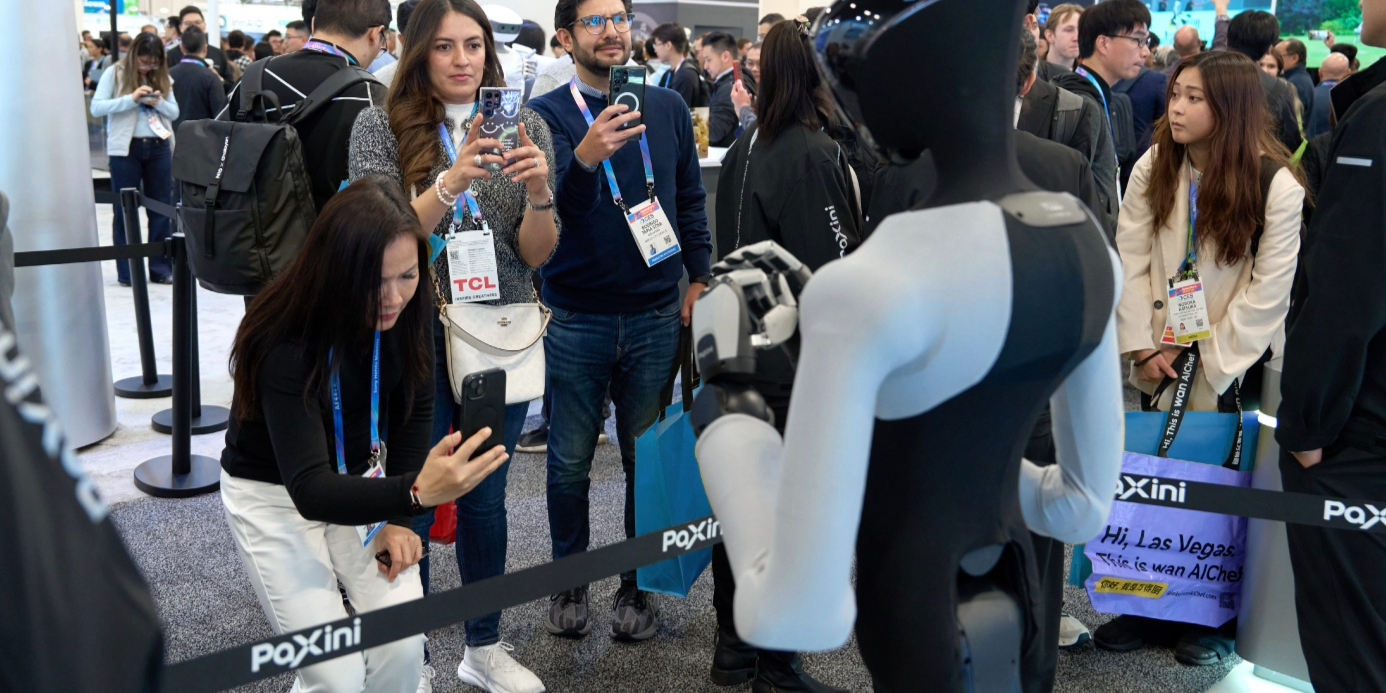
Group 1: Physical AI and Computing Power - The core theme of CES 2026 is the emergence of "Physical AI," where AI technology is transitioning from generating text or video to interacting with physical hardware [4][10] - AMD's chairwoman, Lisa Su, highlighted the increasing demand for computing power, predicting a 100-fold increase in global computing capacity over the next five years [3][4] - The presence of over 200 Chinese companies at CES indicates a strong support for the "Physical AI moment," showcasing various AI applications in physical products [4][23] Group 2: Robotics Innovations - The robotics sector at CES has shifted focus from mere physical movement to specific job functions and operational scenarios, with Chinese companies leading this evolution [5][9] - Companies like Pasoni and Fourier Intelligence showcased advanced robots capable of performing intricate tasks, such as ice cream making and automotive part sorting, demonstrating significant advancements in robotic dexterity [5][6] - The global sales of robots are projected to reach approximately $45 billion by 2026, with expectations to exceed $60 billion by 2030, driven by rising labor costs and efficiency in Chinese manufacturing [8][9] Group 3: Smart Glasses and AR Technology - Chinese companies are aggressively entering the AR/AI glasses market, aiming to redefine the concept of a "second screen" beyond smartphones [11][12] - Innovations include the launch of the world's first dual-lens AR glasses with eSIM functionality by Thunderbird Innovation, allowing users to make calls and connect to the internet without a smartphone [12][13] - The global market for smart glasses is expected to see significant growth, with sales projected to reach around $10.7 billion by 2026, reflecting an over 80% year-on-year increase [18][23] Group 4: Display and Chip Technology - Companies like Tianma Microelectronics and TCL Huaxing are pushing the boundaries of display technology, with innovations such as large-scale OLED screens and advanced automotive displays [19][20] - Lenovo and NVIDIA announced a partnership to enhance AI infrastructure, aiming to quadruple their business collaboration over the next few years [22] - The trend in AI chip development is moving towards high computing power, low energy consumption, and integration, with significant growth expected in AI terminal sales by 2028 [22][23]





从头到脚戴满AI设备,治好你的健康焦虑丨36氪直击CES
36氪· 2026-01-10 09:06
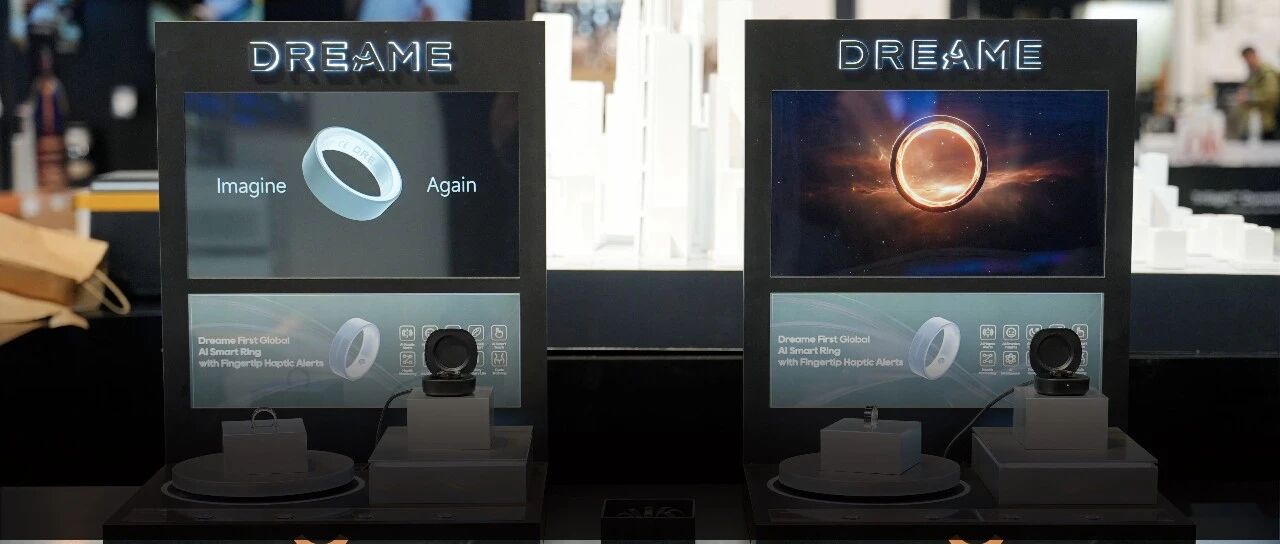
Core Insights - The hardware industry is experiencing intense competition, with many companies showcasing ambitious products at CES, indicating a near-boiling point in market activity [4][5]. - Wearable devices are increasingly focusing on health monitoring, with advancements allowing for more sophisticated metrics like ECG reports and blood pressure readings [5][10]. - The market for smart rings is gaining traction, with companies like Oura achieving significant valuations and sales, prompting new entrants to explore this niche [10][12]. Wearable Devices - Health monitoring has become a primary theme for wearable devices, evolving from basic metrics to comprehensive health reports [5][8]. - Companies are innovating in the smart ring segment, integrating features like heart rate and blood oxygen monitoring, with some products capable of generating ECG reports [10][14]. - The trend is shifting towards proactive health management, with devices designed to intervene in user behavior based on real-time data [14]. AI Glasses and Differentiation - The year 2025 is anticipated to be a pivotal moment for AI glasses, with major manufacturers entering the market and seeking differentiation [16][17]. - Companies are exploring specific use cases for AI glasses, combining functionalities like sports recording and real-time data display [18][20]. - The introduction of eSIM technology in AR glasses is seen as a crucial step towards making these devices independent and comparable to smartphones [23][24]. Recording Devices - The recording device market is also evolving, with companies like Gyges Labs and Plaud innovating by creating smaller, more versatile recording hardware [25]. - The competition in the recording device sector is intensifying, as companies strive to differentiate their products despite initial market advantages [25].
中国科技企业闪耀CES,以创新和品牌力突围
2 1 Shi Ji Jing Ji Bao Dao· 2026-01-10 00:10
Group 1 - The core viewpoint of the articles highlights the increasing presence and competitiveness of Chinese technology companies at the CES 2026, showcasing a shift from traditional manufacturing roles to a more diversified global strategy that emphasizes technology, design, and localized operations [1][4]. - Chinese companies are exhibiting a strong focus on AI integration, with nearly all exhibitors emphasizing AI in their presentations, indicating a trend towards practical applications rather than just theoretical concepts [2][3]. - The number of Chinese humanoid robot exhibitors at CES 2026 exceeds 20, surpassing the total from the US, Japan, South Korea, and Europe combined, demonstrating a significant cluster effect in this sector [2]. Group 2 - In the first three quarters of 2025, China's export of high-tech products reached 37.5 trillion yuan, marking an 11.9% increase and contributing over 30% to the overall export growth during the same period [1]. - The global market for robotic vacuum cleaners is dominated by Chinese brands, which accounted for over 60% of the market share in terms of shipment volume in 2025 [5]. - Chinese technology companies are increasingly focusing on brand building after achieving significant sales milestones, with many adopting interactive marketing strategies to enhance brand visibility and consumer engagement [6][7]. Group 3 - The CES serves as a window into technological trends and reflects the journey of Chinese companies expanding into overseas markets, with a notable increase in brand recognition and a shift away from the "low-price label" to a "technology leader" image [4][6]. - The rapid iteration cycles of Chinese companies, averaging six months to a year for product updates, contrast with European companies that typically require two to three years, allowing for quicker market responsiveness [4][6]. - Challenges remain for Chinese companies in navigating diverse market environments, including varying consumer preferences, regulatory requirements, and external uncertainties, which necessitate comprehensive long-term strategic planning [7][8].
CES观察|智能眼镜群雄逐鹿 清洁电器进化“具身智能”
Xin Jing Bao· 2026-01-09 15:03
Group 1: Core Insights - CES 2026 focuses on systemic transformations in artificial intelligence technology, with smart glasses emerging as a key highlight of the event [1] - The year 2026 is anticipated to be a golden period for the development of smart glasses, driven by an increasing number of players entering the market [2][3] - AI is being fully integrated into home appliances and consumer electronics, with traditional companies merging with new entrants [1][6] Group 2: Smart Glasses Development - Over 50 companies, including notable brands like Thunder Innovation, XREAL, and Rokid, showcased their smart glasses at CES 2026 [2] - New lightweight models were introduced, such as Rokid's AI+AR glasses weighing only 49 grams and another model at 38.5 grams [2] - The Chinese market is seeing a surge in AI glasses from various brands, including Xiaomi and Lenovo, since 2025 [2][3] Group 3: Market Trends and Opportunities - The introduction of new national subsidy policies in China has expanded the categories eligible for subsidies, including smart glasses [3] - The global shipment of smart glasses is projected to exceed 11 million units in 2026, indicating a competitive and diverse market landscape [3] - The penetration rate of cleaning robots in global households remains below 10%, suggesting significant growth potential in the cleaning appliance sector [4] Group 4: Cleaning Appliances and AI Integration - Cleaning appliances, particularly robotic vacuums, are advancing towards embodied intelligence, with innovations like bionic designs enabling multi-floor cleaning [4] - Chinese brands have rapidly increased their market share in the global robotic vacuum sector, capturing 65.7% of the market in the first three quarters of 2025 [5] - AI is becoming a core capability across home appliances, with companies like TCL and Hisense showcasing advanced AI-integrated products at CES [6][7]
CES深度观察|AI硬件消费时代的“幕后英雄”走向台前
Sou Hu Cai Jing· 2026-01-09 14:48
Core Insights - The 2026 CES in Las Vegas highlighted a shift from technological innovation to practical applications of AI, with a focus on new hardware products like smart cockpits, embodied robots, and AI glasses [1][3] - Chinese supply chain companies are transitioning from being "behind the scenes" to taking a front-row role in the AI hardware consumer era, showcasing their capabilities at CES [3][4] Group 1: Chinese Companies' Participation - A total of 942 Chinese companies participated in CES 2026, accounting for approximately 22% of the total exhibitors, marking a significant increase from 204 companies in 2021 [4] - The participation of Chinese firms has evolved from sporadic entries to organized group participation, reflecting a robust global presence [4][6] Group 2: Technological Advancements and Market Position - Chinese manufacturers are diversifying their strategies to capture the global AI hardware market, with companies like TCL focusing on key interactive display technologies and automakers like BYD and Great Wall leveraging AI for international expansion [6][9] - Companies like Lens Technology are transitioning from traditional component suppliers to comprehensive AI hardware ecosystem platforms, showcasing their capabilities in various AI applications [11][15] Group 3: Innovations and Product Launches - Lens Technology presented a range of innovations at CES, including a bionic dexterous hand and ultra-thin glass products for aerospace applications, demonstrating their advanced manufacturing capabilities [13][24] - The company also showcased integrated solutions for smart automotive cockpits, which have gained traction among leading automotive brands like Tesla and NIO [15][20] Group 4: Supply Chain Evolution - The evolution of the supply chain in China is driven by the need for manufacturers to adapt to the AI hardware landscape, enabling them to redefine their roles and capabilities [9][27] - Lens Technology's strategic shift illustrates how traditional manufacturing strengths can be leveraged to create competitive advantages in the AI era, with a focus on high-quality production and innovation [20][26] Group 5: Future Outlook - The transformation of Chinese supply chain companies signifies a broader shift in the manufacturing landscape, moving from scale advantages to technological leadership [28] - As these companies continue to innovate and expand globally, the AI hardware industry is expected to experience enhanced collaboration, richer application scenarios, and greater resilience [28]


从联网设备到智能体终端,阿里云开启AI硬件的普惠元年
3 6 Ke· 2026-01-09 13:26
Core Insights - The CES 2026 event highlights the significant presence of Chinese companies, which account for one-quarter of all exhibitors, signaling a shift in AI hardware from novelty to independent intelligent agents [1][3] - Alibaba Cloud is playing a crucial role in this transformation, providing foundational support for hardware innovation without pursuing independent hardware development [4][13] - The evolution of AI hardware is marked by a transition from "functional intelligence" to "system-level intelligence," driven by advancements in underlying technologies and business models [5][6] Group 1: Industry Transformation - The AI hardware industry is entering a phase of explosive growth, moving away from "pseudo-intelligence" to devices capable of understanding complex human interactions [5][6] - The collaboration between cloud computing and edge computing is becoming the industry standard, with Alibaba Cloud offering tailored intelligence solutions for various hardware needs [7][8] - The integration of AI capabilities into hardware is redefining user interactions, allowing devices to respond to more abstract user requests and adapt to human habits [8][10] Group 2: Alibaba Cloud's Role - Alibaba Cloud is recognized as an "emerging leader" in key areas such as cloud infrastructure and model capabilities, positioning itself alongside top global AI companies [9] - The company emphasizes the importance of making technology accessible and affordable, ensuring that AI hardware becomes a common tool rather than an expensive luxury [4][24] - By providing extensive model capabilities, Alibaba Cloud enables over 150,000 hardware manufacturers to innovate without the need for substantial resources [27][28] Group 3: Market Dynamics - The market for AI consumer hardware is shifting towards a more discerning consumer base that values stability, experience, and real-world application [10][12] - Users are increasingly willing to pay for perceived value, with a notable rise in subscription models for AI functionalities, particularly in health-related applications [12][10] - The relationship between large tech companies and smaller manufacturers is evolving from competition to collaboration, fostering a more symbiotic ecosystem [24][28] Group 4: Product Innovations - New AI products, such as the Mooni M1 for children, demonstrate how AI can enhance user interaction by focusing on individual needs and preferences [14][16] - In the smartphone sector, companies like OPPO and Honor are integrating advanced AI capabilities to improve user experience and interaction [18][19] - The automotive industry is also seeing significant advancements, with AI systems transforming vehicle interfaces into intelligent hubs that understand and respond to user needs [19][21]

从联网设备到智能体终端,阿里云开启AI硬件的普惠元年
36氪· 2026-01-09 13:09
Core Viewpoint - The article emphasizes that AI hardware has evolved from being mere gimmicks to becoming independent intelligent entities, showcasing significant innovation from Chinese manufacturers at CES 2026 and the role of Alibaba Cloud in this transformation [3][6][19]. Group 1: AI Hardware Evolution - AI hardware has crossed the threshold from being toys to independent intelligent agents, indicating a major shift in the industry [3][6]. - The transition from "China manufacturing" to "China creation" is highlighted, with Alibaba Cloud playing a crucial role in providing the necessary technological support for hardware innovation [7][19]. - The year 2026 marks the beginning of a "species explosion" in AI hardware, driven by continuous technological advancements and a shift in business logic [9][10]. Group 2: Technological Advancements - AI hardware is undergoing a transformation from "functional intelligence" to "system-level intelligence," with the ability to understand complex environments [10][11]. - The collaboration between cloud computing and edge computing is becoming the industry standard, allowing for a balance between performance and power consumption [11][12]. - Alibaba Cloud's models, ranging from 0.5 billion to 480 billion parameters, provide tailored intelligence solutions for various hardware needs [11][12]. Group 3: Market Dynamics - The market for AI consumer hardware is shifting from an "enlightenment market" to a more mature one, where users demand stable performance and real-life value [13][14]. - Users are increasingly willing to pay for AI functionalities, particularly in health-related applications, indicating a significant change in consumer behavior [14][16]. - The evolution of payment models from one-time purchases to subscription services reflects a deeper integration of AI into everyday life [16]. Group 4: Role of Alibaba Cloud - Alibaba Cloud is positioned as a silent innovator, supporting over 150,000 hardware manufacturers without competing directly in the hardware market [19][34]. - The company’s approach fosters trust among manufacturers, allowing them to innovate collaboratively rather than defensively [19][34]. - By providing a robust AI infrastructure, Alibaba Cloud enables Chinese manufacturers to transition from low-margin assembly to high-value innovation [39][40]. Group 5: New Product Innovations - New AI products, such as the Mooni M1 for children, demonstrate how AI capabilities are integrated into hardware, enhancing user interaction [22][28]. - The collaboration with various companies has led to significant advancements in wearable technology and creative hardware, showcasing the versatility of AI applications [24][26]. - The smartphone industry is also experiencing a transformation, with enhanced interaction capabilities through AI, making devices more intuitive and responsive [29][30]. Group 6: Global Market Position - Chinese hardware is evolving from being a follower in the global tech landscape to becoming a leader in defining new standards [36][38]. - The collaboration between Alibaba Cloud and hardware manufacturers is reshaping the global value chain, allowing for a more competitive stance in the international market [39][40].

中国科技企业闪耀CES:撕下低价标签 以创新和品牌力突围
2 1 Shi Ji Jing Ji Bao Dao· 2026-01-09 09:38
Core Insights - The presence of Chinese technology companies at CES 2026 has significantly increased, showcasing a shift from traditional supply chain roles to a more diversified global strategy focused on technology, design, and localized operations [1][4]. Group 1: Chinese Companies at CES - A total of 207 Chinese companies participated in CES 2026, occupying over 4,900 square meters of exhibition space, marking a strong presence in the global tech landscape [1]. - The focus of the exhibition has shifted towards AI-driven technologies, with nearly all exhibitors highlighting AI as a core component of their offerings [2]. Group 2: AI and Robotics - Chinese companies are leading in the robotics sector, with over 20 humanoid robot exhibitors, surpassing the total from the US, Japan, South Korea, and Europe combined [2]. - Innovations in practical applications of AI are evident, with products like delivery robots and advanced cleaning robots demonstrating significant functional capabilities [3]. Group 3: Market Position and Product Competitiveness - By the first three quarters of 2025, Chinese brands accounted for over 60% of the global market share in robotic vacuum cleaners, indicating a strong competitive position [5]. - Chinese technology firms are increasingly recognized for their technological advancements and design quality, allowing them to command a price premium in overseas markets [5]. Group 4: Brand Development and Market Expansion - As Chinese tech companies achieve significant sales milestones, they are increasingly focusing on brand building, utilizing interactive marketing strategies to enhance consumer engagement [6]. - The transition to brand-focused strategies is expected to further boost sales, particularly in high-value product categories [6]. Group 5: Challenges and Strategic Considerations - Companies face challenges related to varying market conditions, cultural differences, and regulatory requirements across different regions [7]. - The external environment's uncertainty poses risks, but stabilizing conditions could enhance the competitive advantages of Chinese tech firms [7].