
TEMU

Search documents
南沙自贸片区将打造全球集中分拨中心,发展跨境电商中间贸易
2 1 Shi Ji Jing Ji Bao Dao· 2025-06-06 02:46
Core Insights - The Guangdong Free Trade Zone's Nansha District has achieved significant milestones in its ten years of development, becoming a leading hub for trade and logistics in China [1][2][4] Group 1: Infrastructure and Logistics Development - Nansha has established the country's first fully automated multi-modal transportation terminal and the largest roll-on/roll-off vehicle terminal cluster, enhancing its logistics capabilities [1] - The Nansha Port is projected to handle over 20 million TEUs in container throughput by 2024, accounting for approximately 80% of the province's waterborne cargo turnover [3] Group 2: Trade and Economic Performance - The Nansha Free Trade Zone has attracted a total of $56.8 billion in foreign investment and has seen an average annual growth rate of over 24% in foreign trade imports and exports [1] - Nansha's cross-border e-commerce business has maintained the highest import and export value among national comprehensive bonded zones, with a compound annual growth rate of about five times for automobile exports during the 14th Five-Year Plan period [3] Group 3: Policy and Institutional Innovation - Over the past decade, Nansha has generated 772 institutional innovation results, with 43 being replicated nationwide, accounting for 25% of the total [1][4] - Nansha has pioneered various reforms, including the commercial registration confirmation system, which transitioned from manual approval to intelligent confirmation, enhancing market access transparency [4] Group 4: Regional Cooperation and Integration - Nansha is actively promoting cooperation with Hong Kong and Macau, providing valuable experiences for integrating regional rules and mechanisms, thereby contributing to the national development agenda [4][5] - The district aims to become a new highland of institutional openness, benchmarking against high-level policies from Singapore, Hong Kong, and Hainan Free Trade Port [2]
中豫航空集团承办2025跨境电商航空货运创新发展对接会
Zhong Guo Min Hang Wang· 2025-05-30 13:48
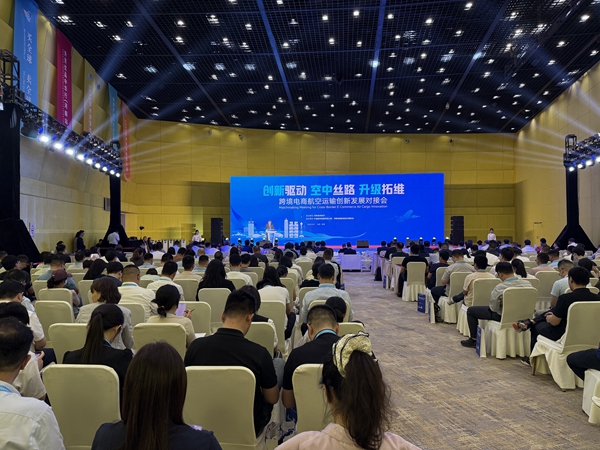
Group 1 - The 2025 Zhengzhou Cross-Border E-Commerce Conference and Foreign Trade Quality Products Event was launched on May 29, 2025, at the Zhengzhou International Convention and Exhibition Center, featuring a significant project co-hosted by Zhongyu Aviation Group and the Henan International Freight Forwarding Association [1][3] - The conference theme "Innovation-Driven Air Silk Road Upgrade and Expansion" attracted representatives from the Civil Aviation Administration, International Air Transport Association (IATA), cross-border e-commerce platform TEMU, and leading companies in the industry to discuss the development of cross-border e-commerce air logistics [3][5] - Zhongyu Aviation Group's General Manager Liu Jianmin reported that in 2024, Zhengzhou Airport's cargo volume reached 825,000 tons, with international cargo volume ranking fifth in the country, highlighting the "Zhengzhou-Luxembourg" air route as a landmark project of the Belt and Road Initiative [5][6] Group 2 - The "Zhengzhou-Kuala Lumpur" dual-hub cooperation has been included in the China-Malaysia Joint Statement, accelerating the establishment of new dual-hub layouts in Saudi Arabia and Ethiopia, connecting Central China closely with the world through air transport [6] - A cross-border e-commerce air transport center is set to be completed by the end of the year, significantly enhancing cargo assurance capabilities and providing strong support for the rapid access of global goods [6] - Several strategic cooperation agreements were signed during the event, including ground service agreements for all-cargo aircraft with China Cargo Airlines and Sichuan Airlines, and collaborations with IATA, TEMU, and Eastern Airlines Logistics for cross-border e-commerce logistics [8]

跨境电商的暴富神话消退了
创业邦· 2025-05-28 02:45
Core Viewpoint - The era of easy profits in cross-border e-commerce is coming to an end, with increasing regulatory pressures and market volatility challenging the survival of players in the industry [2][3][25]. Group 1: Market Dynamics - TEMU and other Chinese cross-border e-commerce platforms have rapidly expanded globally, but recent policy changes, such as the U.S. cancellation of the "low-value exemption" for imports from China, have significantly impacted their business models [2][5][10]. - The U.S. market has seen a dramatic increase in tariffs, with packages valued under $800 now subject to a 120% tax, which has severely affected platforms relying on low-cost direct shipping [11][12][14]. - The cross-border e-commerce landscape is shifting from a focus on low prices to a more competitive environment where brands must adapt to new regulations and market conditions [3][56]. Group 2: Competitive Landscape - The competition among cross-border e-commerce platforms has intensified, with TEMU, SHEIN, and TikTok Shop emerging as key players, challenging Amazon's dominance [25][31][34]. - TEMU's "full management model" has attracted many merchants by minimizing entry barriers, but this has also led to concerns about merchants losing pricing power and market influence [36][41]. - The introduction of a "semi-management model" allows sellers more control over logistics and pricing, indicating a shift towards a more flexible operational approach in response to market pressures [42][43]. Group 3: Regulatory Challenges - Regulatory scrutiny has increased globally, with platforms like SHEIN and TEMU being designated as "super large online platforms" under the EU's Digital Services Act, leading to tighter regulations [5][6]. - The cancellation of the low-value exemption in the U.S. is seen as a direct attempt to undermine the competitive pricing advantage of Chinese cross-border e-commerce platforms [11][27]. - Emerging markets, such as Southeast Asia, are also tightening regulations, as seen with TEMU facing scrutiny in Thailand and Indonesia [6][5]. Group 4: Future Outlook - The cross-border e-commerce sector is expected to transition from aggressive growth strategies to a focus on profitability and value creation, emphasizing product quality and brand development [56]. - Companies are likely to increase investments in research and development to enhance product quality and adapt to changing consumer demands in a more competitive landscape [56]. - The future of cross-border e-commerce will be shaped by the ability of companies to navigate regulatory challenges and leverage new market opportunities, particularly in emerging regions [54][55].

跨境电商的暴富神话消退了
华尔街见闻· 2025-05-27 10:34
Core Viewpoint - The rapid growth of cross-border e-commerce is facing significant challenges due to changing policies and market dynamics, leading to a shift from a focus on low prices to a need for brand differentiation and value creation [1][5][78]. Group 1: Market Dynamics - The cross-border e-commerce landscape has shifted dramatically, with platforms like TEMU and SHEIN facing increased scrutiny and regulatory challenges in various markets, particularly in the U.S. and Europe [7][12][19]. - The cancellation of the "low-value exemption" policy by the U.S. government has severely impacted Chinese cross-border e-commerce players, particularly those relying on direct shipping models [12][13][40]. - The overall cross-border e-commerce import and export volume in China reached 2.38 trillion yuan in 2023, with a year-on-year growth of 15.6% [37]. Group 2: Competitive Landscape - TEMU has rapidly gained market share, surpassing eBay to become the second most visited e-commerce site globally, leveraging aggressive marketing and a unique "full-service model" [44][48]. - The competitive environment has intensified, with major players like Amazon responding by increasing their recruitment of Chinese sellers and launching new low-price initiatives [46][47]. - The introduction of the "half-service model" by various platforms, including TEMU and AliExpress, reflects a strategic shift towards balancing cost control and operational flexibility [56][60]. Group 3: Policy Impact - Regulatory changes, such as the EU's potential new fees on incoming small packages, highlight the ongoing uncertainty that cross-border e-commerce platforms must navigate [3][7]. - The recent U.S. tariff adjustments have created a temporary window of opportunity for Chinese sellers, leading to a surge in shipping bookings as businesses rush to capitalize on lower tariffs [63][64]. - The evolving policy landscape is expected to lead to a significant reshaping of the cross-border e-commerce sector, with smaller players likely to exit the market while larger, more resilient companies gain market share [67][68]. Group 4: Future Outlook - The future of cross-border e-commerce will likely focus on profitability and brand value rather than just price competition, necessitating increased investment in product quality and innovation [77][78]. - As the market matures, companies will need to adapt to higher operational standards and consumer expectations, moving towards a more sustainable growth model [77][78]. - The shift towards local fulfillment and the establishment of overseas warehouses will become increasingly important for maintaining competitiveness in the face of rising tariffs and regulatory challenges [69][72].

“小单快反”神话褪色,快时尚遭遇行业拐点
创业邦· 2025-05-21 10:34
Core Viewpoint - The fast fashion industry is facing significant challenges due to the abrupt end of the U.S. tax exemption policy for small packages, which has adversely affected China's new generation of fast fashion enterprises and their "small order quick return" business model [3][4]. Group 1: Challenges to the "Small Order Quick Return" Model - The "small order quick return" model, characterized by flexible supply chains and rapid response to market demands, is under threat from increased tariffs and longer customs clearance times [6][7]. - The recent changes in tariff policies have raised costs significantly, with tariffs on small packages increasing from 0% to 30%, which severely impacts the profitability of the "small order quick return" model [8][10]. - Customs clearance processes have become more complicated, extending the time required for goods to enter the market, which undermines the competitive advantage of fast fashion brands like Shein that rely on rapid turnover [11][16]. Group 2: Impact on Market Dynamics - The fast fashion market is expected to undergo a significant shift, with traditional brands like Inditex (ZARA's parent company) and Fast Retailing (Uniqlo's parent company) potentially benefiting from the challenges faced by Chinese fast fashion brands [4][24]. - Despite the potential for traditional brands to gain market share, they are unlikely to fully absorb the losses incurred by the "small order quick return" brands, leading to an overall decline in the industry's scale [24][26]. - Price sensitivity among consumers remains high, as evidenced by a 23% drop in Shein's sales in the U.S. following the tariff changes, indicating that higher prices could lead to reduced demand for fast fashion products [24][25]. Group 3: Long-term Outlook - The fast fashion industry is expected to experience a contraction in market size in the short term due to trade tensions and increased costs, although there may be a slight rebound for traditional brands [26][28]. - The long-term viability of the "small order quick return" model is uncertain, as the industry must adapt to new realities while maintaining its core competitive advantages [28][29].

说出海不卷的人肯定没做过出海
Tai Mei Ti A P P· 2025-05-17 03:02
Core Insights - The article discusses the evolution of Chinese manufacturing and its transition to branding and overseas expansion, highlighting the challenges and opportunities in the global market [1][4][30] Group 1: Market Dynamics - The overseas market is becoming increasingly competitive, with many Chinese companies venturing abroad, leading to a "red ocean" scenario rather than the anticipated "blue ocean" [7][9] - The number of Chinese companies going overseas has reached a new high, with cross-border e-commerce import and export volume increasing by over 15% in one year [10] Group 2: Opportunities in Overseas Markets - There are still significant opportunities in overseas markets, particularly for those who can adapt their strategies and leverage brand strength, content, and operational capabilities [16][30] - Successful companies are shifting from merely selling products to building brands and engaging with consumers through content and community [18][22] Group 3: Strategic Shifts - Companies are moving from large platforms to private domain marketing, focusing on authentic engagement rather than traditional advertising [22][24] - The evolution of supply chains is also a key trend, with companies establishing local warehouses and production facilities in foreign markets to enhance their operational efficiency [26][28] Group 4: Mindset and Adaptation - The perception of competition ("卷") stems from a narrow understanding of market dynamics; companies must upgrade their strategies to succeed in different cultural contexts [29] - The future of overseas expansion will depend on long-term brand building, understanding cultural nuances, and employing systematic capabilities to address structural opportunities [30]
雷军官宣小米造芯!自研手机SoC芯片即将发布;吉利揭秘极氪私有化真相,吉利高管:时间不等人;零跑高管:降价只是决定,降本才是能力
雷峰网· 2025-05-16 00:21
Group 1 - Geely announced significant management changes and revealed the rationale behind the privatization of Zeekr, emphasizing the need for integration to enhance competitiveness [4][5] - Geely set ambitious targets post-merger, including a cost reduction goal exceeding 3%, R&D optimization of 10-20%, and management efficiency improvements of 10-20% [4][5] - Zeekr's R&D expenses for Q1 amounted to 2.91 billion, a decrease of 1 billion compared to the previous year [5] Group 2 - Xiaomi's self-developed SoC chip, named "Xuanjie O1," is set to be released, marking a significant milestone in its decade-long chip development journey [7][9] - The new chip will debut in the Xiaomi 15S Pro, showcasing Xiaomi's commitment to high-quality, self-designed technology [7][9] Group 3 - Leap Motor's COO stated that price cuts are merely decisions, while cost reduction is a true capability, indicating ongoing price wars in the automotive industry [11] - The automotive sector is expected to experience continued price competition, driven by technological advancements that will lower overall costs [11] Group 4 - General Motors' Chinese import vehicle platform, Daolang, faced a sudden layoff of approximately 200 employees, with compensation based on tenure [12] - GM stated that the restructuring of Daolang was due to significant changes in the economic landscape, impacting its operations in China [12] Group 5 - XPeng Motors announced a major redesign of the XPeng P7, with the chairman highlighting the emotional investment in the project [13][15] - XPeng's delivery numbers showed a significant year-on-year increase, with a total of 129,053 vehicles delivered in the first four months of 2025, representing a 313% growth [15] Group 6 - Alibaba's entertainment division reported a revenue increase of 12% year-on-year, achieving an adjusted EBITDA of 36 million for Q1 2025, marking a turnaround from previous losses [18] - The overall revenue for Alibaba in Q1 2025 reached 236.45 billion, with a net profit of 12.38 billion [18] Group 7 - Microsoft announced a global layoff of 6,000 employees, with over 40% of the cuts affecting software engineering roles due to the impact of AI on job functions [27] - The introduction of AI tools is reshaping project management roles, leading to a reduction in team sizes and project timelines [27] Group 8 - Great Wall Motors plans to establish a research and development center and manufacturing base in Brazil, with an initial production capacity of 50,000 vehicles [25] - The investment in Brazil is projected to exceed 10 billion Brazilian Reais over the next decade, aiming to cater to the Latin American electric vehicle market [25]






全球跨境电商交易博览会7月在杭举办
Hang Zhou Ri Bao· 2025-05-08 02:16
五大特色优势引领新跨境电商时代 今年在杭举办的全球跨境电商交易博览会,将呈现五大特色优势。 7月10日-12日,在浙江省商务厅、杭州市商务局支持下,上海扩展集团、杭州日报、都市快报、海 圈网、跨境百人荟组织举办全球跨境电商交易博览会,为传统外贸转型赋能。 十年规模由1.2亿元增长到超1500亿元 2015年,国务院批复同意在杭州设立全国首个跨境电商综合试验区,今年迎来10周年,我国跨境电 商从星星之火成长为中国外贸发展中举足轻重的力量。 10年来,杭州跨境电商进出口规模由获批之初的不足1.2亿元增长到1519.95亿元,增长了1267倍, 跨境电商卖家数由获批之初的200余家,增长到2024年的6.5万家,增长了325倍,交易额2000万元以上 的跨境电商企业1586家,杭州成为全国的跨境电商枢纽。 2025年全球跨境电商交易博览会将在杭州大会展中心举办,本次展会以"甄选源头精品 链接跨境人 才"为主题,以"直播出海、品牌出海、新兴市场"为抓手,坚持市场化、专业化、国际化、规模化、特 色化办展,打造集品牌展示、贸易洽谈、采购对接、资源共享为一体的高端展会合作交流平台。 本次展会展览面积预计达到60000平方米 ...
突发!极氪拟从美股退市;联想杨元庆回应产品是否涨价;英伟达称中国500亿美元市场不容错过丨大公司动态
Di Yi Cai Jing· 2025-05-07 11:54
Group 1 - Geely plans to acquire all issued shares of Zeekr, leading to its privatization and delisting from the NYSE, aiming to enhance resource efficiency and brand synergy [2] - Lenovo's chairman indicated that product pricing will depend on component supply and demand, with current tariffs having a limited impact unless further policy changes occur [3] - Nvidia's CEO emphasized the importance of the Chinese AI market, projecting a potential market size of $50 billion in the next two to three years [4] Group 2 - Taobao and Xiaohongshu have formed a strategic partnership to enhance the shopping experience by allowing direct links from product recommendations to Taobao [5] - JD.com announced the start of its 618 shopping festival on May 31, with a pre-sale event beginning on May 13 [6] - TEMU has ceased its full-service model in the U.S. as of late April, marking a shift in its operational strategy [7] Group 3 - BMW reported Q1 revenue of €33.758 billion, a 7.8% decrease year-over-year, with net profit down 26.4% to €2.173 billion [18] - Ferrari's Q1 revenue reached €1.791 billion, a 13% increase year-over-year, with a total shipment of 3,593 units [20] - Qingdao Beer plans to acquire 100% equity of Jimo Yellow Wine for a total consideration of ¥665 million, aiming to diversify its product line [25][26] Group 4 - Hema's founder announced a new venture, Pet Fresh, which has secured $25 million in angel funding to enhance its supply chain and product offerings [22] - The price of gold jewelry continues to rise, with brands like Chow Tai Fook increasing prices by ¥7 per gram to ¥1,033 per gram [27] - The Shanghai Lego Park is set to open on July 5, 2025, featuring over 75 interactive attractions [28]

独家|TEMU已停止美区全托管模式
news flash· 2025-05-07 08:34
Core Insights - TEMU has ceased its full custody model in the U.S. region as of the end of April [1] - Products in the U.S. region are now prominently labeled with local warehouse, "no import fees," and "no additional delivery charges" [1] Company Summary - TEMU's decision to stop the full custody model indicates a strategic shift in its operational approach within the U.S. market [1] - The labeling of products suggests a focus on enhancing customer transparency and reducing perceived costs associated with imports and delivery [1]