
法国巴黎银行

Search documents
法巴银行:美联储9月降息将利好股市,预期恒指下个目标是26500点
Sou Hu Cai Jing· 2025-08-19 01:53
Core Viewpoint - The Federal Reserve is expected to lower interest rates in September under pressure from President Trump and Treasury Secretary Mnuchin, which is likely to benefit the stock market [1] Group 1: Market Outlook - The U.S. money market fund size has reached $7 trillion, and a restart of rate cuts will lead funds to seek new opportunities, aligning with a global rate-cutting cycle that will favor the stock market [1] - The Hang Seng Index's next target is projected to be 26,500 points, with short-term adjustments expected and support around 24,500 points, making it an attractive entry point for investors [1] Group 2: Sector Analysis - Recent earnings and guidance from major tech stocks were positive, which should have been a catalyst for the sector; however, market expectations were high, leading to some stock adjustments, presenting a low-buy opportunity given current valuations are not overly expensive [1] - A barbell strategy is recommended for investors, with recent increases in domestic bank stocks, Chinese telecom stocks, and domestic insurance stocks; however, in a volatile market with ongoing rate cut themes, it remains necessary to hold these related stocks [1]

欧洲领导人很不服!想要给泽连斯基讨个说法
Sou Hu Cai Jing· 2025-08-18 15:56
Core Insights - The article highlights the collective action of European leaders in Washington, which appears to be a desperate attempt to assert their influence in the face of diminishing power and autonomy in geopolitical negotiations [2][4][11] - It emphasizes the underlying issues of Europe's strategic autonomy, economic dependence, and moral standing, particularly in relation to the ongoing conflict in Ukraine [11][13][21] Group 1: European Leaders' Actions - European leaders, including Macron and Scholz, rushed to Washington to demonstrate unity and assert their voice in the Ukraine crisis, but their presence felt more like a show of desperation than genuine influence [6][11] - The leaders faced humiliating restrictions during their visit, highlighting their diminished status in negotiations with the U.S. [6][9][11] - The collective action was perceived as a façade, with leaders unable to influence the negotiation dynamics or the outcomes of discussions regarding Ukraine [11][13] Group 2: Strategic and Economic Challenges - The article outlines three major challenges facing Europe: the illusion of strategic autonomy, economic reliance on the U.S. for military support, and the erosion of moral authority in the face of realpolitik [11][21] - Europe's military capabilities are severely limited without U.S. support, as evidenced by the failure of European peacekeeping forces without American satellite guidance [9][11] - Economic dependencies, particularly on Russian energy, pose significant risks to European industries, especially as winter approaches [9][19] Group 3: The Need for Autonomy - The article argues for the necessity of military, energy, and political autonomy for Europe to regain its standing and effectively support Ukraine [15][17][21] - It stresses that without substantial investment in military infrastructure and energy independence, Europe will remain vulnerable and unable to assert its interests [16][19][21] - The call for a unified political decision-making mechanism among EU member states is crucial to overcoming internal divisions and enhancing collective strength [18][21] Group 4: Implications for Ukraine - The article suggests that Ukraine's fate is being used as a bargaining chip in European negotiations, undermining the urgency of support for its defense [13][21] - The leaders' inability to secure immediate and concrete support for Ukraine reflects a broader failure to prioritize genuine assistance over political posturing [21] - The ongoing conflict and the negotiations surrounding it highlight the precarious position of Ukraine, which is caught between the interests of European nations and the U.S. [21]

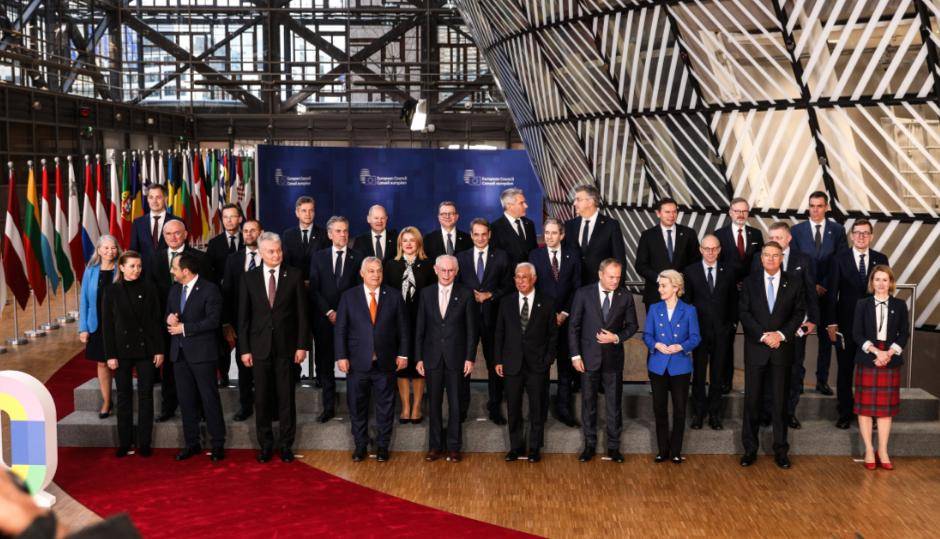
每日机构分析:8月14日
Xin Hua Cai Jing· 2025-08-14 13:56
Group 1 - BNP Paribas suggests that the European Central Bank (ECB) may raise interest rates in Q4 2025, viewing it as a "recalibration" of the neutral rate due to fiscal policies offsetting tariff drag [1] - Rabobank analysts express a more pessimistic outlook for Eurozone growth and inflation, predicting that deposit rates will remain unchanged until the end of 2027 [2] - Goldman Sachs believes the ECB's rate-cutting cycle has ended, forecasting that rates will remain stable for an extended period [2] Group 2 - Santander Bank analysts note that the UK's GDP growth of 0.3% in Q2 exceeded expectations, indicating that concerns over employment weakness may be overstated, supporting the Bank of England's decision to keep rates unchanged [3] - The Dutch International Bank highlights that the UK's GDP growth was primarily supported by government consumption and inventory, while household consumption and business investment showed significant weakness [3] - Monex Europe analysts point out that the Norwegian central bank's decision to maintain rates and signal caution on rate cuts supports the krone, despite short-term influences from risk sentiment and oil price fluctuations [3]
特朗普难以如愿?美联储激进降息的门槛还很高!
Jin Shi Shu Ju· 2025-08-14 11:34
Core Viewpoint - U.S. Treasury Secretary Scott Bessent advocates for a bold action from the Federal Reserve, suggesting a 50 basis point rate cut in September, followed by further reductions to significantly lower borrowing costs from the current range of 4.25% to 4.5% [1][2] Group 1: Inflation and Economic Indicators - The July Consumer Price Index (CPI) showed a moderate overall increase, providing a rationale for a potential rate cut, but rising service sector prices raised concerns about whether this is a temporary fluctuation or a more troubling trend [2][6] - The core inflation rate, excluding volatile food and energy prices, experienced its largest monthly increase since the beginning of the year, driven by rising service sector costs, which increased by 3.1% year-over-year [6][7] - Despite the overall inflation rate stabilizing at 2.7%, the significant rise in service prices, including a notable increase in dental services, has led economists to question the sustainability of this trend [6][7] Group 2: Federal Reserve's Policy Divergence - There is a sharp division among Federal Reserve officials regarding interest rate policy, making consensus difficult without clear evidence of a severe economic downturn [3][4] - The decision to maintain rates in July was one of the most controversial in decades, with two members voting against it in favor of a 25 basis point cut, highlighting the impact of tariffs and labor market conditions on inflation [3][4] - Some officials, like San Francisco Fed President Mary Daly, have begun to support a return to rate cuts due to rising labor market risks and lower-than-expected inflation [4][5] Group 3: Labor Market Dynamics - The labor market is showing signs of weakness, with a recent poor employment report prompting more officials to advocate for rate cuts, despite some caution regarding inflation [4][5] - The definition of a "weak labor market" has evolved, with recent slowdowns in job growth potentially reflecting reduced labor supply rather than decreased demand [7][8] - Concerns have been raised that cutting rates in a structurally changing labor market could exacerbate inflationary pressures, as the economy may lack capacity due to labor shortages [8]
欧洲央行降息已结束?市场转向押注利率“Higer for longer”
Zhi Tong Cai Jing· 2025-08-14 07:43
投资者们越来越预期欧元区将进入"长期高利率"(Higher for longer)状态,而预计在3月会出现的利率下 调只是暂时现象,之后借款利率将再度攀升至2%以上。 例如,包括高盛在内的一些投资银行已经调整了他们的预测,现在预计欧洲央行已经结束了当前的宽松 货币政策周期。 尽管贸易风险仍可能对经济增长和通胀造成影响,但这些银行认为,欧洲央行在最近的会议后对欧元区 经济给出了乐观的评估,因此在可预见的未来,该央行很可能会将利率维持在2%的水平。 多项基于市场的利率预期指标显示,在美国与欧盟近期达成贸易协议之后,投资者对于关税带来的通缩 影响的担忧正在逐渐减轻。交易员还认为,德国大幅增加财政支出将促进经济发展,从而在更长期内减 少进一步降息的必要性。 "Higher for longer"这一观点在2022年和2023年主导了市场走势,当时各大央行正努力应对由新冠疫情和 俄乌战争所引发的顽固通胀问题。 以下是一些能够反映利率前景的市场指标: 短期利率政策前景:欧元短期利率预计最终将达2% 针对欧洲央行官方隔夜基准利率(即欧元短期利率,简称ESTR)的远期合约显示,到明年3月,该利率下 调25个基点的可能性约为6 ...
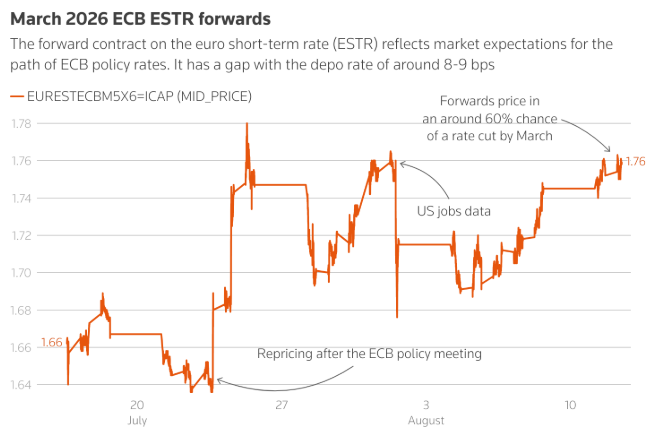
宽松周期已结束?市场押注欧元区利率“更高更久”
Hua Er Jie Jian Wen· 2025-08-14 06:49
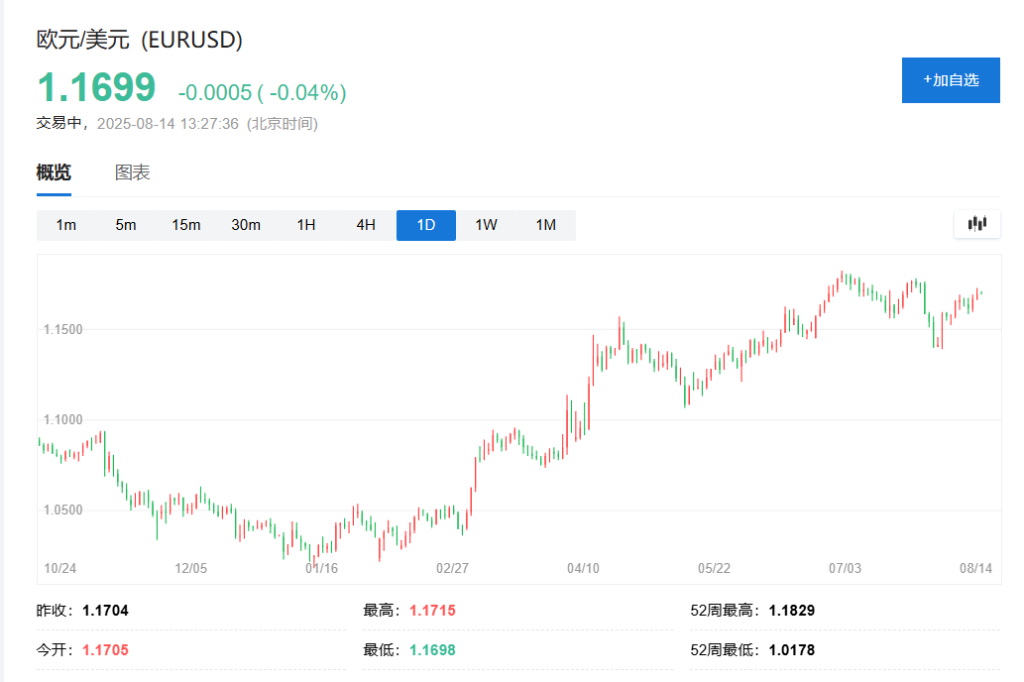
欧洲央行进一步降息的预期正在迅速降温。 投资者正日益押注欧元区将进入一个利率"更高更久"的环境,市场定价显示,欧洲央行本轮的宽松周期可能已经结束。 8月14日据路透报道,市场预期的转变主要源于两个关键动态。首先,近期美欧贸易协议的达成,缓解了市场对关税可能带来通缩冲击的担忧。其 次,市场普遍相信,德国即将推行的大幅财政支出增长将有效提振经济,从而降低了欧洲央行在更长时期内进一步降息的必要性。 受此影响,包括高盛在内的数家主要投资银行已经调整了其预测,认为欧洲央行当前的宽松周期已经画上句号。尽管贸易风险仍可能对增长和通 胀构成压力,但这些银行相信,在最近一次会议上对欧元区经济给出了积极评估的欧洲央行,可能会在可预见的未来将利率维持在2%的水平。 这一预期转变已直接反映在汇率市场上。由于投资者愈发预期美联储将在9月恢复降息,而欧洲央行将按兵不动,欧元本月已上涨近3%。 此外,尽管近期达成的美欧贸易协议对欧洲而言并非完美,但它成功避免了更高关税的威胁,消除了笼罩市场数月之久的一大不确定性。这一结 果虽然可能导致欧元区GDP增长预期被下调约0.5个百分点,但也让投资者对关税可能引发严重通缩的担忧大为减弱,为欧洲央行维 ...
高盛关税预警触动白宫神经 华尔街集体警示美国通胀风险攀升
Xin Hua Cai Jing· 2025-08-14 05:16
Group 1 - Goldman Sachs' economic outlook report predicts that by the end of this year, American consumers will feel the full impact of tariff policies, leading to significant political backlash from President Trump [2] - The effective tariff rate has surged from 3% at the beginning of the year to 18%, indicating a rapid acceleration in price transmission mechanisms as companies deplete their buffer inventories [2] - Economists warn that the current tariff increases are unprecedented since World War II, creating substantial uncertainty regarding cost transmission [2][3] Group 2 - The inflation transmission is not limited to goods but has also affected service sector input prices, with core service prices showing unexpected strength [3] - The "sticky price CPI" indicator compiled by the Cleveland Fed has reached an annualized growth rate of 3.8%, the highest since May 2024, significantly outpacing the more volatile food and energy prices [3] - Current tariff policies could potentially reduce U.S. GDP by 1% and increase inflation by 1% to 1.5%, with core CPI projected to reach 3.5% by year-end [3] Group 3 - The Federal Reserve faces dual pressures from rising inflation expectations and weak labor market signals, with market expectations leaning towards maintaining a wait-and-see approach until 2025 [4] - Retailers are adjusting pricing strategies in response to rising costs, and some companies are considering relocating production lines to avoid tariff risks [5] - The ongoing economic debate reflects a broader examination of the resilience of the U.S. economy amid global value chain restructuring and cost reallocation [5]


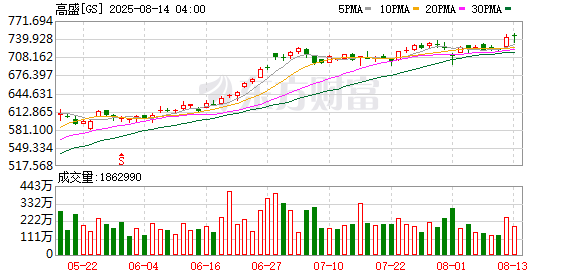
高盛惹怒特朗普,华尔街声援:关税引发的通胀冲击即将来袭
Feng Huang Wang· 2025-08-14 05:01
Core Viewpoint - Goldman Sachs predicts that U.S. consumers will bear an increasing burden of tariffs, with the cost expected to rise from 22% in June to 67% by October [2] Group 1: Economic Impact of Tariffs - Economists believe the maximum impact of tariffs on inflation has yet to be felt, with expectations of rising consumer inflation as inventory depletes and actual tariff rates increase from approximately 3% to 18% [1][4] - The tariffs could reduce GDP by 1% and increase inflation by 1% to 1.5%, with some effects already visible [4] - Monthly inflation increases are expected to be between 0.3% and 0.5%, pushing core inflation indicators to the 3% to 3.5% range [4] Group 2: Market Reactions and Predictions - Following Trump's criticism of Goldman Sachs, industry insiders noted that many economists with views contrary to the U.S. government's stance could face job losses [3] - The Blue Chip Economic Indicators report shows a slight increase in GDP growth forecasts for the second half of the year, now averaging 0.85% [5] Group 3: Inflation Trends and Concerns - Pantheon Macroeconomics forecasts core inflation to rise by 1 percentage point, reaching 3.5% by year-end, with only about 25% of the tariff impact currently passed to consumers [7] - BNP Paribas highlights upward pressure on service input prices, indicating that inflation concerns extend beyond goods [8] - The Cleveland Fed's sticky price CPI shows a three-month annualized rate of 3.8%, the highest since May 2024, suggesting persistent inflationary pressures [8]
关税冲击波将至!华尔街普遍预警:美国核心通胀恐破3% 消费者支出面临“1%GDP税”
智通财经网· 2025-08-14 02:28
Core Viewpoint - Goldman Sachs economists predict that by the end of this year, U.S. consumers will increasingly feel the impact of tariffs, leading to rising inflation and potential economic slowdown [1][2]. Economic Impact - Economists estimate that tariffs could reduce GDP by approximately 1% and increase inflation by 1% to 1.5%, with some effects already being felt [2]. - The effective tariff rate is expected to rise to around 18% from about 3% at the beginning of the year, contributing to a steady increase in prices [2]. - The impact of tariffs on consumer prices is uncertain, as the current tariff increases are unprecedented compared to historical data [2]. Inflation Trends - Inflation is projected to rise gradually, with core inflation potentially reaching 3.5% by the end of the year, driven by higher costs being passed on to consumers [4]. - The "sticky" nature of inflation is a concern, with the Cleveland Fed's "sticky price CPI" showing a three-month annualized rate of 3.8%, the highest since May 2024 [4]. Consumer Spending and Economic Growth - Short-term inflation increases may suppress consumer spending, with GDP growth for the second half of the year expected to be around 0.85% [3]. - Some economists believe that the restrictive effects of tariffs may be temporary, with expectations for significant growth improvement next year [3]. Future Concerns - The expiration of the "low-value tax exemption" on August 29 could particularly impact retail goods, leading to further price increases [4]. - There is a consensus among economists that higher inflation may lead to hesitation from policymakers regarding interest rate cuts, despite expectations for a more accommodative monetary policy in the future [5].
美国7月批发通胀或回升 消费者面临更大价格压力
Zhi Tong Cai Jing· 2025-08-13 22:25
Group 1 - The U.S. wholesale inflation rate is expected to show signs of recovery in July, indicating that businesses' ability to absorb high tariff costs is weakening, leading to increased pressure on consumer prices [1] - According to a FactSet survey, the Producer Price Index (PPI) is projected to rise by 2.4% year-on-year in July, slightly up from 2.3% in June, with a month-on-month increase of 0.2% [1] - Goldman Sachs economists indicate that as of June, U.S. companies have absorbed about 64% of tariff costs, but this figure may drop to below 10% in the coming months, resulting in more costs being passed on to consumers [1] Group 2 - Economists believe that the maximum impact of tariffs on inflation has yet to be felt, with the effective tariff rate rising from approximately 3% at the beginning of the year to 18% [2] - JPMorgan's chief U.S. economist estimates that tariffs could reduce U.S. GDP by about 1% and increase inflation by 1 to 1.5 percentage points [2] - Most institutions expect a limited upward pressure on inflation (0.3%-0.5% monthly), primarily as a temporary shock, which will not prevent the Federal Reserve from initiating rate cuts in late 2025 [2] Group 3 - The Blue Chip Economic Indicators August survey shows that the average GDP growth rate for the second half of the year is expected to be 0.85%, an increase from the previous forecast of 0.75% in July [3] - Analysts have adjusted their expectations regarding the impact of tariffs, anticipating a significant economic recovery in 2026 [3]