零跑汽车

Search documents
2026年销量目标现分化:传统车企稳健推进 新势力冲刺高增长
Zhong Guo Zheng Quan Bao· 2026-01-15 22:47
Core Insights - The automotive market in 2026 is characterized by significant differentiation among major car manufacturers, with a total sales target exceeding 21.55 million units, approximately 63% of the 2025 domestic sales volume [1] - Traditional automakers are targeting a steady growth rate of 10% to 30%, focusing on new energy vehicles and international expansion, while new entrants and cross-industry brands are setting aggressive targets of 34% to 67.5% to capture market share [1] Summary by Category Traditional Automakers - Major traditional automakers have set sales targets concentrated around 3 million units, with Geely aiming for 3.45 million units in 2026, a 14% increase from 2025, and a new energy vehicle target of 2.22 million units, achieving a penetration rate of 64.3% [2] - Chery Group has set a target of 3.2 million units, also a 14.03% increase, with plans to launch 17 key models focusing on electrification and intelligence [2] - Dongfeng Group is more aggressive, raising its target from 2.5 million to 3.25 million units, a 30% increase, with a focus on 1.7 million new energy vehicles and 600,000 exports [2] - Great Wall Motors has set a more cautious target of 1.8 million units, reflecting a 36% increase from 2025 [2] New Entrants and Cross-Industry Brands - New entrants like Leap Motor are setting high growth targets, with a goal of 1 million units in 2026, representing a 67.5% increase from 2025's 596,600 units [3] - Xiaomi aims for 550,000 units, a 34% increase, with plans to launch multiple new models to enhance its product matrix [3] - NIO has set a target range of 456,000 to 489,000 units, maintaining a stable growth rate of 40% to 50% [3] Joint Venture Brands - Joint venture brands are generally more conservative, with GAC Toyota setting a target of 800,000 units, a mere 3.6% increase from 2025 [4] - SAIC Volkswagen aims for 1 million units, maintaining its 2025 target, while overall, SAIC Volkswagen targets 1.2 million units through the introduction of seven new energy vehicles [4] Factors Supporting Target Achievement - The differentiation in growth targets reflects a shift from incremental expansion to competition within existing market shares, with the difficulty of achieving these targets closely tied to company fundamentals, product strategies, and operational capabilities [5] - New energy vehicle sales growth targets are significantly higher than overall targets, indicating a consensus that new energy vehicles are becoming the main growth driver in the market [5] - The ability to meet sales targets is influenced by three key dimensions: the rollout of new energy products, success in overseas markets, and the overall capability of the organization [6][7]
2025中国汽车驶出增长新动能
Xin Lang Cai Jing· 2026-01-15 22:40
Core Insights - The Chinese automotive industry has achieved significant milestones in 2025, with total vehicle production and sales exceeding 34 million units, and new energy vehicles (NEVs) surpassing 16 million units, marking a structural upgrade in the industry [5][6] - NEVs now account for over 50% of new car sales in China, indicating their dominance in the market [6][7] - The industry is experiencing rapid technological advancements, particularly in smart driving and battery technology, which are enhancing the competitiveness of electric vehicles [9][10] Industry Performance - In 2025, China's NEV production reached 16.62 million units, with sales at 16.49 million units, reflecting year-on-year growth of 29% and 28.2% respectively, maintaining the global leadership for 11 consecutive years [6][7] - BYD has surpassed Tesla in annual pure electric vehicle sales, marking a significant achievement for the company [7] - The introduction of L3-level autonomous driving vehicles by Changan and BAIC marks a transition from technology validation to mass production applications [8] Technological Advancements - The automotive industry is witnessing breakthroughs in battery technology, with advancements in energy density and charging efficiency, contributing to the reduction of "range anxiety" for electric vehicle users [9] - The integration of AI and robotics into the automotive sector is creating new opportunities for innovation and efficiency [10] - The collaboration between companies like JD, GAC Group, and CATL is enhancing the entire automotive value chain from R&D to sales [9][10] Regulatory and Market Dynamics - The industry is facing challenges related to "involution" competition, prompting regulatory measures to ensure fair market practices and promote high-quality development [12][13] - New guidelines and safety standards are being implemented to enhance the safety and reliability of electric vehicles [13][14] - The focus on building a modern industrial system and promoting green consumption is expected to drive the future growth of the automotive sector [14][15]

2026年销量目标现分化: 传统车企稳健推进 新势力冲刺高增长
Zhong Guo Zheng Quan Bao· 2026-01-15 21:12
Core Insights - The automotive market in 2026 is characterized by significant differentiation in sales targets among major car manufacturers, with a total target exceeding 21.55 million units, approximately 63% of the 2025 domestic sales volume [1] - Traditional automakers are focusing on stable growth rates of 10% to 30%, while new entrants and cross-industry brands are setting aggressive targets of 34% to 67.5%, indicating a strong push for market share [1] Summary by Company - **Geely**: Set a sales target of 3.45 million units for 2026, a 14% increase from 2025, with a focus on 2.22 million units of new energy vehicles (NEVs), achieving a penetration rate of 64.3% [1] - **Chery**: Aims for 3.2 million units, a 14.03% increase from 2025's 2.81 million units, with plans to launch 17 key models [2] - **Dongfeng Group**: Targets 3.25 million units, a 30% increase from 2025, with 1.7 million NEVs and 600,000 units for export [2] - **Great Wall Motors**: Sets a more conservative target of 1.8 million units, a 36% increase from 2025's 1.32 million units [2] - **Leap Motor**: Aims for 1 million units, a 67.5% increase from 2025's 596,600 units, leveraging core technology and a competitive parts system [2] - **Xiaomi**: Targets 550,000 units, a 34% increase from 2025's 410,000 units, emphasizing a stable expansion strategy [3] - **NIO**: Plans for a sales range of 456,000 to 489,000 units, maintaining a growth rate of 40% to 50% [3] - **GAC Toyota**: Sets a conservative target of 800,000 units, a 3.6% increase from 2025 [3] - **SAIC Volkswagen**: Aims for 1 million units, maintaining 2025 levels, with plans for 7 new NEV models [3] Market Dynamics - The automotive industry is shifting from incremental expansion to competition within existing market shares, with varying growth rates reflecting companies' strategies and market conditions [4] - Traditional automakers are generally targeting growth rates between 13% and 30%, with NEV sales growth rates significantly higher, indicating a consensus on NEVs as the main growth driver [4] - New energy vehicle sales targets are notably higher than overall sales targets, with Geely and Changan targeting 32% and 26.2% growth rates respectively [4] Strategic Considerations - The high growth targets set by new entrants are driven by the need for scale to improve cash flow and profitability, but achieving these targets will require strong organizational capabilities [5] - Key factors influencing the achievement of sales targets include the rollout of new energy products, success in overseas markets, and the overall capability of the companies [6] - The industry is expected to see a 4.3% growth in exports, with companies like BYD targeting 1.5 to 1.6 million units for overseas sales [6]






传统车企稳健推进 新势力冲刺高增长
Zhong Guo Zheng Quan Bao· 2026-01-15 20:48
Core Insights - The automotive market in 2026 is characterized by significant differentiation in sales targets among major car manufacturers, with a total target exceeding 21.55 million units, approximately 63% of the 2025 domestic sales volume [1] - Traditional automakers are focusing on stable growth rates of 10% to 30%, while new entrants and cross-industry brands are setting aggressive targets ranging from 34% to 67.5%, indicating a strong push for market share [1] Summary by Company - Geely aims for a sales target of 3.45 million units in 2026, a 14% increase from 2025, with a focus on 2.22 million units of new energy vehicles, achieving a penetration rate of 64.3% [1] - Chery targets 3.2 million units, a 14.03% increase from 2025, with plans to launch 17 key models focusing on electrification and intelligence [2] - Dongfeng Group sets an ambitious target of 3.25 million units, a 30% increase from 2025, with a focus on 1.7 million new energy vehicles and 600,000 exports [2] - Great Wall Motors adopts a more cautious approach with a target of 1.8 million units, reflecting a 36% increase from 2025 [2] - Leap Motor aims for 1 million units, a 67.5% increase, building on a strong 2025 performance of 596,600 units [2] - Xiaomi targets 550,000 units, a 34% increase, emphasizing a production strategy driven by orders [3] - NIO sets a sales target range of 456,000 to 489,000 units, maintaining a growth rate of 40% to 50% [3] - GAC Toyota's target is 800,000 units, a modest 3.6% increase, while SAIC Volkswagen aims for 1 million units, maintaining its 2025 target [3] Market Dynamics - The differentiation in sales targets reflects a shift from incremental expansion to competition within existing market shares, with the difficulty of achieving these targets closely tied to each company's base, product layout, and systemic capabilities [4] - Traditional automakers are generally targeting growth rates between 13% and 30%, with a notable emphasis on new energy vehicle sales growth, which is significantly higher than overall growth targets [4] - New energy vehicles are recognized as the main growth engine, with companies like Geely and Changan setting ambitious growth targets for their new energy vehicle sales [4] - The aggressive targets set by new entrants are seen as a response to the need for scale, cash flow improvement, and valuation support, although they face challenges in converting scale into systemic strength [5] Key Factors for Target Achievement - The success of sales targets hinges on three main dimensions: the rollout of new energy products, effectiveness in overseas market expansion, and the overall systemic support capabilities of the companies [5] - Companies like Geely and Changan are expected to achieve their targets due to stable completion rates and robust channel layouts, while some joint venture brands may face risks of market share erosion despite conservative targets [5]

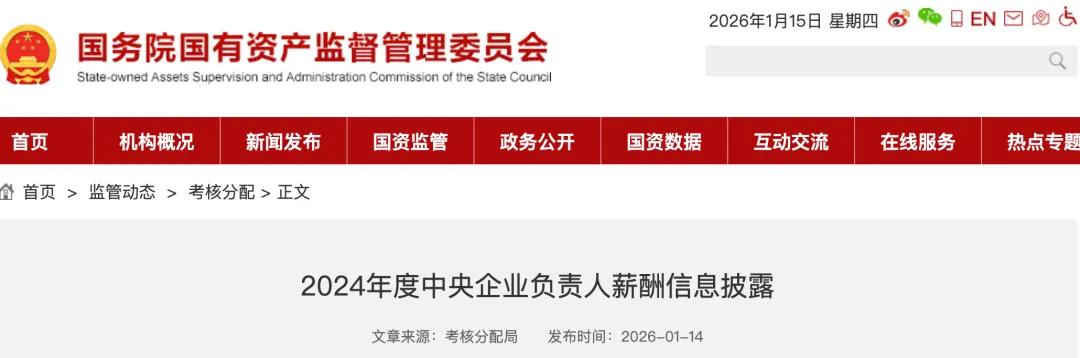
两大整车央企高管年薪全曝光!
Xin Lang Cai Jing· 2026-01-15 14:09
Core Viewpoint - The 2024 salary disclosures for executives of state-owned enterprises (SOEs) reveal that the annual salaries of leaders at Dongfeng Motor Group and China FAW Group are both below one million RMB, highlighting a significant contrast with private and state-controlled automotive companies [1][8]. Summary by Relevant Sections Salary Overview - The State-owned Assets Supervision and Administration Commission (SASAC) announced the salary details for 81 SOE executives, including Dongfeng Motor Group and China FAW Group [1][8]. - Both companies' executives have annual salaries that are significantly lower than those in private automotive firms [1][8]. China FAW Group Salary Details - The chairman, Qiu Xiandong, has a salary of 909,700 RMB; the general manager, Liu Yigong, earns 886,900 RMB; and other executives have salaries ranging from 330,900 RMB to 1,000,000 RMB [4][11]. - The total salaries for key positions are as follows: - Qiu Xiandong: 90.97万元 - Liu Yigong: 88.69万元 - Liang Guiyou: 81.69万元 - Wu Bilei: 39.48万元 - Chen Bin: 33.09万元 - Fang Shili: 75.01万元 - Sun Jiguang: 13.63万元 [4][11]. Dongfeng Motor Group Salary Details - The chairman, Yang Qing, receives 868,600 RMB; the general manager, Zhou Zhiping, earns 651,500 RMB; and other executives have salaries ranging from 388,400 RMB to 781,700 RMB [4][11]. - The total salaries for key positions are as follows: - Yang Qing: 86.86万元 - Zhou Zhiping: 65.15万元 - Zhang Zutong: 78.17万元 - You Zheng: 78.17万元 - Huang Yong: 51.78万元 - Peng Yuanpu: 38.84万元 - Liu Yanhong: 39.09万元 - Feng Changjun: 77.68万元 [4][11]. Comparison with Private Firms - In contrast to SOE executives, private automotive companies often offer significantly higher compensation packages, including stock options that are closely tied to performance metrics [7][14]. - For instance, Li Xiang, chairman of Ideal Auto, has a total annual compensation of 639 million RMB, which includes a base salary of 2.67 million RMB and stock options worth 636 million RMB triggered by performance targets [7][14]. - Founders of private firms like Geely and BYD typically have nominal salaries, with substantial earnings derived from stock appreciation and dividends [7][14].
向质而行!2025中国汽车驶出增长新动能
Zhong Guo Jin Rong Xin Xi Wang· 2026-01-15 13:33
Group 1 - The core viewpoint of the article highlights that China's automotive industry has achieved significant milestones in 2025, with production and sales both exceeding 34 million units, and new energy vehicles (NEVs) surpassing 16 million units, marking a continuous 17-year dominance in the global market [1][2] - The market share of NEVs in domestic new car sales has exceeded 50%, indicating that NEVs have become the dominant force in China's automotive market [2][3] - Major breakthroughs in the automotive sector include BYD surpassing Tesla in annual pure electric vehicle sales, and significant milestones achieved by other companies like FAW-Volkswagen and Changan Automobile [2] Group 2 - The penetration of intelligent assisted driving technology has accelerated, with over 60% of new passenger cars sold featuring advanced driving assistance systems [3] - The cost of battery cells has decreased, and improvements in battery life and charging speed have alleviated "range anxiety" for electric vehicles, with a growing charging infrastructure [3] - The automotive industry is experiencing a convergence with robotics and low-altitude economy, creating a new ecosystem that enhances technological integration and innovation [6] Group 3 - The automotive industry in China is undergoing a phase of standardization, with measures being implemented to regulate market competition and ensure safety [7][9] - A series of reforms have been introduced to combat "involution" in the market, promoting a shift from scale expansion to value enhancement among car manufacturers [9][10] - The "14th Five-Year Plan" emphasizes the importance of building a modern industrial system and enhancing the supply-demand adaptability of consumer goods, with smart connected vehicles being a key focus area [10]


2025年车市销量创新高,TOP5车企“吃掉”半数天下
2 1 Shi Ji Jing Ji Bao Dao· 2026-01-15 13:22
Core Viewpoint - In 2025, China's automotive market is expected to achieve record growth amidst structural changes, with production and sales reaching 34.53 million and 34.40 million units respectively, marking a year-on-year increase of 10.4% and 9.4% [1] Group 1: Market Growth and Structure - The growth is significantly driven by the rise of new energy vehicles (NEVs), with domestic sales projected to reach 13.875 million units, a year-on-year increase of 19.8%, resulting in a penetration rate of 54% for new energy passenger cars [1] - Chinese brands are a core engine of this growth, with sales of domestic passenger cars expected to hit 20.936 million units, a 16.5% increase, raising market share to 69.5%, the highest since 2018 [1] - The automotive industry has seen a rational return to pricing strategies, with only 156 new models reducing prices in the first ten months of 2025, indicating improved market order [1] Group 2: Profitability and Market Dynamics - Despite the growth in sales, the automotive industry's profitability remains under pressure, with revenues surpassing 10 trillion yuan and profits reaching 440.3 billion yuan, a 7.5% increase, but with a profit margin of 4.4%, below the average of 6% for downstream industrial enterprises [2] - The market is shifting towards new energy vehicles, with traditional fuel vehicle sales declining by 4.3% to 11.06 million units, while new energy vehicle sales are expected to grow by 17.7% [3] Group 3: Competitive Landscape - The competition in the 100,000 to 200,000 yuan price range is intense, with significant sales growth for NEVs in this segment, which accounted for 6.941 million units sold, a 24% increase [3] - BYD continues to dominate this price segment, with its Dynasty and Ocean series capturing nearly 90% of its total sales, while Geely's Galaxy brand has seen a 150% increase in sales [4] - New entrants like Leap Motor and Xpeng are also making significant inroads, with Leap Motor achieving a 104.7% increase in sales, focusing on cost control and technology [7] Group 4: Future Outlook and Challenges - The automotive market is expected to face a slowdown in growth, with predictions for 2026 indicating only a 1% increase in total sales to 34.75 million units, while NEVs are expected to grow by 15.2% [8] - Policy changes, such as the new recycling and consumption policies, are anticipated to support market demand, but competition is expected to intensify [9] - Major traditional automakers have set ambitious sales targets for 2026, while new entrants are also aiming for aggressive growth, indicating a highly competitive environment [10]

从两个“百万”看中国新能源汽车产业量质齐升
Zhong Guo Zhi Liang Xin Wen Wang· 2026-01-15 09:20
Group 1 - The core message highlights the significant milestones achieved by Chinese electric vehicle manufacturers, with NIO producing its one-millionth vehicle, symbolizing a dual breakthrough in scale and brand for the industry [1] - The emergence of new energy vehicle companies like NIO, Li Auto, and Xpeng has redefined the automotive industry in China, moving away from traditional fuel vehicles to electric and intelligent models, thus reshaping business models and user relationships [2] - The collaboration between Huawei and JAC Motors to create the high-end vehicle, the Zunji S800, signifies a shift in the automotive industry towards high-end pricing and advanced technology integration, marking a new phase in China's automotive evolution [2] Group 2 - Data from the China Association of Automobile Manufacturers indicates strong performance in the new energy vehicle sector, with production and sales reaching 14.907 million and 14.78 million units respectively from January to November 2025, reflecting year-on-year growth of 31.4% and 31.2% [3] - The Chinese new energy vehicle industry is transitioning from survival to value creation, indicating a maturation phase as brands aim for global competitiveness [3]


“十五五”开年这么干——车企2026愿望清单解析
Zhong Guo Qi Che Bao Wang· 2026-01-15 08:38
1月6日,奇瑞集团明确2026年全年销量目标为320万辆,同比增加14.03%。同时,东风汽车把2026年整体销量目标定为325万辆,吉利汽车的销量目 标为345万辆,零跑汽车挑战年度销量100万辆,小米汽车的目标是55万辆,蔚来提出"每年保持40%~50%的增长"……车企的2026年规划与目标正在陆续 出炉。除了产销目标是新亮点,智能化、新能源技术创新也是车企新一年的"重头戏";对未来产业的布局及"出海"同样是车企2026年追逐的目标。 新年新目标 既稳健又激进 2026年作为"十五五"开局之年,许多车企都在摩拳擦掌,争取迎来"开门红"。东风汽车表示,2026年,为实现325万辆的整体目标、170万辆新能源车 与60万辆出口车的指标,要在多个维度同步推进。一方面,继续强化自主品牌的产品竞争力与品牌影响力,推动岚图、猛士等高端品牌在细分市场建立用 户认知,同时加快奕派、风神等大众化品牌的电动化转型与智能化普及。另一方面,合资板块需进一步加快电动化车型导入与智能化配置升级,稳定市场 份额的同时,探索出口与本地化协同的新路径。 1月1日,吉利汽车宣布,董事会已将本集团2026年的销量目标定为345万辆,较2025 ...

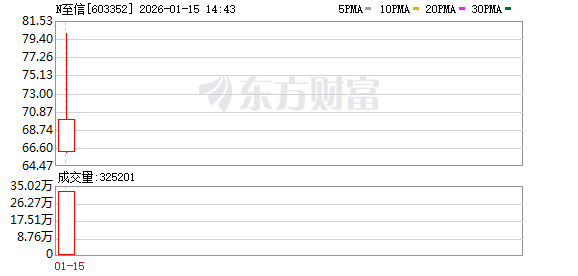
至信股份挂牌上交所主板 股价开盘上涨201.69%
Zheng Quan Ri Bao· 2026-01-15 06:43
Core Viewpoint - Chongqing Zhixin Industrial Co., Ltd. has successfully listed on the Shanghai Stock Exchange, becoming the first new stock from Chongqing in 2023, with a significant increase in share price on its debut day [2] Group 1: Company Overview - Zhixin Co. was established in 1995 and is headquartered in Chongqing, operating over 10 manufacturing bases nationwide [2] - The company has developed into a major private automotive parts manufacturer in Southwest China, specializing in the production of automotive stamping parts and related molds [3] - Zhixin Co. has a comprehensive R&D team and owns subsidiaries focused on mold development and industrial automation solutions, achieving a complete industrial chain from mold development to production line automation [2][3] Group 2: Financial Performance - The company issued 56.67 million new shares at an issue price of 21.88 yuan per share, raising approximately 1.329 billion yuan for capacity expansion and working capital [2] - Revenue for the years 2022, 2023, 2024, and the first half of 2025 is projected to be 2.091 billion yuan, 2.564 billion yuan, 3.088 billion yuan, and 1.604 billion yuan respectively, with a compound annual growth rate (CAGR) of 21.52% from 2022 to 2024 [3] - The net profit attributable to shareholders after deducting non-recurring gains and losses for the same periods is expected to be 52.25 million yuan, 119.69 million yuan, 184.72 million yuan, and 87.18 million yuan, with a CAGR of 88.02% from 2022 to 2024 [3] Group 3: Future Development Plans - The company aims to leverage the supportive national policies for the automotive industry, focusing on market opportunities and enhancing automation and intelligent applications [4] - Zhixin Co. plans to expand production scale and improve operational efficiency while maintaining strong internal management to become a leading domestic automotive parts supplier recognized by customers [4]