三生制药

Search documents
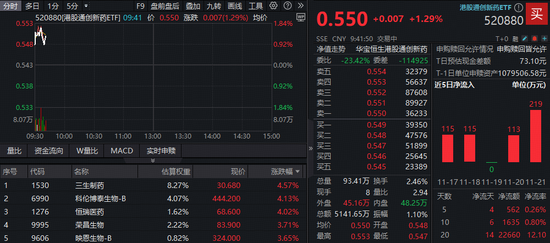
创新药突破不断,港股通创新药ETF(520880)盘初上探1.66%!三生制药等龙头股领衔修复行情
Xin Lang Ji Jin· 2025-11-24 01:55
Core Insights - The Hong Kong innovative drug sector is experiencing a rebound, with the Hong Kong Stock Connect innovative drug ETF (520880) rising by 1.66% at one point [1] - Major stocks such as Sanofi, Kelun-Biotech, and Hengrui Medicine saw increases of over 4%, while stocks like China Resources Pharmaceutical and Fuxing Pharmaceutical faced adjustments [1] Industry Trends - The innovative drug industry is shifting from a quantity-driven approach to a quality-driven one, entering a phase where product efficacy is paramount [3] - There is a growing focus on differentiated and internationalized pipelines, with an emphasis on products that can generate profits [3] - Oral peptide drugs, such as PCSK9 inhibitors and IL-23 antagonists, are showing promising clinical data and have the potential to reshape treatment paradigms [3] Market Dynamics - Chinese innovative pharmaceutical companies are deeply involved in global drug development, with the number of clinical trials ranking first worldwide, particularly in cell therapy, ADCs, and bispecific antibodies [3] - By 2024, it is expected that 38% of globally approved new drugs will have their first launch in China, highlighting the country's growing importance in the pharmaceutical landscape [3] - The upcoming expiration of patents for multinational corporations (MNCs) is creating opportunities for Chinese assets, which are becoming significant sources for important projects [3] ETF Performance - The Hong Kong Stock Connect innovative drug ETF (520880) and its linked funds are passively tracking the Hang Seng Hong Kong Stock Connect Innovative Drug Select Index, which includes top-weighted stocks like BeiGene, China Biologic Products, and Innovent Biologics [3]

从欧美到东南亚,中国创新药出海的下一个风口在哪
2025-11-24 01:46
Summary of Key Points from the Conference Call Industry Overview - The Chinese pharmaceutical sector is experiencing structural growth after a period of deep adjustment, with innovative drugs like Zebutinib and Furmetin achieving significant sales in North America, indicating a shift from generic to innovative drug development [1][2][6] - The global contribution rate of Chinese innovative drugs has been steadily increasing since 2015, expected to reach a transformative stage by 2025, with products like Zebutinib projected to become a $5 billion blockbuster [1][2][6] Core Insights and Arguments - The A-share pharmaceutical sector has shown a clear turning point in 2025, with the Shenwan Pharmaceutical Biotechnology Index rising by 21.1% year-to-date, reflecting a recovery and reversal trend [2] - The improvement in the policy environment, such as relaxed centralized procurement policies and enhanced dual payment systems for medical insurance, is fostering growth in the pharmaceutical industry [2][7] - The shift in strategy for Chinese innovative drugs has moved from "license out" to first-in-class drug development, entering a new phase of global collaboration and establishing overseas teams [1][8] Market Dynamics - Global market fluctuations have impacted the A-share market, with volatility in U.S. stocks affecting Asian tech stocks and subsequently the A-share market, although the underlying logic of the A-share market remains unchanged [5] - The medical industry is expected to benefit significantly from the current macroeconomic environment of interest rate cuts, which historically have favored the healthcare sector [7][22] Challenges and Opportunities - Chinese innovative drug companies face challenges in the U.S. market due to heightened FDA approval standards, necessitating improved communication with regulatory bodies and adherence to international clinical trial standards [3][9] - Emerging markets like Southeast Asia present growth opportunities despite challenges such as limited payment capabilities and high registration barriers; leveraging cost advantages and establishing local teams can facilitate market entry [11][8] Technological Advancements - AI technology is becoming a crucial enabler in the pharmaceutical industry, enhancing data processing and analysis capabilities, optimizing medical SOP processes, and potentially leading to breakthroughs in drug development [12][16] - AI applications in drug development can significantly improve efficiency and success rates, potentially increasing the success rate from 10% to 20% and reducing development time [16][13] Future Outlook - The outlook for the medical industry, particularly the innovative drug sector, is optimistic, with expectations of continued strong growth driven by supportive policies and market dynamics [6][7][22] - Key upcoming events, such as major conferences and clinical trial results, are critical for investment opportunities in the innovative drug sector [20][21] Investment Sentiment - Investors are encouraged to maintain confidence in the pharmaceutical sector, particularly in innovative drugs, as the market is expected to continue its upward trajectory despite short-term fluctuations [17][22] - The healthcare payment environment is improving, with expectations of increased funding and reduced cost control concerns, further supporting the industry's growth [18][22]
创新药10年冰火淬炼:千亿BD交易背后的繁荣和挑战(上)丨2025·大复盘
Tai Mei Ti A P P· 2025-11-24 00:06
Core Insights - The Chinese innovative pharmaceutical industry is experiencing significant transformation, marked by substantial licensing deals and a shift towards global leadership in quality over quantity [2][3][6] - The total amount of License-out upfront payments has surpassed that of the primary market for the first time, indicating a shift in funding dynamics within the industry [13][31] - Despite the growth, there are underlying challenges such as a lack of clinical development capabilities and the undervaluation of early-stage pipelines, leading to a phenomenon of "selling seedlings at a discount" [16][20][24] Group 1: Industry Growth and Transactions - In 2025, the total amount of License-out transactions in China is expected to exceed that of the U.S. by 3.2 times, reflecting a rapid acceleration in drug approvals and a surge in innovative drug development [3][6] - The total amount of BD transactions in the Chinese pharmaceutical sector has surpassed $100 billion, with a significant increase in both the number of deals and transaction values [8][11] - Major transactions include a $125 billion collaboration between Hengrui Medicine and GSK, a $114 billion partnership between Innovent Biologics and Takeda, and a $61.5 billion deal between 3SBio and Pfizer, positioning these deals among the largest in global innovative drug licensing [9][10] Group 2: Challenges and Market Dynamics - The industry faces a stark divide, with leading companies achieving profitability while smaller biotech firms struggle with funding and development risks, leading to a survival of the fittest scenario [28][31] - The proportion of License-out transactions for late-stage clinical projects has only slightly increased, indicating ongoing challenges in clinical development capabilities [16][20] - The gap in clinical trial design and execution between Chinese companies and multinational corporations (MNCs) remains significant, impacting the ability of domestic firms to retain control over late-stage assets [19][21][24] Group 3: Financial Performance and Market Reactions - Innovative drug companies in China reported a revenue increase of 22.1% year-on-year in the first three quarters of 2025, with a notable reduction in net losses [28][31] - The market is becoming more discerning, focusing on clinical value and commercialization potential rather than short-term trading excitement, leading to a more cautious approach to BD transactions [32][33] - The capital market's response to BD transactions has been mixed, with significant deals not necessarily translating into sustained stock price increases, highlighting the need for long-term value realization [32][33]



国泰海通医药2025年11月第三周周报:持续推荐创新药械产业链-20251123
GUOTAI HAITONG SECURITIES· 2025-11-23 12:48
Investment Rating - The report maintains an "Overweight" rating for the innovative pharmaceutical and medical device industry chain [3][5]. Core Viewpoints - The innovative pharmaceutical sector is experiencing high prosperity, with a recommendation for companies like Heng Rui Medicine, Hansoh Pharmaceutical, Sanofi Pharmaceutical, Kelun Pharmaceutical, and Enhua Pharmaceutical to maintain an "Overweight" rating. The report also suggests that Biopharma/Biotech companies such as Kelun Biotech, BeiGene, Baillie Gifford, Yimeng Biotech, Jingxin Pharmaceutical, Teva Biotech, WuXi Biologics, and Ailisi should also be rated "Overweight" as their innovative pipelines are gradually being realized and their performance is entering a growth phase. Additionally, it recommends CXO and upstream pharmaceutical companies like Haoyuan Medicine, Baipusais, WuXi AppTec, WuXi AppTec, and Tigermed to maintain an "Overweight" rating. The report highlights leading medical device companies such as United Imaging, Lepu Medical, Spring Medical, and Huatai Medical as having potential for recovery, also maintaining an "Overweight" rating [5][6]. Summary by Sections - **A-Share Market Performance**: In the third week of November 2025, the A-share pharmaceutical sector underperformed the broader market, with the Shanghai Composite Index falling by 3.9% and the SW Pharmaceutical and Biological Index declining by 6.9%, ranking 23rd among Shenwan's primary industries [7][9]. - **Hong Kong and US Market Performance**: The Hong Kong pharmaceutical sector also underperformed, with the Hang Seng Healthcare Index and the Hong Kong Biotechnology Index both down by 7.5%, while the US healthcare sector outperformed, with the S&P Healthcare Select Sector Index rising by 1.8% [17]. - **Valuation Metrics**: As of November 21, 2025, the pharmaceutical sector's premium level relative to the entire A-share market is at a normal level, with a current relative premium rate of 71.8% [13][16].


中年男人的“头顶危机”,有人赚疯了
凤凰网财经· 2025-11-23 12:39
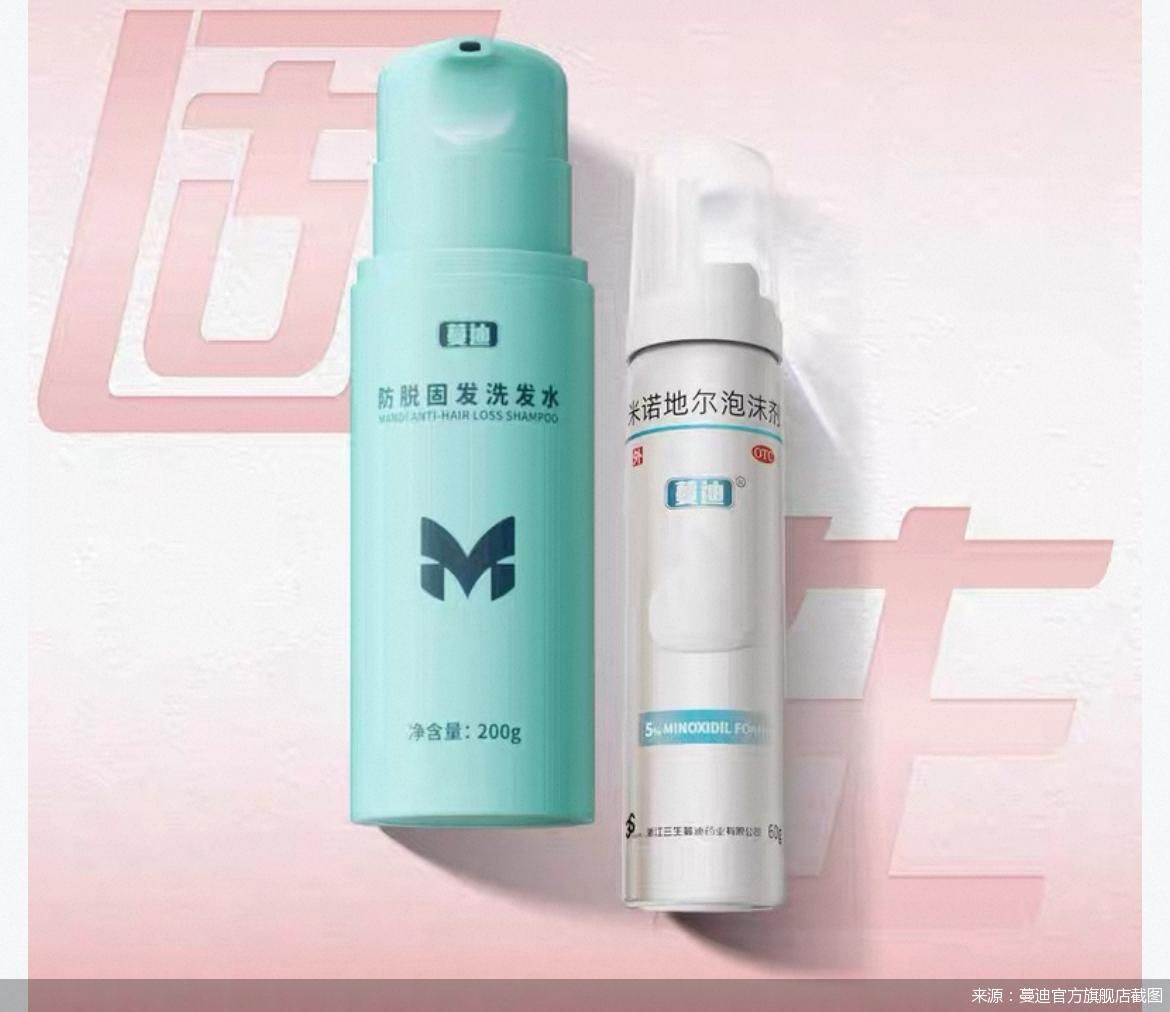
凤凰网财经《 IPO 观察哨》 " 人有三千烦恼丝,而我有一千五 " 、 " 我太爱掉头发了,我感觉上辈子就是个蒲公英 "…… 这些自嘲段子的背后,是当代人真实的"头顶焦虑"。 如今,这份焦虑正撑起一门暴利生意 —— 你的发际线,正在成就一家上市公司。 在"每 5 位成年男性就有一人受脱发困扰 " 的庞大刚需下,行业巨头蔓迪国际正式递交港股招股书,揭开了 " 头顶生意 " 的神秘账本。 招股书显示,蔓迪旗下产品已连续十年占据中国脱发药物市场榜首, 2024 年市占率高达 57% 。支撑其市场地位的,是一份亮眼的财报:高达 80% 的毛利率,让 " 防脱 " 成为一门跑赢绝大多数上市公司的生意。 不过,凤凰网财经《 IPO 观察哨》翻阅招股书发现,这家防脱发巨头的增长逻辑暗藏诸多隐患。 从蔓迪国际营收结构来看,公司主要是线上和线下两种销售方式,报告期内,线下整体波动不大,主要增长点在于线上销售。 其线上收入占比从 2022 年的 55% 攀升至 2025 年上半年的 74% ,在抖音、天猫等平台的 " 双十一 ""6.18" 大促中屡次斩获 OTC 药品 GMV 第一。主要通过 KOL 种草、短视频带货等方式进 ...

防脱成刚需,蔓迪国际赴港上市
Bei Jing Shang Bao· 2025-11-23 11:07
Core Viewpoint - Mandi International has submitted an IPO application to the Hong Kong Stock Exchange, aiming for an independent listing, following the announcement of its spin-off from 3SBio, which will no longer retain any equity in Mandi International [1][3]. Company Overview - Mandi International focuses on developing comprehensive and long-term solutions for skin health and weight management, launching its first 5% minoxidil product in China in 2001, thus entering the hair loss treatment market early [3]. - The Mandi series, which includes products like Mandi 5% minoxidil solution and foam, constitutes a significant portion of the company's revenue, accounting for 91.7% to 92.3% of total product sales from 2022 to 2024 [3][4]. Financial Performance - Mandi International's revenue from 2022 to 2024 is projected to be CNY 9.82 billion, CNY 12.28 billion, and CNY 14.55 billion, with year-on-year growth rates of 25.05% and 18.49% for 2023 and 2024, respectively [4]. - The net profit for the same period is expected to be CNY 2.02 billion, CNY 3.41 billion, and CNY 3.9 billion, with significant growth rates of 68.81% and 14.37% in 2023 and 2024 [4]. Market Dynamics - The hair loss treatment market in China is projected to grow to CNY 21 billion by 2024, with over 339 million people affected by hair loss, more than 60% of whom are under 35 years old [3][4]. - The market for hair loss products has become highly competitive, with various companies, including traditional hair care brands and new entrants from the beauty and pharmaceutical sectors, vying for market share [5][6]. Future Plans - Mandi International plans to use the net proceeds from the IPO for enhancing R&D capabilities, digital operations, brand building, and working capital [4]. - The company aims to solidify its leading position in the hair health sector and accelerate the launch of new business segments [4].
脱发90后撑起一个IPO
3 6 Ke· 2025-11-23 08:19
Core Viewpoint - The hair loss treatment market in China is rapidly growing, with Mandis International preparing for an IPO, highlighting the increasing demand for hair loss solutions among the younger population [1][10]. Company Overview - Mandis International, originally founded as a pharmaceutical company in 2001, gained market traction with its minoxidil solution and has been a leader in the hair loss treatment sector for the past decade [2][4]. - The company was acquired by 3SBio in 2015, which has since expanded its portfolio and market presence [3][4]. Market Potential - Over 330 million people in China suffer from hair loss, with more than 60% of them being under 35 years old, indicating a significant market opportunity [1][10]. - The market for hair loss treatments is projected to be worth hundreds of billions, with major cities like Beijing, Shanghai, Guangzhou, and Shenzhen being the top markets [1][10]. Financial Performance - Mandis International reported revenues of 982 million RMB in 2022, with projections of 1.23 billion RMB in 2023 and 1.45 billion RMB in 2024, reflecting a compound annual growth rate (CAGR) of 21.7% [6][8]. - The gross profit margins have remained high, with figures of 80.3% in 2022, 82.0% in 2023, and 82.7% in 2024 [6]. Product Portfolio - The company's product lineup includes first-generation 5% minoxidil solution, second-generation minoxidil foam, and various anti-hair loss shampoos, holding a market share of 57% and 71% in the domestic hair loss and minoxidil markets, respectively [4][7]. - The revenue from the Mandis® series products accounts for over 90% of total income, with the minoxidil foam's revenue share increasing significantly from 10.6% in the first half of 2024 to 38.7% in the same period of 2025 [7][8]. Competitive Landscape - The hair loss treatment market is becoming increasingly competitive, with rising customer acquisition costs and price reductions impacting profit margins [9]. - The company faces risks from competitors who may develop or commercialize products more successfully, potentially hindering growth targets [9]. Distribution Channels - Mandis International primarily sells through third-party distributors to hospitals and pharmacies, although the number of distributors has decreased from 220 in 2022 to 106 recently, indicating potential customer attrition risks [9]. Industry Trends - The hair loss treatment industry is witnessing a surge in interest, with various brands entering the market and a growing ecosystem of products ranging from shampoos to hair transplants [10][11]. - The increasing prevalence of hair loss among younger demographics is driving demand for effective treatments, with social media playing a significant role in spreading awareness and sharing experiences [10][11].
脱发90后撑起一个IPO
投资界· 2025-11-23 08:04
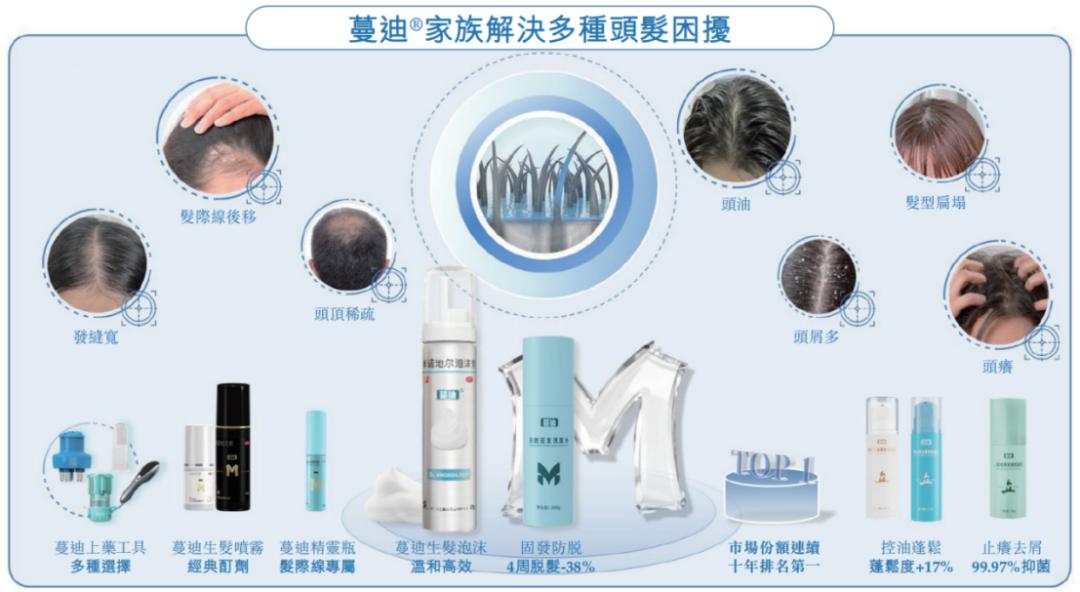
Core Viewpoint - The article discusses the growing market for hair loss treatments in China, highlighting the upcoming IPO of Mandi International and the significant market potential driven by a large population suffering from hair loss, particularly among younger individuals [2][11]. Company Overview - Mandi International, originally founded in 2001, has established itself in the hair loss treatment sector with its Minoxidil products, including a 5% Minoxidil solution and foam [3][6]. - The company was acquired by 3SBio in 2015, which has since expanded its market presence and product offerings [3][4]. Market Potential - Over 330 million people in China suffer from hair loss, with more than 60% of this demographic being under 35 years old, indicating a substantial market opportunity [2][11]. - Mandi's Minoxidil products hold a market share of 57% in the domestic hair loss medication sector and 71% in the Minoxidil category, maintaining a leading position for ten consecutive years [6]. Financial Performance - Mandi International's revenue has shown a compound annual growth rate (CAGR) of 21.7% from 2022 to 2024, with revenues of 982 million RMB, 1.228 billion RMB, and 1.455 billion RMB for those years respectively [8]. - The gross profit margins have remained high, with figures of 80.3%, 82.0%, and 82.7% for the same period [8]. Product Portfolio - The product lineup includes first-generation and second-generation Minoxidil products, as well as a range of shampoos with various benefits [6][8]. - The company is also developing additional products for acne treatment and weight management, with plans for regulatory submissions in the coming years [8]. Distribution Channels - Mandi International's online sales have increased significantly, with online sales accounting for 74% of total sales by mid-2025, up from 55.2% in 2022 [9]. - However, the number of offline distributors has decreased by 51.8% over three years, indicating potential risks in customer retention [10]. Competitive Landscape - The hair loss treatment market is becoming increasingly competitive, with rising customer acquisition costs and price reductions impacting profit margins [10]. - The article notes the emergence of various brands entering the market, including those from established companies like Proya and Vichy, which are launching their own anti-hair loss products [12].

行业周报:减肥赛道开启"长效革命",MNC加速布局高价值平台-20251123
KAIYUAN SECURITIES· 2025-11-23 06:42
Investment Rating - The investment rating for the pharmaceutical and biotechnology industry is "Positive" (maintained) [1] Core Insights - Major multinational corporations (MNCs) such as Pfizer, Eli Lilly, and Novo Nordisk are actively expanding their long-acting pipelines and technology platforms, with Pfizer's acquisition of Metsera for approximately $9.2 billion being a significant move [4][14] - The report anticipates that long-acting new therapies will become a key competitive direction in the weight loss and diabetes treatment sectors, with increasing clinical data expected to highlight the value of these long-acting pipelines and technology platforms [14][30] Summary by Sections Long-Acting Revolution in Weight Loss - The long-acting revolution in the weight loss sector is being driven by MNCs, with Pfizer's acquisition of Metsera providing access to core assets like MET-097i and MET-233i, which are long-acting GLP-1 receptor agonists and amylin analogs [4][14] - The HALO platform from Metsera allows for significant extension of drug half-lives, with MET-097i and MET-233i having half-lives of approximately 15.8 days and 19 days, respectively [30][31] Key Technologies for Long-Acting Delivery - The report identifies several key technologies for achieving long-acting drug delivery, including: - **Antibody-Drug Conjugation**: A mature technology exemplified by Amgen's AMG133, which is in Phase III clinical trials [18] - **Fatty Acid End Modification**: Gaining attention following Pfizer's acquisition of Metsera, with platforms like MBX's dual fatty acid chain modification technology also in development [24][33] - **Subcutaneous Reservoir Controlled Release**: Widely applicable technology with strategic partnerships formed by Eli Lilly and Novo Nordisk [5][12] - **Peptide Stapling Technology**: Enhances the stability of short peptides, with companies like Zhongsheng Pharmaceutical and Tonghua Dongbao developing relevant products [6][17] Recommended Companies - The report recommends focusing on innovative drugs and their supply chains, particularly in the context of flu-related investment opportunities. Monthly and weekly recommended stocks include: - Monthly: 3SBio, Innovent Biologics, Baillie Gifford, Frontier Biotechnologies, Haofan Biologics, Aopumai, Shanghai Yizhong, WuXi Biologics, Zai Lab, and Fangsheng Pharmaceutical [7] - Weekly: Yuyuan Pharmaceutical, East China Pharmaceutical, Hotgen Biotech, Yaokang Biotech, Bid Pharmaceutical, Haoyuan Pharmaceutical, and Sunshine Novo [7]


大消费大跳水,医疗、科技、银行紧随其后
Ge Long Hui· 2025-11-23 04:37
银行也没能幸免,截至收盘下跌1.85%。其中重庆农村商业银行大跌4.43%,光大银行、重庆银行、邮 储银行、民生银行等多股跌幅均在3%上方。 内容只是个人观点,仅供参考,不作为投资依据!欢迎关注交流,互相学习、共同探讨! 大消费低开低走后全天弱势,截至收盘大跌3.36%。其中京东健康大跌8.6%,金沙江中国、美高梅、康 方生物、信达生物、药明生物等多股跌幅均在5%上方。 恒生医疗低开低走,盘中虽有反弹,但最终还是无功而返,截至收盘下跌3.02%。其中三生制药大跌 9.44%,百济神州、药明康德、石药集团等超10只个股跌幅在4%上方。 开盘后执行跳水,随后全天震荡下行,截至收盘恒生指数2.38%。大消费跌幅居前,恒生医疗、互联 网、恒生科技、银行等紧随其后。 ...