宇通客车

Search documents
卡塔尔投资促进局总监司君桀:中企在卡投资瞄准创新与氢能新赛道
2 1 Shi Ji Jing Ji Bao Dao· 2025-11-12 23:20
Core Insights - Chinese enterprises are shifting their investments in Qatar from traditional sectors to innovation-driven industries, aligning with Qatar's "2030 National Vision" for diversified development [1][3] Investment Trends - Investment diversification is evident in four key areas: - In the digital economy and ICT sector, Chinese companies are actively participating in cloud computing, smart city initiatives, and 5G construction, with Huawei having a long-term commitment in Qatar [2] - In advanced manufacturing and transportation, Yutong is collaborating with Qatar's Mowasalat to introduce electric buses, contributing to the green upgrade of Qatar's public transport system [2] - In the gaming and creative industries, Tencent's Level Infinite is leveraging Qatar's developing gaming ecosystem to expand in entertainment and digital content [2] - In legal and professional services, Yingke Law Firm has established a branch in Qatar to provide cross-border business and legal consulting for bilateral enterprises [2] Renewable Energy Cooperation - There is significant potential for cooperation in renewable energy, with Chinese companies possessing world-leading expertise in hydrogen production, battery technology, and carbon management systems [4] - Qatar aims to achieve 18% renewable energy share and 25% greenhouse gas reduction by 2030, with key projects including the 800 MW Al Kharsaah solar power plant and additional projects totaling 875 MW [5] - Qatar plans to build the world's largest blue ammonia plant by 2026, supporting hydrogen and ammonia-based clean energy solutions, and aims to collaborate with China on green and blue hydrogen technology research [6] - Qatar ranks first globally in carbon capture, storage, and utilization (CCUS), and there are opportunities for joint advancements in CCS and energy storage solutions with Chinese engineering and manufacturing strengths [6]
21专访丨卡塔尔投资促进局总监司君桀:中企在卡投资瞄准创新与氢能新赛道
2 1 Shi Ji Jing Ji Bao Dao· 2025-11-12 23:12
Core Insights - Chinese enterprises are shifting their investments in Qatar from traditional sectors to innovation-driven industries, aligning with Qatar's "2030 National Vision" for diversified development [1][3][4] Investment Trends - Investment diversification is evident in four key areas: - **Digital Economy and ICT**: Chinese companies are actively participating in cloud computing, smart city projects, and 5G infrastructure, with Huawei being a notable player in Qatar for over 20 years [3][4] - **Advanced Manufacturing and Transportation**: Yutong is collaborating with Qatar's Mowasalat to introduce electric buses, contributing to the green upgrade of Qatar's public transport system [3][4] - **Gaming and Creative Industries**: Tencent's Level Infinite is leveraging Qatar's growing gaming ecosystem to expand in the entertainment and digital content sectors [4] - **Legal and Professional Services**: Yingke Law Firm has established a branch in Qatar, providing cross-border business and legal consulting services for bilateral enterprises [4] Renewable Energy Cooperation - There is significant potential for cooperation in renewable energy, particularly in hydrogen production, battery technology, and carbon management systems, where Chinese companies hold world-leading expertise [5] - Qatar aims to achieve 18% renewable energy share and 25% greenhouse gas reduction by 2030, with major projects like the 800 MW Al Kharsaah solar power plant and plans for a 2 GW solar plant in Dukhan [5][6] - Qatar is set to build the world's largest blue ammonia plant by 2026, which will support hydrogen and ammonia-based clean energy solutions, creating opportunities for joint research with Chinese firms [5] - Qatar ranks first globally in carbon capture, storage, and utilization (CCUS), providing a platform for collaboration with China in CCS and energy storage solutions [5][6]


商用车板块11月12日涨1.62%,江淮汽车领涨,主力资金净流入3.89亿元
Zheng Xing Xing Ye Ri Bao· 2025-11-12 08:42
Core Insights - The commercial vehicle sector saw a rise of 1.62% on November 12, with Jianghuai Automobile leading the gains [1] - The Shanghai Composite Index closed at 4000.14, down 0.07%, while the Shenzhen Component Index closed at 13240.62, down 0.36% [1] Commercial Vehicle Sector Performance - Jianghuai Automobile (600418) closed at 48.76, up 5.63% with a trading volume of 795,300 shares [1] - Yutong Bus (600066) closed at 31.76, up 1.02% with a trading volume of 99,500 shares [1] - King Long Automobile (600686) closed at 60.51, up 0.27% with a trading volume of 167,500 shares [1] - Foton Motor (600166) remained unchanged at 2.92 with a trading volume of 974,000 shares [1] - Zhongtong Bus (000957) closed at 11.44, down 0.26% with a trading volume of 131,300 shares [1] - JMC (000550) closed at 19.47, down 0.31% with a trading volume of 20,000 shares [1] - FAW Jiefang (000800) closed at 7.31, down 0.54% with a trading volume of 197,500 shares [1] - China National Heavy Duty Truck Group (000951) closed at 18.11, down 0.66% with a trading volume of 90,200 shares [1] - Ankai Bus (000868) closed at 5.42, down 0.73% with a trading volume of 146,100 shares [1] - Zhongjun Vehicle (301039) closed at 9.71, down 0.92% with a trading volume of 87,100 shares [1] Fund Flow Analysis - The commercial vehicle sector experienced a net inflow of 389 million yuan from institutional investors, while retail investors saw a net outflow of 144 million yuan [2] - The main funds showed a significant net inflow into Jianghuai Automobile, amounting to 541 million yuan, while retail investors had a net outflow of 243 million yuan [3] - FAW Jiefang had a net inflow of 11.89 million yuan from main funds, with retail investors contributing a net inflow of 6.81 million yuan [3] - Ankai Bus saw a net inflow of 5.85 million yuan from main funds, but a net outflow of 11.61 million yuan from retail investors [3] - Zhongtong Bus had a net outflow of 7.69 million yuan from main funds, while retail investors contributed a net inflow of 393,200 yuan [3]





汽车行业2025年三季报综述:乘用车业绩分化,商用车高景气有望持续
CHINA DRAGON SECURITIES· 2025-11-12 08:16
Investment Rating - The report maintains a "Recommended" investment rating for the automotive industry [2] Core Insights - The automotive sector has shown a significant performance divergence between passenger vehicles and commercial vehicles, with the latter expected to maintain high growth momentum [1][5] - The passenger vehicle segment experienced a revenue increase of 7.4% year-on-year in Q3 2025, while the sales volume grew by 14.4%, indicating a price war impact with an average price decrease of 0.99 million yuan per vehicle [5][37] - The commercial vehicle sector has seen a notable recovery in sales since June 2025, driven by government fiscal improvements and overseas demand, leading to a valuation recovery in the sector [5][15] Summary by Sections Passenger Vehicles - The passenger vehicle market maintained a high level of activity in Q3 2025, with wholesale sales reaching 7.53 million units, a year-on-year increase of 13.7% [23] - The segment's revenue for Q3 2025 was 557.7 billion yuan, with a notable performance difference among manufacturers, driven by new product launches and a shift towards higher-end models [37][44] - The profitability of the passenger vehicle sector showed a decline, with a net profit of 9.49 billion yuan in Q3 2025, down 25.1% year-on-year, primarily due to pressure on leading manufacturers like BYD [41][44] Commercial Vehicles - The commercial vehicle sector, particularly buses and heavy trucks, has shown significant improvement, with Q3 2025 revenues increasing by 30.6% year-on-year for buses and 26.9% for heavy trucks [6][15] - The heavy truck segment's net profit reached 3.84 billion yuan in Q3 2025, reflecting a 55.3% increase year-on-year, supported by favorable government policies and demand recovery [6][15] Auto Parts - The auto parts sector reported a revenue increase of 10.4% year-on-year in Q3 2025, with a net profit growth of 22.6%, indicating effective cost control and efficiency improvements [5][6] - Nearly 80% of auto parts companies achieved revenue growth in Q3 2025, driven by strong demand from the automotive production side [5][6] Investment Recommendations - The report suggests focusing on companies in strong product cycles, such as Great Wall Motors, Seres, and SAIC Motor, as well as key suppliers in the auto parts sector like Joyson Electronics and Desay SV [5][6][7]





AI走进指数投资,大模型青睐银行股、“易中天”
Di Yi Cai Jing Zi Xun· 2025-11-12 07:49
Core Insights - The integration of AI technology into the securities industry is accelerating, with a focus on utilizing large language models for investment decision-making and risk management [1][4] - The "Large Model Stable 50" index, launched by GaoHua Securities, has achieved a cumulative return of 23.2% since its inception, outperforming other indices [1][2] - The index primarily includes banking stocks, indicating a preference for stable, dividend-paying companies [2][6] Index Performance - The "Large Model Stable 50" index reached a point of 2007.24, with a monthly increase of 3.75% and a year-to-date increase of 16.8%, reflecting a historical annualized return of 20.5% [2] - The "Large Model New Quality Productivity" index, focusing on sectors like semiconductors and AI, has a year-to-date increase of 41.28% and a historical annualized return of 17.61% [2] - The top ten constituents of the "Large Model Stable 50" index are predominantly banks, with over 40% of the index's weight in the financial sector [2][3] Sector Focus - The "Large Model New Quality Productivity" index has a high concentration of technology stocks, with the top three constituents being New Yi Sheng, Hikvision, and Tianfu Communication [2][3] - The information technology sector comprises over half of the companies in the index, followed by communication services and industrial sectors [3] Investment Themes - The themes of dividends and growth are highlighted as significant for A-share investments, with a noted increase in the popularity of dividend-focused strategies over the past few years [6][7] - The integration of AI in investment strategies is expected to strengthen as the trend of index-based investing continues to grow [4][5] - The use of AI models for portfolio adjustments is based on comprehensive assessments of market data, fundamentals, and sentiment, ensuring a systematic approach to risk management [7]





宇通客车涨2.04%,成交额1.83亿元,主力资金净流出1042.16万元
Xin Lang Cai Jing· 2025-11-12 03:42
Core Viewpoint - Yutong Bus has shown a significant increase in stock price and revenue, indicating strong performance in the commercial vehicle sector, particularly in bus manufacturing [1][2]. Financial Performance - As of September 30, 2025, Yutong Bus achieved a revenue of 26.366 billion yuan, representing a year-on-year growth of 9.52% [2]. - The net profit attributable to shareholders reached 3.292 billion yuan, marking a year-on-year increase of 35.38% [2]. - The company has distributed a total of 27.130 billion yuan in dividends since its A-share listing, with 9.963 billion yuan distributed over the past three years [3]. Stock Market Activity - On November 12, Yutong Bus's stock price rose by 2.04%, reaching 32.08 yuan per share, with a total market capitalization of 71.023 billion yuan [1]. - The stock has increased by 28.94% year-to-date, with a slight decline of 0.16% over the last five trading days [1]. - The trading volume on November 12 was 183 million yuan, with a turnover rate of 0.26% [1]. Shareholder Structure - As of September 30, 2025, the number of shareholders decreased by 15.98% to 44,000, while the average number of circulating shares per person increased by 19.02% to 50,305 shares [2]. - The second-largest circulating shareholder is Hong Kong Central Clearing Limited, holding 244 million shares, an increase of 6.5663 million shares from the previous period [3].
专访卡塔尔投资促进局总监:中企在卡投资瞄准创新与氢能新赛道
2 1 Shi Ji Jing Ji Bao Dao· 2025-11-11 23:37
Core Insights - Chinese enterprises are shifting their investment focus in Qatar from traditional sectors to innovation-driven industries, aligning with Qatar's "2030 National Vision" for diversified development [1][2][4] Trade and Economic Cooperation - China is Qatar's largest trading partner, with a projected trade volume of $24.22 billion in 2024, including $4.174 billion in exports and $20.046 billion in imports [1] - From January to August 2025, the bilateral trade volume reached $16.374 billion, reflecting a year-on-year increase of $199 million, or 1.1% [1] Energy Cooperation - Qatar is China's second-largest source of liquefied natural gas (LNG), with imports expected to reach 18.3464 million tons in 2024 [1] - Qatar holds the world's third-largest natural gas reserves, particularly in the North Field, which is the largest single gas field globally [1] Investment Trends - Investment diversification is evident in four key areas: - Digital economy and ICT, with enhanced cooperation in cloud computing, smart cities, and 5G [2][4] - Advanced manufacturing and transportation, including the introduction of electric buses [4] - Gaming and creative industries, with Chinese firms entering the entertainment and digital content sectors [4] - Legal and professional services, with Chinese law firms establishing branches in Qatar [4] Renewable Energy Initiatives - Qatar aims to achieve 18% renewable energy share and a 25% reduction in greenhouse gas emissions by 2030, with significant projects like the 800 MW Al Kharsaah solar power plant [2][6] - Plans for a global largest blue ammonia plant by 2026 to support hydrogen and ammonia-based clean energy solutions [3][6] Innovation and Research - Qatar ranks first in the GCC for university-industry research collaboration and fourth globally in the ITU ICT Development Index [5] - R&D spending increased from 3.25 billion QAR in 2012 to 4.45 billion QAR in 2021, with a target of 1.5% of GDP by 2030 [5] Investment Incentives - Qatar offers a comprehensive set of incentives for foreign investors, including up to 40% coverage of eligible local investment costs for five years in sectors like advanced manufacturing, logistics, technology, and financial services [7][8]
2025Q3板块业绩分化,客车及零部件业绩亮眼:——汽车行业专题研究
Guohai Securities· 2025-11-11 12:33
Investment Rating - The report maintains a "Recommended" rating for the automotive sector [1] Core Views - The automotive industry has shown a mixed performance in Q3 2025, with significant growth in bus and parts sectors, while passenger vehicle profits continue to decline due to intensified competition [1][4] - The overall automotive wholesale sales reached 8.71 million units in Q3 2025, reflecting a year-on-year increase of 15.8% [4][28] - The report highlights the impact of policies such as vehicle trade-in and subsidies, which are expected to support passenger vehicle sales in 2024 and 2025 [4][41] Summary by Sections Recent Trends - The automotive sector outperformed the Shanghai and Shenzhen 300 index with a 23.8% increase from January to October 2025, while the index rose by 17.9% [10] - The parts sector has shown remarkable performance, with significant stock price increases among component companies [22] Revenue and Profit - In Q3 2025, the automotive industry generated revenue of CNY 1,058.55 billion, up 10.1% year-on-year, with a net profit of CNY 40.41 billion, reflecting a 9.1% increase [38][41] - The passenger vehicle segment reported revenue of CNY 544.06 billion, a 7.7% increase, but net profit fell by 18.6% [39][41] - The bus segment saw a revenue increase of 30.1% year-on-year, with net profit soaring by 95.4% [40][41] - The parts sector achieved revenue of CNY 395.66 billion, up 11.0%, with net profit increasing by 26.3% [41] Key Companies and Forecasts - The report identifies key companies benefiting from the current market dynamics, including Li Auto, BYD, and Great Wall Motors, among others [4][5] - It emphasizes the potential for high-end and intelligent vehicle segments to drive future growth, recommending investments in companies positioned for these trends [4][5] Market Dynamics - The report anticipates that the industry will continue to evolve around "new energy expansion and price competition," with further profit differentiation expected [42]
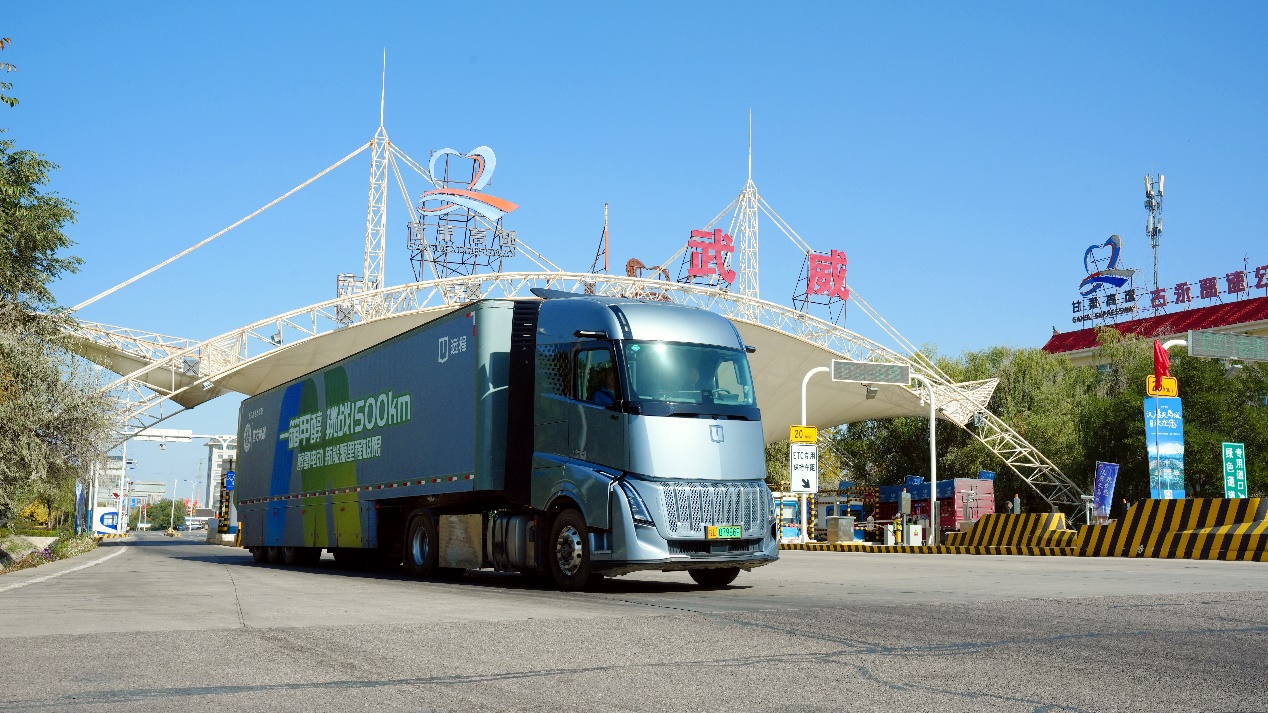
远程当选新能源重卡联盟理事单位,醇氢电动破解行业痛点获认可
Zhong Guo Qi Che Bao Wang· 2025-11-11 09:30
Core Insights - The 2025 China Commercial Vehicle Industry Development and Technology Innovation Conference was held in Wuhan, focusing on strategic paths for the development of the commercial vehicle industry in China [1] - The New Energy Heavy Truck Alliance was established, with nine companies including FAW Jiefang and Dongfeng as council members, aiming to create a collaborative ecosystem for new energy heavy truck manufacturers [1] - The unique "methanol-hydrogen + electric" technology route of Yuan Cheng aims to address the challenges of the heavy truck market's transition to new energy, promoting high-quality industry development [1] Industry Challenges and Opportunities - The heavy truck sector is crucial for logistics and construction, and is undergoing a significant transformation towards electrification and intelligence under China's "dual carbon" strategy [2] - Current challenges include a lack of clear national policy direction on various technology routes, which include pure electric, hydrogen fuel, and plug-in hybrid technologies [2] - The complexity of commercial vehicle applications necessitates a multi-fuel power system, with projections indicating that by 2040, over 65% of new commercial vehicle sales will be hybrid [3] Technological Advancements - Yuan Cheng has developed a "methanol-hydrogen electric" technology that significantly reduces emissions compared to traditional diesel vehicles, achieving a 98% reduction in PM pollutants and a 32%-52% cost reduction compared to diesel [4] - The technology allows for a range of over 1500 kilometers, making it suitable for long-haul logistics, and operates efficiently in cold weather conditions [4] - The company has achieved a market share of 65.9% in the methanol-hydrogen electric heavy truck segment, with a year-on-year growth of 305.9% [6] Strategic Collaborations and Infrastructure Development - Yuan Cheng collaborates with major suppliers like Bosch and ZF to enhance the value of its methanol-hydrogen electric trucks [6] - The company has established over 900 methanol refueling stations across key regions, with plans to expand to 4000 stations by the end of 2027, facilitating easier access to methanol fuel [6] - The focus on research and innovation, along with a commitment to sustainable development, positions Yuan Cheng to lead the transition of the heavy truck industry towards new energy solutions [6]
【周观点】小鹏科技日完善AI布局,继续看好汽车板块
东吴汽车黄细里团队· 2025-11-11 09:09
Investment Highlights - This week's sector performance ranking: SW Commercial Passenger Vehicles (+0.8%) > SW Auto Parts (-0.2%) > SW Autos (-1.2%) > SW Commercial Freight Vehicles (-3.2%) > SW Passenger Vehicles (-3.4%) [4][13] - Top five stocks covered this week include Weichai Power, China National Heavy Duty Truck Group H, Naisite, NIO-SW, and Jifeng Co., Ltd. [4][13] Research Outcomes - The team released Q3 performance summaries and reports on Top Group, Xusheng Group, Guangyang Co., and Bertley, as well as a report on Xingyuan Zhuomei [5][13] Industry Core Changes 1. Tesla's $1 trillion compensation plan was approved, with performance targets including the delivery of 20 million vehicles, 10 million active FSD users, 1 million Robotaxi commercial operations, delivery of 1 million Optimus robots, and an adjusted annual EBITDA target of $400 billion [6][13] 2. XPeng's Technology Day introduced VLA 2.0, the first fully self-developed Robotaxi, the new generation humanoid robot IRON, and two flight systems [6][8][13] 3. Seres, Pony.ai, and WeRide officially listed on the Hong Kong Stock Exchange [6][8][13] Current Automotive Sector Configuration - The automotive industry is at a crossroads: the electric vehicle (EV) boom is nearing its end, while automotive intelligence is in a "dark before dawn" phase, and robotics innovation is in the 0-1 stage. Three main investment opportunities are present during this transition [9][15] - **AI Smart Vehicle Main Line**: Focus on Robotaxi/vans first, followed by C-end applications. Key downstream targets include: - Robotaxi perspective: Integrated models (Tesla, XPeng, Qianli Technology); technology providers + operational sharing models (Horizon Robotics, Baidu, Pony.ai, WeRide); transformation of ride-hailing/taxi services (Didi, Cao Cao Mobility, Ruqi Mobility, Dazhong Transportation, Jinjiang Online) [9][15] - Robovan perspective: Desay SV, Zhongyou Technology, Kaile Co., etc. [9][15] - C-end vehicle sales perspective: Complete vehicles (XPeng, Li Auto, Huawei, Xiaomi, etc.) [9][15] - **Upstream Supply Chain Key Targets**: - B-end vehicle OEMs: BAIC Blue Valley, GAC Group, SAIC Group, etc. [9][15] - Core suppliers: Testing (China Automotive Research, China Automotive Industry Group, etc.), chips (Horizon Robotics, Black Sesame Intelligence), domain controllers (Desay SV, Jingwei Hirain, Joyson Electronics, Coboda, etc.), sensors (Sunny Optical Technology, Hesai Technology, Suteng Juchuang), steer-by-wire chassis (Bertley, Naisite, Zhejiang Shibao), lights (Xingyu Co., Ltd.), glass (Fuyao Glass) [9][15] - **AI Robotics Main Line**: Preferred components (Top Group, Joyson Electronics, Xinquan Technology, Precision Forging Technology, Fuda Co., Ltd., Xusheng Group, Aikedi, etc.) [9][15] - **Dividend & Good Pattern Main Line**: Buses (Yutong Bus), heavy trucks (China National Heavy Duty Truck A-H, Weichai Power), two-wheelers (Chunfeng Power, Longxin General) [10][15]