吉利汽车

Search documents
魅族手机急刹:“偏科生”第四次走到十字路口
2 1 Shi Ji Jing Ji Bao Dao· 2026-02-28 03:42
Core Viewpoint - Meizu Technology announced the suspension of domestic smartphone hardware projects and will focus on third-party hardware partnerships while continuing its overseas mobile business and AI products [1][2][15] Group 1: Company Strategy and Changes - Meizu will pause the development of new domestic smartphone hardware to concentrate resources on its Flyme operating system and AI initiatives [1][15] - The company aims to implement a global strategy with a target of achieving 50% of sales from overseas markets by 2025 [2][25] - Meizu's management has undergone frequent changes since its strategic investment by Geely Group, impacting its operational stability [13][14] Group 2: Historical Context and Market Position - Meizu was an early player in the smartphone market, launching the M8 before the iPhone, and gained recognition for its Flyme OS [3][6] - The company faced significant competition from Xiaomi and Huawei, leading to a decline in its market presence [6][9] - Despite a peak in sales during 2015-2017, Meizu struggled to maintain its competitive edge and faced legal challenges from Qualcomm [11][12] Group 3: Product Development and Future Plans - The planned launch of the Meizu 22 Air was canceled due to rising memory costs, with a focus now on the upcoming Meizu 23 [19][21] - Meizu is exploring AI-native hardware products, including a new device called Meizu 22 Next, which aims to integrate AI capabilities [21][23] - The company is shifting its product line to include a broader range of price points, targeting the mid-range market [17][18]

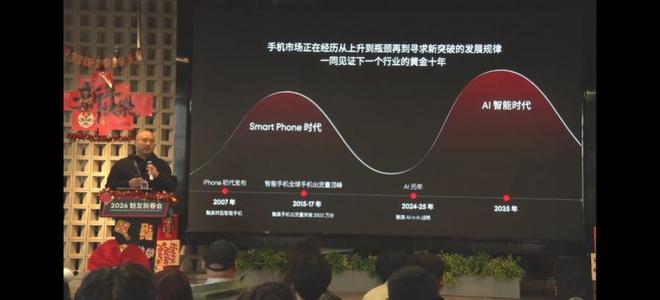
吉利汽车于2月27日斥资5943.27万港元回购367.3万股
Xin Lang Cai Jing· 2026-02-28 03:40
Group 1 - Geely Automobile (00175) announced a share buyback plan, intending to repurchase 3.673 million shares at a cost of HKD 59.4327 million [2] - The buyback is scheduled for February 27, 2026, indicating the company's strategy to enhance shareholder value [2] - This move reflects Geely's confidence in its long-term growth prospects and aims to stabilize its stock price [2]

极氪取得轮边阀及轮胎充放气系统专利
Sou Hu Cai Jing· 2026-02-28 02:41
Group 1 - Zhejiang Geely Holding Group Co., Ltd. and Zhejiang Zeekr Intelligent Technology Co., Ltd. have obtained a patent for a "wheel edge valve, tire inflation and deflation system, and vehicle," with the authorization announcement number CN119878876B, applied on October 2023 [1] - Zhejiang Zeekr Intelligent Technology Co., Ltd. was established in 2021, located in Ningbo, focusing on research and experimental development, with a registered capital of 1.3 billion RMB [1] - The company has invested in 10 enterprises, participated in 191 bidding projects, and holds 5,000 patent records, along with 4 administrative licenses [1] Group 2 - Zhejiang Geely Holding Group Co., Ltd. was founded in 2003, located in Hangzhou, primarily engaged in the automotive manufacturing industry, with a registered capital of 1.03 billion RMB [1] - The company has invested in 39 enterprises, participated in 506 bidding projects, and has 5,000 trademark records and 5,000 patent records, in addition to holding 275 administrative licenses [1]
从卖车到输出技术 中国智造赢得国外车企长期信任
Yang Shi Xin Wen Ke Hu Duan· 2026-02-28 01:38
Group 1 - The core message of the articles highlights the strengthening of long-term cooperation between German automotive companies and China, as evidenced by the recent visit of German Chancellor Merz, who was accompanied by major car manufacturers like Volkswagen, Mercedes-Benz, and BMW [1] - Mercedes-Benz has signed a strategic cooperation memorandum with a Chinese tech company to enhance their partnership, showcasing the integration of Chinese technology in their new S-Class model [1] - BMW has also signed a memorandum with China's CATL to promote carbon reduction in the electric vehicle supply chain, indicating a commitment to sustainability [1] Group 2 - The Chinese automotive industry is expected to export over 7 million vehicles by 2025, demonstrating resilience in foreign trade and marking a new milestone in export scale [2] - The Chinese automotive sector is poised for new opportunities in 2026, with companies like Momenta reporting an annual business growth rate of over 80% and advancements in autonomous driving technology [3] - The reduction of tariffs on Chinese electric vehicles in Canada from 106.1% to 6.1% is seen as a positive signal for Chinese automotive exports, enhancing market accessibility [3] Group 3 - China has established the most complete and advanced new energy vehicle industry chain globally, with capabilities spanning from raw materials to intelligent driving software [4] - The Chinese automotive industry aims not only to export products but also to internationalize its entire value chain, including technology standards and brand value [4]
中创新航2025年业绩预期翻倍:核心业务持续高增长,全球发展势能强劲
Cai Fu Zai Xian· 2026-02-28 01:22
Core Viewpoint - The company, Zhongchao Innovation, anticipates a significant increase in net profit for the year 2025, projecting between RMB 20.25 billion and RMB 21.93 billion, representing a year-on-year growth of approximately 140% to 160% due to sustained high growth in its leading technology products across various sectors [1] Group 1: Financial Performance - The company expects a net profit of approximately RMB 20.25 billion to RMB 21.93 billion for 2025, marking a year-on-year increase of about 140% to 160% [1] - The annual global installed capacity of the company's power batteries reached 62.8 GWh, a year-on-year increase of 52.6%, securing a position among the top four globally with a market share of 5.3% [1] Group 2: Product and Market Development - In the passenger vehicle sector, the company has established deep collaborations with major clients such as XPeng, Leap Motor, Geely, and Toyota, achieving significant growth in high-end vehicle markets and expanding its product offerings [2] - The company’s 5C ultra-fast charging battery has become the largest delivery volume product globally, while its "top-tier all-round" cylindrical semi-solid-state battery has achieved high energy density and ultra-fast discharge capabilities [2] Group 3: Commercial Vehicle and Energy Storage Solutions - The company has successfully implemented its "Zhiyuan" all-scenario solution in the commercial vehicle sector, leading to exponential growth in vehicle installation and new model announcements [3] - In the energy storage sector, the company has introduced new products in the "Zhijiu" series, achieving record high shipment volumes and project deliveries, while expanding its market presence in Europe and the Middle East [3] Group 4: Industry Outlook - Industry analysts indicate that the global energy transition and electrification trends are accelerating, leading to long-term growth in the demand for power batteries and energy storage [3] - The company has built a unique competitive advantage through its strong technical foundation, comprehensive product layout, and deep partnerships with leading enterprises, positioning itself as a leader in driving high-quality development in the global new energy industry [3]
汽车租赁正“去周期性”,头部企业如何打开行业空间?
Jing Ji Guan Cha Wang· 2026-02-27 22:44
Core Insights - The integration of "big transportation + local car rental" is becoming a new trend in travel, providing a seamless experience for short-distance self-driving tours [1] - The car rental industry is transitioning from a marginal sector to a daily travel choice, driven by consumer trends and favorable policies, moving towards scale growth and quality upgrades [2] Industry Trends - The demand for self-driving travel is increasing, with the car rental market expected to reach 300 billion yuan by 2030, growing at a compound annual growth rate of approximately 15% [4] - The "14th Five-Year Plan" emphasizes the construction of a modern comprehensive transportation system, enhancing the infrastructure for long-distance self-driving travel and expanding the physical radius and application scenarios for car rental services [3][4] Company Developments - Ehi Car Services, a leading car rental brand, reported record-breaking performance during the 2026 Spring Festival, with total order volume increasing by 45% year-on-year and a peak daily rental rate of 95% [1] - Ehi is evolving from a traditional car rental service to a comprehensive travel service provider, focusing on creating an "Ehi Travel Ecosystem" that integrates various travel scenarios and enhances user experience [5][6] Strategic Initiatives - Ehi's ecosystem approach includes three pillars: scene integration, platform openness, and data-driven strategies, aiming to provide comprehensive travel solutions and enhance service efficiency [6][7] - The company has established partnerships with major automotive manufacturers to expand its fleet of new energy vehicles, which currently make up about 10% of its fleet, supporting green transportation initiatives [9][10] Future Outlook - The car rental industry is expected to undergo significant transformation, with a focus on resource integration, service personalization, and the promotion of sustainable travel practices [8][11] - Ehi's initiatives align with national goals for carbon neutrality and smart city development, positioning the company as a leader in the evolving travel landscape [11]
开年,合资车大降价
投资界· 2026-02-27 15:49
Core Viewpoint - The automotive market in China is expected to face intense competition in 2026, with companies adopting aggressive strategies to capture market share amid uncertain consumer sentiment and declining sales figures [3][4][6]. Market Overview - The China Association of Automobile Manufacturers reported that in January 2026, the production and sales of passenger vehicles were 2.062 million and 1.988 million units, respectively, representing a year-on-year decline of 4.1% and 6.8% [8]. - The retail sales of domestically produced narrow passenger vehicles in January 2026 were 1.544 million units, down 13.9% year-on-year [8]. Competitive Landscape - Major automakers like Honda and Toyota have initiated price cuts and promotional strategies to stimulate sales, indicating a shift in market dynamics where "cooperation" among competitors is unlikely [4][10]. - The competition is characterized by aggressive pricing strategies, with models like the Honda Accord and Toyota RAV4 being offered at significantly reduced prices to attract customers [4][11]. Industry Trends - The trend of "official price cuts" is seen as just the beginning of a more intense market battle, as companies strive to survive in a challenging environment [12][17]. - The shift towards electric vehicles (EVs) is ongoing, but traditional fuel vehicle models are also expected to undergo price adjustments and upgrades to remain competitive [17][18]. Future Outlook - The automotive industry is at a critical juncture, with companies needing to adapt to changing consumer preferences and market conditions to avoid being left behind [15][16]. - The competitive landscape is expected to become more brutal, with both joint ventures and domestic brands engaging in fierce competition to secure their positions in the market [18].

六座SUV行业深度研究报告:六座SUV的蓝海机遇与红海竞争
Huachuang Securities· 2026-02-27 13:06
Investment Rating - The report maintains a recommendation for the six-seat SUV industry, highlighting both blue ocean opportunities and red ocean competition [2] Core Insights - The six-seat SUV market is expected to see the launch of five new models priced around 200,000 yuan in 2026, with top models potentially achieving monthly sales of 10,000 to 20,000 units [2][22] - The high-end six-seat SUV market is experiencing intense competition, with a significant increase in supply expected in 2026, outpacing market expansion [2][6] - The 200,000 yuan segment remains a potential blue ocean market, as current models often fail to meet consumer demands due to size and pricing issues [6][24] Summary by Sections Total Market Overview - The six-seat SUV market is projected to grow, with an estimated total of 150,000 units sold in 2025, reflecting a year-on-year increase of 21,000 units [13] - The market is expected to continue expanding with the introduction of new models, particularly in the 200,000 yuan segment [6][10] Blue Ocean Opportunities - The 200,000 yuan segment for six-seat SUVs is identified as a significant market opportunity, with current models not meeting consumer expectations in terms of size and pricing [6][22] - The report notes that the proportion of six-seat SUVs priced below 250,000 yuan is only 4.9%, compared to 28% for those above this price point, indicating room for growth [24] Red Ocean Competition - The high-end six-seat SUV market is set to intensify with 22 new models expected to launch in 2026, leading to fierce competition [2][6] - The report highlights a shift in product strategy from size combinations to price combinations, indicating evolving consumer preferences [2][10] Investment Recommendations - The report suggests focusing on companies like Leap Motor and Great Wall Motors, with specific models expected to drive significant sales growth [7][10] - Geely is also recommended due to its ongoing product cycle contributing to sales and profit increases [7][10]





内存涨价“逼停”魅族手机
Guo Ji Jin Rong Bao· 2026-02-27 12:41
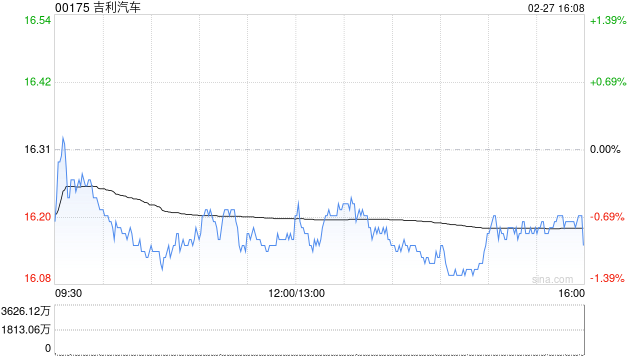
Core Viewpoint - Meizu Technology has announced a strategic transformation, denying rumors of bankruptcy and business suspension, while indicating a fundamental shift in its mobile business model by seeking third-party hardware partnerships [1][4]. Group 1: Company Background - Meizu, founded in 2003 by Huang Zhang, initially gained recognition in the MP3 market before transitioning to high-end smartphones in 2008 with the launch of its first smartphone, Meizu M8 [3]. - At its peak, Meizu's annual sales exceeded 20 million units, competing with major brands like Huawei, Xiaomi, and OPPO [4]. Group 2: Recent Challenges - Since 2016, Meizu has faced multiple crises, including a patent infringement lawsuit from Qualcomm, product quality issues, and the departure of key personnel, leading to a rapid decline in market share [4]. - In 2022, Meizu was acquired by automotive giant Geely and merged into Xingji Meizu, with ambitions to return to the top five in the domestic mid-to-high-end market within three years [4]. Group 3: Market Conditions - The smartphone market is experiencing intense competition, with rising component prices, particularly memory, exacerbating the challenges for non-mainstream brands [4][5]. - The announcement highlights the impact of soaring memory prices on product commercialization, with Meizu's plans for new products being significantly affected [5]. Group 4: Strategic Shift - Meizu is shifting its focus from hardware-driven development to AI-driven software products, aiming to enhance its Flyme software ecosystem for broader applications across various industries [5]. - The company reported that Flyme Auto achieved over 2.26 million units in 2025, aiming for 3 million units in collaboration with Geely in 2026 [6]. Group 5: Product Continuity - Despite the strategic shift, Meizu's mobile phones, AI glasses, and PANDAER products will continue to be sold, with existing services and support for current users remaining unchanged [6].
吉利磷酸铁锂布局落下关键一子
高工锂电· 2026-02-27 12:29
Core Viewpoint - Geely is moving beyond the competition of complete vehicle products and entering the competition at the industrial chain level [3] Group 1: Geely's New Energy Strategy - Jiangxi Yiyuan New Energy Technology Co., Ltd. has officially completed the production of its lithium iron phosphate cathode material project, with a total investment of 2.5 billion yuan and an annual recycling capacity of 40,000 tons of lithium iron phosphate batteries [4] - The successful production of Yiyuan New Energy marks a key breakthrough for Geely in the core material segment of power batteries, facilitating cost control and supporting technological self-iteration [5] - The establishment of the lithium iron phosphate factory signifies Geely's transition from vehicle competition to industrial chain competition [5] Group 2: Competitive Landscape - Geely is not the first automaker to invest in upstream cathode materials, with BYD being the most advanced competitor, having established a closed-loop system from lithium resources to complete vehicles [6] - BYD has invested in various upstream lithium resources and has built multiple battery production bases, creating a controllable system from raw materials to complete vehicles [7] - In 2025, Geely's annual sales are projected to reach 3.02 million vehicles, a significant increase of 39% year-on-year, while BYD's retail sales are expected to decline by 6.3%, narrowing the sales gap between the two companies [8] Group 3: Sales Performance and Product Strategy - In January 2026, Geely surpassed BYD in total sales, reclaiming the title of sales champion [9] - Among Geely's projected sales of 3.02 million vehicles in 2025, 1.687 million will be new energy vehicles, with the Galaxy series accounting for 73.5% of new energy sales [10] - The Galaxy series, particularly the Xingyuan model, is a key player in the market, with sales of 460,000 units, making it the best-selling passenger car in China for 2025 [10] Group 4: Supply Chain and Material Strategy - The launch of the Yiyuan New Energy lithium iron phosphate project is a strategic move by Geely to enhance its supply chain and address its shortcomings in cathode materials [11] - The project aims to achieve comprehensive utilization of 40,000 tons of waste lithium iron phosphate batteries annually, ensuring local supply of raw materials and improving supply chain stability [13] - Geely's battery business is structured into three core segments, with significant production capacity planned across various bases [14] Group 5: Resource Acquisition and Future Outlook - Geely has systematically laid out its lithium resource strategy through equity cooperation and strategic investments, securing key raw materials for lithium iron phosphate production [15] - The completion of the Yiyuan project allows Geely to continue upgrading its material strategies, particularly in lithium iron phosphate and manganese lithium phosphate [16] - Geely's vertical integration strategy from vehicle manufacturing to battery production and material sourcing aims to create a robust competitive advantage in the face of rising raw material costs [16]