博通

Search documents
金十数据全球财经早餐 | 2025年9月8日
Jin Shi Shu Ju· 2025-09-07 23:08
Economic Indicators - Non-farm employment growth significantly below expectations, with June data revised to negative, marking the first contraction since 2020; unemployment rate reaches a nearly four-year high [9] - The U.S. Treasury Secretary indicated that revised employment figures for 2024 could show a reduction of 800,000 jobs [9] - The Chinese central bank has increased gold reserves for the tenth consecutive month [16] Market Performance - U.S. stock indices showed mixed results, with the Dow Jones down 0.48%, S&P 500 down 0.32%, and Nasdaq down 0.03% [4] - The Hang Seng Index in Hong Kong rose by 1.43%, with significant gains in gold, pharmaceutical, and rare earth stocks [4] - A-shares saw a collective increase, with the Shanghai Composite Index up 1.24%, Shenzhen Component Index up 3.89%, and ChiNext Index up 6.55% [5] Commodity Prices - Spot gold reached a new high, briefly surpassing $3,600, closing at $3,586 per ounce, up 1.12% [6] - WTI crude oil fell 2.61% to $61.69 per barrel, while Brent crude oil dropped 1.81% to $65.66 per barrel [6] - Spot silver increased by 0.82%, closing at $40.97 per ounce [6] International Relations and Trade - OPEC+ members agreed to increase oil production by 137,000 barrels per day in October, raising concerns about oversupply [11] - Trump announced readiness to implement a second phase of sanctions against Russia [10] - Japan's Prime Minister announced resignation from the Liberal Democratic Party presidency, impacting political stability [10]


开源证券晨会纪要-20250907
KAIYUAN SECURITIES· 2025-09-07 14:43
Group 1: Macro Economic Insights - The central bank may restart government bond trading, indicating a potential shift in monetary policy [4][5] - The government aims to enhance service consumption and has announced measures to optimize service supply capabilities [5] - Recent employment data from the US shows a significant decline in non-farm employment, indicating a cooling labor market [9][10] Group 2: Coal Industry - The coal market is experiencing a transition between thermal and non-thermal coal, with expectations for coal prices to rise [31] - The current operating rate of coal mines is low, and port inventories are decreasing, which supports a potential price rebound [31][32] - Investment recommendations include focusing on companies benefiting from both cyclical and dividend strategies within the coal sector [34] Group 3: Real Estate and Construction - New housing transaction volumes have decreased both year-on-year and month-on-month, while policies in Shenzhen have been relaxed to stimulate the market [41][42] - The REITs market is showing strong performance, with significant growth in transaction volumes and a favorable environment for high-dividend assets [35][36] - The construction materials index has underperformed compared to the broader market, but the sector is expected to benefit from ongoing policy support [27][41] Group 4: Thermal Management Materials - The thermal management materials industry is projected to grow significantly, driven by the demand for high-performance electronic devices [20][21] - The market for heat pipes and temperature equalization plates is expected to expand, with local procurement trends emerging due to supply chain considerations [23] - Companies like Suzhou Tianmai are positioned to benefit from this growth due to their early investments in advanced thermal management technologies [23]
招商证券:A股调整结束了吗?后市应如何应对?
智通财经网· 2025-09-07 11:54
Core Viewpoint - The short-term adjustment of A-shares is nearing its end, transitioning to a more sustainable low-slope upward trend, with the market still in the second phase of a bull market that began in September 2024 [1][2]. Market Strategy - The core strategy post-adjustment is to "embrace low penetration sectors," focusing on areas such as solid-state batteries, AI computing power, humanoid robots, and commercial aerospace [1][2]. - In the medium term, high intrinsic return quality growth strategies should also be considered, particularly in the 300 and 500 quality growth categories [2]. Market Performance - Recent A-share market performance has been weak due to several factors: intense market speculation around the National Day parade, profit-taking in previously high-performing sectors, and a noticeable decrease in trading volume [2]. Economic Indicators - The manufacturing PMI for August showed a month-on-month increase, and North American PCB shipments turned positive year-on-year, indicating improved economic conditions in certain sectors [3]. - Key areas of improvement include rising precious metal prices due to expectations of Federal Reserve interest rate cuts, and a positive trend in the TMT sector with increased PCB shipments and software industry profits [3]. Fund Flows - There has been a net inflow of 187.7 billion yuan in financing over the first four trading days, with a significant increase in newly established equity public funds and net inflows into ETFs [3]. Industry Developments - OpenAI's announcement of self-developed AI chips is expected to change the supply-demand dynamics in the AI computing market, with significant capital expenditures planned for data center server chips [4]. - OpenAI's cash burn forecast for 2029 has been raised to $115 billion, indicating a substantial increase in expected expenditures [4]. Valuation Trends - Overall A-share valuation levels have declined, with the Wind All A Index PE (TTM) down 0.3 from the previous week, currently at the 66.5% historical valuation percentile [4].

光通信:穿越波动,长坡厚雪
GOLDEN SUN SECURITIES· 2025-09-07 08:20
Investment Rating - The report maintains an "Overweight" rating for the optical communication sector [4]. Core Insights - The optical communication sector has experienced significant volatility recently, but strong demand and large orders in the overseas AI computing field indicate that the fundamentals of the optical module industry remain solid. The AI-driven computing expansion cycle is far from over, and the recent market adjustments provide a better investment opportunity for long-term investors [1][26]. - The core logic driving long-term growth in the optical module industry remains unchanged, with exponential growth in AI computing demand necessitating faster and more efficient data transmission capabilities. Major overseas cloud service providers have significantly increased their capital expenditures, reflecting high industry prosperity [3][28]. Summary by Sections Investment Strategy - The report emphasizes the importance of focusing on the optical communication sector, particularly recommending leading companies in the optical module industry such as Zhongji Xuchuang and NewEase, as well as other related firms [10][11][18]. Market Review - The communication sector has seen a decline, with the optical communication segment performing relatively well compared to other sub-sectors. The report notes that the optical communication index increased by 0.1%, while other indices experienced declines [22][25][23]. AI Computing Infrastructure - Major global AI companies are accelerating their computing infrastructure development through large-scale collaborations and self-developed chip deployments. Companies like Google and Meta have significantly raised their capital expenditure forecasts for AI infrastructure [2][8][30]. Demand for Optical Modules - The demand logic for optical modules remains intact, driven by the ongoing need for enhanced data transmission capabilities due to the exponential growth in AI computing requirements. This is evidenced by substantial increases in capital expenditures from major cloud service providers [3][30]. Short-term Market Adjustments - Recent adjustments in the A-share optical communication sector are attributed more to market sentiment and fund flow changes rather than fundamental shifts in the industry. The report suggests that these adjustments do not hinder the long-term demand logic driven by AI [9][31]. Key Recommendations - The report recommends focusing on the optical communication sector and related companies, highlighting specific firms such as Zhongji Xuchuang, NewEase, and Tianfu Communication, among others. It also suggests monitoring domestic computing supply chains, particularly in liquid cooling segments [10][11][18].


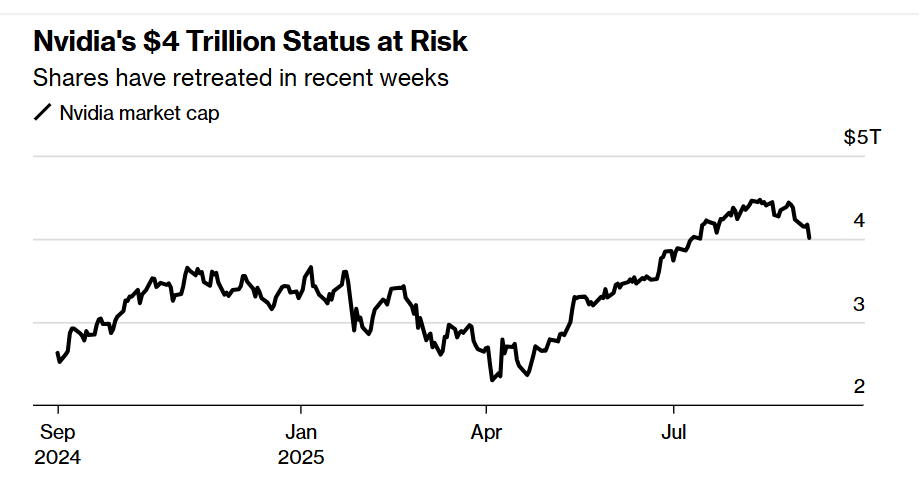
AI芯片赛道“黑马”来袭,英伟达4万亿市值红线受威胁
凤凰网财经· 2025-09-06 13:42
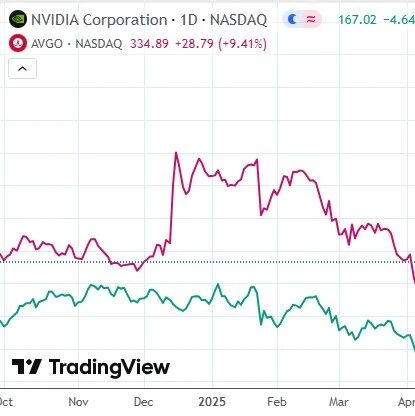
Core Viewpoint - Nvidia's stock price has declined by 2.7% to $167.02, while Broadcom's stock surged by 9.41% to $334.89, following strong earnings and guidance from Broadcom, indicating increased competition in the AI hardware market [2][4][5]. Group 1: Nvidia's Performance - Nvidia's stock price fell over 10% from its August peak, resulting in a market cap reduction of nearly $470 billion, yet it remains the largest company globally with a market cap of approximately $4 trillion [2][5]. - Nvidia's stock reached a relative low compared to Broadcom, marking the lowest point in 18 months [6]. Group 2: Broadcom's Performance - Broadcom's third-quarter earnings exceeded expectations, and the company provided strong guidance for the fourth quarter, particularly in AI chip business growth [4]. - Broadcom secured a $10 billion custom chip order from a new client, likely OpenAI, which is expected to reduce reliance on Nvidia's products [4][5]. - Broadcom's stock has outperformed Nvidia's this year, reflecting growing investor enthusiasm, especially with the association to OpenAI [7].
AI算力投资风向大转变! 市场真金白银押注ASIC强势崛起
智通财经网· 2025-09-06 07:43
Core Viewpoint - Nvidia's stock price has dropped nearly 3%, marking the first significant risk of falling below the $4 trillion market cap in two months, amid concerns over economic downturns and competition from Broadcom's AI ASIC market growth [1][9] Group 1: Nvidia's Market Position - Nvidia's stock has seen a decline of nearly 10% from its August peak, resulting in a market cap loss of approximately $470 billion, despite still being the highest valued company globally [9] - The company is facing increased competition from Broadcom, which has reported strong earnings and growth projections, leading to adjustments in Nvidia's long-term performance expectations by analysts [2][5] Group 2: Broadcom's Performance - Broadcom's semiconductor revenue related to AI infrastructure reached approximately $5.2 billion in Q3, with a year-over-year growth of 63%, exceeding Wall Street's expectations [4] - The company has secured over $10 billion in AI infrastructure orders from a major client, OpenAI, and anticipates a revenue growth rate of 50% to 60% for AI-related revenue in fiscal 2026 [5] Group 3: AI ASIC vs. AI GPU - AI ASIC and Nvidia's AI GPU represent two distinct technological paths in AI chips, with AI ASIC offering significant cost-effectiveness and energy efficiency advantages for large-scale cloud computing giants [3][15] - The rapid rise in demand for AI ASICs, driven by major tech companies, is expected to erode Nvidia's market share in the AI chip sector, which currently holds a 90% market share [13][15] Group 4: TSMC's Role - TSMC remains a critical player in the chip manufacturing sector, benefiting from the surge in demand for AI GPUs and ASICs, with expectations of a 30% sales growth by 2025 due to increasing AI chip orders [17][18] - The company is experiencing supply constraints in advanced packaging capacity, particularly for 5nm and below processes, which is impacting Nvidia's production capabilities [18]

9月6日|财经简报 人民币汇率升值 A股固态电池大涨 华为发布全球首款鸿蒙5三折叠手机
Sou Hu Cai Jing· 2025-09-06 03:04
Group 1: Federal Reserve and Economic Indicators - The U.S. non-farm payroll data for August showed a significant miss with only 22,000 jobs added, leading to a rise in the unemployment rate to 4.3%, the highest since late 2021 [2] - Market expectations for a Federal Reserve rate cut in September have surged to 98%-99.4%, causing the dollar index to drop and gold prices to reach a historic high, surpassing $3,600 per ounce [2] Group 2: Currency and Monetary Policy - The Chinese yuan has appreciated rapidly, with the offshore yuan against the dollar breaking the 7.12 mark, a nine-month high, driven by expectations of a return to the "6 era" [3] - The People's Bank of China announced plans for reserve requirement ratio cuts and interest rate reductions in 2025 to maintain liquidity and support financing costs for the real economy, focusing on technology finance, green finance, and inclusive finance [3] Group 3: Stock Market Performance - The A-share market rebounded, with the Shanghai Composite Index recovering above 3,800 points and the ChiNext Index rising by 6.55%, led by strong performances in solid-state batteries, photovoltaics, and battery sectors [3] - The U.S. stock market showed mixed results, with Broadcom's stock rising 9.4% due to expectations of collaboration with OpenAI, while Nvidia's stock fell 2.7% under competitive pressure [3] Group 4: Corporate Developments - Tesla's CEO Elon Musk has been proposed to receive a compensation plan granting him 12% equity, potentially valued at $1 trillion, contingent on achieving a market cap of $8.5 trillion and operational targets, pending shareholder approval [4] - China’s real estate policies include measures in Hangzhou to boost consumption through events, with ticket sales projected to rank fifth nationally in 2024, showing a 480% year-on-year increase [5] Group 5: Corporate Challenges - China’s Overseas Chinese Town (OCT) has faced significant losses, with a cumulative loss of nearly 29 billion yuan over four years and liabilities of 241 billion yuan, indicating pressure for business transformation [7] - The U.S. Treasury Secretary has called for a review of the Federal Reserve's independence, citing potential conflicts of interest due to its regulatory responsibilities [6]

29年来首次!全球央行黄金储备反超美债;博通收获百亿美元大单,英伟达一周市值蒸发万亿;马斯克获1万亿美元薪酬包,须完成三大目标;美联储9月降息概率逼近1...
Mei Ri Jing Ji Xin Wen· 2025-09-06 02:57
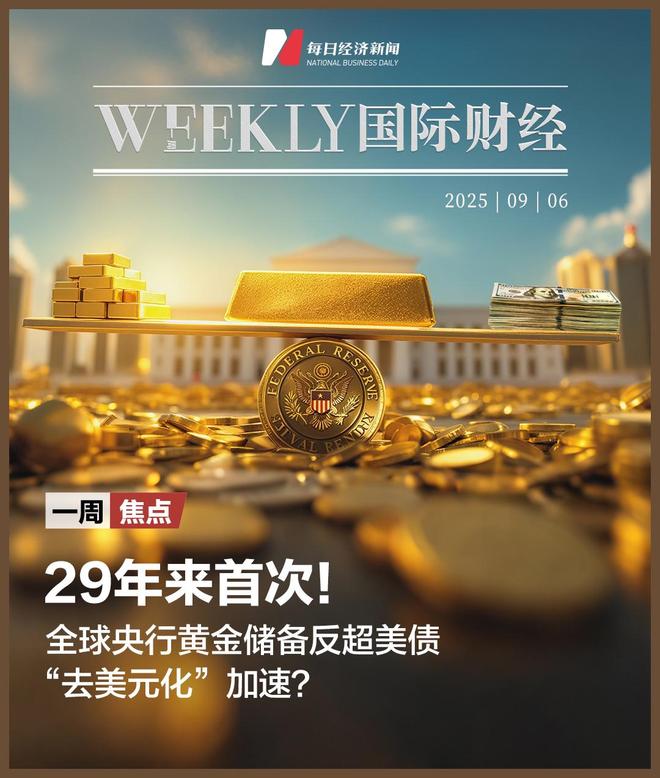
Group 1 - Global central banks' gold reserves have surpassed US Treasury bonds for the first time in 29 years, indicating a strategic shift towards physical assets like gold [4][5][8] - Central banks have been net buyers of gold for 14 consecutive quarters, reflecting a significant increase in gold holdings compared to stagnant US Treasury bond levels [8][10] - The World Gold Council reported that gold has become the second-largest reserve asset globally, following the US dollar, with a notable increase in purchases over the past three years [8][10] Group 2 - Analysts suggest that the current environment is reminiscent of the 1970s, where gold is viewed as a key asset for hedging against inflation and geopolitical uncertainties [5][16] - Gold prices have surged significantly, with a 36% increase in futures prices this year, outperforming the S&P 500 and Bitcoin [12][16] - Historical patterns indicate that gold experiences bull markets during major financial system changes, with the current situation potentially marking the beginning of a third major bull market for gold [15][16] Group 3 - The bond market is facing significant challenges, with US Treasury yields reaching multi-decade highs and a notable decline in bond prices, leading to a shift in investor sentiment towards gold [18][20] - The long-standing bull market in bonds is considered over, with rising yields reflecting concerns over inflation and debt sustainability [20][21] - Investors are increasingly viewing gold as a safer asset, contrasting with the rising risk premiums associated with US Treasury bonds [21][22] Group 4 - Major financial institutions are optimistic about gold's future price trajectory, with forecasts suggesting prices could reach between $3,675 and $4,500 per ounce by 2026 [22][23] - The collective bullish outlook on gold reflects deep concerns regarding the future of US Treasury bonds and broader macroeconomic risks [23]
29年来首次!全球央行黄金储备反超美债;博通收获百亿美元大单,英伟达一周市值蒸发万亿;马斯克获1万亿美元薪酬包,须完成三大目标;美联储9月降息概率逼近100% | 一周国际财经
Sou Hu Cai Jing· 2025-09-06 02:52
Group 1 - Global central banks' gold reserves have surpassed US Treasury bonds for the first time in 29 years, indicating a strategic shift towards physical assets like gold [6][7][10] - Central banks have been net buyers of gold for 14 consecutive quarters, reflecting a significant increase in gold holdings compared to the stagnation of US Treasury bonds in global reserves [10][14] - The World Gold Council reported that 95% of surveyed central banks plan to continue increasing their gold reserves in the next 12 months, the highest percentage since the survey began in 2019 [14] Group 2 - Gold is currently experiencing its third major bull market, driven by high inflation and geopolitical uncertainties, making it a key asset for central banks and investors [20][18] - Historical context shows that gold prices surged significantly during previous financial crises, such as the 1970s and the 2008 financial crisis, suggesting a pattern of gold as a safe haven during economic turmoil [19][20] - Analysts predict that gold prices could reach between $3,675 and $4,500 per ounce by 2026, reflecting a bullish outlook amid concerns over US Treasury bonds [26] Group 3 - The bond market is facing significant challenges, with long-term US Treasury yields reaching levels not seen in decades, leading to a decline in bond prices [22][25] - The current decade is projected to be one of the worst for US Treasury bonds, with a notable drop in their market value due to rising yields and inflation concerns [24][25] - Investors are increasingly questioning the sustainability of US debt, leading to a shift in preference towards gold as a more secure asset [25][26]
AI芯片赛道“黑马”来袭,英伟达4万亿市值红线受威胁
财联社· 2025-09-06 01:32
Core Viewpoint - The article highlights the competitive dynamics between Nvidia and Broadcom, particularly in the AI chip market, following Broadcom's strong earnings report and a significant order from a new customer likely to be OpenAI [3][4]. Group 1: Nvidia's Market Position - Nvidia's stock fell by 2.7% to $167.02, with a peak decline of over 4.4% during the trading session, marking its lowest level since July 14 [1]. - Despite the stock decline, Nvidia remains the largest company by market capitalization globally, valued at approximately $4 trillion [4]. - Nvidia's stock has decreased about 10% from its August peak, resulting in a market cap reduction of nearly $470 billion [4]. Group 2: Broadcom's Performance - Broadcom's stock surged by 9.41% to $334.89, reaching an intraday high of $356.24, which set new records for both intraday and closing prices [1]. - The company reported third-quarter earnings that exceeded expectations and provided strong guidance for the fourth quarter, particularly in its AI chip business [3]. - Broadcom secured a $10 billion custom chip order from a new client, which is speculated to be OpenAI, indicating a strategic move to reduce reliance on Nvidia products [3]. Group 3: Market Dynamics and Investor Sentiment - Analysts suggest that the competition in the AI hardware space is intensifying, with Broadcom emerging as a notable competitor to Nvidia [4]. - Investor sentiment towards Broadcom has improved significantly, driven by the association with OpenAI, which is seen as a catalyst for market momentum [6]. - Despite Nvidia's recent stock decline, analysts believe that the overall AI market's rapid expansion will allow both companies to grow, even if Nvidia loses some market share [4][6].