地平线

Search documents
中科洵瞳推出视觉语言融合导航系统,已实现数百台出货
创业邦· 2025-07-17 03:09
Core Viewpoint - The article discusses how Zhongke Xuntong aims to enable robots to understand the world like humans through visual perception, reasoning, and decision-making, addressing the limitations of traditional robots in dynamic environments [2][3]. Group 1: Challenges in Traditional Robotics - Traditional robots struggle in unstructured environments, failing to navigate effectively due to reliance on pre-set maps and remote control instructions, leading to inefficiencies and high maintenance costs [5][7]. - The fundamental issue lies in the "symbolic modeling" approach of traditional navigation, which simplifies the world into geometric coordinates while neglecting the value of multimodal information [7]. Group 2: Technological Innovations by Zhongke Xuntong - Zhongke Xuntong has developed a world navigation model that integrates visual perception and spatial reasoning, allowing robots to "see and think" in dynamic environments [7][9]. - The company has created a multimodal data set using self-developed data collection devices, enabling the training of a visual-language fusion navigation model [9][10]. Group 3: Breakthroughs in Navigation Technology - The technology has achieved three significant breakthroughs: 1. Transitioning from "pixel perception" to "semantic understanding," allowing robots to interpret environmental semantics, such as recognizing that a sofa is a navigable object [10]. 2. Evolving from "local positioning" to "global cognition," enabling robots to achieve centimeter-level optimal positioning accuracy in both indoor and outdoor settings [12]. 3. Advancing from "instruction execution" to "intent reasoning," allowing robots to autonomously plan paths based on real-time semantic information [13]. Group 4: Practical Applications and Market Impact - Zhongke Xuntong's solutions have enabled robots to navigate without pre-built maps, learning and adjusting paths in unknown environments, which is particularly beneficial for dynamic scenarios like delivery and emergency inspections [15][17]. - The company has successfully delivered hundreds of products, with its core technology serving major enterprises such as Huawei, Xiaomi, Baidu, Nokia, and Horizon [14][17].

这家具身公司的定位很工业化?!待遇最高100w招募算法研究员
具身智能之心· 2025-07-17 02:58
待遇说明 极具竞争力的薪酬与回报: 正式员工:博士年薪70-100万,硕士年薪40-60万(优秀者薪资可面议),并设有丰厚的年度绩效激励; 技术团队专属激励:项目盈利的10%归属技术团队分配,让您的智慧创造获得真金白银的回报; 实习生待遇:硕士实习生300元/天,博士实习生400元/天,并免费提供住宿,助力优秀人才无忧启航; 完善的福利保障: 足额缴纳五险一金(公积金按双边合计24%的顶格比例缴纳); 额外提供房补与饭补; 全天候不间断的零食饮料补给; 投递说明 更多求职相关内容,欢迎加入我们的AutoRobo知识星球,一个覆盖机器人、自动驾驶、具身智能方向的求职社 区!这也是国内首个以自动驾驶和具身为主要方向的社区。 三周年大额优惠来啦!欢迎和我们一起继续成长 AutoRobo知识星球 这是一个给自动驾驶、具身智能、机器人方向同学求职交流的地方,目前近1000名成员了,成员范围包含已经 工作的社招同学,如地平线、理想汽车、华为、小米汽车、momenta、元戎启行等公司。同时也包含2024年秋 招、2025年秋招的小伙伴,方向涉及自动驾驶与具身智能绝大领域。 星球内部有哪些内容?这一点结合我们已有的优势,给大 ...
消费级芯片“上车”引争议:成本较车规级芯片下探至少1/3,无强制安全认证要求
Mei Ri Jing Ji Xin Wen· 2025-07-16 11:30
Core Insights - The difference between consumer-grade chips and automotive-grade chips is significant, particularly in terms of safety and reliability standards [1][2][3] - Automotive-grade chips must meet stringent certification requirements, such as AEC-Q series and ISO 26262, while consumer-grade chips do not have mandatory safety certifications [2][3] - The trend in the automotive industry is shifting towards the use of automotive-grade chips due to their higher safety and reliability standards [8] Consumer-grade vs Automotive-grade Chips - Consumer-grade chips have a defect rate allowance of up to 500 PPM, while automotive-grade chips typically require a defect rate of less than one in a million [1][3] - Automotive-grade chips are designed to operate in extreme conditions, with temperature ranges from -40°C to 150°C, compared to consumer-grade chips which operate in a comfortable indoor environment of 0°C to 70°C [3] - The use of consumer-grade chips in vehicles has been linked to safety concerns, particularly in extreme weather or collision scenarios [6][7] Industry Trends - Major automotive manufacturers like NIO, BYD, and Xpeng are increasingly developing their own automotive-grade chips to meet safety and performance demands [8][11] - Despite the trend towards self-developed chips, many manufacturers still opt for sourcing due to the high costs associated with developing automotive-grade chips [11] - Companies like Qualcomm and various domestic chip manufacturers are actively pursuing the automotive-grade chip market to meet the growing demand for advanced automotive technologies [11][12] Challenges in the Automotive Chip Market - The automotive chip industry in China is still in a developmental phase, with challenges such as a lack of advanced design tools and verification processes for high-function safety chips [12] - The market is becoming increasingly competitive, with a growing emphasis on cost sensitivity among manufacturers [11]

智能化指引中国汽车未来,2025新能源智能汽车新质发展论坛召开
Guan Cha Zhe Wang· 2025-07-16 10:06
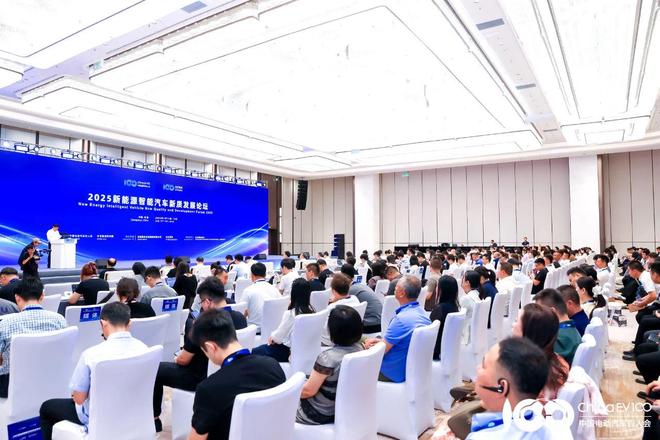
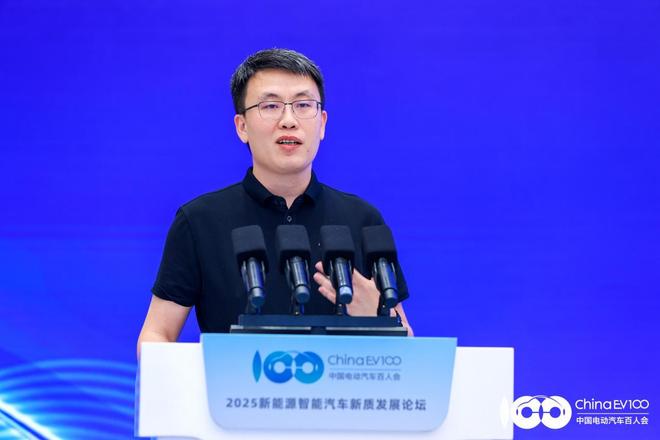
Core Insights - The 2025 New Energy Intelligent Vehicle Development Forum emphasized the importance of intelligentization as a new productive force in the automotive industry, focusing on safety and efficiency innovations [1][3]. Industry Trends - The Chinese automotive industry is expected to accelerate the adoption of advanced driver assistance systems (ADAS) and cultivate a culture of intelligent driving, aiming for L3 and higher levels of automation by 2030 [3]. - The cost structure of vehicles is projected to shift significantly, with mechanical components decreasing from 70% to below 30%, while electronics and software will account for 70% of vehicle costs [3]. Company Strategies - Companies like Jianghuai Automobile and Lantu are focusing on high-quality development and technological innovation to break free from low-level competition [5][7]. - The collaboration between Jianghuai Automobile and Huawei since 2019 has led to deep integration across the entire value chain, exemplified by the launch of the "Respect" brand [7]. Technological Innovations - The integration of AI in vehicle systems is becoming standard, with challenges in hardware-software separation being highlighted by industry leaders [7]. - Great Wall Motors introduced an end-to-end driving assistance model that emphasizes safety through a combination of data-driven approaches and safety protocols [7]. Supply Chain Dynamics - The automotive supply chain is undergoing a transformation, with more chip manufacturers involved in early-stage vehicle design to meet rapid iteration and quality demands [10]. - The software supply chain in China has matured, enabling quick adaptation to chip and electronic architectures [10]. Academic Contributions - Experts from universities are proposing innovative ideas in key areas such as intelligent driving safety and electric drive systems, contributing to the industry's development [11][13]. - The concept of "cognitive-driven" technology is being introduced to enhance the safety and decision-making capabilities of intelligent vehicles [11].
“三年跃升行动”发力,北汽集团上半年销量81.7万辆
Zhong Guo Jing Ji Wang· 2025-07-16 09:28
Core Viewpoint - BAIC Group has reported a year-on-year increase in vehicle sales for the first half of the year, demonstrating resilience in a competitive market, with total sales exceeding 817,000 units, a 6% increase compared to the previous year [1] Group 1: Sales Performance - The overseas market sales surpassed 140,000 units, reflecting a 20% year-on-year growth [1][12] - BAIC Arcfox has achieved cumulative sales of over 55,000 units, marking a 200% increase [3] - Beijing Foton recorded sales of 327,000 units in the first half of the year, up 9% year-on-year [3] Group 2: Product Development - BAIC has introduced several key products this year to meet diverse mobility needs, enhancing product quality and service [5] - The new Arcfox Alpha S5 has a maximum range of 708 kilometers and fast charging capabilities [6] - The launch of the "BAIC Range Extender Duo" includes the BJ40 range extender, emphasizing five core advantages [6] Group 3: Strategic Collaborations - BAIC is focusing on key industrial chains and fostering open cooperation with leading companies in electrification and intelligence, such as Huawei and CATL [8] - The company is actively engaging in new technology research and application to create innovative business models [8] Group 4: Market Expansion - BAIC is deepening its market penetration in the western regions of China, enhancing its product system to fit local environments [10] - The company has established strategic partnerships with local governments in cities like Urumqi and Xining [10] - BAIC's international presence is growing, with significant sales in Morocco, Myanmar, and Madagascar [12] Group 5: Future Plans - BAIC plans to launch a series of new and updated models in the second half of the year, including the Arcfox T1 and the BJ30 hybrid [14] - The company aims to continue its "Three-Year Leap Action" initiative, focusing on user needs to develop more excellent products [14]

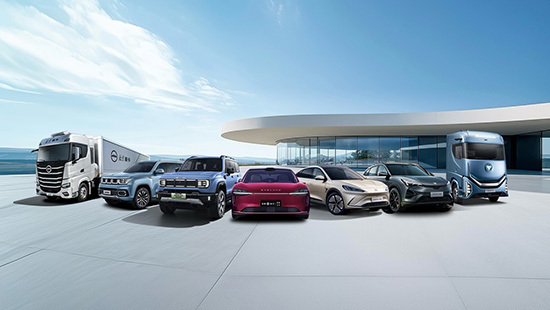
入通后的地平线怎么看
2025-07-16 06:13
各位投资者大家晚上好我是多蒙证学院的技术分析师黄细里非常感谢大家能够收工参加这场会议那么今天的话是地平线的支持者进入后广通那么这个票其实大家也期待了很久很久就是从2020年大家开始朝之下大家对地平线一直都还是有很高的关注度到达正式上市 对 当然今天其实恰好又碰上了比亚迪和吉利这边都陆续的跟进在终端开始新的一轮价格战所以今天这个共同之后其实反倒是有比较大的一个跌幅的那么我们团队其实还是想借这个特殊的时间点再次的跟大家更新一下我们对地平线的一个观点 在我同事冷浩这边详细解答之前我这边我觉得还是想强调一下我们整体对地平线的一个判断和结论吧我们结论也比较清晰就是我们认为二五到二七这三年支架本身的北塔我们团队是在上市可能是属于非常乐观派的对我们认为这三年支架的峰应该一定是会持续的 吹起来而且是越吹越强的所以我们不太认同就是会认为中端打价格战或者说BRT支架的发展效果不是很好这条线可能就下去了可能就大家都不炒了我们会认为这就是阶段性的一些小差距对支架这条线下半年包括后面两三年我们认为是持续的是有机会的所以第一我们对北塔本身是乐观的第二的话在 整个产业链上面 我们认为在供应链的这个环节最佳的这三点 我们认为地平线应该是目前 ...
智驾强标的影响解读
2025-07-16 06:13
Summary of Conference Call Records Industry Overview - The discussion revolves around the **Chinese manufacturing industry**, particularly focusing on the **automotive sector** and the implications of new standards and regulations on autonomous driving technologies [1][2]. Key Points and Arguments - **Shift in Manufacturing Standards**: The Chinese manufacturing sector is moving towards the extremes of the micro-curve, emphasizing research and design, which will enhance the presence of Chinese companies in standard-setting [1]. - **Importance of Standards**: Mastery of standards equates to control over future profits in the industry, highlighting the significance of standard-setting entities like Huawei and Dongfeng in the autonomous driving sector [1]. - **Complexity of New Standards**: The new standards for testing are more complex and stringent, leading to longer testing times, which increases the demand for testing services. Companies like Zhongqi Center are positioned to benefit from this trend [2]. - **Quality of Autonomous Features**: The quality of autonomous features varies significantly among companies, and the new standards will provide benchmarks for evaluating these features, similar to crash test ratings [3]. - **Technological Requirements**: The standards favor technologies like LiDAR, which may catalyze increased adoption in vehicles. The implementation of these standards is expected to drive demand for advanced sensor technologies [4]. - **Risk Mitigation Requirements**: New regulations require vehicles to have capabilities for autonomous deceleration in certain situations, which will test the coordination of algorithms and the integration of third-party functionalities [5]. - **Increased Accountability**: The standards will push companies to enhance their capabilities and ensure compliance, leading to a more competitive environment in the industry [6]. Additional Important Content - **Recommended Companies**: The discussion mentions several companies that are well-positioned to benefit from the new standards, including: - **Solution Providers**: Desay, Jingwei - **Components Manufacturers**: Hesai, Suoteng, Nester, Horizon Robotics, Junsheng, Xiyan, Hongruan, Ruiming Technology [6].
地平线吕鹏:智能驾驶发展注重节奏,应踩准“甜点位”
Guan Cha Zhe Wang· 2025-07-16 04:57
Group 1 - The core viewpoint emphasizes that the development of intelligent driving will significantly change user habits and travel methods in the automotive industry [3][4] - The Chinese automotive industry has made substantial progress in market share, technological competitiveness, and industrial competitiveness, but the differentiation in electrification is diminishing, leading to a more significant focus on intelligentization as the next battleground [3][5] - The proliferation of intelligent driving features is driven by collective efforts within the Chinese automotive sector, with consumer expectations shifting towards vehicles equipped with advanced driver assistance systems [3][4] Group 2 - The development of intelligent driving is more software-oriented, indicating a shift from traditional manufacturing to an ICT industry model, with the importance of understanding user needs highlighted [3][5] - The analogy of the ICT industry's evolution from PCs to smartphones illustrates that the automotive sector is in a rapid iteration phase until user demands are fully met [4][5] - The key to successful intelligent driving development lies in maintaining a balance between rapid iteration and quality, with the need for scalable and efficient solutions emphasized [4][5] Group 3 - The two main factors constraining the pace of intelligent driving development are computing power and algorithms, which determine the upper limits of user experience and implementation capabilities [5] - The Horizon Journey 6 chip has achieved rapid production milestones, reaching 1 million units, attributed to accumulated technological capabilities and timely market positioning [5] - The period from late 2026 to 2027 is anticipated to be a new "sweet spot" for computing power platforms, presenting challenges for automotive companies to achieve scalability and user satisfaction [5]
中欧数字合作如何“数”造未来(环球热点)
Ren Min Ri Bao Hai Wai Ban· 2025-07-15 21:32
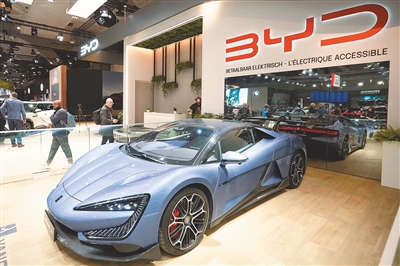
Core Insights - The article discusses the ongoing digital technology cooperation between China and Europe, highlighting key areas such as artificial intelligence, autonomous driving, and cross-border e-commerce as focal points for collaboration [2][3]. Group 1: Digital Cooperation Expansion - The scope of digital cooperation between China and Europe is continuously expanding, with both sides exploring new business development models amid uncertain times [2]. - Recent forums have emphasized the need for strategic reevaluation of China-Europe relations, particularly in AI development and regulation [2]. - Chinese companies like BYD and Geely are investing in Europe to promote autonomous driving technology, while firms like Huawei Cloud and Alibaba Cloud are establishing data centers and cloud solutions in the region [2]. Group 2: Trade and Investment - In June, a Sino-German smart manufacturing conference facilitated 28 trade and investment projects in sectors like new energy vehicles and AI, totaling over 6.8 billion yuan [3]. - In 2022, Volkswagen Group invested approximately 2.4 billion euros to establish a joint venture with Chinese autonomous driving company Horizon, focusing on autonomous driving solutions [3]. Group 3: Complementary Resource Endowments - China has become a significant player in global AI, quantum computing, and humanoid robotics, while the EU is increasing investments in digital transformation, particularly in AI [3][5]. - The complementary nature of resource endowments between China and Europe in digital technology innovation and economic development is highlighted, with successful collaborations already emerging in AI and autonomous driving [5]. Group 4: Global Trade Stability - Amid increasing global trade uncertainties, China and Europe are seen as crucial actors in maintaining global trade stability and innovation [8]. - The potential for further cooperation in the communications sector is significant, leveraging Europe's regulatory frameworks and China's manufacturing capabilities [7]. Group 5: AI Governance and Collaboration - There is a strong mutual interest in AI governance between China and Europe, with both sides emphasizing the importance of multilateral mechanisms to address cross-border challenges [6][8]. - Establishing a high-level dialogue mechanism for AI governance between China and Europe is suggested to enhance cooperation and develop a coordinated global governance framework [8].
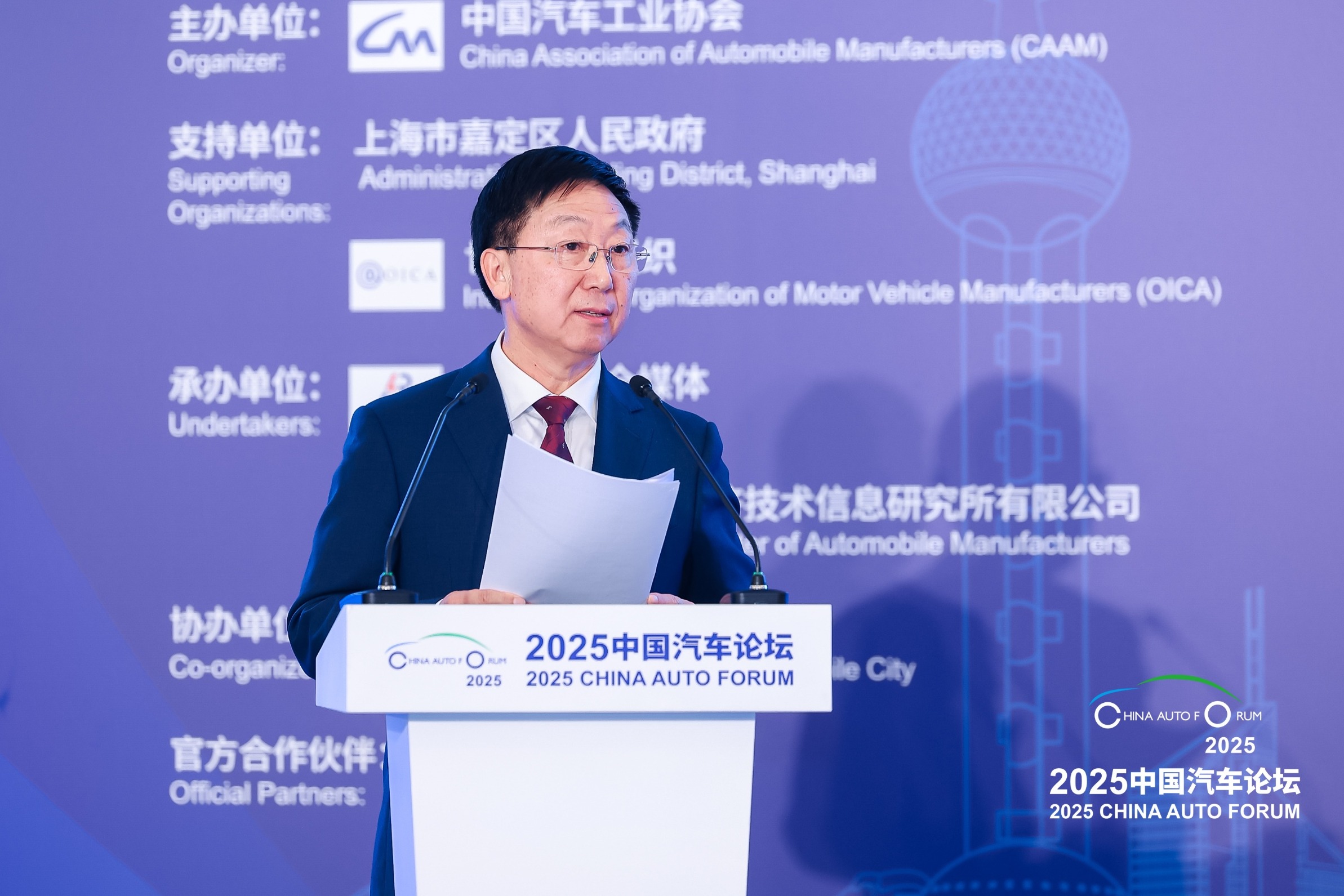
激辩2025:中国汽车人的“破局”方法论 ——直击中国汽车论坛现场
Zhong Guo Jing Ying Bao· 2025-07-15 14:30
Core Insights - The automotive industry in China is making progress in combating "involution" competition, with major companies taking proactive measures to stabilize the supply chain and protect supplier interests [1][9] - The 2025 China Automotive Forum highlighted the need for innovation and collaboration among companies to enhance the industry's global competitiveness and shift from scale to quality [2][9] - Predictions indicate that the new energy vehicle (NEV) market in China will see significant growth, with expected sales reaching 16 million units in 2025, surpassing 50% of new car sales for the first time [3] Industry Developments - The automotive industry in Shanghai's Jiading district has over 4,500 related enterprises, with more than 600 parts suppliers, indicating a robust industrial ecosystem [2] - The automotive market in China has seen production and sales exceed 30 million units for two consecutive years, with NEVs crossing the 10 million mark in ownership [2] - The industry is experiencing a structural transformation driven by electrification and artificial intelligence, with a focus on long-term competitiveness through innovation rather than short-term price wars [9][10] Challenges and Opportunities - The industry faces a "growth without profit" scenario, necessitating improvements in profitability despite increasing sales [10] - Companies are exploring cost reduction and efficiency improvements internally while seeking opportunities abroad to navigate the challenges of "involution" [12] - The forum discussed various topics, including brand building, ESG perspectives, and the impact of AI on the automotive ecosystem, indicating a shift towards a more integrated and innovative industry approach [12]