腾讯

Search documents
批量涨停!AI编程板块震荡拉升 概念股产品商业化进度如何?
Xin Lang Cai Jing· 2026-01-12 10:24
Group 1: AI Programming Sector Performance - The AI programming sector in the A-share market experienced a significant surge, with stocks like Zhuoyi Information and Puyuan Information hitting their daily limits [1] - Elon Musk's announcement on X platform regarding the upcoming upgrade of xAI's Grok Code, which will support complex programming tasks, contributed to the sector's strong performance [1] - Zhuoyi Information's business aligns closely with the AI programming field, focusing on integrated development tools and advancing a dual strategy of "IDE+AI" and "AI+IDE" [1] Group 2: Zhuoyi Information's Product Launches - Zhuoyi Information plans to launch two AI programming products, SnapDevelop and EazyDevelop, in 2025, with EazyDevelop already generating orders since October 2025 [2] - SnapDevelop has 20,000 trial users and a subscription fee of 3,800 yuan per year, with potential discounts during the promotional period [2] - The company anticipates a significant increase in paid users for both products in 2026, with revenue targets set at no less than 145 million yuan in 2025 and 280 million yuan in 2026 [2] Group 3: Puyuan Information's Focus - Puyuan Information is concentrating on AI-enhanced low-code development platforms, integrating large model capabilities to improve developer efficiency and quality [3] - The company has not yet confirmed user numbers for its standard products, and revenue from related businesses will be monitored in future reports [3] Group 4: Industry Trends and Projections - The AI programming field has evolved from auxiliary tools to independent technologies capable of handling complex tasks, with notable performance metrics from various models [3] - Tencent's report indicates that over 90% of its engineers use AI programming assistants, with 50% of new code generated by AI [4] - The AI Coding industry is currently valued at $3 billion, projected to reach $23 billion by 2030, with a potential long-term market space of nearly $700 billion [4]
押注AI,米哈游投资首战告捷!MiniMax今日再度大涨
Nan Fang Du Shi Bao· 2026-01-12 09:45
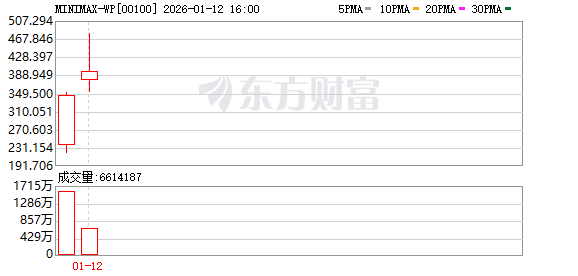
Core Insights - MiniMax, an AI large model company, successfully went public on the Hong Kong Stock Exchange under the code "0100.HK," with its stock price soaring 109.09% on the first day, reaching a market capitalization of over HKD 100 billion, setting a record for institutional subscriptions in recent years [1] - The company has attracted significant investments from top-tier institutions such as Alibaba, Tencent, Hillhouse Capital, and Sequoia China, with cornerstone investors collectively subscribing HKD 27.23 billion, accounting for nearly 70% of the offering size, which supported the stock price [1] - MiHoYo, a gaming industry player, made its first successful investment in a listed company through MiniMax, reflecting the gaming sector's long-term commitment to the AI industry [1][2] Company Overview - MiniMax was established in early 2022 and is a global general artificial intelligence (AGI) company focused on multimodal model development, making it one of the few companies in China with a high international revenue from large models [4] - The company has a young team of 385 members, with an average age of 29, and nearly 74% of its workforce in research and development, including over 30% returning overseas talent [4] - MiniMax's founder and CEO, Yan Junjie, has a strong academic background, holding a PhD from the Chinese Academy of Sciences and experience at SenseTime [4] Financial Performance - MiniMax reported revenue of USD 53.4 million (approximately RMB 380 million) for the first three quarters of 2025, representing a year-on-year growth of 174.7%, with over 70% of its revenue coming from international markets [5] - The company has accumulated over 212 million users for its AI products, with a rapid increase in paying users [5] - Despite its growth, MiniMax is facing significant losses, with a total loss of approximately USD 1.32 billion, highlighting the challenges of maintaining technological leadership and converting its large user base into sustainable profits [6] Industry Trends - The case of MiHoYo exemplifies the gaming industry's broader embrace of AI, as companies seek to enhance content production, user experience, and operational maintenance through AI technologies [7] - Major gaming companies like Tencent and NetEase are integrating AI tools into their games, indicating a strategic shift towards AI as a core component of game development and user engagement [7] - The Chinese large model market is projected to exceed RMB 70 billion by 2026, with the gaming sector viewed as a critical area for the application and commercialization of large model technologies [7][8]

张钹、杨强与唐杰、杨植麟、林俊旸、姚顺雨(最新3万字发言实录)
Xin Lang Cai Jing· 2026-01-12 04:37
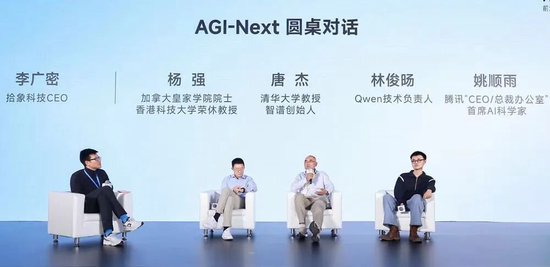
Core Insights - The AGI-Next conference highlighted the current challenges and future opportunities in AI development, particularly focusing on the capabilities and limitations of large models [3][4][5]. Group 1: Key Discussions on AGI and AI Development - Zhang Bo emphasized five fundamental deficiencies in current large models, advocating for a definition of AGI that includes executable and verifiable capabilities [3]. - Yang Qiang discussed the differentiation of agents based on their ability to autonomously set and plan goals, rather than relying on human-defined parameters [3]. - Tang Jie noted that while scaling remains a valid approach, the true exploration should focus on enabling models to possess autonomous scaling capabilities [4]. Group 2: Scaling and Model Capabilities - Yang Zhilin explained that the essence of Scaling Law is to convert energy into intelligence, emphasizing the importance of efficient approaches to reach the limits of intelligence [4]. - Lin Junyang expressed optimism about the potential for Chinese teams to achieve global leadership in AI within the next 3-5 years, estimating a 20% probability of success [4]. - Yao Shunyu highlighted the differentiation between vertical integration and layered model applications, suggesting that model companies may not necessarily excel in application development [4]. Group 3: Future Directions and Challenges - The discussion pointed out that the path from scaling to genuine generalization capabilities remains a core challenge for AI models [12][14]. - The need for models to develop memory and continuous learning structures akin to human cognition was identified as a critical area for future research [35][36]. - The exploration of self-reflection and self-awareness capabilities in AI models was deemed a significant yet controversial topic within the academic community [36][47]. Group 4: Technical Innovations and Model Architecture - The introduction of new optimization techniques, such as the Muon optimizer, was highlighted as a means to enhance token efficiency and overall model performance [55][58]. - The development of the Kimi Linear architecture aims to improve linear attention mechanisms, making them more effective for long-context tasks [64]. - The integration of diverse data sources and the enhancement of model architectures are seen as essential for achieving better agent capabilities in AI [67].

软件暴力拉升,GEO概念活跃,软件ETF(159852)一键布局AI软件投资机遇
Xin Lang Cai Jing· 2026-01-12 03:53
Group 1 - The internet services and software development sectors are experiencing significant gains, with the CSI Software Service Index rising by 6.43% as of 11:05 AM on January 12, 2026 [1] - Key stocks such as Keda Xingtong, Hehe Information, and Weining Health have seen substantial increases, with respective rises of 16.05%, 14.97%, and 14.89% [1] - The CES 2026 exhibition highlights the continuous improvement in global AI computing power, with NVIDIA launching the mass-produced NVIDIA Rubin platform and AMD previewing the new Helios platform and MI500 series GPUs [1] Group 2 - CITIC Securities notes that Chinese independent third-party model vendors like MiniMax have significant commercial potential compared to leading US players, with MiniMax reporting $53.44 million in revenue for the first three quarters of 2025, indicating a potential for exponential growth [2] - The top ten weighted stocks in the CSI Software Service Index as of December 31, 2025, include iFLYTEK, Kingsoft Office, and Tonghuashun, collectively accounting for 60.89% of the index [2] - The Software ETF (159852) tracks the CSI Software Service Index, providing an accessible investment tool for the computer software industry, with additional opportunities available through the Software ETF linked fund (012620) for AI software investments [2]
招银国际每日投资策略-20260112
Zhao Yin Guo Ji· 2026-01-12 03:08
Group 1: Market Overview - The Hang Seng Index closed at 26,232, up 0.32% for the day and 2.35% year-to-date [1] - The Shanghai Composite Index rose by 0.92% to 4,120, with a year-to-date increase of 3.82% [1] - The US markets showed positive performance, with the Dow Jones up 0.48% and the S&P 500 up 0.65% [1] Group 2: Sector Performance - In the Hong Kong market, the financial sector increased by 0.20%, while the real estate sector rose by 0.32% [2] - Chinese stocks saw gains in materials, consumer discretionary, and integrated enterprises, while consumer staples and utilities declined [3] - The MSCI China Healthcare Index has risen by 11.8% since the beginning of 2026, outperforming the MSCI China Index which increased by 9.1% [5] Group 3: Economic Indicators - China's CPI growth has slightly increased, reaching a near two-year high, driven by rising food and gold jewelry prices [4] - The US non-farm payrolls for December fell short of expectations, indicating a weakening job market, with the unemployment rate dropping to 4.4% [4] - The basic medical insurance expenditure in China showed a recovery with a 0.5% growth in 2025, compared to a 5.5% increase in 2024 [9] Group 4: Pharmaceutical Industry Insights - The market size for patented drugs in China is estimated to be around 300-400 billion RMB, with domestic innovative drugs accounting for about 1/3 of this market [6] - The global pharmaceutical market is projected to reach 1.74 trillion USD, with China's market size at 166 billion USD, representing only 9.5% of the global market [7] - The trend of Chinese innovative drugs going overseas is expected to continue, with a significant increase in BD (business development) transactions projected for 2025 [8]
平安恒生港股通科技主题ETF(159152)正式发行 聚焦AI时代核心资产机遇
Xin Lang Cai Jing· 2026-01-12 02:58
Core Viewpoint - The Ping An Hang Seng Hong Kong Stock Connect Technology Theme ETF (159152) has been officially launched, aiming to provide investors with a convenient tool to invest in leading Hong Kong technology stocks and share in the benefits of the artificial intelligence (AI) revolution [1][2]. Group 1: Investment Advantages - The Hang Seng Hong Kong Stock Connect Technology Theme Index has unique investment advantages due to its pure industry structure, high concentration of weights, and potential for valuation recovery in the current market environment [1]. - The index strictly limits its components to five subcategories: information technology, electronic components, interactive media and services, online retailers, and payment services, ensuring a high degree of technological purity [1]. - The index selects the top 30 securities based on average daily market capitalization over the last six months, enhancing its logical consistency and allocation value, aligning well with AI industry investment logic [1]. Group 2: Weight Concentration - The index features a more pronounced weight concentration, with a 15% individual stock weight cap, resulting in the top five constituents (Alibaba, Tencent, Xiaomi, Meituan, Kuaishou) accounting for approximately 60% of the total weight, and nearly 80% for the top ten [1]. - This structure aligns with the "stronger gets stronger" principle in the technology sector, making it more responsive in AI and other technology-driven market trends [1]. Group 3: Valuation Insights - The index's price-to-earnings ratio (TTM) shows a significant discount compared to the Nasdaq 100 index, with the valuation gap at historically high levels, indicating no apparent bubble risk [2]. - The valuation disparity between leading tech companies in China and the U.S. is evident, with Hong Kong tech giants having substantial room for valuation recovery [2]. - The index encompasses leaders across the entire AI industry chain, forming a complete AI ecosystem from training computing power to application software/hardware, which is a key reason for long-term optimism regarding the index [2].
AIGC赛道大爆发,创业板软件ETF华夏(159256)持仓股汉得信息大涨超15%
Mei Ri Jing Ji Xin Wen· 2026-01-12 02:58
中信证券认为,以MiniMax为代表的中国独立第三方模型厂商在商业化进展上,相比美国领先玩家有较 多潜力,相比OpenAI的120亿美元ARR对应5000亿美元估值、Anthropic的50亿美元对应1830亿美元估 值,MiniMax2025年前三季度5344万美元意味着未来在收入端有着跨数量级的潜力,而在市值层面,相 比腾讯/阿里/字节从成立到千亿美元市值分别耗时15/15/8年,新一代AI企业将有望加速这一进程。 相关产品:创业板软件ETF华夏(159256)、创业板200ETF华夏(159573)、人工智能AIETF (515070) 1月12日盘中,A股股指涨跌分化,大科技板块表现强势,Sora概念、AIGC概念、AI智能体板块涨幅持 续扩大,软件开发板块异动拉升,创业板软件ETF华夏(159256)大涨超4%,其持仓股昆仑万维、汉 得信息、拓尔思、润泽科技、每日互动、卫宁健康、万兴科技均涨超10%。 消息方面,1月9日,全球化AI第一股MiniMax(股票代码:0100.HK)正式登陆香港联合交易所。 MiniMax本次IPO发行价定为发行上限的165港元,市场认购反响极为热烈,公开发售部分获得1 ...

美国专家热议豆包AI手机:引领全球的“游戏变革者”
Feng Huang Wang· 2026-01-12 02:29
凤凰网科技讯 1月12日,自2025年12月发布以来,豆包AI手机不仅在国内科技圈掀起热潮,成为持续刷 屏的话题中心,其影响力也迅速扩散至海外,引发海外科技博主以及政策专家的关注和解读。 近期,在美国知名智库亚洲协会举行的"中国的DeepSeek时刻"研讨会上,咨询公司DGA Group合伙人、 中美科技政策专家Paul Triolo,以及耶鲁大学法学院高级研究员Samm Sacks给出了高度一致的评价:豆 包AI手机代表真正的技术创新,是足以引领全球AI智能体发展方向的"游戏变革者"。 Paul Triolo认为,豆包AI手机真正的突破,在于它把"与AI的交互方式"从文本时代,推进到了操作系统 级、多智能体协同的新阶段。 在传统具备AI功能的手机上,手机只能被动回答问题、执行单一指令、无法跨应用操作。但在豆包AI 手机上,用户通过语音发出指令后,手机不再只是听懂字面意思,而是能够理解用户的真实意图,并自 主拆解任务、完成一系列原本需要手动操作的复杂流程。 Paul Triolo特别提到了美国投资人Taylor Ogan的实测案例:作为首批体验者,Ogan在社媒平台X上发布 了一系列实测报告,毫不吝啬地盛赞豆 ...
证券研究报告行业周报:IDC的边际变化-20260111
GOLDEN SUN SECURITIES· 2026-01-11 12:44
Investment Rating - The report maintains a "Buy" rating for key companies in the IDC sector, including Zhongji Xuchuang, Xinyi Sheng, and Tianfu Communication [5][10][24]. Core Insights - The IDC market is experiencing a shift in supply and demand dynamics, driven by marginal improvements in chip supply and the explosive demand for domestic AI applications [2][20]. - Major domestic companies like ByteDance are significantly increasing their capital expenditure plans, leading to a resurgence in data center bidding activities [1][19]. - The release of NVIDIA's next-generation AI chip platform, "Rubin," is set to redefine hardware standards for high-power, fully liquid-cooled data centers, prompting a global technological upgrade in data centers [4][22][26]. Summary by Sections IDC Market Dynamics - The IDC sector is regaining attention as major companies resume bidding for data centers due to improved chip supply and clear capital expenditure plans [3][21]. - The current valuation of the IDC sector is at a bottom range, providing room for recovery as the national integrated computing network accelerates its systematic construction [3][21]. Supply Chain and AI Applications - The easing of external chip restrictions has allowed internet giants to restart data center bidding, with expectations of improved supply from late 2025 [2][20]. - Continuous iterations of domestic large models are creating real and sustained demand for computing power, which is crucial for data center construction [2][20]. Investment Opportunities - The report suggests focusing on IDC manufacturers such as Dongyangguang, Runze Technology, and Aofei Data, as well as companies in the optical communication and liquid cooling sectors [24][9]. - Key recommended companies include Zhongji Xuchuang, Xinyi Sheng, and Tianfu Communication, among others, with a focus on the optical module industry and domestic computing supply chain [24][9].


蚂蚁阿福的火,ChatGPT Health的势,都指向讯飞医疗的“慢功夫”
Xin Lang Cai Jing· 2026-01-11 10:23
Core Insights - The Hong Kong stock market is experiencing a surge in AI company listings, with notable examples including Zhiyu and MiniMax, which have seen record oversubscription rates and significant market valuations [1][2] - The competitive landscape for medical AI has evolved, with major players like Ant Group's Aifu and OpenAI's ChatGPT Health entering the market, indicating a shift towards health management as a high-frequency AI usage scenario [2][5] - The focus of competition has shifted from whether AI can perform tasks to who can deliver deeper, longer-lasting, and verifiable solutions in the medical AI space [7][20] Market Dynamics - The entry of major tech companies into the health AI sector is driven by the value of establishing a vertical entry point in a competitive AI landscape, where health data integration presents a unique opportunity [8][9] - The medical health sector is characterized by a data flywheel effect, where collaboration among government, institutions, and users can create a sustainable business model [9] - The competition is not just about functionality but also about building trust and compliance in data handling, which is crucial for long-term success [17] Company Strategies - iFlytek Medical has taken a different approach by focusing on the grassroots medical system, emphasizing compliance, delivery, and scalability over creating a viral consumer product [12][14] - The company has secured a significant project with the National AI Application Pilot Base, which positions it to define standards and operational frameworks in the medical AI sector [14][20] - iFlytek Medical's strategy involves enhancing its health management capabilities while maintaining a focus on professional boundaries and sustainability, contrasting with the more rapid growth strategies of its competitors [15][18] Competitive Landscape - The competition between iFlytek Medical and Ant Group's Aifu represents two distinct approaches: an "entry-type" model focused on consumer engagement versus a "system-type" model aimed at embedding AI within existing medical frameworks [15][20] - The future of competition will hinge on who can establish a true data feedback loop and integrate AI capabilities into real-world medical processes, ensuring compliance and operational sustainability [16][18] - The market is witnessing a shift in value perception, where sustainable revenue structures and replicable delivery capabilities are becoming more critical than mere product popularity [19][20]