阿里

Search documents
王海被全网禁言了
创业邦· 2025-03-26 03:30
Core Viewpoint - The article discusses the recent ban of Wang Hai, a prominent figure in the anti-counterfeiting industry, and raises questions about the necessity and implications of "professional counterfeiters" in the e-commerce ecosystem [4][6][21]. Group 1: Wang Hai's Ban - Wang Hai, known as the "first person in online anti-counterfeiting," was banned from major social media platforms just before the 315 Consumer Rights Day event, leading to widespread speculation about the reasons behind this action [4][6][17]. - The ban is likely linked to a legal dispute with "Rainbow Planet," which has publicly accused Wang Hai's team of defamation and requested the closure of his accounts on platforms like Douyin [8][13][24]. - Following the ban, Wang Hai's last video, which exposed counterfeit products, was released on January 18, indicating a sudden halt in his activities [17][19]. Group 2: The Role of Professional Counterfeiters - The existence of professional counterfeiters like Wang Hai has been a topic of debate, with some viewing them as necessary for market regulation, while others see them as exploitative [6][21][22]. - Wang Hai's team has a history of successfully exposing counterfeit products, which has led to significant financial penalties for major e-commerce figures, thus protecting consumer rights [20][31]. - Despite the positive impact on consumer protection, the methods employed by professional counterfeiters often blur the lines between advocacy and extortion, raising ethical concerns [21][22][31]. Group 3: Industry Perspectives - A survey indicated that 67% of consumers are more likely to increase their spending on platforms that actively combat counterfeit goods, highlighting the perceived value of anti-counterfeiting efforts [38]. - However, some small business owners express concerns that stringent anti-counterfeiting measures can increase operational costs and create challenges for legitimate businesses [38]. - Major e-commerce platforms and their founders, including those from JD.com and Alibaba, have emphasized the importance of combating counterfeit goods while advocating for fair practices and flexibility in enforcement [38][39].


市场或在短期内迎来反弹,关注AI板块的反弹力度
Sou Hu Cai Jing· 2025-03-25 15:34
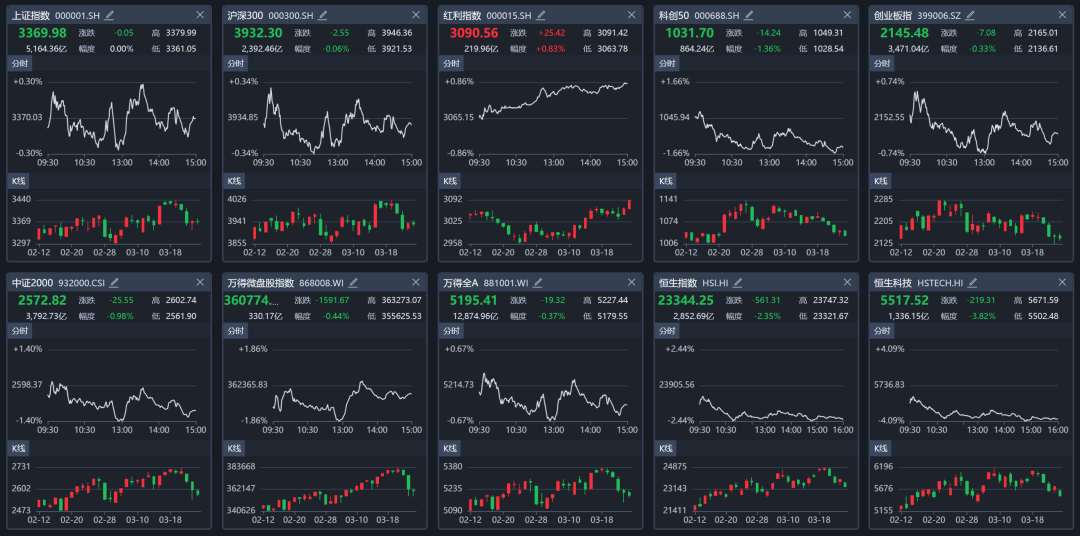
Market Overview - The equity market continues to experience fluctuations, with major indices showing narrow movements; the Shanghai Composite Index remained nearly flat, while the CSI 300 fell by 0.06% and the CSI Dividend Index rose by 1.63% [1] - The technology sector faced significant declines, with the Hang Seng Tech Index and the STAR 50 Index dropping by 3.82% and 1.36% respectively [1] Commodity Market - Precious metals showed signs of stabilization, with Shanghai gold and silver rising by 0.26% and 0.57% respectively [3] - Industrial metals, particularly copper, saw increases due to ongoing impacts from U.S. tariffs, with Shanghai copper up by 1.17% and New York copper up by 1.12% [3] - The glass industry is experiencing a supply reduction and demand increase, leading to a 3.70% rise in glass prices; several steel mills announced daily production cuts of 10%, supporting a recovery in black commodities [3] Monetary Policy and Liquidity - The central bank's proactive measures, including a 450 billion yuan MLF operation and a net injection of 630 billion yuan this month, aim to stabilize liquidity [5] - Despite these measures, funding rates have increased, with overnight rates rising to 1.90% before settling at 1.70% by the end of the day [5] - The adjustment in the central bank's reverse repo announcement format has raised questions about the actual demand reported by banks, impacting market sentiment [6] Investment Sentiment and Trends - The equity market's trading volume has hit a new low since the Spring Festival, with total turnover at 1.29 trillion yuan, indicating a potential for significant rebounds following extreme volume reductions [7] - Small-cap stocks continue to weaken, with the CSI 1000 and Wind Micro Cap indices down by 0.78% and 0.44% respectively, reflecting a decrease in risk appetite among leveraged funds [8] - The AI and computing sectors have seen notable corrections, with the AIGC Index, GPU Index, and IDC computing rental index down by 2.36%, 2.74%, and 4.82% respectively, suggesting a potential for future rebounds in these areas [8] Hong Kong Market - The Hang Seng Index and Hang Seng Tech Index fell by 2.35% and 3.82%, respectively, influenced by Xiaomi's fundraising plan, which led to a 6.32% drop in its stock [9] - Despite the declines, there was a net inflow of 13.896 billion yuan from southbound funds, indicating that some investors view the market corrections as buying opportunities [9] - The AH share premium index has risen to 131.72, continuing its upward trend since March 19 [9]
DeepSeek官宣V3小版本升级强在哪,被赞“开源里程碑”
Di Yi Cai Jing· 2025-03-25 15:12
Core Insights - DeepSeek has officially announced the release of its V3 model, which has garnered significant attention for its enhancements in inference, front-end development, Chinese writing, and search capabilities. This model is now recognized as the highest-scoring non-inference model, surpassing competitors like xAI's Grok3 and OpenAI's GPT-4.5 [1][4] Group 1: Model Enhancements - The V3 model represents a substantial upgrade over the previous R1 model, utilizing reinforcement learning techniques to significantly improve performance in inference tasks [6] - In code-related tasks, the V3 model generates more usable and visually appealing code, exemplified by a program simulating multiple balls in motion with adjustable parameters [6] - The model has improved the quality of mid to long-form Chinese text creation and provides more detailed and well-formatted outputs for report generation in online search scenarios [6] Group 2: Performance Metrics - The V3 model has achieved a 7% increase in intelligence index, leading all other non-inference models, although it still trails behind DeepSeek's own inference model R1 and other inference models from OpenAI, Anthropic, and Alibaba [7] - Despite being a non-inference model, the V3 model's ability to provide immediate responses makes it particularly useful in scenarios sensitive to latency [7] Group 3: Developer Feedback - Developers have reported significant improvements with the V3 model, noting its ability to surpass the R1 model and even Claude-3.7 in practical coding tests, demonstrating visible advancements in physical motion simulation [7] - An overseas developer successfully created a website and wrote over 800 lines of code without any errors using the new model, highlighting the competitive pressure open-source models are placing on larger tech companies [8]


行领导一起背锅
表舅是养基大户· 2025-03-25 13:32
先聊个和今天市场没啥关系的事儿哈,上周五,总局印发了《商业银行代销管理办法》,为什么要聊这个呢,我一说可能大家就记起来了。 去年6月初的时候,市场一则关于 银行不得再继续代销私募基金 的传言发酵,对市场的冲击非常大,当天小盘股大跌2%以上,我当时也聊了,说这个传 闻"不可能发生,更不应该发生",原文我删了,大家也不用回头找了,但草稿箱里还有,开头这么说的,下图。 你可以理解为,当时的这个传闻,就是借着,这回这个办法的征求意见稿的名头,传播的。 很多人问,能不能解读一下这个办法,我觉得简单来说,核心就是4件事。 1、 银行可以继续卖私募 ,方法沿用现在的,通过TOF或者私募管理人担任投顾的模式; 2、银行代销出现的风险事件太多了,爆出来的很多,没爆出来的更多,在这个办法中,相比过往的文件, 不再有银行不承担代销产品的风险管理责任的 说法 ,换句话说,以后银行不能轻飘飘地说,自己只是代销的,风险都是管理人造成的了——这导致银行对代销的准入、退出等全生命周期,会变得更 加谨慎。 3、私募管理人,做银行准入的最低门槛,是 规模不低于3亿、成立不少于3年、且3年内没有接受过惩罚 ,这意味着,过去那种明星公募基金经理,出 ...
当接入DeepSeek成标配,文小言的杀手锏是什么?
雷峰网· 2025-03-25 12:36
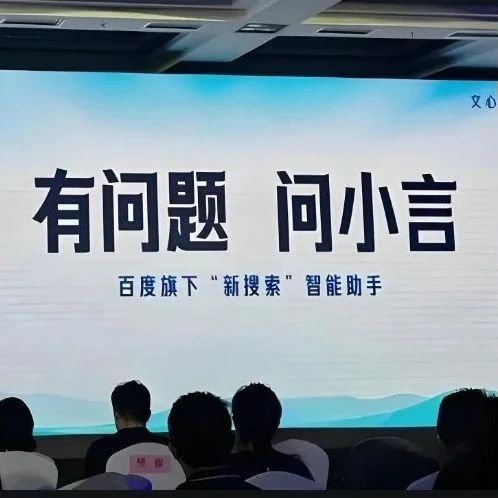
Core Viewpoint - The competition in the large model sector has entered a new phase, with a shift from competition to collaboration among major players, emphasizing the importance of openness and user value in the AI landscape [2][5][36]. Group 1: Industry Dynamics - In 2023, the large model market saw intense competition, with Baidu launching the Wenxiao Yan model 3.5, leading to a frenzy among manufacturers to enhance foundational model technology [2]. - By 2024, the focus shifted to application, resulting in a "bone fracture" price war in the ToB market and a "money-splashing" user acquisition battle in the ToC sector [2]. - The entry of Deepseek as a disruptive player has prompted existing companies to rethink their strategies, leading to a trend of collaboration rather than pure competition [5][8]. Group 2: Product Development and Strategy - Deepseek's emergence has led to a reevaluation among AI manufacturers, with many recognizing the necessity of true openness and collaboration to survive [5][6]. - Baidu's Wenxiao Yan has adopted an open approach, integrating with Deepseek and enhancing its product ecosystem, which has allowed it to maintain competitiveness despite the challenges posed by new entrants [7][21]. - The integration of multiple models, including Deepseek and Baidu's latest models, allows Wenxiao Yan to offer comprehensive services, enhancing user experience through multi-modal capabilities [11][12][31]. Group 3: User-Centric Approach - The AI industry in 2025 will face significant challenges, necessitating new methods to address evolving user needs [33]. - Respecting user value is crucial, as it involves understanding and meeting diverse user demands, which has led to a trend of embracing open-source ecosystems [35][36]. - Baidu plans to make Wenxiao Yan fully free, providing advanced features to users, reflecting a commitment to user-centric development in the competitive landscape [36].

贝莱德的选择题
远川研究所· 2025-03-25 12:02
Core Viewpoint - BlackRock, the world's largest asset management company, is navigating complex financial and political landscapes, balancing its investment strategies in China while facing scrutiny and opposition from various U.S. states regarding its ESG policies [3][12][20]. Group 1: BlackRock's Financial Maneuvers - In early 2025, BlackRock made headlines by defaulting on a loan for two office buildings in Shanghai, despite having a substantial asset management scale of $11.6 trillion by the end of 2024 [3]. - BlackRock's net profit for 2024 was approximately $6.4 billion, indicating that the default was not due to a lack of funds [3]. - The company also participated in a significant transaction involving the Panama Canal, offering $22.8 billion, which is roughly equivalent to its total profits over the past four years [3]. Group 2: Historical Context and Growth - BlackRock's rise to prominence was significantly influenced by its acquisition of Barclays Global Investors in 2008 for $13.5 billion, which propelled its assets from $1.3 trillion to $3.3 trillion [8][9]. - Under Larry Fink's leadership, BlackRock's market capitalization grew from $1.1 billion at its IPO in 1999 to $44.8 billion by 2009, marking a 40-fold increase over ten years [9][11]. Group 3: ESG Investment and Political Dynamics - Larry Fink has been a strong advocate for ESG (Environmental, Social, Governance) investing, aligning with Democratic agendas and promoting sustainable investment practices [12]. - Despite initial success with ESG funds, BlackRock has faced backlash from Republican-led states, leading to significant withdrawals, such as $7.94 billion from Louisiana and $8.5 billion from Texas [13][14]. - The political landscape has shifted, with some officials now recognizing potential benefits from collaboration with BlackRock, especially following the Panama Canal deal [14]. Group 4: Opportunities in China - BlackRock views China as a significant opportunity, having been one of the largest beneficiaries of China's financial market opening since 2011 [16]. - The firm has established a strong presence in China, acquiring various licenses to operate in the asset management sector, including QDLP and RQFII licenses [17][20]. - However, recent geopolitical tensions and regulatory scrutiny have raised questions about the viability of continuing operations in China, prompting a reassessment of investment strategies [20][22]. Group 5: Challenges and Future Outlook - Despite its strong licensing position, BlackRock's public fund management in China has not seen significant growth, with its assets remaining below 100 billion RMB [21]. - The firm faces challenges in maintaining its competitive edge amid increasing regulatory pressures and changing market dynamics [22]. - The future of BlackRock's operations in China may hinge on its ability to navigate these complexities while continuing to seek growth opportunities [22].


32B本地部署!阿里开源最新多模态模型:主打视觉语言,数学推理也很强
量子位· 2025-03-25 00:59
Core Viewpoint - The article discusses the release of the Qwen2.5-VL-32B-Instruct model by Alibaba's Tongyi Qwen, highlighting its advancements in performance and capabilities compared to previous models and competitors. Group 1: Model Specifications - The Qwen2.5-VL family includes three sizes: 3B, 7B, and 72B, with the new 32B version balancing size and performance for local operation [2][3]. - The 32B version has undergone reinforcement learning optimization, achieving state-of-the-art (SOTA) performance in pure text capabilities, even surpassing the 72B model in several benchmarks [4]. Group 2: Performance Improvements - The Qwen2.5-VL-32B demonstrates enhanced mathematical reasoning abilities, image analysis, content recognition, and visual logic deduction, providing clearer and more human-like responses [5]. - For example, it can analyze a traffic sign image and accurately calculate travel time based on distance and speed, showcasing its reasoning process [5][6]. Group 3: Open Source and Community Engagement - The model has been open-sourced and is available for testing on platforms like Hugging Face, allowing users to experience its capabilities directly [14][15]. - The rapid community engagement is evident, with users already running the model in various forums and discussions, indicating a strong interest in its applications [16][17].


中金 | AI进化论(8):AI Agent:AI的L3时刻?
中金点睛· 2025-03-24 23:32
Core Viewpoint - The article discusses the rapid evolution of AI Agents, particularly focusing on the introduction of the general-purpose AI Agent Manus by the startup Monica, which signifies a new phase in AI development and showcases strong commercial potential [1][3][26]. Group 1: AI Agent Development and Trends - The transition from reasoning to intelligent agents (L3) is accelerating, with significant advancements in execution capabilities by various global companies [2][11]. - Recent months have seen a surge in AI Agent product releases, primarily aimed at enhancing execution effectiveness and simplifying the development process for creators [11][20]. - The AI Agent Manus has outperformed OpenAI's Deep Research in a benchmark evaluation, indicating its superior problem-solving capabilities across various tasks [3][26]. Group 2: Innovations in AI Agent Models - Manus demonstrates a multi-agent model that facilitates the deployment of general-purpose AI Agents, aligning with the goals of overseas companies to create modular and unified API protocols [3][31]. - The "process display" feature of Manus helps lower the understanding barrier for users, increasing trust in AI products and potentially catalyzing widespread adoption [3][34]. Group 3: Impact on Human-Computer Interaction - AI Agents are expected to transform human-computer interaction, influencing content distribution and hardware design significantly [4][39]. - The integration of AI Agents into smartphones is anticipated to change the interaction paradigm from traditional app-based interfaces to a more seamless agent-driven experience [39][41]. Group 4: Competitive Landscape - Mobile manufacturers are actively developing system-level AI capabilities, with various companies launching AI-enabled smartphones that integrate intelligent assistants [46][47]. - Internet companies are also collaborating with hardware manufacturers to enhance consumer applications, indicating a competitive race to dominate the AI Agent market [50][51]. Group 5: Future Outlook - The evolution of AI Agents may lead to a reconfiguration of the consumer electronics landscape, with traditional devices adapting to incorporate AI capabilities [49]. - As AI Agents gain traction, the distribution of user traffic may consolidate around single agents, impacting the app development ecosystem and shifting content distribution power [41][42].




主题聚焦|关注业绩稳健的低位主题
中信证券研究· 2025-03-24 00:12
Core Viewpoint - The article emphasizes the importance of focusing on low-position themes with stable performance, such as low-position consumption, AI+ themes, and commercial aerospace, as high-position themes are expected to experience fluctuations [1][2][3]. Market Overview - Active capital positions are currently high, leading to market corrections and a shift in thematic styles, with previously popular themes declining [1]. - The past two weeks have seen rapid rotation in thematic markets lacking sustainability, with a decrease in market liquidity and activity [2][3]. - The Federal Reserve's recent meeting indicated a pause in interest rate adjustments, reducing concerns about a U.S. recession and inflation [3]. - European countries are increasing defense spending amid ongoing geopolitical uncertainties, with plans to invest €800 billion in defense upgrades [4][5]. Thematic Environment - The market is witnessing a decline in transaction volume, with a heightened focus on assets with high performance and low relative valuations [3]. - The A-share market has experienced significant pullbacks, with major indices declining and average daily trading volume dropping to around 1.5 trillion [5]. Catalytic Factors - Financial policies supporting consumption are being implemented, including increased loan limits for personal consumption [6]. - Internet companies are set to launch new AI platforms and products in March and April, which may stimulate interest in the AI+ application sector [6][7]. - The domestic large aircraft industry is entering a new phase of scale and industrialization, potentially increasing market share [7]. Key Focus Areas - The focus is on low-position consumption policies that may boost the low-position consumption sector, the large aircraft industry that is expected to grow, and the upcoming AI product launches that could drive the AI+ application sector [7].

重估小米
虎嗅APP· 2025-03-23 23:47
Core Viewpoint - Xiaomi Group has shown significant growth in its 2024 annual performance, with revenue reaching 365.9 billion and a net profit of 23.58 billion, indicating a year-on-year growth of 35% and 34.9% respectively. The company has successfully delivered 137,000 electric vehicles, exceeding its initial target of 100,000 [1]. Group 1: Revenue Structure - The "Mobile x AIoT" segment generated revenue of 333.2 billion in 2024, reflecting a year-on-year growth of 22.9% [3]. - Xiaomi's smartphone revenue rebounded to 191.8 billion in 2024, with a slight increase in average selling price (ASP) to 1,138.2 yuan, marking a historical high [4]. - The IoT and lifestyle products segment surpassed 100 billion in revenue for the first time in 2024, achieving a year-on-year growth of 30% [6]. - Internet services revenue reached 34.1 billion in 2024, growing by 13.3% year-on-year [7]. - The global monthly active users (MAUs) exceeded 700 million in December 2024, a 9.5% increase year-on-year [8]. Group 2: Profit Structure - Internet services emerged as the most profitable segment for Xiaomi, with a total gross profit of 89.7 billion from 2021 to 2024, surpassing the gross profit from smartphones, which totaled 87.1 billion [9]. - In 2024, the gross profit from smartphones was 24.3 billion with a gross margin of 12.6%, while IoT products contributed 21.1 billion with a gross margin of 20.3% [10]. - The gross margin for smartphones improved from 13.1% in 2021 to over 20% in 2024, indicating a successful shift towards higher-end products [11]. Group 3: Market Positioning - Xiaomi is often labeled as a "hardware company," with smartphones and IoT products accounting for 80% of its revenue, which affects its valuation in the market [12]. - The IoT product range includes over 9 billion devices across more than 260 categories, indicating a broad market presence [13]. - Xiaomi's retail strategy includes a significant expansion of its offline stores, aiming to reach 15,000 by the end of 2024 and 20,000 by 2025 [14]. Group 4: New Ventures - The electric vehicle segment, including the Xiaomi SU7 series, has shown promising growth, with a gross profit of 44,000 yuan per vehicle by Q4 2024 [17][18]. - Despite the high costs associated with entering the automotive market, Xiaomi has managed to maintain a stable gross margin and control expenses effectively [20][22]. - The company aims to deliver 350,000 vehicles in 2025, with expectations of increasing gross profit per vehicle to 50,000 yuan [23]. Group 5: Strategic Outlook - Xiaomi's entry into the electric vehicle market positions it alongside major tech giants, potentially elevating its status within the competitive landscape of Chinese internet technology companies [29]. - The company is focused on expanding its ecosystem beyond smartphones, which is crucial for long-term growth and market competitiveness [25][28].