
贺利氏

Search documents
国投期货国投期货期市晨报-20250805
Guo Tou Qi Huo· 2025-08-05 10:09
1. Report Industry Investment Rating - No relevant content provided 2. Core Viewpoints of the Report - The platinum and palladium markets are characterized by high supply concentration and low elasticity, with significant influence from factors such as mine production, recycling, and demand in various sectors. The Chinese market has a high dependence on imports for platinum - palladium resources, and the recycling sector is becoming increasingly important. The development of platinum - palladium futures and options provides new investment opportunities [15][22][86] - The demand for platinum and palladium in the automotive catalyst sector is affected by factors such as the development of new - energy vehicles and emission standards. The potential for growth in the hydrogen energy sector offers new prospects for the consumption of platinum and palladium [37][47][77] 3. Summary by Directory 3.1 Platinum and Palladium Variety Overview - Platinum and palladium, along with rhodium, ruthenium, osmium, and iridium, form the platinum - group metals (PGMs), which are precious metals. Platinum and palladium have higher demand than other PGMs. Platinum has a crustal content of 0.005 ppm, and palladium has 0.0006 ppm [6] - Platinum (Pt) has a high melting point, good ductility, and excellent electrical and thermal conductivity. It is mainly used in industrial catalysts, jewelry, electronics, etc. Palladium (Pd) can adsorb gases, is corrosion - resistant, and is mainly used in the catalyst field [7][8] - Platinum - group metal deposits can be divided into primary and secondary sand deposits. The main formation causes include magmatic action, hydrothermal processes, and exogenous deposition [10] 3.2 Platinum - Group Metal Industry Chain - The supply chain of platinum - group metals has an "oligopoly" structure. Most raw material supply and smelting are in the hands of a few integrated mining and smelting producers. The separation and purification processes of platinum - group metals vary according to the raw material composition. The current mainstream purity of platinum and palladium in the spot market is not less than 99.95%, and the Guangzhou Futures Exchange requires the delivery purity to be no less than 99.95% [15][19] - The extraction of platinum - group metals involves steps such as exploration, mining development, ore extraction, processing, and refining. Recycling of platinum - group metals is highly valued due to their low crustal content [16][20] 3.3 Global Platinum Supply - Demand Pattern - The main platinum - supplying countries are South Africa, Zimbabwe, and Russia. In 2024, South Africa's platinum output accounted for 71% of the global total. The global platinum output declined in 2024, and it is expected to decline further in 2025 [55][57] - The main platinum - consuming regions are China, Europe, North America, and Japan. In 2024, the global platinum demand decreased by 1.6% to 198 tons, with a supply gap of 1.98 tons. The demand in the automotive industry, jewelry, and other sectors showed different trends [59][65] 3.4 Global Palladium Supply - Demand Pattern - The main palladium - supplying countries are Russia, South Africa, Canada, and the United States. In 2024, Russia and South Africa accounted for 43% and 41% of the global total respectively. The global palladium output increased by 0.7 tons to 25.6 tons in 2024, with a supply surplus of 2.4 tons [69][71][77] - The main palladium - consuming regions are China, the United States, Europe, and Japan. The demand for palladium in the automotive catalyst sector decreased due to factors such as the substitution of new - energy vehicles [73][77] 3.5 Chinese Platinum - Group Resource Pattern - China's platinum - group metal resources are extremely scarce, with most of the reserves in Gansu. In 2024, China produced 4.9 tons of platinum - palladium metals. The import dependence on platinum - palladium resources is high, and the recycling industry is facing challenges such as waste shortages [82][86] - In 2024, China imported 104.1 tons of platinum and 28.1 tons of palladium. The consumption of platinum and palladium in China showed different trends, with the consumption of palladium in the automotive catalyst sector declining significantly [88][92][100] 3.6 Platinum and Palladium Price Review - The historical price trends of platinum and palladium are influenced by factors such as supply - demand relationships, economic conditions, and geopolitical situations. The price difference between platinum and palladium and the ratio of gold to platinum also show certain patterns [116] 3.7 Draft of Platinum and Palladium Futures of Guangzhou Futures Exchange - The contract text, risk control system, and delivery business of platinum and palladium futures on the Guangzhou Futures Exchange are under development. The current global active platinum and palladium futures markets are mainly in COMEX [52] 3.8 Platinum and Palladium Options - The draft of platinum and palladium options includes the option contract solicitation draft and the risk control system [42]




今日白银缩量调整!开盘暴跌2.9%!国内国际白银市场最新价格
Sou Hu Cai Jing· 2025-07-30 22:49
Core Viewpoint - The silver market is experiencing a significant collapse due to multiple factors, leading to a sharp decline in prices and a loss of investor confidence [1][3][5]. Market Performance - On July 29, the Shanghai Gold Exchange silver TD contract opened at 9168 yuan/kg and closed at 9181 yuan/kg, down 11 yuan from the previous day, marking a narrow trading range with a daily fluctuation of only 0.64%, the lowest of the month [1]. - The domestic and international price gap for silver widened to 120 yuan/kg, the highest premium in nearly a month, indicating that buying silver in Shanghai is nearly 4% more expensive than in New York [1]. - The silver sector saw a significant drop, with 90% of stocks in the sector declining, and the Tonghuashun silver concept index losing 1.36% in a single day [3]. Industry Impact - The global largest photovoltaic silver paste supplier, Heraeus, lowered its third-quarter shipment guidance, reducing capacity utilization from 85% to 70%, signaling a downturn in the photovoltaic industry [3]. - The domestic photovoltaic glass operating rate has fallen to 65%, with silver plating demand decreasing by 4.2%, leading to a reduction of 120 tons/month in industrial silver usage [3]. - The adoption of silver-coated copper technology in HJT cells has reduced silver consumption from 14 tons to 10 tons per GW, indicating a nearly 30% decrease in silver's role in the photovoltaic sector [3]. Investor Sentiment - The net asset value of the Guotou Ruijin silver futures ETF dropped by 1.54%, with a 3.2% reduction in scale, reflecting ongoing panic among retail investors [5]. - Speculative long positions in COMEX silver futures saw a significant reduction, with a decrease of 5200 contracts, indicating a loss of financial premium for silver [5]. External Factors - The strong rise of the US dollar index, which increased by 0.32% to 103.85, was exacerbated by a trade agreement announcement, leading to a market sell-off of safe-haven assets like silver [7]. - The yield on 10-year US Treasury bonds surpassed 4.3%, creating a higher opportunity cost for holding silver, which has a volatility of 38% compared to the 5% of Treasury bonds [7]. Technical Indicators - The Shanghai Futures Exchange has signaled bearish trends, with the 5-day moving average crossing below the 10-day moving average, indicating a potential acceleration of selling pressure [8]. - Key support levels for domestic silver TD have shifted down to 9120 yuan, with a breach potentially triggering further selling from quantitative funds [8]. Options Market Activity - On July 29, the open interest for the "9200 yuan put option" surged by 30,000 contracts, indicating a strong bet on prices falling below 9000 yuan, further intensifying market pessimism [9].

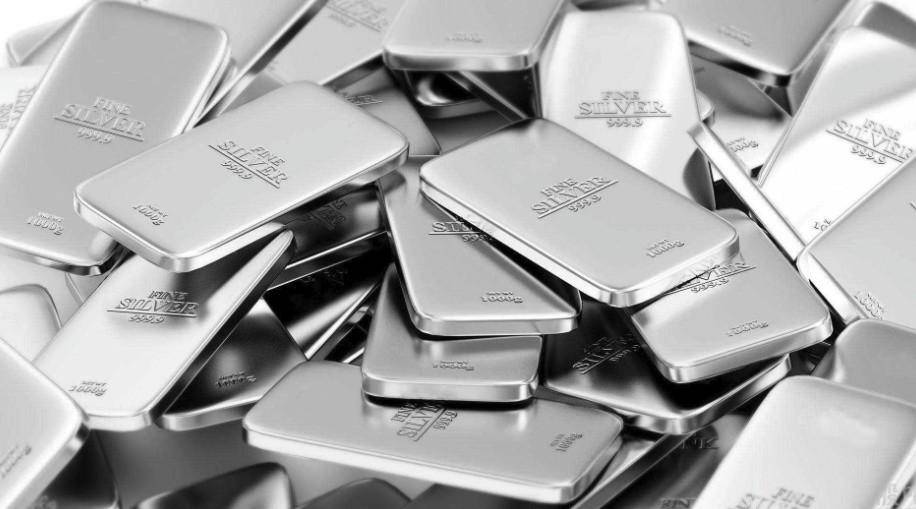
贺利氏预测:国际金价高位震荡 短期料在3150-3500美元/盎司波动
Xin Lang Cai Jing· 2025-07-24 07:12
Group 1 - The core viewpoint is that the international gold price is expected to fluctuate between $3,150 and $3,500 per ounce in the short term [1][2] - Recent gold market activity shows London gold fluctuating between $3,250 and $3,450 per ounce, influenced by U.S. tariff agreements with multiple countries [1] - The U.S. economy remains resilient with inflation and retail sales data exceeding expectations, leading to market speculation that interest rates may not decrease in July [1] Group 2 - High gold prices are suppressing physical gold consumption and investment enthusiasm, with U.S. Mint gold coin sales dropping from 64,000 ounces in January to only 7,500 ounces in May [2] - Central banks continue to purchase gold, with China's central bank increasing its reserves by 7 tons in June, which supports long-term gold prices [2] - Despite a recent decline in gold ETF inflows, global ETF holdings remain significantly below historical highs, indicating potential for renewed investment if gold prices continue to rise [2]

铂钯系列(一):品种概况与产业链
Guo Tou Qi Huo· 2025-07-23 11:56
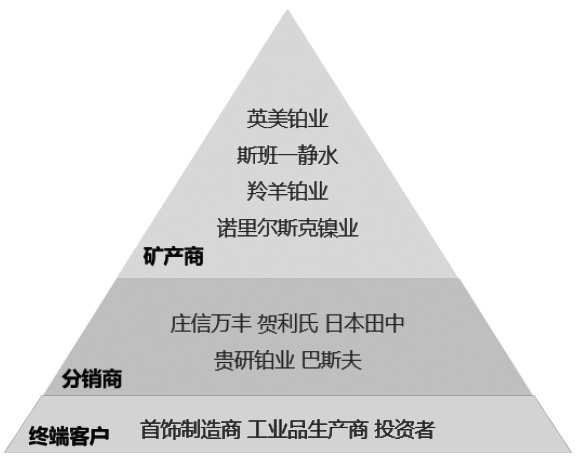
1. Report Industry Investment Rating No relevant content provided. 2. Core Viewpoints of the Report - Platinum and palladium are important members of the platinum group metals (PGMs), with high demand in practical applications. The supply chain of PGMs is in a "pyramid" shape, and the upstream mine resources are highly concentrated. The consumption of platinum and palladium is mainly in the fields of catalysts, jewelry, and other industrial applications, and there are various investment channels [1][14]. 3. Summary According to the Directory 3.1 Platinum and Palladium Variety Overview - **Natural Attributes**: Platinum and palladium are silver - white metals, belonging to PGMs and precious metals. Platinum has a crustal content of five - hundred - millionths, and palladium has a crustal content of one - hundred - millionth. Platinum is mainly used in industrial catalysts, jewelry, etc., while palladium is mainly used in the catalyst field [1][2][4]. - **Resource Distribution and Classification**: PGMs are mostly in the form of composite ores. Platinum deposits are related to ultramafic rocks and are formed through tectonic processes. PGM mines can be divided into primary and exogenous sand deposits. The main formation causes include magmatic action, magmatic hydrothermal processes, and exogenous deposition. Global PGM resources are mainly concentrated in five regions, and most of China's PGM deposits are symbiotic or associated ores [5][11]. 3.2 Platinum Group Metal Industry Chain - **Upstream**: The upstream mine resources are highly concentrated. South Africa is the main producer, accounting for nearly 80% of the global reserves. The production of platinum and palladium mines is facing bottlenecks, and the top 5 platinum producers account for 82% of the supply [21][25][26]. - **Material Supply and Recycling**: The platinum - group material industry is technology and capital - intensive. Multinational groups dominate the processing and recycling fields. In China, the recycling capacity of PGMs is expanding, but the secondary resource supply is becoming tight, and domestic enterprises face fierce competition [30]. - **Terminal Applications** - **Automotive Catalysts**: Platinum and palladium are mainly used as catalysts in automobile exhaust purification. Platinum has better performance in diesel engines, while palladium is more commonly used in gasoline engines [32][35][41]. - **Jewelry**: Platinum is suitable for high - end jewelry due to its high density, good ductility, and stability. Palladium is less used in jewelry due to its processing difficulty and color change [45]. - **Other Industrial Applications**: In the chemical, glass, electronics, medical, and hydrogen energy industries, platinum and palladium play important roles as catalysts or materials [46][47][48]. - **Investment Channels**: Platinum investment includes physical investment (platinum bars and coins), platinum accumulation plans (PAP), platinum ETFs, futures, forwards, and indirect investment through stocks [50].
比黄金更疯!白银暴涨35%创13年新高
Sou Hu Cai Jing· 2025-07-16 12:37
Group 1 - Silver prices have surged to a historical peak of $39 per ounce, marking the highest level since 2011, with a year-to-date increase of over 35% as of July 14, 2025, compared to gold's 27% increase [2][3] - Retail demand for silver products has seen a significant increase, with sales of silver bars and coins rising by 40% year-on-year, indicating a strong market interest [4] - The gold-silver ratio has rapidly corrected, dropping from over 100 in April-May to around 87, suggesting that silver was previously undervalued and has potential for further gains [4] Group 2 - The photovoltaic (PV) industry is the largest driver of silver demand, with global PV installations expected to exceed 600 GW in 2024, leading to a substantial increase in silver consumption [5] - Semiconductor and electric vehicle sectors are also contributing to silver demand, with the latter showing a 21% to 71% increase in silver usage per vehicle compared to traditional cars [5] - Global silver demand is projected at approximately 36,700 tons in 2024, while supply is only around 31,700 tons, resulting in a supply deficit of 5,000 tons, which is expected to widen in 2025 [5] Group 3 - Investment banks are divided in their outlook for silver, with some raising price forecasts while others warn of a potential end to the current bullish trend due to signs of reduced investment demand [6] - Technical analysis suggests a bullish outlook, with potential price targets of $40 and $50 if key resistance levels are broken [6] - The industrial demand for silver has risen to 70% of total demand, indicating a shift from its traditional role as a safe-haven asset to a growth asset driven by technological advancements [8] Group 4 - The Federal Reserve's monetary policy is a critical variable for silver prices, with expectations of interest rate cuts potentially boosting silver prices further [8] - The volatility of silver prices is a concern, with historical data showing that silver's volatility is about 1.5 times that of gold, necessitating risk management strategies for investors [9] - The ongoing industrial revolution in silver is reshaping the precious metals market, with increasing ETF holdings and a return to historical gold-silver ratio averages indicating a potential revaluation driven by green energy [10]

从东方盛会到全球坐标——一枚纪念章背后的产业崛起史
Qi Huo Ri Bao Wang· 2025-07-14 04:35
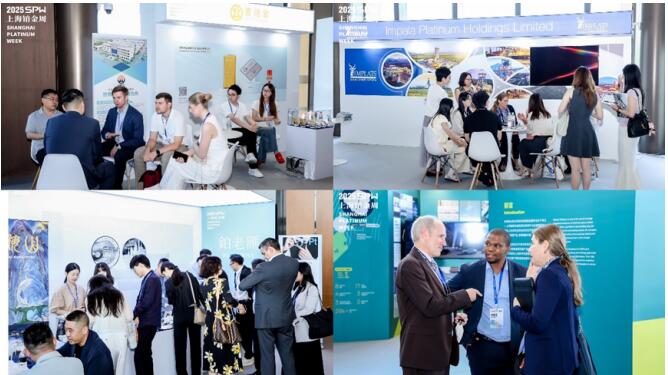
Group 1 - The Shanghai Platinum Week has evolved into a global platform for the platinum group metals industry, marking its fifth anniversary with a commemorative medal that symbolizes its achievements and growth [1][16] - The event has successfully transitioned from a regional gathering to the third global hub for platinum, attracting significant international participation and showcasing China's increasing influence in the industry [5][10] - The first Shanghai Platinum Week in 2021 attracted 780 attendees and reached 40,000 online viewers, establishing a voice for China's platinum group metals sector [3][4] Group 2 - The second Shanghai Platinum Week in 2022 utilized a hybrid model to overcome pandemic challenges, while the third event in 2023 saw participation from 37 exhibitors and 500 representatives, with over 770,000 online views [4][12] - The 2024 event highlighted China's dominance in the global platinum market, with imports accounting for 41% of global demand and significant participation from international mining and financial institutions [5][6] - The 2025 Shanghai Platinum Week is positioned to address global challenges and promote cooperation in the platinum industry, featuring multiple forums and discussions on the future of platinum applications [11][15] Group 3 - The Shanghai Platinum Week has become a platform for innovation, with discussions on the development of platinum futures and the introduction of new trading standards [7][10] - The event has facilitated strategic partnerships, such as the collaboration between China National Gold Group and the World Platinum Investment Council, aimed at enhancing resource synergy and innovation in the platinum market [15] - The growing demand for platinum in hydrogen energy and automotive sectors is expected to drive future growth, with China leading in hydrogen production and consumption [14][12]
贺利氏:央行需求料支撑黄金需求,铂金或维持强势
Xin Hua Cai Jing· 2025-07-10 05:22
Group 1: Gold Market Overview - The gold market is stabilizing with spot gold and COMEX gold prices fluctuating around $3,300 per ounce, as risk aversion sentiment decreases [1] - Heraeus Precious Metals predicts that international gold prices will fluctuate between $3,150 and $3,500 per ounce in the short term, supported by ongoing central bank gold purchases [1][2] - U.S. economic data remains resilient, with June non-farm payroll data exceeding expectations, which has weakened the Federal Reserve's rate cut expectations for July, leading to downward pressure on gold prices [1] Group 2: Central Bank Gold Purchases - Central banks continue to support gold demand, with a net increase of 20 tons of gold in May, primarily from Kazakhstan, Turkey, and Poland [2] - Despite a slight slowdown in the pace of gold purchases, market sentiment remains optimistic, with 95% of surveyed central banks expecting an increase in gold holdings [2] - The demand for gold as a hedge against geopolitical and inflation risks is rising, reflecting a structural shift in reserve management and increased diversification away from the U.S. dollar [2] Group 3: Platinum Market Dynamics - Platinum prices are maintaining strength due to demand from the jewelry sector, with prices fluctuating around $1,400 per ounce [2][3] - The platinum market is in a three-year supply-demand imbalance, with visible inventories being continuously consumed, leading to high leasing rates for platinum [3] - China's jewelry demand has significantly boosted platinum prices, with imports increasing to 12.57 tons in May, up from 11.54 tons in April, indicating strong physical demand [3]
贺利氏预测:金价高位震荡 全球经济政治不确定性依旧支撑黄金需求
Xin Lang Cai Jing· 2025-05-29 07:18
Group 1: Gold Market Insights - The global economic and geopolitical uncertainties continue to support gold demand, with short-term price expectations in the range of $3200-$3500 per ounce [2][1] - Recent fluctuations in the gold market have seen London gold prices oscillating between $3200 and $3400 per ounce, influenced by U.S. trade policies and ongoing trade negotiations between the U.S. and EU [1] - Investment demand for gold remains strong despite high prices suppressing jewelry consumption, with April's outflow from the Shanghai Gold Exchange increasing by 27 tons to 153 tons [1] Group 2: Platinum Market Insights - Short-term platinum price expectations are projected to fluctuate between $1000 and $1100 per ounce, with recent prices having risen above $1100 before a slight retreat [3][2] - The platinum market is experiencing a three-year supply-demand imbalance, with visible inventories being continuously depleted, and potential for sustained strength if the fundamentals remain supportive [2] - China's platinum market demand is expected to remain robust, with projections indicating a recovery in platinum jewelry processing by Q4 2024 and a potential 50% expansion in processing volume by Q1 2025 [2]
全球铂金市场将维持结构性短缺状态
Qi Huo Ri Bao Wang· 2025-05-21 00:30
Core Insights - The strategic value of platinum is increasingly recognized in key industrial sectors, particularly amid global energy transitions and technological revolutions [1] - Platinum is now included in the strategic reserve management systems of major economies such as the US, Japan, EU, and Russia [1] Supply Side Analysis - Global platinum supply is projected to increase by 3% in 2024, reaching 7.293 million ounces, which is below expectations [7] - Mine supply is expected to be 5.807 million ounces, also a 3% increase, primarily due to the release of inventory by mining companies [7] - Recycled supply is forecasted to decline by 1% to 1.486 million ounces, marking the lowest level since 2013 [7] - The global platinum supply chain is characterized by a pyramid structure, with a few major producers dominating the market [9] - South Africa holds approximately 90% of the world's platinum reserves, with significant contributions from Russia, Canada, and the US [10][11] - The top five platinum producers account for 83% of total supply, indicating a highly concentrated market [12] Demand Side Analysis - Total global platinum demand is expected to reach 8.288 million ounces in 2024, a 5% increase [16] - Automotive demand is projected to decline by 2% to 3.13 million ounces due to reduced production of catalyst-equipped vehicles [16][19] - Jewelry demand is anticipated to grow by 8% to 1.933 million ounces, driven by strong demand in Europe, North America, and India [16] - Industrial demand is expected to decrease by 1%, with significant declines in the chemical sector [16] - Investment demand is projected to surge by 77% to 702,000 ounces, fueled by increased interest in platinum bars and coins [16] Market Outlook - The global platinum market is expected to face a supply shortfall of 995,000 ounces in 2024, primarily driven by a significant increase in investment demand [21] - Supply is forecasted to contract by 4% in 2025, with total supply dropping to 7.002 million ounces due to reduced mining output [21] - Demand is also expected to decrease by 5% in 2025, influenced by lower ETF inflows and softening demand for platinum bars and coins [21]
如何看待高纯石英行业
2025-05-08 15:31
Summary of High Purity Quartz Industry Conference Call Industry Overview - The high purity quartz sand industry in China has matured in preparation technology, but the lack of stable and high-quality mineral sources remains a bottleneck. Recent discoveries of 4N grade and above mineral sources in multiple regions, such as Henan Dongqinling, which has reached the Youniming 4N8 standard suitable for photovoltaic applications, are promising. Other regions like Xinjiang Altai and Hunan Renli have also reported similar findings [1][4][21]. Key Developments and Trends - A significant recent development in the high purity quartz sand industry is the discovery of high-quality mineral veins in China that can meet C8 grade standards or higher. This could potentially reduce reliance on overseas mineral sources in the long term, although the transition will not be rapid. For leading companies, this could lower raw material costs and provide short-term profit benefits [2][27]. - The synthetic quartz sand market is progressing, with stable operation for 500 hours and continuous cost reduction in photovoltaic crucible applications. Although this technology has not yet reached mass production, its future potential is substantial, applicable not only in photovoltaic scenarios but also in the semiconductor field [2]. Market Supply and Demand - The high-end high purity quartz sand market heavily relies on imports, especially for C8 grade and above products, primarily supplied by American company SiO2 and Norwegian TQC. China is the largest importer globally, with an expected import of approximately 40,000 tons of high purity quartz above 3N in 2024, amounting to a trade value of $820 million, with a unit price of about $20,000 per ton [1][9]. Technological Insights - The purification technology for high purity quartz includes acid treatment and thermal treatment, with domestic companies having relatively mature refining techniques. However, the quality of stable mineral sources is crucial for ensuring product quality [3][17]. - Synthetic quartz sand has the highest purity, as natural quartz sand has a purification limit. It can replace applications in semiconductor single crystal furnace crucibles and high-end optical glass. Recent studies indicate that domestic synthetic sand has reached international standards, with pilot products showing good verification results [5][25]. Investment Recommendations - If the domestic semiconductor and photovoltaic crucible quartz sand market transitions to local sources, downstream customers will need to re-validate these new mineral sources, which may level the playing field for related companies. Leading companies with purification technology and customer resources, such as Quartz Co., Feilihua, Kede Stone, and Zhongqi New Materials, are recommended for attention. Additionally, due to the higher technical barriers and costs associated with synthetic quartz sand, companies like Kaisheng Technology should also be monitored [6][27]. Challenges and Risks - The development of high purity quartz mines faces risks such as mining difficulties and environmental issues, which may affect the pace of development. If new mineral sources are successfully verified domestically, industry competition may intensify [3][28][29]. - The supply bottleneck in domestic high purity quartz sand is primarily due to the lack of high-grade minerals. Leading companies like Quartz Co. have relied on imports to address raw material shortages, with over 93% of their raw materials sourced from countries like India and Brazil [19]. Conclusion - The recent discoveries of high-quality mineral sources in China could significantly impact the high purity quartz sand industry, potentially reducing reliance on imports and altering the competitive landscape. However, the transition will require careful validation by downstream customers and may face various challenges in mining and environmental regulations.