
中国海外发展

Search documents
东小口断供五年终“补仓”,北京昌平“10盘联动”再添置业新选择
Bei Jing Shang Bao· 2025-11-12 13:47
Core Viewpoint - The recent land supply in the Dongxiaokou area of Beijing's Changping district marks a significant change after five years of stagnation, indicating a shift in the residential land supply landscape and potential for improved housing quality in the region [1][2][3] Group 1: Land Supply and Market Dynamics - The newly supplied land in Dongxiaokou is strategically located between the 5th and 6th ring roads, near the intersection of Haidian, Chaoyang, and Changping districts, and adjacent to the under-construction Metro Line 13B [2] - The last land supply in the Dongxiaokou area occurred in 2020, with previous sales averaging around 5.8 million yuan per square meter, while recent transactions have stabilized around 5.5 million yuan per square meter [2] - The Changping district has successfully auctioned five plots of land by November 2025, matching the total supply for the entire previous year, with a total transaction value of 10.454 billion yuan [3] Group 2: Housing Market Characteristics - Currently, there are nine projects for sale in Changping, with prices ranging from approximately 3.9 million yuan per square meter for the lowest to 6.13 million yuan per square meter for the highest [3] - The price disparity between new and second-hand homes is significant, with new homes in the Beiqijia area averaging around 5.39 million yuan per square meter, while second-hand homes range from 1.8 million to 2.8 million yuan per square meter [3][5] - The demand for new homes is driven by a young, high-income demographic attracted to the area due to its proximity to major tech companies and urban amenities [4] Group 3: Product and Quality Trends - The main housing units in the Changping area are concentrated in the 75-130 square meter range, catering to both first-time buyers and those seeking improved living conditions [6][7] - New residential projects are increasingly focusing on high-quality construction standards, with many achieving a high usable area ratio of over 90%, compared to around 75% for older second-hand homes [8][9] - The introduction of "good housing" projects is enhancing the overall quality of new homes, aligning them with the standards of other major urban areas in Beijing [10]
华源晨会精粹20251112-20251112
Hua Yuan Zheng Quan· 2025-11-12 11:29
Real Estate - The real estate sector has seen a decline of 0.2% this week, with new home transactions in 42 key cities totaling 1.54 million square meters, a month-on-month decrease of 38.7% [2] - The government has launched a plan to develop smart cities, aiming to establish over 50 fully digital transformation cities by the end of 2027 [2][10] - Various local policies are being implemented, such as Shenzhen's support for converting idle non-residential properties into affordable rental housing [2][10] Transportation - The express delivery sector is experiencing strong demand, with the National Postal Bureau emphasizing the need to combat "involution" competition [14][25] - Shentong has completed the acquisition of Danbird Logistics, which is expected to enhance its market share and service capabilities [15][25] - The shipping industry is benefiting from improved Sino-US trade relations, with expectations of increased demand for Panamax bulk carriers [16] Pharmaceuticals - Haitai New Light reported a significant revenue increase of 40.47% year-on-year for the first three quarters of 2025, driven by strong demand for medical endoscopes and optical products [29][30] - The company has a backlog of orders worth approximately 300 million yuan from US clients, indicating robust market demand [30] - The gross profit margin has steadily improved, reaching 66.55%, supported by the transition of production capacity to Thailand to mitigate tariff risks [31] Technology - Audiwei has achieved a revenue growth of 12% year-on-year for the first three quarters of 2025, with plans for H-share financing to enhance overseas expansion [33][34] - The company is benefiting from the upgrade of intelligent driving systems, which is increasing demand for its ultrasonic sensors [34][35] - Parallel Technology has reported a 69% year-on-year revenue increase, driven by its collaboration with Alibaba Cloud to promote domestic computing power and AI technology [37][38]

房地产行业专题研究:景气低位分化加速,优质房企毛利率率先回升
Guolian Minsheng Securities· 2025-11-12 11:17
Investment Rating - The report maintains an investment rating of "Outperform the Market" for the real estate industry [7] Core Insights - The real estate industry is experiencing a low-level adjustment with accelerated differentiation among companies, where the overall revenue of sample companies decreased by 12.5% year-on-year, and net profit attributable to shareholders dropped by 161.6% [4][8] - The sales decline is narrowing, with top companies like Jianfa Real Estate, China Jinmao, and Yuexiu Property achieving growth against the trend [4][9] - The land market is showing a trend of quality improvement and reduced volume, with core city premium land transactions supporting a year-on-year increase in transaction value [4][9] Summary by Sections 1. Financial Performance: Weakness Continues, Differentiation Among Companies - In the first three quarters of 2025, the overall revenue of 23 sample companies decreased by 12.5% year-on-year, with state-owned enterprises showing a growth of 6.1% while private and mixed-ownership companies faced declines of 17.1% and 27.8% respectively [16] - The net profit attributable to shareholders for these companies fell by 161.6%, with state-owned enterprises experiencing a decline of 1595.6% [16][22] - The overall gross margin for the sample companies was 13.0%, a decrease of 0.3 percentage points compared to the full year of 2024, while state-owned enterprises saw a recovery in gross margin [22][40] 2. Operational Performance: Sales Under Pressure, Land Market Quality Improvement - In the first three quarters of 2025, the cumulative sales amount of commercial housing nationwide decreased by 7.9% year-on-year, with a decline in sales area of 5.5% [9][43] - The top 100 real estate companies reported a cumulative sales amount of 24,948 billion, down 12.8% year-on-year, with the top 10 companies showing a decline of 11.7% [49][52] - The land market is characterized by a reduction in supply and an increase in transaction value, with the cumulative transaction amount reaching 13,304 billion, up 11.9% year-on-year [54][57] 3. Financing Environment: Marginal Improvement, State-Owned Enterprises at an Advantage - The bond issuance scale for real estate companies has stopped declining, with a year-on-year increase of 3.9% in the first three quarters of 2025 [10] - The average bond issuance interest rate has decreased from 5.5% in 2021 to 2.8% in the first half of 2025, indicating a recovery in market confidence [10][57] - The liquidity pressure remains, with significant differences in the financial health of various companies [10][57] 4. Investment Recommendations: Focus on Leading Companies in Core Areas - The report recommends focusing on leading companies that continue to acquire land in core areas of first-tier and strong second-tier cities, such as Greentown China, Jianfa International Group, and China Overseas Development [11][57] - Attention should also be given to companies with potential turnaround opportunities and those with core competitive advantages in the real estate intermediary sector [11]





ESG引领:协同共进
Sou Hu Cai Jing· 2025-11-12 06:14
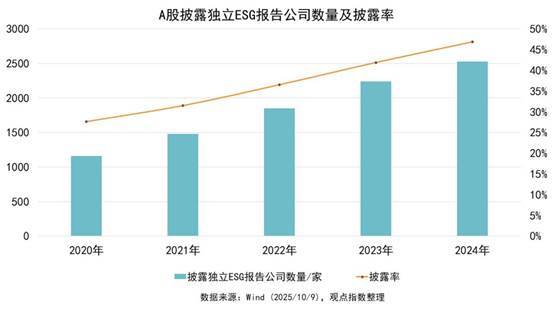
Core Insights - The Chinese economy is in a period of adjustment, with commercial real estate undergoing deep adjustments while retail consumption shows limited signs of recovery. Investment confidence and development motivation among enterprises remain insufficient, although some companies have resumed investment activities since late October [1] - Companies are actively expanding financing channels, particularly accelerating the implementation of public REITs for consumer infrastructure, while also deepening digital transformation and exploring diversified operations to enhance operational quality and consumer experience [1] - The "Performance Index • 2025 Annual Commercial Real Estate Performance Report" was released to provide practical references for market participants, helping the industry seek certain development paths amid uncertainties [1] ESG Practices - The ESG framework has emerged as a comprehensive assessment tool for investors, promoting corporate actions in environmental protection, social responsibility, and governance, thereby enhancing sustainable development levels [2] - Commercial real estate companies are increasingly engaging in ESG practices, contributing to job creation and resource efficiency through green buildings and energy-saving measures [2] - The industry faces challenges such as resource limitations for small and medium-sized enterprises in ESG practices and high thresholds for green finance [2][4] Policy and Regulatory Developments - Recent policies focus on information disclosure, green finance, corporate governance, and industry standards to promote the "dual carbon" strategy [4] - The Ministry of Finance and the Ministry of Ecology and Environment issued a draft for the "Corporate Sustainable Disclosure Standards No. 1 - Climate (Trial) (Draft for Comments)" to enhance climate-related information disclosure [5] - By 2027, a unified sustainable disclosure standard system is expected to be established in China, with local governments actively promoting green economic development [5][6] ESG Reporting Trends - The number of A-share companies disclosing independent ESG reports has increased, with a disclosure rate of 46.83% for the 2024 fiscal year, up from 41.86% in 2023 [7] - The real estate sector maintains a high disclosure rate of approximately 62.63%, although smaller firms still have significant room for improvement in ESG report quality [9] Energy Efficiency and Green Leasing - Energy efficiency improvements are crucial for commercial real estate, reducing operational costs and attracting quality tenants while aligning with environmental trends [16] - Companies are implementing various energy-saving measures, including smart energy management systems and green leasing practices, to share costs and benefits with tenants [20][21] - The demand for green leases is increasing, driven by tenant interest in sustainability and shared economic benefits [20] Green Building and Financial Trends - Green buildings enhance long-term asset returns, with studies indicating that certified buildings can command higher rents and lower operational costs [24][25] - The financing environment for the real estate sector remains tight, with green financing primarily accessible to leading state-owned and Hong Kong enterprises [29][31] Social Responsibility and Community Engagement - Companies are increasingly focusing on employee rights, community service, and supply chain management to enhance their social image and contribute to sustainable development [32] - Initiatives include employee welfare programs and community engagement projects, with significant financial contributions to social causes [32][35] Governance and Risk Management - Strong governance structures are essential for sustainable development, ensuring transparency and effective risk management [38][39] - Companies are establishing comprehensive risk management policies and committees to address environmental, social, and governance risks [40]

供应“腰斩”的金九银十,北方这个城市竟逆势增长22%
3 6 Ke· 2025-11-12 02:18
Core Insights - The real estate market is experiencing a significant supply reduction, with a nearly 50% decrease in supply in October compared to September, yet transactions have slightly increased by 2% [1][5][4] - Demand remains present in specific cities, with notable transaction growth in cities like Guangzhou, Chengdu, and Xiamen, where new home sales have increased by over 10% month-on-month [1][8][11] - The market is undergoing a structural adjustment, focusing on inventory reduction and the acquisition of idle land, rather than returning to previous peak levels [2][3] Market Overview - The overall market is in a "shrinking" phase, having experienced nearly four years of scale contraction since 2022, with no expectation of returning to the peak levels of 2020-2021 [2][4] - The average annual new housing demand in China is estimated to be around 880 million square meters [2] - The supply in 30 key cities in October was 5.22 million square meters, marking the second-lowest level of the year [4] City-Specific Performance - In October, 20 out of 30 key cities saw an increase in residential transaction volume, with 12 cities experiencing growth of over 10% [8][9] - Cities like Dongguan and Huizhou reported transaction increases exceeding 50%, attributed to low previous bases and concentrated project registrations [8][11] - Continuous month-on-month growth was observed in cities such as Guangzhou, Xiamen, and Xi'an, with Xi'an maintaining a high transaction volume above 500,000 square meters [9][12] Demand Dynamics - The cities with sustained transaction growth generally have a high absorption rate, with cities like Chengdu and Xi'an showing rates above 30% [11][12] - In Xi'an, the demand is driven by affordable housing products, while high-end products are experiencing a focus effect [12][16] - The market is shifting towards a model of "sales determine production," indicating a need for high-quality offerings in both affordable and luxury segments [16]

房地产行业周报(25/11/1-25/11/7):五部门推智慧城市计划,新房及二手房成交走弱-20251111
Hua Yuan Zheng Quan· 2025-11-11 15:39
Investment Rating - The investment rating for the real estate industry is "Positive" (maintained) [3][4] Core Viewpoints - The report emphasizes that real estate is a crucial asset allocation and investment direction for Chinese households, and stabilizing housing prices is significant for facilitating economic circulation. The policy environment is expected to strengthen further, promoting high-quality development in the real estate sector. There is an anticipated wave of development for high-quality residential properties due to policy guidance and changes in supply-demand structure [4][48]. Market Performance - The Shanghai Composite Index rose by 1.1%, while the real estate sector (Shenwan) declined by 0.2% during the week [4][7]. - In the new housing market, 154 million square meters were sold across 42 key cities from November 1 to November 7, representing a 38.7% decrease from the previous week and a 46.7% year-on-year decline [4][13]. - The second-hand housing market saw 191 million square meters sold in 21 key cities during the same period, reflecting a 7.6% decrease week-on-week and a 26.7% year-on-year decline [4][28]. Data Tracking - For new housing, the cumulative sales in November (up to the week of November 7) were 154 million square meters, showing a 195.2% increase month-on-month but a 46.7% decrease year-on-year [4][17]. - In the second-hand housing market, cumulative sales for November reached 191 million square meters, indicating an 895.9% increase month-on-month but a 26.7% decrease year-on-year [4][31]. Industry News - The National Development and Reform Commission and other departments issued a plan to promote the development of smart cities, aiming to establish over 50 fully digital transformation cities by the end of 2027 [4][45]. - Shenzhen is supporting the conversion of idle non-residential properties into affordable rental housing, while Hunan's Pingjiang County is implementing a comprehensive approach to selling existing homes [4][45]. Company Announcements - In October, major real estate companies reported significant declines in sales, with China Overseas Development at 186.6 billion (down 55.1% year-on-year) and Poly Development at 211.2 billion (down 50.1% year-on-year) [4][48].



地产承压下的韧性之光:从房企三季报透视行业冷暖
Cai Jing Wang· 2025-11-11 08:57
Core Insights - The real estate industry is currently in a "bottoming" phase, with profitability under pressure being a common challenge across the sector [1] - As of the first three quarters of 2025, over 50% of the 77 A-share listed real estate companies reported losses, highlighting the widespread impact of the industry's downturn [1][2] - Despite the overall industry challenges, leading companies like China Merchants Shekou and Poly Developments have demonstrated resilience through strong cash flow and diversified business strategies [2][4] Sales Performance - From January to October 2025, the top 100 real estate companies recorded sales of 28,967.1 billion yuan, a year-on-year decline of 16.3% [2] - The average sales for the top 10 companies decreased by 15.0%, while the average for companies ranked 11-30 fell by 17.8% [2] - The overall revenue and profit scale of the industry have contracted due to sluggish market transactions [2][3] Financial Health - In the first three quarters of 2025, 41 A-share listed real estate companies incurred losses totaling 872 billion yuan, with an industry gross margin of 14.22% and a net margin of -5.57% [2] - Leading firms like Poly Developments reported a net cash inflow from operating activities of 69.77 billion yuan, with cash reserves exceeding 1200 billion yuan, indicating strong financial health [4] Land Acquisition Strategies - Resilient companies are adopting disciplined land acquisition strategies, focusing on optimizing existing land reserves rather than blind expansion [5][6] - As of September 27, 2025, over 4600 parcels of idle land are set to be acquired through special bonds, covering more than 2.4 million square meters and totaling over 620 billion yuan [5] - The trend of cautious land investment is evident, with a significant increase in land transaction amounts in first-tier cities, which accounted for 32.6% of total transactions [7] Quality and Product Strategy - The concept of "good housing" has gained traction, with companies focusing on enhancing product quality to meet rising consumer expectations [8][9] - Leading firms are implementing comprehensive quality management systems and strategies to ensure product safety, comfort, and sustainability [9][10] - Poly Developments has established a four-tier, eight-dimensional quality management system to enhance product and service quality based on extensive customer research [10]
中国的新兴前沿-C-REITs:开启未来十年的投资新篇章
2025-11-11 02:47
Summary of C-REITs Conference Call Industry Overview - The Chinese real estate industry is transitioning from new residential construction to rental asset operations, coinciding with the development of the REIT market, which may reshape the competitive landscape for developers and redefine long-term investment logic in the sector [1][3][11]. Key Points Importance of Current Developments - Since Q3 2025, favorable policies have accelerated the issuance of domestic REITs (C-REITs), expanding the range of assets and issuing entities. C-REITs are expected to become a significant asset class over the next 10 to 20 years, with a market potential of approximately $1 trillion, which is over 30 times the current size [3][9]. - The limited trading volume of C-REITs suggests that listed developers are a good entry point into this rapidly expanding theme due to their large rental asset portfolios and low participation in REIT issuance [3][9]. Beneficiaries - In-depth analysis indicates that China Resources Land (1109.HK) has the highest short-term benefit potential, followed by Seazen Holdings (601155.SS) and Longfor Group (0960.HK), due to their substantial shopping center portfolios and high pledge ratios. Other companies like China Overseas Land & Investment (0688.HK), China Merchants Shekou (001979.SZ), Vanke (2202.HK), Poly Developments (600048.SS), and Gemdale (600383.SS) also have significant non-retail rental assets that could benefit in the medium term as REIT coverage expands [4][9]. Signals to Watch - The normalization of REIT issuance, especially with private developers' participation, the expansion of covered commercial asset types, and increased flexibility in capital recycling will strengthen confidence in the mid-term investment logic [4][9]. Regulatory Framework and Market Development - C-REITs have a more stringent regulatory framework compared to mature markets like the US and Japan, including requirements on structure, holding ratios, leverage levels, and initial yield [15][19]. - The development of C-REITs has progressed through four phases over the past 25 years, with significant milestones including the first public REITs listed in 2021 and the expansion of eligible asset types [11][12]. Market Size and Performance - As of September 2025, there are 75 publicly listed C-REITs with a total issuance size of approximately RMB 200 billion and a market capitalization of about RMB 220 billion. Despite significant growth since the first listings, C-REITs currently represent only 0.15% of the total market capitalization of China's stock market [20][29]. - The average trading yield of C-REITs has compressed to 4.4%, reflecting a price increase of about 10% since IPOs, with specific sectors like water facilities and new infrastructure seeing substantial price increases [21][40]. Long-term Potential - The potential market size for C-REITs could reach between $800 billion to $1 trillion, which is 28 to 33 times the current market size, driven by the growth of commercial REITs and the completion of new properties [41][43]. - The estimated total value of commercial properties completed since 2000 is approximately $4.9 trillion, indicating a significant opportunity for C-REITs to capture a larger market share in the future [41][42]. Conclusion - The C-REIT market in China is poised for significant growth, driven by favorable policies, a shift in investment focus, and the potential for substantial market capitalization increases over the next decade. Developers with large rental portfolios are well-positioned to benefit from this emerging asset class [3][4][9].

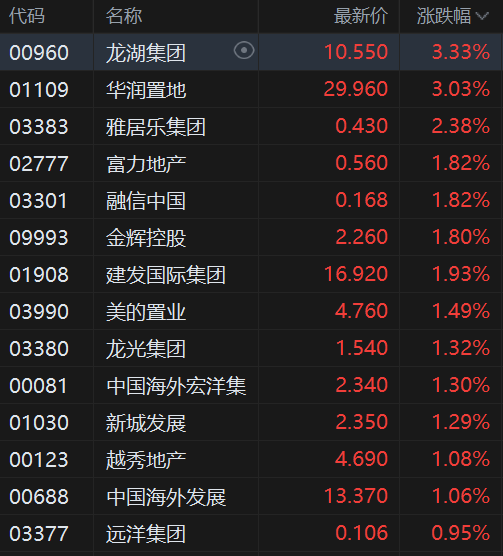
港股异动丨内房股普涨 龙湖集团涨3.33%,华润置地涨3% 10月行业债券融资同比大增76.9%
Ge Long Hui· 2025-11-11 02:13
Group 1 - Hong Kong real estate stocks experienced a general rise, with Longfor Group up 3.33%, China Resources Land up 3%, and Agile Group up 3.4% [1] - Other notable increases include R&F Properties, Jin Hui Holdings, Ronshine China, and Jianfa International Group, each rising approximately 2%, while Midea Real Estate, Longguang Group, New City Development, and China Overseas Macro Holdings rose over 1% [1] Group 2 - The China Index Academy recently released the October financing report, indicating that the total bond financing in the real estate sector for October 2025 reached 51.24 billion yuan, a year-on-year increase of 76.9% [1] - The issuance of credit bonds in October also saw a year-on-year increase, primarily from state-owned enterprises, with real estate credit bond financing amounting to 32.7 billion yuan, up 50.7% year-on-year, accounting for 63.8% of the total [1] Group 3 - CITIC Securities suggests that 2026 may be a critical year for real estate companies to enter a balance sheet repair phase, with some firms potentially reaching the bottom of a long-term profit cycle [1] - Companies that manage to recover first are likely those with well-positioned assets in good cities, operational investment properties, or financial assets with appreciation potential [1]

大摩闭门会:东稳西荡再现
2025-11-11 01:01
Summary of Key Points from the Conference Call Industry Focus - The conference primarily discusses the macroeconomic environment, focusing on the U.S.-China relations, the impact of AI technology investments, and the real estate market in China. Core Insights and Arguments U.S.-China Relations - The current U.S.-China relationship is characterized as a tactical ceasefire, with both countries needing each other for technology and supply chains, making a complete decoupling unlikely [doc id='25'][doc id='26'] - The recent agreement between the U.S. and China has delayed the implementation of certain export controls and tariffs, indicating a temporary stabilization in trade relations [doc id='26'][doc id='31'] - China controls over 85% of global rare earth supply and is unlikely to relinquish this advantage, which is a strategic asset in the ongoing tech competition with the U.S. [doc id='29'] Economic and Market Dynamics - The U.S. market is experiencing increased volatility due to uncertainties surrounding government shutdowns and the legality of tariffs, while the Chinese market remains relatively stable [doc id='2'][doc id='10'] - AI technology is seen as a double-edged sword, with potential for significant profit increases (estimated at $900 billion for S&P 500 companies) but also concerns about a possible investment bubble [doc id='12'][doc id='18'] - The impact of AI on employment is significant, with 90% of jobs potentially affected, particularly in sectors with high automation potential [doc id='15'] Real Estate Market in China - The real estate market is showing signs of weakness, with a reported over 40% decline in sales area and sales amount for major developers in October compared to the previous year [doc id='56'] - Consumer confidence in housing prices is declining, especially in first-tier cities, where 67% of residents expect further price drops [doc id='58'] - The anticipated recovery in the real estate market may be delayed until the high base effects from previous years are overcome [doc id='58'] Other Important Insights - The AI investment landscape is currently viewed as a capital expenditure concept, with tangible productivity improvements expected to materialize gradually, possibly by 2027 [doc id='17'] - The potential for a new normal in U.S.-China relations suggests ongoing negotiations and tactical adjustments rather than a return to previous levels of cooperation [doc id='30'] - The overall sentiment among global investors is cautiously optimistic about China's market, with a focus on high-quality stocks and stable earnings as key investment strategies [doc id='50'][doc id='54']