北方稀土

Search documents
从“跟随”到“有为” 内蒙古A股上市公司总市值破万亿元
Shang Hai Zheng Quan Bao· 2026-01-14 17:51
Group 1: Capital Market Development - Inner Mongolia has achieved continuous IPOs for five consecutive years, with 12 new companies listed, and the total market capitalization of A-shares surpassing 1 trillion yuan [1][7] - The region has established a multi-level market system, enhancing direct financing and supporting the growth of strategic emerging industries [1][7] - The "Tianjun Plan" has been implemented to assist companies in listing, integrating high-quality services and financial resources to boost economic development [6][7] Group 2: Industry Highlights - Inner Mongolia is a significant player in the dairy industry, with leading companies like Yili and Mengniu driving green development and digital transformation [1][2] - The region's unique ecological initiatives have led to the creation of the world's largest organic milk source base, showcasing the integration of ecology and industry [1][2] - The rare earth industry is a cornerstone of Inner Mongolia's economy, with companies like Northern Rare Earth leading in production and market value [3][4] Group 3: Financial Performance - Inner Mongolia's listed companies have seen significant capital operations, with major asset restructurings and a total of approximately 23.77 billion yuan raised through refinancing [8] - Cash dividends from 28 companies reached 93.03 billion yuan, doubling the amount from the previous five-year period, indicating a strong commitment to shareholder returns [8] - The region has maintained a zero-default record on public market bonds for five consecutive years, reinforcing its creditworthiness [9]




北方稀土:截至1月10日股东总数为667157户
Zheng Quan Ri Bao Wang· 2026-01-14 12:40
证券日报网讯1月14日,北方稀土(600111)在互动平台回答投资者提问时表示,截至1月10日公司的股 东总数为667157户。 ...
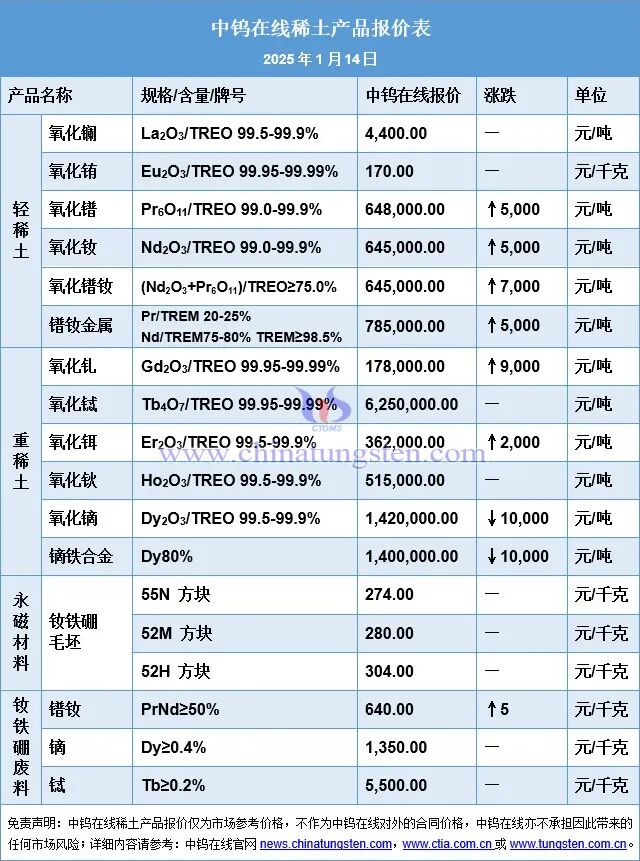
镨钕价格持续上涨
Xin Lang Cai Jing· 2026-01-14 06:06
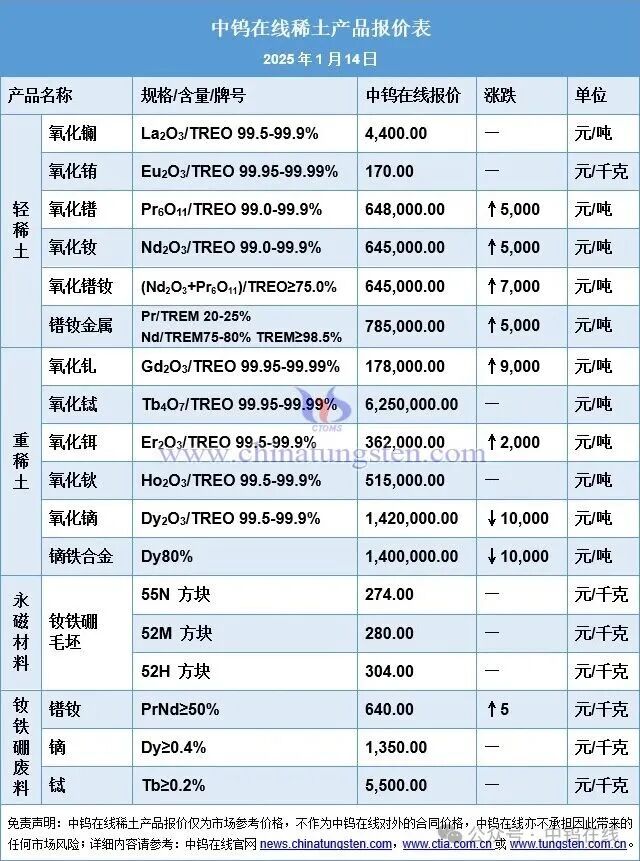
Group 1 - The overall rare earth market in China is maintaining a strong performance, with most product prices experiencing varying degrees of increase, particularly for praseodymium-neodymium oxide, praseodymium-neodymium metal, and gadolinium oxide, which rose by approximately 7,000 yuan/ton, 5,000 yuan/ton, and 9,000 yuan/ton respectively [5][6][7] - In the light rare earth market, suppliers have generally raised their quotes due to tightening spot supply and rising trading prices of rare earth concentrates in northern regions, although the increase in quotes has narrowed, prompting traders to remain cautious [2][6] - The medium and heavy rare earth market shows a mixed trend, with dysprosium and terbium prices remaining weak due to low downstream demand and limited supportive factors, while prices for gadolinium and holmium have increased due to the rise in praseodymium-neodymium prices [3][7] Group 2 - Data from the National Bureau of Statistics indicates that in December 2025, the year-on-year decline in the industrial producer price index was 1.9%, a decrease of 0.3 percentage points compared to the previous month, while the month-on-month increase was 0.2%, an increase of 0.1 percentage points from the previous month [3][7] - For the entire year of 2025, the industrial producer price index decreased by 2.6%, and the purchasing price index decreased by 3.0% [3][7]

诡异信号:美元美股黄金比特币齐涨,如此反常意味着什么?
Sou Hu Cai Jing· 2026-01-14 04:47
Group 1 - The recent financial market performance has defied traditional expectations, with the US dollar index, stock market, gold prices, and Bitcoin all rising simultaneously, indicating a structural change in the US debt market rather than just surface-level data [1][3] - The concept of "internalization" of US debt is highlighted, where the demand for US debt has shifted from foreign buyers to domestic players, leading to a disconnect in the global dollar circulation system [3][4] - This internalization has resulted in a paradox where the US experiences a surplus of dollars, driving up asset prices domestically, while the global market faces a dollar shortage, leading to liquidity crises [3][4] Group 2 - The article suggests that traditional commodities like silver and copper may not sustain price increases due to the changing economic environment, particularly for major exporters like China [4][6] - It emphasizes the importance of focusing on strategic assets and core capabilities rather than hoarding ordinary commodities, with gold and oil being prioritized for their monetary and processing value [6][7] - The need for China to enhance its capabilities in high-end chips and rare earth products is underscored, as these sectors are critical for long-term strategic value and competitiveness in the global market [6][9]
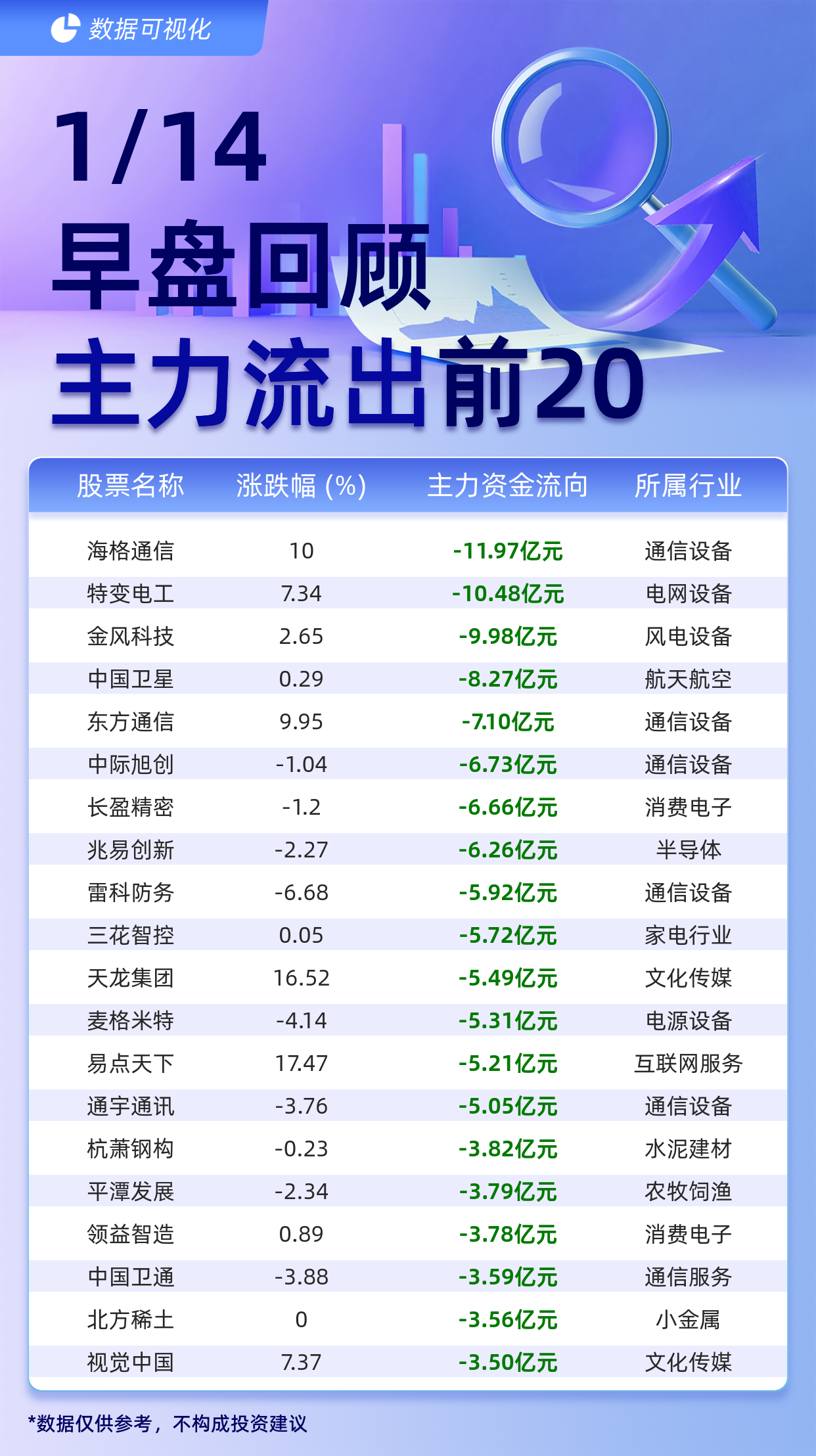
主力个股资金流出前20:海格通信流出11.97亿元、特变电工流出10.48亿元
Jin Rong Jie· 2026-01-14 04:03
Group 1 - The main stocks with significant capital outflows include Haige Communication (-1.197 billion), TBEA (-1.048 billion), and Goldwind Technology (-0.998 billion) [1][2] - Haige Communication experienced a price increase of 10%, while TBEA and Goldwind Technology saw increases of 7.34% and 2.65% respectively [2][3] - Other notable stocks with capital outflows include China Satellite (-0.827 billion), Oriental Communication (-0.710 billion), and Zhongji Xuchuang (-0.673 billion) [1][2] Group 2 - The sectors represented by the stocks with the largest capital outflows include communication equipment, power grid equipment, and wind power equipment [2][3] - Stocks like Tianlong Group and Yidian Tianxia saw significant price increases of 16.52% and 17.47% respectively, despite experiencing capital outflows of -0.549 billion and -0.521 billion [2][3] - The data indicates a mixed performance across various sectors, with some stocks showing positive price movements while still facing substantial capital outflows [1][2]



稀土价格|镨钕价格持续上涨
Xin Lang Cai Jing· 2026-01-14 03:58
Core Viewpoint - The rare earth market is experiencing a strong performance with most product prices showing varying degrees of increase, particularly in praseodymium-neodymium oxide, praseodymium-neodymium metal, and gadolinium oxide, which have risen by approximately 7,000 yuan/ton, 5,000 yuan/ton, and 9,000 yuan/ton respectively [5][6]. Group 1: Light Rare Earth Market - The light rare earth market is seeing price increases due to tightening supply and rising trading prices for rare earth concentrates in northern regions, although the extent of price hikes has narrowed, prompting cautious operations among traders [2][6]. Group 2: Medium and Heavy Rare Earth Market - The medium and heavy rare earth market is showing a mixed trend with prices fluctuating; dysprosium and terbium prices are weak due to low downstream demand and limited supportive factors, while prices for gadolinium and holmium have increased due to rising praseodymium-neodymium prices [3][7]. Group 3: Industrial Producer Prices - According to the National Bureau of Statistics, in December 2025, the national industrial producer price index decreased by 1.9% year-on-year, with a narrowing decline compared to the previous month, while the month-on-month increase was 0.2%, showing an expanded growth rate [7].
2025年1-11月中国十种有色金属产量为7447.4万吨 累计增长3.8%
Chan Ye Xin Xi Wang· 2026-01-14 03:35
Core Viewpoint - The report highlights the growth in China's non-ferrous metal production, indicating a positive trend in the industry with a year-on-year increase in output and a favorable investment outlook for the sector [1]. Group 1: Industry Overview - In November 2025, China's production of ten non-ferrous metals reached 6.99 million tons, reflecting a year-on-year growth of 4.7% [1]. - From January to November 2025, the cumulative production of these metals totaled 74.474 million tons, showing an overall increase of 3.8% compared to the previous year [1]. Group 2: Companies Involved - The report mentions several key companies in the non-ferrous metal sector, including Zijin Mining (601899), Luoyang Molybdenum (603993), China Aluminum (601600), Northern Rare Earth (600111), Jiangxi Copper (600362), Yunnan Copper (000878), Chihong Zn & Ge (600497), Zhongjin Gold (600489), Western Mining (601168), and Shenghe Resources (600392) [1]. Group 3: Research and Consulting - The report is published by Zhiyan Consulting, a leading industry consulting firm in China, which specializes in providing in-depth industry research reports, business plans, feasibility studies, and customized services [1].





2025年1-11月内蒙古自治区工业企业有4346个,同比增长6.39%
Chan Ye Xin Xi Wang· 2026-01-14 03:29
上市公司:兴业银锡(000426),电投能源(002128),银泰黄金(000975),北方稀土(600111), 赤峰黄金(600988),伊利股份(600887),骑士乳业(832786),大唐药业(836433),北方股份 (600262),内蒙华电(600863) 相关报告:智研咨询发布的《2026-2032年中国工业云行业市场深度评估及投资机会预测报告》 2016-2025年1-11月内蒙古自治区工业企业数统计图 数据来源:国家统计局,智研咨询整理 知前沿,问智研。智研咨询是中国一流产业咨询机构,十数年持续深耕产业研究领域,提供深度产业研 究报告、商业计划书、可行性研究报告及定制服务等一站式产业咨询服务。专业的角度、品质化的服 务、敏锐的市场洞察力,专注于提供完善的产业解决方案,为您的投资决策赋能。 2025年1-11月,内蒙古自治区工业企业数(以下数据涉及的工业企业,均为规模以上工业企业,从2011 年起,规模以上工业企业起点标准由原来的年主营业务收入500万元提高到年主营业务收入2000万元) 为4346个,和上年同期相比,增加了261个,同比增长6.39%,占全国的比重为0.83%。 ...

稀土产品价格分化上涨,稀土ETF嘉实(516150)一键布局稀土产业链机遇
Xin Lang Cai Jing· 2026-01-14 02:56
Group 1 - The core viewpoint of the news highlights a significant increase in rare earth product prices, with the China Rare Earth Industry Index rising by 1.07% on January 14, 2026, driven by strong performances from key stocks such as Antai Technology and Xiamen Tungsten [1] - The average price of praseodymium and neodymium oxide increased by 11,200 yuan per ton to 636,100 yuan per ton, while the average price of praseodymium and neodymium metal rose by 11,700 yuan per ton to 772,400 yuan per ton [1] - The strategic importance of tungsten and rare earths in high-end manufacturing, new energy, and defense technology is emphasized, with China's management of mining quotas and export controls underscoring their value [1] Group 2 - As of December 31, 2025, the top ten weighted stocks in the China Rare Earth Industry Index accounted for 60.4% of the index, including Northern Rare Earth, Goldwind Technology, and Xiamen Tungsten [2] - The Jiashi Rare Earth ETF (516150) closely tracks the China Rare Earth Industry Index, providing a convenient tool for investors to access the domestic rare earth industry chain [2] - The formation of a MACD golden cross signal indicates a positive trend for these stocks, suggesting potential investment opportunities [2]
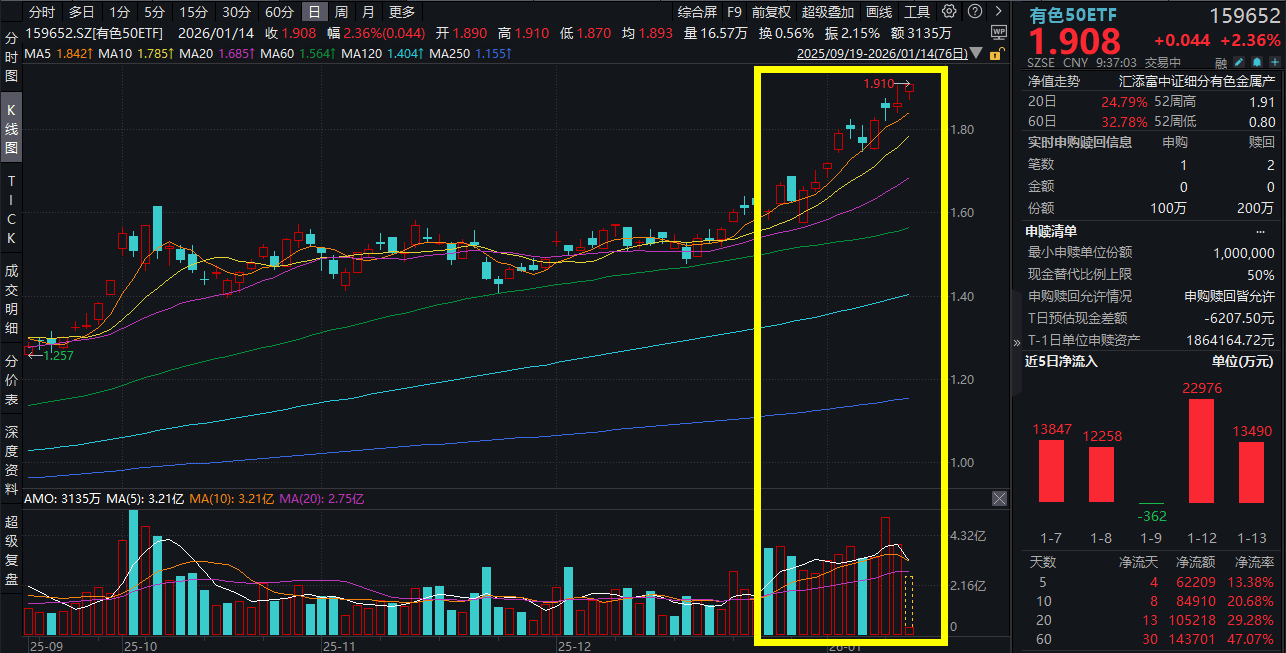
金银铜锡集体飙涨!兴业银锡涨超6%,有色50ETF(159652)大涨超2%再创新高!有色全面开花,三大金属热火朝天
Sou Hu Cai Jing· 2026-01-14 02:45
Core Viewpoint - The A-share market is experiencing a strong upward trend, particularly in the non-ferrous metals sector, with significant price increases in various metals and ETFs [1][3]. Non-Ferrous Metals Sector Performance - The non-ferrous metals sector is benefiting from multiple catalysts, including macroeconomic disturbances, rigid supply, and new demand dynamics [3]. - The non-ferrous 50 ETF (159652) has seen a price increase of over 2%, reaching new highs [1][5]. - Key stocks in the sector include Zijin Mining, which rose by 2.69%, and Yunnan Tin, which surged by 6.29% [2][5]. Precious Metals Insights - Gold prices are supported by geopolitical tensions and weak employment data, with forecasts suggesting potential for gold to exceed $4,500 per ounce [3]. - The World Gold Council reported a net purchase of 45 tons of gold by central banks in November, indicating strong demand [3]. Industrial Metals Dynamics - Copper prices are expected to continue rising due to supply constraints and regional mismatches, with a projected total market shortfall of over 100,000 tons by 2026 [6]. - The ongoing geopolitical risks and supply security concerns are driving copper prices to new historical highs [6]. Lithium Market Outlook - Policy changes are anticipated to lead to a short-term surge in lithium exports, positively impacting lithium carbonate prices [4][6]. - The demand for lithium remains robust, with expectations of continued strong performance in the battery sector [4]. Investment Strategy - The non-ferrous 50 ETF (159652) is highlighted as a comprehensive investment vehicle covering various metal sectors, with a high concentration of strategic assets [7][9]. - The ETF's copper content is 34%, and gold content is 12%, making it a leading option in its category [9]. Performance Metrics - The non-ferrous 50 ETF has shown a cumulative return of 99.61% since 2022, driven by earnings rather than valuation increases, with a current PE ratio of 26.27, down 52% from five years ago [11].