东风汽车

Search documents
东风汽车“天元智能”出炉:中国汽车智能化迎来新赛点
Jing Ji Guan Cha Wang· 2025-05-01 05:57
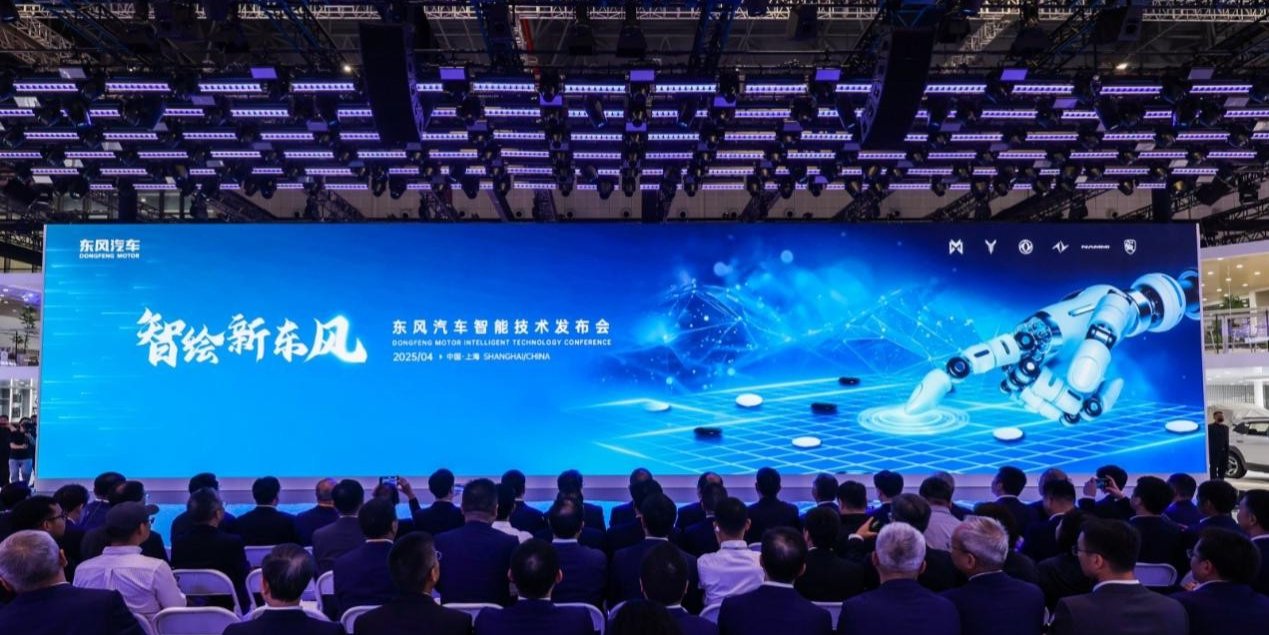
Core Viewpoint - Dongfeng Motor has launched the "Tianyuan Intelligent" technology brand, emphasizing its confidence in technology and its commitment to smart automotive solutions in the AI era [2][3][14] Group 1: Technology and Innovation - The "Tianyuan Intelligent" brand encompasses a comprehensive technology system, including smart cockpits, driver assistance systems, and AI assistants, distinguishing it from fragmented technologies of other automakers [2][4] - Dongfeng has made significant advancements in automotive intelligence over the past decade, transitioning through various technological eras, which has laid the groundwork for the "Tianyuan Intelligent" brand [2][11] - The core of the "Tianyuan Intelligent" system is based on an enterprise-level Taiji model, which supports a dual foundation of electronic architecture and an open-source operating system [4][5] Group 2: Business Model and Ecosystem - The "Tianyuan Intelligent" brand not only serves Dongfeng but also provides a collaborative ecosystem for various partners, fostering a business model with incubation capabilities [2][5] - Dongfeng's approach combines self-research and co-creation, allowing for rapid reuse of platform technologies while promoting personalized technology applications [6][9] - The open-source nature of the Tianyuan OS enables innovation and technology sharing among car manufacturers, developers, and partners, facilitating the transformation of ideas into commercial projects [6][9] Group 3: Safety and Integration - Dongfeng emphasizes the importance of integrating software and hardware to ensure the safety and practicality of intelligent vehicles, particularly in driver assistance systems [7][9] - The Tianyuan Intelligent brand includes a comprehensive safety framework, meeting new national standards for battery safety and achieving high safety ratings for its vehicles [9][10] - The enterprise-level Taiji model enhances operational efficiency across various business functions, integrating data across the entire value chain [10][11] Group 4: Market Position and Future Outlook - The launch of the "Tianyuan Intelligent" brand positions Dongfeng to capture emerging opportunities in the evolving automotive landscape, where vehicles are becoming more than just transportation tools [11][14] - Dongfeng aims to leverage its technological advancements to enhance its competitive edge in the smart automotive sector, potentially improving its market performance and valuation [14]


曝日产汽车武汉工厂将停产 产能利用率严重不足
Xi Niu Cai Jing· 2025-05-01 02:19
Group 1 - Nissan plans to shut down its vehicle production operations at the Wuhan plant by the end of the fiscal year 2025, which ends on March 31, 2026 [2] - The Wuhan plant, which began operations in 2022, has an annual production capacity of approximately 300,000 units and primarily produces the electric vehicle Ariya and the SUV X-Trail [2] - Nissan's sales in China have been declining, with a 12.2% year-on-year drop in 2024, marking six consecutive years of decline [2] Group 2 - The utilization rate of Nissan's production capacity in China was only 42.1% in 2023, with the actual production at the Wuhan plant being just 11,200 units, resulting in a utilization rate of less than 3.7% [2] - This is not the first adjustment Nissan has made to its production layout in China, as it previously closed the production operations at the Changzhou plant in June of the previous year [3] - If the Wuhan plant successfully ceases operations, Nissan's production bases in China will be reduced from six to four [3]

日产汽车新能源战略“深改” 以“中国速度”向全球迸发
Zhong Guo Jing Ying Bao· 2025-04-30 19:26
Core Insights - The article highlights Nissan's strategic shift in response to the rapid transformation of the automotive industry in China, emphasizing the importance of local market adaptation and innovation [1][2][3] Group 1: Strategic Initiatives - Nissan plans to launch 10 new energy models in the Chinese market by the summer of 2027, increasing from an initial target of 8 models [3] - The company has shortened its product development cycle to 24 months, allowing for quicker market responses and product launches [2] - Nissan aims to invest over 10 billion RMB by the end of 2026 to develop new products and expand its technical center to accommodate 4,000 employees [3] Group 2: Local Development and Market Adaptation - Nissan has empowered its local R&D teams to lead vehicle development, breaking away from traditional joint venture models that relied heavily on overseas headquarters [2] - The local teams are now capable of integrating consumer demands, such as advanced interactive experiences and safety features, into product designs [2] - The company recognizes the unique characteristics of the Chinese market, which is marked by rapid changes and high consumer expectations [2] Group 3: Competitive Positioning - Nissan is not positioning itself as a niche brand but aims to cover all market segments, focusing on compact cars and SUVs while expanding into high-end and new energy markets [5] - The company emphasizes unique brand characteristics in its products, from design to interior quality, to differentiate itself from competitors [5] - Nissan's strategy includes exporting models developed in China to global markets, transforming China into a comprehensive base for R&D, production, and export [6]
国产汽车芯片暗战上海车展
第一财经· 2025-04-30 15:02
Core Viewpoint - The local supply chain is reshaping the global automotive industry landscape through technological breakthroughs, rapid response, and cost advantages, with future competition in the smart automotive industry focusing on ecosystem collaboration and supply chain integration efficiency [3][4]. Group 1: Industry Trends - The competition among automotive companies is shifting from electrification to intelligence, with in-vehicle chips becoming strategic resources for automakers [4]. - The 2025 Shanghai Auto Show featured a dedicated "China Chip Exhibition Area," showcasing over 1,200 domestic automotive chips from more than 150 member units of the China Automotive Chip Industry Innovation Strategic Alliance, marking the largest participation in history [4][5]. - Major chip companies like Horizon Robotics and Black Sesame Intelligence unveiled new products and strategic partnerships at the auto show, indicating a race among domestic chip manufacturers to seize market opportunities [4][5]. Group 2: Technological Developments - Intel participated in the Shanghai Auto Show for the first time, launching its second-generation SDV (AI-enhanced Software Defined) SoC and announcing a collaboration with Black Sesame Intelligence to develop a cockpit-driving integration platform [5]. - The new platform aims to achieve deep integration of cockpit interaction and assisted driving functions, supporting scenarios from L2+ to L4, with a reference design planned for release in Q2 2025 [5]. - Black Sesame Intelligence also announced the mass production of a domestic single-chip central computing platform based on the Wudang C1296 chip, marking a significant step in integrated cockpit solutions [6]. Group 3: Market Dynamics - The global smart driving auxiliary chip market, traditionally dominated by NVIDIA and Tesla, is experiencing shifts as domestic chip companies gain traction [7]. - According to a report, in 2024, the global installation volume of smart driving domain control chips is projected to reach 5.28 million units, with NVIDIA's Drive Orin-X series holding nearly 40% market share and Tesla's FSD at 25.1% [7]. - Domestic chip companies like Horizon Robotics and Black Sesame Intelligence are forming partnerships with multiple OEMs, emphasizing the importance of large-scale production for their survival [7]. Group 4: Competitive Landscape - Domestic chip companies possess advantages such as supply chain security, cost-effectiveness, and rapid service response, which are increasingly valued by automakers amid geopolitical tensions [7]. - However, many domestic chip products are primarily suited for entry-level smart driving assistance systems, typically found in vehicles priced below 200,000 yuan, while high-end products from brands like NIO, Xpeng, and Li Auto still rely heavily on NVIDIA [7]. - The competition with NVIDIA in high-end smart driving chips is expected to intensify in the coming years, as domestic companies work to close the performance and functionality gap [8].
国产汽车芯片暗战上海车展
Di Yi Cai Jing· 2025-04-30 12:56
Core Insights - The local supply chain is reshaping the global automotive industry landscape through technological breakthroughs, rapid response, and cost advantages, with future competition in the smart vehicle sector focusing on ecosystem collaboration and supply chain integration efficiency [1][2] Industry Developments - The 2025 Shanghai Auto Show featured a dedicated "China Chip Exhibition Area," showcasing over 1,200 domestic automotive chips from more than 150 member units of the China Automotive Chip Industry Innovation Strategic Alliance, marking the largest participation in history [1] - Intel debuted its second-generation SDV (AI-enhanced Software Defined) SoC at the auto show, collaborating with Black Sesame Intelligence to develop an integrated cockpit and driving assistance platform, which is set to support scenarios from L2+ to L4 and aims for a reference design release in Q2 2025 [2] Competitive Landscape - The global smart driving assistance chip market is experiencing a shift as domestic chip companies like Horizon Robotics and Black Sesame Intelligence gain traction, challenging the dominance of Nvidia and Tesla [3][4] - A report from Founder Securities indicates that in 2024, the global installation volume of smart driving domain control chips is projected to reach 5.28 million units, with Nvidia's Drive Orin-X series holding nearly 40% market share and Tesla's FSD at 25.1% [3] Strategic Collaborations - Black Sesame Intelligence has initiated mass production of its first domestic single-chip central computing platform based on the Wudang C1296 chip, in collaboration with Dongfeng Motor and Junlian Zhixing [3] - Local chip companies are forming partnerships with multiple OEMs, which is crucial for driving large-scale production and ensuring supply chain security amid geopolitical factors [4] Market Positioning - Domestic chip companies are focusing on entry-level smart driving assistance systems, primarily used in vehicles priced below 200,000 yuan, while high-end products remain dominated by Nvidia [4] - The competition in high-end smart driving chips is expected to intensify in the next two to four years as urban NOA technology matures and becomes widely adopted [5]


ECARX(ECX) - 2025 Q1 - Earnings Call Transcript
2025-04-30 12:00
Financial Data and Key Metrics Changes - Total revenue for Q1 2025 reached RMB 1.2 billion, a 30% increase year over year [19] - Sales of goods revenue was RMB 879 million, up 16% year over year [19] - Gross profit for the quarter was RMB 243 million, up 19% year over year, resulting in a gross margin of 19.8% [20][21] - Adjusted EBITDA loss improved significantly compared to a loss of RMB 224 million during the same period last year [21][22] Business Line Data and Key Metrics Changes - Shipments surged to 684,000 units, a 35.8% increase year over year [6][10] - Software license revenue increased by 148% year over year, driven by higher demand and a one-time contract [20] - Service revenue rose to RMB 157 million, up 49% year over year, primarily due to design and development contracts [20] Market Data and Key Metrics Changes - Global vehicle sales fell by 5.6% year over year, while the China market grew by 12.9% year over year [5] - The company serves 18 OEMs across 28 brands globally, indicating a growing scale and trust from global automakers [10] Company Strategy and Development Direction - The company aims to capitalize on the growing demand for intelligent solutions in the automotive industry, focusing on innovative product offerings and strategic global partnerships [4][5] - Plans to establish a global supply chain center and engineering center in Singapore to enhance international operations and support global customers [17][53] Management's Comments on Operating Environment and Future Outlook - Management expressed confidence in capturing opportunities as the automotive industry transitions to software-defined intelligent vehicles [18] - The company highlighted a robust pipeline of new projects and ongoing global expansion, with a positive outlook for 2025 [9][18] Other Important Information - The company achieved a significant milestone with the successful integration of intelligent driving and parking capabilities into its Antora platform [15] - The company has expanded its intellectual property portfolio to 705 registered patents and 778 pending applications as of March 31, 2025 [16] Q&A Session Summary Question: Update on Skyline's recent orders and profitability - Management reported good orders for Skyline in Q1, with fair market gross margins and confidence in maintaining goals for the product line [30] Question: Additional pressure for annual cost down - Management indicated that they are competitive in the China market and have achieved yearly cost reductions from OEM customers [31] Question: Involvement in the Cheney Hong Han H3 program - Management stated they are close partners with GD and are engaged in the ADAS roadmap, but did not provide specific details on the H3 program [32] Question: New business within automakers for SPV - Management confirmed a partnership with Volkswagen Group and highlighted strong performance from GD's product lines [37] Question: Impact of US tariffs on supply and chip supply - Management acknowledged significant challenges from US tariffs but noted that they use contract manufacturing, which mitigates the impact [41][70] Question: Outlook for partnerships with international OEMs - Management sees strong interest from global automakers and highlighted ongoing collaborations, particularly with Volkswagen for launches in Brazil and India [49][50] Question: Establishment of supply chain and engineering center in Singapore - Management elaborated on plans for the Singapore center to enhance global supply chain activities and support international markets [53][54] Question: Integration of driving and cabin features - Management confirmed that the Antora platform is designed for integration of cockpit and ADAS features, with ongoing interest from customers [60] Question: Sustainable demand for Geely Galaxy - Management expressed optimism about sustained demand for Geely Galaxy models, supported by strong market performance [62]

东风猛士M817:以雄魂美学续写东方越野传奇
Zhong Guo Qi Che Bao Wang· 2025-04-30 10:32
Group 1 - The core viewpoint of the article emphasizes that Mengshi Technology is a pioneer in the luxury electric off-road vehicle market, showcasing its innovative spirit and high-end customization at the Shanghai International Automobile Industry Exhibition [2] - The Mengshi M817 is introduced as the new flagship model, combining military-grade quality with advanced off-road technology and a spirit of exploration [3][6] - The number "8" symbolizes infinite possibilities, highlighting the collaboration between Mengshi Technology and Huawei for a new intelligent off-road experience [5] Group 2 - The design of the Mengshi M817 incorporates modern elements while maintaining its rugged off-road heritage, with inspirations drawn from ancient armor and weaponry [10][13] - The vehicle's tail light design is inspired by rocket launches, featuring advanced LED technology that creates a striking visual effect [12] - The design philosophy aims to blend traditional cultural elements with contemporary automotive design, establishing a unique identity for Mengshi vehicles [16][17] Group 3 - The article discusses the future of Chinese automotive design, predicting a "golden decade" for innovation and cultural expression in the industry [17][18] - Mengshi Technology is set to expand its design capabilities globally, with plans to establish design centers in Germany and Japan, enhancing collaboration and efficiency [20] - The focus remains on integrating traditional cultural symbols into modern design, aiming to strengthen China's voice in the global automotive market [18][20]

车展观察丨“链”上世界:中外目光再次聚焦上海车展,融合共进趋势不改
Zhong Guo Jing Ji Wang· 2025-04-30 08:10
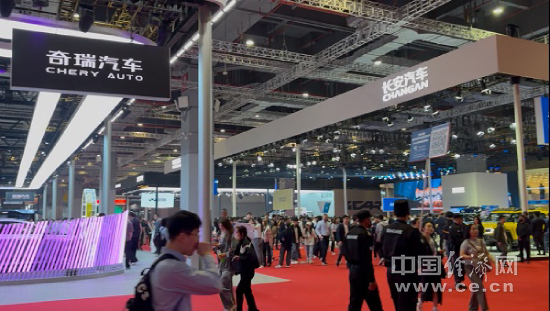
Core Viewpoint - The 2025 Shanghai International Auto Show highlights the global appeal and strength of the Chinese automotive industry, showcasing nearly a thousand manufacturers and supply chain companies from 26 countries amidst escalating tariff wars [1][4]. Group 1: Industry Dynamics - The auto show is expected to attract nearly 10,000 overseas dealers, indicating strong international interest in the Chinese automotive market [1]. - In 2024, China maintained its position as the world's largest automotive market for the 16th consecutive year, with vehicle production and sales leading globally [1]. - China's automotive exports exceeded 6.4 million units in 2024, marking a second consecutive year of leading global exports [1][4]. Group 2: Impact of Tariff Wars - The tariff wars have not deterred Chinese automotive companies from expanding internationally, with a focus on markets like Europe, while exports to the U.S. remain minimal at 11,600 units, accounting for only 1.81% of total exports [4]. - Executives from major companies, such as SAIC-GM, express confidence in their high localization rates, with over 95% of parts sourced domestically, mitigating the impact of tariffs [7]. - The ongoing tariff disputes have prompted some U.S. automakers to pause exports to China, while others are adapting their strategies to maintain market presence [7][8]. Group 3: Future Opportunities - Executives believe that crises can present new opportunities, with a focus on enhancing local operations and global collaboration [9]. - Companies like Nissan are committed to exporting models developed in China, aligning with their strategy of "in China, for China, and to the world" [9]. - The Chinese automotive industry is positioned as a leader in electrification and smart technology, attracting increased foreign investment [8][9]. Group 4: Challenges for Component Suppliers - China's exports of automotive components to the U.S. reached $17.15 billion in 2024, representing 15.6% of total component exports, indicating potential vulnerabilities due to tariff impacts [10]. - The lithium-ion battery exports also saw significant growth, with a total of $15.32 billion, highlighting the importance of this sector [10]. - Experts warn of a potential sharp decline in exports of components to the U.S. due to tariff measures, urging local suppliers to diversify their markets and enhance risk management [10].
40年沧桑巨变,上海车展见证中国汽车业“链”在一起
Zhong Guo Jing Ji Wang· 2025-04-30 06:41
Core Points - The 21st Shanghai International Automobile Industry Exhibition has commenced, featuring nearly 1,000 exhibitors from 26 countries and regions, showcasing over 100 new car models and hosting more than 193 press conferences, solidifying its status as the "largest auto show in the world" [1] - The rapid growth of the Shanghai Auto Show reflects the significant development of China's automotive industry, which has maintained the world's largest production and sales volume for 16 consecutive years [1] - The event serves as a platform for automotive companies to enhance user experience and interaction, with many brands focusing on user-centered design and co-creation activities [3][6] Industry Trends - The rise of short video platforms has made live streaming a crucial marketing tool for car manufacturers, with executives actively engaging with users through social media [6] - The competition among car manufacturers has intensified, leading to a "value war" in the market, with companies showcasing their latest advancements in intelligent driving technology [6][9] - The emphasis on safety in intelligent driving has become a key marketing point, with companies adjusting their promotional strategies in response to recent incidents and regulatory scrutiny [7][8] Supply Chain Developments - The exhibition highlighted the growing strength of China's intelligent automotive supply chain, with a significant presence of technology and supply chain companies [9][12] - Localized products and services are increasingly being developed by Chinese companies, allowing them to compete on a global scale [15][18] - Strategic partnerships between automotive manufacturers and supply chain companies are becoming more common, as seen with Ningde Times and several major car manufacturers [15] Globalization Efforts - The Shanghai Auto Show attracted a large number of international dealers and media, demonstrating the global appeal of the Chinese automotive market despite ongoing trade tensions [19] - Chinese automotive companies are actively pursuing international partnerships and collaborations, with plans to export new energy vehicles globally [22][25] - The event serves as a significant platform for showcasing China's automotive industry achievements and its aspirations to become a global automotive powerhouse [25]
雷军给五一结婚网友送祝福;网购内衣半年后买新退旧;大数据杀熟进入高发期;饿了么主动加入外卖混战;教授称有望每周上三休四……
Sou Hu Cai Jing· 2025-04-30 03:32
Group 1 - Some Chinese suppliers have resumed shipments to the US at original prices, with customers bearing the tariff costs [1] - Walmart has shifted its stance on tariffs, now requiring US customers to absorb the new import tariff costs while resuming orders from Chinese suppliers [6] - Volvo Cars announced a cost-cutting plan of approximately 18.7 billion USD due to a significant drop in operating profit in Q1 [20] Group 2 - Suining E-commerce reported Q1 revenue of 12.894 billion CNY, a year-on-year increase of 2.5%, and a net profit of 17.96 million CNY, marking a return to profitability [25] - Zhejiang Commercial Bank's total customer deposits exceeded 2 trillion CNY as of the end of Q1, reflecting a 4.4% growth since the beginning of the year [28]