
中科星图

Search documents
低空稳健发展,出口增长强劲 | 投研报告
Zhong Guo Neng Yuan Wang· 2025-11-26 03:02
Group 1: Market Overview - During the period from November 16 to November 21, 2025, the Shanghai Composite Index fell by 3.90%, the Shenzhen Component Index decreased by 5.13%, and the ChiNext Index dropped by 6.15%. The Shenwan Machinery Equipment Index declined by 4.78%, underperforming the CSI 300 Index by 1.01 percentage points, ranking 13th among 31 Shenwan first-level industries [1] - In terms of sub-industries, the Shenwan General Equipment, Specialized Equipment, Rail Transit Equipment II, Engineering Machinery, and Automation Equipment sectors experienced declines of 5.73%, 5.48%, 5.93%, 1.65%, and 4.41% respectively [1] Group 2: Low-altitude Economy - The low-altitude economy sector has made significant progress in improving commercial operation standards and expanding ecological application scenarios. The Civil Aviation Administration of China released a draft rule for the operation qualification of small commercial transport operators, aiming to provide institutional support for the safe and standardized development of low-altitude commercial transport [2] - The National Development and Reform Commission and five other departments jointly issued opinions to accelerate the construction of modern state-owned forest farms, promoting the popularization of drones and other equipment, thereby opening up broad space for the application of low-altitude technology in ecological protection and forest management [2] Group 3: Machinery Equipment Sector - Current data indicates that domestic leading enterprises in the machinery equipment sector maintain strong competitive advantages from both supply and demand perspectives. In October 2025, China's engineering machinery import and export trade amounted to $4.844 billion, a year-on-year increase of 0.07%. The import value was $176 million, down by 24.2%, while the export value reached $4.668 billion, up by 1.29% [3] - From January to October 2025, the cumulative trade value for engineering machinery was $50.718 billion, reflecting a year-on-year growth of 11.5%. The import value was $2.192 billion, up by 0.78%, and the export value was $48.526 billion, increasing by 12% [3] - The engineering machinery industry is expected to maintain a steady growth trend in the future [3] Group 4: Investment Recommendations - For the low-altitude economy, the company recommends focusing on infrastructure firms such as Shenzhen Urban Transport, Suzhou Transportation Science and Technology, Huasheng Group, and Nairui Radar. In terms of complete machines, attention is advised for Wan Feng Ao Wei, Yihang Intelligent, Zongheng Co., and Green Energy Hui Charge. Key component firms to watch include Zongshen Power, Wolong Electric Drive, Yingliu Co., and Yingboer. For air traffic management and operations, focus on CITIC Offshore Helicopter, Zhongke Xingtu, and Sichuan Jiuzhou [4] - In the machinery equipment sector, recommended companies in the export chain include Juxing Technology, Quan Feng Holdings, and Nine Company. For the engineering machinery sector, focus on Sany Heavy Industry, XCMG, and Anhui Heli. In the industrial mother machine sector, recommended firms include Huazhong CNC, Kede CNC, and Hengli Hydraulic [4]
财联社11月26日早间新闻精选
Sou Hu Cai Jing· 2025-11-26 00:27
Group 1 - The Chinese government emphasizes the importance of high-quality technological supply to lead the construction of a modern industrial system, with plans to implement major national technological tasks for decisive breakthroughs in key areas [2] - Alibaba plans to "actively" invest in enhancing artificial intelligence capabilities, potentially exceeding its previously committed investment of 380 billion RMB over three years, indicating a strong demand for AI resources [3] - The National Space Administration of China has issued an action plan to promote the high-quality and safe development of commercial space, establishing a national commercial space development fund to encourage long-term and strategic investments [4] Group 2 - The significant increase in black tungsten concentrate prices, which have risen by 132% this year, is expected to be transmitted downstream, supported by strong demand in emerging sectors such as photovoltaic tungsten wire and military applications [7] - Alibaba's financial report for Q2 of fiscal year 2026 shows revenue of 247.8 billion RMB, a year-on-year increase of 4.8%, with adjusted earnings per ADS at 4.36 RMB, below market expectations [9] - The stock of *ST Suwu has been suspended due to major violations leading to forced delisting, while *ST Dongtong faces potential termination of listing due to fraudulent disclosures in annual reports [10] Group 3 - The U.S. stock market indices have collectively risen for three consecutive trading days, with the Dow Jones up by 1.43%, indicating a positive market sentiment [14] - The U.S. 10-year Treasury yield has fallen below 4% for the first time since late October, reflecting increased market expectations for aggressive interest rate cuts [19]
4.5亿太空算力项目开启招标,产业迎来加速落地
Xuan Gu Bao· 2025-11-25 14:57
Group 1 - The "Liangxi Constellation" project is publicly tendered with an estimated contract value of 450 million yuan, funded by self-raised capital [1] - The project involves the construction of a satellite constellation consisting of 12 intelligent computing satellites, utilizing 3D printing for manufacturing and featuring advanced computing payloads [1] - The total computing power of the constellation is expected to be no less than 20P after network completion, covering various aspects such as satellite development, launch, frequency allocation, and operational services [1] Group 2 - The demand for computing power is experiencing exponential growth due to the surge in artificial intelligence (AI), leading to unprecedented challenges for traditional ground data centers in terms of energy consumption and land resources [1] - Space computing is emerging as a significant direction for investment in both China and the United States, with the potential to become a crucial component of future computing power [1] - The space computing sector encompasses multiple key areas, including satellite manufacturing, core chips, data processing, and communication links, each presenting investment opportunities [1] Group 3 - Aerospace Hongtu has established the "Nüwa Constellation" for remote sensing data processing in orbit, achieving over 40% market share in remote sensing data processing, and is expected to benefit from the development of space computing [2] - Zhongke Xingtou, a subsidiary of the Chinese Academy of Sciences, is planning commercial satellite constellations for space computing and sensing, integrating ground-based data with supercomputing capabilities [2] - The company is collaborating with Zhongke Shuguang to build a "space-ground integrated" computing network, enhancing urban governance and disaster warning scenarios [2]


12月起,商业航天将接连迎来多场盛会,政策或也有重磅进展
Xuan Gu Bao· 2025-11-25 07:16
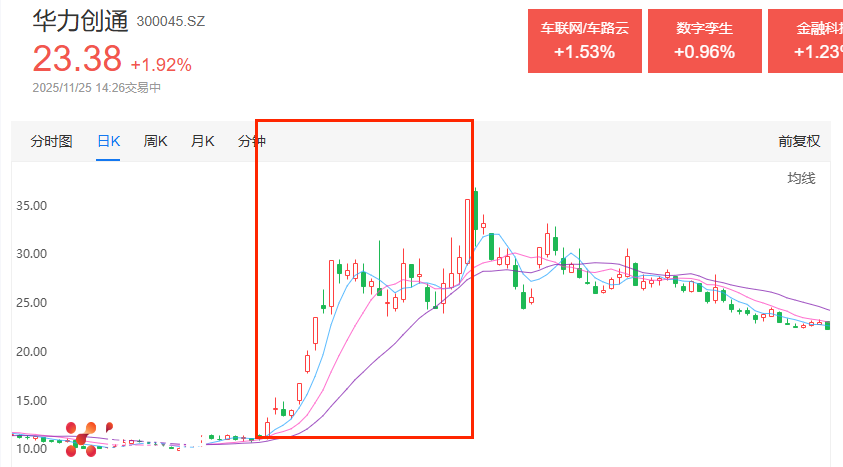
Event Overview - The 2025 Third China Commercial Space Development Conference and the Fourth Zhongguancun Commercial Space Conference will be held in Beijing from December 18 to 19, marking the first national industry event initiated and implemented by industry social organizations in the commercial space sector [1] - Additional major space industry events are scheduled from January to March 2026, including the Third Beijing Commercial Space Industry High-Quality Development Conference and the 2026 Beijing International Commercial Space Exhibition [1] Industry Development Acceleration - The establishment of the Commercial Space Administration signifies a key institutional development, expected to enhance coordination across multiple departments and improve efficiency in satellite industry development, including launch approvals and operational licensing [2] - Analysts from CITIC Securities and Huatai Securities highlight a triple inflection point for the commercial space sector, driven by policy, performance, and technology advancements [2] - The Chinese commercial space industry is projected to reach a value of 2.8 trillion yuan by 2025 [2] Satellite Application Focus - The core of commercial space is identified as satellite applications, which are increasingly integrated with technologies like 6G and AI, leading to rapid expansion in various new business trials [3] - The number of satellite launches is expected to grow by 100%-200% annually during the 14th Five-Year Plan period, with satellite connectivity becoming mainstream in consumer markets [3] Historical Performance of Key Players - Huawei's launch of the HUAWEI Mate 60 Pro, the first mass-market smartphone supporting satellite calls, has significant implications for the industry [4] - Huali Chuantong, a leader in satellite internet, experienced over 200% stock price increase from August 29 to October 11 [5] Related Concept Stocks - A list of concept stocks related to the commercial space industry includes companies involved in solar wings, satellite operations, rocket manufacturing, and testing services, indicating a broad investment landscape [7]

云衢启章,鹏翼展卷——低空经济绘就万亿新图景
Zhong Guo Zheng Quan Bao· 2025-11-25 00:13
Core Viewpoint - The low-altitude economy in China is projected to reach a market size of 1.5 trillion yuan by 2025 and is expected to exceed 2 trillion yuan by 2030, indicating a strong growth trend in the industry [1] Group 1: Market Demand and Growth - The surge in orders reflects a high market demand, with Meituan's drone delivery surpassing 670,000 commercial orders by September 2025, and 150,000 orders in the first half of 2025 alone [2] - The industry anticipates that by 2035, the value of drone logistics in China could exceed 1 trillion yuan, with an average annual growth rate of around 20% [2] - Numerous low-altitude aircraft manufacturers have received substantial orders, with companies like Wolt and Yihang securing hundreds of aircraft orders and significant financing to support production [3][4] Group 2: Infrastructure and Safety - The development of the low-altitude economy requires a robust infrastructure network and comprehensive safety regulations to ensure smooth operations [1][6] - Safety is recognized as a top priority in the industry, with calls for unified regulatory systems to manage low-altitude flight activities effectively [7] - Companies are working towards creating a multi-network integration of air, sky, and ground services to enhance regulatory and service models for the low-altitude industry [8] Group 3: Policy Support and Strategic Development - The Chinese government predicts that the low-altitude economy will reach a market size of 3.5 trillion yuan by 2035, emphasizing the importance of policy support for industry stability [9] - The establishment of the Low Altitude Economic Development Department by the National Development and Reform Commission aims to formulate and implement strategies for the sector [10] - Local governments are increasingly incorporating low-altitude economic development into their work reports, indicating a multi-layered regulatory framework is being established [11]
云衢启章,鹏翼展卷
Zhong Guo Zheng Quan Bao· 2025-11-24 20:13
Core Insights - The low-altitude economy in China is projected to reach a market size of 1.5 trillion yuan by 2025 and is expected to exceed 2 trillion yuan by 2030, indicating strong growth trends in the industry [1][7] - The development of low-altitude applications is rapidly expanding, with increasing orders, active financing, and technological advancements contributing to a vibrant market landscape [1][2] Market Demand and Orders - As of September 2025, Meituan's drone delivery service has completed over 670,000 commercial orders, with 150,000 orders in the first half of 2025 alone, highlighting the growing demand for drone logistics [1] - The industry anticipates over 140 new low-altitude logistics routes to be opened in 2024, with drone logistics revenue expected to surpass 1 trillion yuan by 2035, maintaining an annual growth rate of around 20% [1][2] Application Scenarios - Low-altitude economic applications are categorized into four main areas: production operations, transportation, cultural tourism experiences, and security [2] - The demand for low-altitude flying vehicles is increasing, with companies like Zero Gravity Aircraft and Yufeng Future securing significant orders for various aircraft models, indicating a robust market response [2][3] Safety and Infrastructure - Safety is emphasized as a critical priority for the healthy development of the low-altitude economy, with calls for comprehensive monitoring and regulatory systems to ensure safe operations [5][6] - The establishment of a new infrastructure and flight control system is necessary to support the smooth operation of low-altitude activities, with ongoing efforts to develop integrated solutions for urban air mobility [4][6] Policy Support - The Chinese government is actively promoting the low-altitude economy through strategic planning and policy initiatives, including the establishment of a dedicated department for low-altitude economic development [7][8] - Recent government measures encourage private investment in low-altitude infrastructure, aiming to foster a collaborative environment for industry growth [7][8]
计算机行业重大事项点评:Google:Gemini3开启全模态革命
Huachuang Securities· 2025-11-24 14:15
Investment Rating - The report maintains a "Recommendation" rating for the computer industry, expecting the industry index to rise more than 5% over the next 3-6 months compared to the benchmark index [4][35]. Core Insights - Gemini 3, launched by Google, significantly enhances its AI competition position with superior reasoning and multimodal capabilities, achieving a groundbreaking Elo score of 1501 on the LMArena leaderboard [10][11]. - The model excels in various benchmarks, including a 91.9% accuracy in the GPQA Diamond test and a 23.4% score in the MathArena Apex test, showcasing its advanced performance in reasoning and mathematics [10][11]. - Google has introduced the Antigravity platform, which integrates Gemini 3's capabilities, allowing for autonomous planning and execution of complex software engineering tasks [17][20]. - The "chip-model-ecosystem" strategy positions Google with a competitive edge, leveraging self-developed Trillium TPU chips that enhance computing power by 4 times and reduce energy consumption by 67% [20][21]. Summary by Sections Section 1: Gemini 3 Performance Evolution - Gemini 3 demonstrates significant technical breakthroughs, outperforming its predecessor in all key AI benchmarks, including achieving a 37.5% score in the "Humanity's Last Exam" without tools [10][11]. - The model's multimodal understanding is highlighted by its performance in MMMU-Pro and Video-MMMU tests, scoring 81% and 87.6% respectively [10][11]. Section 2: Gemini 3 Deep Think - The Deep Think mode of Gemini 3 expands its capabilities, achieving a 41.0% score in the "Humanity's Last Exam" without tools and a 93.8% accuracy in the GPQA Diamond test [15][16]. Section 3: Antigravity Platform - Antigravity enhances the development experience by providing a dedicated interface for agents, allowing them to operate editors, terminals, and browsers autonomously [17][20]. Section 4: Chip-Model-Ecosystem Strategy - Google's strategy integrates hardware, models, and ecosystem, achieving significant results with Gemini series models, which have seen over 6.5 billion monthly active users and a 70% adoption rate among cloud customers [20][21]. Section 5: Investment Recommendations - The report suggests focusing on specific sectors within AI, including domestic computing power and enterprise services, highlighting companies like Cambricon, Alibaba, and Kingsoft Office [22][24].

资金“抄底”了,大举净流入
Zhong Guo Zheng Quan Bao· 2025-11-24 12:12
Group 1: ETF Performance - Aerospace and satellite-themed ETFs showed strong gains, with multiple products rising over 4% on November 24 [4] - The Satellite ETF (563230) surged by 3.79%, with its share increasing nearly 50% since the end of September, making it the top performer among similar ETFs [4] - The technology-focused Nasdaq ETF (159509) experienced a significant premium of 19.23% after resuming trading following a one-hour suspension [3][10] Group 2: Market Trends - The market saw a significant adjustment last week, but there was a "bottom-fishing" trend with substantial net inflows into several broad-based ETFs [2][7] - The lithium carbonate futures contract hit a limit down, negatively impacting market expectations for related companies, leading to a decline in rare metals and energy-related ETFs [5] - Despite recent adjustments, the long-term development logic of the new energy sector remains solid, supported by policy, market demand, and performance recovery [5] Group 3: Fund Flows - Notable net inflows were recorded for several broad-based ETFs, including the CSI 500 ETF, which saw a net inflow of 57.78 billion [9] - The Hang Seng Technology and CSI 50 ETFs also ranked high in net inflows for November, indicating investor interest in these sectors [9] - Active trading was observed in various currency and bond ETFs, with the Silver Day ETF (511880) achieving a transaction volume exceeding 20 billion [7][8]
资金“抄底”了!大举净流入
Zhong Guo Zheng Quan Bao· 2025-11-24 11:59
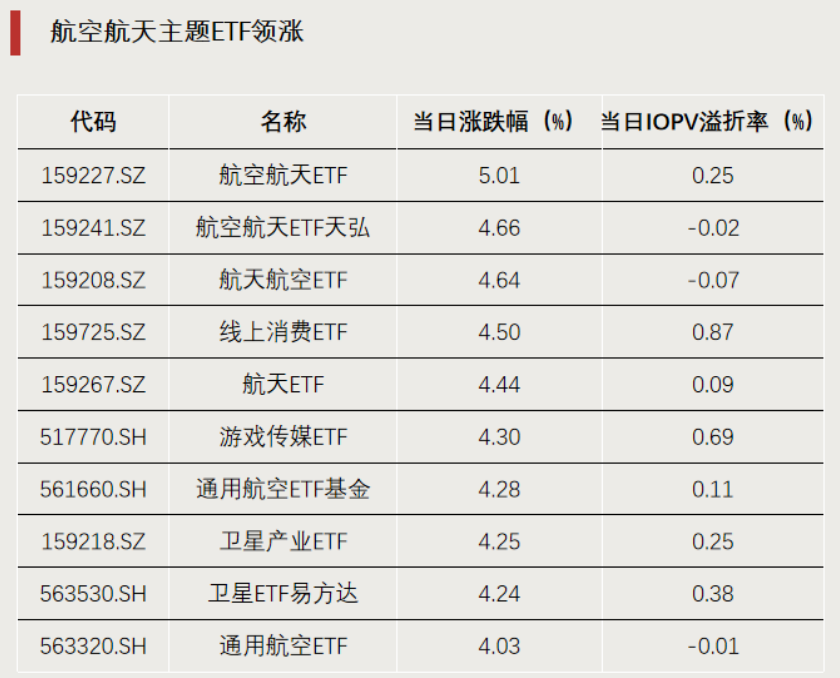
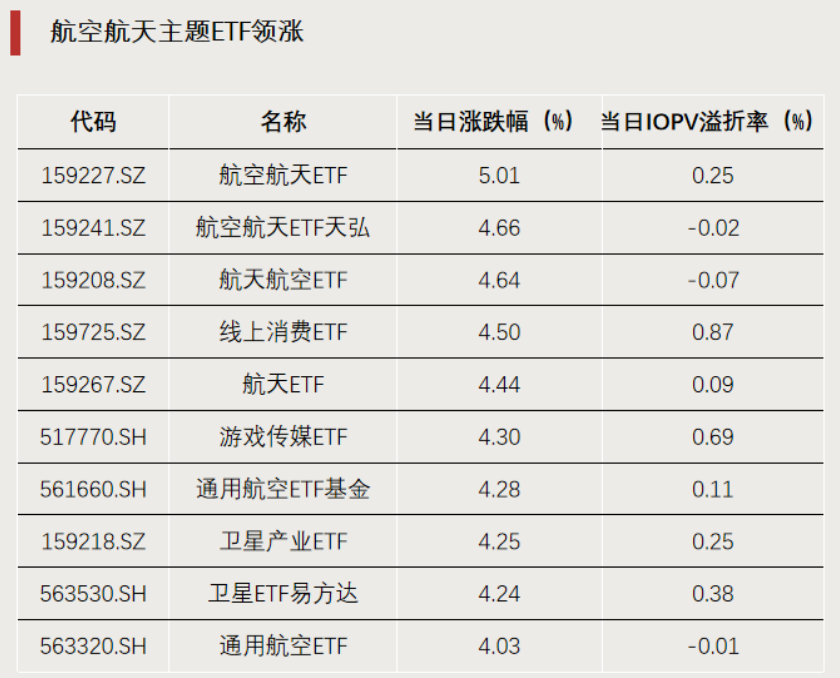
Group 1: Market Performance - On November 24, aerospace and satellite-themed ETFs showed strong gains, while rare metal ETFs collectively declined [1][4] - The market experienced significant adjustments last week, but there was a "bottom-fishing" trend with substantial net inflows into several broad-based ETFs [2][10] - The NASDAQ Technology ETF (159509) was suspended for one hour on November 24 due to a significant premium, resuming trading with a premium rate of 19.23% at market close [3][12] Group 2: ETF Highlights - Aerospace-themed ETFs led the market with multiple products rising over 4%, including the Satellite ETF (563230), which surged by 3.79% and saw a nearly 50% increase in shares since September [4][5] - The Satellite ETF tracks the China Satellite Industry Index, including companies involved in satellite launch, navigation, and internet services [4] - The top-performing ETFs on November 24 included Aerospace ETF (159227) with a gain of 5.01%, and several others with gains ranging from 4.03% to 4.66% [6] Group 3: Rare Metals and Energy ETFs - Rare metal ETFs experienced significant declines, with the Sci-Tech Composite Index ETF (589580) leading the drop at -2.14% [7][8] - The decline in rare metals was attributed to a drop in lithium carbonate futures, which negatively impacted market expectations for related companies [7] Group 4: Fund Flows and Investment Trends - There was active trading in currency and bond ETFs, with the Silver River Daily ETF (511880) exceeding 20 billion yuan in trading volume [9][10] - Despite market adjustments, there was a notable net inflow into broad-based ETFs such as the CSI 500 and ChiNext ETFs, indicating investor confidence [11] - The CSI 500 ETF saw a net inflow of 5.778 billion yuan last week, while the Hang Seng Technology ETF also reported significant inflows [11] Group 5: Premium Risks in Cross-Border ETFs - Several cross-border ETFs have been issuing warnings about high premium rates, with the NASDAQ Technology ETF (159509) and NASDAQ 100 ETF (159660) showing premiums exceeding 10% [12][14] - On November 24, multiple cross-border ETFs, including those tracking the Nikkei 225 and S&P 500, issued midday announcements regarding premium risks, advising investors to be cautious [14][15]
商业航天:卫星应用多点开花加速拓展
HUAXI Securities· 2025-11-23 13:31
Investment Rating - The industry rating for the defense and military industry is "Recommended" [1] Core Insights - The core of commercial aerospace is satellite applications, which are fundamentally space data services. The integration of satellite applications with technologies like 6G and AI is accelerating, leading to a proliferation of new business experiments [2] - The number of satellite launches is expected to grow by 100%-200% annually during the 14th Five-Year Plan period, driven by advancements in domestic reusable rocket testing [2] - Satellite direct connection for mobile phones and vehicles is anticipated to become mainstream applications in the consumer market, with satellite computing transmission scheduling emerging as a key component in the cloud computing market [2] - The development of satellite internet and satellite IoT is expected to complement each other, addressing communication needs in areas where terrestrial networks are unavailable [3] - By 2030, global satellite IoT connections are projected to exceed 300 million, with the market size potentially reaching the hundred billion dollar level, driven by technological maturity and cost reduction [3] Summary by Sections Event Overview - The launch of commercial trials for satellite IoT services in China aims to enhance market supply and stimulate industry vitality [1] - Huawei's upcoming devices are expected to feature satellite connectivity, marking significant advancements in satellite communication technology [1] Analysis and Judgment - The integration of satellite applications with emerging technologies is leading to innovative business models and applications [2] - The trend of satellite computing is emerging, where satellites will incorporate AI capabilities to enhance their functionality [5] Beneficiary Companies - **Putian Technology**: Involved in the "Three-body Computing Constellation" project, contributing to the development of space-based AI computing [6] - **Hollysys**: A key player in satellite measurement, experiencing rapid growth in commercial aerospace orders [7] - **National Science and Technology Military Industry**: Engaged in solid rocket engine production, transitioning to a comprehensive aerospace business model [7] - **Shanghai Hanyun**: Supplies communication systems for low Earth orbit satellite constellations [8] - **Zhenray Technology**: A core supplier of satellite internet chips and components, with significant revenue expected from satellite communication [9]