
石头科技

Search documents
可选消费W07周度趋势解析:通胀降温信号带动海外消费类资产估值修复,美国政界跨党派联手推动信用卡利率上限立法
海通国际· 2026-02-23 10:50
Market Overview - Cooling inflation signals have led to a valuation recovery in overseas consumer assets, with the U.S. bipartisan push for credit card interest rate cap legislation creating uncertainty in the credit card sector[1] - Weekly performance of sectors shows U.S. hotels leading with a 3.1% increase, followed by overseas sportswear at 2.5% and luxury goods at 2.2%[11] Sector Performance - The U.S. hotel sector's strong performance is attributed to Marriott and Hilton, with Marriott's Q4 2025 adjusted EBITDA exceeding market expectations, reaching $5.84 billion to $5.93 billion[6] - Overseas sportswear saw a 2.5% increase, driven by a lower-than-expected January CPI of 2.4%, enhancing Fed rate cut expectations[13] - Luxury goods increased by 2.2%, with Hermès up 4.5% due to better-than-expected FY2025 results, while LVMH fell by 4.1% due to disappointing performance in key segments[8] Consumer Trends - The jewelry sector has shown resilience, with a year-to-date increase of 13.7%, outperforming other sectors[11] - Domestic sportswear increased by 0.3%, with Anta Sports rising 4.6% following the acquisition of a stake in PUMA[13] Challenges - The credit card sector faced a significant decline of 5.5%, influenced by proposed legislation to cap interest rates, which could severely impact profitability[14] - The snack sector dropped by 4.6%, with companies like Three Squirrels experiencing a 6.2% decline due to substantial drops in e-commerce sales across major platforms[14] Valuation Insights - Valuations across various sectors remain below the historical five-year averages, with overseas sportswear expected PE at 30.1x, only 57% of the past average[9] - The luxury sector's expected PE is 26.2x, representing 49% of its historical average, indicating potential for future growth as market conditions stabilize[9]
人形机器人春晚技惊四座,机器人ETF易方达等产品被连夜“翻牌”
Cai Jing Wang· 2026-02-19 15:37
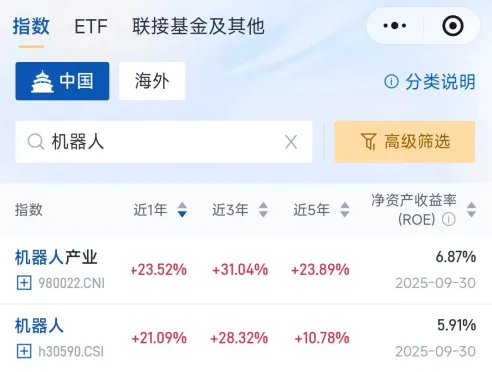
Core Viewpoint - The collaboration between Yushu Technology and Tagou Martial Arts School for the Spring Festival Gala showcased significant advancements in humanoid robotics, leading to a surge in interest and investment in the robotics sector, particularly in related ETFs [1]. Investment Opportunities - The market has seen a more than 300% increase in robot-related searches on JD.com within two hours of the gala, indicating heightened investor interest in the robotics industry [1]. - Two main robotics indices are highlighted: the Guozhen Robotics Industry Index and the Zhongzheng Robotics Index, each with different focuses and compositions [1][2]. Index Characteristics - The Guozhen Robotics Industry Index focuses on humanoid robots and core components, with nearly 80% of its weight in humanoid robot-related companies, suggesting higher sensitivity to market movements in this segment [3]. - The Zhongzheng Robotics Index has a broader coverage, including software and hardware providers for robotics, with approximately 65% weight in humanoid robots [3]. - The Guozhen index has 50 constituent stocks with a more balanced weight distribution, while the Zhongzheng index has 66 stocks with a higher concentration in its top holdings [3][4]. Performance Metrics - The Guozhen Robotics Industry Index has shown a return of +23.52% over the past year, while the Zhongzheng Robotics Index has returned +21.09% [2]. - The top ten holdings in both indices include companies like Greentec, iFlytek, and Top Group, with the Guozhen index featuring unique companies like Sanhua Intelligent Control [3][4]. Investment Strategy - Investors are advised to choose between the two indices based on their investment goals and risk tolerance, with the Guozhen Robotics Industry Index being a preferable option for those targeting humanoid robotics specifically [5].


A股发行价最高的10只股票,其中七成破发,其中有1只跌幅达93%!
Sou Hu Cai Jing· 2026-02-19 12:21
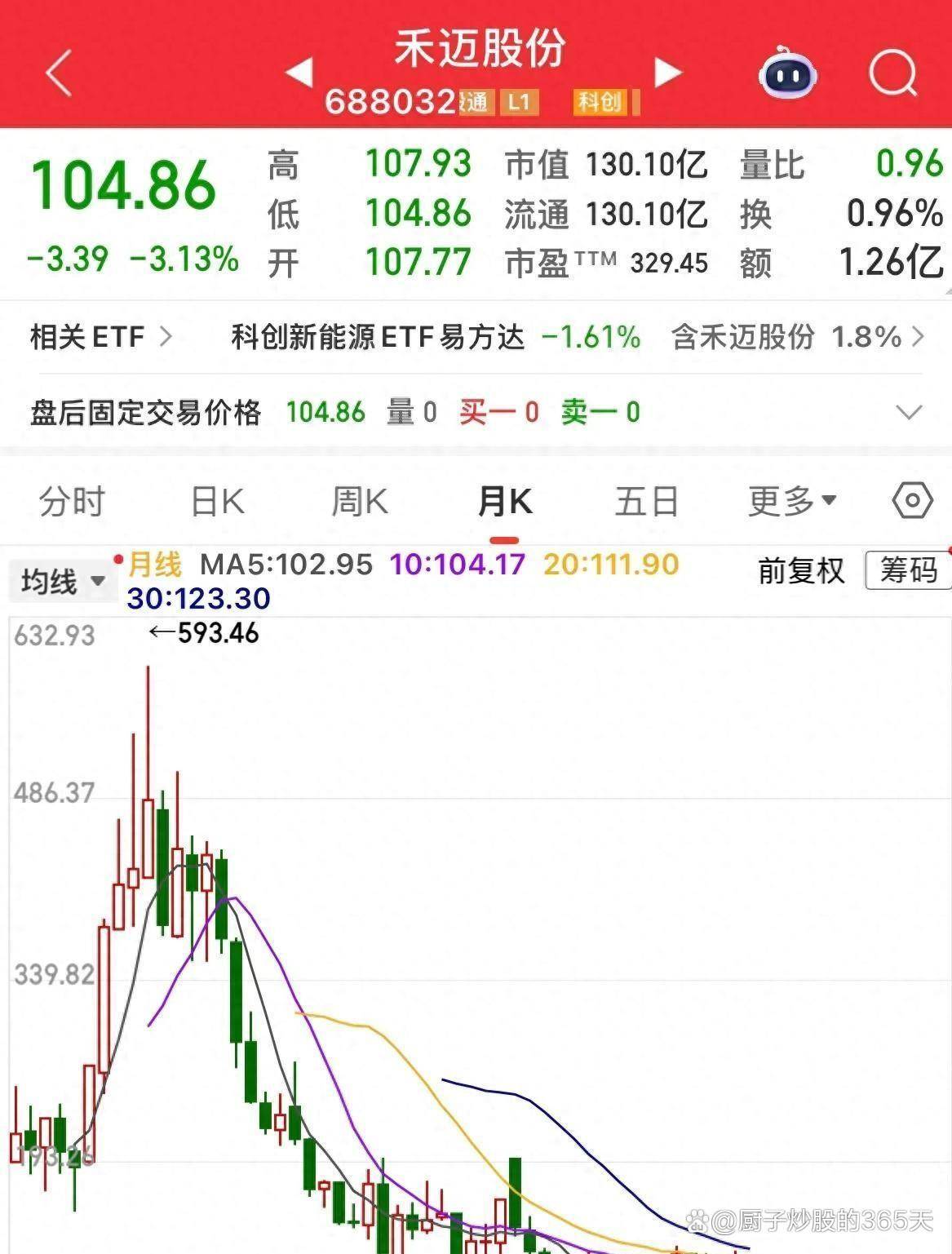
Core Viewpoint - The article discusses the significant decline in the stock prices of ten high-issue-price stocks in the A-share market, with seven of them falling below their issue prices, highlighting the risks associated with high valuations and market sentiment shifts [1][22]. Group 1: Stock Performance - Among the ten stocks, only Stone Technology, Naxin Micro, and BeiGene remain above their issue prices as of mid-February 2026 [6][8]. - The maximum decline from issue prices includes: - CanSino down 69.15% - Wanrun New Energy down 58.54% - Huabao New Energy down 54.93% - Yiqiao Shenzhou down 42.22% - Hemai down 32.82% - Foxit Software down 22.17% - Suocheng Technology down 12.83% [10]. - CanSino experienced a dramatic drop of 93% from its peak price of 797.20 yuan to 63.90 yuan [11][19]. Group 2: Company Backgrounds - Hemai, the highest issue price stock at 557.80 yuan, faced a significant decline after reaching a peak of 1877.43 yuan [12]. - Wanrun New Energy, listed at 299.88 yuan, never reached its issue price after its first day of trading [15]. - Yiqiao Shenzhou, with an issue price of 292.92 yuan, peaked at 353.83 yuan before falling to 73.38 yuan [16]. - CanSino, a COVID-19 vaccine stock, was listed at 209.71 yuan and peaked at 797.20 yuan before its decline [17]. Group 3: Market Conditions and Trends - The high issue prices were driven by market enthusiasm for sectors like hard technology, new energy, and biomedicine during the registration reform period from 2020 to 2023 [5][4]. - The overall market sentiment has shifted, leading to a decline in these stocks as the initial excitement waned [22]. - The article notes that the current new stock market shows a stark contrast, with a recent increase in participation and initial gains, but also warns of accumulating risks [24][26]. Group 4: Investment Implications - The high issue prices and P/E ratios of these stocks are no longer guarantees of company strength, but rather potential warning signs of investment risk [28]. - The article emphasizes that the era of easy profits from new stock subscriptions has ended, requiring more thorough research and disciplined investment strategies [27].


整个社会都在喊没钱了,为什么这些公司反而年赚百亿?
创业家· 2026-02-18 09:33
Core Viewpoint - The article emphasizes that despite the prevailing narrative of economic hardship, certain industries are thriving and generating significant profits, particularly in the context of Japan's "lost 30 years" and the evolving consumer behavior in China [3][4]. Group 1: Emerging Business Opportunities - The article identifies eight key industries that are experiencing growth, highlighting that a low-desire society does not equate to a lack of opportunities [4]. - The concept of consumption upgrading and demand migration is presented as the largest business opportunity [5]. Group 2: Second-Hand Economy - In the context of reduced spending on luxury goods, the second-hand economy is flourishing, with companies like "大黑屋" in Japan and "红布林" and "胖虎" in China seeing substantial revenue increases [6][7]. - The article notes that platforms like "闲鱼" and "转转" are experiencing significant user engagement and transaction volume growth [9][10]. Group 3: Pet Economy - The pet economy is highlighted as a growing sector, with young consumers spending on premium pet products despite having fewer children [12]. - Companies like "中宠" and various pet brands are witnessing strong sales growth, indicating a shift in consumer spending towards pet care [13][14][15]. Group 4: Adult Care Products - The adult diaper market in Japan has surpassed $10 billion, showcasing the potential of the aging population as a significant economic driver [18][19]. - The article suggests that aging should be viewed as an opportunity rather than a burden, contributing to a multi-trillion dollar "sunset economy" [19]. Group 5: Health Food and Beverages - The rise in health consciousness and demographic changes are driving demand for sugar-free beverages and functional foods, with brands like "东方树叶" and "简醇" gaining traction in China [21][22]. Group 6: Beauty and Aesthetics - The beauty industry continues to thrive, with products like collagen supplements and home beauty devices achieving significant sales, indicating a persistent consumer desire for beauty enhancements [23][24][26]. Group 7: Outdoor and Leisure Activities - The outdoor equipment market is growing, with brands like "凯乐石" and "骆驼" benefiting from increased consumer interest in outdoor activities [29][31]. - The article notes that even in economic downturns, consumers are willing to invest in experiences and leisure [32]. Group 8: Convenience and Time-Saving Products - The "lazy economy" is emerging, with increased demand for frozen foods and smart home appliances that save time, reflecting a shift in consumer priorities towards convenience [39][40]. - The article posits that in a low-desire economy, time-saving solutions may hold greater commercial value than cost-saving measures [42].

智能硬件公司觉得自己无所不能|TMT年度盘点
经济观察报· 2026-02-18 07:03
Core Viewpoint - The explosive growth of the smart hardware industry in 2025 is driven by AI's need for a physical world carrier, moving beyond mere content generation and virtual interactions [4][3]. Group 1: Industry Dynamics - In 2025, major hardware manufacturers are diversifying their product lines, with companies like DJI venturing into vacuum robots and others expanding into various sectors, reflecting a collective confidence and a sense of urgency to capture market share [3][6]. - The industry is characterized by a "do-it-all" mentality, where companies are attempting to integrate their core technologies into any device that can be powered, leading to a proliferation of products across categories [6][7]. - The competitive landscape has intensified, with companies engaging in unconventional marketing tactics and patent wars, as seen in the surge of lawsuits over multi-modal interaction algorithms [12][13]. Group 2: Investment Trends - The venture capital landscape in 2025 is marked by a simplistic investment logic favoring startups founded by alumni of successful companies like DJI and Anker, leading to inflated valuations based on past affiliations [9][10]. - There is a significant influx of capital into the hardware sector, with various types of investment funds actively seeking opportunities, indicating a shift in focus from software to hardware as essential for AI applications [10][9]. Group 3: Market Challenges - The smart hardware market is experiencing a saturation of similar products, particularly in the smart ring and AI glasses segments, resulting in fierce price competition and diminishing profit margins [13][14]. - The phenomenon of "white-labeling" has become prevalent, with many products lacking unique technological advantages, leading to drastic price reductions and reduced consumer retention [14][13]. - Some companies that were once seen as promising have begun to downsize, indicating a potential contraction in the market as competition intensifies [14].

追觅在春晚亮出“全场景”,生态品牌洗牌周期已至?
Xin Lang Cai Jing· 2026-02-17 11:36
Core Viewpoint - The emergence of Chasing Technology as a "smart technology ecosystem strategic partner" at the CCTV Spring Festival Gala signifies a shift in competition among Chinese tech companies from single products to system ecosystems, indicating a reshuffling period for ecosystem brands [2][3][16]. Group 1: Brand Presence and Market Position - Chasing Technology showcased its full-scene ecological matrix at CES and the Spring Festival Gala within two months, highlighting its rapid brand exposure [2][15]. - The company operates in over 120 countries and regions, serving more than 42 million households, with leading market shares in various countries for its robotic vacuum and washing machine products [4][17]. - In the global market, Chasing Technology holds the top market share in robotic vacuums in 30 countries, with over 40% market share in 11 of those countries, and over 70% in washing machines in nearly 20 countries [4][17]. Group 2: Industry Trends and Technological Advancements - The transition from single product competition to ecosystem competition is becoming a new form of competition among Chinese tech companies, as evidenced by trends observed at CES 2026 [6][19]. - The reusability of underlying technology is crucial for companies to build ecosystems, with Chasing Technology's core technologies being applicable across multiple product categories, significantly reducing the marginal costs of expanding into new categories [20][21]. - The company has filed over 10,000 patents globally, with more than 3,000 granted, showcasing its extensive technological capabilities that extend from robotic vacuum algorithms to smart driving systems [20]. Group 3: Consumer Experience and Market Strategy - As companies shift to ecosystem competition, the focus is on delivering a consistent smart experience rather than just comparing individual product specifications [8][22]. - Chasing Technology maintains a leading market share in the high-end segment of the cleaning appliance market, with significant shares during major sales events [23]. - The company's strategy contrasts with traditional Chinese appliance companies that often entered markets based on cost advantages; instead, it targets high-end markets first to establish brand recognition before scaling through technology reuse [10][24]. Group 4: Future Outlook and Industry Implications - The recognition of Chasing Technology at a national level reflects a broader trend in Chinese manufacturing, where the next decade will favor companies that can balance high-end technology with accessibility for everyday consumers [11][24]. - The ability to deliver high-end experiences to a broader market without diluting innovation is becoming a critical competitive factor in the industry [9][22].

经济越来越差,这八大行业越赚爆!
创业家· 2026-02-17 09:22
Core Insights - The article discusses how certain industries are thriving despite a general perception of economic downturn, highlighting eight key sectors that present significant business opportunities in a low-desire society [3][4]. Group 1: Key Industries - **Second-Hand Economy**: The second-hand luxury market in Japan, represented by companies like Daikokuya, has seen a surge in revenue. In China, platforms like Hongbulin and Panghu are experiencing similar growth, indicating a shift in consumer spending towards second-hand goods [6][7][8][9]. - **Pet Economy**: With declining birth rates, young people are spending more on pets, leading to significant growth in pet food and healthcare products. Companies like Inaba in Japan and Guobao in China are capitalizing on this trend [11][12][14][15]. - **Adult Care Products**: The adult diaper market in Japan has surpassed $10 billion, indicating a growing demand for adult care products in China, with companies like Kexin poised for growth [16][17][18]. - **Health Food and Beverages**: The rise in health consciousness has led to increased demand for sugar-free beverages and functional drinks, with brands like Dongfang Shuye and Jianchun gaining traction in China [21][22]. - **Beauty Economy**: The demand for beauty products, including collagen supplements and at-home beauty devices, is on the rise, with companies like Jinbo Bio and U like seeing significant sales growth [23][25]. - **Outdoor Recreation**: The outdoor equipment market is booming, with brands like Kailas and Camel experiencing rapid sales growth as consumers seek leisure activities [25][26][27]. - **Emotional Economy**: Products that provide emotional comfort, such as low-alcohol beverages and lifestyle brands, are gaining popularity, reflecting a dual consumer behavior of frugality and indulgence [28][29][30]. - **Convenience Economy**: The demand for convenience foods and smart home appliances is increasing as younger generations spend less time cooking. Brands like Anjijia and Kewotai are seeing steady growth [33][35][36]. Group 2: Market Trends - The article emphasizes that the current economic climate, often viewed as a "winter," presents opportunities for those willing to invest in counter-cyclical sectors [39]. - It suggests that the key to success in a low-desire society is to identify and capitalize on emerging trends and consumer needs, rather than retreating from the market [39].

AI时代怎么做硬件出海,沈劲谈中国公司:该轮到我们定义品类了
创业邦· 2026-02-15 10:57
Core Viewpoint - The article discusses the evolution of Chinese consumer electronics from a phase of following global leaders to a phase of leading and defining new product categories, particularly in the context of AI and emerging technologies [5][14][36]. Group 1: Transition Phases in Chinese Consumer Electronics - The evolution of Chinese consumer electronics can be categorized into three phases: following, catching up, and leading. The "following" phase involved benchmarking against leaders and offering high cost-performance products, while the "catching up" phase focused on single-point innovations and high-end breakthroughs [10][12]. - The leading phase is characterized by a reconstruction of product paradigms and the discovery of new usage scenarios, with the expectation that 2025 will mark the year when China leads in smart cleaning technology [14][19]. Group 2: New Product Categories and Innovations - The article highlights the emergence of two new product categories: Ambient AI terminals and personal AI supercomputing centers. Ambient AI terminals focus on passive interaction and context establishment, while personal AI supercomputing centers emphasize offline intelligence and privacy protection [21][25]. - OpenAI's upcoming AI hardware is expected to fill specific gaps rather than replace smartphones, aligning with the identified market needs [25]. Group 3: Factors for Successful Category Definition - The ability to define product categories is broken down into five dimensions: trend recognition, scene selection, technology integration, experience closure, and scalability. Chinese companies have made significant progress in these areas, particularly in understanding overseas markets [27][29]. - The article emphasizes the importance of deeply understanding the lifestyles and values of different generations, such as Gen Z and Alpha, to successfully define and market new products [29][32]. Group 4: Historical Context and Future Outlook - The historical context of Chinese companies' evolution in consumer electronics is discussed, noting that past successes were often built on following established leaders. The current environment presents a "definer's dividend," where Chinese companies are positioned to lead in new categories [35][36]. - The article concludes with a call for entrepreneurs to strive for category definition, suggesting that the process of naming and defining new products is collaborative and iterative [42][43].

杨浩涌投资师弟狂赚33倍!阿童木机器人赴港IPO,新业务“钱途”不明
Xin Lang Cai Jing· 2026-02-14 14:24
Group 1 - The core focus of the article is on the rapid development and commercialization of humanoid robots, with a specific emphasis on the IPO journey of Tianjin Atongmu Robot Co., Ltd. [2][3][33] - The company has established itself as a leader in the domestic parallel robot market, holding the top market share for five consecutive years [3][10][29]. - The article highlights the challenges faced by the company, including profitability stability, cash flow pressures, and competition in new business areas [3][33][29]. Group 2 - The founder, Liu Songtao, has successfully led the company through seven rounds of financing over ten years, with significant backing from notable investors [6][36][37]. - The company’s valuation has increased dramatically, from approximately 12 million RMB in 2015 to 2.5 billion RMB by 2025, reflecting over 208 times growth [7][36]. - Liu Songtao and co-founder Song Tao hold significant shares, controlling a combined voting power of 33.99% [9][38]. Group 3 - The core business of Atongmu Robot is parallel robots, which are widely used in various production lines, and the company has become the top domestic brand in this segment [10][41]. - The revenue from parallel robots accounted for 64.2%, 52.1%, and 52% of total revenue in 2023, 2024, and the first nine months of 2025, respectively [12][41]. - The company is expanding its product line, introducing heavy-duty collaborative robots in 2023, high-speed SCARA robots in 2024, and plans to enter the embodied intelligent robot market in 2025 [10][39][43]. Group 4 - The company has faced challenges with new product lines, such as heavy-duty and high-speed SCARA robots, which have shown negative gross margins [17][23]. - The overall gross margin has improved, reaching 28.9% in 2025, but new product lines are struggling to contribute positively to profitability [16][19]. - The company has been operating with negative cash flow from operations, indicating challenges in self-sustaining financial health [20][21]. Group 5 - The company is pursuing a strategy that includes the development of space robots and smart cleaning robots, although these markets are highly competitive and uncertain [24][26][27]. - The company plans to allocate part of its IPO proceeds to support the research and early commercialization of space robots, but the potential returns remain uncertain [27][29]. - The article emphasizes the need for the company to validate its self-sustaining capabilities in the market amidst ongoing cash flow issues and competitive pressures [29].

石头科技公布国际专利申请:“底座组件与清洁系统”
Sou Hu Cai Jing· 2026-02-13 21:59
Group 1 - The core point of the article is that Stone Technology (688169) has filed an international patent application for a "Base Component and Cleaning System," with the application number PCT/CN2025/112718, published internationally on February 12, 2026 [1] - Stone Technology has announced a total of 30 international patent applications this year, representing a 1400% increase compared to the same period last year [1] - In the first half of 2025, the company invested 685 million yuan in research and development, which is a year-on-year increase of 67.28% [1]
