
第一三共

Search documents
百利天恒回应港股二次上市
Sou Hu Cai Jing· 2025-10-23 08:19
Core Insights - Baillie Tianheng's IPO application has been approved for a secondary listing on the Hong Kong Stock Exchange, marking a significant step in its internationalization strategy aimed at expanding global financing channels and advancing its innovative research pipeline for global clinical trials and commercialization [1][2]. Company Strategy - The company plans to conduct multiple clinical trials for its investigational drugs in the United States, pushing its core pipeline into international validation stages [1]. - Baillie Tianheng aims to establish overseas production bases through self-construction or acquisition to achieve global R&D and production synergy [1]. Key Products - Iza-bren, a dual-target antibody-drug conjugate (ADC) targeting EGFR and HER3, is highlighted as a core innovation, currently the only dual-target ADC in Phase III clinical trials globally [6][7]. - Iza-bren has a broad range of indications, including lung cancer, breast cancer, head and neck squamous cell carcinoma, and several others, with 7 indications included in the CDE's list of breakthrough therapies and 1 receiving breakthrough therapy designation from the FDA [6][7]. - T-Bren, another ADC targeting HER2, is positioned as a best-in-class candidate, with 14 clinical trials ongoing in both China and the U.S., including key registration studies [10][11][12]. Market Potential - Iza-bren is viewed as a potential challenger to the leading cancer therapy, Pembrolizumab, with a projected peak annual sales of $20 billion, and an estimated pipeline valuation ceiling of $30 billion [8][9]. - T-Bren's market strategy is informed by the success of Enhertu, a HER2 ADC developed by Daiichi Sankyo and AstraZeneca, which has seen significant sales growth [13]. Clinical Development - Baillie Tianheng is advancing multiple ADC and multi-specific antibody pipelines globally, with several candidates expected to enter early clinical trials in the U.S. by 2025 [15][16]. - The company is also exploring the potential of its HIRE-ARC platform for various tumor types, with ongoing clinical trials for candidates like BLARC001 [16].


以日为鉴
Hu Xiu· 2025-10-22 21:27
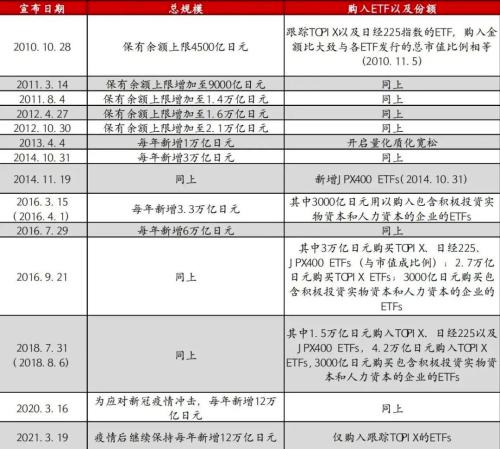
Core Insights - The article discusses the phenomenon of increased bank deposits in China, with a total increase of 12.73 trillion yuan in the first three quarters, and a significant surge of 2.96 trillion yuan in September alone, reversing a previous downward trend [1] - It draws parallels between the current low-interest environment in China and Japan's "lost decades," suggesting that despite low returns, individuals prefer to hold cash and deposits due to a lack of confidence in riskier assets [2][17] - The article highlights the performance of Japan's Nikkei 225 index, which has seen substantial growth since its historical low in 2009, driven by the Bank of Japan's aggressive ETF purchasing strategy [5][9] Group 1: Bank Deposits and Economic Behavior - In the first three quarters, individuals increased their bank deposits by 12.73 trillion yuan, with a notable rise of 2.96 trillion yuan in September, indicating a shift in savings behavior [1] - The current interest rates for bank deposits are very low, with savings accounts yielding between 0.05% and 0.2%, and fixed-term deposits around 1% [1] - This situation mirrors Japan's experience during its prolonged low-interest period, where citizens opted for cash and deposits due to a lack of investment confidence [2][17] Group 2: Japanese Market Insights - The Nikkei 225 index has shown remarkable recovery, rising from a low of 7,054 points in March 2009 to 48,580.44 points in October 2023, reflecting a compound annual growth rate of over 10% for those who invested in related ETFs [2][5] - The Bank of Japan's unique approach of purchasing ETFs has played a crucial role in stabilizing and boosting the stock market, with the central bank's holdings now representing about 7% of the total market capitalization [5][9] - Japan's economic recovery has been characterized by a shift from growth to returns, with significant contributions from export-oriented companies benefiting from a weaker yen [9][11] Group 3: Investment Strategies and Comparisons - The article suggests that Chinese investors could learn from Japan's experience by considering investments in domestic ETFs, particularly in the context of low-interest rates [4][23] - The structure of the Chinese stock market, particularly the CSI 300 index, reflects a similar evolution as Japan's, with a focus on financial, real estate, and emerging technology sectors [23][25] - The Chinese ETF market has surpassed Japan's, indicating a growing acceptance and potential for further investment in index funds among retail investors [31]
全球首个无进展生存期、总生存期双获益药物 科伦博泰TROP2 ADC实现肺癌二线治疗突破
Mei Ri Jing Ji Xin Wen· 2025-10-22 13:50
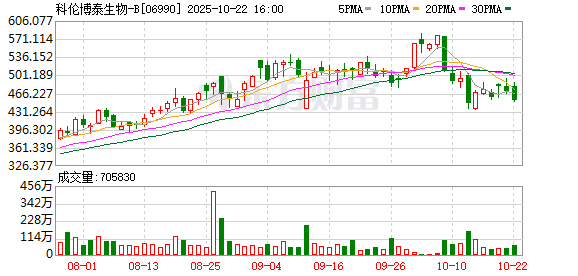
Core Viewpoint - The recent clinical trial data presented by Keren Biotechnology at the 2025 European Society for Medical Oncology (ESMO) conference indicates that sac-TMT (TROP2 ADC) is the first drug to achieve both progression-free survival (PFS) and overall survival (OS) benefits in the second-line treatment of EGFR-mutant non-small cell lung cancer (NSCLC), addressing a significant treatment gap in this area [2][6]. Group 1: Clinical Trial Results - The OptiTROP-Lung04 study evaluated the efficacy and safety of sac-TMT compared to platinum-based doublet chemotherapy in patients with locally advanced or metastatic EGFR-mutant NSCLC [4]. - The study enrolled 376 patients, with a median follow-up of 18.9 months, showing a median PFS of 8.3 months for sac-TMT versus 4.3 months for chemotherapy, representing a 51% reduction in the risk of disease progression or death [4]. - The OS for sac-TMT was not reached (NR) compared to 17.4 months for chemotherapy, indicating a 40% reduction in the risk of death, with an objective response rate (ORR) of 60.6% versus 43.1% for chemotherapy [4][6]. Group 2: Safety Profile - The most common treatment-related adverse events (TRAEs) for both sac-TMT and chemotherapy were hematologic toxicities, with no reported cases of interstitial lung disease (ILD) or pneumonia in the sac-TMT group, suggesting a manageable safety profile [4][6]. Group 3: Future Directions - Following the promising results in second-line treatment, Keren Biotechnology has initiated a phase III clinical trial (SKB264-Ⅲ-15) to evaluate sac-TMT in combination with osimertinib compared to osimertinib alone in first-line treatment for patients with EGFR-mutant locally advanced or metastatic NSCLC [7]. - The significant clinical need for effective treatments in EGFR-mutant NSCLC has led to multiple investigational drugs targeting this indication, highlighting the competitive landscape in this therapeutic area [6][7].
创新药重返泡沫时代? 映恩生物朱忠远:行业估值有泡沫不是坏事 对外授权不是创新药公司的目标,而是手段
Mei Ri Jing Ji Xin Wen· 2025-10-20 14:37
Core Viewpoint - The article discusses the recent developments and future prospects of Ying'en Biotech, highlighting its position in the ADC (Antibody-Drug Conjugate) market and the broader trends in the Chinese biotech industry, emphasizing the importance of business development (BD) and the potential for global competitiveness in the sector [1][8]. Company Overview - Ying'en Biotech was listed on the Hong Kong Stock Exchange and achieved a significant market capitalization of HKD 29.932 billion, with its stock price reaching a historical high of HKD 563.500 per share [1]. - The company has a strong focus on ADCs, with 10 clinical-stage pipelines, and is recognized as a "dark horse" in the ADC sector [2][4]. Clinical Development - The company's lead product, DB-1303, has shown significant advantages over the established drug T-DM1 in its Phase III clinical trials, indicating a promising path toward market approval [2][3]. - DB-1303 has received breakthrough therapy designation from both the FDA and CDE, showcasing its potential in treating endometrial cancer, a less competitive indication [3]. Business Development Strategy - Ying'en Biotech has successfully engaged in multiple BD transactions, partnering with notable companies such as BioNTech and GSK, which has positioned it favorably within the industry [7][8]. - The company has a strategic focus on global markets, leveraging its international team and experience to enhance its product development and commercialization efforts [6][7]. Market Trends - The ADC market is projected to grow at a compound annual growth rate (CAGR) of 34% from 2020 to 2024, with the market size expected to exceed USD 13 billion by 2024 [6]. - The article notes a shift in investor sentiment towards Chinese biotech, with a significant increase in BD transactions involving multinational corporations [8][9]. Financial Performance - Despite substantial R&D investments, Ying'en Biotech reported net losses of CNY 387 million, CNY 358 million, and CNY 1.05 billion for the years 2022 to 2024, with a loss of CNY 2.074 billion in the first half of 2025 [12]. - The company maintains confidence in its financial strategy, anticipating that its BD activities will generate significant milestone payments in the coming years [10][12]. Future Outlook - The CEO envisions a future where Chinese ADC companies will be globally recognized for their contributions to patient care, emphasizing the importance of innovation and effective clinical execution [11][12]. - Ying'en Biotech aims to transition from a biotech firm to a pharmaceutical company, focusing on maintaining its R&D integrity while expanding its global presence [10][11].
全球首个无进展生存期、总生存期双获益 科伦博泰TROP2 ADC实现肺癌二线治疗突破
Mei Ri Jing Ji Xin Wen· 2025-10-20 12:37
Core Viewpoint - The breakthrough in overcoming EGFR-TKI resistance in non-small cell lung cancer (NSCLC) is a common goal for new therapies, with the recent clinical data from Kolonbo Tai's TROP2 ADC sac-TMT showing significant benefits in both progression-free survival (PFS) and overall survival (OS) for EGFR-mutant NSCLC patients in the second-line treatment setting [1][3]. Group 1: Clinical Study Results - The III phase clinical study (OptiTROP-Lung04) evaluated sac-TMT against platinum-based doublet chemotherapy in patients with locally advanced or metastatic EGFR-mutant NSCLC, enrolling 376 patients with a median follow-up of 18.9 months [3]. - The study reported a median PFS of 8.3 months for sac-TMT compared to 4.3 months for chemotherapy, representing a 51% reduction in the risk of disease progression or death [3]. - The OS for sac-TMT was not reached (NR) versus 17.4 months for chemotherapy, indicating a 40% reduction in the risk of death [3]. - The objective response rate (ORR) was 60.6% for sac-TMT compared to 43.1% for chemotherapy, with a median duration of response (mDoR) of 8.3 months versus 4.2 months [3]. Group 2: Safety Profile - The most common treatment-related adverse events (TRAEs) for sac-TMT and platinum-based chemotherapy were hematologic toxicities, with no reported cases of interstitial lung disease (ILD) or pneumonia in the sac-TMT group, indicating a manageable safety profile [4]. Group 3: Future Directions - The results from the study suggest that sac-TMT has achieved statistically significant and clinically meaningful improvements in both OS and PFS compared to chemotherapy, addressing the challenge of obtaining OS advantages after EGFR-TKI resistance [5]. - Kolonbo Tai plans to expand the use of sac-TMT into first-line treatment, with a new III phase clinical study (SKB264-III-15) initiated to evaluate sac-TMT in combination with osimertinib against osimertinib monotherapy in patients with EGFR-mutant NSCLC [7].
阿斯利康(AZN.US)乳腺癌药物Enhertu预防复发效果优于竞品 有望治愈早期患者
智通财经网· 2025-10-20 09:00
Core Insights - AstraZeneca (AZN.US) and Daiichi Sankyo's cancer drug Enhertu shows improved treatment outcomes for early-stage breast cancer patients, potentially expanding its patient base and moving closer to a cure [1] - Enhertu outperformed Roche's Kadcyla in preventing disease recurrence and showed better results when used pre-surgery [1][2] - The collaboration between AstraZeneca and Daiichi Sankyo has made Enhertu one of the fastest-growing cancer drugs globally, with sales reaching $3.75 billion last year [1] Group 1 - In a study, over 92% of patients treated with Enhertu were alive and free of invasive disease three years post-surgery, compared to 84% for Kadcyla [2] - Enhertu reduced the risk of death or recurrence by 53%, although it was associated with more cases of interstitial lung disease [2] - Approximately two-thirds of patients treated with Enhertu had no cancer cells remaining in their breast or lymph nodes at surgery, compared to 56% in the standard treatment group [2] Group 2 - The main challenge for doctors is determining whether Enhertu should be used pre- or post-surgery, with some experts favoring post-surgery use [2][3] - AstraZeneca's oncology business executive vice president stated that the data from the trials shows "significant advantages," highlighting the need for further discussion on the optimal timing for Enhertu's use [3]

医药生物行业跟踪周报:高股息创新中药标的被低估,重点推荐佐力药业、方盛制药等-20251019
Soochow Securities· 2025-10-19 11:55
Investment Rating - The report maintains a rating of "Buy" for the pharmaceutical and biotechnology sector, specifically recommending companies like Zhaoli Pharmaceutical and Fangsheng Pharmaceutical as undervalued high-dividend Chinese medicine stocks [1]. Core Insights - The report highlights that the Chinese medicine sector is characterized by strong cash flow and low debt ratios, making it capable of high dividend payouts. This sector is less affected by international political dynamics, making it a viable defensive strategy in a volatile market [16][17]. - The report ranks sub-sectors in the following order of preference: innovative drugs > research services > CXO > Chinese medicine > medical devices > pharmacies [10][12]. Summary by Sections 1. Significant Excess Returns in Pharmaceutical Stocks - The A-share pharmaceutical index has shown a year-to-date increase of 18.85%, with a weekly decline of 2.48%. The Chinese medicine sector saw a slight increase of 0.38%, while other sectors like medical services and medical devices experienced declines [4][9]. 2. High Dividend Yield in Chinese Medicine Sector - The report emphasizes the attractiveness of high dividend yields in the Chinese medicine sector, with companies like Zhaoli Pharmaceutical expected to have a dividend yield of 4.1% in 2025, and Fangsheng Pharmaceutical at 3.1% [17][18]. 3. R&D Progress and Company Dynamics - Recent developments include the approval of innovative drugs and clinical trials by various companies, indicating ongoing advancements in the sector [4][12]. 4. Industry and Regulatory Insights - The report provides insights into the regulatory landscape affecting the pharmaceutical industry, noting that the impact of tariff wars on the sector is limited [4]. 5. Market Review - The report tracks the performance of various pharmaceutical sub-sectors, noting that the Chinese medicine sector has outperformed others in recent weeks [4][9].


又有BD大单,罗氏超15亿美元押注翰森制药,MNC的一场“焦虑型投资”?
Sou Hu Cai Jing· 2025-10-18 06:45
Core Insights - The recent surge in business development (BD) transactions in the pharmaceutical industry highlights a growing trend, with five deals involving companies like Hansoh Pharmaceutical and Roche, totaling over $4.2 billion [1][2][3] - Hansoh Pharmaceutical's collaboration with Roche involves a licensing agreement for the ADC drug HS-20110, which is currently in clinical trials for colorectal cancer and other solid tumors [1][11] - The partnership reflects Roche's strategic need to enhance its product pipeline in the competitive ADC market, where it faces increasing pressure from other pharmaceutical companies [5][6] Group 1: Business Development Transactions - Five BD transactions were disclosed recently, involving companies such as Hansoh Pharmaceutical, Roche, and others, with a total value exceeding $4.2 billion [1] - The deals primarily focus on high-barrier, unmet clinical needs, indicating a strategic shift towards innovative drug development [1][2] - Hansoh's licensing agreement with Roche includes an upfront payment of $80 million and potential milestone payments of up to $1.45 billion [1][11] Group 2: Market Dynamics and Competitive Landscape - Roche has been a leader in the ADC space but is facing increasing competition from other companies developing next-generation ADCs [5][6] - The ADC market is becoming crowded, with multiple companies targeting the CDH17 pathway, which is seen as a promising area for cancer treatment [12][13] - The demand for innovative treatments, particularly for colorectal cancer, is rising, with over 510,000 new cases reported annually in China alone [11][12] Group 3: Hansoh Pharmaceutical's Innovation Strength - Hansoh Pharmaceutical has successfully transitioned from generic to innovative drug development, with a robust pipeline of products targeting major diseases [7][9] - The company's revenue for the first half of the year reached approximately 7.43 billion RMB, with a year-on-year growth of about 14.3%, driven largely by innovative drug sales [10] - Notable products include the first original third-generation EGFR-TKI in China, which has been included in multiple national treatment guidelines [9][10]

科伦博泰HER2 ADC药物获批用于治疗乳腺癌 该靶点国内已有多款药物上市
Mei Ri Jing Ji Xin Wen· 2025-10-17 15:53
Core Insights - Keren Biotechnology's antibody-drug conjugate (ADC) A166 (also known as "Shutailai") has received approval from the National Medical Products Administration (NMPA) for use in adult patients with HER2-positive breast cancer who have previously received one or more anti-HER2 therapies [1] - The approval is based on a Phase III clinical trial (KL166-III-06) that demonstrated significant improvement in progression-free survival (PFS) compared to T-DM1, with a trend towards improved overall survival (OS) [1] Company Developments - Keren Biotechnology has initiated a Phase II clinical study for A166 targeting HER2-positive breast cancer patients who have previously received topoisomerase inhibitor ADC therapy [2] - A166 is the second ADC approved by Keren Biotechnology, indicating a growing portfolio in the ADC space [1] Industry Context - The HER2-targeted ADC market is currently dominated by international pharmaceutical companies, with Roche's T-DM1 and Daiichi Sankyo/AstraZeneca's DS-8201 leading the market [2] - DS-8201 was first approved in China in February 2023 and has multiple indications, including breast cancer, gastric cancer, and lung cancer, and is included in the national medical insurance directory [2] - Other domestic ADCs, such as Rongchang Biotech's trastuzumab deruxtecan, have also gained approval for various HER2-related indications, contributing to a competitive landscape [3] - The timeline for A166's inclusion in the national medical insurance directory may be challenging, as the preliminary review for the 2025 adjustments has already been completed [3]
创新药出海黄金时代,科创板抢占弹性先机
Quan Jing Wang· 2025-10-17 13:37
Core Insights - The article discusses the growth and potential of China's innovative drug industry, highlighting its transition from generic to innovative drug development, particularly in the context of the global market and competition with the U.S. [1][9] Group 1: Definition and Market Position of Innovative Drugs - Innovative drugs are defined as medications that are first to be launched globally, requiring novel efficacy and mechanisms of action [1][2] - The distinction between innovative drugs and generic drugs lies in the former's proprietary intellectual property and unique therapeutic functions [2][3] - China's innovative drug companies have made significant advancements, particularly in CAR-T therapies and bispecific antibodies, positioning themselves competitively on the global stage [1][8] Group 2: Pipeline Importance and Development Challenges - The pipeline is considered a major asset for innovative drug companies, with multiple projects running concurrently to mitigate risks associated with individual project failures [4][5] - The success rate for drug development from discovery to market is less than 7%, with the highest failure rates occurring in early stages [4][6] - China's innovative drug companies are noted for their rapid development and efficiency in their pipelines, which are diversified across various therapeutic targets [5][6] Group 3: Payment System and Policy Support - Recent policy changes have integrated innovative drugs into national healthcare strategies, enhancing the support for their development and market access [9][10] - The collaboration between public insurance and commercial insurance is crucial for the financial viability of innovative drugs, with current commercial insurance coverage being significantly lower than in developed markets [10][11] - The government has allocated substantial funds to support innovative drug development, with a notable shift towards commercial insurance to alleviate financial pressures on public healthcare systems [10][11] Group 4: Globalization and Collaboration Models - The article outlines the evolution of collaboration models for Chinese innovative drug companies, shifting from outright buyouts to co-development agreements with multinational corporations [12][13] - New collaborative structures, such as joint ventures, are emerging, reflecting the growing recognition of Chinese innovative assets on the global stage [12][13] - The increasing global acceptance of Chinese innovative drugs is expected to enhance their market presence and revenue potential [12][14] Group 5: Role of the STAR Market - The STAR Market is highlighted as a critical platform for innovative drug companies, providing access to capital and emphasizing their technological attributes [15][16] - The STAR Market's index includes a concentrated number of high-growth innovative drug companies, which are expected to perform well in the context of increasing global demand for innovative therapies [15][17] - The index's structure allows for significant investment opportunities, particularly in companies with strong research and development capabilities [16][17] Group 6: Future Growth Potential - The long-term outlook for China's innovative drug sector remains positive, with substantial growth opportunities anticipated over the next 3-5 years [19][20] - The domestic market for innovative drugs is still underdeveloped compared to global standards, indicating significant room for expansion [21][22] - The potential for large-scale contracts and partnerships with multinational companies is increasing, reflecting the competitive strength of Chinese innovative drug firms [22]