China Steel

Search documents
特朗普收钢税,马科长升局长,中国钢铁凭什么逆袭?
Sou Hu Cai Jing· 2025-07-04 10:52
Group 1 - The steel industry in China, despite low profitability, is considered a crucial pillar of the national economy, with a total output value of 81,300 billion and a profit of only 291 billion, resulting in a profit margin of 0.36% [2] - China's steel production capacity remains around 1.1 billion tons, accounting for over half of global production, with a shift towards high-end products essential for various infrastructure projects [3] - The transformation of the steel industry in China reflects a broader economic management strategy that prioritizes social stability and employment over short-term financial gains [5][14] Group 2 - The U.S. and European countries are facing challenges in their steel industries due to protectionist policies and a lack of long-term strategic planning, leading to job losses and decreased competitiveness [10][11][12] - Japan's acquisition of U.S. steel companies to avoid tariffs may compromise its technological independence and long-term competitiveness in the steel sector [13] - The contrasting approaches between China and Western countries highlight a fundamental difference in economic philosophies, with China focusing on human factors and social welfare rather than purely financial metrics [14]

美越达成协议限制转口贸易,中国钢铁出口影响几何
Di Yi Cai Jing· 2025-07-04 10:07
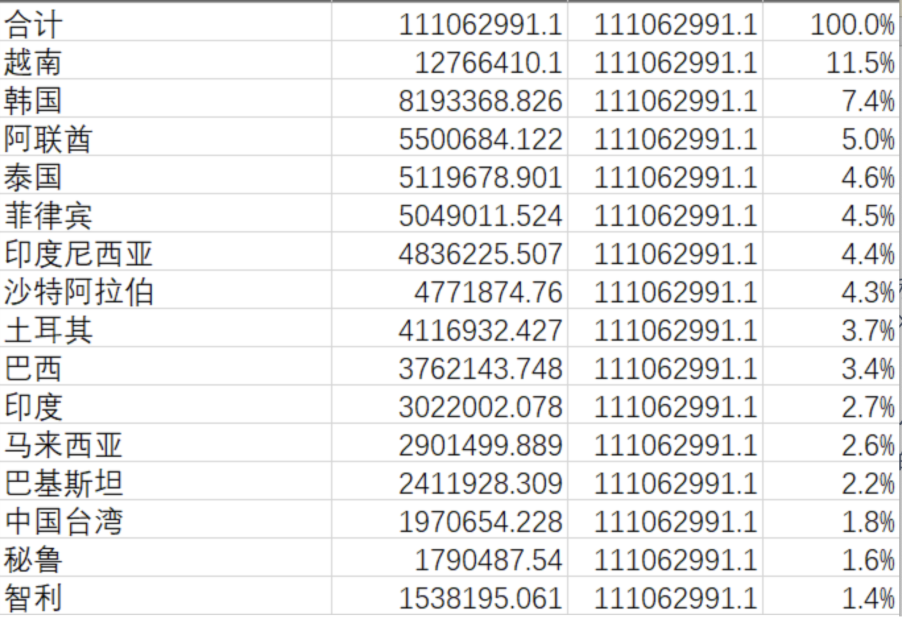
Group 1 - The trend of transferring technology and production capacity from Chinese steel mills to Southeast Asia, Africa, and the Middle East is expected to continue, leveraging local resources and tariff advantages [1][6] - The U.S. has reached a trade agreement with Vietnam, imposing a 20% tariff on all goods exported to the U.S., significantly lower than the previously announced 46% tariff [1] - Vietnam is projected to become the largest export destination for Chinese steel in 2024, accounting for 11.5% of total steel exports [2][3] Group 2 - In 2024, China's steel exports are expected to reach 110.72 million tons, marking a historical high with a year-on-year increase of 22.7% [2] - The export volume to Vietnam has shown a significant decline in early 2025, with a 25.9% decrease compared to the same period in 2024 [4][5] - The steel trade friction between China and countries like Vietnam and South Korea is increasing, with Vietnam imposing anti-dumping duties on Chinese steel products [3][4] Group 3 - The ASEAN region is experiencing strong demand for steel, particularly driven by Vietnam, Malaysia, and Singapore, with total demand expected to reach approximately 80 million tons by 2025 [5][6] - Chinese steel companies are accelerating overseas investments, with notable projects in Vietnam, Saudi Arabia, and Egypt, indicating a strategic shift towards international production [6] - The Chinese steel industry is advised to maintain a balanced export strategy that meets domestic needs while also catering to international market demands [7]
摩根大通:中国钢铁-供给侧改革 2.0?有待观察
摩根· 2025-07-03 02:41
Investment Rating - The report maintains a cautious stance on steel equities, suggesting to wait for further concrete policies before investing [5]. Core Insights - The report discusses the recent government initiatives aimed at curbing excess competition and reducing capacity in the steel sector, highlighting a historical context of similar measures that have led to short-term price increases followed by declines [5]. - Investors are currently pricing in a potential "supply-side reform 2.0," but the report emphasizes the lack of concrete policies such as mandatory production cuts and consolidation of unprofitable mills, which are necessary for a more bullish outlook [5]. Summary by Sections Historical Policy Announcements - The report includes a table detailing historical policy announcements related to phasing out outdated capacities, showing various impacts on steel prices over different time frames [3]. - For instance, a symposium in January 2016 led to a 1.2% drop in rebar prices the following day, while subsequent announcements in February and April 2016 saw price increases of 1.0% and 0.3%, respectively [3]. Market Performance - Steel shares experienced significant fluctuations, with increases of 5% to 91% noted on July 2, attributed to government meetings and production cut notices in Tangshan [5]. - The report indicates that historical reactions to similar government announcements typically resulted in a 2% increase in share prices the following day, but declines of 2-5% after a month [5]. Global Steel Comparisons - A comparative analysis of global steel companies is provided, showcasing market capitalization, enterprise value, and performance metrics such as EV/EBITDA and PE ratios [7]. - For example, Baosteel has a market cap of $21.1 billion and an EV/EBITDA ratio of 6.0, while U.S. Steel Corp has a market cap of $12.4 billion with a PE ratio of 26.2 [7].
中国钢铁工业协会:车企“卷”价格严重冲击钢铁企业稳健经营
Xin Jing Bao· 2025-06-10 13:14
Core Viewpoint - The China Iron and Steel Association emphasizes the urgent need for collaboration between the steel and automotive industries to combat "involution" and promote healthy development across the supply chain [1][2] Group 1: Industry Challenges - Automotive companies are pressuring steel suppliers to lower prices, significantly impacting the stable operations of steel enterprises [1] - In 2024, key automotive companies are expected to produce approximately 40 million tons of automotive steel plates, with cold automotive plates accounting for about 29 million tons [1] - Some automotive manufacturers have demanded price reductions exceeding 10% from steel suppliers, which is beyond what steel companies can accept [1] Group 2: Financial Pressures - The current market environment has led to automotive steel plates having virtually no profit margin for steel manufacturers, while automotive companies continue to request price cuts [1] - Certain automotive firms are delaying payments to steel suppliers, extending payment terms through financial instruments, thereby increasing financial pressure on steel companies [1] Group 3: Innovation and Competition - The procurement model for automotive steel plates undermines previous R&D investments and service systems, negatively affecting the motivation for steel suppliers to innovate [2] - The association views "involution" as a detrimental force that disrupts fair competition, distorts resource allocation, and hinders innovation and advancement in the value chain [2] - The automotive industry is urged to adhere to fair competition principles and focus on technological advancement as a core competitive advantage [2]
突发!印度对中国钢铁征12%重税,网友:自断后路!
Sou Hu Cai Jing· 2025-06-01 12:16
Group 1 - India's Ministry of Finance announced a 12% tariff increase on steel imports from China, marking a significant policy shift in the context of global trade disputes [1][3] - China has become India's second-largest source of steel imports, with import volumes reaching a nine-year high in both 2024 and 2025 [1] - India's steel production capacity gap is reported to be 120 million tons, with a current production target of 300 million tons, but only achieving 180 million tons [3] Group 2 - The Indian government claims the tariff is aimed at curbing Chinese dumping, despite the significant production capacity shortfall [3] - The Indian steel industry is facing pressure as domestic steel prices have dropped by approximately 15%, impacting small and medium-sized steel manufacturers [3] - Analysts suggest that India's reliance on Chinese imports for coking coal while exporting iron ore to China creates a policy contradiction that may affect long-term outcomes [3] Group 3 - Predictions indicate that the tariff could lead to increased costs for infrastructure projects in India [5] - Chinese companies have already begun relocating production to countries like Vietnam and Indonesia to avoid tariffs, with Baosteel keeping rough processing domestic while moving refining operations abroad [5] - China's special steel export prices are three times higher than those of India, and recent advancements in corrosion-resistant deep-sea steel by Ansteel may mitigate the actual impact of tariffs [5] Group 4 - China's control over coking coal exports to India presents a potential leverage point, as tightening exports could significantly impact Indian steel production [7] - The Chinese Ministry of Commerce has stated it will take necessary measures to protect the rights of its enterprises, indicating confidence in its position [7] - China's steel exports cover 103 countries, with India accounting for only 6%, suggesting a dynamic balance in global steel trade driven by interdependence [7][9]
中国钢铁工业协会市场调研部副主任刘彪:粗钢总量下降 品种需求分化
Qi Huo Ri Bao· 2025-05-22 08:10
Group 1 - The Chinese steel industry has experienced rapid development and adjustment over the past 16 years since the listing of rebar futures in 2009, with crude steel production peaking at 1.065 billion tons in 2020 and projected to decline to 1.005 billion tons by 2024, a total decrease of 60 million tons [1] - Despite the overall decline in crude steel production, there is a notable differentiation in product types, with rebar production decreasing from 266 million tons in 2020 to 195 million tons in 2024, a reduction of 7 million tons, while hot-rolled coil production increased by 9.5 million tons during the same period [1] - China's steel exports have shown a growth trend, with 2023 exports reaching 110 million tons, nearing the historical peak of 112 million tons in 2016, indicating a shift towards higher value-added products in steel exports [1] Group 2 - Since the second half of 2022, the price gap between imported and exported steel has widened, with the average import price approaching twice that of the export price, and some high-end products from Germany and Sweden exceeding 3,000 USD per ton [2] - The export price has been under pressure due to intense domestic market competition, leading to a decline in export prices and contributing to increased trade friction in the international market [2]
中国钢铁工业协会副会长骆铁军:钢铁与金融深度融合、相互促进
Qi Huo Ri Bao Wang· 2025-05-22 07:11
Group 1 - The steel industry in China has experienced significant growth since the new century, leading to the emergence of steel futures, with nine related futures products currently available, including four listed on the Shanghai Futures Exchange [1] - Rebar is the largest metal futures product globally in terms of trading volume, reflecting the increasing financial attributes and pricing trends of steel futures [1] - Steel companies have transitioned from merely observing the futures market to actively utilizing it to mitigate operational risks, indicating a deepening integration between steel and finance [1] Group 2 - The Shanghai Futures Exchange has engaged with steel companies to enhance contract continuity and delivery convenience, resulting in an overall increase in delivery volumes for rebar and hot-rolled coils [2] - The steel industry is currently facing challenges due to a complex international environment, leading to increased pressure on production and operations, prompting the China Iron and Steel Association to focus on enhancing industrial capabilities and modernizing supply chains [2] - The association emphasizes three key priorities: controlling capacity expansion, promoting industry concentration, and ensuring resource security, while also advancing internationalization efforts in the steel industry [2] Group 3 - The steel industry is recognized as a vital foundation for the national economy, with calls for the Shanghai Futures Exchange to become a world-class trading platform to better serve the real economy [3] - The China Iron and Steel Association aims to collaborate with the Shanghai Futures Exchange and industry stakeholders to improve futures regulations and promote the integration of finance and industry, supporting high-quality development in the steel sector [3]
巴克莱:金属与矿业-市场对中国钢铁减产报道态度不明
2025-05-12 03:14
Summary of Barclays Metals & Mining Conference Call Industry Overview - **Industry**: Metals & Mining, with a focus on the steel production sector in China and global commodity markets [1][7] Key Points and Arguments 1. **China's Steel Production**: - CISA estimates that nationwide steel production is up 5.4% year-to-date as of late April, contrasting with NBS's 1.1% increase to March [2] - Speculated output restrictions of 50 million tons of crude steel could lead to significant price increases due to low inventories, although rebar futures have fallen by 2.4% week-over-week [2] - Implementing a 50 million ton cut would require a 13.2% decline in average daily production for the remainder of the year, which may be challenging due to economic impacts on local economies [2] 2. **Commodity Price Movements**: - Iron ore prices have seen fluctuations, with a recent increase of 1% for 62% fines, currently at $98.2 per ton [14] - EU HRC prices remain stable at €652 per ton, with a 0% change week-over-week [15] - Copper prices increased by 1% to $9,473 per ton, reflecting a 10% rise over the past month [14] 3. **China's Economic Indicators**: - China's foreign exchange reserves increased by $41 billion month-over-month to approximately $3.3 trillion [9] - Total trade value in April reached 3.84 trillion yuan ($531.46 billion), up 5.6% year-over-year, with exports at 2.27 trillion yuan (+9.3% YoY) and imports at 1.57 trillion yuan (+0.8% YoY) [9] - The People's Bank of China (PBOC) announced a 0.5% cut in the reserve requirement ratio (RRR) for eligible financial institutions, expected to inject approximately 1 trillion yuan ($138.9 billion) into the market [9] 4. **Corporate Developments**: - De Beers is closing its lab-grown diamond business, reaffirming its commitment to traditional diamonds [8] - Guinea canceled a bauxite mining license held by EGA due to non-compliance with refinery construction requirements, impacting EGA's operations significantly [10] - KoBold Metals reached a preliminary agreement to acquire a stake in the Manono lithium deposit in the DRC, aiming to deploy over $1 billion for development [10] 5. **Market Sentiment**: - The market remains cautious with ongoing discussions about output restrictions in the steel sector and the impact of PBOC's monetary policy on market sentiment [12][13] - European steel plate prices have shown limited movement, with inquiries increasing but orders remaining low, indicating a cautious market environment [13] Additional Important Information - **Aluminium Market**: US aluminium inventories are expected to run dry by July, potentially leading to price increases due to tariffs [12] - **Copper Inventory Trends**: Copper inventories on the SHFE have declined by 60% month-over-month, indicating a tightening market [10] - **China's Real Estate Policy Changes**: Chinese officials are considering reforms to the housing market to stabilize prices, which may impact future demand [9] This summary encapsulates the key insights from the conference call, highlighting the current state of the metals and mining industry, particularly in relation to China's steel production and broader economic indicators.
一季度中国钢铁生产总体保持稳定
news flash· 2025-04-29 06:44
Core Viewpoint - The overall steel production in China remained stable in the first quarter, with slight increases in production metrics but a decline in apparent consumption [1] Production Data - In the first quarter, the national crude steel output reached 259 million tons, representing a year-on-year increase of 0.6% [1] - The pig iron production was 216 million tons, showing a year-on-year growth of 0.8% [1] - The total steel output amounted to 359 million tons, which is a year-on-year increase of 6.1% [1] Consumption Data - The apparent consumption of crude steel in the country was 230 million tons, reflecting a year-on-year decrease of 1.2% [1]
中国刚亮态度,印度就向美国低头,并对中国钢铁加征关税
Sou Hu Cai Jing· 2025-04-26 09:03
Group 1 - The visit of US Vice President Vance to India marks the first high-level visit since President Trump took office, indicating the importance of US-India relations [1] - Both countries expressed satisfaction with significant progress in negotiations for a bilateral trade agreement, despite the backdrop of Trump's announcement of comprehensive "reciprocal tariffs" [1][3] - The US aims to leverage India as a counterbalance to China, highlighting India's growing global influence and its strategic military ties with Russia [3] Group 2 - India has decided to impose a temporary 12% tariff on certain steel imports for 200 days starting April 21, aimed at protecting its domestic steel industry from a surge in cheap imports, particularly from China [4][6] - The Indian Steel Association had previously requested the government to raise import tariffs, leading to the government's decision based on a report indicating severe damage to the domestic industry from increased imports [4] - The timing of India's tariff announcement coincides with Vance's visit, suggesting political motivations behind the move, as India appears to align more closely with US interests while disregarding warnings from China [6][8]