
洋河股份

Search documents
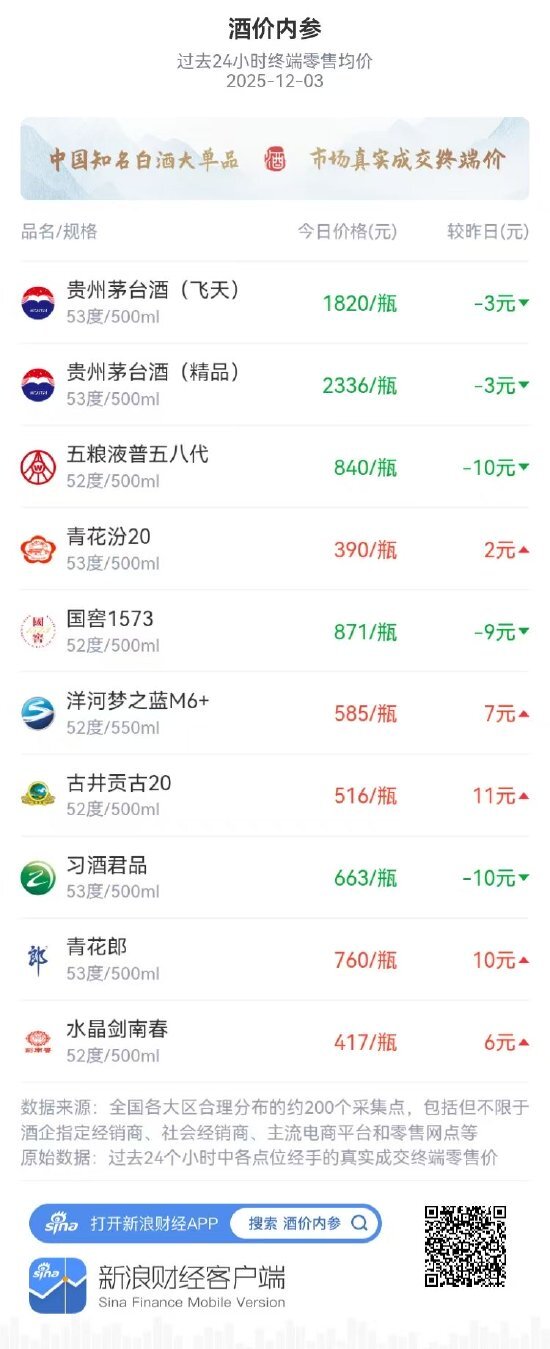
酒价内参12月3日价格发布 青花郎实现四连涨
Xin Lang Cai Jing· 2025-12-03 01:33
Group 1 - The core viewpoint of the article indicates that the retail prices of the top ten liquor products in the white liquor market have shown a slight increase, reaching a total price of 9198 yuan, marking the highest level in the past week [1][2] - The data collected by "Wine Price Insider" comes from approximately 200 sampling points across various regions, ensuring an objective and traceable representation of the market prices [1][2] - The price movements of different liquor products exhibit a wide divergence, with notable increases in prices for products like Gujing Gong 20, which rose by 11 yuan per bottle, and Qinhualang, which saw a 10 yuan increase [1][4] Group 2 - At the 2025 Fenjiu Global Dealer Conference, the chairman of Shanxi Fenjiu Group highlighted a shift in white liquor consumption from traditional business and government use to a dual focus on "pleasing others" and "self-pleasing" [2] - The chairman emphasized the need for white liquor companies to adapt to changing consumer behaviors and market dynamics, indicating a strategic shift towards national expansion and targeting younger consumers [2] - The 2026 strategy for Fenjiu includes a focus on both traditional market expansion and the development of international and youth-oriented strategies as key growth paths [2]


酒价内参12月3日价格发布 五粮液普五八代下跌10元
Xin Lang Cai Jing· 2025-12-03 01:25
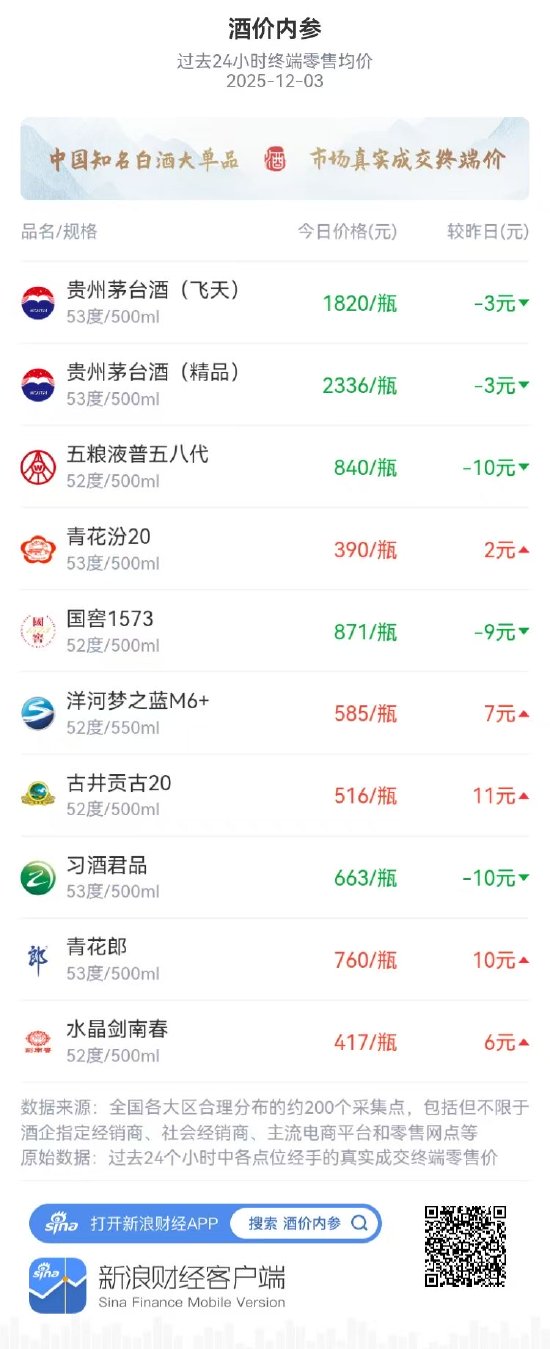
Core Insights - The article highlights the recent trends in the Chinese liquor market, particularly focusing on the retail prices of major baijiu brands, which have shown slight increases and a mixed performance among different products [1][5][6]. Price Trends - The average retail price of the top ten baijiu products has slightly increased, with a total price of 9198 yuan for a bundled sale, marking a 1 yuan rise from the previous day, reaching the highest level in the past week [1][5]. - Notable price changes include: - Gujing Gong 20 saw a significant rebound of 11 yuan per bottle [6]. - Qinghua Lang increased by 10 yuan per bottle, continuing a strong upward trend for four consecutive days [6]. - Yanghe Dream Blue M6+ rose by 7 yuan per bottle, while Crystal Jian Nan Chun increased by 6 yuan per bottle, marking three consecutive increases [6]. - On the downside, Wuliangye Pu 58 and Xijiu Junpin both dropped by 10 yuan per bottle, with Guojiao 1573 decreasing by 9 yuan per bottle [6]. Market Dynamics - The white liquor consumption is shifting from a traditional model focused on business and government consumption to a new paradigm that includes both "pleasing others" and "self-pleasing" [2][6]. - The chairman of Shanxi Fenjiu Group emphasized the need for companies to adapt to changing consumer behaviors and market dynamics, indicating a long-term coexistence of traditional and modern consumption patterns [2][6]. - Fenjiu's 2026 strategy will focus on expanding market coverage and promoting sales while also targeting younger consumers and international markets as key growth areas [2][6].





洋河要破产了?
Sou Hu Cai Jing· 2025-12-02 17:17
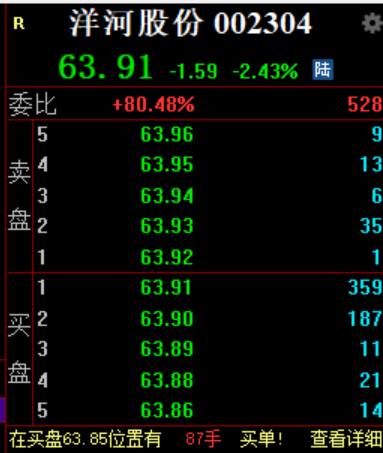
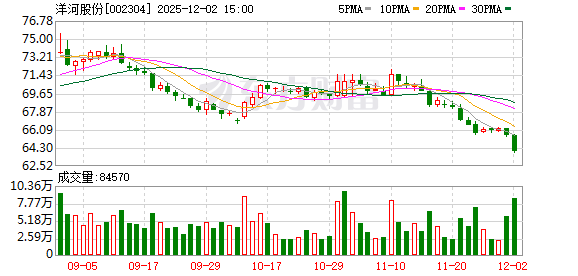
Core Viewpoint - Yanghe Co., Ltd. has experienced a significant decline in stock price, with a year-to-date drop of 18.39%, raising concerns about its financial stability and future profitability [2][4][32]. Group 1: Stock Performance - On December 2, 2025, Yanghe's stock fell by 2.43%, closing at 63.91 [1]. - The current market capitalization of Yanghe is approximately 962 billion, which is significantly lower than the cash reserves of its competitor, Moutai, which stands at 1,871 billion [2]. - The stock is nearing its year-to-date low of 63.17, indicating potential further declines [2]. Group 2: Financial Health - Yanghe has cash-like assets amounting to 218 billion, suggesting a relatively low risk of immediate bankruptcy [5][22]. - The company's estimated price-to-earnings ratio is around 12, based on a projected annual net profit of 60 billion [5][6]. - Despite the current downturn, Yanghe has accumulated a total net profit of 977 billion since its listing in 2009, averaging about 60 billion annually [27][28]. Group 3: Industry Context - The white liquor industry is currently undergoing an adjustment phase, but leading brands like Yanghe still maintain a strong market position [24]. - Yanghe's recent product launch, the seventh generation of "Sea Blue," has received positive consumer feedback, indicating potential for future sales growth [26]. - The company is expected to navigate through the industry's inventory reduction cycle due to its solid cash reserves [25].
从星辰大海到烟火人间 洋河股份以“蓝色桥梁”践行责任担当
Xin Hua Cai Jing· 2025-12-02 13:25
作为行业领军企业,近年来,洋河持续构建多元立体的公益矩阵,以更具格局、更富温度的品牌形象, 践行"兼济天下"的企业情怀,在时代画卷中彰显深厚的责任担当。 筑梦苍穹:创新公益模式助力强国梦 航天事业是国家综合实力与民族未来的集中体现。从"北斗"组网到"天问"探火,我国航天事业跨越式发 展,离不开一代代航天人的不懈探索,也少不了社会力量积极参与。洋河以创新模式助力航天事业,成 为响应国家战略、履行社会责任的生动实践。 自2019年起,洋河成为中国航天事业合作伙伴,积极助力航天事业发展,通过资金支持、科普教育、文 创开发、人才培养等多维度举措,推动航天精神与社会公益深度融合。随着双方合作的持续深化,2023 年,洋河升级为战略合作伙伴,合作方式和投入模式持续深化。2024年,洋河创新推出"百万航天合伙 人计划",截至2025年年中,该计划参与人次突破百万,有力推动航天公益事业的社会化,大大提升了 大众参与度。 科学普及方面,洋河联合中国航天基金会开展"航天科普进校园"活动,深入全国数十所偏远地区中小 学,举办讲座与互动体验数百场,惠及数万青少年。在神舟二十号载人飞船发射当日走进甘肃酒泉天仓 小学,举办"爱心圆梦·情 ...
12月2日深证国企股东回报R(470064)指数跌0.36%,成份股洋河股份(002304)领跌
Sou Hu Cai Jing· 2025-12-02 11:00
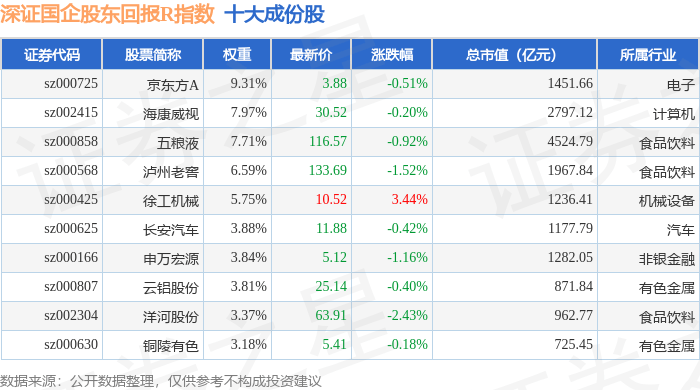
Core Points - The Shenzhen State-Owned Enterprises Shareholder Return Index (470064) closed at 2227.58 points, down 0.36%, with a trading volume of 18.448 billion yuan and a turnover rate of 0.74% [1] - Among the index constituents, 18 stocks rose while 31 stocks fell, with XCMG Machinery leading the gainers at 3.44% and Yanghe Brewery leading the decliners at 2.43% [1] Group 1: Index Performance - The Shenzhen State-Owned Enterprises Shareholder Return Index reported a decline of 0.36% on the trading day [1] - The total trading volume for the index was 18.448 billion yuan, indicating a relatively low turnover rate of 0.74% [1] Group 2: Stock Performance - The top-performing stock was XCMG Machinery, which increased by 3.44% [1] - The worst-performing stock was Yanghe Brewery, which decreased by 2.43% [1] - The index's top ten constituents included major companies such as BOE Technology Group, Hikvision, and Wuliangye, with varying weightings and market capitalizations [1] Group 3: Capital Flow - The index constituents experienced a net outflow of 769 million yuan from institutional investors, while retail investors saw a net inflow of 701 million yuan [3] - XCMG Machinery had a net inflow of 118 million yuan from institutional investors, despite overall negative trends in capital flow for many stocks [3] Group 4: Index Adjustments - Recent adjustments to the index included the addition of 10 new stocks and the removal of 10 existing stocks, reflecting changes in market dynamics [4] - Notable additions included companies from various sectors such as machinery, transportation, and food and beverage [4]


白酒市场迎来小幅涨价潮,是黎明前的曙光,还是昙花一现?
Sou Hu Cai Jing· 2025-12-02 10:02
Core Viewpoint - The Chinese liquor industry is experiencing a temporary price recovery in November, driven by regulatory efforts to address price inversion and combat counterfeit products, although clear signs of inventory depletion and sales recovery are still lacking [2][5]. Group 1: Market Dynamics - In the context of a sluggish market, the liquor industry faces a significant inventory pressure of 170 billion yuan, leading distributors to adopt aggressive discounting strategies to boost sales [5]. - The price inversion phenomenon has severely harmed distributors' interests, prompting brand owners to raise prices to maintain the integrity of the pricing system [5]. - The market is witnessing a shift towards rational consumption, with increased regulatory scrutiny on sales prices and a crackdown on low-price promotions and counterfeit products by e-commerce platforms [9][11]. Group 2: Company Performance - Among 20 listed liquor companies, 17 reported a decline in profits, with a median profit drop of 64.40%, and eight companies, including Shunxin Agriculture, faced losses [2]. - Despite the price increases initiated by brands like Yanghe and Guojiao, the overall market remains under pressure, with major products like Moutai experiencing price declines again by the end of November [7][9]. - The production of liquor in 2024 is projected to reach 160.194 million liters, a year-on-year increase of 3.74%, indicating a potential oversupply situation in the market [7][9]. Group 3: Consumer Behavior - The changing consumer sentiment reflects a more rational approach to high-priced liquor, influenced by a slowdown in disposable income growth and evolving consumption concepts [7]. - The focus on "opening rate" as a key performance indicator by companies like Songhe and Luzhou Laojiao aims to shift the emphasis from stockpiling to actual sales, alleviating inventory pressure and stabilizing product prices [11]. - Historical data suggests that stock market performance positively influences liquor consumption, with significant increases in consumer spending observed during favorable market conditions [11].
CBA新赛季增设潜力赛,开放15个招商品类
Zhong Guo Jing Ying Bao· 2025-12-02 08:04
Group 1 - The CBA League's 31st season will commence on December 12, with the regular season reduced from 46 to 42 rounds, aligning game rules more closely with FIBA standards [1][2] - A new "CBA Potential Match" will be introduced, allowing more young players to gain exposure and playing time, which is seen as beneficial for player development [2][3] - The trend towards youth is evident, with 62 out of 339 registered domestic players being first-time registrants, and 197 players born in the 2000s, making up 58% of the total [3][4] Group 2 - The core player mobility is increasing, with notable players like Zhao Rui and Zhang Zhenlin involved in trades, enhancing the quality of transactions [4] - The number of sponsors has decreased from 16 to 14, with some companies exiting and new ones entering, indicating a shift in sponsorship dynamics [4][5] - The league is opening 15 categories for club sponsorship rights, aiming to enhance commercial potential and brand value for clubs [5][6] Group 3 - Several teams have undergone name changes due to sponsorship updates, reflecting the ongoing trend of brand partnerships in the league [6][7] - Alcohol companies are prominent sponsors, with five teams in the CBA and three in the WCBA being sponsored by liquor brands, highlighting the marketing strategy of leveraging sports for brand recognition [6][7] - The future of sports marketing is expected to evolve towards deeper engagement and interaction, moving beyond simple sponsorships to more integrated marketing strategies [7]

CBA新赛季增设“潜力赛” 各俱乐部再获15个品类招商权益
Zhong Guo Jing Ying Bao· 2025-12-02 07:33
Core Viewpoint - The 31st season of the Chinese Basketball Association (CBA) League is set to begin on December 12, with significant changes in the competition format and rules aimed at enhancing the league's appeal and player development [1][2]. Group 1: Competition Format Changes - The regular season will be reduced from 46 rounds to 42 rounds [1]. - Game time will be adjusted from 12 minutes per quarter to 10 minutes, aligning more closely with FIBA rules, and certain special regulations will be eliminated [1]. - The CBA Club Cup will continue with an upgrade, adding three NBL teams, bringing the total to 23 participating teams [2]. - A new "CBA Potential Game" will be introduced, allowing for more exposure and playing time for young players [2]. Group 2: Player Demographics and Transactions - Among the 339 registered domestic players, 62 are first-time registrants, making up 18%, while "post-2000" players account for 58% [3]. - The number of players aged 31 and above has decreased to 29, the lowest in the past three seasons [3]. - A total of 48 domestic player transactions were completed, including 18 transfers and 17 free agent signings, marking a new high in transaction volume [3]. Group 3: Sponsorship and Media Partnerships - The number of sponsors has decreased from 16 to 14, with notable exits and new entries among sponsors [4]. - The league will continue with a five-tier sponsorship system, including major sponsors like China Life and strategic partners like Li Ning [4]. - Media partnerships have shifted to primarily include CCTV Sports for the new season [5]. Group 4: Team Naming and Marketing Strategies - Several teams have undergone name changes due to new sponsorship agreements, reflecting a trend in sports marketing [6]. - Alcohol brands are prominent sponsors, with five teams in the CBA and three in the WCBA being sponsored by liquor companies [6]. - The trend in sports marketing is shifting towards deeper engagement strategies, combining online and offline interactions to enhance brand recognition [7].
茅台“猎手”董宝珍预警:周期未到底,白酒还没到抄底时刻!
Xin Lang Cai Jing· 2025-12-02 06:20
Core Insights - The current focus for many investors is whether it is the right time to bottom-fish in the high-end liquor market, particularly in the baijiu sector [1][2] Demand Cycle - The demand cycle for high-end liquor is currently in a downward trend, influenced by macroeconomic slowdowns and a shrinking high-end dining sector [9][11] Inventory Cycle - The industry is still in the process of destocking, with leading brands like Moutai and Wuliangye yet to complete their inventory optimization [8][9] Valuation Cycle - The price-to-earnings (P/E) ratio for the baijiu sector has decreased from previously high levels of 60-70 times to around 20 times, indicating a return to normal valuation but not yet reaching a clearly undervalued state [9][10] Case Study: Yanghe - Yanghe's recent performance serves as a cautionary example; despite a high dividend yield and low P/E ratio attracting investors, its earnings significantly declined, reflecting ongoing issues in demand and inventory adjustments within the industry [10][11]
洋河股份跌2.00%,成交额3.03亿元,主力资金净流出8593.70万元
Xin Lang Cai Jing· 2025-12-02 05:35
Core Viewpoint - Yanghe Co., Ltd. has experienced a significant decline in stock price and financial performance, with a notable drop in revenue and net profit for the first nine months of 2025 [2][3]. Financial Performance - As of September 30, 2025, Yanghe Co., Ltd. reported a revenue of 18.09 billion yuan, a year-on-year decrease of 34.26% [2]. - The net profit attributable to shareholders for the same period was 3.98 billion yuan, down 53.66% year-on-year [2]. - The company's stock price has fallen by 18.63% year-to-date, with a 2.31% decline over the last five trading days and a 9.03% drop over the last 20 days [1]. Shareholder Information - The number of shareholders as of September 30, 2025, was 164,100, a decrease of 13.97% from the previous period [2]. - The average number of circulating shares per shareholder increased by 16.24% to 9,180 shares [2]. Dividend Distribution - Since its A-share listing, Yanghe Co., Ltd. has distributed a total of 56.34 billion yuan in dividends, with 19.66 billion yuan distributed over the last three years [3]. Institutional Holdings - As of September 30, 2025, the top ten circulating shareholders included notable entities such as the China Securities Finance Corporation and various ETFs, with changes in their holdings reflecting market dynamics [3].