
吉利

Search documents
汽车周报:小米把‘马力廉价’具象化,豪华不只是‘贵’-2025-03-06
Shenwan Hongyuan Securities· 2025-03-06 07:55
证 券 研 究 报 告 证券分析师 戴文杰 A0230522100006 daiwj@swsresearch.com 樊夏沛 A0230523080004 fanxp@swsresearch.com 联系人 朱傅哲 (8621)23297818× zhufz@swsresearch.com 2025 年 03 月 02 日 小米把'马力廉价'具象化,豪华 不只是'贵' 看好 ——2025/2/21-2025/2/28 汽车周报 本期投资提示: 行 业 及 产 业 请务必仔细阅读正文之后的各项信息披露与声明 本研究报告仅通过邮件提供给 中庚基金 使用。1 行 业 研 究 / 行 业 点 评 汽车 ⚫ 观点:短期市场虽然经历调整,但我们仍然相信智能化/Ai/机器人是今年汽车板块的重 要主线,而需求复苏将成为一条重要的支撑岸线贯穿全年行情。我们相信上半年随着政 策效果快速落地,情绪面依然乐观。而小米 Su7 Ultra 的发布成功,让我们坚信新势力 对传统汽车行业的冲击是巨大且确定的。我们认为后续机会在:1、汽车智能化和机器 人由 0 到 10 的估值弹性,建议关注优势企业小鹏、比亚迪、吉利、小米、理想、拓 普、三 ...





申万宏源全行业联合 2025年两会政府工作报告解读
2025-03-06 05:18
Summary of Key Points from the Conference Call Industry or Company Involved - The conference call primarily discusses the Chinese economy and various sectors influenced by the 2025 government work report, including technology, capital markets, real estate, and consumer sectors. Core Points and Arguments 1. **Economic Development Focus**: The government emphasizes expanding domestic demand, boosting consumption, promoting technological innovation, and supporting the development of the private economy. Consumption is highlighted as a key component of domestic demand policies [3][4][5] 2. **Capital Market Development**: The report stresses the importance of stabilizing the real estate and stock markets, with monetary policy support and capital market reforms being crucial. The management aims to create a favorable environment for the capital market [3][6][8] 3. **Investment Opportunities**: Key investment opportunities for the upcoming year are identified in technology sectors, particularly in AI computing, humanoid robots, and low-altitude economy. High-dividend sectors are also expected to see trends as recovery expectations grow [3][10] 4. **Monetary and Fiscal Policy**: The report indicates a shift towards moderately loose monetary policy and more proactive fiscal policy, with a focus on the supply of government bonds and local government debt [3][11] 5. **Real Estate Sector Outlook**: The government maintains a positive stance on the real estate sector, emphasizing the need for stable housing prices to support consumption. Specific measures include potential interest rate cuts and easing purchase restrictions in first-tier cities [3][14] 6. **Technological Innovation Initiatives**: The government outlines new initiatives in technological innovation, including advancements in AI, 6G technology, and smart devices, positioning these as core drivers of high-quality development [3][5] 7. **Consumer Electronics and Emerging Industries**: The report highlights the importance of consumer electronics, with government subsidies for products like smartphones and AR/VR devices, which will stimulate market demand [3][24] 8. **Cultural Industry Growth**: The cultural industry is seen as having significant growth potential, with support for the application of large models and the opening of the internet and cultural sectors to promote international trade [3][22] 9. **Food and Beverage Sector**: The food and beverage sector is expected to recover as the economy stabilizes, with a focus on national brands and regional leaders in the market [3][41][42] Other Important but Possibly Overlooked Content 1. **Debt Management**: The government acknowledges the need to address debt issues within the development framework, particularly concerning private enterprises [3][4] 2. **Transportation and Logistics**: The report emphasizes the need for innovation in transportation and logistics to enhance efficiency and reduce costs, particularly in cold chain and cross-border logistics [3][27][28] 3. **Green Transition**: The government is committed to promoting a green and low-carbon transition in transportation, integrating new technologies to improve operational efficiency [3][29] 4. **Banking Sector Support**: The report indicates the necessity of injecting capital into state-owned banks to support the real economy, with a projected issuance of special bonds to bolster bank capital [3][43][44] 5. **Non-Bank Financial Sector**: The focus is on comprehensive reform in the non-bank financial sector, promoting long-term capital inflows and addressing risks in smaller financial institutions [3][45] 6. **Construction Industry Trends**: The construction industry is expected to shift towards maintaining and renovating existing structures, with an emphasis on overseas expansion to compensate for domestic market saturation [3][58] This summary encapsulates the key insights and implications from the conference call, providing a comprehensive overview of the government's economic strategies and their potential impact on various sectors.

吉利正式“反击”比亚迪
虎嗅APP· 2025-03-05 10:03
Core Viewpoint - The article discusses Geely's strategic response to the competitive landscape of intelligent driving technology, emphasizing its unified approach through the "Qianli Haohan" system across all brands, contrasting with BYD's rapid rollout of intelligent driving versions across its product lines [2][12]. Summary by Sections Unified Intelligent Driving Strategy - Geely announced the unification of its intelligent driving solutions under the "Qianli Haohan" system, which is divided into five levels: H1, H3, H5, H7, and H9, aiming for a comprehensive rollout of features like parking assistance and navigation by March [3][4]. - The H1 level features a sensor configuration of 10V5R and a minimum computing power exceeding 100 TOPs, enabling high-speed navigation and automatic parking [4]. - The H3 level includes 11V3R sensors, supporting high-speed navigation and memory parking capabilities [4]. - The H5 level adds a laser radar to the H3 configuration, enhancing its capabilities for urban navigation and memory parking [4]. - The H7 level is similar to H5 but upgrades to parking valet features, while the H9 targets L3 level autonomous driving with advanced sensor configurations [4]. Competitive Positioning - Geely's approach contrasts with BYD's strategy of rapidly updating all mainstream models to "intelligent driving versions," as Geely opts for a more measured rollout, focusing on new models first and gradually updating older ones [13][21]. - The company is also integrating AI technologies into its intelligent driving strategy, enhancing capabilities in human-machine interaction and decision-making [6][8]. Resource Allocation and Development - Geely has established a joint venture to enhance its AI capabilities, which includes significant resources like the Xingrui Intelligent Computing Center with a computing power of 23.5 EFLOPS, the highest among domestic automakers [10][9]. - The integration of the Zeekr brand into Geely's structure aims to streamline development and reduce redundancy in intelligent driving technology [20][22]. Market Dynamics - The article highlights the ongoing price competition in the automotive market, with Geely and BYD both engaging in price reductions to maintain market share, indicating that having intelligent driving capabilities is becoming essential for competitiveness [18][17]. - Geely's strategy reflects a balance between technological advancement and market timing, as it seeks to avoid hasty decisions that could undermine its product lineup [21][23].


【热点评述】关注比亚迪智能化战略发布会
乘联分会· 2025-03-05 09:06
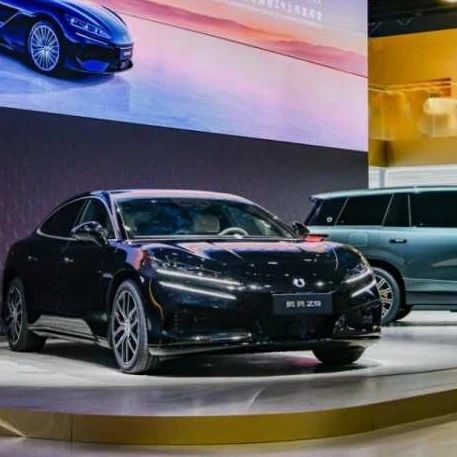
Core Viewpoint - BYD has officially launched its "Universal Intelligent Driving" strategy, introducing the "Tianshen Eye" technology matrix across its entire vehicle lineup, aiming to cover mainstream price ranges from 70,000 to 200,000 yuan [1][10]. Group 1: Tianshen Eye Technology Matrix - The "Tianshen Eye" technology matrix consists of three versions: "A" for the Yangwang brand targeting high-end users, "B" for Tengshi and BYD's premium models balancing cost and performance, and "C" for BYD's mainstream models focusing on affordability [2]. - The Tianshen Eye C features advanced hardware and algorithms, including a front-facing three-camera system and end-to-end control algorithms, with plans for future upgrades via OTA to unlock additional functionalities [3]. Group 2: Background of Intelligent Strategy - BYD has been conservative in implementing intelligent driving features but has recently surpassed the industry average in equipping such technologies, with high-level intelligent driving functions increasingly appearing in mid-to-high-end models [4]. - The introduction of the Tianshen Eye system across 21 models aims to democratize high-level intelligent driving technology, making it accessible in vehicles priced below 100,000 yuan [5]. Group 3: Market Comparison and Challenges - Compared to new entrants like Hongmeng Zhixing and Weilai, BYD's Tianshen Eye C is positioned as a Pro version, while Tianshen Eye A is akin to a Max version, with Tianshen Eye B estimated to fall in between [6]. - The aggressive push for "intelligent driving equity" may face challenges from technological, consumer, and competitive market perspectives [7]. Group 4: Future Industry Trends - The year 2025 is anticipated to mark the beginning of a "Universal Intelligent Driving" era, with other brands like Changan and Geely also planning to launch intelligent driving models priced around 100,000 yuan, potentially leading to intensified price competition in the market [8][10]. - BYD's strategy of adding features without increasing prices is expected to compel other manufacturers to follow suit, which could create a new form of price war in the intelligent driving segment [10].
比亚迪“灵鸢”生意经
21世纪经济报道· 2025-03-04 13:14
Core Viewpoint - BYD is focusing on ecological competition in the automotive industry, emphasizing that consumers now view cars as mobile spaces for entertainment and social interaction rather than just transportation tools [1] Group 1: Technological Innovations - BYD launched the "Lingyuan" intelligent car-mounted drone system in collaboration with DJI, allowing users to control drone functions through a dedicated app while driving [1] - The "Lingyuan" system comes in two versions: a battery swap version primarily for the Yangwang brand and a fast-charging version for BYD's Dynasty, Ocean, Tengshi, and Fangchengbao brands, with a total price of 16,000 yuan [1] - The system will first be available on six models, including Fangchengbao Biao8 and Tengshi N9 [1] Group 2: Strategic Partnerships - BYD has formed partnerships with various tech companies, including OPPO and Huawei, to enhance user experiences through mobile connectivity and smart driving features [2] - The company has integrated functionalities with major smartphone brands, including Apple and Samsung, to broaden the ecosystem [2] Group 3: Industry Trends - The automotive industry is shifting from hardware manufacturing to ecological services, with companies like BYD aiming to build their ecosystems through collaborations rather than solely relying on internet companies [1][2] - The competition for user data and service interfaces is intensifying as automotive manufacturers seek to gain control over in-car experiences [3][4] Group 4: Future Directions - BYD's collaboration with DJI is seen as a significant step towards defining low-altitude scenarios and accelerating the company's smart technology layout [4] - The company aims to integrate various aspects of users' lives around the vehicle, moving from a traditional car sales model to an ecosystem-based approach [4] - The expansion of automotive space scenarios is becoming a critical battleground for brand value, with companies eager to build their own automotive ecosystems [6]
【新能源周报】新能源汽车行业信息周报(2025年2月24日-3月2日)
乘联分会· 2025-03-04 10:10
Industry Information - Huawei's first R&D center in Guangzhou has been inaugurated, focusing on smart vehicles, cloud computing, and IoT, with a capacity for about 5,000 employees [8] - Over 20 Chinese state-owned enterprises have integrated DeepSeek, indicating a push for AI applications across various sectors including energy and finance [8] - The National Energy Administration is advancing the construction of charging infrastructure along highways and promoting high-power charging technology standards [9] - Shenzhen's automotive production ranked first in the country last year, with a significant increase in electric vehicle production and charging stations surpassing gas stations [11] - CATL has established a new energy technology company in Wuhu with a registered capital of 5 million RMB [12] - The total production of lithium batteries in China is projected to reach 1,170 GWh in 2024, a 24% increase year-on-year [14] Policy Information - The Ministry of Industry and Information Technology and other departments have initiated a pilot program for the full electrification of public vehicles in ten cities [19] - The government is supporting the low-carbon transition of the energy system and increasing financial support for charging infrastructure [20] - The National Energy Administration is steadily promoting the pilot application of fuel cell vehicles [20] Company Information - Xiaomi's SU7 Ultra has been officially launched with a price range of 529,900 to 814,900 RMB, featuring dual V8 and one V6 motors with a combined power of 1,138 kW [40] - Ideal Auto plans to standardize laser radar across its entire new vehicle lineup [23] - NIO has entered the humanoid robot sector, joining other companies like Xiaomi and Xpeng in this emerging market [24] - Xpeng's self-developed Turing chip will debut in a new model in May, designed for L4 autonomous driving [28] - BYD has signed an agreement with Nuevo León, Mexico, to promote electric vehicle development [30]


海泰科20250303
2025-03-04 07:00
Summary of Haitai Technology Conference Call Company Overview - Haitai Technology was established in 2003 and has become a leading enterprise in the injection mold industry both domestically and internationally. [3] - Major clients include renowned automotive parts suppliers such as Bosch, Pirelli, and domestic companies like BYD and Geely. [3] - The company serves major automotive manufacturers across Europe and China, including brands like Mercedes-Benz, BMW, and Volkswagen. [3] Industry Insights - China is the largest mold producer and consumer globally, with an annual output value of approximately 300 billion RMB, of which automotive injection molds account for about 100 billion RMB. [3] - The injection mold segment is projected to generate annual revenues of 45-55 billion RMB. [5] - The demand for automotive molds is closely linked to new model development and sales, with a typical passenger car requiring around 500 sets of injection molds valued at approximately 80 million to 100 million RMB. [3][9] Financial Performance - In the first three quarters of 2024, Haitai Technology's injection mold revenue reached 500 million RMB, capturing about 1% of the market share. [3] - The company anticipates revenue growth to 1 billion RMB post-capacity release, increasing market share to around 2%. [3] - Over the past three years, the average annual revenue was approximately 550 million RMB, with net profits around 50 million RMB. [6] Market Dynamics - The automotive mold industry experiences slow growth, influenced by the pace of new model launches. [7] - The competitive landscape is intensifying, with Haitai's gross margin declining from 22% to 18% due to increased competition, although it remains higher than peers. [12] - The company exports over 70% of its products to high-end brands in the EU, maintaining a higher gross margin compared to competitors. [12] Future Projections - By the end of 2025, the company expects to have orders worth 940 million RMB, a 22% increase year-on-year, with a production capacity of around 1,000 sets of molds. [14] - Revenue projections for 2025 include 700 million RMB from molds and 120 million RMB from plastic parts, totaling approximately 850 million RMB. [26] - The company plans to achieve a total revenue of around 1.3 billion RMB by 2026, with net profits estimated at 90 million RMB. [26] Strategic Initiatives - Haitai Technology is expanding its plastic parts business in Thailand, expecting to reach 300 million RMB in revenue by 2026. [16] - The company is also focusing on developing modified materials, with a project expected to begin trial production by the end of 2025. [21] - The strategy includes self-research and replicating overseas standard formulas to enhance competitiveness in the automotive supply chain. [24] Challenges and Risks - The company faces challenges from increased competition and potential declines in gross margins due to market pressures. [12] - Credit impairment losses have been noted, particularly from the high合汽车 incident, which may affect future financial stability. [30] Conclusion - Haitai Technology is positioned for growth in the injection mold and automotive parts sectors, with strategic expansions and a focus on high-margin products. However, it must navigate competitive pressures and market dynamics to achieve its financial targets. [27]
全球围剿特斯拉
吴晓波频道· 2025-03-03 17:07
Core Viewpoint - Investors are betting on Elon Musk's vision for Tesla's future rather than its current performance, with a potential for a 1000% profit growth in the next five years [1][3]. Group 1: Political and Social Backlash - Protests against Musk and Tesla have erupted across the U.S., with demonstrators urging people to boycott Tesla and vandalizing vehicles [3][5]. - The protests are largely driven by political discontent related to Musk's influence on government spending and his support for right-wing politics in various countries [5][7]. - Tesla's market share in Europe has significantly declined, with a 45.2% drop in registrations in January, and a market share of only 1% [7][11]. Group 2: Sales and Market Performance - Tesla's sales in China, the only market showing growth, increased by 8.8% in 2024, accounting for 37% of global sales, but January sales fell by 11.5% [11][13]. - The company's stock price has dropped by 40% from its historical high, with a market value loss of nearly 1 trillion RMB in just one week [7][9]. Group 3: Future Business Strategy - Musk's focus appears to be shifting from electric vehicles to autonomous driving and robotics, with plans to launch a Robotaxi service by 2027 [19][20]. - The introduction of the FSD (Full Self-Driving) service is seen as a critical component for Tesla's future, despite current challenges in adapting to complex driving conditions in China [13][17]. - Analysts predict that if Tesla successfully transitions to a profitable robotaxi company, its stock price could soar by 12.5 times within five years, reaching $2,600 [21]. Group 4: Leadership and Investment Philosophy - The contrast between Musk as an "entrepreneurial god" and traditional "operational gods" like Tim Cook highlights differing investment philosophies, with investors drawn to Musk's potential for innovation and disruption [22][24]. - The narrative suggests that investors are not just buying into Tesla's current success but are investing in Musk's vision for a transformative future [24].

2025乘用车轮胎行业简析报告
上海嘉世营销咨询· 2025-03-03 13:55
Investment Rating - The report does not explicitly state an investment rating for the passenger car tire industry Core Insights - The passenger car tire industry is experiencing significant growth driven by the increasing demand for new energy vehicles and the rising vehicle ownership in China. The market is characterized by a competitive landscape with both domestic and international brands vying for market share. The report highlights the importance of technological innovation and adaptation to meet the evolving demands of the automotive market, particularly in the context of new energy vehicles [3][4][5]. Summary by Sections 1. Definition and Classification of Passenger Car Tires - Passenger car tires are specifically designed for vehicles such as sedans, sports cars, and SUVs, requiring higher performance and stability under various driving conditions [3]. - Classification includes PC tires for regular cars, SUV tires for multi-purpose vehicles, performance tires for sports cars, and specialized tires for new energy vehicles [4]. 2. Industry Chain - The industry chain consists of upstream raw materials (natural rubber, synthetic rubber, carbon black, steel wire), midstream tire manufacturing, and downstream automotive manufacturing and aftermarket services [5][6][7]. 3. Upstream Raw Materials - Natural rubber prices are expected to rise due to adverse weather conditions and supply chain disruptions, with prices projected to reach 16,890 CNY/ton by the end of 2024, a 29.33% increase from the beginning of the year [8]. - The cost of raw materials constitutes nearly 70% of tire production costs, significantly impacting overall profitability [41]. 4. Midstream Production - Major production regions for passenger car tires in China include Shandong, Jiangsu, and Zhejiang, with Shandong accounting for 50% of national production capacity [10][12]. 5. Downstream Market Trends - The aftermarket for automotive services is shifting towards online platforms, with over 65% of car owners using apps for purchasing parts and services [15]. - The demand for tire replacement is increasing, with approximately 180 million tires replaced annually in China [16]. 6. Market Demand and Growth - The production of passenger cars is directly linked to tire demand, with each new vehicle requiring four tires. The growing vehicle ownership in China is expected to further increase this demand [16][20]. - The tire production volume in China is steadily increasing, with a projected output of 9.35 billion tires by 2024 [22][23]. 7. New Energy Vehicle Tire Demand - The rapid growth of new energy vehicles, with sales expected to reach 12.87 million units in 2024, is driving the demand for specialized tires that meet specific performance criteria [29]. - New energy vehicles require tires with low rolling resistance, high durability, and better noise reduction capabilities [26][28]. 8. Export Market Dynamics - China's tire exports reached 349 million units in 2024, with a 13.4% year-on-year increase, indicating strong international demand [34]. - The export market is crucial for the industry, with significant competition from countries like Brazil, the UK, and Russia [34]. 9. Competitive Landscape - The market is competitive, with domestic brands like Linglong and Zhongce rapidly expanding in the mid to low-end segments, while international brands dominate the high-end market [36][37]. - Linglong Tire has emerged as a leader in new energy vehicle tire supply, achieving significant revenue growth [39][40]. 10. Future Trends - The industry is expected to see continued growth in new energy vehicle tires, increased focus on sustainability, and advancements in smart and digital technologies [45][46][47][48].
低空经济专题系列报告三(政策篇):各地政策密集颁布,低空发展路渐清晰
Jinyuan Securities· 2025-03-03 05:09
Investment Rating - The industry investment rating is "Overweight" [1] Core Insights - 2024 is identified as the inaugural year for the low-altitude economy, with the industry still in its early stages facing various challenges such as unclear development directions, lack of standards and regulations, insufficient infrastructure, and application scenarios yet to be developed [5][11] - A significant number of local governments have issued specific policies to support the low-altitude economy, categorized into two types: "Action Plans" and "Several Measures," both typically spanning three years until 2026/2027 [5][11] - The total planned industry scale across 22 provinces that have released "Action Plans" amounts to 1.71 trillion yuan, with nearly 100 core enterprises and over 8,000 industry chain companies identified [7][11] Summary by Sections Section 1: Action Plans - 22 out of 31 provincial-level administrative regions have released "Action Plans," focusing on industry scale, core enterprise cultivation, industry chain composition, take-off and landing sites, general airports, route development, flight volume, and application scenario development [7][9] - Key regions leading the low-altitude economy development include the Greater Bay Area, Yangtze River Delta, and Sichuan-Chongqing region, with ambitious targets set [7][9] - The planned industry scale in key provincial-level administrative regions includes 3 trillion yuan for Guangdong, 500 billion yuan for Shanghai, and 1 trillion yuan for Beijing [8][9] Section 2: Several Measures - Local governments are providing substantial financial support through various measures, including tax incentives, infrastructure funding, and operational subsidies for low-altitude economy enterprises [13][16] - Specific financial support includes zero tariffs on certain aviation-related imports, tax reductions, and direct funding for infrastructure projects [13][16] - The measures also encompass operational subsidies for different types of aircraft, with specific rates for eVTOL and drone operations [14][16] Section 3: Rapid Industry Actions - The low-altitude economy is witnessing swift actions and project launches driven by policy guidance, with a focus on cultivating the aircraft industry chain, including manufacturing, certification, and sales [17][18] - Major players in the eVTOL sector are actively developing new aircraft, with expectations for significant advancements in certification and operational readiness by 2026-2027 [18]