迈瑞医疗

Search documents
市值管理指引实施一周年,A股市值管理迈入规范发展新阶段
Huan Qiu Wang· 2025-11-16 01:53
Core Viewpoint - The implementation of the "Guidelines for Market Value Management" has transitioned A-share market value management from a vague topic to a systematic and transparent phase, leading to significant progress in the past year [1][3]. Group 1: Market Value Management Progress - Over the past year, 1001 A-share companies have disclosed their market value management systems, a fivefold increase compared to the beginning of the year, contrasting sharply with the previous years where only about 10 companies were involved [3]. - Among these companies, 619 have engaged in mergers and acquisitions, representing 61.84% of the total, indicating a strong trend towards restructuring and strategic realignment [4]. - The average stock price increase for these companies since the introduction of the market value management guidelines is 20.63%, outperforming the CSI 300 index by 5.9 percentage points [3]. Group 2: Financial Activities and Shareholder Returns - In the past year, 326 companies conducted share buybacks totaling 48.936 billion yuan, a 13.85% increase year-on-year, while 216 companies' major shareholders and executives increased their holdings by 65.736 billion yuan, marking a 72.88% year-on-year growth [4]. - The total dividend payout for approximately 1000 companies in 2024 is projected to be around 1.14 trillion yuan, reflecting a 3.75% increase from 2023, with an average of 0.97 dividends per company, up 18.50% year-on-year [5]. - The number of companies publishing ESG reports has increased by 9.88% year-on-year, with 645 companies releasing such reports, and 952 companies holding performance briefings, a slight increase of 1.38% [5]. Group 3: Strategic Initiatives and Market Response - Companies are adopting various strategies for value creation, with significant mergers and acquisitions being a key focus, such as Binhai Energy's acquisition of 100% of Cangzhou Xuyang Chemical [4]. - High-frequency dividends are becoming a benchmark for outstanding companies in the capital market, with several firms announcing multiple dividend plans throughout the year [5]. - The market has responded positively, with over 100 companies experiencing stock price increases exceeding 50%, and more than 30 companies doubling their stock prices [5].


联影瞄准「超声之王」的阳谋
Hua Er Jie Jian Wen· 2025-11-16 00:57
Core Insights - United Imaging Healthcare is entering the ultrasound market dominated by Mindray Medical, having received regulatory approval for three ultrasound diagnostic systems, marking a significant expansion in its medical imaging product line [1][2] - The core selling point of United Imaging's ultrasound products is their intelligence, featuring AI-driven workflows and advanced image optimization capabilities [2][3] - The global ultrasound diagnostic equipment market is projected to grow significantly, with a compound annual growth rate of 7.97% from 2025 to 2032, reaching approximately $23.8 billion by 2032 [6] Product Development - United Imaging has been preparing to develop ultrasound products for over a decade, officially starting R&D in 2019 after assembling a suitable team [2] - The ultrasound products will utilize a large AI model and a dataset of over a billion entries, enhancing operational efficiency and diagnostic accuracy [2][3] - The company aims for high localization rates in its core components, with 100% self-developed key parts [4] Market Strategy - United Imaging is optimistic about the market despite intense competition and price wars, particularly in the mid-to-low-end segment [6][8] - The company plans to leverage high-end innovative products to improve profit margins while also introducing competitive mid-range products [8] - The strategy includes expanding production capabilities with new facilities to control costs and maintain competitiveness in the high-end market [8] Competitive Landscape - Mindray Medical currently holds the leading position in the domestic ultrasound market, with a market share exceeding 30% in 2023 [9] - United Imaging faces competition not only from Mindray but also from strong foreign players like GE Healthcare [9] - The sales of Mindray's high-end ultrasound series reached nearly 400 million yuan in the first half of 2025, indicating robust market performance [10]


药企赴港IPO火爆 半个月8家递表 基石投资者“快看不过来了”
Xin Lang Cai Jing· 2025-11-16 00:14
Core Viewpoint - The surge in IPO applications from pharmaceutical companies in Hong Kong has created a competitive environment, leading to challenges in securing cornerstone investors and navigating the market dynamics [1][5]. Group 1: IPO Market Dynamics - The Hong Kong IPO market for healthcare has seen a significant recovery, with 23 companies successfully listed this year compared to only 8 last year [1]. - Over 40 healthcare companies have applied for IPOs this year, with 8 applications in just the first half of November [1]. - The competition among companies to attract suitable investors has intensified due to the increasing number of IPO applications [1][5]. Group 2: Specific Company Developments - Bai Li Tianheng's IPO was delayed due to market conditions, with reports suggesting that investor demand did not meet expectations [2][3]. - The company aimed to attract long-term value-focused investors rather than those interested in short-term gains [4]. - The IPO structure includes cornerstone placements, book-building placements, and public offerings, with cornerstone investors playing a crucial role in stabilizing the market perception of the IPO [4]. Group 3: Investor Behavior and Market Trends - Investors are currently more focused on new IPOs due to the significant gains seen in the secondary market this year, leading to a preference for new offerings over existing stocks [5]. - The participation of cornerstone investors has increased, with many successful IPOs this year having multiple cornerstone investors involved [7]. - Despite a recent cooling in the secondary market, the enthusiasm for IPO applications remains high, with expectations for several companies to list in the first quarter of next year [8][9]. Group 4: Future Outlook - The healthcare sector is still attracting attention from both international and domestic investors, with a focus on high-quality investment targets [10]. - The pricing strategy for upcoming IPOs will be critical, as sufficient discounting is necessary to garner investor interest [10].
医药行业2026年度医疗器械策略报告设备篇:创新破壁,并购筑基:后集采时代医疗器械的价值重构-20251115
NORTHEAST SECURITIES· 2025-11-15 15:32
Investment Rating - The report rates the medical device industry as "Outperforming the Market" [1][5]. Core Insights - 2026 is expected to be a year of value reconstruction for China's medical device sector, driven by policy support, innovation, and recovery of domestic demand [1][3]. - The industry is witnessing a shift from "approval optimization" to "payment optimization," with regulatory improvements supporting the innovation of high-end medical devices [1][3]. - The current market fundamentals show signs of a turning point, while institutional holdings are at historical lows, indicating potential investment opportunities [1][3]. Summary by Sections Overall Medical Device Situation - In the first three quarters of 2025, the SW medical device index reported total revenues of 178.4 billion yuan, a year-on-year decrease of 2.29%, primarily affected by low-value consumables and IVD [15]. - The overall net profit for the same period was 26.7 billion yuan, down 13.99%, with high-value consumables showing improved profitability [15][20]. Medical Equipment - The recovery of procurement orders is expected to peak in Q4 2025 to Q1 2026, driven by improved funding and the "old-for-new" policy [66]. - The domestic government procurement income is stabilizing, while overseas revenue is still in a low base phase, indicating significant growth potential [66]. - The report highlights that the economic benefits of equipment procurement are becoming evident, with domestic high-end equipment showing competitive pricing [71]. Innovation in Medical Devices - The report emphasizes three main investment themes: government support, recovery of domestic demand, and accelerated overseas expansion [3][66]. - The innovation cycle is expected to accelerate, with a focus on companies that possess core competitiveness and a global perspective [3][66]. Market Trends - The report notes that the medical device sector is gradually stabilizing, with companies adapting to procurement pressures and showing signs of performance recovery [54]. - The overseas revenue share for medical device companies is increasing, with significant growth opportunities in regions with lower per capita equipment numbers [32][66].
药企赴港IPO火爆,半个月8家递表,基石投资者“快看不过来了”
第一财经· 2025-11-15 13:45
Core Viewpoint - The article discusses the surge in IPO applications from pharmaceutical companies in Hong Kong, highlighting the competitive landscape and the challenges faced by these companies in securing investors amid a crowded market [3][5][10]. Group 1: IPO Market Dynamics - As of November 14, 2023, 23 healthcare companies have successfully listed on the Hong Kong stock market this year, compared to only 8 in the same period last year [3]. - Over 40 healthcare companies have applied for IPOs in Hong Kong this year, with 8 applications submitted in just the first half of November [3]. - The increase in IPO applications has led to heightened competition among companies to attract suitable investors, resulting in a more complex negotiation landscape between companies and institutional investors [3][5]. Group 2: Case Study of Baillie Gifford - Baillie Gifford's planned global offering was delayed due to market conditions, with reports suggesting that investor demand did not meet expectations [4][5]. - The company aimed to attract long-term value investors rather than those focused on short-term price fluctuations, indicating a strategic approach to its IPO [5][6]. - The IPO process involves cornerstone placements, book-building, and public offerings, with cornerstone investors playing a crucial role in validating the company's value [6]. Group 3: Market Sentiment and Trends - The pharmaceutical sector has seen significant stock price increases this year, leading investors to focus on new IPOs rather than existing stocks [7]. - The introduction of new IPO pricing mechanisms by the Hong Kong Stock Exchange has increased the participation of cornerstone investors in pharmaceutical IPOs [9]. - Despite a recent cooling in the secondary market, the enthusiasm for IPO applications remains strong, with expectations of multiple companies going public in the first quarter of the following year [10][11]. Group 4: Investment Focus Areas - Certain sectors within the pharmaceutical industry, such as siRNA and ADC drugs, are attracting more attention from investors, indicating a trend towards specialized investment opportunities [11]. - The competition among major pharmaceutical companies for acquisitions, particularly in the GLP-1 drug space, has heightened interest in related IPOs [11]. - The article notes that while many IPOs are being pursued, the quality of the offerings and their pricing will be critical in attracting investor interest [13].


从高端突破到基层覆盖,国产设备如何搅动百亿超声市场?
2 1 Shi Ji Jing Ji Bao Dao· 2025-11-15 12:55
Core Insights - The article emphasizes that the ultrasound industry is undergoing significant transformation driven by technological breakthroughs, regulatory enhancements, and global competitive dynamics, with a focus on making advanced technology accessible and affordable [1] Industry Overview - Ultrasound technology, as one of the four major imaging technologies in modern medicine, holds a core position in clinical applications due to its advantages such as no radiation, real-time scanning, ease of operation, high safety, rapid detection, and cost-effectiveness [1] - As of 2019, ultrasound accounted for approximately 74.44% of the total medical imaging equipment in China, indicating a substantial market presence [1] Market Dynamics - The global ultrasound equipment market was valued at $7.9 billion in 2021, with an expected compound annual growth rate (CAGR) of 4.5% from 2022 to 2030 [2] - In China, the ultrasound equipment market was approximately 9.02 billion yuan in 2020, projected to reach 21.62 billion yuan by 2030, reflecting a CAGR of 8.1% [2] - Major international players like GE and Philips dominate the market, holding about 50% market share as of 2019, while domestic companies like Mindray and KaiLi Medical have rapidly ascended to the global top 10 [2][3] Competitive Landscape - Domestic leading companies are overcoming high-end barriers through independent research and external acquisitions, exemplified by Mindray's acquisition of ZONARE and subsequent product launches [3] - Mindray achieved a market share of 12.17% in the high-end stationary ultrasound market and 37.72% in the high-end portable ultrasound market in 2023, making it the only domestic brand in the top 10 [3] Technological Advancements - The introduction of AI technology is seen as a key differentiator for companies like 联影 (United Imaging), which plans to launch a full line of ultrasound products to meet diverse clinical needs [3][6] - AI is expected to enhance diagnostic efficiency in tertiary hospitals and address talent shortages in grassroots hospitals by standardizing ultrasound operations and quality control [6] Growth Opportunities - The demand for ultrasound equipment is expected to grow due to policies promoting new hospital constructions and expansions, as well as large-scale medical equipment updates [4][5] - The global medical AI market is projected to grow from approximately $28 billion in 2025 to over $120 billion by 2030, with China expected to expand at a CAGR exceeding 40% [6]
药企赴港IPO火爆,半个月8家递表,基石投资者“快看不过来了”
Di Yi Cai Jing· 2025-11-15 08:41
Core Viewpoint - The surge in IPO applications from pharmaceutical companies in Hong Kong has created a competitive environment, leading to challenges in securing cornerstone investors and achieving favorable pricing for new listings [1][2][3]. Group 1: IPO Market Dynamics - The Hong Kong IPO market for healthcare has seen a significant recovery, with 23 companies successfully listed this year compared to only 8 last year [1]. - Over 40 healthcare companies have applied for IPOs this year, with 8 applications submitted in just the first half of November [1]. - The competition among companies to attract suitable investors has intensified due to the increasing number of IPO applications [1][4]. Group 2: Case Study of Baillie Gifford - Baillie Gifford's IPO plans were delayed due to unfavorable market conditions and insufficient demand from cornerstone investors [2][3]. - The company aims to attract long-term investors who value growth potential rather than short-term price fluctuations [3]. - The IPO structure includes cornerstone placements, book-building placements, and public offerings, with cornerstone investors playing a crucial role in establishing market credibility [3]. Group 3: Investor Sentiment and Market Trends - The performance of the pharmaceutical sector has been strong, with many stocks experiencing significant gains, leading investors to focus on new IPOs rather than existing stocks [4][5]. - Despite a recent cooling in the secondary market, the enthusiasm for IPOs remains high, with many companies eager to secure reputable cornerstone investors [5][8]. - The market is witnessing a differentiation in investor interest, with certain sectors like siRNA and ADC drugs attracting more attention [7][8]. Group 4: Future Outlook - Several companies are expected to launch IPOs in the first quarter of next year, as they aim to capitalize on favorable market conditions [7]. - The IPO pricing strategy is critical, as investors are looking for sufficient discount space to engage with new offerings [8].
市值管理“新元年”:千帆竞发 价值之舟破浪前行
Shang Hai Zheng Quan Bao· 2025-11-15 02:29
Core Insights - The issuance of the "Guidelines for Market Value Management" marks a significant shift in A-share market value management from a vague topic to a systematic and transparent regulation [1] - Over the past year, 1001 A-share companies have disclosed their market value management systems, a fivefold increase compared to earlier this year [1] - The average stock price increase for these companies since the implementation of the guidelines is 20.63%, outperforming the CSI 300 index by 5.9 percentage points [1] Group 1: Market Value Management Practices - 619 out of 1001 listed companies have engaged in mergers and acquisitions, representing over 61.84% of the total [3] - 326 companies have conducted stock buybacks totaling 48.936 billion yuan, a 13.85% increase year-on-year [4] - The total dividend payout for 2024 is approximately 1.14 trillion yuan, a 3.75% increase from 2023, with an average of 0.97 dividends per company, up 18.50% [5] Group 2: Company Performance and Strategies - Companies like Shenghong Technology have reported significant growth, with a revenue increase of 83.40% and a net profit increase of 324.38% [6] - Guizhou Moutai emphasizes value creation and sustainable development, launching a mid-year dividend plan and a buyback plan [8] - The focus on core business and innovation is highlighted as essential for long-term market value management [9] Group 3: Challenges and Recommendations - Current challenges in market value management include a tendency to equate it with stock price manipulation and a lack of professional management teams in many companies [10] - Recommendations include improving information disclosure systems and establishing a value creation-oriented assessment framework [10][11] - Encouraging third-party professional institutions to participate in market value management evaluation is suggested to enhance market professionalism and credibility [12]
民营企业打“组合拳”提质量 积极探索市值管理“最优解”
Shang Hai Zheng Quan Bao· 2025-11-14 18:39
◎记者 柴刘斌 冯心怡 真金白银的分红、豪气的回购增持、灵活的股权激励、高频次的机构调研、包容的并购重组、活跃的海 外投资……这一年,一批民营上市公司通过一系列市场化工具的"组合拳",积极探索市值管理"最优 解"。 据Wind数据统计,截至2025年11月14日,已有512家民企上市公司披露了市值管理制度,其中约70家公 司市值增幅超50%,电力设备、机械设备、有色金属等行业表现尤为突出。 "民企市值管理行为更为灵活多样,善于利用股权激励、并购重组、投资新兴产业等方式。但受制于资 源与融资环境,产业龙头更注重战略叙事和全球化布局,中小民企则更关注流动性管理和股权再融 资。"近日,上海财经大学滴水湖高级金融学院教授、资本市场研究中心主任陈欣接受上海证券报记者 采访,分析了不同规模民企做好市值管理的差异化打法。 强化价值沟通 提振市场信心 埃斯顿一年40多次接待机构调研,迈瑞医疗年内实施3次大手笔分红,指南针发布涵盖422名员工的股权 激励计划……这一年,民营企业正将市值管理从理念转化为行动。 *ST松发市值管理制度发布以来市值增幅达1546.87%,东山精密1亿欧元收购GMD集团加快欧洲产业布 局,宁德时代匈牙 ...




联影医疗入局超声,后来者如何破局?
Xin Lang Cai Jing· 2025-11-14 14:41
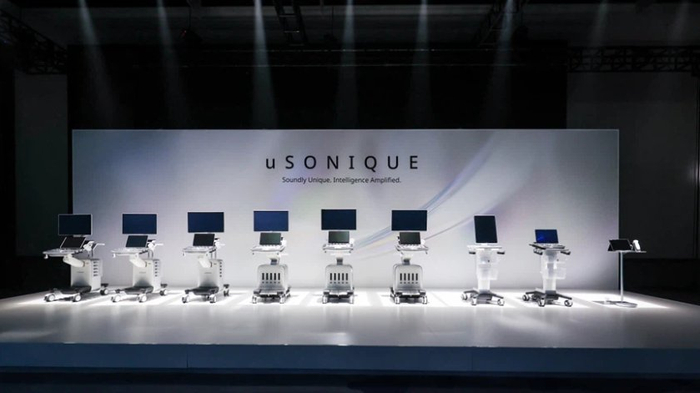
Core Viewpoint - The company, United Imaging Healthcare, has officially entered the ultrasound market with the launch of its uSONIQUE series products, leveraging AI technology to cover a wide range of applications in the medical imaging sector [1][3]. Group 1: Product Launch and Market Position - United Imaging Healthcare has released the uSONIQUE series, which includes high-end to economical ultrasound products, supporting various medical applications such as cardiology, obstetrics, and emergency care [1][3]. - The company has received medical device registration for three ultrasound systems: uSONIQUE Pulse, uSONIQUE Genesis, and uSONIQUE Venus, completing its medical imaging product portfolio [3]. - The entry into the ultrasound market comes after the company initially focused on CT and MR products since its establishment in 2011, with ultrasound research starting in 2019 [3][4]. Group 2: Market Dynamics and Competition - The ultrasound market in China is valued at over 10 billion, with significant global business potential, indicating a competitive landscape where all manufacturers are on a level playing field due to advancements in AI [4]. - Major competitors in the domestic ultrasound market include Mindray and foreign firms like GE and Philips, with a trend towards high-end products as low-end ultrasound devices contribute minimally to profits [8][9]. - Mindray reported that high-end and ultra-high-end models accounted for 63% of its domestic ultrasound revenue, highlighting the shift towards premium products in the market [8]. Group 3: Sales Strategy and Future Outlook - The company aims to leverage its established distribution channels and trust relationships with hospitals to facilitate the sales of its new ultrasound products [9]. - A physician noted that imaging is interconnected, suggesting that United Imaging Healthcare's comprehensive product line could provide hospitals with integrated solutions [9]. - For the first three quarters of 2025, the company reported revenues of 8.859 billion and a net profit of 1.120 billion, with significant growth in overseas markets contributing to overall performance [11].