
零跑汽车

Search documents
12月新能源车销量跟踪:目标兑现度分化,战略选择成关键变量
Haitong Securities International· 2026-01-05 08:42
Investment Rating - The report does not explicitly state an investment rating for the automotive industry but indicates a challenging outlook for the market moving into 2026 due to increasing volatility and structural changes [7]. Core Insights - Major automakers reported December and full-year sales results, with a notable decline in the typical year-end "pull-forward" effect, leading to double-digit month-on-month declines for most OEMs [7][8]. - The fading demand driven by subsidies is expected to put sustained pressure on the automotive market in China, with a forecast of increased volatility and market restructuring [7][8]. - The divergence in target fulfillment among automakers reflects the alignment of corporate strategies with actual market demand, with some companies exceeding targets through effective segmentation and cost efficiency [16]. Summary by Relevant Sections December Sales Performance - BYD sold 420,000 units in December, an 18% year-on-year increase but a 13% month-on-month decline, achieving a full-year target of 4.602 million units [8][9]. - Geely's December sales reached 240,000 units, a 13% year-on-year increase but a 24% month-on-month decline, with a full-year target of 3.025 million units achieved [9]. - Leapmotor delivered 60,000 units in December, a 42% year-on-year increase, surpassing its annual target of 500,000 units ahead of schedule [10]. Strategic Positioning and Market Demand - Companies that effectively matched their strategic positioning with market demand were able to meet or exceed their sales targets, while others that relied heavily on specific products or technologies underperformed [16]. - NIO achieved a record 48,000 units in December, with a full-year delivery total of 326,000 units, reflecting a 74% target achievement rate [15]. - Xiaomi Auto exceeded 50,000 units in December for the first time, achieving over 400,000 units for the full year, aligning with its revised guidance [12]. Future Outlook - The report anticipates intensified competition in the electric vehicle segment, particularly for companies like Li Auto, which aims to maintain its leading position while facing uncertainties in its battery electric vehicle strategy [13]. - The overall market dynamics suggest that companies will need to adapt to changing consumer preferences and competitive pressures as they move into 2026 [16].

港股汽车股持续走低,蔚来、长城跌超6%,小鹏跌超5%
Di Yi Cai Jing· 2026-01-05 08:40
Group 1 - The core viewpoint of the news is that Hong Kong automotive stocks are experiencing a significant decline, with major companies like NIO, Great Wall Motors, and Xpeng Motors seeing drops of over 6%, nearly 6%, and over 5% respectively, marking new lows since their listings in September 2025 [1][2] - Other Hong Kong automotive stocks such as Leap Motor, Geely, Li Auto, and BYD are also facing varying degrees of decline [2] - A document titled "2026 New Year's Day Car Market Passenger Flow Decline Communication" has circulated among institutions, indicating that passenger car traffic during the 2026 New Year's holiday has decreased compared to the same period in 2025 [3] Group 2 - The decline in passenger flow is attributed to increased vehicle purchase costs due to adjustments in the 2026 new energy vehicle purchase tax policy, leading to consumer hesitation [3] - Despite several automakers offering purchase subsidies, these "safety net" policies have not significantly attracted consumers [3] - There is potential for consumer demand to be released if the purchase costs in January are more favorable compared to December and November of the previous year, with market conditions needing to be observed in the following week [3]

港股蔚来跌超6%港股汽车股走低
Di Yi Cai Jing· 2026-01-05 08:39
Core Viewpoint - The Hong Kong automotive stocks are experiencing a significant decline, with NIO falling over 6% and other major players like Great Wall Motors and Xpeng also seeing substantial drops, attributed to a decrease in consumer traffic during the New Year holiday and rising purchase costs due to policy changes [1] Group 1: Market Performance - As of January 5, NIO's stock dropped over 6%, Great Wall Motors fell nearly 6%, Xpeng decreased by over 5%, and Chery Motors declined by nearly 4%, marking new lows since their listings in September 2025 [1] - Other Hong Kong automotive stocks, including Li Auto, Geely, and BYD, also experienced varying degrees of decline [1] Group 2: Consumer Behavior and Market Dynamics - A document titled "2026 New Year Car Market Traffic Decline Communication" circulated among institutions, revealing that consumer traffic for passenger vehicles during the 2026 New Year holiday was lower compared to the same period in 2025 [1] - One reason for the decline in consumer traffic is the adjustment of the new energy vehicle purchase tax policy, which has increased purchasing costs and led to a wait-and-see attitude among consumers [1] - Despite various car manufacturers offering purchase subsidies, these "safety net" policies have not significantly attracted consumers [1] - There is potential for consumer demand to be released if purchasing costs in January are more favorable compared to December and November of the previous year, with market conditions needing to be observed in the following week [1]
港股汽车股走低
Di Yi Cai Jing· 2026-01-05 08:22
Core Viewpoint - The Hong Kong automotive stocks have experienced a significant decline, with major players like NIO, Great Wall Motors, and Xpeng Motors seeing drops of over 6%, 6%, and 5% respectively, reaching new lows since their listings in September 2025 [2] Group 1: Market Performance - As of January 5, 2026, several Hong Kong automotive stocks, including NIO, Great Wall Motors, and Xpeng Motors, have seen substantial declines, with NIO dropping over 6% and Great Wall Motors nearly 6% [2] - Other automotive stocks such as Li Auto, Geely, and BYD also experienced varying degrees of decline [2] Group 2: Policy Changes and Consumer Behavior - Two major policy changes affecting the electric vehicle (EV) industry in 2026 include a reduction in the vehicle purchase tax incentive from full exemption to a 5% tax rate, and a shift in subsidy methods from fixed amounts to percentage-based subsidies [3] - The reduction in purchase tax has increased the cost for consumers, leading to a more cautious purchasing attitude, despite some automakers offering subsidies [3] - For example, a NIO model priced at 119,800 yuan will incur a purchase tax of nearly 6,000 yuan, while NIO only offers a 2,000 yuan subsidy, resulting in a higher overall cost for consumers compared to 2025 [3]


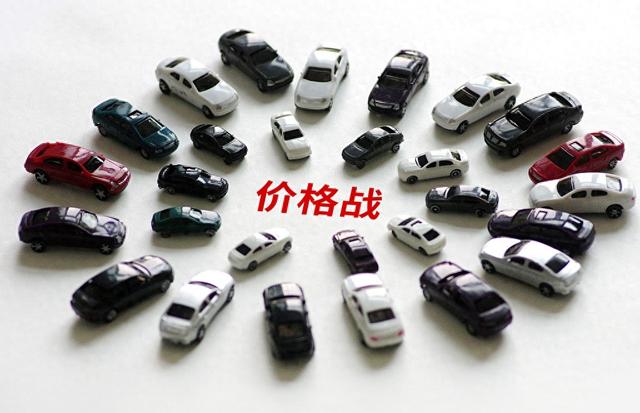
韧性2025|喊停价格战,车企离盈利还远吗?
Xin Lang Cai Jing· 2026-01-05 08:14
Core Viewpoint - The release of the "Automotive Industry Pricing Behavior Compliance Guidelines (Draft for Comments)" by the State Administration for Market Regulation is seen as a clear signal to halt price wars and reverse the trend of irrational competition in the automotive industry [1][5]. Group 1: Regulatory Changes - The guidelines outline nine high-risk pricing behaviors, including selling below cost, price collusion, and false promotions, and establish a compliance framework covering the entire production, sales, and service chain [1]. - Companies are required to establish pricing mechanisms based on production costs, respect dealers' autonomy in pricing, and regulate the disclosure of fees for "paid unlocking" features [1]. Group 2: Industry Profitability - The profitability of the domestic automotive industry has declined for five consecutive years, with profit margins dropping from 6.2% in 2020 to 4.5% in the first nine months of 2025, significantly below the mechanical industry average of 7.39% [3]. - 74.4% of dealers are experiencing price inversion, and 52.6% are operating at a loss, severely squeezing the space for research and innovation [3]. Group 3: Price Competition and Market Dynamics - The average discount rate for traditional fuel vehicles increased by nearly 8 percentage points year-on-year in 2024, while electric vehicles saw a rise of about 5 percentage points, but the consumption stimulation effect of price wars dropped from 3% in 2023 to 0.6% in 2024 [5]. - The low-price competition has led to systemic risks, with some companies selling below production costs, harming dealer interests and resulting in reduced product quality and after-sales service [5]. Group 4: Cost Reduction Strategies - Companies are focusing on cost reduction and efficiency improvement as core strategies to enhance profit margins, with an average vehicle cost decrease of 8.3% year-on-year in the first three quarters of 2025, and a 1.7 percentage point increase in gross profit margins [6]. - Vertical integration of the supply chain is an effective cost reduction path, as exemplified by BYD's comprehensive self-sufficient system from raw materials to finished vehicles [6]. Group 5: Market Transformation - The shift from price wars to value wars signifies the automotive industry's transition from "barbaric growth" to "regulated maturity," reflecting the industry's resilience [9]. - The Chinese automotive market is expected to gradually form a market order characterized by "quality for price and healthy competition," driven by value creation and resilience [11].
港股汽车股走低,蔚来跌超6%
Di Yi Cai Jing Zi Xun· 2026-01-05 07:48
2026年,新能源汽车行业迎来两大政策变动,一是新能源汽车车辆购置税优惠力度"退坡",从全额免征 调整为减半征收(按5%税率);二是汽车"两新"政策补贴方式出现变化,将定额补贴调整为按车价比 例补贴,虽然补贴上限保持不变,但低价车型补贴力度实际上也在"退坡"。 元旦假期期间,多家汽车经销商销售人员向第一财经记者表示,造车新势力因平均售价较高,所以报废 补贴和置换更新补贴的变化对其影响不大;但新能源汽车购置税"退坡"确实增加了消费者的购车成本。 记者了解到,虽然很多车企出台了"兜底"措施,但并不能完全抵消购置税成本的提升。蔚来门店销售 称,以买断价11.98万元的萤火虫车型为例,消费者2026年购买需缴纳购置税近6000元,蔚来仅提供 2000元的选配金补贴。相比2025年,消费者购买成本"会高一点点"。 1月5日,港股汽车股持续走低,截至当日下午三时许,蔚来跌超6%;长城汽车跌近6%;小鹏汽车跌超 5%;奇瑞汽车跌近4%,创下2025年9月底上市以来的新低。其他港股汽车个股如零跑汽车、吉利汽 车、理想汽车、比亚迪股份股价也均有不同程度的下跌。 消息面上,1月4日晚间,一份名为《2026元旦车市客流下滑交流》的 ...
华福证券:汽车以旧换新补贴政策如期落地 26年新能源车同比增速有望维持高增
智通财经网· 2026-01-05 06:47
Group 1 - The core viewpoint of the article is that the implementation of the vehicle trade-in subsidy policy is timely and will significantly support future industry demand, particularly for mid-to-high-end vehicles [1][2] - The 2026 vehicle trade-in subsidy policy includes changes such as a shift from fixed subsidies to those linked to vehicle prices, with scrapping subsidies set at 12% for electric vehicles and 10% for gasoline vehicles, with caps of 20,000 and 15,000 yuan respectively [1] - The cumulative wholesale volume of passenger vehicles from January to November 2025 is approximately 26.726 million units, representing a year-on-year increase of 11.2%, while the cumulative retail volume is about 21.476 million units, with a growth of 6.0% [2] Group 2 - The market performance of leading new energy vehicle companies is showing significant differentiation, with brands like Leap Motor, Xpeng, and NIO performing well, while the overall market is affected by price wars and subsidy policy reductions [3] - The expected year-on-year growth rate for new energy passenger vehicles in 2025 is approximately 18%, with a forecasted growth rate of 5-10% for 2026 [2][3] - The total delivery volume of seven key car manufacturers in 2025 is approximately 7.171 million units, reflecting a year-on-year increase of 16.8% [3]
零跑汽车(09863):一汽溢价入股助力零跑新征程
HTSC· 2026-01-05 06:34
Investment Rating - The report maintains a "Buy" rating for the company [7] Core Insights - The company aims to become a world-class automotive enterprise, targeting sales of 1 million units in 2026 and 4 million units in the long term [4][5] - The company has established a comprehensive self-research and platform-based manufacturing system, achieving a sales volume of approximately 597,000 units in 2025, marking a significant improvement in its fundamentals [2][3] - The strategic investment from FAW Group, acquiring approximately 5% equity for about HKD 3.74 billion, highlights the recognition of the company's long-term strategy [3] Sales and Financial Projections - The company expects to achieve sales of 600,000, 1,040,000, and 1,420,000 units in 2025, 2026, and 2027 respectively, with corresponding revenues of RMB 68.3 billion, RMB 123.5 billion, and RMB 168.8 billion [5][11] - The net profit attributable to the parent company is projected to be RMB 6.6 million, RMB 51.1 million, and RMB 82.5 million for the years 2025, 2026, and 2027 respectively [5][11] Strategic Developments - The company has signed a powertrain cooperation agreement with FAW, focusing on the joint development of range-extended and plug-in hybrid vehicles, with the first model expected to be mass-produced in 2026 [3] - The D-series models, including D19 and D99, are set to launch in 2026, enhancing the company's high-end product lineup [3][4] Market Expansion - The company plans to leverage Stellantis' distribution channels to export over 60,000 vehicles in 2025, entering 35 countries with more than 800 overseas stores [2][4] - The strategic cooperation with FAW and Stellantis is expected to drive growth and profitability during the upcoming new vehicle cycle [4]

港股新能源汽车股午后持续走低,佑驾创新跌超8%
Mei Ri Jing Ji Xin Wen· 2026-01-05 05:30
每经AI快讯,1月5日,港股新能源汽车股午后持续走低,佑驾创新跌超8%,蔚来-SW跌超6%,小鹏汽 车-W、长城汽车跌超5%,零跑汽车、小米集团-W、比亚迪股份纷纷下挫。 ...
整车主线周报:2026年以旧换新政策落地,景气度向上-20260105
Soochow Securities· 2026-01-05 05:12
Investment Rating - The industry investment rating is "Overweight," indicating an expected outperformance of the industry index relative to the benchmark by more than 5% over the next six months [35]. Core Insights - The implementation of the vehicle trade-in policy in 2026 is expected to boost the industry's outlook, particularly for passenger vehicles, heavy trucks, and buses, with a focus on high-end electric vehicles and established export-oriented companies [2][26]. - The heavy truck segment is anticipated to see a sales volume of 800,000 to 850,000 units in 2026, reflecting a year-on-year increase of 3% [30]. - The bus segment is projected to maintain growth, with an estimated sales volume of 40,000 units in 2026, a 5% increase year-on-year [30]. - The motorcycle industry is expected to achieve total sales of 19.38 million units in 2026, a 14% increase, with large-displacement motorcycles projected to grow by 31% [27]. Summary by Sections Passenger Vehicles - The short-term outlook is positive due to the new subsidy policies, with expectations for a recovery in demand in Q1 2026. Key companies to watch include Jianghuai Automobile, Geely, Great Wall Motors, and BYD [2][26]. - The 2026 subsidy budget is projected at 125 billion yuan, which could drive an additional sales increase of 780,000 to 1.54 million units [15]. Heavy Trucks - The 2026 trade-in policy for heavy trucks has exceeded expectations, with subsidies remaining at previous levels. The anticipated sales volume for 2026 is optimistic, with a target of 800,000 to 850,000 units [30][19]. - Recommended companies in this segment include China National Heavy Duty Truck Group, Weichai Power, and FAW Jiefang [30]. Buses - The bus segment's policy has also exceeded expectations, with a projected sales volume of 40,000 units in 2026, reflecting a 5% year-on-year increase [30][18]. - Key recommendations include Yutong Bus and King Long [30]. Motorcycles - The motorcycle industry is expected to see a total sales volume of 19.38 million units in 2026, with large-displacement motorcycles projected to grow significantly [27]. - Recommended companies include Chunfeng Power and Longxin General [27].



