Momenta

Search documents
从烧钱拓荒到算账淘汰赛 新能源重卡赛道融资换挡
Zhong Guo Qi Che Bao Wang· 2026-01-16 09:29
Core Insights - The financing heat in the new energy heavy truck sector is rising, with companies like Kaven New Energy and Supao Technology securing billions in funding, indicating ongoing capital interest in the electrification of commercial vehicles [1] - The investment logic has shifted from early-stage technology concepts to a focus on commercial viability, requiring companies to demonstrate cost control, scalable delivery, and ecosystem integration capabilities [1] Financing Trends - In 2025, the total financing in the new energy heavy truck sector reached approximately 8 billion, with the top five companies capturing over 70% of this amount [2] - Kaven New Energy completed over 1.2 billion in Pre-A financing in June 2025, while Supao Technology secured over 1 billion in strategic financing, focusing on core technology development and global expansion [2] - Other notable financing includes Berai Technology's record-breaking 1 billion in the autonomous driving sector and Jiushi Intelligent's 100 million in B4 financing, highlighting the capital's recognition of technology implementation [2][3] Market Dynamics - A stark contrast exists between the financing fortunes of leading and trailing companies, with the latter facing unprecedented survival pressures and financing costs exceeding 10%, compared to 3.5%-5% for leading firms [3] - Many trailing companies are experiencing issues such as unpaid wages and team departures, indicating a rapid industry reshuffle [3] Shift in Investment Focus - The era of financing based solely on technology concepts has ended, with capital now favoring companies that have validated their business models and can demonstrate delivery capabilities [4] - Successful companies have clear paths to market and verifiable delivery results, with DeepWay and Proton Automotive exemplifying this trend through significant sales and operational achievements [4][5] Ecosystem and Global Expansion - The future of competition in the new energy heavy truck sector will hinge on technology differentiation, ecosystem building, and global market strategies [6] - Companies are expected to develop dual technology routes, such as pure electric and hydrogen, while also exploring alternative fuels like methanol [6] - Building an operational ecosystem that integrates vehicles, energy, and services will be crucial for companies to differentiate themselves in a crowded market [7] International Market Opportunities - Expanding into international markets is becoming essential for leading companies to enhance market share and brand influence, with several firms already making strides in Europe and North America [8] - However, challenges such as regulatory compliance and geopolitical factors will require companies to possess robust technology and localized operational capabilities to succeed globally [8]
谁能代表中国智驾?《中国智能驾驶行业趋势白皮书(2025)》点名华为、元戎、Momenta
Jing Ji Guan Cha Wang· 2026-01-16 06:53
Core Insights - The Chinese intelligent driving industry is entering a new phase driven by AI large models by 2025, with increasing competition in urban NOA (Navigation Assisted Driving) scenarios [2] - The report "China Intelligent Driving Industry Trend White Paper (2025)" analyzes the evolution of intelligent driving technology and predicts future trends of core technology routes like VLA large models and world models [2] Market Dynamics - Leading suppliers, represented by "Hua Yuan Mo" (Huawei, Yuanrong Qixing, Momenta), are becoming dominant forces in the industry, showcasing a close relationship between technological innovation, commercialization, and market demand [2] - Yuanrong Qixing has shown strong growth, particularly in mainstream vehicle segments, with a market share of 38% in October 2025, marking a 2.7 times increase compared to previous periods [4] Competitive Landscape - Momenta and Huawei maintain stable market shares of 38% and 24% respectively, but Yuanrong Qixing's rapid growth and market penetration are noteworthy, indicating higher demands for suppliers' market expansion capabilities [7] - The success of Yuanrong Qixing exemplifies the importance of actual application and scalable delivery capabilities in the competitive landscape of the intelligent driving industry [7] Future Outlook - As intelligent driving technology transitions from validation to large-scale delivery, the market competition will become increasingly complex, with leading suppliers optimizing technology and expanding market penetration [8] - The industry is expected to move towards a more mature commercialization phase, with promising growth prospects driven by technological maturity and surging market demand [8]

《报告》:NOA供应商市场呈“双强主导”格局
Zhong Guo Jing Ying Bao· 2026-01-16 05:57
中经记者陈燕南北京报道 在当前百年未有之全球科技大变局下,智能网联汽车作为交通及汽车领域培育新质生产力、构建现代化 产业体系的战略支点,近年来在我国迎来快速发展,正迈入高阶辅助驾驶普及、示范应用推进关键期。 近日,《中国经营报》记者获悉,由中国汽车工业协会全资子公司智库——中国汽车工业经济技术信息 研究所有限公司编撰的《2025城市NOA汽车辅助驾驶研究报告》发布,从行业背景、市场格局分析、 未来趋势展望、发展建议等多个维度,剖析了城市NOA技术及产业的发展态势,旨在为行业企业提供 参考,助力我国智能网联汽车产业高质量发展。 《报告》显示,2025年1—11月,我国搭载城市NOA功能的乘用车累计销量达312.9万辆,渗透率占乘用 车上险量的15.1%。2025年1—11月,搭载城市NOA功能的乘用车销量中,自主品牌销量达到253.73万 辆,占比达到81.1%;全球知名汽车品牌已开始选择与国内头部第三方供应商合作以实现在智驾领域的 突破。 "NOA(导航辅助驾驶)技术作为智能网联汽车应用的核心抓手,是衔接高阶辅助驾驶与完全自动驾驶 的关键桥梁,更是提升用户出行体验、彰显智能化价值的核心载体,其发展水平直接关乎 ...
一个普通自动驾驶算法工程师的2025年
自动驾驶之心· 2026-01-15 12:28
Core Viewpoint - The article discusses the significant advancements in the autonomous driving industry in 2025, focusing on the evolution of L2, L3, and L4 levels of autonomous driving technology, highlighting both the opportunities and challenges faced by the industry [3][11]. Group 1: L2 Level Developments - In 2025, L3 autonomous driving technology began to gain regulatory approval, leading to a decline in the previously popular "L2++" concept, with all consumer-facing smart driving functions now categorized as L2 [6][8]. - BYD initiated the "smart driving equality" movement by integrating its self-developed "Tian Shen Zhi Yan" system into lower-priced models, making advanced features accessible to more consumers [8]. - Traditional automakers like Geely and Chery followed suit, expanding mid-level assisted driving features to a broader market, contributing to a wave of widespread smart driving adoption [8][10]. - The market saw an increase in domestic smart driving suppliers like Momenta expanding into overseas markets, securing contracts with established automakers [8][10]. Group 2: L3 Level Developments - The end of 2025 marked a turning point for L3 autonomous driving, with the Ministry of Industry and Information Technology granting approval for the first L3 conditional autonomous driving models, including the BAIC Arcfox Alpha S and Changan Deep Blue SL03 [12][14]. - These models can operate under specific conditions, with the Arcfox capable of speeds up to 80 km/h on designated roads, marking a significant shift in responsibility from drivers to manufacturers and system suppliers [14][15]. - The approval of L3 technology is expected to reshape the industry landscape, potentially becoming a benchmark for measuring the leading players in the autonomous driving sector in 2026 [15]. Group 3: L4 Level Developments - 2025 was a pivotal year for L4 autonomous driving, witnessing a resurgence in capital investment and the beginning of commercial viability, with companies like Pony.ai and WeRide going public and raising significant funds [16][17]. - L4 technology demonstrated its commercial potential in specific applications, such as autonomous mining trucks and urban delivery vehicles, achieving operational efficiencies and cost reductions [19][23]. - The industry consensus shifted from a focus on technological idealism to practical commercial applications, emphasizing the importance of production capabilities and operational efficiency [23]. Group 4: Industry Insights and Future Outlook - The article emphasizes the need for continuous learning and adaptation within the autonomous driving sector, as technological advancements and market dynamics evolve rapidly [24][29]. - The growing application of autonomous driving technology across various urban and logistical scenarios in China reflects the country's leadership in the global autonomous driving landscape [29].

奔驰战略调整密集落地:搁置L3智驾转攻L2+,应对市场下滑推进成本管控
Ju Chao Zi Xun· 2026-01-15 06:10
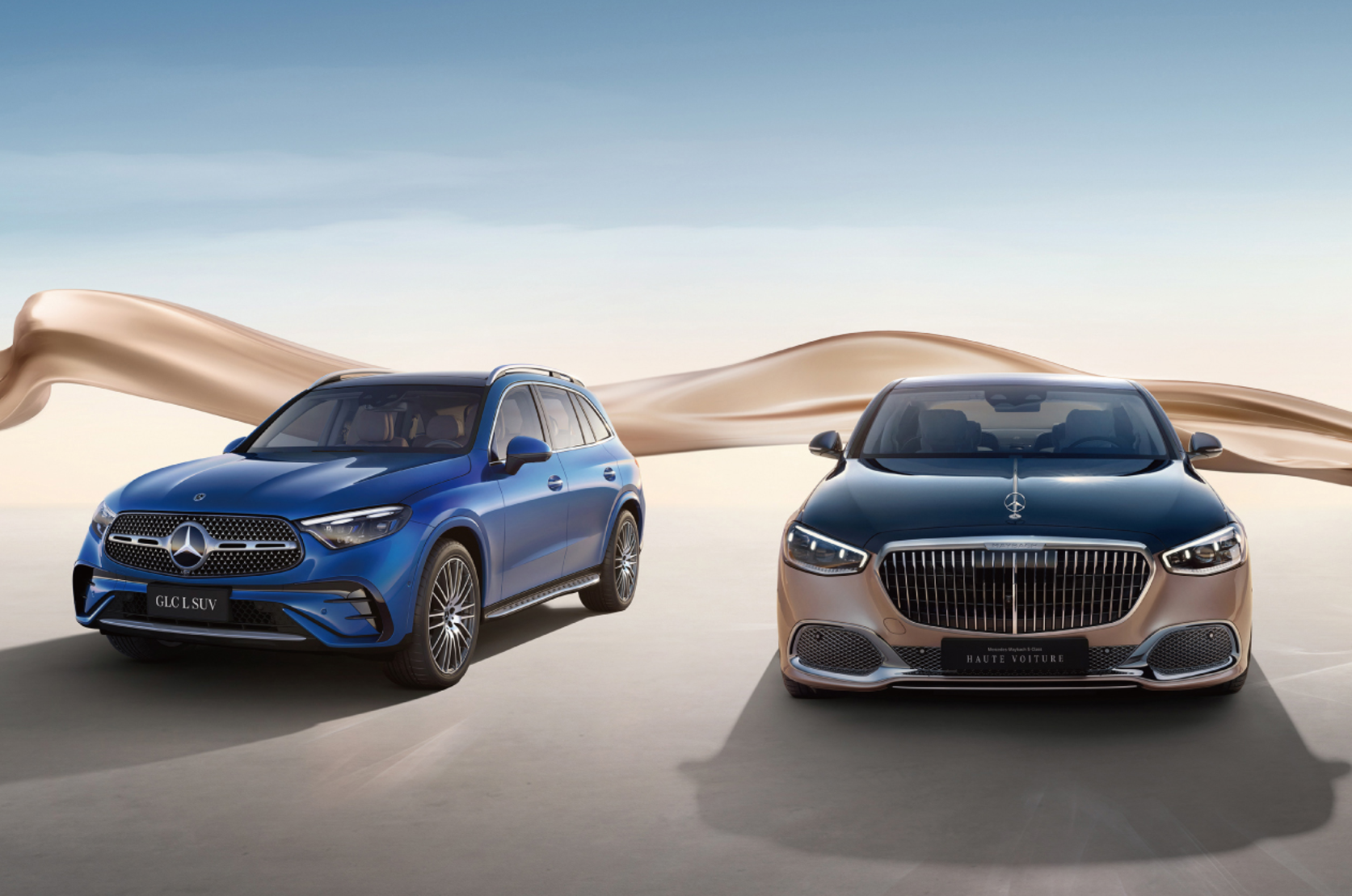
在自动驾驶技术布局上,奔驰同时深化与中国本土企业的合作。2025年9月,奔驰与中国无人驾驶技术初创公司Momenta达成协议,将其技术引入奔驰在中 国的全新电动CLA车型,覆盖高速公路、城市街道及停车场景的驾驶辅助功能。有知情人士透露,Momenta技术最终将配备于奔驰40款车型。值得注意的 是,宝马也于2025年6月与Momenta签署类似协议,将其技术应用于中国市场的Neue Klasse电动车型,Momenta已完成对BBA的战略布局,成为德系豪华车 企在华智驾核心供应商。 资本层面,奔驰近期完成了对中国智驾企业的股权布局。2025年12月24日,千里科技发布公告显示,其股东重庆力帆控股协议转让公司股份事宜完成过户, 梅赛德斯-奔驰(上海)数字技术有限公司正式成为千里科技持股3%的股东。此次股份转让源于力帆控股未按约定完成股票质押回购交易,根据相关重整计 划,力帆控股将135,633,002股千里科技无限售流通股以9.87元/股的价格转让给奔驰数字技术,用于偿还债务。过户完成后,力帆控股持股比例从13.68%降 至10.68%。 据悉,奔驰此次重点发力的L2+级系统为其在2026国际消费电子展(CES) ...
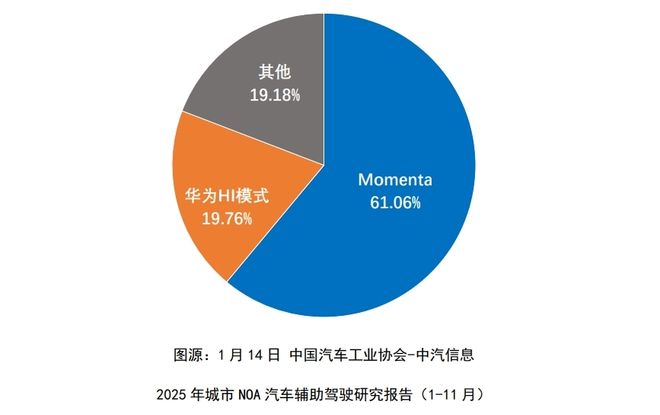
Momenta:2025年公司在第三方NOA供应商市场的市占率超60%
Zheng Quan Ri Bao Wang· 2026-01-15 04:02
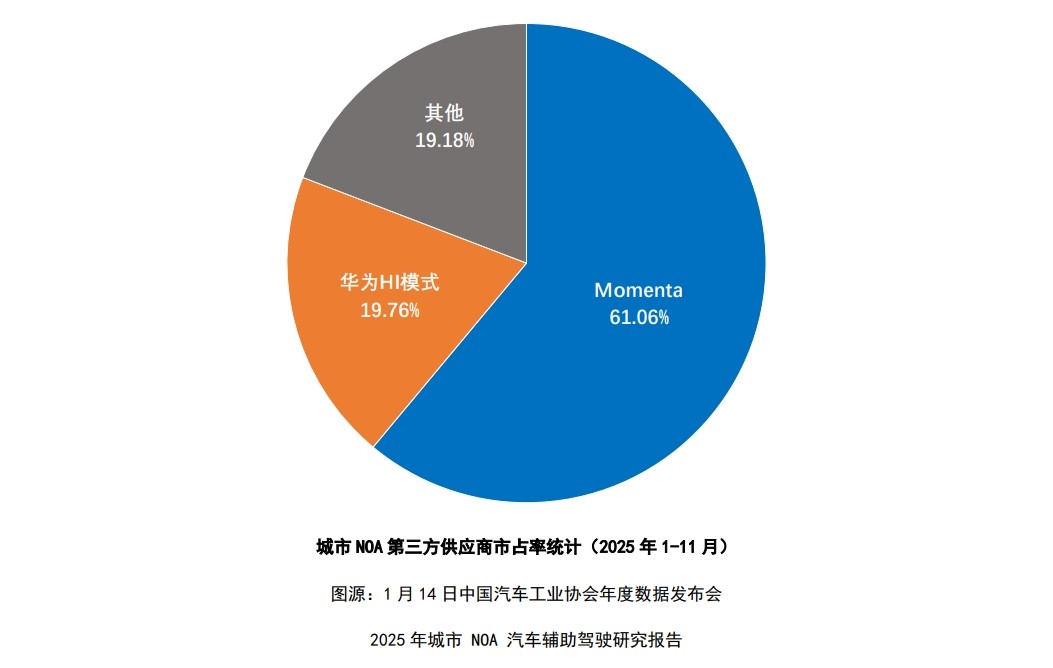
Group 1 - The report released by the China Automotive Industry Association indicates that from January to November 2025, the cumulative sales of passenger cars equipped with urban NOA (Navigation on Autopilot) reached 3.129 million units, with vehicles using Momenta's NOA system accounting for 414,400 units, representing approximately 61.06% of the third-party supplier market share [1] - Momenta has established partnerships with eight out of the top ten global automotive manufacturers, covering major domestic passenger car companies, which highlights its significant market presence and influence [1] - The report emphasizes that third-party technology suppliers like Momenta are providing a "Chinese solution" for the global intelligent driving industry, attracting collaboration from well-known automotive brands from Germany, the United States, Japan, and South Korea, thereby enhancing China's voice in the global automotive industry value chain [1] Group 2 - Momenta's core technology route is based on "reinforcement learning + end-to-end architecture," and it employs a dual-track product strategy of mass production assistance and scalable autonomous driving, leveraging vast data for continuous algorithm iteration [2] - The company has developed a multi-dimensional cooperation ecosystem with automakers, including SAIC, GAC, BYD, Mercedes-Benz, BMW, Audi, and Toyota, focusing on technology co-research and customized solutions [2] - Momenta's R6 reinforcement learning model is the first in China to achieve mass production based on an end-to-end foundation, officially entering production in the third quarter of 2025 [2]
智驾“中国方案”双强格局:Momenta与华为NOA合计占比超80%
Guan Cha Zhe Wang· 2026-01-15 03:50
Core Insights - The report highlights the rapid expansion of the urban NOA (Navigation Assisted Driving) market in China, with cumulative sales reaching 3.129 million units from January to November 2025, accounting for 15.1% of passenger car insurance volume, an increase of 5.6 percentage points compared to the entire year of 2024 [1][2] Industry Overview - The urban NOA technology is becoming a core configuration in automotive intelligence, with 2025 identified as a key year for its commercialization [2] - The market is characterized by a "dual strong" pattern among third-party urban NOA suppliers, with Momenta and Huawei leading, together holding over 80% of the market share [1][2] Company Performance - Momenta's urban NOA deployment reached 414,400 units, representing 61.06% of the third-party supplier market, with partnerships covering major domestic passenger car manufacturers and 8 out of the top 10 global automakers [2] - Huawei's HI model achieved a deployment of 134,100 units, accounting for 19.76% of the third-party supplier market [2] - Domestic brands excelled in the urban NOA segment, with related model sales reaching 2.5373 million units, making up 81.1% of the total [2] Competitive Landscape - Global automotive brands such as Mercedes-Benz, BMW, Audi, Cadillac, Buick, and Toyota are accelerating their urban NOA strategies through collaborations with leading Chinese intelligent driving suppliers [2] - The report indicates that the "Chinese solution" for intelligent driving, developed by companies like Huawei and Momenta, is attracting deep cooperation from renowned automotive brands in Germany, the US, Japan, and South Korea, enhancing China's influence in the global automotive value chain [2] Technological Advancements - The report suggests that as high-level assisted driving enters a phase of large-scale implementation, key factors determining supplier market position include algorithm strength, data loop capabilities, and experience in large-scale production [3][5] - The urban NOA is driving systemic changes in the intelligent driving sector, with applications extending from highway NOA to urban environments, and a shift towards integrated system architectures [3][5] Future Outlook - The report predicts that the integration of multimodal models and end-to-end technologies, along with continuous upgrades to computing platforms, will further enhance the safety experience of urban NOA [5] - Competition in the industry is shifting from a focus on individual technical metrics to a comprehensive competition based on product experience, technological limits, and scalability, with leading companies building systematic advantages through algorithms, data loops, and large-scale production [5]


2026,中国智驾驶入决赛圈
3 6 Ke· 2026-01-15 03:46
Core Insights - Tesla's Full Self-Driving (FSD) technology has demonstrated its capability by completing a 4,397 km journey across the U.S. without human intervention, showcasing its stability in complex driving conditions [1] - The competition in the autonomous driving sector is intensifying, particularly in China, where several companies are facing significant challenges, leading to a consolidation of players [1] - The industry consensus is that by 2026, only two to three companies will emerge as leaders in the autonomous driving space [1] Group 1: Tesla's Technological Advancements - Tesla's FSD V12 and V14 represent critical turning points, with V12 proving the feasibility of a model-driven end-to-end approach, prompting the industry to shift towards this model [2] - FSD V14 addresses the limitations of previous versions by integrating a reasoning capability, leading to a potential unification of L2 and L4 development paradigms [2] Group 2: Competitive Landscape in China - Companies like Horizon Robotics, Zhaojun Technology, and WeRide are emerging as strong competitors, with Horizon completing a significant technology architecture switch and launching its HSD model [3][4] - WeRide has shifted focus from L4 Robotaxi to L2+ solutions, achieving rapid development and production timelines [3] - Zhaojun Technology has adopted an aggressive strategy by completely overhauling its previous technology framework to focus on end-to-end solutions [4] Group 3: Industry Trends and Challenges - The industry is witnessing a shift from rule-based to model-driven approaches, with VLA (Vision-Language-Action) models gaining traction among manufacturers like Xpeng and Li Auto [5][6] - Huawei is taking a different approach by rejecting VLA in favor of WA (World Action) models, emphasizing the need for a more streamlined process [6] - The competition is expected to intensify as companies strive to secure sufficient data and funding to support their autonomous driving technologies [10][11] Group 4: Future Outlook - The autonomous driving sector is entering a phase of stricter regulations and increased competition, with a focus on L2+ and urban navigation assistance (NOA) as immediate priorities for many companies [12] - By 2026, the market is anticipated to narrow down to a few key players, with Huawei currently leading the pack, followed by Horizon, Momenta, and WeRide [12][13]

中国智驾双强:Momenta与华为NOA合计占比超80%
Guan Cha Zhe Wang· 2026-01-15 03:44
Core Insights - The report highlights the rapid expansion of the urban NOA (Navigation Assisted Driving) market in China, with a cumulative sales of 3.129 million units from January to November 2025, accounting for 15.1% of passenger car insurance volume, an increase of 5.6 percentage points compared to the entire year of 2024 [1][2] Market Dynamics - The market for third-party urban NOA suppliers is characterized by a "dual strong" pattern, with Momenta and Huawei significantly leading, together holding over 80% of the market share among third-party suppliers [1][2] - Momenta's urban NOA deployment reached 414,400 units, representing 61.06% of the third-party supplier market, with partnerships covering major domestic passenger car manufacturers and 8 out of the top 10 global automakers [2] - Huawei's HI model achieved a deployment of 134,100 units, accounting for 19.76% of the third-party supplier market [2] Competitive Landscape - Domestic brands excelled in the urban NOA segment, with related model sales reaching 2.5373 million units, representing 81.1% of the total, showcasing the innovation and market competitiveness of Chinese automakers [2] - Global brands such as Mercedes-Benz, BMW, Audi, Cadillac, Buick, and Toyota are accelerating their strategies by collaborating with leading Chinese intelligent driving suppliers to implement urban NOA features [2] Technological Advancements - The report indicates that high-level assisted driving is entering a phase of large-scale implementation, where algorithm strength, data loop capabilities, and mass production experience are critical for determining suppliers' market positions and growth rates [3] - The urban NOA is driving systemic changes in the intelligent driving field, with applications extending from highway NOA to urban environments, and a shift towards integrated system architectures [5] - The end-to-end large model has become the core engine for NOA technology iteration, facilitating a transition from modular architectures to integrated perception and planning systems [5] Future Outlook - The report predicts that the integration of multimodal models and end-to-end technologies, along with continuous upgrades to computing platforms, will further enhance the safety experience of urban NOA [5] - The industry competition is shifting from a focus on individual technical metrics to a comprehensive competition based on product experience, technological limits, and mass production capabilities [5]
中汽协2025城市NOA报告发布:Momenta第三方供应商市场市占率超60%
Zhong Jin Zai Xian· 2026-01-15 03:01
Core Insights - The report highlights the rapid growth of the urban NOA (Navigation on Autopilot) market in China, with a cumulative sales of 3.129 million passenger cars equipped with urban NOA from January to November 2025, achieving a penetration rate of 15.1%, an increase of 5.6 percentage points compared to the entire year of 2024 [3][4]. Group 1: Market Dynamics - The urban NOA market is characterized by a "dual strong" pattern among third-party suppliers, with Momenta and Huawei leading the market, together accounting for over 80% of the market share among third-party suppliers [3][4]. - Momenta has a leading position with 414,400 units of urban NOA equipped vehicles, representing approximately 61.06% of the third-party supplier market, while Huawei's HI model has around 134,100 units, accounting for about 19.76% [3][4]. Group 2: Competitive Landscape - Domestic brands have shown significant strength, with sales of urban NOA-equipped vehicles reaching 2.5373 million units, making up 81.1% of total sales, indicating their innovation and competitiveness in the smart connected vehicle sector [4]. - Global automotive brands are increasingly collaborating with leading domestic third-party suppliers to enhance their smart driving capabilities, with notable partnerships including Mercedes-Benz, BMW, Audi, Cadillac, Buick, and Toyota [4]. Group 3: Technological Advancements - The report emphasizes that algorithms, data closed-loop capabilities, and experience in large-scale production are critical factors determining the market position and development speed of autonomous driving suppliers [4][5]. - The end-to-end large model has become the core engine for the iteration of NOA auxiliary driving technology, promoting a shift from modular architecture to an integrated perception and planning system [5][6]. Group 4: Future Trends - The competition among autonomous driving suppliers is evolving from a focus on single technical indicators to a comprehensive capability that includes product experience, technological potential, and scalability [7]. - The integration of multi-modal models and end-to-end technology, along with continuous upgrades of computing platforms, is expected to enhance the safety experience of urban NOA technology [6][7].