TCL

Search documents
IDC二季度中、美智能手机市场速览:华为重夺中国市场榜首 联想居美国第三
Zhi Tong Cai Jing· 2025-08-18 06:21
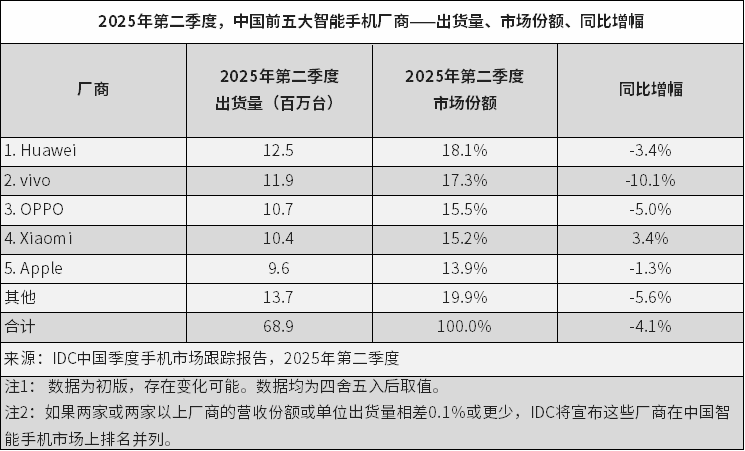
Core Insights - The global smartphone market is projected to ship 297 million units in Q2 2025, reflecting a year-on-year growth of 1.4% [1] - In China, the top five smartphone manufacturers are Huawei, vivo, OPPO, Xiaomi, and Apple, with Huawei reclaiming the top position after four years [1][3] - The U.S. market's top five manufacturers are Apple, Samsung, Lenovo, Google, and TCL, with Apple maintaining a significant lead in market share [1][4] China Market Summary - The total smartphone shipments in China for Q2 2025 reached 68.9 million units, marking a decline of 4.1% year-on-year, ending six consecutive quarters of growth [2] - Huawei led the Chinese market with a shipment of 12.5 million units, holding an 18.1% market share, despite a year-on-year decline of 3.4% [2][3] - Xiaomi was the only manufacturer among the top five to achieve positive growth, with a year-on-year increase of 3.4% [2][3] - Consumer confidence remains low, impacting overall market demand despite promotional events like "618" [2] U.S. Market Summary - The U.S. smartphone market experienced a growth of 3.7%, with total shipments reaching 25.7 million units in Q2 2025 [4][5] - Apple led the U.S. market with a shipment of 12.2 million units, capturing a market share of 47.6% and achieving a year-on-year growth of 14.8% [5] - Samsung followed with a shipment of 6.9 million units, reflecting a growth of 14.3% due to inventory increases and the introduction of AI features in mid-range devices [5] - Lenovo (Motorola) continued to expand its presence in the U.S. market with a year-on-year growth of 2.4% [5]




IDC二季度中、美智能手机市场速览:华为重夺中国市场榜首 联想(00992)居美国第三
Zhi Tong Cai Jing· 2025-08-18 06:14
Global Smartphone Market Overview - The global smartphone market is projected to ship 297 million units in Q2 2025, reflecting a year-on-year growth of 1.4% [1] - The Chinese market's top five manufacturers are Huawei, vivo, OPPO, Xiaomi, and Apple, with Huawei reclaiming the top position after four years [2] - The U.S. market's top five manufacturers are Apple, Samsung, Lenovo, Google, and TCL, with Apple maintaining a significant lead [3] Chinese Market Insights - In Q2 2025, China's smartphone shipments declined by 4.1% to 68.9 million units, ending a six-quarter streak of year-on-year growth [1] - The decline is attributed to limited impact from government subsidy programs and low consumer confidence, despite strong sales during the "618" shopping festival [1] - Huawei's market share is 18.1% with a shipment of 12.5 million units, while Xiaomi is the only manufacturer among the top five to achieve positive growth at 3.4% [2] U.S. Market Insights - The U.S. smartphone market grew by 3.7% in Q2 2025, with total shipments reaching 25.7 million units [3] - Apple leads the U.S. market with a 47.6% share, experiencing a 14.8% increase in shipments, the highest among the top five manufacturers [3] - Samsung also saw significant growth at 14.3%, driven by inventory increases and a focus on AI integration in mid-range devices [3]
发挥软硬件优势 家电企业加码智慧楼宇业务
Zhong Guo Zheng Quan Bao· 2025-08-13 21:07
Core Insights - The leading home appliance companies are diversifying their businesses and entering new sectors such as robotics, healthcare, photovoltaics, and machine tools to create a second growth curve [1][6] Group 1: Smart Building Sector - Smart buildings have become a focal point for many companies, particularly in the home appliance sector, with Midea rebranding its central air conditioning division to Midea Building Technology to enter this market [2] - Midea Building Technology focuses on providing comprehensive smart building solutions, including HVAC, smart elevators, building automation, and energy management, emphasizing low-carbon and intelligent features [2][4] - Other companies like Haier and Siemens are also entering the smart building market, with Haier developing a smart building ecosystem that offers solutions for the entire lifecycle of buildings [2][3] Group 2: Green and Low-Carbon Development - The construction sector is a significant contributor to national carbon emissions, prompting many smart building companies to prioritize green and low-carbon development [4] - Midea Building Technology aims to enhance building energy efficiency while ensuring comfort through its core business areas, which include HVAC, elevators, building control, and energy management [4] - Successful retrofitting projects, such as the transformation of the Citibank building in Shanghai, demonstrate significant energy savings and carbon emission reductions [5] Group 3: Diversification Strategies - Home appliance companies are actively transforming and entering various sectors, including robotics, energy storage, healthcare, and machine tools, to establish a second growth curve [6][7] - TCL has expanded into smart terminals, semiconductor displays, and new energy photovoltaics, becoming a competitive global smart technology group [7] - Gree Electric Appliances is also pursuing diversification beyond home appliances, entering high-end technology industries through acquisitions and new business ventures [7] - Midea Group has been proactive in expanding beyond home appliances, focusing on robotics, smart buildings, energy storage, and healthcare, with a goal to increase the proportion of B2B business revenue [7]

创维集团发布盈利警告,预计上半年净利润暴降50%
Xi Niu Cai Jing· 2025-08-11 12:49
Core Viewpoint - Skyworth Group is experiencing a significant decline in net profit, with expectations of a 50% drop, following a previous 46.9% decrease in 2024, indicating a troubling trend in financial performance [2][9]. Financial Performance - From 2021 to 2023, Skyworth's net profit has shown a clear downward trend, with figures of 1.634 billion yuan, 827 million yuan, and 1.069 billion yuan respectively. The 2022 net profit saw a drastic decline of 49.39% [1]. - Skyworth Digital, a subsidiary, anticipates a net profit of 43 million to 63 million yuan for the first half of 2025, representing a year-on-year drop of 76.35% to 65.35% [9]. Market Conditions - The decline in performance is attributed to the ongoing downturn in the domestic real estate market, which has led to reduced sales and subsequent impairment provisions in the modern service sector [1]. - National statistics indicate a 12.9% year-on-year decrease in new residential property sales area in 2024, with sales revenue down 17.1%, further impacting the demand for major appliances [1]. Product Performance - Skyworth's main products, including televisions, refrigerators, and washing machines, are facing a slowdown in the overall domestic major appliance market, which has even seen periods of negative growth [5]. - The domestic TV market has been particularly hard hit, with retail volume dropping by 13.6% in 2023 and a further decline of 1.8% expected in 2024 [5]. Competitive Landscape - Skyworth's market share in television reached 17.0% in 2024, a slight increase of 0.4 percentage points from 2023, but the company faces stiff competition from domestic brands like Hisense and TCL, as well as international players [8]. - The entry of internet brands like Xiaomi has intensified price competition in the TV sector, leading to a phenomenon where some brands are reportedly selling at a loss [8]. Future Outlook - The company is under pressure to navigate through intense market competition and find ways to reverse the declining trend in performance [11].

Canalys:第二季度全球智能手机出货量小幅下降至2.889亿部
Zhi Tong Cai Jing· 2025-08-11 08:21
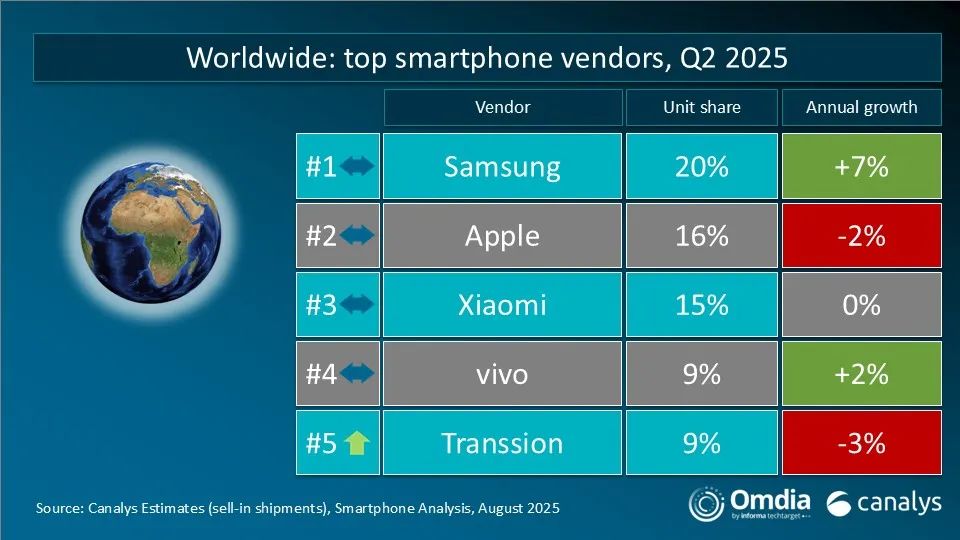
Core Insights - Global smartphone shipments are projected to slightly decline to 288.9 million units in Q2 2025 due to moderate consumer demand, leading to suppressed market growth [1] - Samsung retains the top position in global shipments with 57.5 million units, a 7% year-on-year increase, primarily driven by the Galaxy A series targeting the mass market [1] - Apple ranks second with 44.8 million iPhone units shipped, experiencing a 2% decline, facing challenges from intense competition in China and inventory adjustments in the U.S. market [1] - Xiaomi holds the third position with 42.4 million units shipped, showing strong performance in Latin America and Africa [1] - Vivo ranks fourth with 26.4 million units, a 2% increase, particularly strong in the Indian market [1] - Transsion is fifth with 24.6 million units shipped, reflecting a 3% decline [1] Global Market Overview - In the worldwide smartphone vendor rankings for Q2 2025, Samsung leads with a 20% market share and a 7% annual growth, followed by Apple at 16% with a 2% decline, and Xiaomi at 15% with no growth [1] - Vivo and Transsion hold 9% market shares each, with Vivo growing by 2% and Transsion declining by 3% [1] Regional Insights Latin America - Samsung leads with a 32% market share and an 8% growth, followed by Xiaomi at 20% with an 8% growth [3] - Lenovo holds 15% with a 10% decline, while Honor shows significant growth at 8% with a 70% increase [3] Europe - Samsung has a 31% market share but a 10% decline, while Xiaomi grows by 11% to 23% [3] - Apple holds 21% with a 4% decline, and Lenovo and realme have 5% and 4% shares respectively [3] Mainland China - Huawei leads with an 18% market share and a 15% growth, followed closely by Vivo at 17% with a 10% decline [5] - OPPO and Xiaomi both have 16% and 15% shares respectively, with Xiaomi growing by 3% [5] India - Vivo dominates with a 21% market share and a 31% growth, followed by Samsung at 16% with a 2% growth [6] - OPPO and Xiaomi both hold 13% shares, with OPPO growing by 24% and Xiaomi declining by 25% [6] United States - Apple leads with a 49% market share but a 10% decline, while Samsung follows with 31% and a significant 38% growth [7] - Lenovo and Google hold 12% and 3% shares respectively, with Google growing by 11% [7] Brazil - Samsung leads with a 40% market share but a 3% decline, followed by Lenovo at 24% with an 8% decline [8] - Xiaomi holds 17% with no growth, while Apple has 5% with a 9% decline [8] Mexico - Samsung leads with a 23% market share but a 2% decline, followed by Xiaomi at 18% with a 13% decline [9] - Lenovo and OPPO have 12% and 10% shares respectively, with OPPO declining by 14% [9]
集创北方再闯科创板IPO 专注于显示芯片研发设计
Zheng Quan Shi Bao Wang· 2025-08-06 10:42
Core Viewpoint - Beijing Jichuang Beifang Technology Co., Ltd. (referred to as "Jichuang Beifang") is preparing for its initial public offering (IPO) on the Sci-Tech Innovation Board, having previously withdrawn its application in March 2023 after being accepted in June 2022 [1] Company Overview - Jichuang Beifang is an internationally leading display chip design company established in 2008, focusing on the research, design, and sales of display chips, providing comprehensive solutions for various display panels and screens [1] - The company has developed a rich product portfolio, including panel display driver chips, power management chips, LED display driver chips, and control chips, while also actively exploring advanced display technologies such as small-pitch LED displays and silicon-based OLED displays [1] Market Position - Jichuang Beifang ranks first among global or mainland Chinese manufacturers in several segments of the display chip market, including: - First in market share for smartphone LCD display driver chips and LCD TDDI chips in mainland China [2] - First in market share for large-size display DDICs among mainland manufacturers [2] - First in market share for power management chips in the mainland China display panel market [2] - First in global market share for LED display driver chips from 2019 to 2023 [2] Research and Development Team - The company has built a strong R&D team with extensive technical expertise and industry experience, comprising over 64% of its 1,086 employees as of March 31, 2025, with 95% holding at least a bachelor's degree and over 52% holding a master's degree or higher [2] Supplier and Customer Relationships - Jichuang Beifang has established stable partnerships with major wafer manufacturers and testing service providers, ensuring consistent product quality and output [3] - The company has a robust customer base, including well-known panel and LED screen manufacturers such as BOE, Huaxing Optoelectronics, and LG Group, and its products are widely used by leading brands like TCL, LG, Samsung, OPPO, vivo, and Xiaomi [3] Shareholding Structure - As of July 31, 2025, the controlling shareholder of Jichuang Beifang is Zhang Jinfang, who holds a total equity stake of 39.97% through direct and indirect holdings [3]
高温炙烤下的空调江湖:新旧势力混战东北,价格血拼难解库存承压
Hua Xia Shi Bao· 2025-08-01 04:51
Core Insights - The air conditioning industry is experiencing significant growth due to the "old-for-new" national subsidy policy and extreme summer temperatures, particularly in the Northeast region of China [1][2] - Intense competition among major brands is evident as they vie for market share, leading to aggressive pricing strategies [1][6] - Online sales channels have become the dominant force in the air conditioning market, accounting for approximately 60% of total sales in the first half of the year [2][3] Market Dynamics - The Northeast market has become a battleground for air conditioning companies, with major brands like Xiaomi, Gree, and Midea mobilizing resources to meet demand [4][5] - Online sales of air conditioners reached 38.45 million units in the first half of the year, a 15.6% increase year-on-year, with online channels growing by 18% [2][3] - Offline channels still hold a significant share, contributing to 50.3% of total sales despite a lower volume share [3] Competitive Landscape - Major players like Gree, Midea, and Haier dominate the market, collectively holding nearly 70% of the retail volume and 73.6% of the retail value [5] - Xiaomi aims to become the third-largest air conditioning brand in China, targeting 10 million units shipped this year [5][6] - The price war has intensified, with low-end models seeing significant price reductions, making it challenging for new entrants to compete [7][8] Pricing Strategies - The average online price for Gree and Midea air conditioners has decreased by approximately 10% and 2% respectively, while Xiaomi's average price dropped by 20% [8] - The offline market shows a different trend, with Gree maintaining the highest average price at 4,770 yuan, despite a 4.5% decrease [8][9] - The competition in the low-end market is fierce, with prices for popular models dropping below 1,200 yuan [7] Future Outlook - The high temperatures in the Northeast are expected to provide a temporary boost to air conditioning sales, but overall growth may be limited due to the region's small market share [10][11] - Analysts predict a potential decline in sales volume by approximately 5.6% in the second half of the year, influenced by high inventory levels and previous strong demand [10][11] - The overall market is expected to maintain slight growth, but challenges remain due to high base effects and economic conditions [11]
每日投资策略-20250731
Zhao Yin Guo Ji· 2025-07-31 03:54
Industry Insights - The Chinese stock market is experiencing a pullback, with sectors such as consumer discretionary, information technology, and finance leading the decline, while energy, consumer staples, and telecommunications sectors with high dividend yields are rising [2] - The political bureau meeting has set the tone for the second half of the year, focusing on boosting consumption and addressing internal competition, signaling a shift towards economic rebalancing [2][3] - The global AI glasses market is expected to grow significantly, with Ray-Ban Meta showing strong sales performance and Xiaomi setting ambitious shipment targets, indicating a robust growth trajectory for the AI glasses supply chain [3] Company Insights - New Oriental reported a 19% year-on-year increase in net revenue for Q4 FY25, reaching $1.09 billion, exceeding company guidance, while non-GAAP net profit grew by 59% to $98 million, driven by cost optimization measures [4] - For FY26, New Oriental anticipates total revenue growth of 5%-10%, reaching between $5.15 billion and $5.39 billion, which is below consensus expectations due to macroeconomic uncertainties and increased competition [4] - The target price for New Oriental has been adjusted down to $70 from a previous $76, maintaining a "Buy" rating despite the downward revision in revenue forecasts [4]

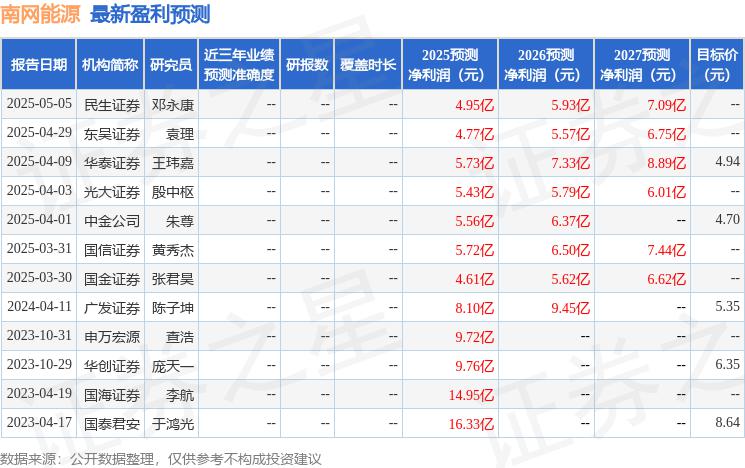
南网能源:7月25日接受机构调研,西部证券参与
Zheng Quan Zhi Xing· 2025-07-25 11:36
Core Viewpoint - Company is undergoing a strategic transformation from a focus on "investment holding" to a dual emphasis on "investment holding + high-end services" and expanding its business scope to include "comprehensive energy + energy conservation and carbon reduction" [2] Business Transformation - The company has launched a strategic plan for 2025, focusing on optimizing its business structure and expanding into high-end services, including consulting, design, construction, operation, and energy trading services [2] - Initiatives such as the "Energy Conservation Business Doubling Plan" and "Service Doubling Plan" are being implemented to strengthen the energy conservation and carbon reduction business [2] - A digital services company has been established to support the transition towards a dual focus on investment and high-end services [2] Biomass Power Plant Operations - The company has applied for bankruptcy for two biomass project companies, with the court accepting the applications, while other projects like the Fengtian and Chishui projects are operating normally and have achieved profitability [3] Distributed Photovoltaic Projects - The company's distributed photovoltaic projects are primarily located in five provinces of the southern power grid, with approximately 70% of installed capacity targeting industrial and commercial users [4] Building Energy Efficiency Projects - The company provides comprehensive energy-saving services for existing buildings and efficient energy supply systems for new constructions, with revenue derived from energy management, profit-sharing based on energy savings, and service fees [5] - The decline in gross margin for building energy efficiency projects in 2024 is attributed to reduced electricity savings and increased project costs, with future strategies focusing on energy-saving renovations in public institutions and key industries [5] Financial Performance - For Q1 2025, the company reported a main revenue of 693 million yuan, a year-on-year increase of 20.35%, and a net profit of approximately 91.34 million yuan, up 1.65% year-on-year [8] - The company has a debt ratio of 64.6% and an investment income of approximately 11.7 million yuan, with a gross margin of 34.67% [8] Market Outlook - The company anticipates a positive outlook for 2025, driven by stable growth in core industrial and building energy efficiency sectors, and a reduced impact from biomass operations [7] - The company is actively monitoring renewable energy subsidy policies and is prepared for potential adjustments in subsidy payments [7]

今夏空调市场乘“热”而上,济南有门店销量同比涨300%
Qi Lu Wan Bao Wang· 2025-07-24 10:16
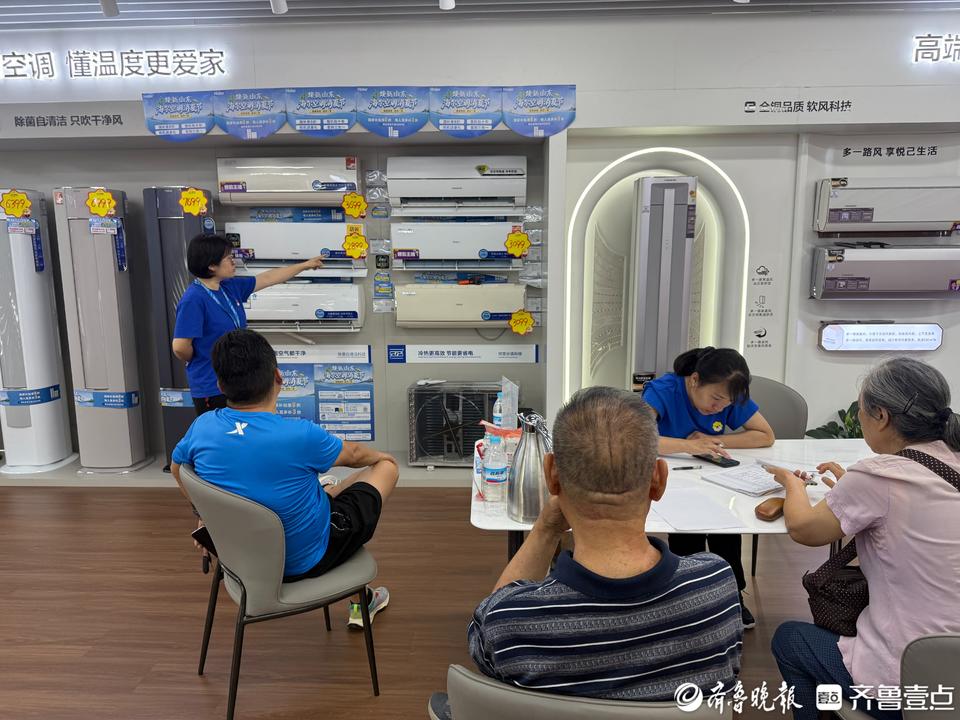
Core Insights - The air conditioning market in Jinan is experiencing a significant sales surge due to prolonged high temperatures and multiple subsidies, leading to increased consumer demand and busy installation services [1][11]. Sales Performance - Sales in air conditioning stores have seen remarkable growth, with some stores reporting a 300% year-on-year increase in sales [2][4]. - Major retailers like JD.com and Suning have also reported substantial increases in air conditioning sales, with JD.com noting over 200% growth since July and Suning reporting an 82% increase in energy-efficient air conditioners [4][11]. - Gree Electric stated that its popular air conditioning models saw a 240% increase in sales during the 618 shopping festival [4]. Installation Services - The surge in air conditioning sales has put pressure on installation services, with some engineers installing up to 14 units per day, which is three times the average of previous years [5][8]. - Companies like Midea and Gree are implementing measures to support installation teams, including cross-regional assistance and additional subsidies for installers [8][9]. Market Trends - The current market is witnessing a shift towards smart and energy-efficient air conditioning units, with features like voice control and mobile connectivity becoming standard even in mid-range products [9][11]. - The ongoing sales boom is expected to accelerate the elimination of outdated products and expand the market for high-efficiency appliances [9][11]. Consumer Behavior - Consumers are taking advantage of substantial subsidies, with some air conditioners being sold at discounts of up to 50%, making them more affordable [11]. - The combination of high temperatures and attractive subsidies is driving a significant increase in consumer purchases, indicating a favorable market environment for air conditioning products [11].