京东集团

Search documents
悬崖上的永辉
虎嗅APP· 2026-02-06 00:08
Core Viewpoint - Yonghui Supermarket is facing significant financial challenges, with a projected net loss of 2.14 billion yuan in 2025, marking a 45.6% increase year-on-year, and has reported losses for five consecutive years. The company attributes these losses to major operational strategy adjustments, including store renovations and closures, which have resulted in direct losses of 1.2 billion yuan [4][8]. Group 1: Company Background and Growth - Yonghui Supermarket was founded in 1995 by brothers Zhang Xuansong and Zhang Xuanning, starting with a micro-profit model. The brand was officially established in 1998 and gained momentum in 2000 by leveraging the "Agricultural Reform Supermarket" policy, leading to rapid growth [6][7]. - By 2010, Yonghui became the first "fresh food stock" listed on the Shanghai Stock Exchange, and by 2020, it achieved a record revenue of 93.2 billion yuan, marking its peak in the industry [7][8]. Group 2: Recent Challenges and Strategic Changes - Since 2021, Yonghui has entered a prolonged period of losses, with figures of 3.944 billion yuan in 2021, 2.763 billion yuan in 2022, and 1.329 billion yuan in 2023. The company has attempted a major transformation called "Fat Reform" to address these issues, which involves comprehensive changes in product structure, shopping experience, and organizational framework [8][9]. - The "Fat Reform" has led to significant financial costs, including a projected loss of 2.14 billion yuan for 2025, with 910 million yuan attributed to asset write-offs and 300 million yuan due to loss of gross margin from store renovations [9][10]. Group 3: Market Dynamics and Competitive Landscape - The retail landscape has shifted dramatically, with the rise of e-commerce and community group buying, which have significantly impacted traditional retail models. The community group buying market in China surpassed 830 billion yuan in 2023, with user numbers increasing from 212 million in 2017 to 845 million [10][11]. - Yonghui's traditional advantages in fresh food are being eroded by new competitors offering lower prices and more efficient supply chains. The company struggles to compete with both discount stores and experiential retailers, leading to a loss of customer traffic [11][13]. Group 4: Future Directions and Strategic Imperatives - Yonghui's transformation should not aim to replicate the success of competitors like Fat Donglai but rather focus on establishing a unique shopping proposition that differentiates it from other channels. This involves creating an emotional connection with consumers and offering distinctive value beyond price [17][18]. - The company must navigate its complex organizational structure and historical burdens to find a new positioning that resonates with consumers in a rapidly evolving market. The challenge lies in identifying what unique reasons consumers will have to choose Yonghui over other retail options [18].


2026年第一个爆款 Clawdbot现象背后是AGI更近了
2 1 Shi Ji Jing Ji Bao Dao· 2026-02-05 23:29
Core Insights - Clawdbot, now known as "OpenClaw," is an open-source AI assistant that has rapidly gained popularity in the tech community, achieving over 100,000 stars on GitHub within days and boosting sales of Apple Mac Mini [1][10] - The project signifies a shift from "conversational AI" to "agent-based AI," reflecting market expectations for next-generation AI applications capable of autonomous planning and execution of complex tasks [3][12] Technology and Functionality - Clawdbot operates on a three-part logic system: instructions, gateway, and execution, allowing users to issue commands via an app, which are processed locally through a gateway [3][12] - The AI assistant is designed to run locally, interact in real-time, possess memory, and evolve autonomously, functioning as a 24/7 assistant [3][12] - The MiniMax M2.1 model, praised for its capabilities in complex logical reasoning and coding, is a key component that enhances Clawdbot's performance [3][12] Market Impact - The launch of Clawdbot has triggered a surge in Mac Mini purchases, with notable figures in the tech industry, including Google's AI product head, purchasing the device to experience Clawdbot [14] - Major cloud service providers in China, such as Tencent Cloud and Alibaba Cloud, have quickly introduced one-click deployment services to facilitate rapid adoption among enterprises and developers [15] Industry Trends - Clawdbot's emergence accelerates the transition to the AI Agent era, with implications for hardware, cloud security, and AI infrastructure [17] - The project highlights the potential for private deployment models to drive growth in consumer hardware, VPS, and cloud security sectors [17] - The phenomenon of AI agents creating their own social forums, such as Moltbook, indicates a new dimension in AI interaction, where agents operate independently of human oversight [16] Future Perspectives - The development of Clawdbot raises questions about the future of AI programming, with its creator revealing that the project was nearly entirely generated by AI, suggesting a potential shortcut to achieving AGI [18] - The concept of "self-solving" capabilities in AI is gaining traction, with predictions that 2026 could mark a pivotal year for AGI, driven by the maturation of long-term intelligent agents [18]
看病遭遇电诈 民警火速追回
Xin Lang Cai Jing· 2026-02-05 23:24
本溪市公安局溪钢分局驻本钢总医院警务室民警史秀一、王成镇迅速行动,核查确认是犯罪嫌疑人冒充 熟人获取关老太信任,然后用骗来的付款码在京东商城购买了电子购物卡。为避免涉案资金被转移,史 秀一火速联系京东客服,对涉案购物卡进行了冻结并成功为关老太全额追缴回被骗的2000元钱款。 目前,该案仍在进一步侦办中。 本报讯 记者金松报道 近日,本溪市民关老太看病时收到微信消息,说是能领网络消费补贴,结果被骗 2000元。 62岁的关老太家住本溪溪湖,前几天到本钢总医院看病时,接到一条微信信息,显示是她一个熟人发来 的,告诉她看病也属于消费,能申请领取网络消费补贴。关老太相信了对方的话,被对方骗取了个人身 份信息和付款码,银行卡被划走2000元。意识到不对的关老太马上找到驻院警务室报警。 ...
举行爱心捐赠公益活动
Xin Lang Cai Jing· 2026-02-05 19:12
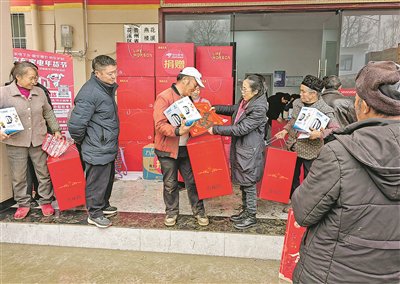
本报讯 2月4日,花溪区燕楼镇坝楼村举办以"家电下乡·暖冬惠农·京东护航"为主题的专项公益活动。 活动由贵阳市市场监督管理局、花溪区融媒体中心、燕楼镇人民政府及京东家电喷水池体验店联合开 展,通过政策宣讲、物资捐赠、现场咨询、服务保障等多种形式,将惠民红利与暖心服务精准送达村民 手中。活动中,还向坝楼村78户脱贫户和监测户捐赠羽绒被、电饭锅、电暖器、春联等物资和家电产 品。 转自:贵州日报 坝楼村村民领取爱心赠品。 (杨小平 贵阳日报融媒体记者 李春明 文/图) (《举行爱心捐赠公益活动》由贵阳日报为您提供,转载请注明来源,未经书面授权许可,不得转载或 镜像。) 活动开展前,坝楼村驻村工作队与村"两委"通过对全村冬季安全用电、用火等情况进行大走访,摸排村 民需求,确保村民切实享受到美好乡村"国补换新惠民计划"和"京东补贴"双重补贴,帮助解决村民家电 需求与换新需求,并由京东提供涵盖选购、配送、安装、售后的一站式服务保障。据悉,此次专项公益 活动将持续至2月14日。 ...

AI时代,企业为何集体走向艺术?京东、腾讯、梅见、喜茶的艺术实践观察
Sou Hu Cai Jing· 2026-02-05 18:50
Core Viewpoint - The rapid development of AI technology is prompting companies to adjust their organizational structures and job roles, leading to a re-evaluation of talent assessment standards and the integration of art into brand building and daily operations [1][3]. Group 1: Art Practices - JD.com plans to build a contemporary art museum in Shenzhen Bay, covering over 10,000 square meters, operating as an independent contemporary art institution, and focusing on themes related to technology, ecology, urbanization, and future living [5][6]. - Tencent is advancing the "Teng Chuang Future" art space, applying technologies like AI and VR/AR in cultural heritage protection and art display, including projects like the digital restoration of Dunhuang murals [8][9]. - Mei Jian Qing Mei Jiu has created China's first art space centered around alcohol, integrating online exhibitions and offline artistic collaborations, promoting Eastern aesthetics in contemporary life [11][12]. - Heytea incorporates artists and design agencies into its brand visual construction, launching global collaborations and themed stores to embed art into high-frequency consumer scenarios [15][16]. - Nongfu Spring integrates art into product packaging, collaborating with illustrators and photographers to create visually appealing designs that enhance brand recognition [20]. - Bilibili extends its online content ecosystem into offline public cultural spaces, showcasing original artworks and inviting creators to participate in exhibitions, enhancing community engagement [22][23]. Group 2: Core Characteristics - JD.com's art museum includes exhibition, performance, and educational spaces, facilitating various cultural activities while aligning with its technological and logistical background [5][6]. - Tencent's art initiatives leverage AI for detail restoration and digital archiving, enhancing efficiency in cultural heritage preservation and creating interactive exhibition spaces [9]. - Mei Jian Qing Mei Jiu collaborates with numerous artists to apply artistic works directly to product packaging, making art a part of everyday consumption [12]. - Heytea's artistic elements are integrated into packaging and store design, enhancing visual experiences and facilitating brand recognition among young consumers [17]. - Nongfu Spring's artistic packaging serves as a high-frequency display medium, reinforcing brand identity through consistent visual engagement [20]. - Bilibili's art practices emphasize community involvement, transforming viewers into participants and creators, thereby extending the lifecycle of content and IP [24]. Group 3: Brand Logic - JD.com's art museum enhances its brand image by adding cultural and emotional dimensions, transitioning from a purely e-commerce platform to a comprehensive institution with technological and cultural attributes [6]. - Tencent's involvement in cultural heritage and digital exhibitions strengthens its brand positioning as a technology and culture hybrid, expanding its business space in the digital cultural sector [9]. - Mei Jian Qing Mei Jiu differentiates itself in a saturated beverage market by enhancing the cultural and emotional value of its products through artistic collaboration [13]. - Heytea's artistic visual strategy helps establish brand recognition and emotional connections with consumers, increasing premium pricing and repeat purchase rates [17]. - Nongfu Spring's continuous design investment builds a stable perception of quality and aesthetics, creating long-term brand assets [20]. - Bilibili's offline exhibitions enhance community ties and user engagement, fostering a participatory culture that extends the relevance of its content [24]. Conclusion - Companies are increasingly entering the art sector through three main approaches: establishing physical cultural spaces, utilizing technology to transform art experiences, and integrating art into products and daily consumption [25].

上海家电数码购新补贴:新增“线下即时摇号”
Guo Ji Jin Rong Bao· 2026-02-05 14:07
2月4日晚,上海市商务委发布《上海市2026年落实国家家电以旧换新、数码和智能产品购新补贴政 策实施细则》,在原有线上摇号基础上,新增"线下即时摇号"参与方式,通过即摇、即中、即用的模 式,进一步满足消费者线下门店选购补贴商品的需求,该模式于2月5日起正式落地。 据悉,2026年上海家电以旧换新、数码和智能产品购新补贴整体仍以报名摇号、中签发券的形式开 展,此前已完成三轮线上报名摇号。 需要提醒的是,已参与线上摇号报名的消费者,在开始报名至完成发券期间(5天内)资格被锁 定,无法参与"线下即时摇号"活动,之后可以参与活动。 本次补贴覆盖品类与线上保持一致,包括6类家电产品和4类数码智能产品。其中,家电产品为1级 能效或水效标准的冰箱(含冰柜)、洗衣机、电视、空调(含中央空调)、热水器(含壁挂炉)、电脑 (含台式和便携式计算机);数码和智能产品为单件售价不超6000元的手机、平板、智能手表(手 环)、智能眼镜。补贴标准为产品扣除各环节优惠后最终售价的15%,每人每类限补贴1件,家电产品 单件补贴最高不超1500元,数码和智能产品单件补贴最高不超500元。 以云闪付APP为例,进入"政府以旧换新补贴"应用服务并选 ...
内资加码助力恒指稳住阵脚 空头活跃度短线攀升
Xin Lang Cai Jing· 2026-02-05 13:42
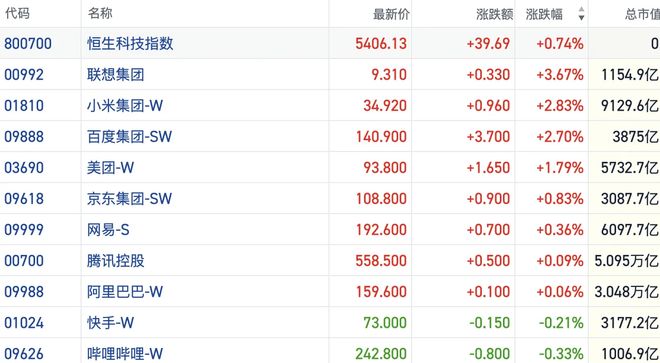
Core Viewpoint - The Hong Kong stock market showed signs of recovery with major indices turning positive, supported by domestic capital inflows and a mixed performance across sectors, particularly in technology and traditional industries [1][4]. Group 1: Market Performance - The Hang Seng Technology Index reached a new low during the day but closed up by 0.74% at 5406.13 points [2] - The Hang Seng Index and the National Enterprises Index increased by 0.14% and 0.5%, respectively [1] - Major tech stocks such as Xiaomi and Baidu rose nearly 3%, while Meituan increased by nearly 2% [1] Group 2: Sector Movements - Consumer sectors including dining, dairy, and beer stocks collectively rose, while telecommunications, biomedicine, home appliances, automotive, banking, and brokerage stocks also strengthened [2] - In contrast, sectors like gold and non-ferrous metals experienced downward volatility, with semiconductor and AI-related industries undergoing continued adjustments [3] Group 3: Trading Activity - The total trading volume for the Hang Seng Index reached 315.11 billion HKD, indicating a certain level of market activity [4] - Southbound capital saw a net purchase of nearly 25 billion HKD, becoming a key driver for market support [4] - Short selling reached a record high of 40.17 billion HKD, accounting for 12.75% of the trading volume, indicating ongoing market volatility [4] Group 4: Investment Trends - There is a notable shift in market focus from high-tech sectors like AI to more traditional industries [4] - Hedge funds are reportedly increasing short positions in software stocks, contributing to a significant sell-off in that sector [6] - Goldman Sachs forecasts a 3% appreciation in the nominal effective exchange rate of the RMB, which may benefit cyclical traditional industries [6] Group 5: Future Outlook - Analysts expect the market to maintain a volatile trend, with potential rotation in investment styles and themes [8] - The current valuation expansion space for Hong Kong stocks is limited, with earnings performance likely to dictate market trends [8] - A "technology + dividend" strategy remains effective in the short term, with an emphasis on defensive sectors such as banking, insurance, telecommunications, and utilities [8]
开局定胜势,北京“十五五”蓄力突破|北京经济新航标
Xin Lang Cai Jing· 2026-02-05 12:19
清晨的北京亦庄,北汽蓝谷工厂的智能车间里,机械臂精准舞动,每45秒就有一辆新能源汽车驶下生产线;前门大街的"非遗年货节"上,老艺人的糖画摊 位前人头攒动,年轻游客举着手机记录这份年味;京唐城际铁路的车厢内,做建材生意的张先生正翻看着合同,1小时直达唐山的通勤效率,让跨城办公 成为日常…… 2026年,"十五五"规划的开局之年,春潮涌动的京城大地上,这样的活力场景处处可见。从产业车间到消费市场,从协同战场到民生一线,北京以两会精 神为指引,锚定"地区生产总值增长5%左右"的目标,让新质生产力的引擎高速转动,让京津冀协同的脉络愈发清晰,更让高质量发展的成果浸润千家万 户。这座城市,正以稳中有进、质效双升的姿态,书写着新时代的发展答卷。 (全5022字,阅读需要18分钟) 记者|朱开云 新质生产力支撑 "以前造芯片,核心环节得跑遍大半个中国,现在在亦庄就能完成从设计到封装的全链条配套。"北京一家半导体产业链企业负责人道出了北京高精尖产业 集群的崛起密码。这家专注高可靠通信芯片研发的企业,自2021年迁入亦庄后,收入规模增长了十几倍,背后正是北京日益完善的产业生态支撑。 (来源:半两财经) 2026年,北京将新质生产 ...
昆山:“四好农村路”畅通产业循环,厚植共富根基
Xin Lang Cai Jing· 2026-02-05 11:02
Core Insights - The article emphasizes the importance of rural road infrastructure in driving economic development and achieving common prosperity in Kunshan City, positioning the "Four Good Rural Roads" as a foundational project for industrial layout and logistics efficiency [1] Group 1: Infrastructure Development - Kunshan has constructed over 600 kilometers of industrial roads, with more than 65% being secondary roads, ensuring seamless connectivity with the city's rapid road network and major highways [1] - The "1530" efficient transportation circle allows for quick access to highways within 15 minutes and to major cities like Shanghai and Suzhou within 30 minutes, facilitating rapid market access for local products [1] Group 2: Logistics System Enhancement - A comprehensive logistics network has been established, covering all administrative villages, with major courier services achieving 100% direct delivery rates [1] - The introduction of modern logistics hubs, such as JD Logistics Park and Tianhuan Cold Chain, has improved delivery efficiency by over 20% and reduced average costs by more than 15% [1] Group 3: Economic Impact - The efficient transportation and logistics systems have led to the optimization of industrial structures, promoting the clustering and branding of local industries, which enhances value creation [2] - By 2025, the per capita disposable income of rural residents in Kunshan is projected to reach 49,700 yuan, with the urban-rural income ratio narrowing to 1.76:1, indicating improved economic conditions for residents [2]
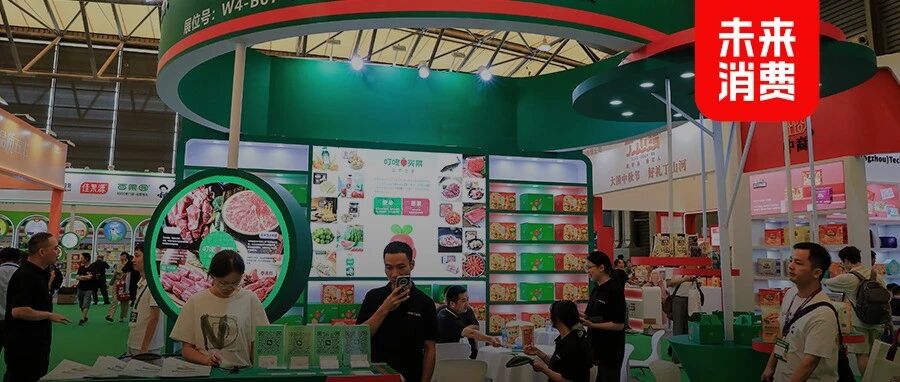
叮咚买菜被美团收购,即时零售进入巨头争战期
36氪未来消费· 2026-02-05 10:38
Core Viewpoint - Meituan's acquisition of Dingdong Maicai marks a significant consolidation in the local lifestyle sector, indicating the end of the era where fresh e-commerce relied on independent platforms to "burn money for scale" [3][4]. Group 1: Acquisition Details - Meituan has reached a final agreement to acquire 100% of Dingdong Maicai's China business for approximately $717 million, excluding its overseas operations [3]. - The acquisition is seen as a defensive move by Meituan to prevent Dingdong from being acquired by competitors, which could lead to intensified price wars [5]. Group 2: Market Context - The competition in instant retail is intensifying, with major players like JD and Hema also accelerating their expansion efforts [4][6]. - Dingdong Maicai's recent financial performance shows promising growth, with a GMV of 7.27 billion yuan and revenue of 6.66 billion yuan in Q3 2025, both reaching historical highs [7]. Group 3: Strategic Implications - The acquisition allows Meituan to gain a mature network and team from Dingdong Maicai, avoiding the high costs associated with early-stage investments [7][8]. - Dingdong Maicai has established a strong presence in key regions like Shanghai and the Yangtze River Delta, which are critical for market competition [8]. Group 4: Future Prospects - Dingdong Maicai's founder is reportedly pursuing a "second entrepreneurship" by developing B2B overseas business, indicating a strategic shift [8][9]. - The internal sentiment among Dingdong employees suggests concerns about potential personnel optimization following the acquisition [10].