
宝马

Search documents
8月乘用车:自主海外大比拼、新势力持续狂飙、合资反攻新能源
Zhong Guo Jing Ji Wang· 2025-09-02 13:04
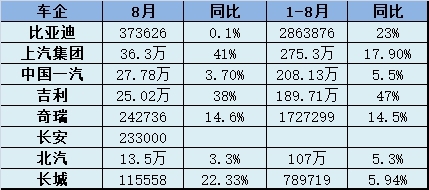
Core Insights - The automotive market in August showed significant growth driven by favorable policies and consumer demand, with domestic brands leading the market while luxury and joint venture brands lagged behind [1] Domestic Brands Performance - BYD achieved sales of 373,626 units in August, a slight increase of 0.1% year-on-year, with cumulative sales of 2,863,876 units for the first eight months, representing a 23% increase [2] - SAIC Group reported sales of 363,700 units in August, up 41% year-on-year, with cumulative sales of 2,753,000 units, a 17.9% increase [2] - Chery exported 129,000 vehicles in August, marking a 32.3% increase year-on-year, and maintained its position as the top exporter of Chinese cars [4] - Geely's new energy vehicle sales reached 147,000 units in August, a remarkable 95% increase year-on-year, making it the second-largest player in the new energy sector after BYD [4] New Energy Vehicle Market - The new energy vehicle segment continues to thrive, with companies like Leap Motor achieving record sales of 57,066 units in August, leading the new force brands [5][6] - Hongmeng Zhixing and Xiaopeng also reported strong sales, with the former selling nearly 50,000 units and the latter launching a new model that boosted sales [6][7] Joint Venture Brands - FAW-Volkswagen sold 135,772 units in August, a 4.2% year-on-year increase, while its Audi brand saw significant sales due to new product launches [8][10] - The joint venture brands are facing challenges from both domestic and new energy brands, with a notable decline in sales for luxury brands like Mercedes-Benz, BMW, and Audi [9][10] Market Outlook - The automotive market is expected to become increasingly competitive as the traditional sales peak season approaches, with ongoing policy support likely to reshape market dynamics [10]



二季度汽车经销商调研报告:超半数品牌返利兑现周期缩至30天内
Jing Ji Guan Cha Wang· 2025-09-02 12:54
Core Insights - The report from the China Automobile Dealers Association indicates significant changes in rebate policies and inventory levels among major automotive brands following a call for manufacturers to optimize rebate policies and shorten payout periods [2][5]. Rebate Payout Periods - Among the 40 major automotive brands surveyed, 25 brands have a fixed rebate payout period of no more than 30 days, while 15 brands have a period of no more than 60 days [2]. - For non-fixed rebates, 18 brands have a payout period of no more than 30 days, and 16 brands have a period of no more than 60 days [2]. - The report highlights a reduction in the number of brands with payout periods exceeding 90 days, with no brands reporting periods over 180 days [3]. Rebate Payout Methods - 12 brands provide rebates in cash or vehicle accounts that can be withdrawn without fees, while 28 brands offer a mix of vehicle accounts and cash, with varying conditions for withdrawal [3][4]. - Some brands impose fees or require manufacturer approval for withdrawals, which can complicate liquidity for dealers [4]. Inventory Levels - Over 53% of dealers report inventory levels exceeding 1.5, with 29.36% indicating levels above 2.0 [5]. - Certain brands, such as Xiaopeng, Xiaomi, and Deep Blue, report low inventory levels due to their sales models, while brands like Changan and Hongqi have higher inventory levels [5][6]. Price Discrepancies - 8 brands report no price discrepancies, while 32 brands experience an average price discrepancy of approximately 16.18% [6]. - Previously, around 80% of models from 42 brands faced price discrepancies exceeding 20% [6]. Overall Industry Impact - The report suggests that while there have been improvements in rebate policies and inventory management, challenges remain, particularly with complex rebate policies and long payout periods that continue to affect dealer operations and the overall health of the automotive industry [6].
汽车行业系列深度十:自主冲击豪华市场,高端定义增量空间
Minsheng Securities· 2025-09-02 12:08
Investment Rating - The report maintains a positive investment recommendation for the mid-to-high-end automotive market, particularly for domestic brands [6]. Core Insights - The domestic automotive market is experiencing a shift from a focus on cost-effectiveness to brand building, especially in the mid-to-high-end segments [1][2]. - The high-end market (above 150,000 RMB) is expected to see significant growth, with domestic brands poised to capture a larger share due to their increasing brand loyalty and product capabilities [2][5]. - The competitive landscape is evolving, with traditional luxury brands facing challenges from emerging domestic players leveraging technology and innovation [3][4]. Summary by Sections 1. Mid-to-High-End Market Profitability - The mid-to-high-end market is characterized by strong profitability and significant growth potential, with domestic brands currently holding less than 50% market share in segments priced above 150,000 RMB [2][5]. - The 5-15 million RMB market is dominated by domestic brands, achieving a market share of 70.6% as of Q2 2025, but is entering a phase of stock competition with limited growth potential [12][16]. - The 15-25 million RMB market shows a growing share for domestic brands, currently at 48.0%, indicating room for further expansion [18][19]. 2. Lessons from Overseas Brands - Traditional luxury brands have established strong brand identities through historical positioning and consistent messaging, which domestic brands can learn from [2][3]. - The ultra-luxury segment emphasizes performance and exclusivity, while traditional luxury brands focus on luxury experiences and brand prestige [3]. 3. Building Brand Barriers for Domestic Brands - Domestic brands are increasingly focusing on building brand barriers through product differentiation and technological advancements, particularly in the luxury segment [4][5]. - The competitive landscape in the 25 million RMB and above market is stabilizing, with leading domestic brands like Li Auto and Huawei establishing a strong presence [4][24]. 4. Challenges and Opportunities in the Luxury Market - The luxury market is witnessing a clear leadership structure, with domestic brands like Li Auto and Xiaomi emerging as strong competitors against traditional luxury brands [4][24]. - The report suggests that the 15-25 million RMB market is fragmented and presents opportunities for traditional and emerging players to establish leadership [15][19]. 5. Investment Recommendations - The report recommends focusing on domestic brands in the mid-to-high-end market, particularly those with strong brand potential and innovative capabilities [5]. - Suggested companies for investment include emerging players like Xiaomi, Li Auto, and traditional brands with high-end sub-brands such as Geely and BYD [5].




郭永锋接替李凤刚 一汽奥迪销售公司中方一把手两年内再换人
Jing Ji Guan Cha Bao· 2025-09-02 10:28
Group 1 - The leadership change at FAW Audi Sales Company is aimed at addressing the declining market performance, with Guo Yongfeng replacing Li Fenggang as the executive vice president starting September 1, 2025 [1] - FAW Audi's sales have been declining for three consecutive years, with 2024 sales dropping to 611,000 units, a 12.5% year-on-year decrease [2] - Audi's overall performance in China is negatively impacted by FAW Audi's decline, with a 10.2% drop in sales to 287,600 units in the first half of 2025 [2] Group 2 - FAW Audi's slow progress in the transition to electric vehicles is concerning, with over 90% of sales still coming from fuel vehicles, while competitors like Mercedes and BMW have higher electric vehicle sales ratios [3] - The establishment of the Audi FAW New Energy production base in Changchun is expected to enhance the introduction of new energy models, starting with the Q6L e-tron [3] - FAW Audi is collaborating with Huawei to enhance the intelligence of fuel vehicles, which may help improve market performance [3]
【新能源周报】新能源汽车行业信息周报(2025年8月25日-8月31日)
乘联分会· 2025-09-02 09:11
Industry Information - China Automotive Research Institute will continue to develop hydrogen energy measurement testing capabilities to support the hydrogen vehicle industry [8] - Ganfeng Lithium has established a new energy technology company in Hubei [9] - EVE Energy has achieved mass production of small cylindrical batteries in Malaysia [9] - CATL has invested in a new company that includes charging pile business [9] - Hongmeng Zhixing has delivered 900,000 units, maintaining the top average transaction price among Chinese automotive brands for 14 consecutive months [10] - A Chinese electric vehicle ordering platform has launched in the European market [12] - A joint venture between Zhongchu Innovation and Leap Motor has been established with a registered capital of 1 billion yuan [12] - The world's first pure electric flying car has begun trial operations [13] - The National Energy Administration reported that the number of charging infrastructure in China has reached 16.696 million, ten times that at the end of the 13th Five-Year Plan [14] - Xinwanda has completed the product plan and process verification for its third-generation all-solid-state battery with a density of 400Wh/kg [14] - The China Automotive Technology and Research Center has established a new energy and intelligent connected vehicle innovation and testing research base in Wuhan [14] - Bosch's smart driving control innovation project has settled in Suzhou [15] - In the first half of 2025, Chinese companies accounted for over 68% of global electric vehicle battery installations [16][18] - A joint research institute between Huazhong University of Science and Technology and Dongfeng Motor has signed six research projects focusing on solid-state batteries and other fields [18] - Guoxuan High-Tech reported a revenue of 19.4 billion yuan in the first half of 2025, a year-on-year increase of 15% [19] - Horizon Robotics announced that the total shipment of its Journey series automotive auxiliary driving chips has exceeded 10 million sets [19] Policy Information - Chongqing Fengdu County has issued a notice regarding the vehicle scrapping and replacement policy [24] - New energy vehicles are entering a strict regulatory era [25] - Wuxi City has released a three-year action plan for urban renewal [26] - Huizhou City in Guangdong has implemented preferential policies for parking fees for new energy vehicles [27] - Siping City in Jilin is promoting the high-quality development of charging and swapping infrastructure [28] - The State Council is promoting the development of smart connected vehicles and other new-generation smart terminals [30] - The first group standard for four-wheeled low-speed electric vehicles has been released [34] - The Central Committee of the Communist Party of China and the State Council have called for improvements in urban infrastructure, including parking spaces and charging piles [34]
坤泰股份(001260) - 坤泰股份投资者关系活动记录表
2025-09-02 08:18
Company Overview - Shandong Kuntai New Materials Technology Co., Ltd. specializes in the R&D, production, and sales of automotive interior materials and products, listed on the Shenzhen Stock Exchange on February 16, 2023 [2][3] - The company’s core business covers the entire industry chain of automotive interior components, with main products including automotive tufted carpets and needle-punched carpets, primarily serving the complete vehicle market [2][3] Market Expansion - Kuntai has established stable partnerships with brands such as BMW, Audi, Mercedes-Benz, Volvo, Hongqi, NIO, Li Auto, and Xpeng, and is actively expanding overseas markets with subsidiaries in the USA, Singapore, and Mexico [2][3] Production Capacity and Growth - The company’s needle-punched carpet business has seen rapid growth due to favorable industry policies and increasing demand for needle-punched carpets, particularly in the context of the growing new energy vehicle market [3][4] - The production capacity for needle-punched materials is set to increase significantly with the launch of a project aimed at producing 6.75 million square meters of high-grade needle-punched materials and 15,000 tons of BCF yarn [3] International Operations - The Mexican production base has achieved small-scale production, with plans for stable operations based on customer orders, aiming for full-scale production soon [4] - A new production base in Morocco is being established to serve the European market, focusing on the development, production, and sales of automotive carpets [7] Profitability and Product Features - The company aims to improve its gross margin by focusing on core business areas, expanding market space, enhancing customer structure, increasing R&D investment, and strengthening cost control [4] - Key product features include anti-mold, antibacterial, flame retardant, low odor, low volatility, sound absorption, and recyclability, driven by a commitment to technological innovation and environmental principles [6]
浙江荣泰(603119):Q2盈利维持高位,机器人业务布局持续推进
GOLDEN SUN SECURITIES· 2025-09-02 07:06
Investment Rating - The report maintains a "Buy" rating for the company [3][6] Core Views - The company reported a revenue of 572 million yuan for H1 2025, representing a year-on-year increase of 15%, and a net profit attributable to shareholders of 120 million yuan, up 22% year-on-year [1] - The revenue growth rate in Q2 2025 showed a slowdown, primarily attributed to the deceleration in Tesla's sales, but overseas customer acquisition is expected to drive future revenue growth [1][2] - The company is strategically positioned in the robotics sector, with a clear layout and ongoing expansion into precision transmission and humanoid robotics through acquisitions [2] Financial Performance - For H1 2025, the gross margin was 35.7%, an increase of 2.0 percentage points year-on-year, while the net profit margin was 21.6%, up 1.3 percentage points year-on-year [2] - The company’s revenue forecast for 2025-2027 is adjusted to 308 million, 415 million, and 577 million yuan respectively, with year-on-year growth rates of 34%, 34%, and 38.9% [3][5] - The projected P/E ratios for 2025, 2026, and 2027 are 93x, 69x, and 50x respectively [3] Business Strategy - The company has made strategic acquisitions to enhance its capabilities in the robotics field, including a 15% stake in Guangzhou Jinli Intelligent Transmission Technology Co., which will facilitate entry into emerging sectors [2] - The company is expected to benefit from partnerships with leading global automotive manufacturers and battery suppliers, which will likely increase its overseas revenue share [1][2]

中国汽车人,你为什么没钱?
3 6 Ke· 2025-09-02 03:09
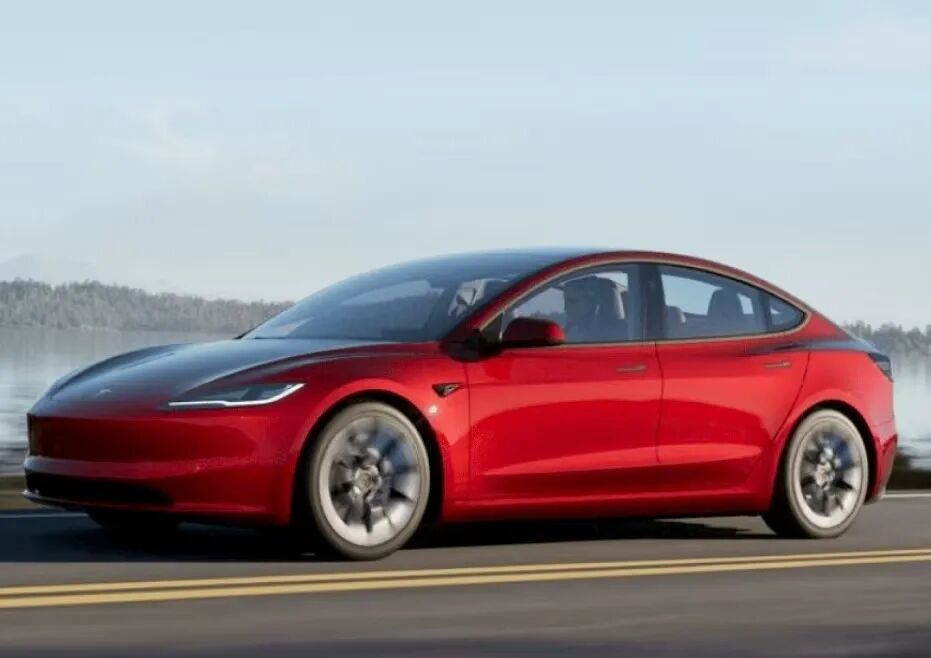
Core Viewpoint - The Chinese automotive industry is experiencing a significant price war, leading to reduced profit margins and financial strain on manufacturers and dealers, despite some sales volume growth [5][17][31]. Group 1: Price War and Market Dynamics - Tesla has reduced the price of its Model 3 Long Range AWD from 269,500 RMB to 259,500 RMB, a decrease of 10,000 RMB, reflecting ongoing price competition in the market [3]. - The automotive industry's profit margin fell to 3.5% in July 2025, marking a recent low, with a year-on-year decline from 4.4% in July 2024 [17][19]. - Despite a 6.3% year-on-year increase in retail sales volume to 1.826 million units in July, the overall market sentiment remains negative due to price pressures [6][17]. Group 2: Manufacturer Responses and Consumer Impact - Many manufacturers, including Haval, Geely, and BYD, continue to offer high discounts, with some brands increasing their discount rates in July 2025 [8][10]. - The number of models experiencing price cuts in July 2025 was 17, which is fewer than in earlier months but still indicates ongoing price competition [10][12]. - The automotive industry is facing a decline in profitability, with reports of over 1,200 dealerships nearing closure and more than 50% of dealerships operating at a loss [20]. Group 3: Economic Context and Future Outlook - The price war is attributed to a broader economic downturn, with consumer purchasing power declining, forcing manufacturers to lower prices to maintain sales volume [26][31]. - The automotive sector is seen as a critical lever for economic activity, especially as the real estate market struggles, leading to increased pressure on automotive companies to sustain operations [26][31]. - The industry is urged to find a balance between competitive pricing and sustainable profitability, as the current environment is unsustainable for many players [35].

特斯拉8月遭遇“滑铁卢”
3 6 Ke· 2025-09-02 01:29
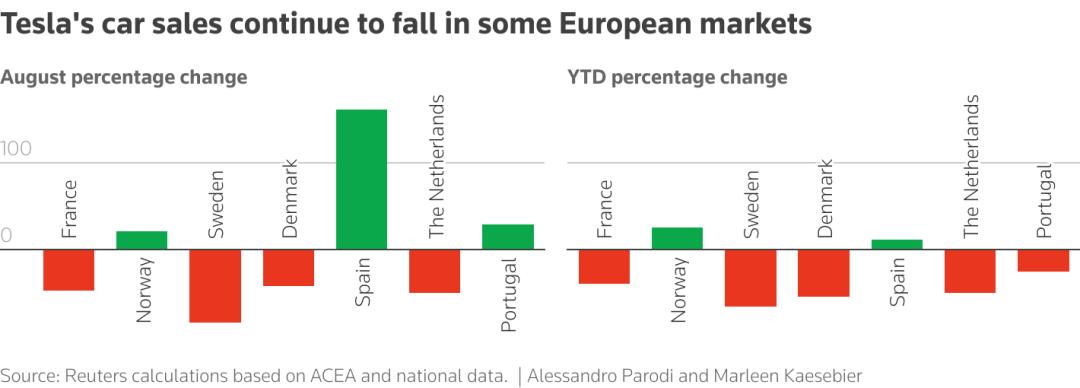
Core Viewpoint - Tesla is losing its competitive edge in the European electric vehicle market, facing declining sales and increasing competition from companies like BYD, which is rapidly gaining market share [1][6][11]. Sales Performance - In August, Tesla's sales in key European markets plummeted, with France experiencing a 47.3% year-on-year decline while the overall market grew by 2.2% [2] - Sweden saw an extreme drop of 84% in Tesla's sales, contrasting with a 6% increase in the local automotive market [2] - Denmark and the Netherlands also reported significant declines of 42% and 50% respectively, indicating a clear trend of market shrinkage for Tesla [2][6]. Regional Highlights - Norway and Spain are exceptions where Tesla saw growth, with a 21.3% increase in Norway, although BYD's growth was significantly higher at 218% [3] - In Spain, Tesla's sales surged by 161% due to government subsidies, but BYD's sales skyrocketed over 400% [3]. Competitive Landscape - Tesla's declining sales reflect its passive position in the European market, attributed to an aging product line and lack of new models since the launch of Model Y in 2020 [7] - Competitors, particularly Chinese companies like BYD, NIO, and Xpeng, are continuously introducing new models, intensifying competition [7]. Market Share Decline - Tesla's market share in Europe has dropped dramatically from 2.5% in 2024 to 1.7% in 2025, highlighting a significant loss of presence [8]. Brand Image Issues - Tesla faces a "brand image crisis" due to Elon Musk's political activities, which have led to consumer backlash in Europe [9] - Over half of surveyed consumers indicated they are unwilling to purchase Tesla vehicles due to Musk's actions, marking a shift in the brand's perception [9]. Pricing Strategy Consequences - Tesla's frequent price cuts to maintain sales have resulted in a sharp decline in the resale value of its vehicles, with Model Y prices dropping by 41% year-on-year [10] - This depreciation creates a perception of risk for potential buyers, further impacting new car sales [10]. Summary of Challenges - Tesla is grappling with multiple challenges in Europe, including outdated product offerings, fierce competition, collapsing resale values, and damage to its brand image due to Musk's controversies [11].
新坐标20250901
2025-09-02 00:42
Summary of Conference Call for New Coordinates Company Overview - New Coordinates has achieved its highest quarterly revenue ever in the first half of 2025, with Q2 revenue exceeding 200 million yuan, showing significant year-on-year and quarter-on-quarter growth [3][22] - The company’s net profit reached a record high of 77 million yuan, with a healthy gross margin maintained [3] Industry and Market Dynamics - The overseas revenue of New Coordinates has surpassed domestic revenue for the first time, accounting for over 51% of total revenue, primarily due to the efforts of overseas subsidiaries since 2022 [2][3] - The commercial vehicle and commercial engine business segments have increased in proportion, indicating an optimization of the company’s business structure [2] Customer Structure and Market Share - BYD still accounts for over 10% of New Coordinates' revenue, although this has slightly decreased; Volkswagen accounts for approximately 40%-50% globally, with foreign markets making up two-thirds of this [2][4] - The commercial vehicle segment has seen nearly 20% growth, with revenue exceeding 70 million yuan, mainly driven by overseas markets and clients such as MAN and Caterpillar [4][10] - The Mexican subsidiary has shown significant revenue growth, enhancing profitability through scale effects and automation improvements [16] Product Development and R&D - New Coordinates established a dedicated subsidiary for four-cylinder engine research and development with a registered capital of 500 million yuan, aiming to enter small-scale production in the second half of the year [6][30] - The company has made progress in developing new products, particularly in the valve train and precision components, with the "other" category (mainly high-pressure pumps and parts) showing rapid growth [8][9] Future Outlook and Seasonal Factors - The company anticipates a slight slowdown in performance in Q3 and Q4 due to seasonal factors, with new projects from Chery, Great Wall, and others expected to gradually contribute to growth [7][22] - The heat management system's stainless steel component business is expected to ramp up in the second half of the year [7] Financial Performance and Growth Projections - The revenue growth rate for the first half of 2025 was around 20%, with expectations for the full year to be around 10% [22][24] - Traditional business is projected to maintain approximately 10% growth in the coming years, supported by ongoing projects and customer orders [24] Strategic Initiatives and Competitive Position - New Coordinates is focusing on high-performance alloy steel materials instead of traditional carbon steel to meet the automotive industry's stringent quality requirements [21] - The company has secured a project with Rolls-Royce, enhancing its brand effect and potential for high-end customer orders [26][27] Challenges and Risks - The company faces challenges in maintaining growth due to potential slowdowns in key clients like BYD and seasonal impacts on performance [22][23] - The commercial vehicle market remains a significant growth area, but the company’s market share in this segment is still relatively low compared to passenger vehicles [12][13] Conclusion - New Coordinates is positioned for growth with a strong focus on overseas markets and new product development, although it must navigate seasonal fluctuations and competitive pressures in the automotive industry [2][7][12]
