奔驰

Search documents
IAA2025观察:中欧新能源博弈,全球格局重塑
Haitong Securities International· 2025-09-10 14:50
Investment Rating - The report does not explicitly provide an investment rating for the industry or specific companies within it [20]. Core Insights - The 2025 IAA Mobility event highlighted the competitive dynamics between Chinese and European automakers, with over 100 Chinese companies participating, making China the largest foreign exhibitor [6][1]. - Chinese automakers are accelerating their overseas expansion, focusing on a full-chain strategy that includes products, channels, and supply chains to enhance their market presence in Europe [7][2]. - European automakers are prioritizing cost reduction and efficiency to maintain profitability while facing increasing competition from Chinese brands [8][3]. - The report identifies three key trends: rapid overseas expansion by Chinese OEMs, a shift in competition towards system-level capabilities, and a pragmatic market structure in Europe that includes both PHEVs and entry-level BEVs [9][4]. Summary by Sections Event Overview - The IAA Mobility event took place from September 8-14, 2025, in Munich, featuring 748 exhibitors, with a significant representation from Chinese companies [1][6]. Chinese Automakers' Strategies - BYD plans to start production in Hungary and establish over 1,000 stores in Europe by the end of 2025, expanding to 2,000 by 2026 [7][2]. - XPeng showcased new models and announced a new R&D center in Munich, emphasizing its AI and mobility ecosystem [7][2]. - Leapmotor and GAC also introduced new models targeting the European market, highlighting their commitment to local production and market penetration [7][2]. European Automakers' Responses - BMW aims to reduce EV costs by 40-50% and achieve profitability levels comparable to ICE vehicles by 2026 [8][3]. - Mercedes-Benz and Volkswagen are focusing on maintaining their market positions without engaging in price wars, while Renault and Stellantis are adjusting their strategies to emphasize lower-cost models [8][3]. Key Trends - The report outlines three major trends: the acceleration of Chinese automakers' overseas expansion, the transition of competition towards comprehensive system capabilities, and the emergence of a dual market structure in Europe that accommodates both PHEVs and entry-level BEVs [9][4].




慕尼黑车展,一场决定未来格局的中德车企对弈
Mei Ri Jing Ji Xin Wen· 2025-09-10 13:57
Group 1: Event Overview - The 2025 International Motor Show in Munich focuses on innovation, infrastructure solutions, software development, and emerging mobility trends, marking a shift from traditional auto shows to comprehensive mobility platforms [1] - A total of 748 exhibitors participated, with 57% coming from outside Germany, and China being the largest foreign participant, accounting for nearly one-third of overseas exhibitors [1] Group 2: Chinese Automakers' Strategies - Chinese automakers are increasingly active in Europe, with participation rising from over 70 companies in 2023 to 116 in 2025, showcasing vehicles and technologies across various sectors [2][3] - Xpeng Motors announced the opening of its first European R&D center during the show, aiming to better understand and meet European consumer needs [2] - BYD plans to launch multiple new hybrid models in Europe and aims to establish over 1,000 stores by the end of 2023, with a goal of exceeding 2,000 by the end of 2026 [3] Group 3: Competitive Landscape - European automakers, including BMW and Mercedes-Benz, are responding to the competitive pressure from Chinese companies by showcasing their latest electric models and emphasizing cost reduction strategies [7][8] - Mercedes-Benz introduced the new GLC 400 4MATIC electric model, while BMW launched the iX3, with plans for significant new model releases by 2027 [7][8] Group 4: Industry Collaboration - Chinese battery manufacturers like CATL have established deep ties with European automakers, with CATL claiming partnerships with over 90% of mainstream car manufacturers in Europe [6][9] - Companies like Momenta are also forming collaborations with numerous global automakers, enhancing the potential for Sino-European cooperation in smart driving technologies [9]
欧洲放缓电动化步伐,给中国电池企业带来什么?
2 1 Shi Ji Jing Ji Bao Dao· 2025-09-10 12:27
Core Viewpoint - The article highlights the evolving dynamics of the European electric vehicle (EV) market, emphasizing the critical role of Chinese battery manufacturers like CATL in addressing the region's structural challenges in electrification [2][4][5]. Group 1: European Electrification Trends - The electrification rate in Europe increased from 23% to 26% in the first half of 2025, with projections nearing 29% by year-end, indicating a significant rise in the adoption of pure electric vehicles [3][4]. - Despite major automakers like Volkswagen and BMW slowing their electrification efforts, the market data reflects a contrasting trend, showcasing a deep-seated contradiction in Europe's electrification trajectory [3][4]. Group 2: Challenges in Battery Production - European battery production faces a critical bottleneck due to a lack of competitive capabilities in lithium iron phosphate (LFP) batteries, which are essential for reducing EV costs and increasing market accessibility [4][5]. - The European Union is at least five years behind China in the development and production of LFP batteries, a gap that may persist until 2030 [4][5]. - BloombergNEF forecasts a shortfall of 70 GWh in battery capacity for the expected 3.27 million EV sales in Europe by 2025, highlighting the urgent need for local production [4][5]. Group 3: Opportunities for Chinese Battery Manufacturers - The absence of local battery production capabilities in Europe presents a historic opportunity for Chinese companies like CATL and EVE Energy to establish manufacturing plants in the region [4][5]. - CATL's factory in Hungary is projected to have a capacity of 100 GWh, supplying batteries to major European brands, while a joint venture with Stellantis in Spain aims for a 50 GWh capacity by the end of 2026 [5][6]. Group 4: Strategic Collaborations and Market Share - CATL's collaboration with European automakers signifies a shift towards deeper integration of advanced battery technologies, with customized battery solutions being developed for platforms like BMW's Neue Klasse [7][8]. - CATL's market share in Europe reached 35% from January to October 2024, with expectations to exceed 40% in 2025 and potentially surpass 50% by 2027 [8]. - The company's global market share for power batteries reached 37.5% in the first seven months of 2025, reflecting a significant increase from 2020 [8].

这届慕尼黑车展:新车不多,伤害极大
3 6 Ke· 2025-09-10 12:25
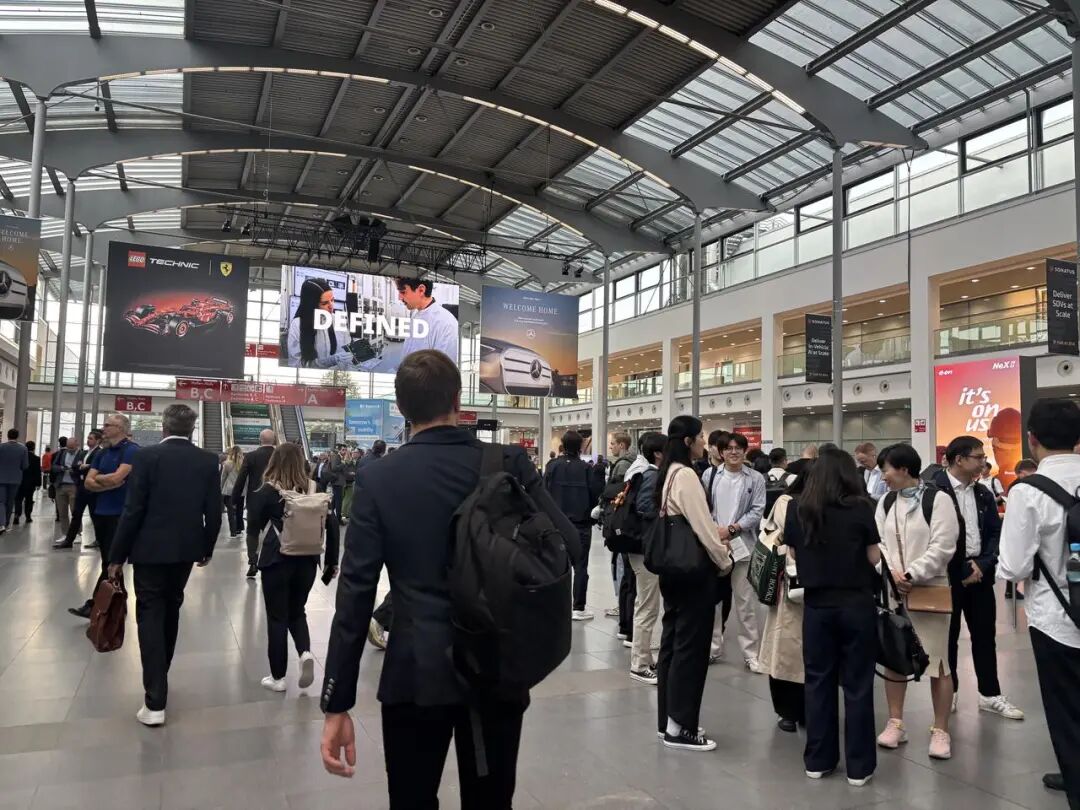
Core Insights - The Munich Auto Show has seen a significant presence of Chinese automotive companies, with one-third of the exhibition space occupied by them, indicating China's rising influence in the global automotive industry [1] - The show highlights a shift in strategy for both Chinese and German automakers, focusing on product innovation and global expansion rather than just vehicle sales [3][18] Group 1: Differences in Auto Shows - Munich Auto Show is characterized by its compactness, with less than half the exhibition space compared to domestic shows, yet it showcases the latest strategic models from major brands [3] - Unlike domestic shows that emphasize vehicle sales, the Munich Auto Show serves as a strategic platform for global players, with Chinese companies using it as a launchpad for international markets [3][18] - The presence of both automakers and suppliers in the same venue reflects a more integrated approach to the automotive supply chain [3] Group 2: German Automakers' Strategies - German automakers, particularly BMW and Mercedes-Benz, are shifting focus from concept cars to new production models, indicating a response to market demands [6][7] - Mercedes-Benz has streamlined its naming strategy for electric vehicles, moving away from the EQ branding to simplify consumer recognition [9] - The new Mercedes-Benz GLC electric version features advanced technology and design, aiming to meet consumer preferences for spacious and comfortable vehicles [15][11] Group 3: Expansion of Chinese Automakers - Chinese automakers are increasingly participating in international auto shows, with a notable increase in the number of Chinese companies at the Munich Auto Show compared to previous years [18] - Companies like AITO and Xiaopeng are using the show to establish their brands in Europe, with plans for direct sales and localized production [20][22] - Leap Motor's Lafa5 is positioned as a sporty model targeting younger consumers, marking a new phase in the company's product strategy [26] Group 4: Competitive Landscape - The competition in the automotive industry is intensifying, with Chinese brands gaining market share in Germany, evidenced by a projected 4% market share for new entrants [32] - Chinese automakers are achieving high customer satisfaction ratings, surpassing traditional German brands in net promoter scores [33] - The shift towards electric vehicles and the need for differentiation in technology and product offerings are driving the evolution of the automotive market [36][41] Group 5: Globalization and Market Strategy - The ultimate goal for Chinese automakers is profitability in international markets, with Europe emerging as a key battleground for growth [37][40] - Successful international expansion requires a combination of technology, product quality, and effective distribution channels [41] - The increasing presence of Chinese brands at international events signals a significant transformation in the global automotive landscape [44]

欧洲放缓电动化步伐 给中国电池企业带来什么?
2 1 Shi Ji Jing Ji Bao Dao· 2025-09-10 12:22
Group 1 - The 2025 Munich Auto Show highlighted the collaboration between European automotive manufacturers and Chinese battery producers, particularly with CATL's introduction of its NP3.0 technology platform and the Shunxing Pro lithium iron phosphate battery [1] - Despite a slowdown in the electrification rate in Europe, data shows that the electrification rate increased from 23% to 26% in the first half of 2025, with projections nearing 29% by year-end, indicating a contradiction in the market dynamics [2] - The structural issues in Europe's electrification process are evident, with a significant reliance on high-end ternary batteries and insufficient development of lithium iron phosphate technology, leading to a lack of competitiveness in the mid-to-low-end market [2] Group 2 - Northvolt's bankruptcy in 2024 and its North American subsidiary's subsequent failure in 2025 have highlighted Europe's loss of capacity to produce qualified lithium iron phosphate batteries, which are crucial for reducing electric vehicle prices [3] - The European Union is at least five years behind China in the development and production of lithium iron phosphate batteries, a gap that may persist until 2030 [3] - BloombergNEF predicts that Europe will face a 70GWh shortfall in battery capacity by 2025, despite projected electric vehicle sales of 3.27 million units [3] Group 3 - The lack of local battery production capabilities in Europe has created significant opportunities for Chinese battery companies like CATL and EVE Energy to establish manufacturing plants in the region [3][4] - CATL's factory in Hungary is expected to have a capacity of 100GWh, supplying 30 European brands, while a joint venture with Stellantis in Spain aims for a 50GWh capacity by the end of 2026 [6] - The collaboration between Chinese battery firms and European automakers is deepening, with CATL's technology being integrated into various vehicle platforms, indicating a shift towards a more collaborative approach in product design [6][7] Group 4 - CATL's market share in Europe reached 35% from January to October 2024, with expectations to exceed 40% in 2025 and potentially surpass 50% by 2027 [8] - The global market share of CATL reached 37.5% from January to July 2025, reflecting an 11 percentage point increase since 2020, solidifying its position as an industry leader [8] - European manufacturers are responding to the competitive landscape by encouraging local battery industry transformation and exploring technology sharing with automotive companies [8]
中国电车,集体跑德国“撒野”去了
3 6 Ke· 2025-09-10 10:42
Group 1 - The Munich Auto Show has seen a record participation from Chinese companies, with 116 exhibitors, making China the second-largest exhibiting country after Germany [1] - Among the 29 automotive manufacturers at the show, 14 are from China, while only 10 are from Europe [1] - Chinese automakers are increasingly showcasing their products and strategies in Europe, with companies like Xpeng and Leapmotor making significant debuts [5][6] Group 2 - Leapmotor's new model Lafa 5 made its global debut at the show, and the company has established over 1,700 sales and service points across more than 30 countries [6] - Xpeng highlighted its AI technology and showcased multiple models, including the new P7 and G6, while announcing plans for a new R&D center in Munich [10][8] - BYD is focusing on substantial overseas expansion, planning to open over 1,000 stores in Europe by the end of the year and launching new hybrid models [10][12] Group 3 - European automakers like BMW, Mercedes-Benz, and Volkswagen are also unveiling new electric models, but they express skepticism about the EU's 2035 target for 100% electric vehicle sales [5][21] - BMW and Mercedes-Benz have introduced new electric models, such as the iX3 and GLC EV, showcasing their commitment to electrification while simultaneously voicing concerns about the future of internal combustion engines [17][19] - The European giants are caught in a dilemma, trying to balance their electric ambitions with the reality of their existing combustion engine business [21][22]
欧洲7月车市大涨,磷酸铁锂加速上车
高工锂电· 2025-09-10 10:36
Core Viewpoint - The European automotive market is experiencing a recovery driven by policy support, expanding demand, and technological advancements, particularly in electric and hybrid vehicles [1][2]. Market Overview - In July, the European new car market (EU + EFTA + UK) saw a year-on-year growth of 5.9% to 1.0854 million units, marking the largest increase since April 2024, primarily due to the popularity of electric and hybrid vehicles [3][4]. - Despite the growth in July, the cumulative new car registrations in Europe as of July still showed a slight year-on-year decrease of 0.04% [4]. Electric and Hybrid Vehicle Trends - Plug-in hybrid vehicles (PHEVs) have emerged as the dominant force in reshaping the market, with sales in July increasing by 52% year-on-year [5]. - In Spain, new car registrations surged by 17.1% in July, supported by the "Moves III plan," which allocates €400 million for electric vehicle purchases and charging infrastructure [5][6]. Regional Insights - In Northern Europe, the share of pure electric vehicles exceeds 80%, with Norway's electric vehicle registration in July growing by 56.6% to 9,291 units, achieving a 97.2% market share [6]. - Overall, from the beginning of the year to July, the sales of pure electric vehicles in Europe increased by 25.9% to 1,376,720 units, with a market share growth of 17.4% compared to the previous year [7]. Manufacturer Performance - In July, BYD's new car registrations surged by 225.3%, while Volkswagen Group's registrations grew by 11.6%, maintaining its leading position in the European market [10][11]. - The ID series from Volkswagen has been particularly successful, with the ID.7 achieving a monthly sales record of 2,402 units in Germany, tripling year-on-year [8][10]. Future Developments - BYD plans to introduce two new hybrid models in Germany this year to cater to diverse consumer needs [13]. - The introduction of low-cost electric vehicles is becoming a key battleground for automakers in Europe, with several new models priced below €25,000 expected to launch [14]. Battery Technology and Supply Chain - The export volume of lithium iron phosphate (LFP) batteries from China reached 39.4 GWh in the first seven months, a year-on-year increase of 42% [19]. - Major Chinese battery manufacturers are increasingly partnering with European automakers, with companies like Gotion High-Tech and Guoxuan High-Tech supplying LFP batteries to brands like Mercedes and Volkswagen [20][21]. Conclusion - The European automotive market is undergoing significant transformation, with electric and hybrid vehicles leading the charge, supported by favorable policies and technological advancements, while Chinese manufacturers are making substantial inroads into the market through strategic partnerships and innovative products [1][2][4].

从宝马iX3到比亚迪匈牙利工厂:慕尼黑车展,一场决定未来汽车格局的中德对弈
Mei Ri Jing Ji Xin Wen· 2025-09-10 10:17
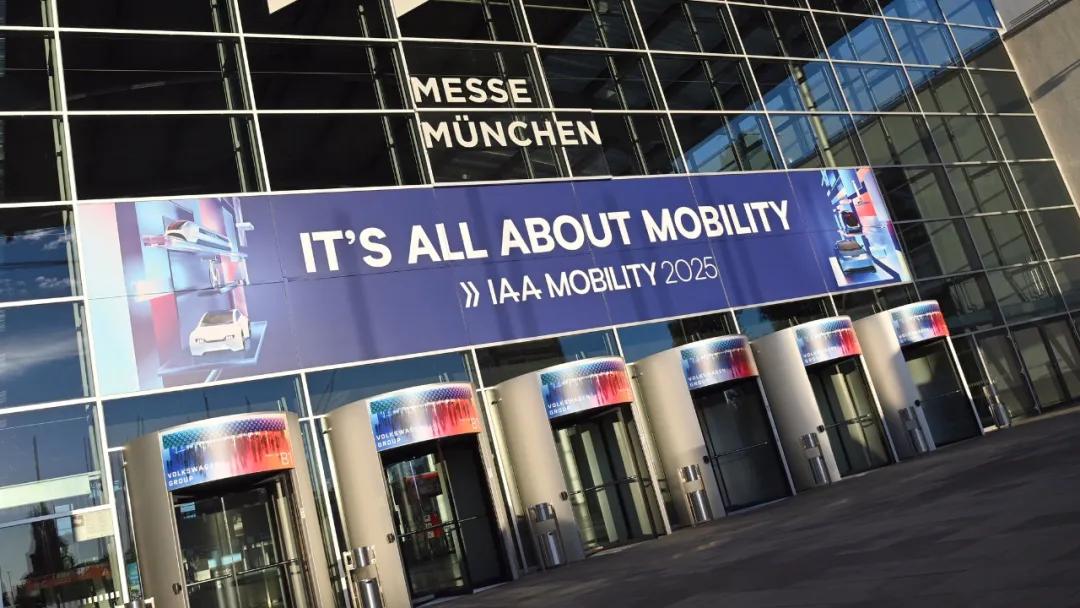
Core Viewpoint - The Munich International Motor Show is showcasing a significant competition between Chinese and German automotive companies, highlighting the shift from traditional auto shows to comprehensive mobility platforms [1][3]. Group 1: Event Overview - The 2025 Munich International Motor Show opened on September 8, 2023, with the theme "It's All About Mobility," focusing on innovative technologies and emerging mobility trends [1]. - A total of 748 exhibitors participated, with 57% coming from outside Germany, and China being the largest foreign participant, accounting for nearly one-third of overseas exhibitors [1]. Group 2: Chinese Automotive Presence - The number of Chinese companies participating in the show increased from over 70 in 2023 to 116 in 2024, covering various sectors including complete vehicles and automotive intelligence [3][4]. - Chinese brands captured 9.9% of electric vehicle sales in Europe as of July, with an overall market share of 5.3%, demonstrating resilience and growth potential [4]. Group 3: Strategic Moves by Chinese Companies - XPeng Motors announced the opening of its first European R&D center during the show, aiming to better understand and meet European consumer needs [5]. - BYD plans to launch multiple new hybrid models in Europe and has set a target to open over 1,000 stores by the end of 2023 and more than 2,000 by the end of 2026 [5][6]. - Hongqi, representing China's luxury segment, unveiled its EHS5 electric SUV, targeting urban and family commuting markets [6][7]. Group 4: German Automotive Response - German automakers like BMW, Mercedes-Benz, and Volkswagen showcased their latest electric models, indicating a strong commitment to compete against Chinese brands [9][10]. - Mercedes-Benz highlighted its new GLC 400 4MATIC electric model, set to launch in 2026, while BMW introduced the iX3, with plans for mass production by 2026 [9][10]. Group 5: Industry Collaboration and Integration - Chinese battery manufacturers such as CATL have established deep ties with European automakers, with CATL already collaborating with over 90% of mainstream car manufacturers in Europe [8][11]. - Companies like Momenta are forming partnerships with numerous global automakers, enhancing the potential for collaboration in smart driving technologies [11].
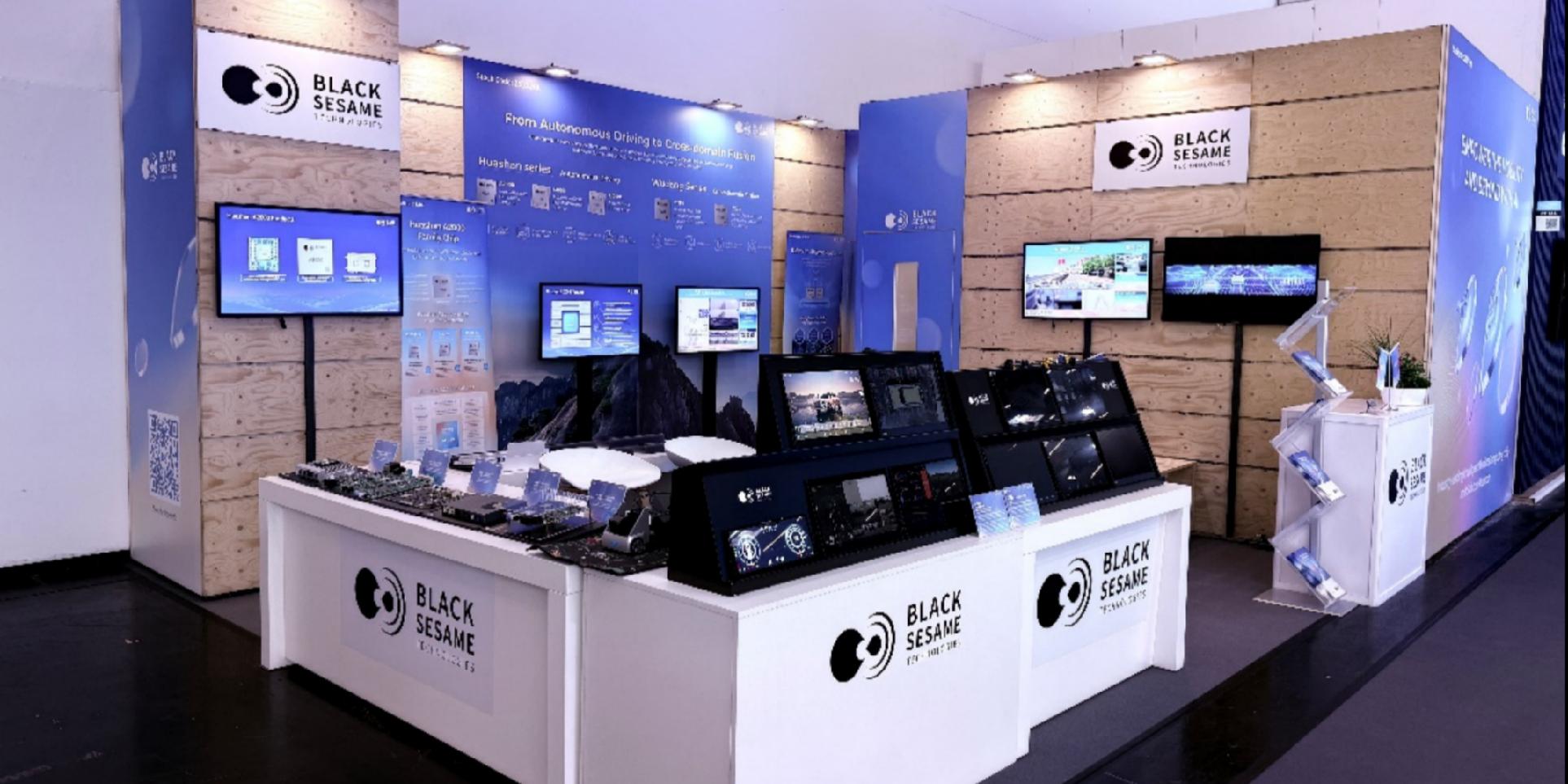
黑芝麻智能慕尼黑登台,中国芯片的“欧洲考题”
Jing Ji Guan Cha Wang· 2025-09-10 09:00
Core Insights - The article highlights the emergence of Chinese chip company Hezhima Intelligent at the IAA Mobility event in Munich, showcasing its capabilities in smart driving technology and positioning itself as a foundational computing platform for intelligent driving [2][3] Regulatory Context - The European Union's General Safety Regulation II (GSR2) mandates that all new vehicle models registered after July 2024 must include a suite of Advanced Driver Assistance Systems (ADAS) features, such as Automatic Emergency Braking (AEB) and Lane Keeping Assistance (ELKS) [2] - Compliance with UNECE R155 and R156 regulations on cybersecurity and software updates is transitioning to full coverage by 2024, creating significant pressure on automotive manufacturers to meet these standards [2] Market Opportunity - Hezhima Intelligent's introduction of the "Safety Intelligent Base" and its Wudang C1200 family of chips aims to alleviate compliance pressures and address cost concerns for European automakers facing challenges from electrification and tariffs [3] - The company has already achieved mass production of its Huashan A1000 family chips in various models, providing a proven track record that enhances its credibility in the European market [3][4] Competitive Landscape - The presence of Chinese chip companies like Hezhima in Europe is not necessarily viewed as a threat; rather, it may accelerate the maturity of the industry by pushing automakers to reassess their cost structures and compliance capabilities in light of stringent regulations [5] - Hezhima's cross-domain integration platform and production experience could position it as a potential secondary or primary supplier for European automakers if it successfully reduces costs and improves development efficiency [6] Challenges Ahead - The rigorous certification and auditing processes in the European market will require Hezhima to provide verifiable evidence of its performance, transitioning from laboratory validation to real-world testing [6] - The success of Hezhima in Europe will depend not only on the computational power of its chips but also on its ability to meet local regulatory requirements and pass through the necessary compliance checks [6]

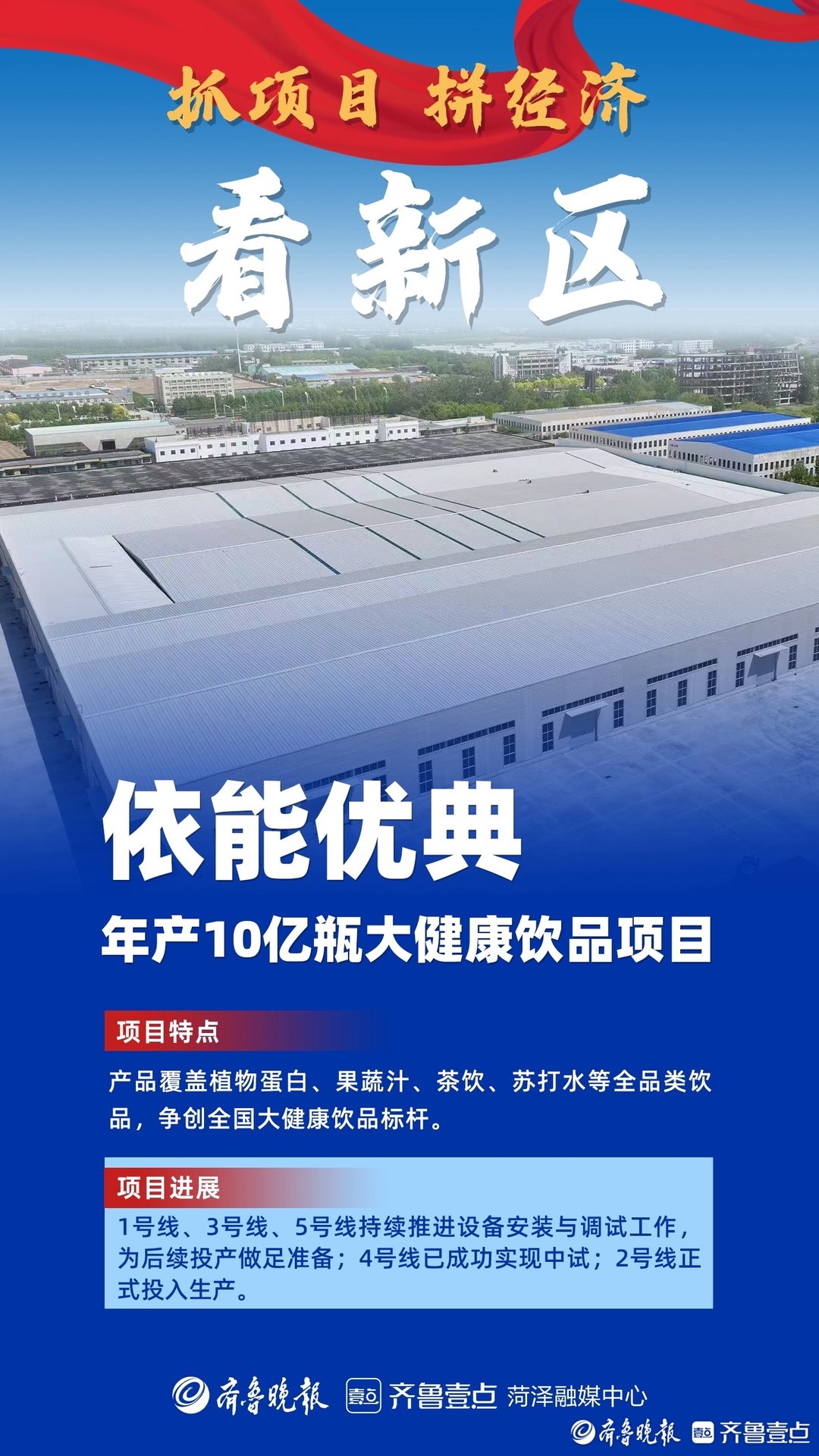
按下“加速键” 鲁西新区多措并举推动项目建设“提档加速”
Qi Lu Wan Bao Wang· 2025-09-10 08:28
Core Viewpoint - The article emphasizes the focus of the Luwest New Area on alleviating difficulties for enterprises, enhancing services, ensuring strong support, and accelerating project implementation to foster high-quality regional economic development [1]. Project Progress - The installation and debugging of equipment for Line 1, Line 3, and Line 5 are ongoing, preparing for future production; Line 4 has successfully achieved pilot testing; Line 2 has officially commenced production [3]. - The modular factory construction has reached full completion of all individual units, with simultaneous installation and flooring work underway, laying a solid foundation for subsequent equipment entry and production [8]. - The main structure of the energy storage project has been completed, with drainage facilities ready for construction, awaiting equipment arrival [17]. - The construction of the high-end injection project is progressing efficiently, with multiple engineering tasks nearing completion [31]. Project Features - The zero-carbon industrial park project is designed specifically for the production and manufacturing of long-duration energy storage batteries and systems, aiming to create the world's first integrated zero-carbon industrial park for long-duration energy storage [7]. - The green energy storage and large-scale energy equipment project, once fully operational, will become a leading national green energy equipment industrial park [11]. - The energy storage project plans to establish two 2.5GWh dedicated battery production lines, four module pack lines, and two energy storage system integration production lines, with an annual production capacity of 5GWh for dedicated energy storage batteries and 3,000 sets of energy storage system equipment [16]. - The automotive fastener project aims to develop a research, production, and sales base for automotive parts, precisely matching the needs of mid-to-high-end models from brands like Ford, Volkswagen, Tesla, Mercedes-Benz, and BMW [20]. - The project for ecological diatom boards focuses on constructing production and deep processing lines for fourth-generation diatom inorganic mineral boards, along with a national-level fireproof material testing center [25].