P7

Search documents
Is XPeng Inc. (XPEV) one of the 10 Best Auto Manufacturer Stocks to Buy According to Analysts?
Yahoo Finance· 2026-03-20 17:16
Group 1 - XPeng Inc. has partnered with Volkswagen AG to begin mass production of the ID. UNYX 08, a full-size electric SUV that incorporates autonomous driving technologies and Turing AI chips [1][2] - The ID. UNYX 08 is set to launch in the first half of 2026, as part of Volkswagen's strategy to introduce over 20 new models this year and 50 new energy vehicles in China by 2030 [2] - The manufacturing of the ID. UNYX 08 and another jointly developed electric vehicle will take place at Volkswagen's Hefei facility, which has an annual production capacity of 350,000 vehicles [2] Group 2 - In February, XPeng Inc. delivered a total of 15,256 automobiles and initiated global deliveries of the new XPENG P7+, with shipments planned for eighteen countries [5] - XPeng Inc. specializes in the design, development, manufacture, and marketing of smart electric vehicles, including the G3 SUV and the P7 sports sedan [6]

小鹏汽车 VLA最新进展
数说新能源· 2026-03-18 03:02
Core Insights - The article discusses the growth and developments in the new energy vehicle (NEV) sector, highlighting key trends and performance metrics in the industry. Group 1: Performance Metrics - The comprehensive score for safety, compliance, comfort, and efficiency has improved by 4-5 times compared to the previous generation, with a significant increase in MPI by approximately 5 times [4] - Real-world testing showed a maximum of 1220 km without manual takeover during a 5000+ km journey across China, indicating strong performance in unfamiliar cities [4] - The goal for the end of the year is to enhance performance by an additional 5-10 times [4] Group 2: Market Trends - The number of test drive sessions at 732 stores nationwide has nearly doubled, with the Ultra model's share increasing significantly [5] - The company plans to gradually roll out new models, starting with the P7 and followed by G7, X9, and others within three months [7] - The focus is shifting towards integrating cockpit and intelligent driving systems, aiming to redefine vehicles as "intelligent entities" with autonomous driving as a core capability [6] Group 3: Strategic Developments - The company is working on merging cockpit and intelligent driving systems under a unified team, with a target completion for the architecture by Q2 and acceleration in Q3-Q4 [6] - The next decade is expected to see a transition from smart cars to smart entity cars, emphasizing the vehicle's ability to understand user intent and control various functions [6] - The company is also expanding its presence in Southeast Asia, indicating a strategic move to tap into emerging markets [17]


【汽车】春节长假扰动销量,关注财报季业绩表现——新势力2月销量跟踪报告(倪昱婧/邢萍)
光大证券研究· 2026-03-03 23:03
Core Viewpoint - The article discusses the impact of the Spring Festival holiday on February's new energy vehicle (NEV) sales, highlighting the performance of various manufacturers and the upcoming product launches in the industry [4][5][7]. Group 1: February NEV Sales Performance - Li Auto's delivery volume increased by 0.6% year-on-year but decreased by 4.5% month-on-month to 26,421 units [4] - NIO's delivery volume rose by 57.6% year-on-year but fell by 23.5% month-on-month to 20,797 units, with the NIO brand up by 65.8% year-on-year and down by 27.5% month-on-month to 15,159 units, while the Lada brand decreased by 26.4% year-on-year and 14.3% month-on-month to 2,981 units [4] - Xpeng's delivery volume dropped by 49.9% year-on-year and 23.8% month-on-month to 15,256 units [4] Group 2: New Flagship Models Launch - On February 6, Li Auto officially launched the L9 Livis, a flagship SUV featuring an 800V fully active suspension and a self-developed high-performance driving platform [5] - On February 8, Xpeng announced the core parameters of the GX, an AI luxury six-seat flagship SUV, equipped with an 800V high-voltage platform and L4-level autonomous driving capabilities [5] - The flagship models from Li Auto and Xpeng aim to enhance product strength through chassis architecture and intelligent driving features to capture high-end NEV market share [5] Group 3: Financing and Delivery Updates - Tesla's domestic Model 3 delivery cycle has been shortened to 1-3 weeks, with various financing policies extended, including an 8,000 yuan limited-time insurance subsidy [6] - Li Auto maintains delivery cycles for L6/L9 at 1-3 weeks, while the delivery cycle for L8 has been extended to 2-4 weeks [6] - NIO's delivery cycles for several models remain stable, with the new ES8's cycle shortened to 4-5 weeks [6] - Xpeng's delivery cycles for several models have been adjusted, with the G9's cycle extended to 1-5 weeks [6] - Xiaomi's delivery volume exceeded 20,000 units in February, with financing offers continuing [6] - Huawei's Hongmeng Zhixing saw a year-on-year delivery increase of 31.1% but a month-on-month decrease of 51.3% to 28,000 units [6] Group 4: Upcoming Product Launches and Financial Performance - The industry anticipates a surge of new vehicle launches from multiple manufacturers in March and April, with a focus on financial performance amid rising costs [7][8] - Tesla is expected to launch the third-generation Optimus humanoid robot in Q1 2026, presenting potential investment opportunities in components related to domestic and international robot mass production [8]


小鹏汽车-VLA 2.0:大胆跨越,捕捉 “X 因素”
2026-03-03 03:13
Summary of XPeng Inc. Conference Call Company Overview - **Company**: XPeng Inc. - **Industry**: China Autos & Shared Mobility - **Stock Rating**: Overweight - **Price Target**: US$34.00 - **Current Price**: US$17.56 (as of February 27, 2026) - **Market Cap**: Rmb104,825 million - **52-Week Range**: US$28.23 - US$16.13 Key Developments - **VLA 2.0 Launch**: XPeng unveiled its VLA 2.0, which boasts a 12x faster model inference compared to the previous generation, enhancing the driving experience by improving handling of complex scenarios and corner cases. This update will be available on models P7, G7, and X9 Ultra in the second half of March 2026, with other models receiving updates in April [2][5][9]. - **Licensing Revenue**: Volkswagen will be the first external customer to adopt XPeng's VLA 2.0, indicating a potential for increased licensing revenue as more OEMs may follow suit [3]. - **Robotaxi Deployment**: XPeng is on track to deploy fully autonomous robotaxis in Guangzhou later this year, leveraging the capabilities of VLA 2.0. Initial deployment may be small, but the strategy aims to establish a foundation for commercial expansion of its robotaxi fleet [4]. - **Global Competition**: XPeng plans to roll out VLA 2.0 globally by 2027, which may intensify competition with global leaders like Tesla, as XPeng aims to match their autonomous driving capabilities [5]. Financial Projections - **Revenue Growth**: Projected revenue for the fiscal year ending December 2026 is Rmb102,874 million, with an expected increase to Rmb120,366 million by December 2027 [7]. - **Earnings Per Share (EPS)**: EPS is expected to improve from a loss of Rmb6.65 in 2024 to a profit of Rmb1.27 by 2027 [7]. - **EBITDA**: Expected to turn positive by 2026, with projections of Rmb1,363 million in 2026 and Rmb2,451 million in 2027 [7]. Investment Considerations - **Valuation Methodology**: The valuation is based on a probability-weighted DCF methodology with a terminal growth rate of 3% and a WACC of 12.8% [10]. - **Risks**: - Upside risks include competitive model introductions and better-than-expected branding with superior in-car user experience [12]. - Downside risks involve intensified competition in the midrange/high-end segments and cash flow pressure due to lower profitability [12]. Conclusion XPeng Inc. is positioning itself as a leader in the autonomous driving space with the launch of VLA 2.0 and plans for global expansion. The financial outlook shows potential for significant revenue growth and profitability improvements, although the company faces competitive pressures in the evolving automotive landscape.
Citi is Bullish on XPeng Inc. (XPEV)
Yahoo Finance· 2026-02-20 16:05
Group 1: Company Performance and Projections - XPeng Inc. reported unaudited fourth-quarter results with sales of RMB20.38 billion, a gross margin of 20.1%, and a vehicle margin of 13.1% [3] - The company anticipates delivering 1,000 humanoid robots in the last quarter of the year [1] - Citi analyst Jeff Chung reduced XPeng's price objective from $28.40 to $27.60 while maintaining a Buy rating [1] Group 2: Market Analysis and Competitor Insights - JPMorgan trimmed its price objective for XPeng to $34 from $50 while retaining an Overweight rating, citing expectations of underperformance in China's auto industry in 2026 due to slowing passenger vehicle growth [2] - JPMorgan also reduced Li Auto's profitability projection to a loss due to lower sales volumes and margins [2] Group 3: Technological Advancements - XPeng implemented a start-and-stop charge payment feature on the XPENG App in Hong Kong, allowing users to scan charging pile QR codes, monitor charging sessions, and pay with AlipayHK [2]
XPeng (XPEV) Draws Mixed Analyst Calls, Expands Global Payments
Yahoo Finance· 2026-02-14 13:17
Core Viewpoint - XPeng Inc. is enhancing its digital payment experience for EV charging services through a collaboration with Ant International's Antom payment platform, marking a significant step in its global expansion strategy [1][2]. Group 1: Collaboration and Payment Integration - XPeng has partnered with Antom to enable drivers to manage charging and payments directly within the XPeng mobile app, starting with AlipayHK in Hong Kong and planning to add credit card options soon [2]. - The collaboration aims to integrate various payment methods, including global credit cards and local alternatives like e-wallets and mobile banking apps [2][3]. Group 2: Market Position and Analyst Insights - XPeng is recognized as the first Chinese next-generation EV maker to collaborate with Antom, highlighting its innovative approach in the EV market [3]. - JPMorgan has lowered its price target for XPeng from $50 to $34 while maintaining an Overweight rating, citing challenges in China's auto industry and a forecasted loss for the company due to weaker sales and margins [3]. Group 3: Company Overview - XPeng Inc. designs, manufactures, and sells smart electric vehicles, focusing on advanced autonomous driving technologies and connected car systems, with products including electric SUVs and sedans like the G9 and P7 [4].
广汽预亏90亿,本田成最大「拖油瓶」!降价减配都难救?
Xin Lang Ke Ji· 2026-02-11 01:58
Core Viewpoint - GAC Group is facing significant financial challenges, with a projected net loss of up to 90 billion yuan for 2025, marking the largest decline in a decade, primarily driven by poor sales performance from GAC Honda [2][3][4]. Group Performance - GAC Group's total vehicle sales for 2025 are expected to be around 172.15 million units, falling short of the 230 million target, representing a year-on-year decline of 14.06% [5]. - GAC Honda's cumulative sales reached 351,926 units by the end of last year, a decrease of 25.22%, making it the brand with the largest sales drop within the group [3][5]. Sales and Pricing Strategy - GAC Honda has implemented aggressive discounting strategies, with the P7 model's price reduced from 199,900 yuan to 149,900 yuan, reflecting a 25% decrease [10][11]. - Despite these efforts, GAC Honda's sales in January plummeted by 69.86%, with only 4,558 units sold, indicating a severe downturn [8]. Market and Competitive Landscape - The automotive industry is experiencing intense competition and rapid restructuring, which has adversely affected GAC Group's performance [4]. - GAC Honda's struggles are attributed to its slow adaptation to the electric vehicle market, missing out on the benefits of the current transition to new energy vehicles [10]. Future Outlook - GAC Group is considering reducing the specifications of the P7 model due to the significant gap between the suggested retail price and actual sales price, which may hinder cost recovery [10]. - The company has initiated a series of reforms, including the "Panyu Action" to enhance operational efficiency and integrate its brands more effectively [4].

广汽预亏90亿 本田成最大“拖油瓶”
Xin Lang Ke Ji· 2026-02-11 01:52
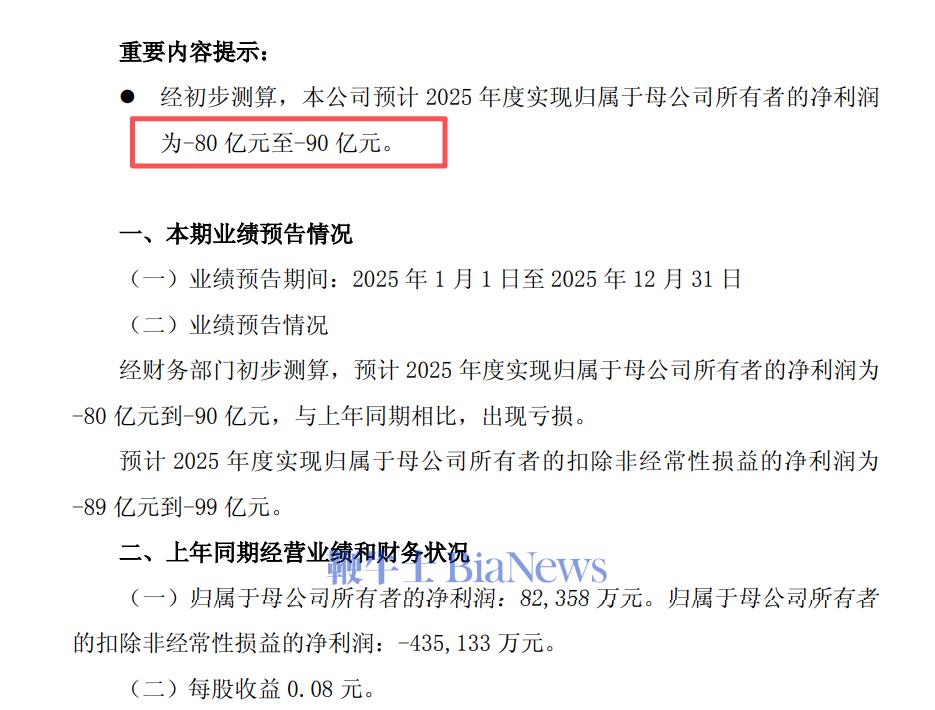
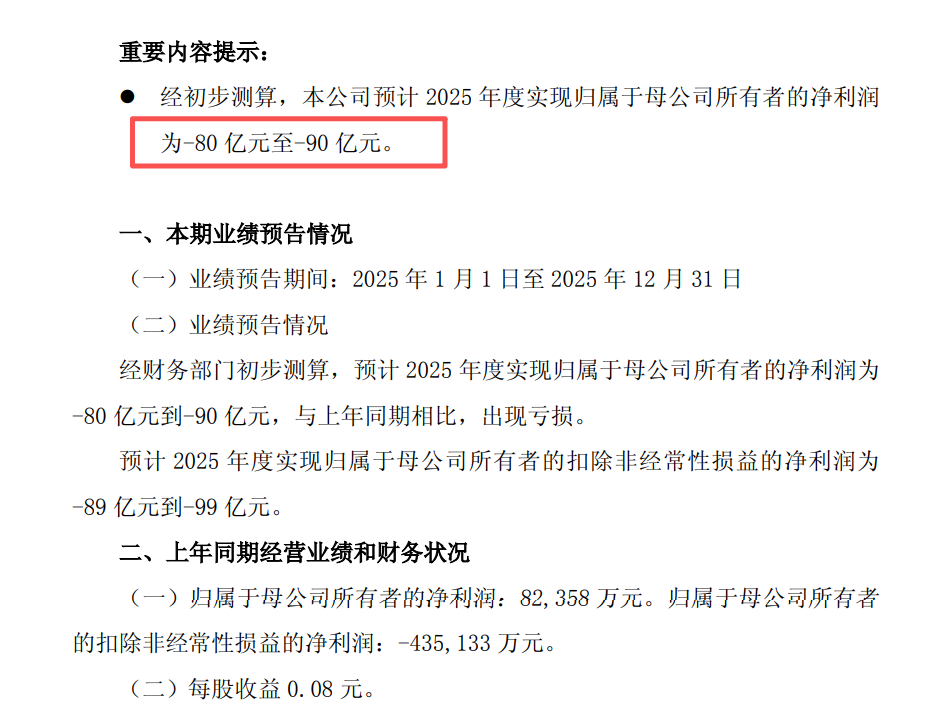
Core Viewpoint - GAC Group is facing a significant decline in performance, with a projected net loss of up to 9 billion yuan for 2025, marking the largest drop in nearly a decade. The company failed to meet its sales target of 2.3 million vehicles, achieving only approximately 1.72 million units sold, a year-on-year decrease of 14.06% [4][10]. Group 1: Financial Performance - GAC Group's 2025 earnings forecast indicates a net profit loss between 8 billion to 9 billion yuan, a stark contrast to the profit of 824 million yuan in 2024, representing the largest decline in ten years [4]. - The company's revenue growth rate has slowed significantly, dropping from 45.72% in 2023 to 17.62%, with a further decline expected in 2024 [7]. - The net profit plummeted from 8.064 billion yuan in 2022 to only 824 million yuan in 2024, a decrease of nearly tenfold [7]. Group 2: Sales Performance - GAC Honda, a major brand under GAC Group, reported a cumulative sales figure of 351,926 vehicles by the end of last year, down 25.22% year-on-year, making it the brand with the largest sales decline within the group [10]. - In January, GAC Honda's sales fell to just 4,558 units, a staggering year-on-year drop of 69.86% [13]. - The overall sales target for GAC Group in 2025 was set at 2.3 million vehicles, but the actual sales were only about 1.72 million units, reflecting a significant shortfall [10]. Group 3: Market Strategy and Adjustments - GAC Group has entered a "wartime state" to address its challenges, implementing various reforms, including the "Panyu Action" to enhance operational efficiency and product development processes [7]. - The company is adjusting its sales strategies, including significant discounts on models like the P7, which saw a price reduction of 25% from its original price [3][16]. - GAC Group is also restructuring its management of its own brands, creating new departments to oversee marketing and sales for brands like Trumpchi and Aion [8]. Group 4: Industry Challenges - The automotive industry is experiencing intense competition and rapid restructuring, which has adversely affected GAC Group's sales performance [7]. - GAC Honda's struggles are attributed to its failure to keep pace with the shift towards electric vehicles, missing out on the benefits of the new energy vehicle market [14][18]. - The brand's marketing strategies have been criticized as outdated, failing to adapt to modern retail trends, which has contributed to declining brand awareness [18].
广汽预亏90亿,本田成最大“拖油瓶”,降价减配都难救?
Xin Lang Ke Ji· 2026-02-11 01:48
Core Viewpoint - GAC Group is facing a significant financial downturn, with a projected net loss of up to 90 billion yuan for 2025, marking the largest decline in nearly a decade, primarily attributed to poor performance from GAC Honda [3][5]. Financial Performance - GAC Group's expected net profit for 2025 is projected to be between -80 billion and -90 billion yuan, a stark contrast to the profit of 8.24 billion yuan in 2024, indicating a dramatic decline [3][5]. - The company's revenue growth has slowed from 45.72% in 2023 to 17.62%, with a negative growth trend continuing into 2024 [5]. - GAC Honda's cumulative sales reached 351,926 units by the end of last year, reflecting a year-on-year decline of 25.22%, making it the brand with the largest sales drop within the group [7]. Sales and Market Strategy - In January, GAC Honda's sales plummeted to 4,558 units, a staggering year-on-year decrease of 69.86% [2][10]. - To boost sales, GAC Honda has implemented significant discounts, reducing the price of the P7 model from 199,900 yuan to 149,900 yuan, a 25% decrease [2][11]. - GAC Group has initiated a "wartime state" strategy to address the challenges, focusing on three key battles to revitalize the company [2]. Product and Brand Challenges - GAC Honda's struggles are exacerbated by its inability to keep pace with the shift towards electric vehicles, with the launch of its new electric brand "Yue" facing negative public perception [10][12]. - The company is considering reducing features in its P7 model due to the significant gap between the suggested retail price and actual selling price, which may hinder cost recovery [11][12]. - GAC Honda's marketing strategies are viewed as outdated, failing to adapt to modern retail trends, which has contributed to declining brand awareness [12].
广汽预亏90亿,本田成最大“拖油瓶”! 降价减配都难救? | 次世代车研所
Xin Lang Cai Jing· 2026-02-11 01:09
Core Viewpoint - GAC Group is facing a significant decline in performance, with a projected net loss of up to 90 billion yuan for 2025, marking the largest drop in nearly a decade. The company's ambitious sales target of 2.3 million vehicles has also not been met [2][19]. Financial Performance - GAC Group's forecast for 2025 indicates a net profit attributable to shareholders of between -80 billion and -90 billion yuan, a stark contrast to the profit of 8.24 billion yuan in 2024, representing a nearly tenfold decrease [19]. - The revenue growth rate for GAC Group has slowed from 45.72% in 2023 to 17.62%, with a further decline expected in 2024 [22]. Sales Performance - The actual vehicle sales for GAC Group in 2025 are approximately 1.72 million, a 14.06% decrease compared to the previous year, falling short of the 2.3 million target [25]. - GAC Honda, a major brand under GAC Group, has seen a cumulative sales drop of 25.22% year-on-year, with total sales of 351,926 vehicles by the end of last year [9][25]. Market Strategy and Adjustments - In response to the declining performance, GAC Group has initiated the "Panyu Action" reform, which includes measures such as creating an operational headquarters and integrating operations for its self-owned brands [22][23]. - GAC Group is also restructuring its management of self-owned brands, establishing new departments to oversee marketing and sales for brands like Trumpchi and Aion [23]. Challenges in Product Offering - GAC Honda's flagship model, the P7, has seen a drastic price reduction from a suggested retail price of 199,900 yuan to an actual selling price of 149,900 yuan, reflecting a 25% decrease [12][30]. - The sales of GAC Honda's P7 model have been disappointing, with January sales plummeting by 69.86% year-on-year, indicating a deep adjustment period for the brand [11][30]. Competitive Landscape - Compared to other brands within GAC Group, GAC Honda's performance is notably weaker, with competitors like GAC Aion and GAC Toyota showing positive growth in sales [11][27].