
蔚来

Search documents
俞浩,我帮你捋好了:怎样用20年干到百万亿美元
Sou Hu Cai Jing· 2026-01-17 14:41
Core Viewpoint - The ambitious goal of achieving a market value of 100 trillion USD in 20 years is presented as a feasible target based on historical trends of tech giants like Microsoft, Apple, and Nvidia, which have seen significant increases in their valuations over time [2][17]. Group 1: Strategic Recommendations - The company should leverage its core technology of "high-speed digital motors + AI algorithms" to expand into various sectors beyond home appliances, including automotive and aerospace [3][5]. - It is advised to adopt strategies from industry leaders: Nvidia's hardware and ecosystem integration, Apple's seamless user experience, and Microsoft's open platform approach to create a robust business model [5][6]. - The company should focus on global expansion and localization, establishing direct retail experiences in key markets to enhance brand presence and adapt products to local needs [6]. Group 2: Roadmap to Growth - The first phase (2026-2030) aims to solidify the company's foundation with a target market value of 50 billion USD, emphasizing R&D investment and market leadership in existing product categories [7][8]. - The second phase (2031-2035) focuses on expanding the ecosystem, targeting a market value of 500 billion USD, with plans to enter the automotive sector and develop partnerships for technology sharing [10]. - The third phase (2036-2040) aims for a market value of 3 trillion USD, with the goal of establishing industry standards and leading in smart living and robotics [11]. - The final phase (2041-2046) envisions a market value of 100 trillion USD, emphasizing groundbreaking technologies and a shift towards subscription services and data monetization [12][13]. Group 3: Financial Strategy - The company needs to secure diverse funding sources, including self-funding, equity financing, and strategic investments, to support its ambitious growth plans without relying solely on public offerings [16].

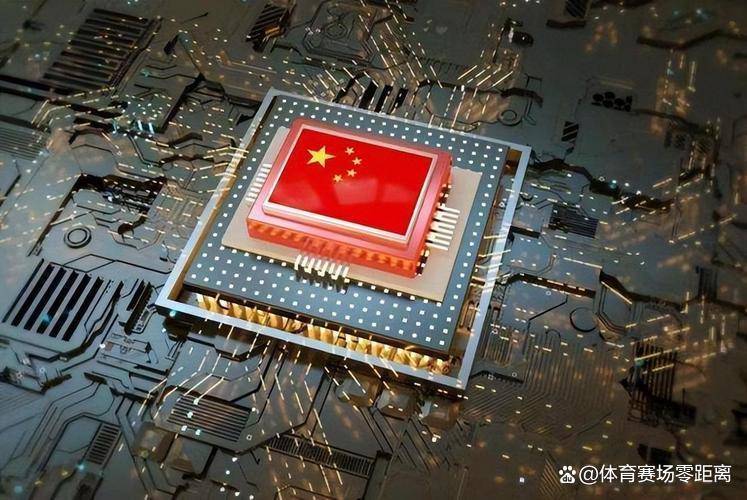
中国攻克半导体材料世界难题!全球产业链格局或将改写
Sou Hu Cai Jing· 2026-01-17 07:05
Core Insights - The semiconductor industry is experiencing significant advancements, particularly in materials and technologies that enhance performance and reduce costs [1][2][3]. Group 1: Technological Breakthroughs - The team led by Academician Hao Yue from Xi'an University of Electronic Science and Technology has developed a novel "ion implantation-induced nucleation" technique, which has reduced the interface thermal resistance of aluminum nitride to one-third of its original value, addressing a long-standing issue in the industry [1]. - The new technology has increased the output power density of gallium nitride microwave power devices by 300%, leading to a 50% increase in detection range for chips of the same size and a 25% reduction in energy consumption for communication base stations [1]. Group 2: Industry Upgrades - Chongqing's semiconductor research has developed a nano-copper paste that replaces silver, resulting in a 70% reduction in packaging material costs, with applications in BYD and NIO's 800V high-voltage platforms, extending chip lifespan by 30% [2]. - Shanghai has established the first national demonstration line for two-dimensional semiconductors, with molybdenum disulfide-based processors matching the performance of silicon-based 90nm processes, laying the groundwork for key technologies below 1nm [2]. - Henan is building a complete industrial chain for "materials-equipment-process," with diamond semiconductor material production accounting for 60% of the national output, and a humidity sensor developed by Zhengzhou University showing a hundredfold increase in sensitivity [2]. Group 3: Application Explosions - New cooling technologies have reduced the power consumption of 5G base stations by 40%, increasing coverage in remote areas to 98% [3]. - Silicon carbide power modules have enabled electric vehicles to achieve over 1000 km of range with a charging time of just 15 minutes [3]. - Two-dimensional semiconductor chips have improved AI server energy efficiency by five times, with training costs for large models dropping by 60% [3]. - Diamond sensors have achieved single-molecule-level disease marker detection, with a 99.7% accuracy rate for early cancer diagnosis [3]. Group 4: Challenges Ahead - The defect density of two-dimensional semiconductor wafers remains three orders of magnitude higher than silicon-based materials, necessitating the development of atomic-level repair technologies [4]. - 75% of high-end etching machines and electron beam lithography machines are still reliant on imports, hindering the speed of process iteration [4]. - 90% of global EDA tools are controlled by foreign companies, posing challenges for domestic alternatives to overcome algorithmic barriers [4]. Group 5: Future Roadmap - According to Academician Wang Xi from the Chinese Academy of Sciences, the development of semiconductor materials in China requires a three-pronged approach: achieving full autonomy in 14nm processes by 2027 to support automotive electronics and industrial control needs, focusing on breakthroughs in third-generation semiconductor materials for 5G base stations and fast charging markets, and accelerating research on wide bandgap materials like diamond and gallium oxide for next-generation optoelectronic devices [5].
男子醉驾后“断片”:“叫了代驾……最后掉沟里了,我记得”
Bei Jing Ri Bao Ke Hu Duan· 2026-01-17 04:14
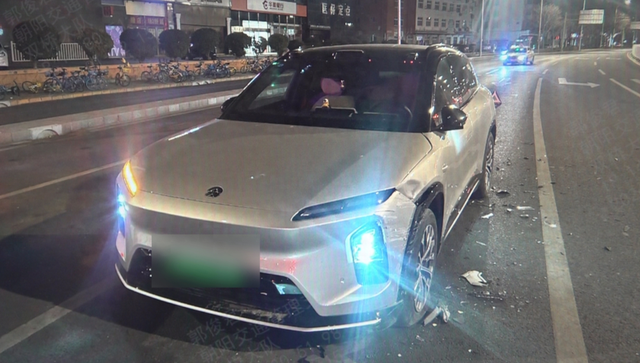
针对酒驾、醉驾,交管部门一直以"零容忍"的态度,严厉打击,但仍有司机侥幸上路,近日在北京街 头,就发生了令人咂舌的一幕…… 酒精一旦与驾驶活动沾上边儿,后果往往不堪设想。 "看一眼这数,先生,看一眼这红字,看得清吗?看不清。"在交通队,司机半眯着眼,意识模糊。呼气 式酒精检测数值显示,他每百毫升血液中酒精含量高达166毫克。第二天,血液酒精检测也有了结果。 每百毫升血液中247毫克的酒精含量表明,司机已经达到了醉酒后驾驶机动车的标准。 1月11日晚11时58分,在朝阳区四季星河西路与朝阳北路的交叉路口。一辆蔚来牌小客车正在路口排队 等候信号灯放行,一辆白色小客突然从路口北侧向东左转,驶入逆向车道,与蔚来车发生了猛烈撞击。 随后,又撞上路中护栏才停了下来。然而,没过几秒钟,白色小客就调转车头,直接驶离了现场。这一 波操作,惊呆了前后几辆车的驾驶员,大家纷纷下车查看情况,被撞车车主立即报了警。 根据报警人行车记录仪拍摄的画面,民警确定了肇事车的车牌号,并与车主取得联系。但车主表示这辆 车借给了别人,事发时应该是司机王某在使用。根据车主提供的信息,民警很快联系上王某,但他在电 话里口齿不清,并表示是别人撞了他。 与 ...
美股小幅收跌,美光科技涨超7%,中概指数跌1.15%
Ge Long Hui· 2026-01-17 00:57
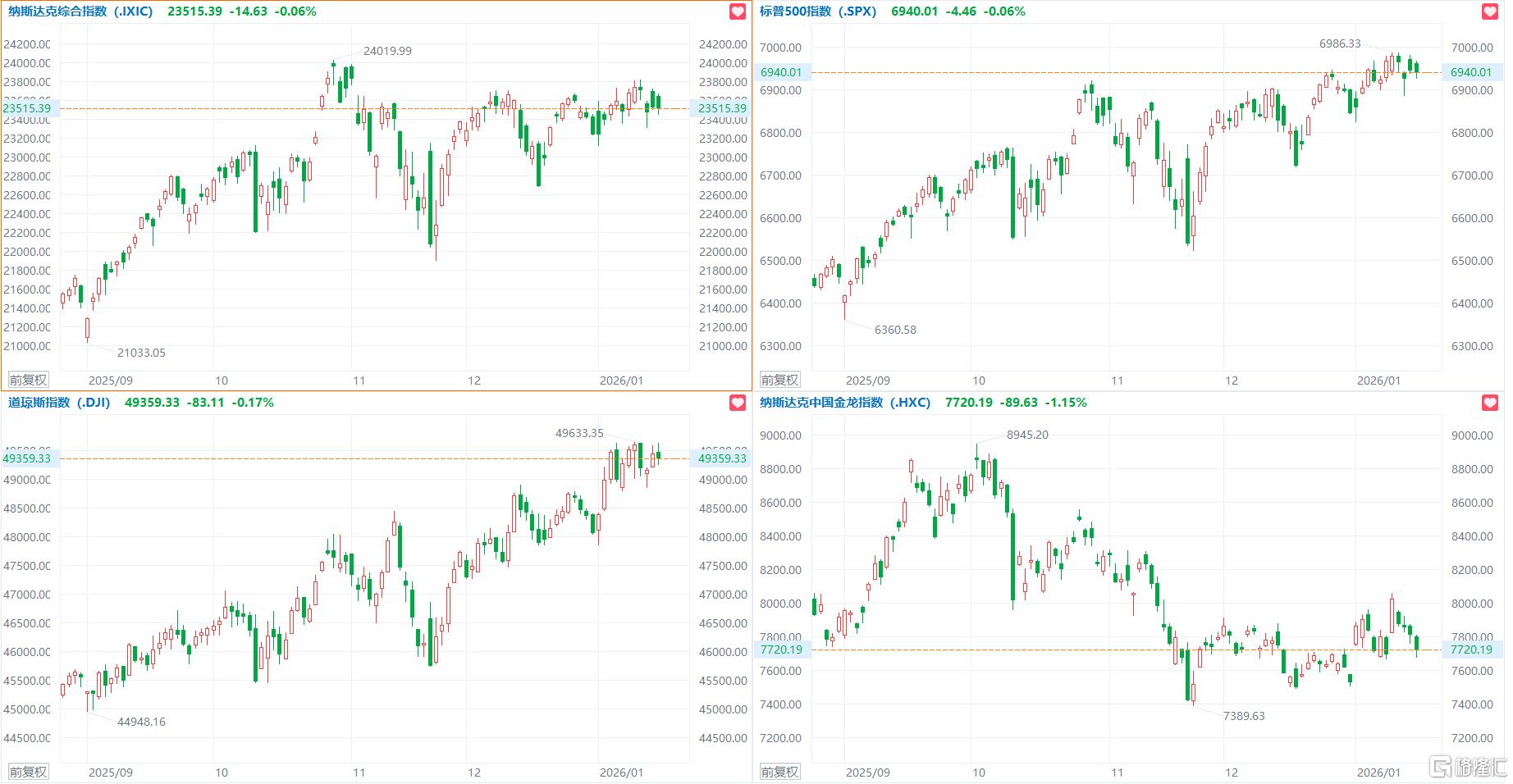
纳斯达克中国金龙指数收跌1.15%,热门中概股中,小米收跌3.5%,阿里跌3%,美团跌2%,腾讯、京东、理想跌超1%,拼多多跌0.6%,网易涨1.3%,蔚来 涨1.4%,文远知行涨1.5%,华住涨1.9%,小马智行涨2.4%。 美股三大指数集体收跌,纳指跌0.06%,道指跌0.17%,标普500指数跌0.06%。芯片股普涨,费城半导体指数涨1.15%,美光科技涨超7%,博通、应用材 料、阿斯麦涨超2%。周线方面,道指本周累跌0.29%,纳指本周累跌0.66%,标普500指数本周累跌0.38%,费城半导体指数本周累涨3.78%。 ...
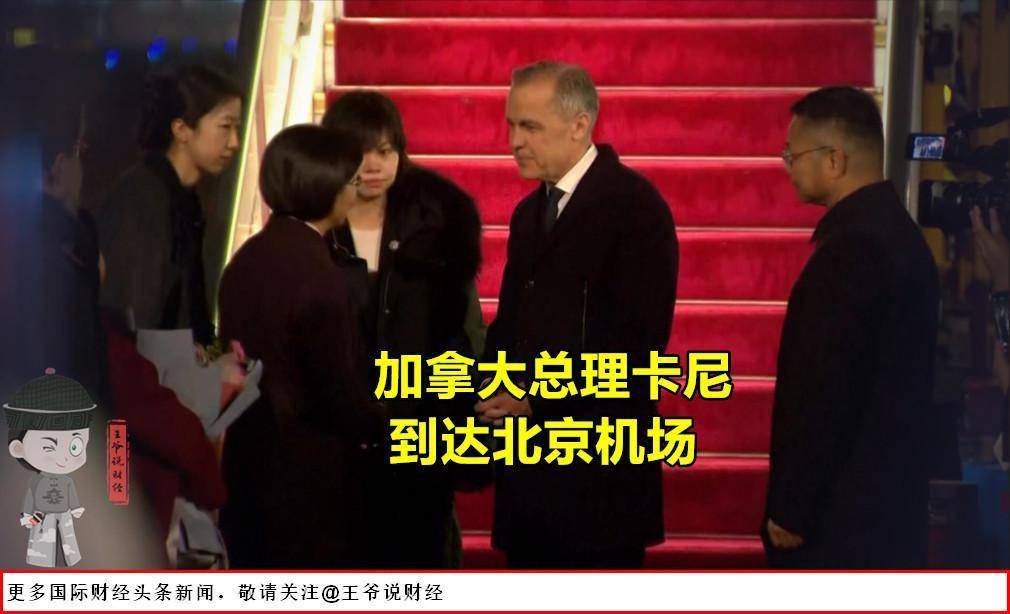
大反转!卡尼宣布:加拿大将进口4.9万辆中国电动汽车!关税从100%降到6.1%?
Sou Hu Cai Jing· 2026-01-16 17:19
Group 1 - The core point of the article is that Canada has significantly reversed its policy on electric vehicle tariffs from a 100% tax to a 6.1% most-favored-nation rate, allowing the import of 49,000 Chinese electric vehicles, marking a major shift in trade relations between China and Canada [1][3][10] Group 2 - Background on the tariff increase: In October 2024, Canada imposed a 100% tariff on Chinese electric vehicles under U.S. pressure, leading to a drastic drop in exports from 8,972 units in August to just 100 units by December, a decline of 99% [3][6] Group 3 - Reasons for Canada's sudden policy shift include: 1. Significant damage to Canadian consumers and the local market due to high tariffs, which limited access to competitively priced Chinese electric vehicles [6][7] 2. A desire to reduce dependency on U.S. economic policies, as previous tariffs did not yield substantial benefits for Canada [7][8] 3. The impact of China's retaliatory measures, which pressured Canadian agricultural and seafood sectors, prompting a reevaluation of the tariff strategy [8][10] Group 4 - Implications of the policy reversal: 1. The 49,000 vehicle quota opens the North American market for Chinese companies like BYD and NIO, allowing them to alleviate competitive pressure in Europe [10][12] 2. Canadian consumers will benefit from more affordable electric vehicles, while the local electric vehicle industry may see upgrades due to Chinese technological and supply chain advantages [10][12] 3. This shift may signal a broader trend of reducing trade barriers globally, as countries recognize that cooperation leads to mutual benefits rather than protectionism [10][12]
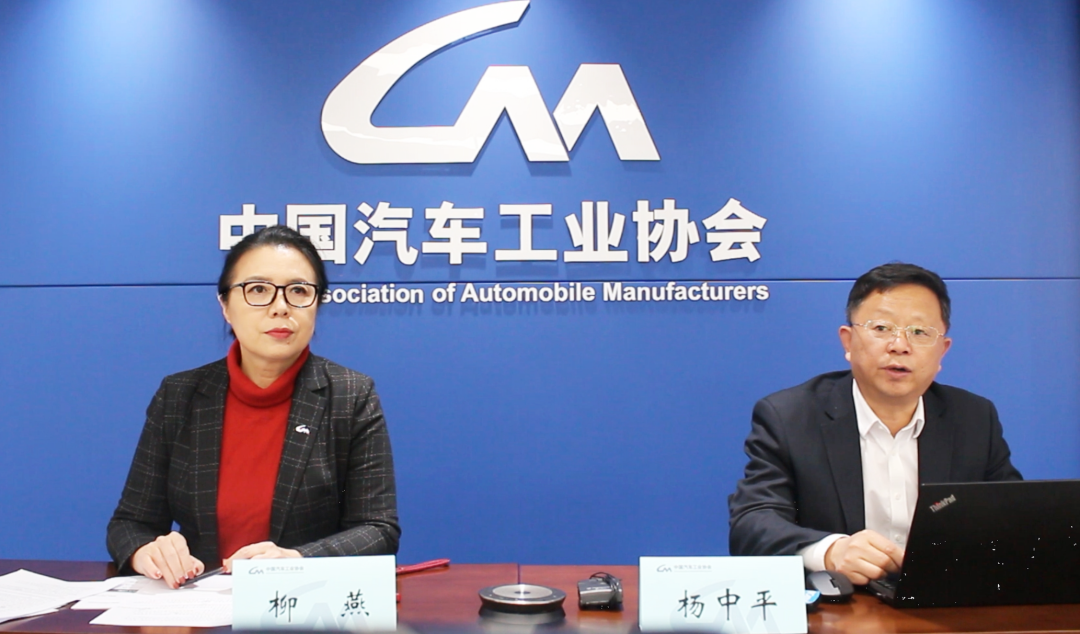
中汽协发布《2025城市NOA汽车辅助驾驶研究报告》
Yang Shi Wang· 2026-01-16 15:27
Core Insights - The report highlights the significant development of urban Navigation Assisted Driving (NOA) as a new competitive frontier for China's automotive industry, driving a transformation in the global industrial ecosystem [1] Market Overview - From January to November 2025, the cumulative sales of passenger cars equipped with urban NOA reached 3.129 million units, with a market penetration rate of 15.1%, an increase of 5.6 percentage points compared to the entire year of 2024 [2] - Domestic brands led the smart driving wave, contributing 2.5373 million units, accounting for 81.1% of total sales, while global brands like Mercedes-Benz, BMW, Audi, and Toyota are collaborating with leading Chinese technology suppliers [2] Competitive Landscape - The market is characterized by a "dual-driven" model of "in-house development" by car manufacturers and "third-party collaboration" [4] - In the third-party supplier market, Momenta and Huawei dominate, holding approximately 80% of the market share, with Momenta leading at about 61.06% and Huawei at 19.76% [4] Technological Advancements - The report emphasizes that technological iteration is the fundamental driving force of industry development, with end-to-end large models leading the transformation of smart driving system architecture [6] - Companies like Tesla and Li Auto have achieved mass production of "one-piece" end-to-end models, while Huawei's architecture enhances complex scenario processing through cloud-vehicle collaboration [7] Future Outlook - The report anticipates that by 2030, high-level autonomous driving functions will achieve large-scale market application, with urban NOA expected to become a mainstream configuration, potentially generating trillions in industry growth [8] - It identifies challenges such as the need for breakthroughs in core technologies, data security, and the establishment of a regulatory framework, proposing five key development recommendations [8]
超20款车光速调价,丰田“自杀式”反击,2026价格战再升级
3 6 Ke· 2026-01-16 12:53
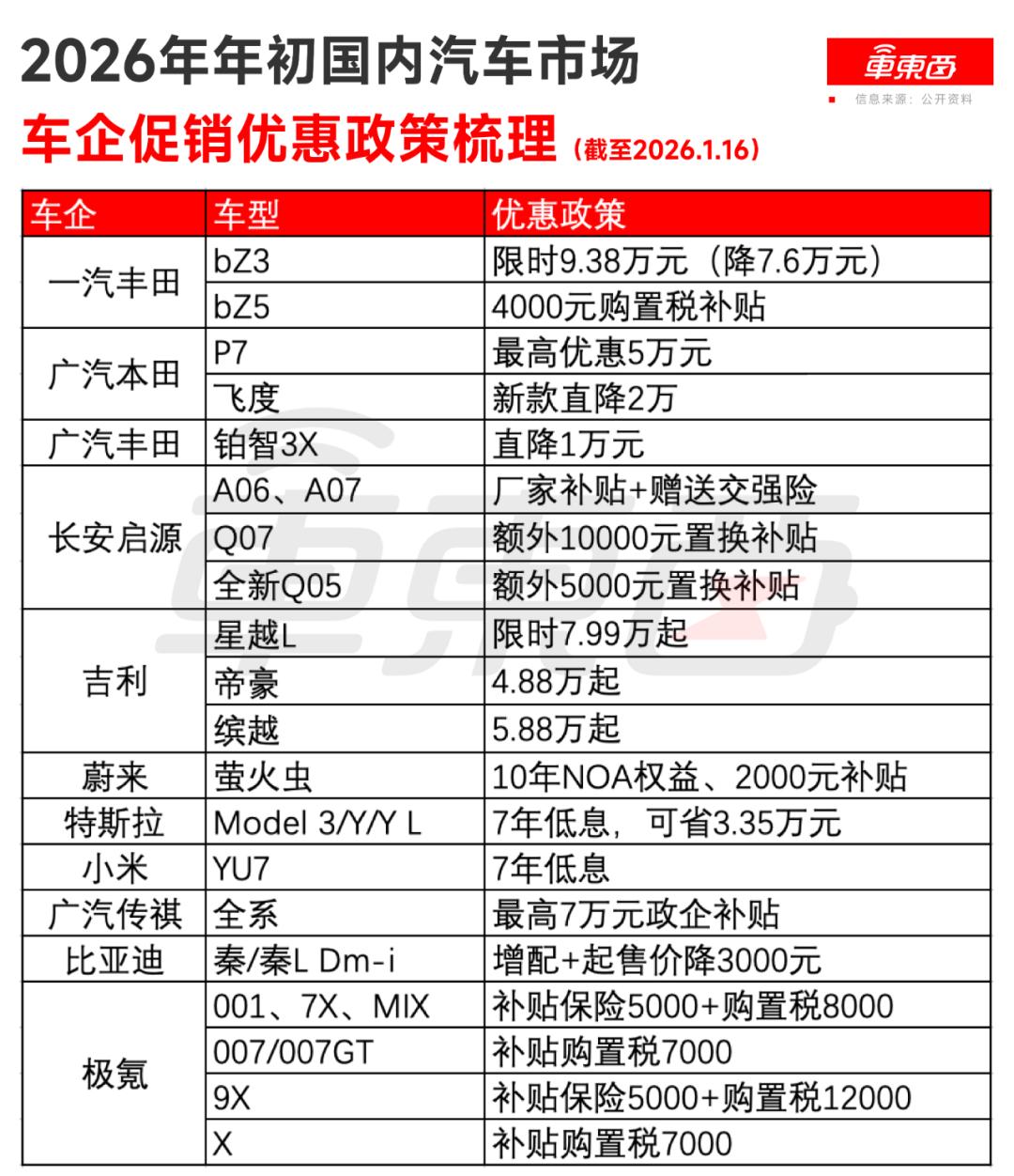
Core Viewpoint - The automotive industry is experiencing an intense price war initiated by luxury brands, leading to significant price reductions across various models from multiple manufacturers, creating a new wave of discounts in the market [1][6]. Group 1: Price Reductions and Promotions - BMW has initiated a price drop of up to 300,000 yuan, prompting over 10 automakers to follow suit with more than 20 mainstream models participating in the price reduction trend [1]. - Geely's Emgrand is now priced at 48,800 yuan, while the new Honda Fit has seen a price cut of 20,000 yuan, setting a new low at 66,800 yuan [1][13]. - Toyota's bZ3 electric sedan has been drastically reduced to 93,800 yuan, a decrease of 76,000 yuan, representing a nearly 45% drop from its previous price [9]. Group 2: Competitive Strategies - The competition has escalated with joint efforts from joint venture brands, particularly Japanese automakers, who are adopting aggressive pricing strategies to reclaim market share [7]. - Various automakers are employing a combination of subsidies, enhanced features, and financing options to attract buyers, rather than relying solely on price cuts [20][30]. - NIO's Firefly brand is offering cash subsidies along with a 10-year NOA (Navigation on Autopilot) free usage right, showcasing a strategic approach to enhance customer value [32]. Group 3: Market Dynamics and Consumer Impact - The price war has led to a significant reduction in the entry price for electric vehicles, making them more accessible to consumers [9][19]. - The automotive market is witnessing a shift where companies are not just competing on price but also on the value offered through financing and additional features, which may lead to a more sustainable competitive environment [37]. - The ongoing promotions and price adjustments are expected to drive sales ahead of the Chinese New Year, indicating a strategic push by manufacturers to maximize order volumes during this peak season [37].





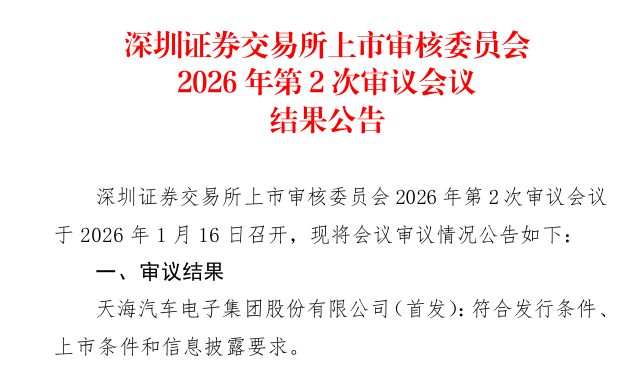
天海电子深交所主板IPO过会 主营汽车线束、汽车连接器等汽车零部件产品
智通财经网· 2026-01-16 12:19
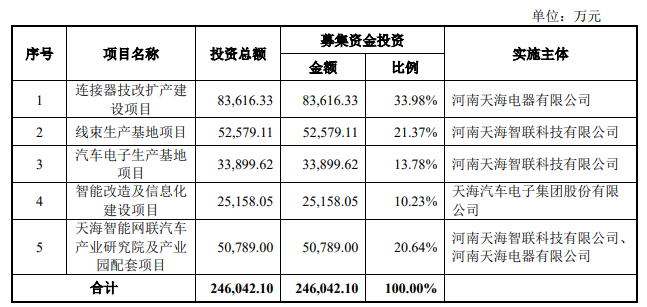
Core Viewpoint - Tianhai Automotive Electronics Group Co., Ltd. (Tianhai Electronics) has received approval for its IPO on the Shenzhen Stock Exchange, aiming to raise approximately 2.46042 billion yuan [1]. Group 1: Company Overview - Tianhai Electronics specializes in providing automotive transmission systems, connection systems, and intelligent control solutions, focusing on the R&D, production, and sales of automotive components such as wiring harnesses, connectors, and electronic products [1]. - The company’s products are primarily used in both new energy vehicles and traditional fuel vehicles [1]. - Key raw materials for the company's products include wires, cables, connectors, chips, and electronic components [1]. Group 2: Sales and Market Position - The company employs a direct sales model for its wiring harnesses and electronic products, while its connectors are primarily sold through direct sales with some distribution [2]. - Tianhai Electronics has established long-term partnerships with major automotive manufacturers, including Chery Automobile, SAIC Motor, and General Motors, positioning itself as a first-tier supplier [2]. - The company has also formed multi-dimensional collaborations with leading new energy vehicle manufacturers such as Li Auto, NIO, and Xpeng Motors, capitalizing on the growth opportunities in the new energy vehicle sector [2]. Group 3: Fundraising and Investment Projects - The funds raised from the IPO will be allocated to several key projects, including: - Connector technology upgrade and expansion project with a total investment of approximately 836.16 million yuan [3]. - Wiring harness production base project with an investment of about 525.79 million yuan [3]. - Automotive electronics production base project with an investment of around 338.99 million yuan [3]. - Smart transformation and information technology project with an investment of approximately 251.58 million yuan [3]. - Industry research institute and industrial park supporting project with an investment of about 507.89 million yuan [3]. Group 4: Financial Performance - The company’s projected revenues for the years 2022 to 2025 are approximately 8.215 billion yuan, 11.549 billion yuan, 12.523 billion yuan, and 6.557 billion yuan respectively [3]. - Net profits for the same periods are estimated to be around 410 million yuan, 684 million yuan, 616 million yuan, and 324 million yuan respectively [3]. - As of June 30, 2025, total assets are projected to reach approximately 12.753 billion yuan, with a debt-to-asset ratio of 61.55% [4].
天海电子深市主板IPO过会
Sou Hu Cai Jing· 2026-01-16 11:03
Group 1 - The Shenzhen Stock Exchange's listing review committee approved Tianhai Automotive Electronics Group Co., Ltd.'s IPO, confirming it meets issuance, listing, and information disclosure requirements [1] - Tianhai Electronics is located in Hebi Economic and Technological Development Zone, primarily engaged in the R&D, production, and sales of automotive wiring harnesses, connectors, and electronic components, holding a market share of 8.45% in the automotive wiring harness industry and 3.52% in the automotive connector industry [2] - The company has established long-term stable partnerships with major automakers such as Chery, SAIC, Geely, Changan, and General Motors, as well as collaborations with leading new energy vehicle manufacturers like Li Auto, NIO, Leap Motor, and Xpeng [2] Group 2 - In 2024, Tianhai Electronics achieved a revenue of 12.523 billion yuan and a net profit attributable to shareholders of 614 million yuan; in the first half of 2025, the revenue was 6.557 billion yuan with a net profit of 315 million yuan [2] - The company completed its A-share listing guidance in June 2025 and plans to raise 2.46 billion yuan through its IPO on the Shenzhen Stock Exchange, which will be used for various projects including connector technology upgrades, production base construction, and the establishment of an intelligent connected vehicle research institute [2]
9系双旗舰重塑50万级豪华市场,极氪的“破壁”方法论
Jing Ji Guan Cha Wang· 2026-01-16 10:58
Core Insights - The Chinese luxury car market is undergoing significant changes, with traditional luxury brands experiencing a decline in sales while domestic brands like Zeekr are gaining market share [1][2][3] Group 1: Market Dynamics - In 2025, traditional luxury brands saw a decline in imported car sales, with some brands experiencing a drop of over 60% year-on-year due to inventory pressure and slow electrification [2] - Conversely, Chinese high-end brands such as Zeekr, NIO, and Li Auto are steadily increasing their market share in the 300,000 to 500,000 yuan price range [2] - The shift in consumer perception among high-net-worth individuals in China is a key driver of this change, moving from valuing brand history to prioritizing technological advancement and smart experiences [3] Group 2: Product Innovation - The Zeekr 9X is recognized for its technological superiority over traditional luxury SUVs, achieving over 1,000 kilometers of range and exceptional performance through its 900V architecture [4] - The Zeekr 009 has also established itself as a leader in the MPV segment, demonstrating the brand's understanding of luxury beyond vehicle categories [5] Group 3: Global Expansion - Zeekr is transitioning from merely exporting products to a comprehensive global strategy that includes localizing products, channels, and services in various markets [7] - The brand has received international recognition, being praised as a leading global brand from China, indicating a shift from manufacturing to intelligent manufacturing and branding [8] Group 4: Strategic Integration - Zeekr's integration with its parent company Geely has allowed it to focus on long-term product development and user experience without the pressures of short-term profitability [9] - This integration provides Zeekr access to Geely's extensive resources, enhancing its ability to compete in the luxury market [9] Group 5: User Engagement - Zeekr has initiated a "communication transparency revolution," making key information accessible to users and inviting them to supervise service processes [11] - The brand's "mystery experience officer" program engages users in the feedback process, ensuring quality control from the customer's perspective [12] Group 6: Brand Evolution - Zeekr has successfully transitioned from a nascent brand to a significant player in the luxury market, showcasing that Chinese automotive brands can achieve high market scale and brand value [13]