
云边协同

Search documents
每日并购资讯 | 招商局商业房托完成收购香港柯士甸路酒店 总代价2.05亿港元;苹果斥资20亿美元收购以色列AI公司 CEO将入职苹果
Sou Hu Cai Jing· 2026-01-31 04:43
Group 1 - China Merchants Commercial REIT completed the acquisition of a hotel on Kossuth Road in Hong Kong for a total price of HKD 205 million, with a discount of approximately 3.3% compared to the appraised value [2] - Haohan Deep announced a cash acquisition of 34% equity in Yunbian Cloud Technology for CNY 85.75 million, aiming to enhance its AI strategy by integrating cloud and edge computing [3] - Ying Tang Intelligent Control plans to issue shares and pay cash to acquire 100% equity of Guilin Guanglong Integration Technology and Shanghai Aojian Microelectronics for a total of CNY 808 million [4][6] Group 2 - ST Xifa intends to acquire 50% equity of Lhasa Beer for CNY 292 million, aiming for full ownership to enhance asset integrity and management control [4][5] - China Aluminum, in partnership with Rio Tinto, is set to acquire approximately 68.6% of Brazil's aluminum company for a base transaction price of BRL 46.89 billion, equivalent to approximately CNY 62.86 billion [7] - China Foreign Trade's subsidiary plans to establish a joint venture with Nanshan Hungary to acquire a warehouse in Hungary, with a total investment commitment of approximately EUR 49.83 million [8] Group 3 - Apple has acquired Israeli AI startup Q.ai for nearly USD 2 billion, marking one of its largest acquisitions to date, with a focus on innovative imaging and machine learning applications [9]

沙利文年度报告出炉:腾讯云领跑中国专有云市场
Sou Hu Cai Jing· 2026-01-16 08:27
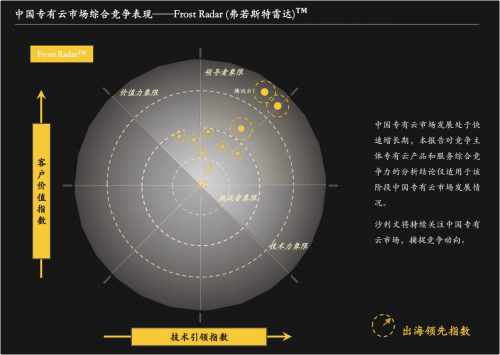
Core Insights - The report highlights the rapid growth of the proprietary cloud market in China, driven by its advantages in migration costs, security compliance, and internal system integration, making it a critical infrastructure for "intelligent" and "overseas" enterprises [1][3] - Tencent's proprietary cloud TCE has been recognized as a leader in the Frost Radar evaluation, ranking first in both the "Customer Value Index" and "Overseas Leadership Index," showcasing its comprehensive strength and market influence [1][4] Group 1: Market Trends - The proprietary cloud is evolving from a simple resource delivery platform to a "smart infrastructure system" that supports core business and AI strategies, requiring full-stack solutions that include computing power, AI frameworks, and model services [3] - The demand for proprietary cloud solutions is deepening across industries, necessitating capabilities in security compliance, independent innovation, and collaboration from core to edge [3] Group 2: Tencent's Positioning - Tencent's TCE has established a leading position in customer value and overseas expansion by leveraging technology to enhance customer outcomes, aiming to support various industries in their digital transformation [4] - In the financial sector, TCE has become the preferred choice for major financial institutions' cloud transformation, exemplified by its support for China UnionPay in expanding its multi-center financial cloud architecture [4] - In the public sector, TCE's "one cloud, multiple cores" government cloud platform supports over 80 government systems in Shanghai's Xuhui District, significantly improving urban operational efficiency and risk management [4] Group 3: Technological Innovations - TCE maintains a core advantage of "same-source, same-structure," providing users with a consistent experience akin to public cloud services, enabling seamless use of full-stack services in a private environment [4][5] - TCE has achieved multiple domestic certifications for security compliance, establishing a comprehensive security protection system from infrastructure to application layers, which is crucial for industries with high security requirements [5] - The proprietary cloud is expected to focus on AI-native capabilities, cloud-edge collaboration, and intelligent operations as key development trends, with Tencent committed to continuous innovation and application deepening [5]


研判2025!中国网闸行业发展历程、市场现状及未来趋势分析:随着技术的深度融合,推动网闸向高效安全智能方向演进[图]
Chan Ye Xin Xi Wang· 2026-01-09 01:50
Industry Overview - The Chinese network isolation gateway (网闸) industry is transitioning from compliance-driven to value-driven, with a market size projected to reach approximately 213.5 billion yuan in 2024, reflecting a year-on-year growth of 7.39% [1][4][8] - The network isolation gateway is a network security device that enables high-security data exchange through physical isolation and data ferrying technology, ensuring complete physical separation of networks while allowing controlled data exchange [2][4] Industry Development History - The development of the Chinese network isolation gateway has evolved through three stages: 1. First generation: Single machine isolation card technology for basic network isolation and non-real-time data exchange 2. Second generation: Switch and shared storage architecture addressing real-time issues 3. Third generation: Dedicated switching channel technology providing high-performance secure tunnels [4][5] Industry Chain - The upstream of the network isolation gateway industry includes raw materials and components such as chips, PCBs, high-speed solid-state switches, and power modules, as well as software like operating systems and security algorithms [5][6] Market Size - The market for the network isolation gateway is expected to grow significantly, driven by increasing data value and stringent cybersecurity requirements, with a projected market size of 213.5 billion yuan in 2024 [1][4][8] Key Companies' Performance - The competitive landscape of the network isolation gateway industry is characterized by leading companies like Qihoo 360 and Venustech, which dominate the market due to their technological advantages and established presence in critical sectors [8][9] Industry Development Trends 1. The technology will evolve towards a hybrid architecture that combines software-defined and hardware-accelerated solutions, enabling dynamic network isolation strategies [11] 2. The core value of network isolation gateways is shifting from mere network isolation to becoming comprehensive data security exchange platforms, integrating data security capabilities throughout the data lifecycle [12] 3. Future competition will focus on ecosystem and system capabilities, with a need for deep industry-specific solutions and a shift towards domestic hardware and intelligent software integration [13]


从 “产品供给” 到 “生态赋能” 浩瀚深度商业模式全面跃升
Zheng Quan Ri Bao· 2026-01-07 10:16
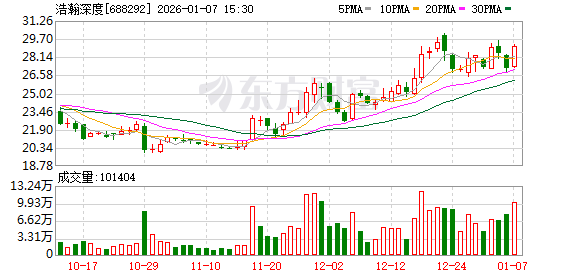
Core Viewpoint - The acquisition of a 35% stake in Yunbian Cloud by Haohan Deep is a strategic move to enhance its AI capabilities and expand its market presence in key industries such as retail, manufacturing, and healthcare [2][3] Group 1: Acquisition Details - Haohan Deep signed a share acquisition agreement with Yunbian Cloud's shareholders, resulting in a total control of 54% of the company post-acquisition [2] - Yunbian Cloud specializes in cloud-network integration services, with over 600 industry clients across various sectors [2] Group 2: Strategic Implications - The acquisition is part of Haohan Deep's ongoing AI strategy, extending AI capabilities from financial cloud services to core industries, creating a comprehensive "cloud-edge collaboration" AI capability system [2] - The integration will provide three core capabilities: deep integration of DPI technology for precise traffic identification, advanced AI algorithms for network optimization, and robust hardware design capabilities [2] Group 3: Market Expansion and Business Model Transformation - The AI edge gateway will extend intelligence to end-user scenarios, enabling localized data processing and real-time responses, enhancing operational efficiency and customer experience in retail [3] - The acquisition will shift Haohan Deep's business model from project-based to a sustainable service model, incorporating SASE subscriptions and edge computing services, allowing clients to customize service modules based on their needs [3] - This move marks the establishment of a new business framework for Haohan Deep, integrating "intelligent applications, intelligent networks, and intelligent edges," breaking through previous growth limitations [3]

从“产品供给”到“生态赋能”,浩瀚深度转型驱动商业模式全面跃升
Zheng Quan Shi Bao Wang· 2026-01-07 09:11
Core Viewpoint - The acquisition of a 35% stake in Yunbian Cloud by Haohan Deep marks a strategic move to enhance its AI capabilities and expand its business model towards a sustainable service-oriented approach, integrating AI solutions across various industries [2][3][5][6] Group 1: Acquisition Details - Haohan Deep signed a share acquisition agreement to purchase 35% of Yunbian Cloud, resulting in a total control of 54% of the company [2] - Yunbian Cloud specializes in cloud-network integration services, with over 600 industry clients across sectors such as retail, manufacturing, and healthcare [3] Group 2: Strategic Implications - The acquisition is a continuation of Haohan Deep's AI strategy, following a recent collaboration with Suiyuan Technology to launch a "Financial Intelligent Service Integration Machine" [3] - The integration will create a comprehensive "cloud-edge collaborative" AI capability system, enhancing the deployment of AI from financial cloud services to core industries [3][5] Group 3: Synergistic Benefits - Three main areas of synergy are expected: 1. Technical integration, where Haohan Deep will provide core capabilities such as deep integration DPI technology, advanced AI algorithms, and robust hardware design [3][5] 2. Expansion of application scenarios, allowing AI edge gateways to process data locally and respond in real-time across various sectors [5] 3. Business model transformation from project-based to a sustainable service model, incorporating SASE subscriptions and edge computing services [5][6] Group 4: Business Model Evolution - The acquisition signifies a shift towards a new business structure combining "intelligent applications, intelligent networks, and intelligent edges," breaking through previous growth limitations [6]
ARM(ARM.US)2026财年Q2电话会:目前公开宣布的所有新增算力都基于Arm架构
Zhi Tong Cai Jing· 2025-11-07 02:53
Core Insights - ARM's efficiency in computing platforms is approximately 50% higher than competing solutions, leading to significant adoption by major companies like NVIDIA, Amazon, Google, Microsoft, and Tesla [1][2] - The unprecedented demand for computing power is primarily based on ARM technology, contributing to over 100% year-on-year growth in the Neoverse business segment [1][2] - The Chinese market has shown strong performance with historical high demand, driven mainly by license revenue, including a large licensing deal [1][7] Financial Performance - In Q2, SoftBank-related revenue increased from $126 million to $178 million, a rise of $52 million, which serves as a future reference benchmark [5] - The revenue from SoftBank includes IP licensing and design services, with design services having a lower profit margin [5] Strategic Initiatives - ARM's acquisition of DreamBig Semiconductor is aimed at enhancing its Ethernet and DMA controller capabilities, which will expand its product offerings [3] - Collaboration with SoftBank on the Stargate project is expected to provide significant business opportunities in data center construction [3] Market Trends - The infrastructure business is growing at twice the average rate of other categories, with expectations of a 15% to 20% revenue share in ARM's royalty income [6] - The shift in data center computing from training to inference is anticipated, with strong demand for ARM's technologies in edge computing [7] Future Outlook - ARM maintains confidence in its future prospects based on current capital expenditures and the ongoing strong AI cycle [1][7] - The company plans to provide clearer guidance for Q4 based on its licensing reserves and the timing of large licensing deals [1][7]

华为智慧油气解决方案
华为· 2025-10-14 06:37
Investment Rating - The report does not explicitly state an investment rating for the industry Core Insights - The report emphasizes the importance of digital transformation in the oil and gas industry, highlighting the need for advanced ICT capabilities to enhance operational efficiency and reduce costs Summary by Sections Exploration and Development Computing Center - Current challenges include high costs and inefficiencies due to fragmented software procurement and deployment, leading to low software utilization rates [9][10] - The proposed solution involves a centralized computing center leveraging Huawei Cloud for flexible resource allocation and unified management of software and data, enhancing collaboration and efficiency [11][14] - The solution claims an 8x improvement in processing efficiency, reducing processing time from 456 hours to 55 hours [14] Oil and Gas Exploration Data Storage - The report identifies a significant increase in data volume, with project data potentially reaching hundreds of PB, posing challenges in capacity, performance, and cost [21] - The solution includes high-performance storage systems designed to handle large volumes of seismic data with improved reliability and efficiency, achieving a 30% performance improvement and a 30% cost reduction [26][28] Smart Oilfield Solutions - The smart oilfield solution integrates edge computing and AI technologies to enhance operational management and data analysis capabilities [41] - Key benefits include a 50% reduction in manual inspection workload, a 20% decrease in digital investment costs, and a 30% reduction in energy consumption [45] Integrated Network Solutions - The report discusses the need for a unified industrial network to support various operational scenarios, emphasizing the use of advanced technologies like Wi-Fi 6 and 5G for reliable data transmission [74][76] - The proposed network solutions aim to ensure stable connectivity, data security, and simplified management across diverse operational environments [76][80] AI and Big Data Applications - The report highlights the development of AI models for predictive maintenance and operational optimization, which can significantly enhance efficiency and safety in oil and gas operations [57][63] - Successful case studies demonstrate the effectiveness of these AI applications in reducing operational risks and improving response times [60][66]
工业智能化转型的必经之路:5G+边缘计算赋能智慧工厂(PPT)
Sou Hu Cai Jing· 2025-10-13 15:20
Core Insights - The article emphasizes the importance of industrial internet and smart factory solutions driven by 5G and edge computing for digital transformation in enterprises [3][9] - It highlights the challenges faced by traditional industrial models and how the proposed solutions can address these pain points, leading to cost reduction and efficiency improvement [3][9] Industrial Internet and Smart Factory Solutions - The integration of 5G and edge computing is crucial for creating smart factories, enabling real-time data processing and enhanced operational efficiency [4][5] - Edge computing addresses issues of high latency, bandwidth costs, and data security that traditional cloud computing struggles with in industrial settings [4][10] Cloud-Edge Collaboration - The cloud-edge collaborative architecture combines the powerful data processing capabilities of central cloud with the real-time responsiveness of edge computing, forming a distributed computing model [6][9] - This model supports various industrial processes including research and design, manufacturing, quality control, and supply chain management [5][9] Case Studies and Implementation - Beijing's Changping District has successfully implemented an industrial internet service platform, aiding local SMEs in their digital transformation [7] - An industrial park has deployed smart factory solutions that meet the needs of SMEs for low latency, data security, and localized deployment [8] Benefits of the Proposed Solutions - The 5G and edge computing-based smart factory solutions provide comprehensive support for government, parks, and SMEs, enhancing competitiveness and operational efficiency [9] - Key features include ultra-low latency (1-5ms), local data storage for security, and reduced bandwidth costs, which are essential for real-time industrial applications [10] Technical Capabilities - The solutions support over 30 industrial protocols, ensuring compatibility across various devices and systems [10] - Edge computing devices, such as the Edge Intelligent Station (EIS), facilitate local data processing and compliance with data security requirements [10][74] Future Trends - The article suggests that the industrial internet will continue to evolve, focusing on customized solutions for different industries and enhancing collaborative management capabilities [25][27] - The integration of AI, big data, and other emerging technologies will drive further innovation in industrial internet platforms [25][31]
特斯联与紫光云达成战略合作,国产通用AI算力产业发展迎来新的里程碑
IPO早知道· 2025-09-26 02:13
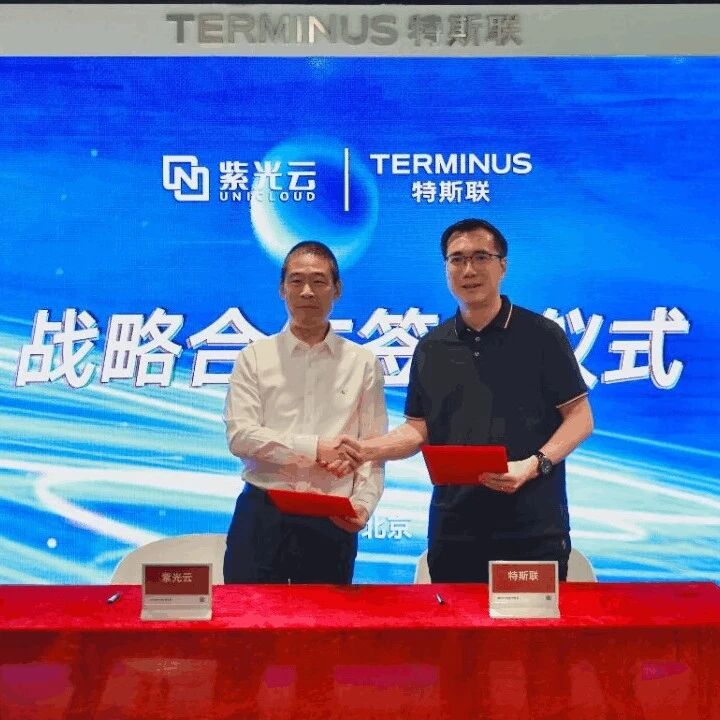
Core Viewpoint - The strategic partnership between Teslian and Unisoc Cloud aims to enhance AI computing power resources and create a more flexible and cost-effective AI computing solution, marking a significant milestone in the development of the domestic general AI computing industry [2][4]. Group 1: Strategic Cooperation - Teslian and Unisoc Cloud have signed a strategic cooperation agreement to leverage each other's strengths for resource sharing and capability synergy [2]. - The collaboration will integrate Teslian's hybrid intelligent computing cloud technology with Unisoc Cloud's cloud service capabilities, enabling users to quickly access cloud computing resources with a single operation [2][3]. Group 2: AI Chip Development - The partnership extends to the upstream of the industry chain, with Unisoc Group's comprehensive chip design capabilities laying a solid foundation for collaboration in customized AI chip development [2][3]. - The combination of Teslian's experience in spatial intelligence and Unisoc's full-stack cloud capabilities is expected to lead to the joint design and optimization of customized AI inference chips for specific scenarios [3]. Group 3: Cloud-Edge Collaboration - The demand for AI computing is shifting from "single-node clusters" to "distributed collaboration," necessitating a cloud-edge collaborative architecture that effectively addresses low resource utilization challenges [3]. - The collaboration aims to establish an open, efficient, and trustworthy domestic AI computing ecosystem, promoting the development direction of the industry [3][4]. Group 4: Impact on Digital Economy - The strategic cooperation is seen as a significant step towards accelerating the construction and implementation of the domestic general AI computing industry, contributing to the development of the digital economy in China [4].
科技赋能能源保供 南京鼓楼企业朗坤智慧打造“AI+能源”新标杆
Yang Zi Wan Bao Wang· 2025-08-29 12:33
Core Viewpoint - The implementation of a cloud-edge collaborative digital platform for thermal power safety production by Nanjing Gulou Enterprise and Langkun Smart Technology is enhancing the operational efficiency and stability of Guodian Power Development Co., Ltd during the critical summer energy supply period [1][2]. Group 1: Technology and Innovation - The AI platform has successfully prevented an unplanned load drop event by providing timely fault diagnosis and operational suggestions [2]. - The platform employs a "big model + small model" collaborative approach, enhancing operational safety and economic optimization by combining deep analysis with rapid diagnostics [4]. - The platform has achieved a significant reduction in coal consumption by 0.45 grams per kilowatt-hour and a 38% decrease in non-stop occurrences since its launch [4]. Group 2: Organizational Impact - The platform breaks down traditional management barriers in power plants, achieving a digital control goal of "five increases and one decrease" in reliability, operational levels, safety management, technical control, and production cost management while reducing labor intensity [4]. - Langkun Smart Technology is fostering a culture of innovation and AI capability enhancement through monthly competitions and specialized training for all employees [5]. Group 3: Future Development - The platform is evolving towards a "cloud-edge-end integrated" architecture to achieve deeper production automation, allowing for real-time command delivery to equipment [5]. - The success of Langkun Smart Technology exemplifies the ongoing optimization of the innovation ecosystem in the Gulou District, aiming to support technology companies in overcoming key technological challenges [5][6].

