
供给创造需求

Search documents
热点思考 | “看多消费”的第二弹(申万宏观·赵伟团队)
赵伟宏观探索· 2026-03-04 16:03
摘要 春节出游"人从众",是出行需求阶段性的脉冲,还是消费"底层逻辑"大转折的缩影?未来消费会否经历 从"量变"到"质变"? 本文分析,供参考。 一问:春节消费的三大"不寻常"?出行"人从众"、出游"银发"热、消费"适己化"。 不寻常一:出行"人从众"。 2026年春节假期长达9天、较2025年同期增加1天,有效释放消费需求。数据 上人流出行强度显著提升,假期内全社会跨区人流同比较假期前1周上行6.5个百分点至9.5%,国内出游 人次再创新高、同比分别较2025年十一假期上行2.9个百分点至19%。与以往"扎堆"热门景区不同的是, 今年多地旅游接客数同比在15%以上,反映各地旅游热度普遍回升。 不寻常二:出游"银发"热 。春节假期出游需求呈现全年龄段回暖态势,改善范围由中青年群体扩展至老 年群体。机票、酒店预定数据显示,60岁以上旅客预订机票量同比超35%,其中飞往北京的人次同比1.6 倍。景区门票方面,60岁以上游客预订量同比40%,来自二线、三线及以下城市游客数同比分别增长 34%、33%。 不寻常三:消费"适己化 "。2026年春节假期消费方式呈现便利化升级特征,自驾出行占比较2025年十一 假期上行5 ...


热点思考 | “看多消费”的第二弹(申万宏观·赵伟团队)
申万宏源研究· 2026-03-04 01:08
转变二:"适己化"等新消费趋势加速形成,更多是信息传播方式迭代升级,放大"媒体传播效应"。 以小 红书为例,2026年春节假期,平台出游笔记同比增加36%,成为假期出行消费趋势的主要策源地。这一 现象的出现在于,用户对新媒体平台的依赖度明显提升;2025年小红书旅行兴趣用户中,超80%会在出 行前通过平台查询攻略,每月累计产生24亿余次旅行相关搜索。 摘要 春节出游"人从众",是出行需求阶段性的脉冲,还是消费"底层逻辑"大转折的缩影?未来消费会否经历 从"量变"到"质变"? 本文分析,供参考。 一问:春节消费的三大"不寻常"?出行"人从众"、出游"银发"热、消费"适己化"。 不寻常一:出行"人从众"。 2026年春节假期长达9天、较2025年同期增加1天,有效释放消费需求。数据 上人流出行强度显著提升,假期内全社会跨区人流同比较假期前1周上行6.5个百分点至9.5%,国内出游 人次再创新高、同比分别较2025年十一假期上行2.9个百分点至19%。与以往"扎堆"热门景区不同的是, 今年多地旅游接客数同比在15%以上,反映各地旅游热度普遍回升。 不寻常二:出游"银发"热 。春节假期出游需求呈现全年龄段回暖态势,改 ...

热点思考 | “看多消费”的第二弹(申万宏观·赵伟团队)
申万宏源宏观· 2026-03-03 16:04
摘要 春节出游"人从众",是出行需求阶段性的脉冲,还是消费"底层逻辑"大转折的缩影?未来消费会否经历 从"量变"到"质变"? 本文分析,供参考。 一问:春节消费的三大"不寻常"?出行"人从众"、出游"银发"热、消费"适己化"。 不寻常一:出行"人从众"。 2026年春节假期长达9天、较2025年同期增加1天,有效释放消费需求。数据 上人流出行强度显著提升,假期内全社会跨区人流同比较假期前1周上行6.5个百分点至9.5%,国内出游 人次再创新高、同比分别较2025年十一假期上行2.9个百分点至19%。与以往"扎堆"热门景区不同的是, 今年多地旅游接客数同比在15%以上,反映各地旅游热度普遍回升。 不寻常二:出游"银发"热 。春节假期出游需求呈现全年龄段回暖态势,改善范围由中青年群体扩展至老 年群体。机票、酒店预定数据显示,60岁以上旅客预订机票量同比超35%,其中飞往北京的人次同比1.6 倍。景区门票方面,60岁以上游客预订量同比40%,来自二线、三线及以下城市游客数同比分别增长 34%、33%。 不寻常三:消费"适己化 "。2026年春节假期消费方式呈现便利化升级特征,自驾出行占比较2025年十一 假期上行5 ...

以质量跃升激活消费“一池春水”
Zheng Quan Ri Bao· 2026-01-28 16:19
■朱宝琛 消费是经济增长的"主引擎",也是民生幸福的"晴雨表"。消费品质的迭代,关乎高质量发展的成色与后劲。 1月27日,中国消费者协会公布2026年全国消协组织消费维权年主题为"提升消费品质"。笔者认为,在提振消费各项政策 发力显效、促进消费潜力不断释放的当下,提升消费品质非常必要。这将为经济高质量发展注入持久动力,同时激活消费市场 的"一池春水"。 其一,政策赋能是提升消费品质的重要支撑。 近年来,在科技赋能和消费升级驱动下,我国消费市场逐步向精细化、个性化发展,新消费应运而生。与此同时,居民消 费需求也从"有没有"转向"好不好""优不优"。 这就需要坚持问题导向与系统思维,多方合力,在推动供给提质上下功夫,奏响提质增效的协同乐章。比如,政府部门要 持续推动提升文化娱乐、旅游休闲、餐饮住宿、体育赛事、医疗健康等领域的供给水平,丰富高质量、多元化的服务供给,满 足居民多样化需求,构建起"需求牵引供给、供给创造需求"的良性循环。 企业则要以降本增效推动供给提质降价,让消费者得实惠、愿消费;优化流程、减少中间环节、降低成本,真正让利于 民;同时,强化创新驱动,支持企业加大研发投入,提升供给适配性。 其三,需要持 ...
中国消费必定重走日本老路吗?这份研究给出了新答案
3 6 Ke· 2026-01-13 02:34
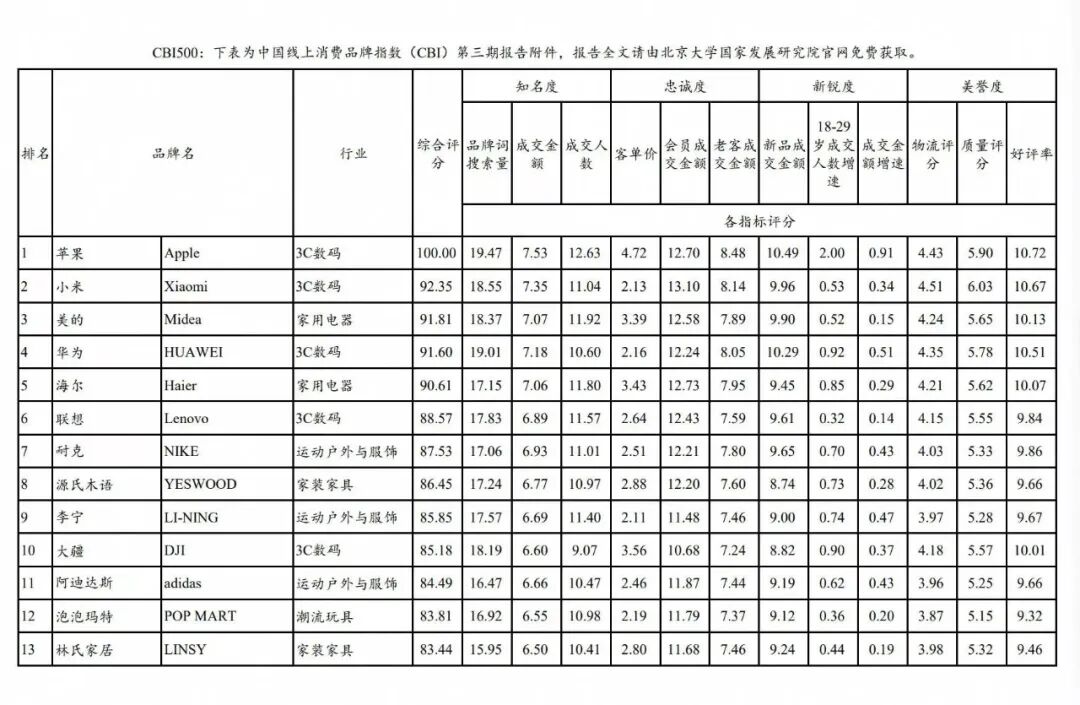
Core Viewpoint - The article discusses the evolving consumer behavior in China, contrasting it with Japan's "lost three decades," emphasizing a trend towards selective consumption upgrades rather than a decline in consumption quality [1][2]. Group 1: Consumer Behavior Trends - The Chinese online consumption brand index (CBI) reached 62.65 in Q3 2025, showing a 4.4% increase year-on-year and a 0.92% increase compared to the same quarter in 2024, indicating a stable growth in consumer preference for high-quality brands [2][4]. - The CBI reflects the proportion of consumers purchasing high-quality branded goods, suggesting that consumers are not entering a "consumption menopause" but are instead actively seeking quality [3][4]. - The trend of "selective consumption upgrade" is evident, where consumers pursue cost-effectiveness for necessities while being willing to pay a premium for emotional and experiential products [5][6]. Group 2: Brand Performance and Market Dynamics - Brands like DJI and Pop Mart have shown significant growth, with DJI entering the top ten for the first time, indicating a shift towards innovative products that create new demand rather than relying on price competition [7][16]. - The CBI report highlights that brands achieving high scores are not necessarily those known for low prices but those that create unique experiences and emotional value for consumers [7][18]. - The report indicates a seasonal pattern in consumer behavior, with higher CBI scores during promotional periods, but the third quarter's performance reflects a solid foundation for brands in non-promotional times [12][14]. Group 3: Platform Strategies and Market Evolution - E-commerce platforms like Taobao are shifting their focus towards supporting quality brands and original merchants, moving away from price wars to fostering product quality and service [24][25]. - The growth in the CBI index is attributed to a strategic shift in platform policies that encourage brands to enhance their value proposition rather than compete solely on price [25][26]. - The article emphasizes that a market balanced between daily sales and promotional periods is more resilient, indicating that brands are building long-term value rather than relying on short-term sales spikes [26][28].






服装消费“千人千面”成趋势
Jing Ji Ri Bao· 2025-12-02 22:07
Core Insights - The article discusses a new implementation plan aimed at enhancing the adaptability of supply and demand in the consumer goods sector, focusing on the clothing industry as a key area for growth and innovation [1][3]. Group 1: Market Trends and Consumer Behavior - The rise of the "weight management" trend has significantly boosted sales of activewear, such as yoga clothing, with live-streaming sales reaching over 200,000 yuan per session and attracting more than 100,000 viewers [2]. - Generation Z is identified as a core consumer group in outdoor sports, with 80% of outdoor users belonging to this demographic, showcasing strong purchasing power and brand loyalty [2]. - The outdoor consumption market in China is projected to reach 190 billion yuan by 2024, growing at a rate 1.3 times that of the overall sports industry [2]. Group 2: Supply-Side Transformation - The clothing industry is transitioning from merely meeting functional needs to creating value through diversified, scenario-based, and emotional supply [4]. - Companies like 真维斯 have achieved significant growth, with online sales increasing from 460 million yuan to 6 billion yuan over five years, marking a growth rate of over 1300% [4]. - The response time to market trends has been reduced from 90 days to 7 days, allowing for efficient management of over 30,000 SKUs and processing around 200,000 orders daily [4]. Group 3: Innovation and Consumer Engagement - The competition among brands is shifting towards "value storytelling," where emotional, aesthetic, and service values are becoming more important than standard functionality [5]. - Platforms like 得物 are witnessing significant growth in categories appealing to younger consumers, emphasizing the importance of emotional value in purchasing decisions [5]. - Companies are encouraged to enhance digital infrastructure and integrate design and supply chain platforms to lower innovation costs and improve supply-demand matching [6][7]. Group 4: Future Directions and Recommendations - The clothing industry is advised to innovate in design and manufacturing, promoting the development of functional and eco-friendly materials through collaboration with fabric manufacturers [7]. - There is a push for creating new consumption scenarios and models, such as flagship stores and concept shops, to meet the demand for "light ownership" [7].
华夏时评:万亿消费蓝图的增长逻辑与挑战
Hua Xia Shi Bao· 2025-11-28 13:42
Core Viewpoint - The implementation plan aims to enhance the adaptability of supply and demand in consumer goods, focusing on expanding domestic demand and promoting consumption as a strategic foundation for economic growth [2][3]. Group 1: Key Concepts of the Implementation Plan - The core concept of the implementation plan is "adaptability," which emphasizes a two-way engagement between supply and demand, ensuring that consumer preferences guide production [3][4]. - The plan outlines the goal of establishing three trillion-level consumption sectors and ten hundred-billion-level consumption hotspots by 2027, marking a shift from directional guidance to precise policy measures [3][4]. Group 2: Targeted Consumption Areas - The three trillion-level consumption sectors include elderly products, smart connected vehicles, and consumer electronics, while the ten hundred-billion-level hotspots encompass baby products, smart wearables, cosmetics, fitness equipment, outdoor goods, pet supplies, civilian drones, trendy toys, jewelry, and national fashion [4]. - The elderly products sector already has a solid foundation, while the smart connected vehicle sector reflects a logic of "incremental expansion," and consumer electronics' potential is driven by AI technology [4]. Group 3: Supply-Side Revolution - The core logic of promoting consumption is a supply-side revolution that aims to create new demand through improved production quality and relevance [5][6]. - The plan's three policy pillars include comprehensive integration of "AI+" actions, flexible manufacturing transformations, and mandatory upgrades to standard systems [5][6]. Group 4: Demand-Side Considerations - The plan also addresses the need for demand-side policies to match the rich supply-side offerings, emphasizing the importance of stable income expectations for consumer spending [6]. - Successful consumption stimulation requires a dual-driven approach from both supply and demand sides, with a focus on creating new jobs through AI and ensuring that technological advancements translate into increased worker income [6]. Group 5: Overall Implications - The implementation plan represents a significant upgrade in China's consumption policy, leveraging AI empowerment, flexible manufacturing, and standard upgrades to create a viable market potential [6]. - The success of supply-side initiatives is contingent upon effective demand-side matching, highlighting the need for policies that not only enhance product intelligence and scene richness but also address consumer income stability [6].

六部门发文增强消费品供需适配性 2027年形成3个万亿级消费领域和10个千亿级消费热点
Zhong Guo Zheng Quan Bao· 2025-11-26 21:00
Core Viewpoint - The implementation plan aims to enhance the adaptability of supply and demand in consumer goods, promoting consumption upgrades to lead industrial upgrades and achieving a dynamic balance between supply and demand [1][3] Group 1: Key Areas of Focus - The plan outlines 19 key tasks across five areas, focusing on industries such as smart connected vehicles, smart home products, consumer electronics, modern textiles, food, and green building materials [1] - It emphasizes the development of innovative applications and the creation of flagship products and enterprises, along with establishing testing platforms in various consumer goods sectors [1] Group 2: Expanding Product Supply - The plan advocates for the development of leisure and sports products, targeting new demands from event economies and outdoor activities, and promoting high-quality sports equipment [2] - It aims to diversify product offerings for specific demographics, including children's products, quality student supplies, trendy items, and age-appropriate products [2] Group 3: Innovation and Internal Demand Activation - By 2027, the plan targets a significant optimization of the consumer goods supply structure, aiming to create three trillion-level consumption fields and ten hundred-billion-level consumption hotspots [3] - The policy is expected to positively impact various industries, including smart vehicles, home products, and health-related goods, by fostering technological innovation and responding to new market demands [3][4] Group 4: Focus on Specific Demographics - The policy particularly addresses the needs of specific consumer groups, promoting the refinement and quality enhancement of products for children, students, and the elderly [4] - New consumption formats such as live e-commerce and instant retail are expected to develop in an orderly manner, injecting vitality into core business districts and new product launches [4]
六部门发文增强消费品供需适配性
Zhong Guo Zheng Quan Bao· 2025-11-26 20:20
Core Viewpoint - The implementation plan aims to enhance the adaptability of supply and demand in consumer goods, promoting consumption upgrades to lead industrial upgrades and achieving a dynamic balance between supply and demand [1][2]. Group 1: Key Areas of Focus - The plan outlines 19 key tasks across five areas, focusing on industries such as smart connected vehicles, smart home products, consumer electronics, modern textiles, food, and green building materials [1]. - It emphasizes the development of leisure and sports products, targeting new demands from event economies, outdoor economies, and winter sports, while promoting high-quality sports equipment [1][2]. Group 2: Targeted Consumer Needs - The plan aims to match diverse consumer needs by enriching the supply of baby products, enhancing quality student supplies, expanding trendy products, and optimizing products for the elderly [2][3]. - It also seeks to cultivate new consumption scenarios and business models, including the promotion of product launches, orderly development of platform consumption, and regulated shared consumption [2]. Group 3: Future Goals - By 2027, the plan targets a significant optimization of the consumer goods supply structure, aiming to create three trillion-level consumption fields and ten hundred-billion-level consumption hotspots [2]. - By 2030, it envisions a high-quality development pattern where supply and consumption interact positively, with a steady increase in consumption's contribution to economic growth [2]. Group 4: Industry Impact - The implementation of the plan is expected to positively impact multiple industries, including smart connected vehicles, smart home products, consumer electronics, and green building materials, driving technological innovation through the creation of flagship products and innovative application scenarios [2][3]. - The sports and leisure product sectors are anticipated to benefit from new demands arising from event and outdoor economies, gaining new growth momentum [2].
记者观察 | 从 “刺激” 到 “适配” 消费与供给进入双向奔赴阶段
Shang Hai Zheng Quan Bao· 2025-11-26 12:09
Group 1 - The core viewpoint of the articles emphasizes the shift in China's consumption policy from simple stimulus measures to a more systematic approach that enhances supply-demand compatibility, aiming to release consumption potential and facilitate economic circulation [1][3] - The structural transformation on the demand side is driven by rising GDP per capita exceeding $10,000 and a middle-income group surpassing 400 million, leading to a shift from imitation consumption to personalized, quality, and scenario-based consumption [2] - The proactive changes on the supply side are responding to and creating new consumer demands, with companies leveraging big data and AI for precise demand insights, leading to the rise of flexible manufacturing and innovative collaborations [2][3] Group 2 - The collaboration between policy guidance and market mechanisms is accelerating the formation of a virtuous cycle, with new consumption models and scenarios flourishing, and targeted subsidies replacing blanket policies [3] - The transition from "stimulation" to "adaptation" reflects a precise understanding of consumption patterns and is essential for high-quality economic development, creating a positive feedback loop between consumption and supply [3] - Continuous release of policy dividends, ongoing technological innovations, and vibrant market dynamics are expected to enhance the smooth interaction between consumption and supply, providing solid support for stable economic growth [3]