
全产业链出海

Search documents
油价冲刺“9元时代”,电车党笑了?
吴晓波频道· 2026-03-21 02:48
Core Viewpoint - The ongoing Middle East conflict and rising oil prices are accelerating the shift from fuel vehicles to electric vehicles, presenting a significant opportunity for Chinese electric vehicle manufacturers to expand globally [2][4][5]. Group 1: Impact of Oil Prices on Vehicle Preferences - The prediction of a price increase of approximately 1.5 yuan per liter for gasoline is causing anxiety among fuel vehicle owners, leading to a shift towards electric vehicles [2]. - Historical parallels are drawn to the 1970s oil crisis, which similarly prompted consumers to abandon larger fuel-consuming vehicles in favor of smaller, more efficient models [4]. Group 2: Growth of Chinese Electric Vehicle Exports - In the first two months of the year, China's total vehicle exports increased by nearly 50%, with traditional automakers like Chery and Geely seeing export growth of 45.6% and 150%, respectively [8]. - Chinese electric vehicle exports reached 559,000 units, a year-on-year increase of 114.7%, with BYD achieving over 100,000 units in overseas sales in February alone [8][12]. Group 3: Market Dynamics in Australia and Southeast Asia - In Australia, the import of new vehicles from China surpassed that from Japan for the first time, indicating a significant shift in market dynamics [10]. - The market share of electric vehicles in Australia grew to 11.8%, with traditional fuel vehicles declining by 17.7% [15]. - In Thailand, Chinese brands achieved a market share of 47.34%, surpassing Japanese brands for the first time, with electric vehicle sales increasing by 345% [16]. Group 4: Challenges and Strategies for Chinese Automakers - Despite significant growth, Chinese automakers face challenges due to the low base of their current market presence and the need for improved localization and service systems [22]. - The strategy has shifted from merely exporting products to a full industry chain approach, including local assembly and supply chain development [22][23]. - Partnerships and acquisitions of local dealerships are being pursued to enhance market presence and control over sales channels [25][28]. Group 5: Future Projections and Market Conditions - Morgan Stanley projects a 16% increase in overall Chinese automotive exports by 2026, with electric vehicle exports expected to grow by 39% [32]. - The domestic market is experiencing a contraction, with significant declines in sales for new energy vehicles, prompting a focus on international expansion [32][33]. - Historical precedents suggest that the current geopolitical climate may lead to a rapid transformation in the global automotive landscape, similar to past oil crises [34].



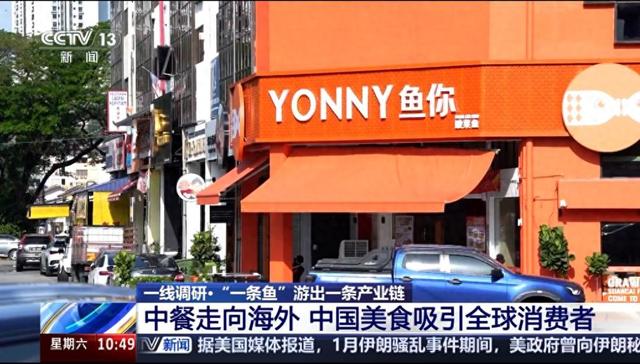
“‘一条鱼’游出一条产业链”,央视聚焦“鱼你模式”
Xin Lang Cai Jing· 2026-02-14 11:25
Core Viewpoint - The article highlights the successful overseas expansion of the Chinese restaurant brand "Fish You Together," showcasing how it leverages the entire industrial chain from agriculture to logistics to promote rural revitalization and internationalization of Chinese cuisine [1][17]. Group 1: Industry Chain and Expansion - "Fish You Together" has established a comprehensive industrial chain covering ingredient cultivation, processing, cold chain logistics, and store operations, positioning itself as a leader in the "sour fish" export industry [3][11]. - By the end of December 2025, "Fish You Together" is expected to become the leading rice fast-food brand in China and the top Chinese restaurant chain in Malaysia, with a rapidly expanding global store network [5][15]. - The brand plans to open over 100 new stores overseas in 2026, reflecting its aggressive expansion strategy [15]. Group 2: Agricultural Collaboration and Stability - The brand has formed long-term partnerships with agricultural producers, ensuring a stable supply of core ingredients for its overseas restaurants, which has led to significant export growth, such as over 300 tons of black fish from Guangdong in 2025 [6][8]. - "Fish You Together" addresses farmers' concerns about price volatility by implementing a guaranteed price mechanism, which has helped stabilize income for local farmers, particularly during adverse weather conditions [8][10]. Group 3: Quality Improvement and Technological Integration - The brand's standardized overseas requirements have driven improvements in agricultural quality and productivity, such as a 9% increase in the yield of "new generation" peppers in Henan [10]. - Collaborations with cold chain logistics companies have enhanced supply chain efficiency, facilitating the export of agricultural products and supporting the brand's international restaurant expansion [11][19]. Group 4: Market Reception and Recognition - In Malaysia, "Fish You Together" opened over 20 stores within ten months, achieving high customer turnover rates and significant daily foot traffic, indicating strong market acceptance [13]. - The brand has received multiple accolades, including recognition as a top brand in the Chinese restaurant sector and awards for its contributions to cultural promotion [15].
中国微短剧出海势头强劲,海外应用数量突破300款
Jin Rong Jie· 2026-02-02 00:21
Core Insights - The number of Chinese micro-short dramas available overseas has exceeded 300, with Chinese companies holding the top three positions in the global short drama app download rankings [1] - The trend of "full industry chain going overseas" for Chinese micro-short dramas is emerging, with AI integrated throughout the entire process and supportive policies aiding the industry's international expansion [1] - It is projected that the overall scale of micro-short dramas going overseas will surpass $6 to $9 billion by 2026 [1]
2025年广东外贸突破9万亿,高技术产品增长明显
Sou Hu Cai Jing· 2026-01-28 10:40
Core Insights - Guangdong's foreign trade has reached a historical annual high, with a target of 9.49 trillion yuan in imports and exports by 2025, marking a 4.4% growth [1] - The province's export value is projected to be 6.03 trillion yuan, a 2.5% increase, while imports are expected to reach 3.46 trillion yuan, growing by 7.8% [1] - Guangdong contributes approximately one-fifth of the national foreign trade total and aims for a 3% growth in total trade volume in 2026 [1] Trade Growth and Market Expansion - The province plans to strengthen its presence in emerging markets like ASEAN and cultivate advantageous export industry clusters [1] - Guangdong's foreign trade product structure is optimizing, with high-tech products exceeding 1 trillion yuan in exports for the first time, growing by 15% [3] - Key high-tech exports include electronic information, high-end equipment, medical devices, and electric vehicles, with lithium batteries and medical instruments leading in national export value [3] Supply Chain and Product Trends - Guangdong's supply chain advantages are significant, with over 3,000 robot-related companies in Foshan, making it the largest industrial robot production base in China [3] - The trend towards high-end, intelligent, and green products is increasing, with exports of electromechanical products expected to reach 4.15 trillion yuan, a 7.3% growth [3] - Notable growth rates in exports of smart products include drones (40.9%), 3D printers (37.1%), and industrial robots (33.9%) [4] Regional Performance - Shenzhen's high-tech product exports are projected to reach 1.4 trillion yuan by 2025, with a growth rate of 11.6%, accounting for 30.7% of the city's total trade [5] - The "new three samples" (new energy vehicles, lithium batteries, and photovoltaics) have become significant growth points, with exports exceeding 200 billion yuan, a 30.6% increase [5] Market Diversification - Guangdong's trade partners are diversifying, with trade volumes with ASEAN, Hong Kong, and the EU each surpassing 1 trillion yuan [6] - Emerging markets in Central Asia, Africa, and the Middle East are also seeing significant growth in trade, with increases of 23.6%, 10.7%, and 8.5% respectively [6] New Business Models - The province is transitioning from single product exports to brand globalization, focusing on service and technology [8] - Recent trends show a shift towards self-built production bases for overseas investments, driven by local policies and international trade requirements [8] E-commerce Growth - Cross-border e-commerce in Guangdong is experiencing explosive growth, with exports from overseas warehouses increasing by 9.8 times [9] - Guangzhou's cross-border e-commerce trade reached a historical high of over 210 billion yuan, growing by 15.7% [9] Financial Services and Internationalization - Hong Kong serves as a financial hub, facilitating international investments and providing legal frameworks for businesses [10] - Companies are encouraged to leverage Hong Kong's services for global brand operations and financial management [10]

每10辆就有1辆中国造,中国车企在欧洲卖爆了
创业邦· 2026-01-03 01:13
Core Viewpoint - Chinese electric vehicles (EVs) are significantly increasing their market share in Europe, overcoming high tariffs and competition from established local brands, indicating a successful penetration into a historically challenging market [5][7]. Market Performance - In 2025, Chinese brands are projected to capture 12.8% of the European EV market and over 13% in the hybrid vehicle sector, marking a historic high [7]. - In the UK, sales of Chinese automotive brands reached 187,800 units in the first 11 months of the year, doubling from the previous year, with expectations to exceed 200,000 units in 2025 [8][11]. - The average market share of Chinese brands in Western Europe is around 6%, with significant growth in countries like Spain and Norway [11]. Competitive Advantages - Chinese automakers benefit from a mature supply chain for new energy vehicles, allowing for stable supply and cost advantages compared to European manufacturers facing high production costs and battery shortages [13]. - The strategy of localizing production, such as Chery's assembly in Barcelona and BYD's new factory in Hungary, helps avoid tariffs and brings products closer to European consumers [14]. Technological Edge - Chinese companies lead in battery technology, with innovations like BYD's blade battery and CATL's high-energy-density batteries, meeting European demands for longer range and safety [14]. - Advanced smart features in vehicles from brands like XPeng and Leap Motor cater to tech-savvy European consumers [15]. Challenges Ahead - Trade barriers, such as a 45% anti-subsidy tax, and upcoming regulatory requirements pose significant challenges for Chinese automakers [15][17]. - Service and brand recognition remain weak compared to established European brands, with limited service networks and slower response times affecting customer retention [17]. - Adapting to stringent European standards for charging interfaces and carbon footprints adds to the cost of vehicle modifications [17].



AI出海转向生态战?告别单兵出击,深圳AI链主组团出海
Nan Fang Du Shi Bao· 2025-11-17 12:48
Core Insights - The "going global" strategy of Chinese AI companies is shifting from a guerrilla approach focused on single products to an ecosystem approach that encompasses the entire industry chain [2][3] - Shenzhen is set to achieve a record high in R&D investment in 2024, exceeding 240 billion yuan, which represents 6.67% of its GDP, the highest proportion in the country [2] - The "Shenzhen-Hong Kong-Guangzhou" innovation cluster has recently ranked first globally in the latest global innovation cluster rankings [2] Industry Trends - AI companies are increasingly forming groups led by "chain master" enterprises to provide comprehensive solutions in overseas markets, particularly in the Middle East [2][3] - There is a strong demand for "intelligent" solutions in the Middle East, but a significant lack of "data" infrastructure, presenting a major opportunity for Shenzhen's full-stack solutions [2][3] Company Strategies - Companies like SenseTime are leading the charge in exporting the entire industry chain, addressing both the "data" and "intelligent" needs of the Middle Eastern market [3] - SenseTime's approach emphasizes that AI technology should solve local problems rather than merely exporting Chinese technology [3][4] - The collaboration between Shenzhen and the Greater Bay Area is viewed as a valuable asset for Chinese tech companies, enhancing their global outreach [4]
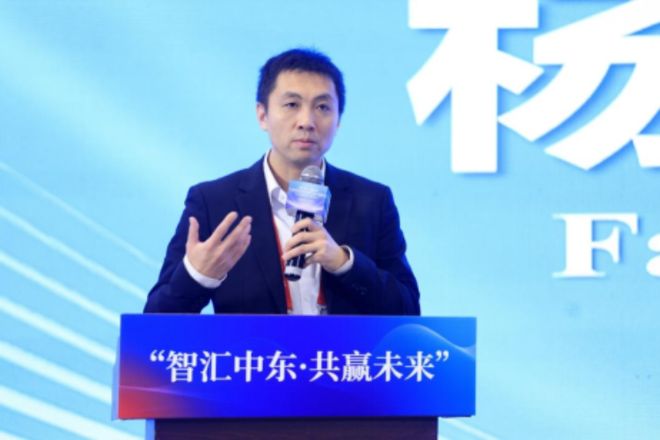
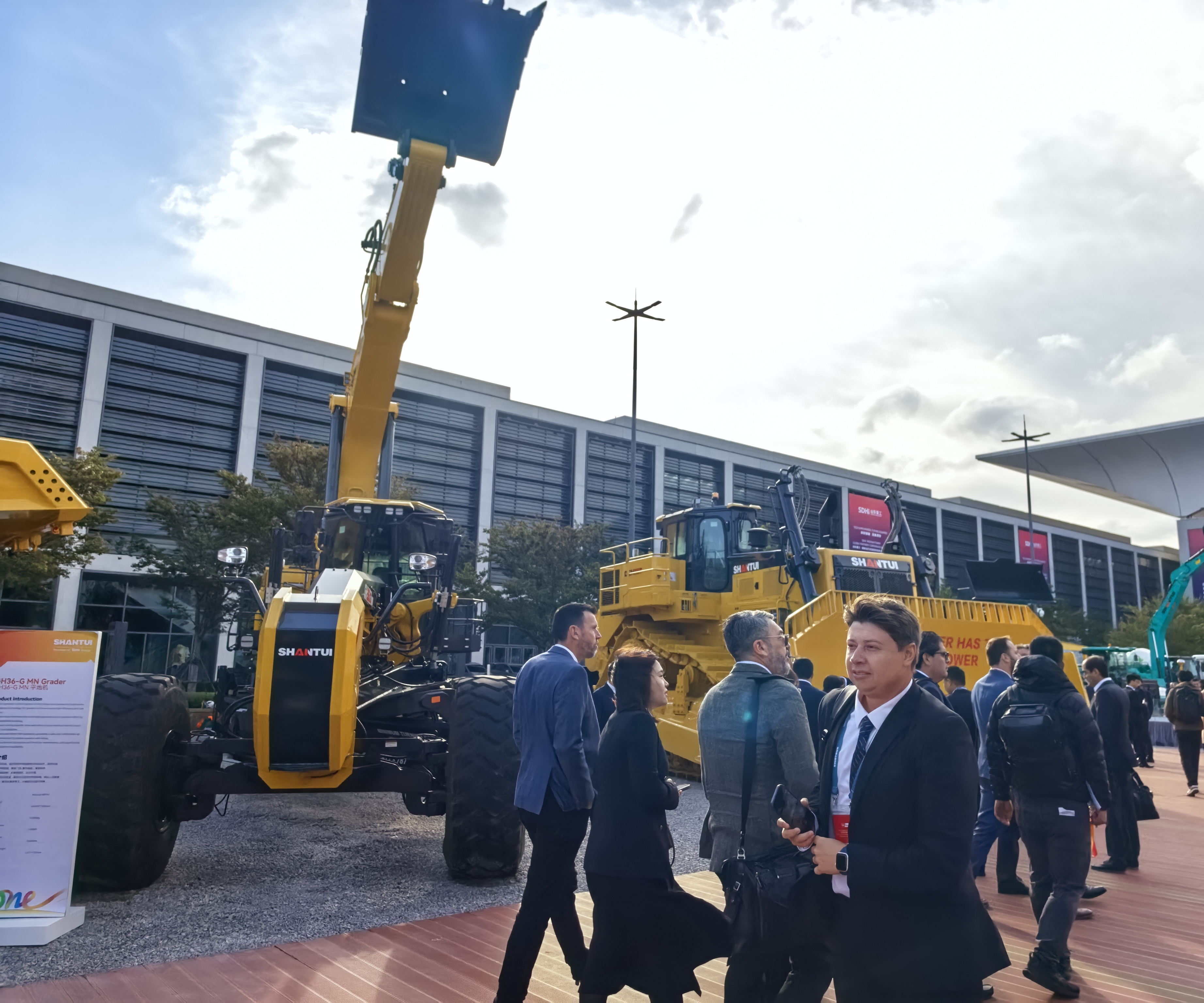
全产业链竞争!中国最大工业装备集团出海不打价格战
Qi Lu Wan Bao· 2025-10-20 09:52
Core Viewpoint - A significant trend of full industrial chain overseas expansion is defining the epic journey of Chinese enterprises going global, as highlighted by the recent Shandong Heavy Industry and Weichai Power Global Partner Conference in Qingdao [1][2]. Group 1: Overseas Business Growth - Shandong Heavy Industry's revenue for the first three quarters of this year approached 440 billion, with a growth rate exceeding 9%, and product export revenue reached 72.7 billion, a year-on-year increase of 6%-7%, expected to reach 100 billion for the entire year [5][6]. - Compared to five years ago, overseas revenue was less than 20 billion, with a contribution rate of less than 10%; by 2025, the contribution rate is projected to reach 60%, a fourfold increase [6]. - In the first three quarters, the export revenue of Weichai's engine segment grew by over 30%, achieving a historical high, with overseas business revenue accounting for approximately 46% [6]. Group 2: Market Expansion and Localization - Shandong Heavy Industry has held four global partner conferences in high-growth regions such as Kazakhstan, UAE, Indonesia, and Mexico since 2023 [7]. - China National Heavy Duty Truck Group reported a 37.4% increase in heavy truck sales in Africa and a 41.5% increase in Southeast Asia during the first three quarters [8]. - The localization of products and services has become a core competitive factor for Chinese enterprises overseas, with China National Heavy Duty Truck establishing over 230 dealers and nearly 400 service outlets globally [11]. Group 3: Competitive Strategy - The strategy of not engaging in price wars but focusing on product adaptability and service quality is emphasized, with companies leveraging their service advantages to avoid price competition [14]. - Shandong Heavy Industry's approach includes customized product development based on local market needs, which enhances competitiveness without resorting to price cuts [13][17]. - The company has established over 1,000 overseas channels and 38 trade platforms to maximize resource efficiency in international markets [18]. Group 4: Collaborative Efforts and Future Plans - The group aims to achieve local team management, manufacturing, and R&D to enhance customer satisfaction and trust in their products [19]. - Shandong Heavy Industry plans to invest 13.6 billion in R&D in 2024, maintaining a high intensity of investment at 4.2% of revenue [23]. - The recent global partner conference showcased the company's commitment to collaboration and resource sharing among its subsidiaries to strengthen its global presence [24].


澄迈:奋楫出海天地宽
Hai Nan Ri Bao· 2025-08-25 01:32
Core Insights - The article emphasizes the development of a unique brand "Come to Chengmai for Going Abroad," focusing on five key scenarios: gaming, cross-border e-commerce, digital culture, manufacturing, and new energy vehicles [2][3][4] Group 1: Economic Development - Chengmai is committed to building a high-quality foreign investment hub, having attracted 602 foreign enterprises and utilized foreign capital of approximately 1.305 billion USD as of July this year [3] - The region aims to leverage its advantages in the Hainan Free Trade Port to create favorable conditions for outbound enterprises, promoting a "quality and quantity rise" in its economic development [2][4] Group 2: Outbound Services - Chengmai is establishing a comprehensive "outbound service system" to support enterprises in their international expansion, including a public service platform for gaming companies that offers market research, technical consulting, and overseas promotion assistance [5][6] - The local government is actively promoting policies to facilitate trade and investment liberalization, aiming to create a platform for foreign enterprises to access the Chinese market and for Chinese enterprises to expand globally [4][6] Group 3: Industry Focus - The region is particularly focused on the new energy vehicle sector, planning to attract related service industries and create a comprehensive outbound service platform for this market [7][8] - Chengmai is also enhancing its cross-border e-commerce capabilities, with companies like Qimeng Technology utilizing live streaming to engage with overseas markets effectively [10][11] Group 4: Future Plans - Chengmai plans to develop a "one-stop" comprehensive service platform for enterprises going abroad, integrating various professional resources to streamline the outbound process [12] - The region is positioned for significant growth in its outbound initiatives, with a focus on creating a favorable business environment and attracting investment [11][12]
瑞承:从东南亚到欧洲,中国车企将迎来国际化转型
Jin Tou Wang· 2025-08-05 08:16
Core Insights - The internationalization strategy of Chinese automotive brands is undergoing a profound transformation, shifting from simple export trade to a comprehensive overseas layout across the entire industry chain [1][2] - Chinese automotive exports have seen explosive growth, surpassing Japan to become the world's largest exporter, with a notable increase in new energy vehicle exports, which grew over 60% year-on-year, accounting for more than one-third of total exports [1] - Leading companies like Chery and SAIC have maintained strong export positions, while BYD has experienced rapid growth in overseas sales, achieving nearly tenfold growth in monthly overseas sales within three years [1][2] Industry Developments - Chinese automotive companies are establishing production bases overseas, particularly in Southeast Asia, with Thailand becoming a key manufacturing hub for brands like BYD, SAIC, and Great Wall [2] - The current export model has expanded to encompass the entire industry chain, with core component manufacturers like battery and motor producers following vehicle manufacturers abroad, creating a complete industrial ecosystem [2] - Leading firms are setting up R&D centers overseas to adapt products to local market demands and are increasing localization efforts in sales networks and after-sales services [2] Challenges and Opportunities - Despite significant progress, Chinese automotive exports face challenges such as increased tariffs and technical standards in certain markets, with new EU regulations posing additional hurdles for electric vehicle exports [3] - There is a need for Chinese brands to enhance consumer recognition in mature markets like Europe and the US, as building brand premium capability remains a long-term challenge [3] - The ongoing rise in global new energy vehicle adoption presents substantial opportunities for Chinese companies, especially in emerging markets where they hold a competitive edge in cost-performance [3] Future Trends - The internationalization of Chinese automotive brands is transitioning from "going out" to "going in," indicating a deeper integration into global markets [3] - Different markets will likely adopt differentiated strategies, with Southeast Asia focusing on economical products and Europe emphasizing high-end and intelligent offerings [3] - The evolution from simple KD assembly to localized production of core components may lead some companies to achieve full localization in R&D, production, and sales [3]
从“产品出海”走向“生态出海” 汽车业强势入局全球化
Zheng Quan Shi Bao· 2025-07-23 18:45
Core Insights - Chinese automotive brands are expanding globally, with increasing sales and a shift from domestic to international markets [1][2][3] - The export volume of Chinese automobiles reached 3.083 million units in the first half of this year, marking a 10.4% year-on-year increase [1][2] - The growth in exports is driven by the rapid development of new energy vehicles (NEVs), which saw a 75.2% increase in exports to 1.06 million units in the first half of the year [2][3] Export Growth Momentum - China's automotive exports are projected to reach 3.111 million units in 2022, 4.91 million in 2023, and 5.859 million in 2024, with the export contribution to total sales rising from 11.5% to 18.6% [2] - NEVs are a significant factor in boosting exports, with strong performance in both plug-in hybrid and electric vehicles [2][3] Global Market Expansion - Chinese automakers are accelerating their global presence, with companies like BYD and Chery expanding their manufacturing and sales networks across multiple continents [4][5] - BYD's overseas sales exceeded 470,000 units in the first half of the year, a 132% increase, with expectations to surpass 800,000 units in 2025 [4] Diversified Export Models - The export strategies of Chinese automotive brands are becoming increasingly diverse, including local manufacturing, joint ventures, and brand acquisitions [7][8] - Companies are focusing on localizing production to enhance competitiveness and reduce logistics costs [7][8] Long-term Strategic Considerations - The transition from merely exporting vehicles to establishing localized operations is crucial for Chinese automakers [9][10] - Companies are advised to deepen local integration, manage risks effectively, and build resilient ecosystems to support global operations [9][10]