算力通胀

Search documents
再论算力通胀-中美产业链区别-AI-infra产业链详解
2026-03-24 01:27
Summary of Key Points from Conference Call Records Industry Overview - The discussion revolves around the AI infrastructure (AI Infra) industry, focusing on the differences in the supply and demand dynamics between the US and China, particularly in the context of computing power inflation and the evolving AI landscape [1][2][3]. Core Insights and Arguments - **Token Supply and Demand Gap**: The demand for tokens is experiencing exponential growth driven by 3D scenarios, agents, and multimodal applications, while supply is expanding linearly due to physical constraints, indicating a rise in computing power prices and ongoing inflation in the industry [1][3]. - **Divergence in Computing Power Paths**: The US is expected to see reasoning power reach 70% by 2025, while China's reasoning demand is anticipated to start in 2024, with a significant surge expected in the second half of 2025 as multimodal and agent capabilities improve [1][4][5]. - **Evolution of Computing Power Forms**: The training side is moving towards large clusters, while the reasoning side is evolving towards distributed, edge, and hybrid CPU+ASIC architectures, with heterogeneous computing power scheduling platforms becoming a unique core aspect of the Chinese market [1][6]. - **Three-Stage Benefit Transmission**: The domestic computing power market will benefit in three stages: short-term advantages for leading cloud vendors and NVIDIA computing power leasing; mid-term benefits for domestic chips and integrated machine industries; and long-term advantages for edge/ASIC solutions [1][6][7]. Additional Important Content - **Impact of Domestic Large Model Capabilities**: The enhancement of domestic large model capabilities will lead to a phased impact on the domestic computing power industry chain, shifting from reliance on high-end training chips to a more diverse chip demand for reasoning [6][7]. - **AI Infra Structure**: The AI Infra ecosystem is structured into seven layers, with significant roles played by chip and hardware layers, cloud computing platforms, AI frameworks, data infrastructure, and MLOps tools [8][9][10]. - **Market Dynamics**: The US market is primarily dominated by comprehensive cloud vendors, while China's market is more diversified, with a mix of AI cloud, GPU cloud, and computing power leasing models [11][12]. - **Investment Logic**: The investment logic prioritizes upstream segments of the industry chain, with cloud vendors and NVIDIA's ecosystem being the immediate beneficiaries, followed by domestic chip manufacturers and edge computing solutions [13][14]. This summary encapsulates the critical insights and arguments presented in the conference call, highlighting the evolving landscape of the AI infrastructure industry and the implications for various stakeholders.
警惕算力通胀!超节点的好用标准该由谁定义?
半导体芯闻· 2026-03-20 10:08
Core Viewpoint - The significance of computing power is evolving from a simplistic "more is better" approach to a more complex understanding of what type of computing power truly serves applications and can be widely utilized [1] Group 1: The Concept of Supernodes - The term "supernode" is being redefined in the industry, transitioning from a broad concept to a more narrowly defined one, often equated with specific large-scale system architectures [3] - While large-scale clusters are essential for training foundational models and pushing performance boundaries, the industry narrative has shifted towards a focus on size and strength rather than suitability for diverse applications [3] Group 2: Demand Side Perspective - The true drivers of AI adoption are not just leading enterprises but a vast number of small and medium-sized businesses, traditional industries, and public service organizations that require stable operational models rather than just larger models [4] - The value of computing power is increasingly measured by deployability, stability, and cost structure, rather than extreme performance [4] Group 3: The Challenge of Usability - The evaluation of what constitutes "usable" technology is complex and relies on real-world scenarios and user participation, rather than just technical specifications [5] - Without widespread access and usage, it is difficult to form genuine feedback on the usability of supernodes, leading to a disconnect between supply and demand [5][6] Group 4: A Healthy Computing Power Ecosystem - An effective computing power ecosystem should consist of a clear hierarchical structure, including large-scale clusters for cutting-edge exploration, medium-scale units for industry applications, and flexible resources for innovation [8] - The definition of usability standards should emerge from broader user experiences rather than being dictated by a single narrative or parameter system [8]


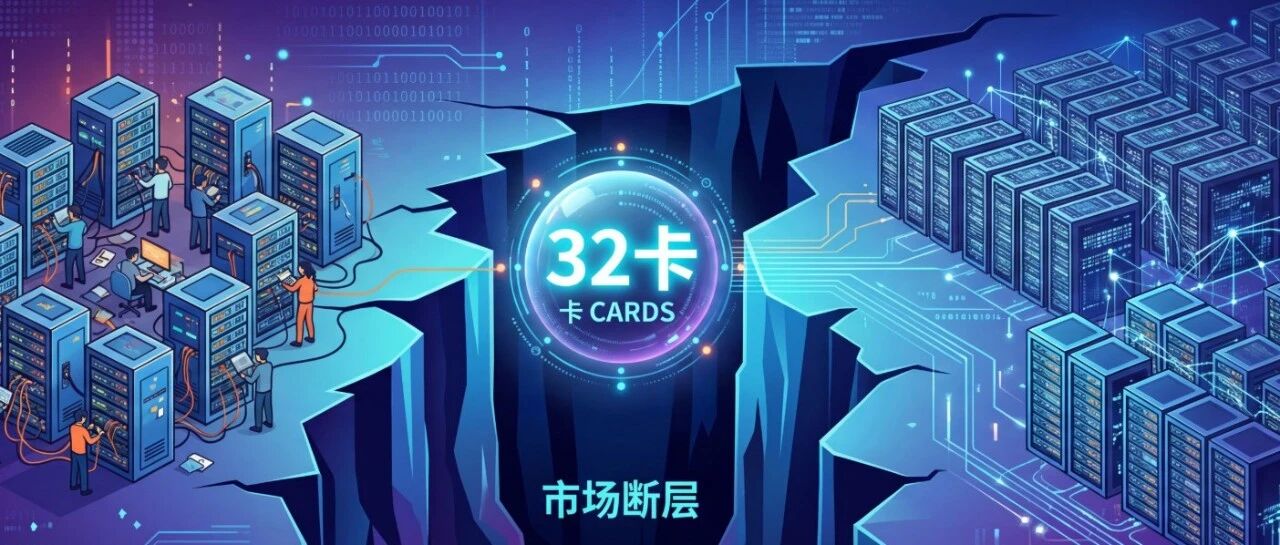
超节点“断层之痛”:谁偷走了中小企业的AI入场券?
傅里叶的猫· 2026-03-20 09:16
Core Viewpoint - The AI industry is facing a significant gap in computing power, with a lack of mid-tier solutions between entry-level 8-card servers and high-end hundreds of card clusters, leading to inefficiencies and increased costs for businesses [2][5][15]. Group 1: Limitations of 8-Card Servers - 8-card servers, while initially beneficial for AI adoption, are now becoming bottlenecks due to their limited memory and communication capabilities, which hinder the performance of large-scale models [3][4]. - The memory bottleneck is evident as loading parameters for mainstream models requires hundreds of GB of memory, which 8-card setups cannot accommodate effectively [4]. - Communication bottlenecks arise when scaling beyond single machines, leading to decreased utilization rates and performance issues in multi-machine training scenarios [4]. Group 2: High-End Computing Power Challenges - High-end computing solutions, often exceeding 100 million yuan, are unaffordable for most companies, creating a barrier to entry for many businesses [6][5]. - The cost of ownership extends beyond initial purchase, including ongoing expenses for infrastructure and maintenance, making these solutions impractical for many [6]. Group 3: The Need for a Mid-Tier Solution - The current market lacks a mid-tier computing solution that meets the needs of most AI companies, with 32-card configurations emerging as a potential standard for commercial applications [8][10]. - A 32-card setup can support the requirements of billion-parameter models while being more accessible in terms of cost, making it suitable for medium-sized enterprises [8][10]. - The concept of "32+N" is gaining traction, suggesting that having additional capacity beyond 32 cards can provide necessary flexibility and redundancy for evolving business needs [11][12]. Group 4: Market Dynamics and Future Outlook - The AI computing market is compared to the real estate market, where essential products are either too small or too expensive, leaving many businesses without suitable options [7]. - There is a growing concern about "computing power inflation," where the focus on high-parameter products neglects the actual needs of users, potentially driving smaller companies out of the market [15]. - A healthy computing market should have a clear structure, with a focus on mid-tier solutions like the 32-card configuration to support a broader range of businesses [15][16].
从阿里云涨价看算力通胀演绎的节奏和阶段
2026-03-20 02:27
Summary of Conference Call Records Industry Overview - The records focus on the cloud computing industry, specifically the dynamics of token inflation and its impact on major cloud service providers such as Alibaba Cloud, Baidu Cloud, and Tencent Cloud [1][2]. Key Points and Arguments Token Inflation and Pricing Trends - Token inflation has been clearly transmitted to major domestic cloud service providers, with price increases marking a definitive trend [1]. - Token demand is experiencing exponential growth, while supply is increasing linearly, leading to a significant supply-demand gap [3][4]. - The price transmission path starts from wafer foundry/chips to IDC/power leasing, and finally to cloud and model vendors, with upstream entities having the strongest bargaining power [1][5]. Cost Dynamics in Video Generation - The cost of video generation has significantly decreased, with generating 1 second of video consuming approximately 20,000 tokens, costing about 1 yuan [1]. Investment Strategy - The investment strategy emphasizes prioritizing upstream sectors, particularly in GPU and core hardware segments, which have a favorable competitive landscape and high price increase certainty [1]. Market Evolution and Price Transmission - Since January 2026, the inflation transmission chain has shown a gradual spillover from upstream to downstream, with initial price increases observed in GPU and storage sectors [2]. - Major cloud providers like Amazon and Google have initiated price hikes, leading to expectations of similar actions from domestic providers [2]. Commercialization Strategies of Model Vendors - In 2026, model vendors are focusing on revenue growth, shifting from expansion to profitability and lightweight models due to changing capital market dynamics [8]. - Successful segments include AI Coding and Agent applications, which have shown strong revenue potential [9]. AI Coding Market Potential - The AI Coding market is currently the most penetrated AI application area, with potential market sizes estimated between $55 billion to $100 billion in China and $50 billion to $100 billion overseas [11]. Agent Applications and Token Consumption - Agent applications, such as Devin, have seen a significant increase in token consumption, driven by factors like persistent memory and multi-turn interactions [12][14]. - The demand for computing infrastructure is expected to rise due to the structural impacts of Agent applications, including increased needs for local, cloud, and edge computing resources [15]. CPU Demand and Market Perception - The rise of Agent applications is expected to increase demand for data center server CPUs, although current market perceptions may not reflect this due to the gradual adoption of these applications [16]. Supply-Side Constraints - Key factors affecting the supply of inference computing power include capital expenditure, physical performance of single cards, and algorithm optimization [18]. - Despite increased capital expenditure, physical constraints may hinder the realization of these investments [18]. Token Supply and Demand Dynamics - The demand for tokens is expected to grow exponentially due to applications in Coding, Agent, and multi-modal areas, while supply growth remains linear, leading to a persistent supply-demand tension [20]. Investment Strategy Recommendations - The investment strategy should focus on both ends of the AI industry chain: computing power and model vendors, with a preference for upstream investments in core hardware [23][24]. Additional Important Insights - The evolution of large model technology is centered around programming, agents, and multi-modal applications [7]. - The competitive landscape in the upstream segments is more concentrated, allowing for better price increase capabilities compared to the more competitive downstream segments [6]. - The recent price increases across the industry reflect a direct response to the supply-demand imbalance in the token market [20].
【研选行业】OpenClaw爆红将如何引爆下轮算力通胀?(核心受益股一览)机构推荐算力+大模型双主线
第一财经· 2026-03-09 11:44
Group 1 - The arrival of the Agent era and the popularity of OpenClaw are expected to trigger the next round of computing power inflation, with institutions recommending a dual focus on computing power and large models, along with a list of core beneficiary stocks [1] - The AI computing power is driving changes in the cooling industry, with 2026 projected to be a pivotal "0-1" point for the industrialization of certain materials, and the market is expected to reach 90 billion by 2030, with a detailed analysis of core beneficiary stocks [1] - Geopolitical conflicts are disrupting oil supply chains, leading to a revaluation of the coal chemical sector [1] - The synergy between computing power and electricity has been included in the government work report, indicating that the new infrastructure for computing power and electricity is entering a fast track [1]

行情展望-两条主线-看好国内算力需求-半导体设备
2026-02-13 02:17
Summary of Conference Call Notes Industry Overview - The conference call discusses the rapid development of China's large model technology, which is narrowing the gap with the US, leading to global computing power inflation. The domestic demand for computing power leasing is underestimated by the market [2][3]. - The semiconductor equipment sector is expected to benefit from increased capital expenditures by storage manufacturers, although the A-share market's response has been insufficient [2][8]. Key Company Insights Xiechuang Data - Xiechuang Data has signed a price and quantity guarantee contract with Alibaba, securing revenue for the next five years. Each 10 billion RMB in capital expenditure is expected to generate an additional annual revenue of 3.5 to 4 billion RMB and a profit of over 800 million RMB [2][6]. - The company plans to finance further investments through Hong Kong stock offerings, aiming for a market capitalization of 200 to 300 billion RMB [2][7]. - Xiechuang Data's partnerships with major storage manufacturers like SanDisk and Kioxia are expected to enhance its profitability, projecting a profit margin of 15 to 20 billion RMB over the next two years [2][7]. Semiconductor Equipment Sector - The semiconductor equipment sector is currently in a bull market, driven by high profitability cycles in storage manufacturers leading to increased capital expenditures. However, the A-share market has treated this as a short-term event [8][11]. - Recommended companies in this sector include: - **Kema Technology**: Expected to double its production capacity, with a market capitalization of over 500 billion RMB [9][11]. - **Changchuan Technology**: Projected revenue of 8 billion RMB in 2026, with a profit of 2.5 billion RMB, indicating significant growth potential [4][12]. - **Zhongwei Company**: Anticipated to have a market capitalization target of 450 to 500 billion RMB, with substantial orders from storage clients [15][16]. Market Trends - The cloud computing and computing power leasing industries are experiencing a closed-loop demand logic and residual value reassessment. CSP (Cloud Service Provider) businesses are growing faster than expected, enhancing their bargaining power [9][10]. - The scarcity of computing resources is expected to become more pronounced due to slow hardware capacity releases [10]. Financial Projections - Xiechuang Data's capital expenditures are projected to exceed 80 billion RMB in 2026, significantly surpassing previous expectations [10]. - Changchuan Technology's market share in the testing machine market is expected to reach 40-50% by 2030, with a projected revenue of 20 billion RMB and a profit of 7 billion RMB [14]. Conclusion - The semiconductor equipment sector is poised for a significant upward trend, driven by strong demand and capital expenditures. Companies like Xiechuang Data, Kema Technology, Changchuan Technology, and Zhongwei Company are highlighted as key investment opportunities due to their growth potential and market positioning [11][16].
未知机构:华泰科技全球大模型厂商在Coding和Agent能力上卷疯了-20260213
未知机构· 2026-02-13 02:05
Summary of Conference Call Notes Industry Overview - The focus is on the global large model manufacturers, particularly in the fields of Coding and Agent capabilities, indicating a significant surge in demand and development within this sector [1] Core Insights and Arguments - The explosion of Agent technology is confirmed as a major trend for the year, with an inevitable increase in both token consumption and pricing [1] - The concept of "computing power inflation" is highlighted as a central theme for the year, suggesting that the demand for computational resources will continue to rise [1] - Continuous non-linear growth in token consumption is anticipated, indicating a robust market outlook for this segment [1] Key Components of Computing Power Inflation - The following areas are identified as critical components contributing to computing power inflation: - GPU (Graphics Processing Unit) - Storage - CPU (Central Processing Unit) - Networking - AI Infrastructure (notable companies include Wangsu Science & Technology, Deepin Technology, Yuke Technology, Kingsoft Cloud, Capital Online, and Qingyun Technology) [1] Model Manufacturers - Key players in the model manufacturing space are mentioned, including: - Zhipu AI - Minimax - iFlytek [1] This summary encapsulates the essential points from the conference call, focusing on the industry dynamics, core insights, and significant players involved in the large model manufacturing sector.
人工智能ETF(515980)盘中涨近2%,近10日累计“吸金”9.68亿元,成分股光云科技20cm涨停!
Xin Lang Cai Jing· 2026-01-29 02:58
Group 1 - The core viewpoint of the articles highlights the strong performance of AI-related stocks and ETFs, driven by increasing demand for AI training and inference, as well as rising prices for cloud computing services [1][2] - As of January 29, 2026, the CSI Artificial Intelligence Industry Index rose by 2.17%, with notable gains from stocks such as Guangyun Technology and XH Technology, indicating robust market interest in AI [1] - The AI ETF (515980) experienced a net inflow of 74.31 million yuan as of January 28, 2026, with a total of 968 million yuan accumulated over the last 10 trading days, reflecting strong investor confidence in the sector [1] Group 2 - Samsung Electronics reported a fourth-quarter net profit of 19.29 trillion won, exceeding analyst expectations, with record-high revenues in its storage chip business, indicating strong performance in the semiconductor sector [2] - The price increase in AI-related services is driven by tightening supply and demand for computing power, with DRAM contract prices expected to rise by 55%-60% in Q1 2026, benefiting companies in the computing infrastructure space [2] - The Huafu AI ETF (515980) strategically allocates 40% to application end and 60% to computing infrastructure, positioning itself well to capitalize on the ongoing AI trend, particularly in the Chinese market [2]

国海证券晨会纪要-20260129
Guohai Securities· 2026-01-29 01:05
Group 1: Company Overview - The report highlights the growth potential of the company through AIDC power engines, expansion to external customers, entry into the new energy sector, and a focus on internationalization [3][4] - The company is one of the few domestic manufacturers capable of producing high-power, high-displacement medium-speed internal combustion engines, with dual production capacity from Lingzhong Engine and Shanghai Diesel Engine [3][4] - The completion of the restructuring of SAIC Hongyan has significantly reduced the company's financial burden, leading to a projected turnaround in net profit for 2025 [5][6] Group 2: Financial Performance - The report anticipates a one-time gain of 3.367 to 3.467 billion yuan from the equity disposal due to the restructuring, which is expected to improve the company's financial structure [5] - The forecasted revenue for 2025-2027 is 6.09 billion, 6.77 billion, and 7.69 billion yuan, with year-on-year growth rates of -6%, +11%, and +14% respectively [7] - The projected net profit for the same period is 2.79 billion, 300 million, and 460 million yuan, with significant fluctuations in growth rates [7] Group 3: Strategic Direction - The new leadership has set a strategic goal to double sales and revenue by 2025, focusing on new energy and internationalization as key growth areas [6] - The company aims to diversify its revenue streams by increasing its presence in high-value, technology-intensive segments, including power batteries and electric drive bridges [6] - The strategy includes enhancing the proportion of external supply and optimizing product structure and overall profitability [6] Group 4: Industry Context - The report discusses the broader context of the AIDC power engine industry, noting high barriers to entry and the increasing demand for reliable power sources driven by AIDC construction expansion [4] - The report indicates that the current inflation in the computing power industry is expected to continue, which may improve profit elasticity for related companies [16][18] - The anticipated price adjustments by major cloud service providers reflect the tightening supply-demand dynamics in the AI training and inference markets, which could impact the overall cloud computing landscape [15][18]

算力通胀终结者!凭一招把大模型Token成本砍到1/2
创业邦· 2026-01-28 12:58
Core Viewpoint - The article discusses the challenges and inefficiencies in the AI computing power industry, highlighting the concept of "computing power inflation" and the need for "high-quality computing power" to address these issues. Group 1: Computing Power Inflation - The rapid growth of computing power over the past decade has led to a situation where many GPUs are underutilized, with effective utilization rates around 40% for training clusters and even below 20% for inference scenarios [2][3] - The industry has been caught in a parameter race to catch up with models like GPT-4 and GPT-5, leading to a waste of resources as hardware development cycles lag behind rapid algorithm changes [2][3] Group 2: High-Quality Computing Power - The definition of "high-quality computing power" includes efficiency, predictability, and sustainability, moving away from merely focusing on peak performance metrics [5] - The company TianShu ZhiXin aims to improve computing efficiency by 60% over industry averages through innovative technologies in their upcoming architecture [8] Group 3: Cost Management and Efficiency - TianShu ZhiXin has developed solutions to reduce storage costs significantly, including a 50% reduction in memory usage for model inference through key-value caching techniques [10] - The company has demonstrated that its single-machine performance can exceed international solutions by over 100%, while halving the cost per token in specific applications [17] Group 4: Market Position and Future Outlook - The year 2026 is expected to be pivotal for the Chinese GPU industry, with TianShu ZhiXin and other domestic players preparing for IPOs, marking the beginning of a more competitive landscape [19] - The company has established partnerships with various hardware manufacturers and solution providers to enhance AI accessibility across industries, indicating a shift towards practical applications of computing power [21]