
自有品牌战略

Search documents
巨星科技:全球工具龙头,行业触底回暖,加速修复-20260211
CAITONG SECURITIES· 2026-02-10 13:20
Investment Rating - The investment rating for the company is "Buy" (maintained) [2] Core Views - The company is a leading player in the global tools industry, covering hand tools, power tools, and industrial tools. It has a strong market presence in China and is one of the leading suppliers globally [7][11] - The demand for tools is expected to rise due to the US interest rate cut cycle and inventory replenishment, with channel partners experiencing a turning point in revenue and inventory growth by the end of 2023 [7][8] - The company's global supply chain and deepening private brand strategy significantly enhance its profitability [7][8] Summary by Sections Company Overview - The company is a large enterprise with a global layout and diverse product categories, focusing on the research, manufacturing, and sales of hand tools, power tools, industrial tools, and laser measuring instruments [11] - The actual controller of the company has shown confidence in its future development by continuously increasing his shareholding [11][12] Financial Performance - The company is expected to achieve significant revenue growth, with projected revenues of 14,898 million yuan in 2025, representing a year-on-year growth of 0.7% [6][50] - The net profit for 2025 is projected to be 2,610 million yuan, with a net profit margin of 17.5% [50] - The company has shown resilience in profitability, with a net profit growth of 36.2% in 2024 [17][21] Business Structure - In the first half of 2025, the company achieved a revenue of 70.27 billion yuan, with a year-on-year increase of 4.87% [23] - The overseas revenue accounts for over 90% of total revenue, primarily from North America and Europe [24] Macro Environment - The DIY projects are driving the demand for hardware tools, with the global hardware tools market expected to grow significantly [26] - The Federal Reserve's interest rate cuts are anticipated to stimulate housing demand, further boosting the demand for tools [34] Competitive Advantages - The company has established a distributed global production capacity with 23 manufacturing bases worldwide, enhancing its supply chain management [42] - The deepening of its private brand strategy has led to a significant increase in brand recognition and market penetration [44][45] Profit Forecast and Valuation - The company is expected to achieve revenues of 21,254 million yuan by 2027, with a corresponding PE ratio of 11.5 [49][50] - The hand tools segment is projected to see a revenue decline in the short term but is expected to recover in the medium to long term due to the housing market's recovery [48]

巨星科技(002444):全球工具龙头,行业触底回暖,加速修复
CAITONG SECURITIES· 2026-02-10 12:24
Investment Rating - The investment rating for the company is "Buy" (maintained) [2] Core Views - The company is a leading player in the global tools industry, covering hand tools, power tools, and industrial tools. It has a strong market presence in China and is one of the leading global suppliers [7][11] - The demand for tools is expected to rise due to the US interest rate cut cycle and inventory replenishment, with channel partners experiencing a turning point in revenue and inventory growth by the end of 2023 [7][8] - The company's global supply chain and deepening private brand strategy significantly enhance its profitability [7][8] Summary by Sections Company Overview - The company is a large enterprise with a global layout and diverse product categories, focusing on the research, manufacturing, and sales of hand tools, power tools, industrial tools, and laser measuring instruments [11] - The actual controller of the company has shown confidence in its future development by continuously increasing his shareholding [11][12] Financial Performance - The company is expected to achieve significant revenue growth, with projected revenues of 14,898 million yuan in 2025, reflecting a year-on-year growth of 0.7% [6][50] - The net profit for 2025 is projected to be 2,610 million yuan, with a net profit margin of 17.5% [50] - The company has shown resilience in profitability, with a net profit growth of 36.2% in 2024 [17][21] Business Structure - In the first half of 2025, the company achieved revenues of 70.27 billion yuan, with a year-on-year growth of 4.87% [23] - The overseas revenue accounts for over 90% of total revenue, primarily from North America and Europe [24][23] Macro Environment - The DIY projects are driving the demand for hardware tools, with the global hardware tools market expected to grow significantly [26] - The Federal Reserve's interest rate cuts are anticipated to stimulate housing demand, further boosting the demand for tools [34] Competitive Advantages - The company has established a distributed global production capacity with 23 manufacturing bases worldwide, enhancing its supply chain management [42] - The deepening of its private brand strategy has led to a significant increase in brand recognition and market penetration [44][45] Earnings Forecast and Valuation - The company is expected to achieve revenues of 21,254 million yuan by 2027, with a corresponding PE ratio of 11.5 [49][50] - The earnings per share (EPS) is projected to grow from 2.18 yuan in 2025 to 3.12 yuan in 2027 [6][50]
零食量贩行业:效率重塑的下半场
BOCOM International· 2026-01-30 10:25
Investment Rating - The report indicates a positive outlook for the snack wholesale industry, transitioning from rapid expansion to a focus on operational efficiency and high-quality growth [6][10]. Core Insights - The snack wholesale industry is experiencing a transformation from a land-grabbing phase to a deep operational phase, driven by a hard discount model that effectively reconstructs the value chain [6][11]. - The market size of the snack wholesale industry has surged from 7.3 billion RMB in 2019 to an estimated 129.7 billion RMB in 2024, reflecting a compound annual growth rate (CAGR) of 77.9% [19][24]. - The competitive landscape is dominated by two major players, "Mingming Hen Mang" and "Wancheng Group," which together hold over 70% market share, indicating a stable "dual strong" market structure [8][10]. Market Size and Growth Potential - The overall snack market in China is projected to grow from 3.2 trillion RMB in 2019 to 4.0 trillion RMB in 2024, with a CAGR of 5.0% [19][24]. - The snack wholesale segment is expected to reach a market size of 6.1 trillion RMB by 2029, with a continued CAGR of 36.5% from 2024 to 2029 [24][30]. - The potential number of stores in the snack wholesale market is estimated to reach 67,000, indicating over 30% growth potential from current levels [30][31]. Competitive Landscape and Key Players - The industry has formed a high concentration "dual strong" structure, with "Mingming Hen Mang" focusing on southern China and "Wancheng Group" dominating the eastern regions [8][10]. - Both companies have rapidly expanded their store networks, with each surpassing 15,000 stores by September 2025, leveraging economies of scale and digital operations to enhance profitability [10][44]. Operational Strategies - The snack wholesale industry emphasizes efficiency through a streamlined supply chain, reducing the markup rate significantly compared to traditional retail channels [11][54]. - The operational model relies on a franchise-driven expansion strategy, which has enabled rapid scaling while maintaining low closure rates [44][48]. - Digital tools are utilized for precise site selection and operational support, enhancing the success rate of new stores and ensuring consistent service quality across locations [52][55]. Product Strategy - The product strategy involves a layered approach, combining traffic-driving products with high-margin items and differentiated offerings, including private label products [37][42]. - The average store carries approximately 1,800 to 2,000 SKUs, with a high turnover rate facilitated by frequent product updates [38][39]. Future Trends - The industry is expected to evolve towards community-based all-category discount supermarkets, expanding product offerings beyond snacks to include essential goods [9][35]. - Innovations in product categories and private label development are anticipated to enhance revenue potential and profitability [10][35].
品质服务双升、消费热潮助力丨步步高2025年预计盈利1–1.5亿元
Sou Hu Cai Jing· 2026-01-30 02:36
Core Viewpoint - The company, Bubu Gao, anticipates a significant reduction in net loss for 2025, projecting a net profit attributable to shareholders of 100 million to 150 million yuan, driven by strategic reforms and operational improvements [2] Group 1: Financial Performance - For 2025, Bubu Gao expects a net profit attributable to shareholders of 100 million to 150 million yuan, with a year-on-year reduction in net loss of 80.67% to 87.11% for the net profit excluding non-recurring gains and losses [2] - Basic earnings per share are projected to be between 0.04 yuan and 0.06 yuan [2] Group 2: Market Strategy - Bubu Gao is focusing on local market optimization by implementing a dual-format strategy of "supermarket + shopping center," creating a high-frequency and high-quality commercial ecosystem to meet diverse consumer needs [3] - The company is enhancing its competitive edge through targeted market research and the introduction of brands that align with regional demands, while also optimizing store layouts and service processes [3] Group 3: Quality and Service Enhancement - The core strategy for 2025 is centered around "quality service," establishing a value system that integrates products, services, and experiences [4] - The launch of the private label brand BL (Better Life, Better Love) in March 2025 has quickly gained traction, with over 70 products introduced by September, covering various categories and emphasizing high cost-performance [4] Group 4: Experience and Supply Chain Improvements - The company is upgrading its stores through experiential modifications, such as the "city living room" concept and the 3.0 version of the "smart market," which has led to a 28% increase in average transaction value [5] - Bubu Gao has established strategic partnerships with over 200 quality suppliers, enhancing product pricing advantages and freshness, which has positively impacted overall sales growth [5]



爱舍伦成功登陆北交所,开启跨越式发展新征程
Quan Jing Wang· 2026-01-23 10:17
Core Insights - Aishalon officially listed on the Beijing Stock Exchange on January 21, marking a new chapter in its capital market journey [1] - The company, established in 2015, focuses on the research, production, and sales of disposable medical consumables in rehabilitation care and medical protection [1] Group 1: Business Model and Partnerships - Aishalon specializes in disposable medical consumables such as medical nursing pads and surgical drapes, primarily through ODM/OEM models for international medical device brands [2] - The company has established long-term strategic partnerships with notable brands including Medline Group (USA), Zarys Group (Poland), and Sejong Healthcare (South Korea) [2] - The chairman highlighted that the company has maintained relationships with core clients for over ten years, contributing to stable performance despite high customer concentration [2] Group 2: Innovation and R&D - As of the signing date of the prospectus, Aishalon holds 77 patents, including 21 invention patents, with a continuous increase in R&D investment focused on product performance upgrades and new product development [3] - The company plans to gradually develop its own brand while maintaining its ODM/OEM foundation, aiming for higher market value [3] Group 3: Future Growth and Strategy - The successful issuance and subsequent fundraising will allow Aishalon to expand existing production capacity and increase R&D investment in new medical consumables [4] - The company aims to transition from a single dressing manufacturer to a broader medical consumables manufacturing and service platform, reducing dependency on single products and clients [4] - Aishalon is establishing a global production footprint with a core domestic base and new facilities in Thailand and Morocco, demonstrating strategic vision to adapt to international trade changes and cost pressures [4]

战略筑基 品质立碑:麦臻选何以成为中国制造出海的优质范本
Jin Rong Jie· 2026-01-14 10:40
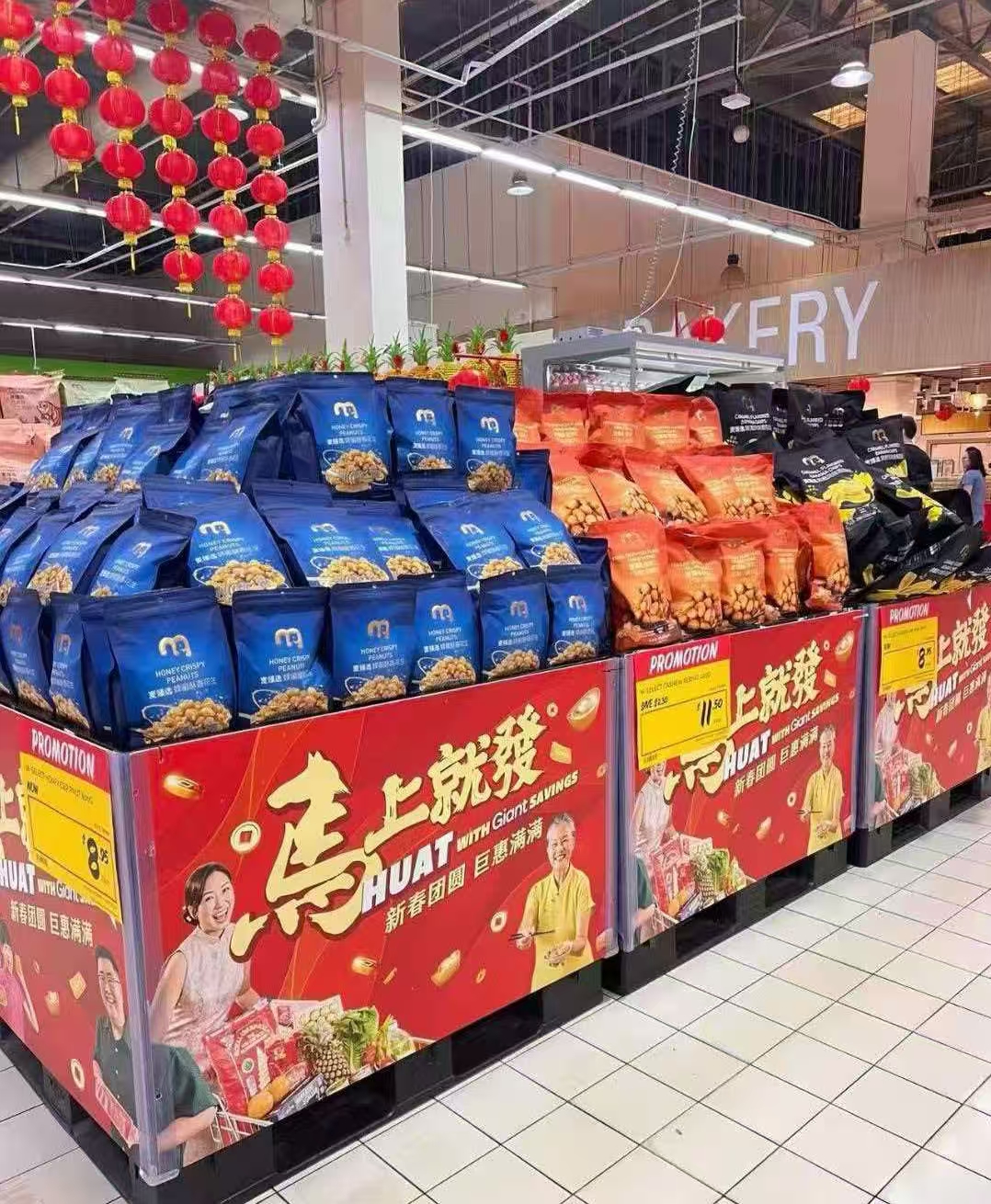
Core Insights - The narrative of Chinese manufacturing is shifting from "scale expansion" to "quality cultivation" as it increasingly influences global taste [1] - Metro's private label "Mai Zhen Xuan" has successfully entered the Singapore market, showcasing products that emphasize safety and taste, reflecting a five-year strategic focus on brand development [1][3] Group 1: Brand Strategy - Metro's "Mai Zhen Xuan" aims to transition from being a generic product to a recognized brand, focusing on health and taste as core values [4] - The brand has won multiple international awards, including 18 medals at the International Taste Institute, highlighting the quality of Chinese manufacturing in the food sector [4][5] - The brand's participation in prestigious competitions serves to validate the acceptance of Chinese flavors in international markets [5] Group 2: Market Expansion - The entry into Southeast Asia, particularly Singapore and the Philippines, reflects a strategic choice based on the region's diverse retail market and the presence of a large Chinese community [6][7] - The collaboration with local retail giants and the establishment of a digital platform and quality supply chain are key to the brand's international expansion [6][7] - The model emphasizes not just product export but also the export of capabilities, including a comprehensive food safety management system [7] Group 3: Value Proposition - "Mai Zhen Xuan" aims to reshape global perceptions of Chinese manufacturing, emphasizing that "Chinese manufacturing" does not equate to "low price and low quality" [8][9] - The brand leverages the growing global demand for Chinese flavors, offering products that meet international standards while retaining unique Chinese characteristics [8] - The shift from cost-driven exports to value-driven outputs marks a fundamental change in the logic of Chinese food exports, focusing on brand value and safety [9]
三闯港交所的乐欣户外,突击分红6500万元IPO募资补流
Sou Hu Cai Jing· 2026-01-06 09:52
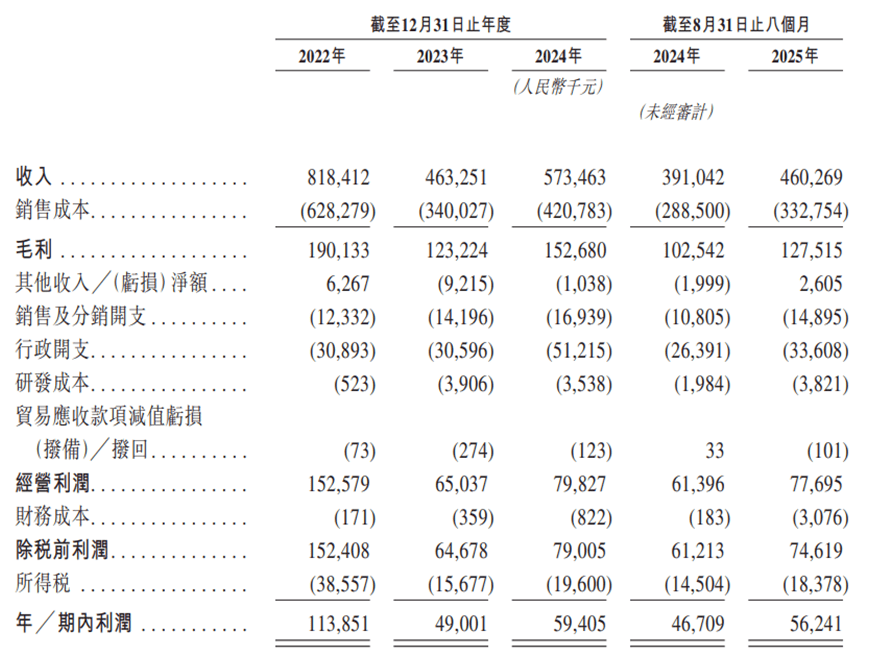
Core Viewpoint - Zhejiang Lexin Outdoor Products Co., Ltd. aims to become the "first stock of fishing gear in Hong Kong" by submitting its prospectus for the third time to the Hong Kong Stock Exchange, with China International Capital Corporation as the sole sponsor [1] Group 1: Company Overview - According to Frost & Sullivan data, Lexin Outdoor is the largest fishing gear manufacturer globally, holding a market share of 23.1% based on 2024 revenue [2] - The company combines OEM/ODM manufacturing capabilities with a growing OBM business, with OEM/ODM revenue accounting for over 90% from 2022 to 2025 [2] - Lexin Outdoor has established long-term partnerships with renowned outdoor brands such as Decathlon and Pure Fishing, distributing products to over 40 countries and regions [2] Group 2: Financial Performance - Lexin Outdoor's revenue experienced significant fluctuations, dropping from RMB 818.4 million in 2022 to RMB 463.3 million in 2023, a decline of 43.4%, before recovering to RMB 573.5 million in 2024 [3][5] - The company's net profit fell from RMB 114 million in 2022 to RMB 49 million in 2023, with a slight increase to RMB 59.4 million in 2024, resulting in a net profit margin decrease from 13.9% to 10.4% [4][5] - The company's financial data shows a divergence between net profit and operating cash flow, with operating cash flow being 1.84 times net profit in 2023, but dropping significantly in 2024 [9][10] Group 3: Market Dynamics - The fishing tackle manufacturing industry in China is highly fragmented, with the top five manufacturers holding only 10.4% of the market share, and Lexin Outdoor ranking second with a mere 1.8% [3] - The European fishing tackle market, which accounts for 73.3% of Lexin Outdoor's revenue in 2024, has a low compound annual growth rate (CAGR) of 2.8% from 2019 to 2024, limiting the company's growth potential [7] Group 4: Business Strategy and Challenges - Lexin Outdoor's reliance on OEM/ODM business has led to a lack of growth in its OBM segment, with OBM revenue only increasing from 4.1% in 2022 to 7.2% in 2024, and then declining to 6.6% by August 2025 [3] - The company’s strategy to acquire the UK fishing brand Solar in 2017 to enhance its OBM business has seen slow progress, indicating challenges in transitioning from a manufacturing-focused model to a brand-driven approach [3] - The company's financial health is questioned due to a sudden dividend payout of RMB 65 million in 2024, exceeding its net profit for that year, raising concerns about its capital allocation strategy [11]
Zumiez(ZUMZ) - 2026 Q3 - Earnings Call Transcript
2025-12-04 23:02
Financial Data and Key Metrics Changes - Third quarter net sales reached $239.1 million, up 7.5% from $222.5 million in the same quarter last year [10] - Comparable sales grew 7.6%, marking the sixth consecutive quarter of positive growth [2][11] - Earnings per share for the quarter was $0.55, significantly above the guidance of $0.29 [3][13] - Gross profit increased to $89.8 million, a 14.7% rise compared to $78.3 million last year, with gross margin improving to 37.6% from 35.2% [11][12] Business Line Data and Key Metrics Changes - North America net sales were $202.8 million, an increase of 8.6% year-over-year, with comparable sales up 10% [10][11] - Women's and hard goods categories saw strong double-digit growth, while men's and accessories experienced low to mid-single digit gains [3][11] - Footwear was the only category with negative comparable sales [11] Market Data and Key Metrics Changes - International net sales, including Europe and Australia, were $36.3 million, up 1.7% year-over-year, with European comparable sales down low single digits but showing improvement [10][12] - North America comparable sales for the 31-day period ended December 2, 2025, increased 7.8%, while international comparable sales increased 2.6% [16] Company Strategy and Development Direction - The company focuses on three strategic priorities: driving revenue growth through customer-focused initiatives, optimizing profitability, and managing volatility while funding strategic expansion [4][8] - The introduction of over 100 new and emerging brands annually has become a significant part of the sales mix, validating the merchandising strategy [5] - The company remains committed to premium pricing and disciplined expense management in international markets, particularly in Europe [7][8] Management's Comments on Operating Environment and Future Outlook - Management expressed confidence in closing the year with strong holiday results, despite macroeconomic uncertainties [4][8] - The company anticipates total sales growth of 4% to 6% for the fourth quarter, with comparable sales expected to be in the 2.5% to 4% range [19][20] - Management noted that while North America shows strong momentum, international operations face challenges [21] Other Important Information - The company ended the quarter with $104.5 million in cash and no debt, reflecting a strong financial position [14] - Inventory levels decreased by 3.5% year-over-year, indicating effective inventory management [15] Q&A Session Summary Question: What is driving the strong performance in hard goods? - Management indicated that the strong performance is primarily driven by the Skate category, with improvements seen in North America, Europe, and Australia, marking a reversal of a multi-year negative trend [25][27] Question: What are the comparable sales assumptions for the fourth quarter? - Management expects a slight deceleration in North America compared to November, while anticipating a negative comp in Europe due to anniversary promotional trends [29][32] Question: What is the current penetration of private label products? - Private label penetration is currently just under 31% of total product sales, up approximately 200 basis points year-over-year [42][43] Question: Who is the company taking market share from in North America? - Management believes they are primarily focused on their core customer base, with gains driven by executing on trend and increasing average unit retail [52][56]

Revolve(RVLV) - 2025 FY - Earnings Call Transcript
2025-12-04 17:15
Financial Data and Key Metrics Changes - The company reported a gross margin of approximately 53.5% for the year, with expectations to reach 55% in the future due to healthy inventory and optimization strategies [50][67] - Gross profit dollars increased by 11% year-over-year, reflecting a 350 basis point improvement in gross margin [47] Business Line Data and Key Metrics Changes - The Forward segment, which focuses on higher-end products, has shown positive growth and improving margins, indicating market share gains [6][7] - Own brands accounted for about 18% of the Revolve segment in 2024, with plans to increase this mix, which previously peaked at 36% in 2019 [32][34] Market Data and Key Metrics Changes - Revolve's business in mainland China doubled over the past few years, with a 50% year-over-year increase in the latest quarter [37][39] - The company is seeing a stronger performance in the higher-income consumer segment, while the lower-income segment has shown some softness [10][11] Company Strategy and Development Direction - The company is focusing on physical retail expansion, having opened stores in Aspen and planning to open another in The Grove, LA, to enhance brand presence and customer experience [26][27] - Investments in AI and technology are being leveraged to improve customer experience and operational efficiencies across various business functions [13][19] Management's Comments on Operating Environment and Future Outlook - Management expressed optimism about the resilience of the consumer, particularly among higher-income demographics, despite broader economic challenges [10][11] - The company aims to maintain a disciplined approach to physical retail expansion, ensuring that new stores are strategically evaluated based on performance data [28][29] Other Important Information - The company has a strong balance sheet with over $300 million in cash and no debt, allowing for continued investment in growth initiatives [73] - The marketing strategy has shifted towards more efficient spending, with successful events like the Revolve Festival driving higher engagement without increased budgets [62] Q&A Session Summary Question: How is the company adapting to the challenges in the luxury market? - Management noted that they are gaining market share in the luxury segment while others struggle, attributing success to product quality and customer service [6][7] Question: What is the strategy for physical retail expansion? - The company plans to open stores gradually, focusing on data-driven decisions to assess performance before further rollouts [26][28] Question: How is the company leveraging AI? - AI is being used to enhance customer experience through personalized shopping tools and to optimize inventory management and logistics [13][19]

吉宏股份20251203
2025-12-04 02:22
Summary of JiHong Co., Ltd. Conference Call Company Overview - **Company**: JiHong Co., Ltd. - **Industry**: E-commerce and Packaging Key Points Financial Performance - In Q3 2025, JiHong's e-commerce revenue reached 3.26 billion RMB, a year-on-year increase of over 40%, accounting for more than 65% of total revenue [2][11] - Overall revenue for Q3 2025 was 5.03 billion RMB, with a profit of 210 million RMB, reflecting a year-on-year profit growth of over 70% [3][11] - Packaging business revenue was 1.77 billion RMB, showing a year-on-year growth of over 14% [2][11] Regional Growth - Northeast Asia saw revenue growth exceeding 35%, while revenue from Europe and the U.S. doubled, contributing over 25% to total revenue [3][11] - Southeast Asia accounted for approximately 18% to 20% of e-commerce revenue, and the Middle East contributed 8% to 10% [3][11] Self-Brand Strategy - The self-brand strategy, initiated in 2022, focuses on the Japanese market with three main brands showing over 100% revenue growth in Q3 2025 [5][6] - The company aims for total self-brand revenue to reach 1.5 billion RMB in three years, leveraging premium pricing and repeat purchases to offset social e-commerce shortcomings [5][6] AI Technology Utilization - AI significantly enhances cross-border e-commerce efficiency through product selection, data analysis, and advertising optimization, leading to a doubling of order volume without increasing staff [2][9][10] - The AI advertising assistant, GKing, automates ad placement, achieving over 85% adoption of its recommendations [10] Inventory Management - JiHong employs a combination of order-based procurement and rolling inventory management, achieving a sell-out rate of 98% and keeping overall inventory below 4% of sales [2][12] Packaging Business Expansion - The packaging segment benefits from increased demand for ready-to-eat retail and food-grade packaging, with new factories in Suzhou and the UAE expected to boost capacity significantly by 2026 [4][19][20] - Projected packaging revenue for 2025 is 2.4 billion RMB, with a target of 2.8 to 3.0 billion RMB for 2026 [20] Risk Management - The company actively diversifies risks by expanding into Belt and Road countries to mitigate the impact of currency fluctuations and international relations [4][13] - Different regions exhibit significant variations in average order value, with Southeast Asia around 150 RMB, Japan and Korea at 220-250 RMB, and higher in the Middle East and Europe [14] Shareholder Actions - The recent share reduction by the major shareholder is a normal arrangement for debt repayment and is not expected to impact stock prices significantly [4][16] Organizational Structure - JiHong's operations are divided into independent teams for packaging and e-commerce, with a partner plan to incentivize team members [17][22] Advertising Cost Management - Advertising costs are monitored across major platforms, with a focus on maintaining profitability despite the potential decline in advertising returns [23] Future Outlook - The company anticipates improved profit margins as self-brands grow and marketing investments stabilize, focusing on revenue growth and market share expansion [15][22]
