财政困境

Search documents
美国大批企业正索赔关税退款
财联社· 2026-03-13 08:35AI Processing
上个月,美国最高法院废除了特朗普政府的全球关税政策,随后众多美国企业纷纷提起诉讼,希望能挽回他们在高额关税中损失的款项。 但据政府方面的说法,现在存在一个问题: 政府需要花费多达4,431,161个小时(相当于506年)来手动处理所有的退款申请。 据统计,在特朗普发起这场贸易战的阶段,有超过5300万件商品(包括汽车、玩具、服装等)被征收了非法关税。 退款存在障碍 虽然后来特朗普全球关税被判违法,但其政府一直警告称,将关税收入退还给那些承担了一年多费用的企业将非常困难,甚至可能带来损 害。现在,政府方面又向法官表示,要退还所有这笔款项,需要更多时间。 种种表态都凸显了围绕特朗普政府在所谓的"紧急措施"下征收的约1660亿美元税款所存在的法律和技术障碍。目前来看,特朗普及其助手 们似乎也并不情愿采取简化措施来处理退款流程。 并且, 特朗普个人明确表示,他坚决反对退还任何关税款项。 他长期以来一直宣称这些款项对美国而言是财政上的利好。这位总统还坚持 认为,完成政府应付金额的法律争执可能需要数年时间,这意味着他或许还会通过其他途径来阻止退款。 新退款处理系统正在推进 尽管进度缓慢,不过根据法律程序,特朗普的政府已经 ...


俄罗斯银行再次出售黄金!看似高抛低吸,实则国库真没钱了?
Sou Hu Cai Jing· 2026-02-23 17:46
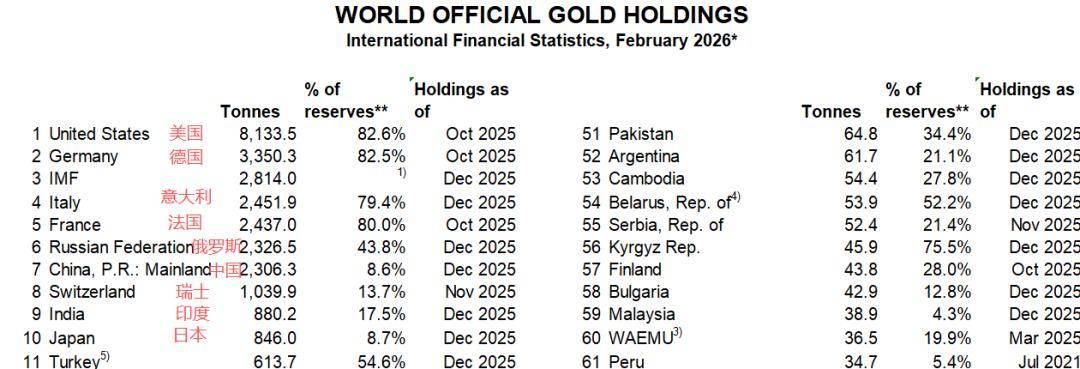
Core Viewpoint - The article discusses the contrasting behavior of the Russian central bank in selling gold reserves while global central banks are increasing their gold holdings, highlighting Russia's financial struggles and the implications for its economy [2][3][9]. Group 1: Global Gold Reserves - As of the end of 2025, Russia holds 2,326.5 tonnes of gold reserves, ranking fifth globally, behind the US, Germany, Italy, and France [3]. - The US leads with 8,133.5 tonnes, followed by Germany with 3,350.3 tonnes, Italy with 2,451.9 tonnes, and France with 2,437.0 tonnes [3]. - China has surpassed 2,300 tonnes in gold reserves and is on track to overtake Russia soon [8]. Group 2: Russia's Gold Selling - In January, the Russian central bank reported a reduction of 300,000 ounces of gold, bringing its total to 7,450,000 ounces, marking the second reduction in six months [3][6]. - The sale of 300,000 ounces at an average price of $4,700 per ounce generated approximately $1.41 billion in foreign exchange revenue for Russia [6]. Group 3: Economic Context - Russia's decision to sell gold is attributed to severe fiscal challenges, including a high budget deficit exacerbated by the Ukraine conflict and Western sanctions [9][12]. - The Russian economy is projected to grow only 1% in 2025, a significant decline from the previous year, indicating potential recession risks [13]. - The government has attempted to address the fiscal crisis through tax increases, but these measures may negatively impact economic activity and tax revenues [12]. Group 4: Future Implications - Continued asset liquidation, particularly gold reserves, is seen as a necessary measure for Russia to manage its budget amid ongoing financial strain [15]. - If the trend of selling 300,000 ounces per month continues, Russia risks depleting its gold reserves, leading to severe economic and fiscal consequences [15].
标普:消费税减免可能加剧日本财政困境
Sou Hu Cai Jing· 2026-01-21 02:10
Core Viewpoint - S&P Global Ratings expresses concern over Japanese Prime Minister Fumio Kishida's proposal to lower food taxes, highlighting the risk of reduced fiscal revenue and long-term damage to the country's finances [1] Group 1 - The proposed tax cuts, such as reductions on certain sales tax items, pose a risk of ongoing revenue decline rather than a one-time impact [1] - If economic growth and revenue growth slow down, the structural increase in spending will further deteriorate the government's fiscal condition [1] - S&P has not commented on potential changes to Japan's credit rating, but the remarks indicate heightened concern for a country with one of the heaviest debt burdens among developed nations [1]
宽松浪潮中独行!日本央行加息为何救不了日元?
Xin Lang Cai Jing· 2025-12-18 15:16
Core Viewpoint - The Japanese yen is expected to remain the weakest major currency against the US dollar in 2025, despite the Bank of Japan being the only major central bank expected to raise interest rates [1][7]. Group 1: Monetary Policy and Interest Rates - The Bank of Japan is anticipated to continue its gradual tightening cycle by raising interest rates by 25 basis points, bringing the policy rate to 0.75%, the highest in 30 years [1][7]. - Market expectations suggest an additional increase of approximately 40 basis points next year, positioning the Bank of Japan among the most hawkish central banks in the G10 alongside the Reserve Bank of New Zealand and the Reserve Bank of Australia [1][7]. - Despite potential rate hikes, there is no guarantee that the yen will rebound in 2026, as most major central banks are nearing the end of their easing cycles [1][7]. Group 2: Economic Conditions and Debt Market - Japan's economy appears to be rebounding from a contraction caused by US tariffs, with corporate confidence reaching a four-year high and labor market indicators showing tight conditions [9][10]. - Inflation has exceeded the Bank of Japan's 2% target for three consecutive years, prompting officials to consider accelerating the pace of interest rate hikes [9][10]. - Japan holds the highest public debt globally, approximately 250% of GDP, which poses challenges for the bond market [10][13]. Group 3: Foreign Investment and Bond Market Dynamics - Foreign ownership of Japanese government bonds and short-term bonds stands at 12.2%, more than double the level in 2010 and close to the historical high of 14.4% in March 2022 [10][12]. - The Japanese bond market is currently the worst-performing major bond market globally, with 10-year government bond yields at their highest since 2007 [4][10]. - The recent rise in bond yields may attract foreign demand, particularly from private pension funds and central bank reserve managers seeking to diversify away from dollar assets [10][12]. Group 4: Currency Intervention and Market Pressures - The yen has shown weakness despite favorable changes in the yield differential, with the exchange rate against the euro hitting historical lows and the dollar-yen rate approaching the critical 160 level [6][12]. - Japanese finance officials have issued intervention warnings but have shown no willingness to act unless the dollar-yen rate remains below 160 [12][13]. - The Japanese government's recent approval of an 18.3 trillion yen (approximately 118 billion USD) supplementary budget represents the largest stimulus plan since the pandemic, primarily financed through new bond issuance [13].

高市早苗再出狂言 ,高市早苗借进击的巨人呼吁投资
Xin Lang Cai Jing· 2025-12-02 11:41
Core Viewpoint - Japanese Prime Minister Kishi Sanae's remarks at an international investment conference on December 1, urging investment in Japan, were met with mixed reactions, highlighting the current economic challenges facing the country [1] Economic Context - The Bank of Japan's Governor Ueda Kazuo hinted at a potential interest rate hike in December, leading to a significant drop in the Nikkei index by nearly 1000 points on the same day [1] - Following the announcement, U.S. stock markets also experienced volatility, and Bitcoin plummeted to approximately $84,000 [1] Currency and Debt Situation - The Japanese yen appreciated against the U.S. dollar, moving from the 156 yen range to the 154 yen range [1] - Japan's government debt has surpassed 200% of its GDP, the highest among developed countries, raising concerns about fiscal sustainability [1]
高市早苗“再出狂言”
中国能源报· 2025-12-02 06:23
Core Viewpoint - The article discusses Japan's economic challenges, including high government debt exceeding 200% of GDP, and the implications of potential interest rate hikes by the Bank of Japan, which have led to market volatility [1]. Group 1: Economic Context - The Bank of Japan's Governor, Ueda Kazuo, strongly hinted at an interest rate hike in December, causing the Nikkei index to drop nearly 1000 points on the same day [1]. - Japan's government debt is currently over 200% of its GDP, the highest among developed countries, indicating severe fiscal challenges [1]. Group 2: Government Response - Prime Minister Kishida Fumio referenced a line from the anime "Attack on Titan" during an international investment conference, urging investment in Japan, though this statement may be misinterpreted given the current economic climate [1]. - Kishida has indicated plans to establish a new fiscal target that allows for more flexible spending over several years, which may dilute the government's commitment to fiscal consolidation [1]. Group 3: Market Reactions - Following the announcement of potential interest rate hikes, U.S. stock markets also experienced continued volatility, reflecting global investor concerns about Japan's economic stability [1].

高市早苗再出狂言
Xin Jing Bao· 2025-12-02 04:50
Core Viewpoint - The Bank of Japan's Governor, Kazuo Ueda, strongly hinted at an interest rate hike in December, leading to a significant drop in the Nikkei index by nearly 1000 points, which also affected the US stock market [1][1][1] Group 1: Economic Challenges - Japan's government debt has surpassed 200% of its GDP, the highest among developed countries, indicating severe fiscal challenges [1][1] - The country is facing multiple economic issues, including an aging population, rising prices, and high government debt [1][1][1] Group 2: Government Response - Prime Minister Sanae Takaichi announced plans to create a new fiscal target that allows for more flexible spending over several years, which may dilute the government's commitment to fiscal consolidation [1][1] - Takaichi's comments at an international investment conference, referencing a popular anime, aimed to encourage investment in Japan but could be misinterpreted given the current economic context [1][1][1]
英国赤字数据凸显财政困境 英镑与国债双双走低
智通财经网· 2025-09-19 10:32
Group 1 - The UK's budget deficit for August reached £18 billion (approximately $24.4 billion), marking the highest borrowing level for the same period in five years and exceeding economists' highest expectations by £4 billion [1] - Cumulative deficit for the first five months of the fiscal year has reached £83.8 billion, which is £11.4 billion higher than the Office for Budget Responsibility's forecast [1] - Concerns over the UK's fiscal situation have led to rising government bond yields, increasing borrowing costs for the government [1] Group 2 - The yield on 10-year UK government bonds rose by 3 basis points to 4.71%, while the 30-year yield increased by 4 basis points to 5.55% [2] - The GBP/USD exchange rate fell by 0.5% to $1.3492, reaching its lowest level since September 8 and potentially marking the worst week since early August [2] - The Bank of England has acknowledged the vulnerability of long-term bonds and announced a slowdown in the reduction of its bond holdings, adjusting the structure of its sales to decrease the amount of long-term bonds sold [2]
英国突发,股债汇“三杀”,发生了什么?
Mei Ri Jing Ji Xin Wen· 2025-09-02 15:45
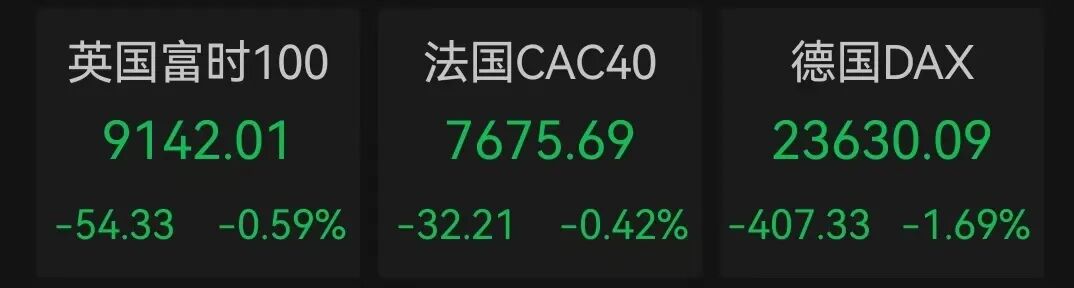
Market Overview - Major European stock indices experienced declines, with the UK FTSE 100 down 0.59% to 9142.01 points, the French CAC 40 down 0.42% to 7675.69 points, and the German DAX down 1.69% to 23630.09 points [1] - The global bond market saw widespread declines, particularly in long-term bonds, with the UK 30-year government bond yield surpassing 5.69%, the highest level since 1998, and the US 30-year bond yield reaching 4.97%, the highest since July [3] Currency Market - The British pound depreciated significantly against the US dollar, dropping over 1.5% to 1.334, with the dollar index rising by 0.49% to 98.15 [3] - The pound's exchange rate against the dollar was reported at 1.34065, reflecting a decline of 1.03% [4] Economic Concerns - The volatility in financial markets is attributed to concerns over the UK's inflation rate, high borrowing levels, and slow economic growth [3] - The UK financial market has been disrupted by fiscal challenges throughout the year, with a notable "triple whammy" in July when the bond market experienced significant fluctuations [5] Fiscal Policy and Debt Management - The UK government's abrupt reversal on welfare cuts in July was a key factor in the market turmoil, leading to potential political resistance against future spending cuts or tax increases [6] - Analysts express concerns about a "vicious cycle" where rising debt worries lead to increased yields, further exacerbating the debt situation [6] - The UK Debt Management Office has reduced the sale of long-term securities to record lows, indicating weakened demand from traditional buyers [6] Government Response - UK Prime Minister Starmer announced cabinet reshuffles to improve government image and gain better control over economic policy [6] - Analysts warn that if the government fails to restore confidence in public finances, it may face a crisis similar to the "mini-budget" fallout experienced three years ago [7]
全球债市新预警!
第一财经· 2025-05-28 07:00
Core Viewpoint - The article discusses the ongoing turmoil in the global bond market, particularly focusing on Japan's long-term debt issues and the implications for both Japanese and U.S. bonds, highlighting structural fiscal challenges that remain unresolved [2][9]. Group 1: Japanese Bond Market - On May 27, Japanese bonds rebounded due to speculation that the Japanese Ministry of Finance might reduce the issuance of ultra-long bonds, leading to a drop in yields to three-week lows [2][5]. - However, on May 28, the auction for 40-year Japanese bonds was seen as a "canary in the coal mine," with the bid-to-cover ratio falling to its lowest level since July 2024, indicating weak demand despite previous short-term positive signals [4][6]. - The yield on 40-year Japanese bonds rose by 8 basis points to 3.365% before the auction, reflecting market concerns about fiscal sustainability [6][11]. Group 2: U.S. Bond Market - The article notes that U.S. Treasury yields also fell on May 27, with the 10-year yield dropping by 6.25 basis points to 4.44%, but the overall outlook remains bearish due to ongoing fiscal concerns [2][9]. - Analysts express that the U.S. bond market is likely to remain in a bear market, driven by fiscal risks exacerbated by recent tax legislation that could add $4 trillion to the national debt over the next decade [9][10]. - The 10-year Treasury term premium is currently near its highest level since 2014, reflecting heightened anxiety over fiscal challenges and political uncertainty [10]. Group 3: Broader Market Implications - The article emphasizes that the structural fiscal issues in both Japan and the U.S. are unlikely to be resolved in the short term, leading to continued volatility in bond markets [2][9]. - The demand for long-term Japanese bonds has weakened significantly, with major traditional buyers like life insurance companies showing reduced interest, contributing to a supply-demand imbalance [10][11]. - Japan's government is projected to face annual debt servicing costs nearing $230 billion over the next four years, raising concerns about the sustainability of its fiscal position [11].